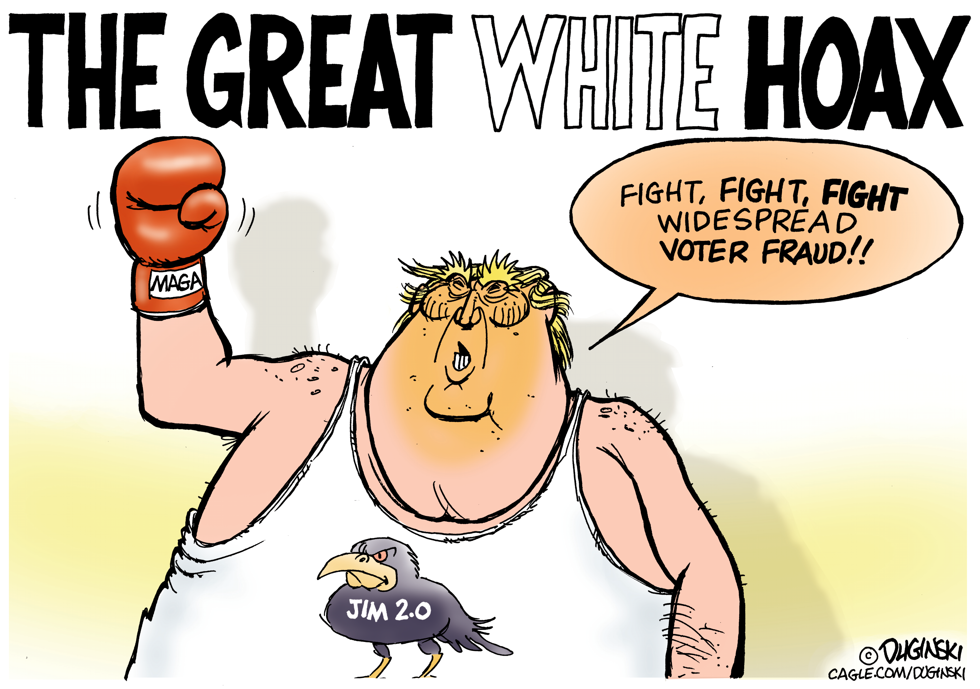
Donald Trump has renewed assertions of widespread voter fraud ahead of upcoming contests. The rhetoric revives familiar challenges to election administration and access rules. Such claims have repeatedly failed to produce evidence in court yet continue to shape public debate and legislative pushes. The cartoon frames the narrative as a deliberate distraction from actual barriers to voting. It positions the fraud talk as cover for renewed restrictions reminiscent of earlier suppression tactics.
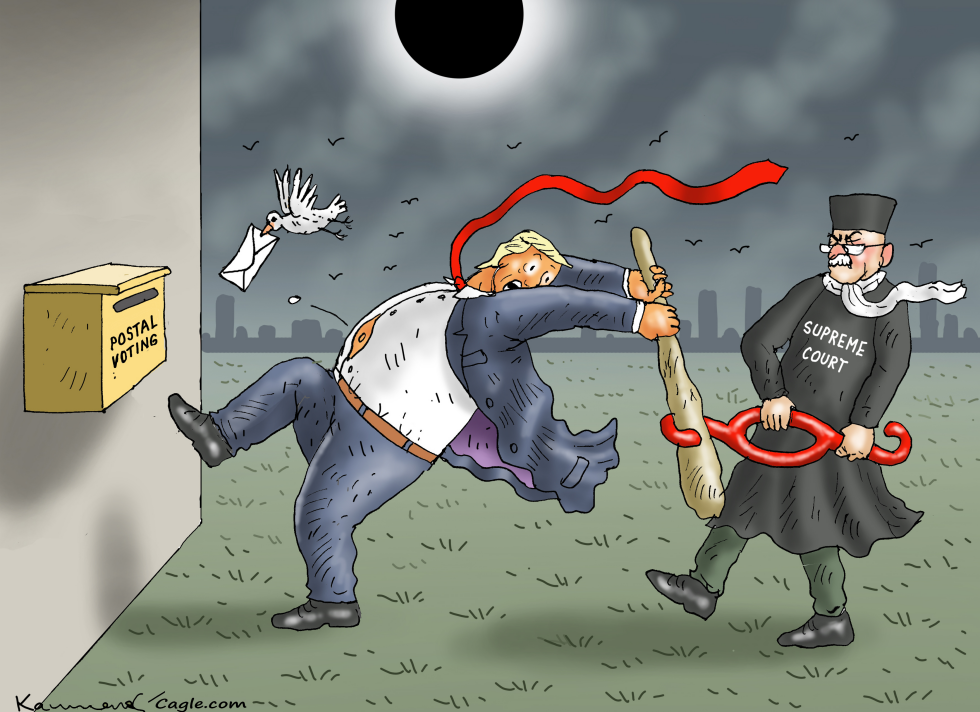
The Supreme Court has moved to restrict efforts by former President Trump to limit or challenge postal voting ahead of the 2026 midterms. The ruling comes as both parties prepare for a high-stakes contest that could determine control of Congress. Trump allies have pushed measures they say protect election integrity while critics see them as attempts to suppress turnout. The decision underscores the court's continuing role in shaping voting rules. The cartoon portrays the court as a necessary check on Trump's aggressive tactics.
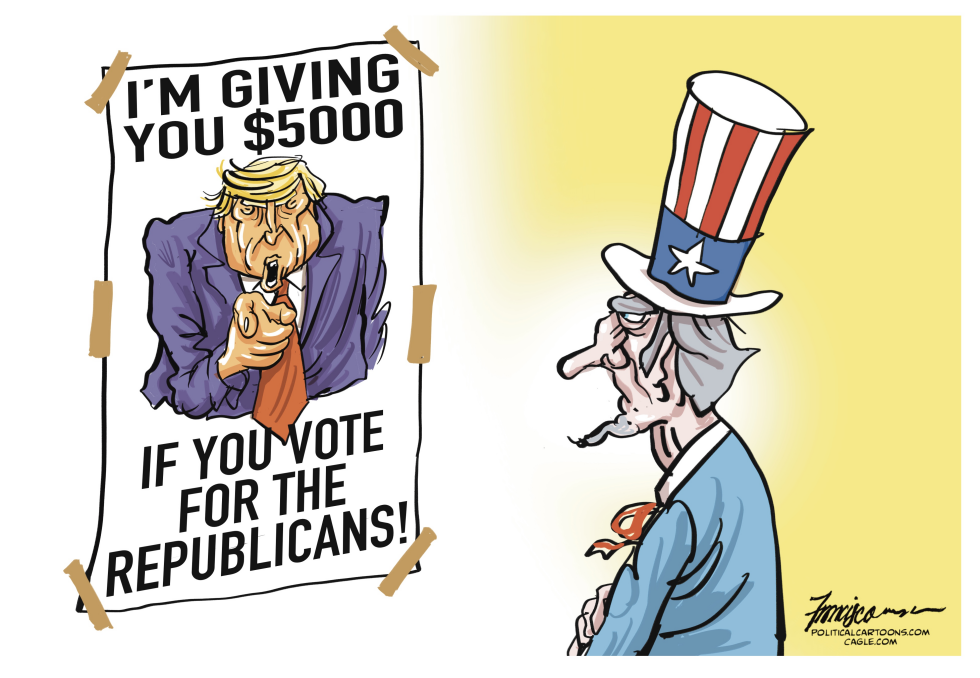
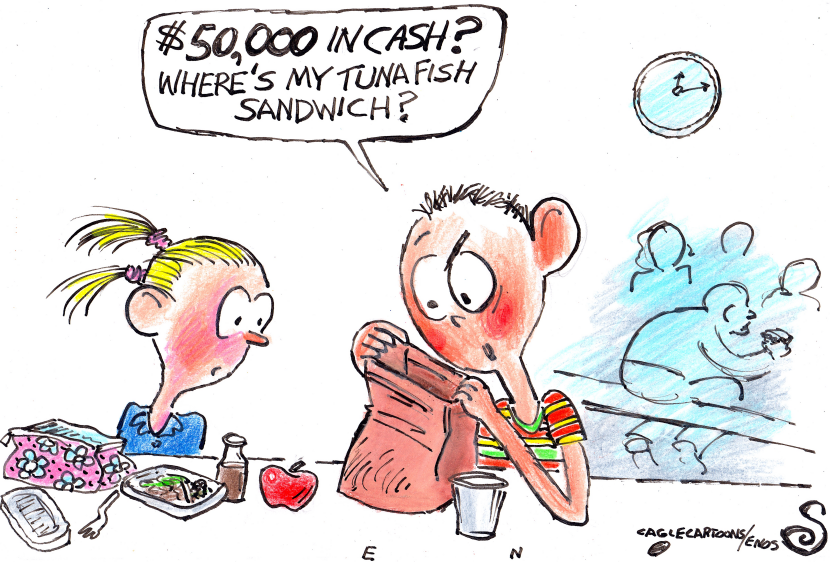
Donald Trump has floated direct cash payments to voters who support Republican candidates. The proposal surfaces weeks before the 2026 midterms and draws immediate scrutiny over its legality and intent. Critics argue the move risks turning elections into auctions. Supporters frame it as economic relief. The cartoon depicts the offer as a blunt transaction that leaves traditional symbols of American integrity uneasy.
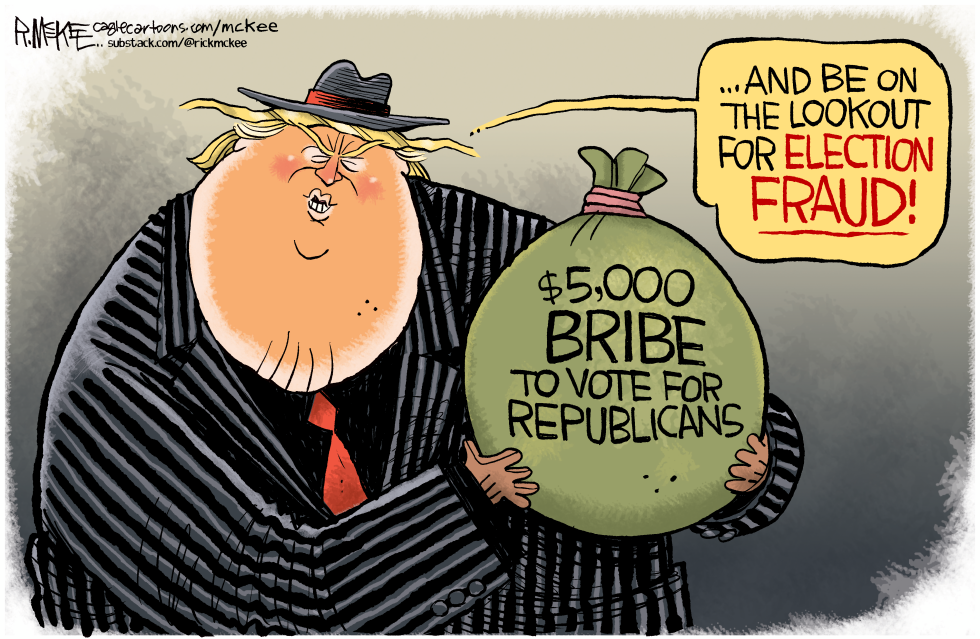
Donald Trump has repeatedly claimed that elections are rigged against Republicans and urged vigilance against fraud. The cartoon responds to this pattern by depicting him offering cash incentives to secure votes for his party. It underscores the perceived double standard in ongoing debates over voting access and integrity ahead of the 2026 midterms. The piece takes the position that such rhetoric from Trump undermines genuine concerns about election security.
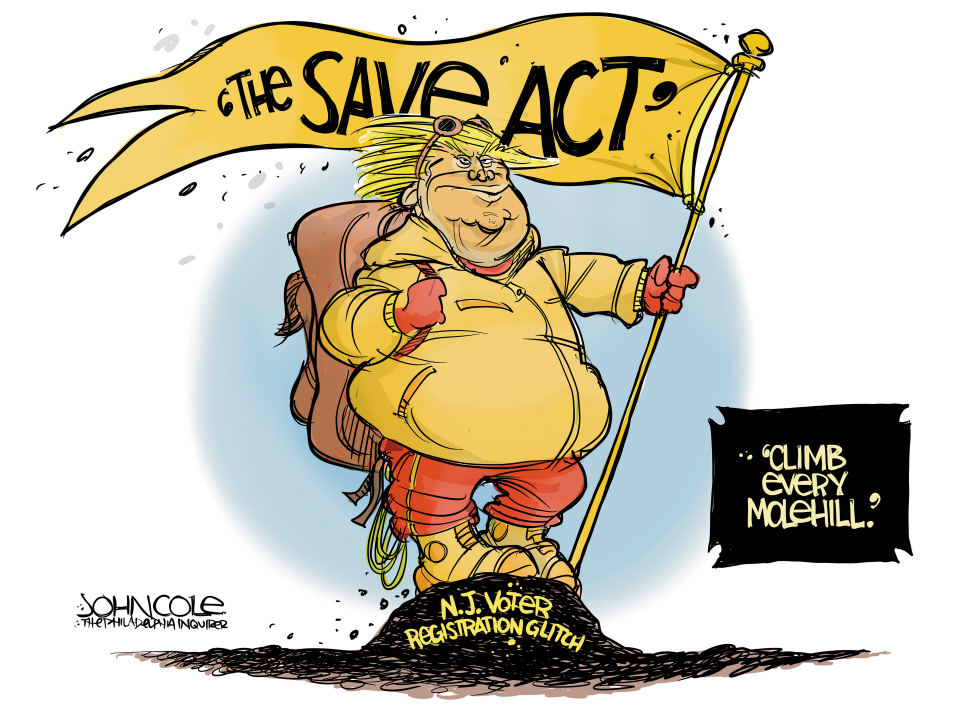
A minor voter registration glitch in New Jersey drew outsized attention from former President Trump and supporters of the SAVE Act in September 2026. The episode highlighted ongoing partisan disputes over election administration and voter ID rules. The cartoon portrays the reaction as an overreaction that turns a small problem into a symbolic crusade, arguing that such emphasis distracts from actual election security needs.
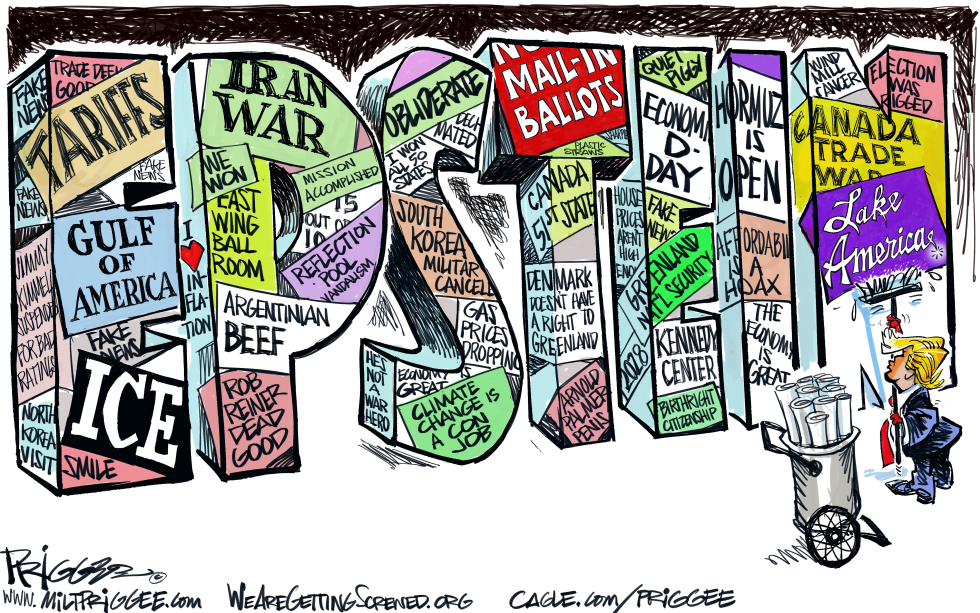
Donald Trump appears in a September 2026 cartoon pushing a cart stacked with signs promoting tariffs, questioning mail-in ballots, and asserting claims about Iran, Canada trade, and domestic issues. The image captures a pattern of public messaging that blends economic nationalism with repeated challenges to established processes. The editorial position frames these statements as a deliberate strategy to keep multiple controversies in motion at once.
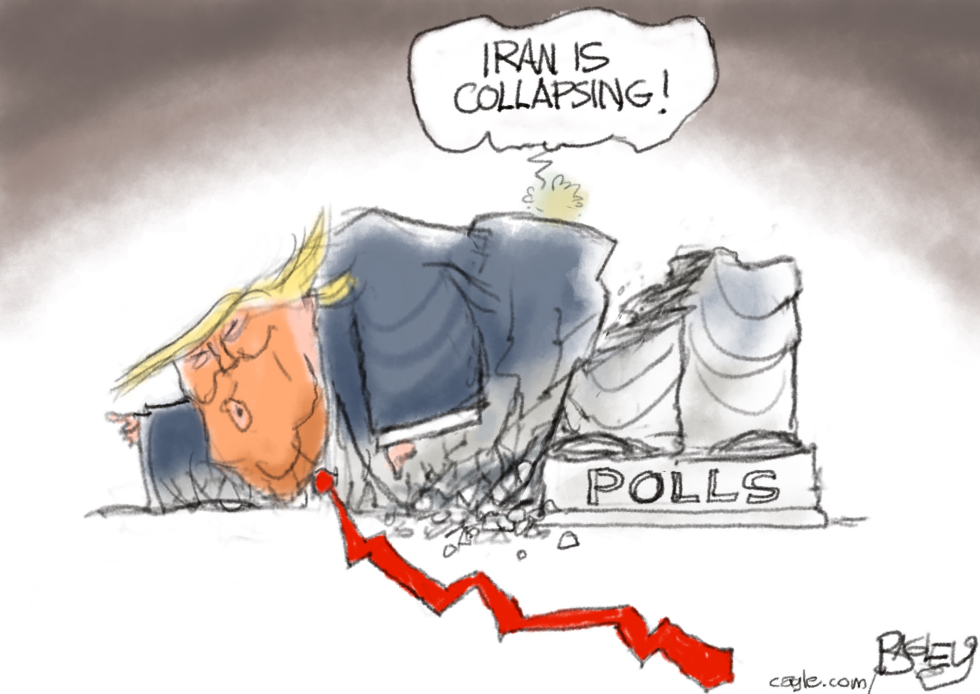
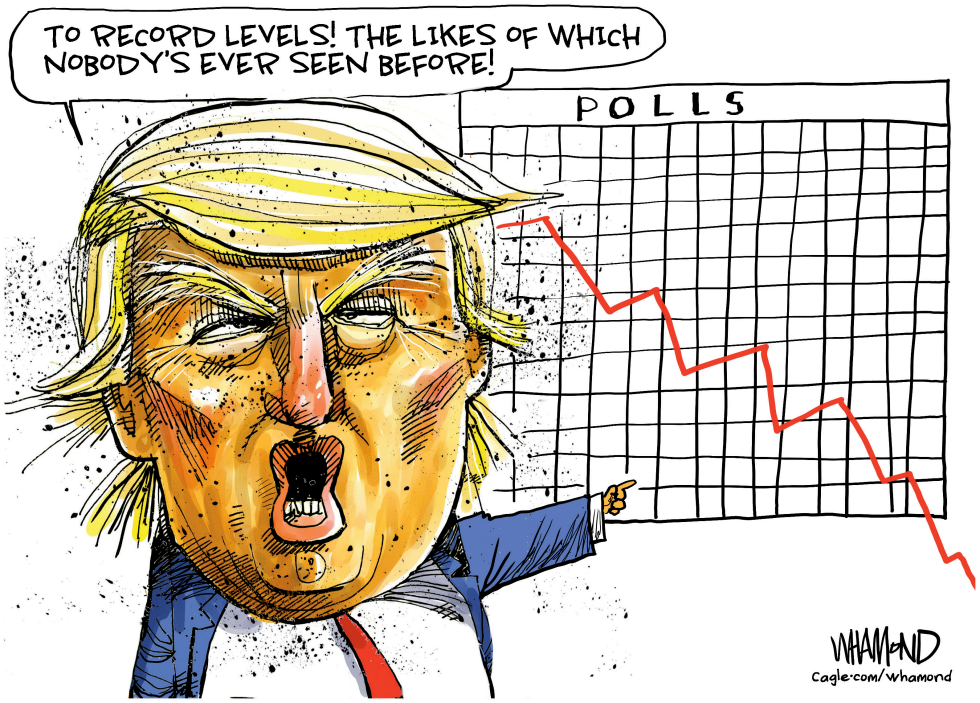
Donald Trump stated that Iran is collapsing even as his own poll numbers declined sharply in late August 2026. The claim drew attention because it came during a period of softening support ahead of midterm elections. The editorial takes the position that the assertion serves mainly as a distraction from domestic political weakness.
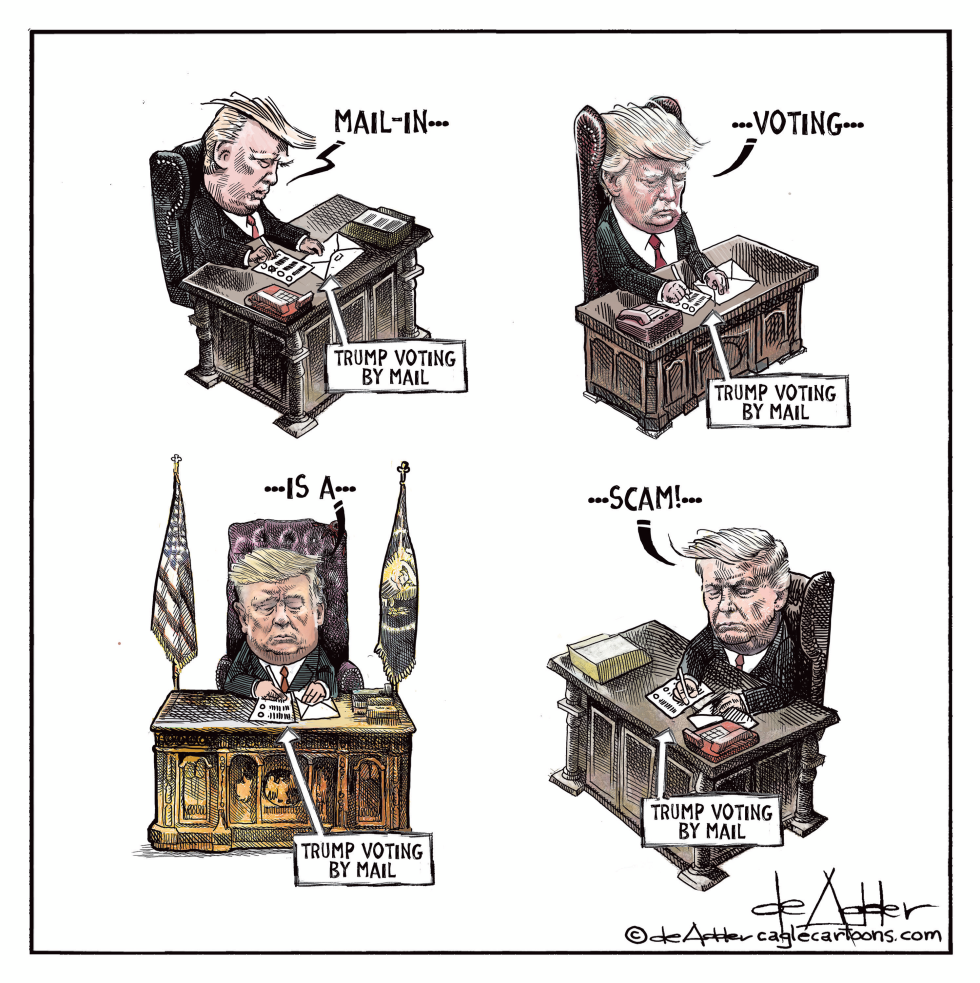
A four-panel cartoon by Michael de Adder published August 18, 2026, shows Donald Trump seated at desks completing mail-in ballots. Text builds across panels to spell MAIL-IN VOTING IS A SCAM while each scene is labeled TRUMP VOTING BY MAIL. The work responds to ongoing debates over mail voting ahead of the 2026 midterms. Trump has repeatedly questioned the security of mail ballots in public statements. The cartoon uses repetition to highlight the contrast between those statements and the depicted actions. No specific new event from the prior month is named in the image itself.
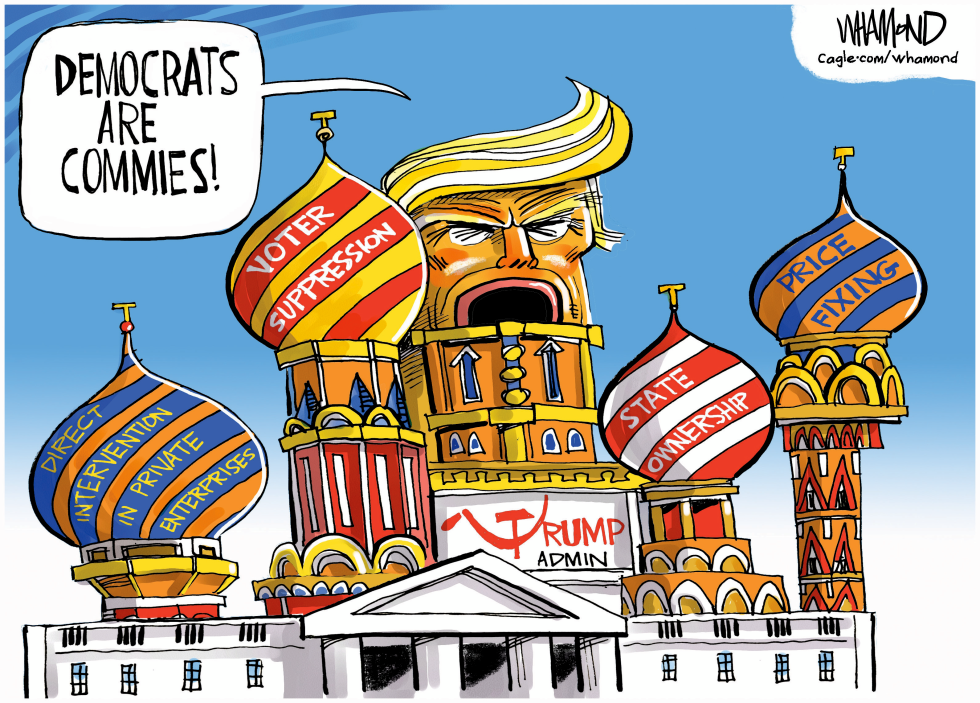
Donald Trump has renewed attacks labeling Democrats as communists amid ongoing debates over election rules and economic interventions. The accusation revives Cold War-era rhetoric in current political discourse. The piece portrays the Trump administration itself as adopting the very state-control measures it condemns.
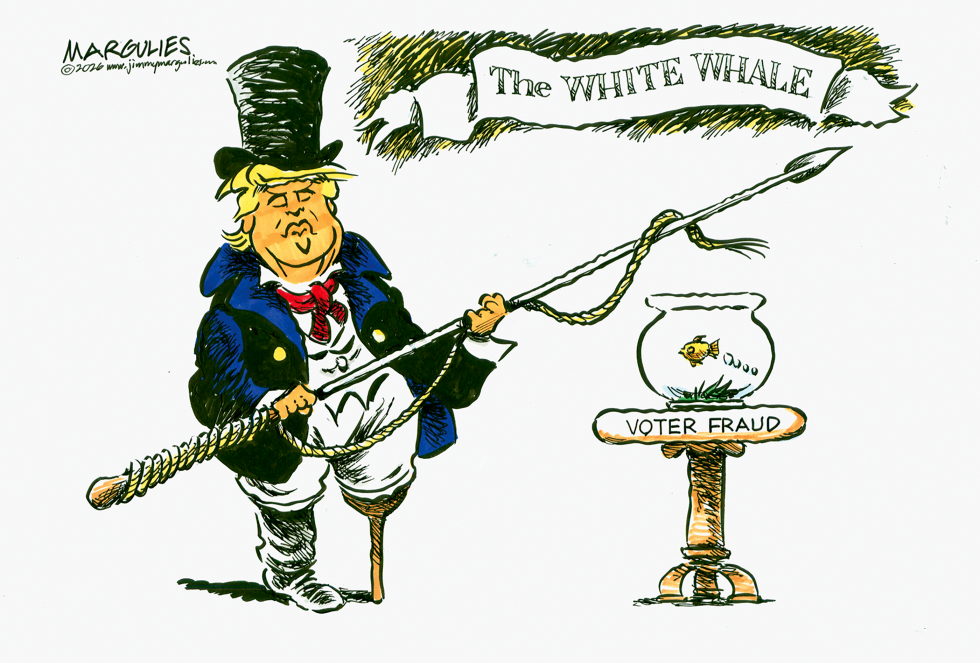
The cartoon by Jimmy Margulies portrays Donald Trump dressed as Captain Ahab from Moby Dick, aiming a harpoon at a small goldfish labeled voter fraud in a bowl. A banner overhead reads The WHITE WHALE. Published July 20 2026 the image comments on Trump's continued focus on voter fraud allegations years after the 2024 election. The visual reduces the expansive claim to a tiny contained target suggesting futility or disproportion in the pursuit.
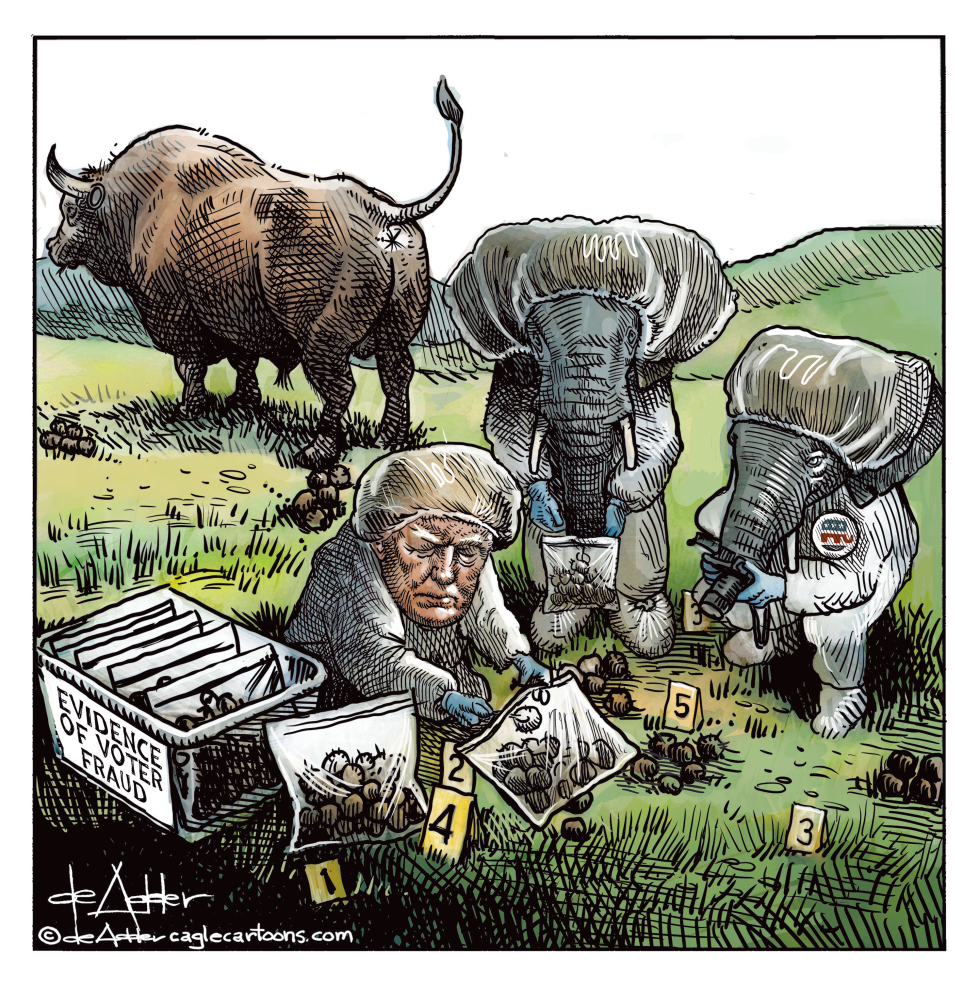
The cartoon shows Donald Trump in protective gear crouching to inspect animal droppings marked as voter fraud evidence. Two elephants wearing GOP buttons and hairnets collect samples in bags, while a bull stands in the background. Evidence boxes and numbered markers line the grassy field. The scene responds to ongoing Republican focus on election integrity issues around the 2026 period. It uses the droppings as a visual stand-in for disputed claims of widespread fraud.
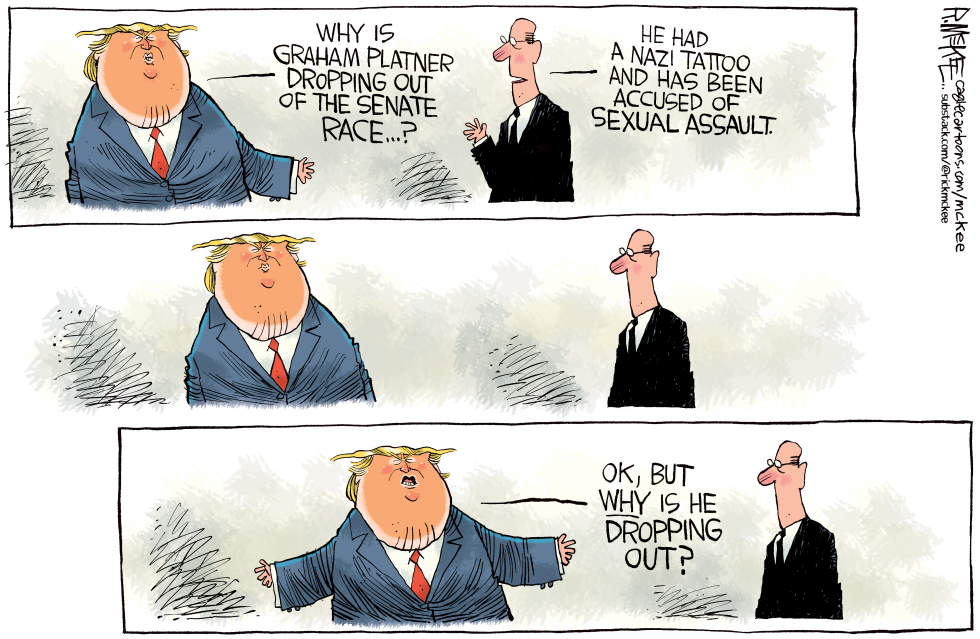
On July 10 2026 Rick McKee depicts Donald Trump questioning an aide about Graham Platner dropping out of a Senate race. The aide cites a Nazi tattoo and sexual assault accusation as reasons. Trump responds by asking again why the candidate is leaving the race. The exchange highlights the former president's focus on the withdrawal itself rather than the underlying controversies. Publication occurs during the 2026 election cycle when candidate viability and scandal impacts remain central topics in Senate contests.
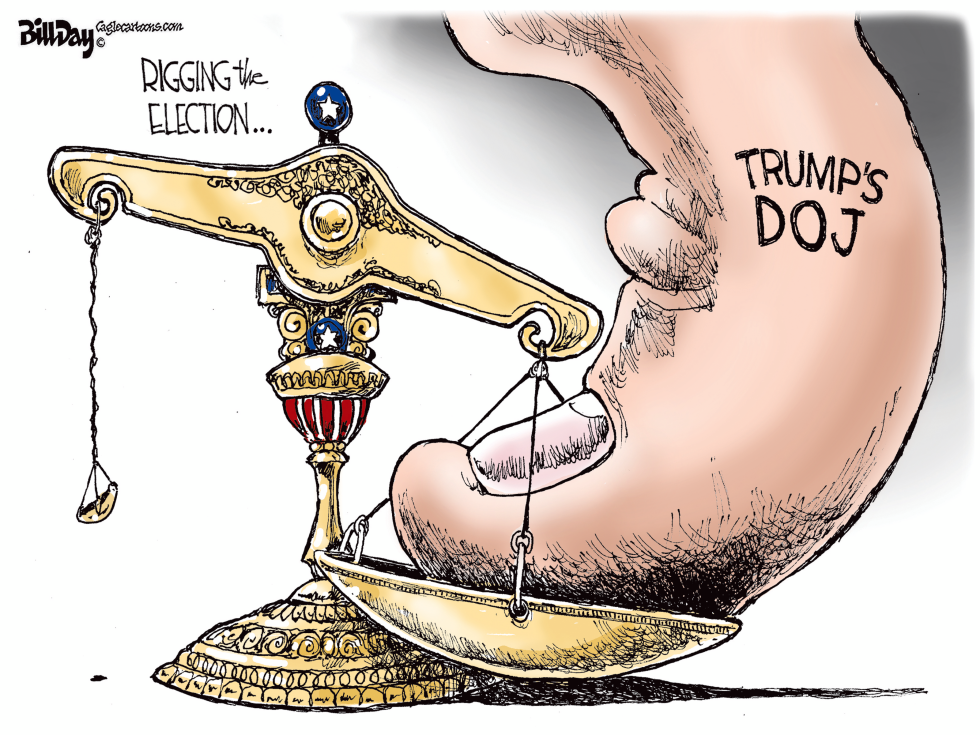
A political cartoon dated July 10, 2026, depicts an ornate scales of justice buckling under the weight of a massive figure labeled Trump's DOJ. The opposite pan hangs empty and elevated. Text above reads RIGGING the ELECTION. The image responds to ongoing concerns over Department of Justice actions and their potential impact on electoral processes during the Trump administration.