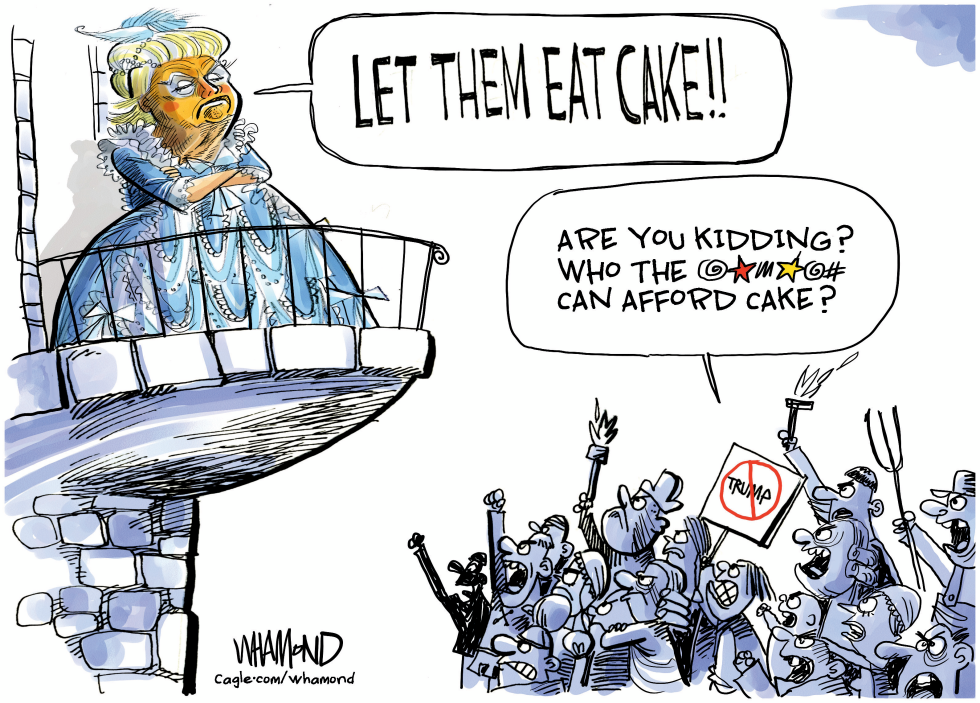
The cartoon by Dave Whamond depicts Donald Trump as Marie Antoinette on a balcony declaring 'LET THEM EAT CAKE!!' while a crowd below protests with signs and questions who can afford cake. Published on September 15, 2026, the image draws on the historical quote to comment on contemporary affordability concerns during Trump's term. The visual contrasts the elevated figure with an agitated crowd holding anti-Trump signs. It captures ongoing public discontent with rising costs. The piece uses the famous anecdote to underscore perceptions of detachment from everyday economic pressures.
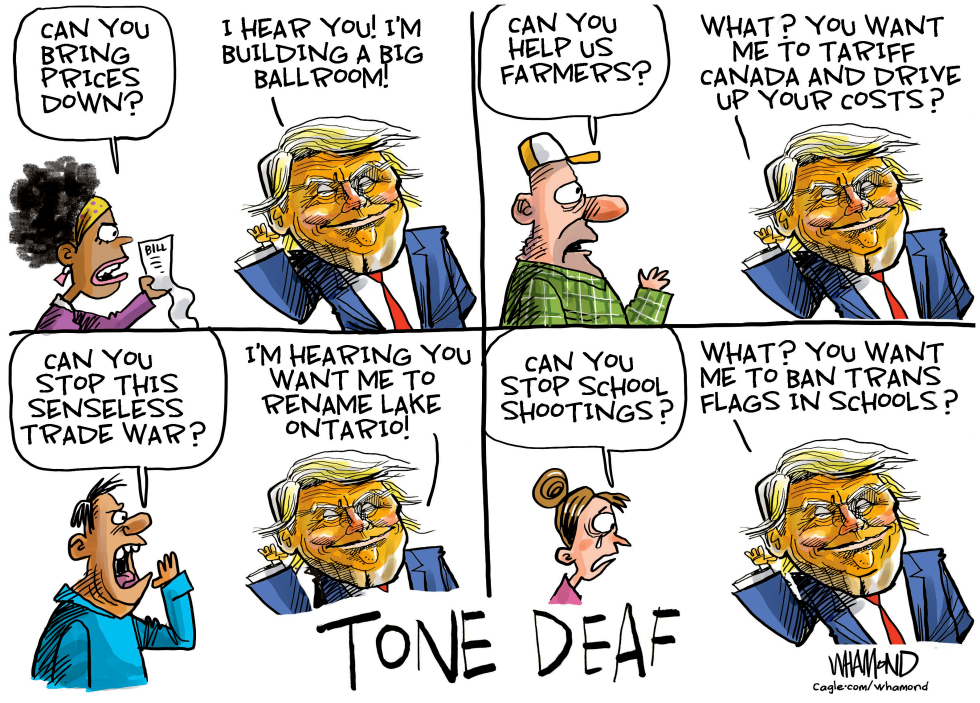
The cartoon by Dave Whamond published September 15, 2026, shows Donald Trump responding to citizen concerns about prices, tariffs on Canada, trade wars, school shootings and transgender flags by pivoting to a ballroom project and renaming Lake Ontario. The four-panel layout underscores a pattern of tone-deaf replies that ignore the original requests.
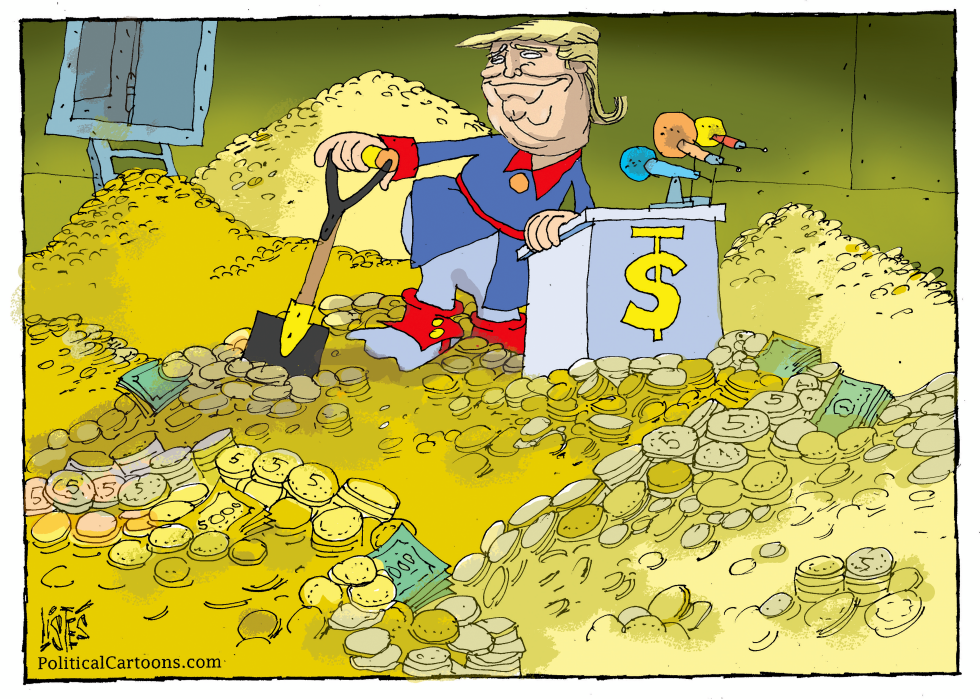
Donald Trump remains a central figure in debates over wealth and political power as of September 2026. The cartoon responds to ongoing scrutiny of how personal fortune intersects with public life and policy influence. It portrays the former president amid symbols of money to critique that dynamic. The editorial position frames Trump's association with wealth as a defining and problematic feature of his political presence.
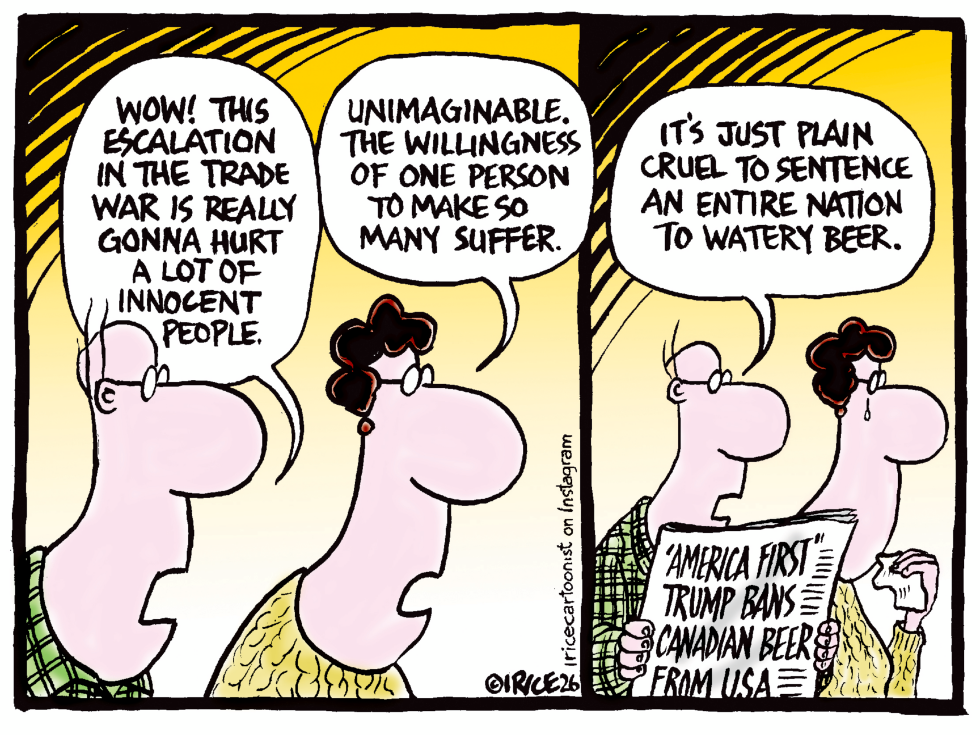
President Trump announced a ban on Canadian beer imports as part of an escalating trade dispute with Canada. The move, framed under the America First banner, immediately drew criticism for punishing ordinary citizens on both sides of the border. The policy extends earlier tariff threats into consumer goods, raising prices and limiting choices for American drinkers. Canadian exporters face sudden market loss while U.S. retailers scramble for alternatives. The editorial cartoon portrays the decision as petty and disproportionate, arguing that one leader's willingness to inflict broad pain reveals the human cost of personal political theater.
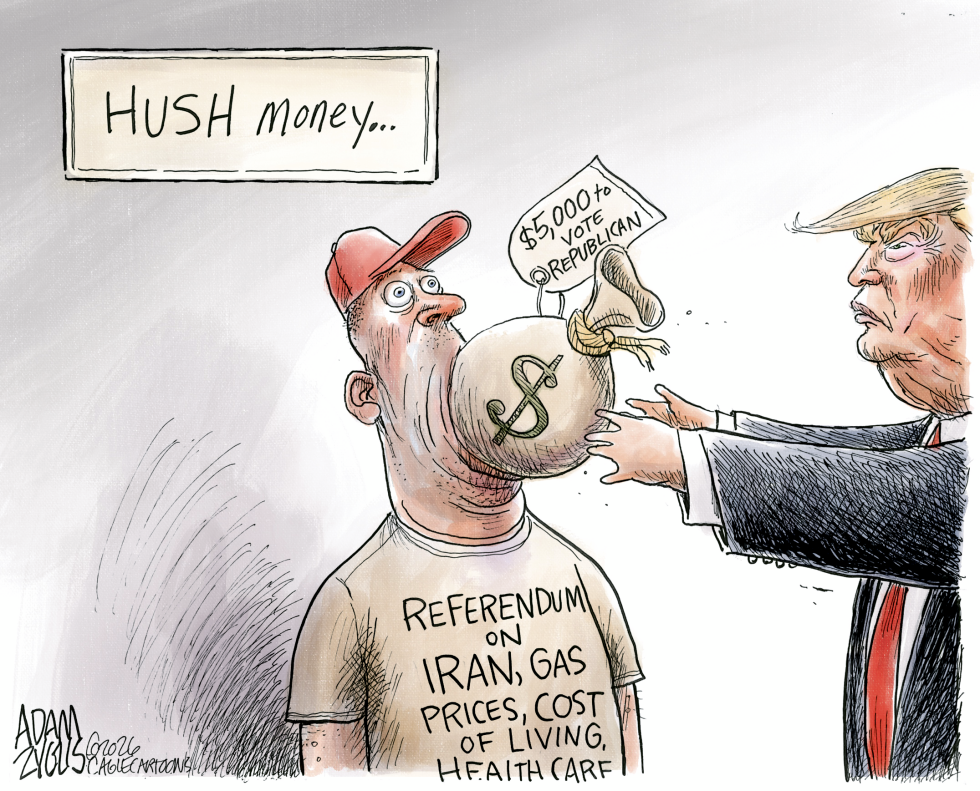
The cartoon shows Donald Trump handing a large bag of cash labeled as hush money to a man in a referendum shirt covering Iran, gas prices, cost of living and health care. A tag on the bag promises $5,000 to vote Republican. The scene responds to ongoing debates over election integrity and foreign policy issues involving Iran as of September 2026. It uses the visual metaphor of a bribe to comment on alleged attempts to influence voter priorities through financial incentives.
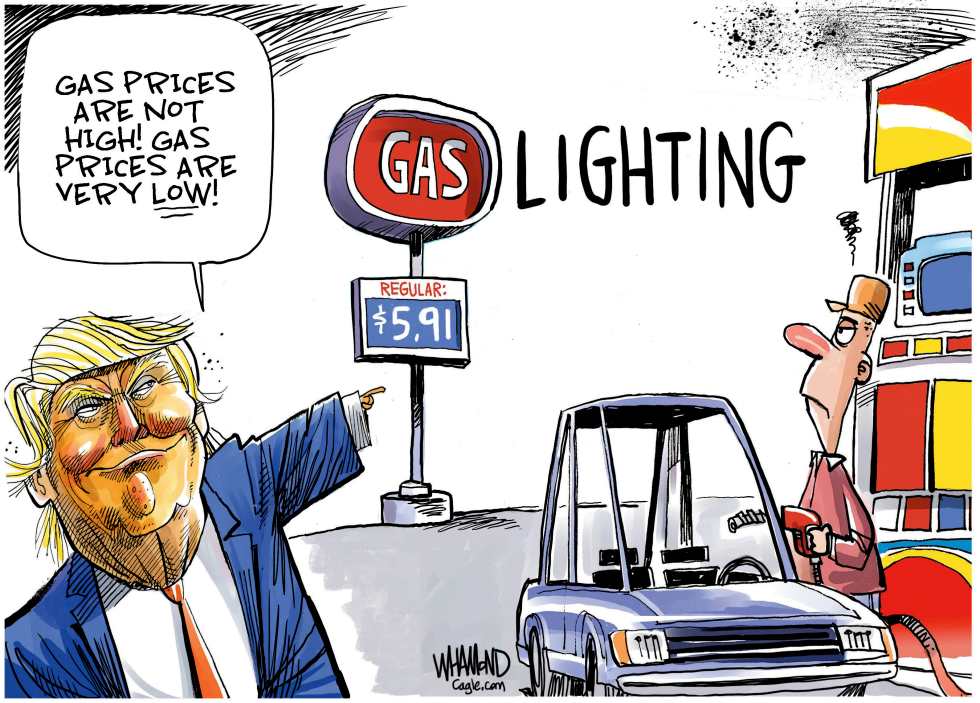
Donald Trump has repeatedly asserted that gas prices are very low even as national averages hover near record territory. The statement comes amid ongoing public frustration with energy costs that have remained elevated for months. The editorial takes the position that such denials amount to deliberate misdirection rather than engagement with economic data.
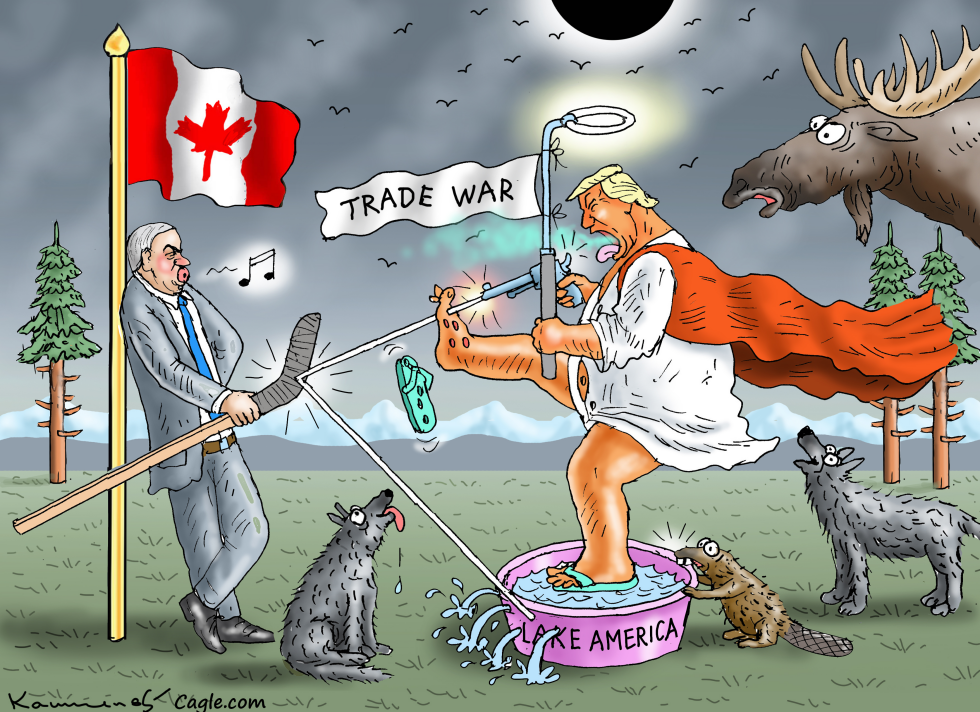
President Trump launched new tariffs on Canadian goods in early September 2026, citing trade imbalances and border issues. The move immediately prompted Canadian countermeasures including duties on US exports. The policy shift disrupts integrated supply chains in autos, energy and agriculture that support millions of jobs on both sides of the border. Markets reacted with volatility as investors weighed the costs of renewed protectionism. The cartoon portrays the tariff campaign as self-inflicted harm that leaves the US exposed to swift Canadian pushback.
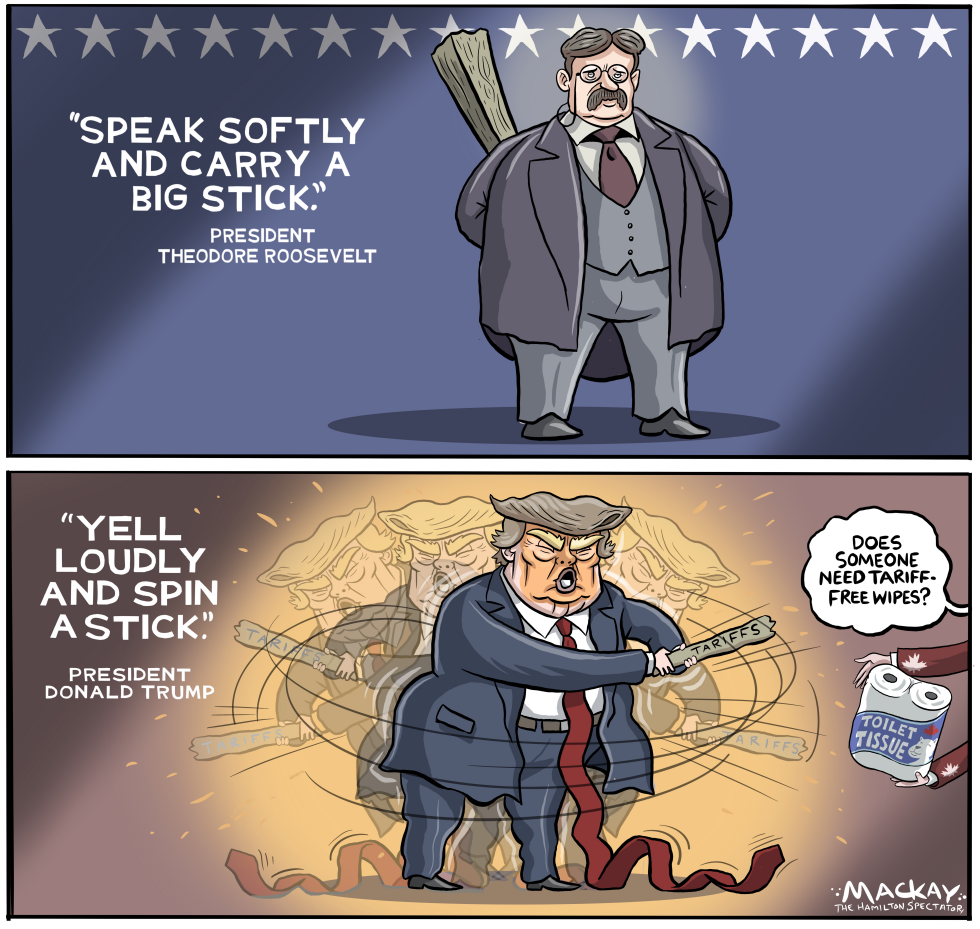
The cartoon by Graeme MacKay contrasts Theodore Roosevelt's famous speak softly and carry a big stick approach with Donald Trump's version of yelling loudly and spinning a stick covered in tariffs. In the lower panel Trump appears dizzy from the motion as a Canadian hand offers toilet tissue labeled tariff-free wipes. The image comments on recent US tariff actions and their impact on Canadian trade relations as of the September 2026 publication date.
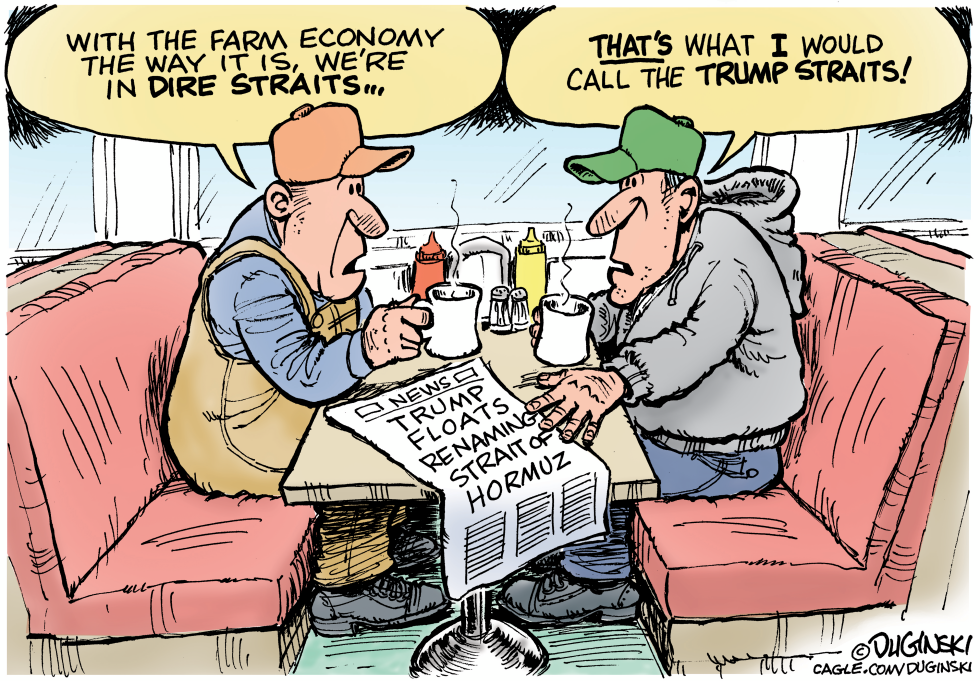
Donald Trump has floated the idea of renaming the Strait of Hormuz, a key Middle East shipping route, drawing attention to its potential effects on global trade and domestic sectors. The proposal arrives as agricultural producers face persistent economic challenges including high input costs and market volatility. The cartoon uses the pun on "dire straits" to connect the foreign policy suggestion to farm belt hardships, implying the rename distracts from or worsens real economic pressures on rural communities.
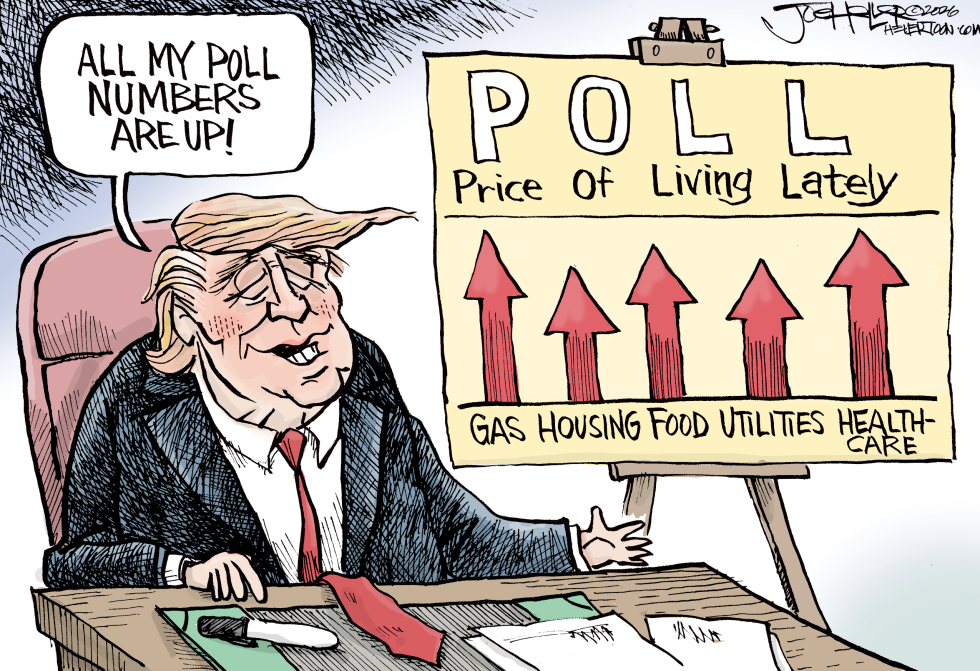
Donald Trump stated that his poll numbers were rising even as the price of living continued to climb across multiple categories. Gas, housing, food, utilities and healthcare costs all posted increases according to the visual data presented. The development matters because household expenses directly affect voter sentiment ahead of upcoming elections. Trump positioned the poll improvement as positive news despite the economic pressures shown. The piece takes the position that any reported poll gains are closely tracking the same upward pressure on everyday costs rather than reflecting broader approval.
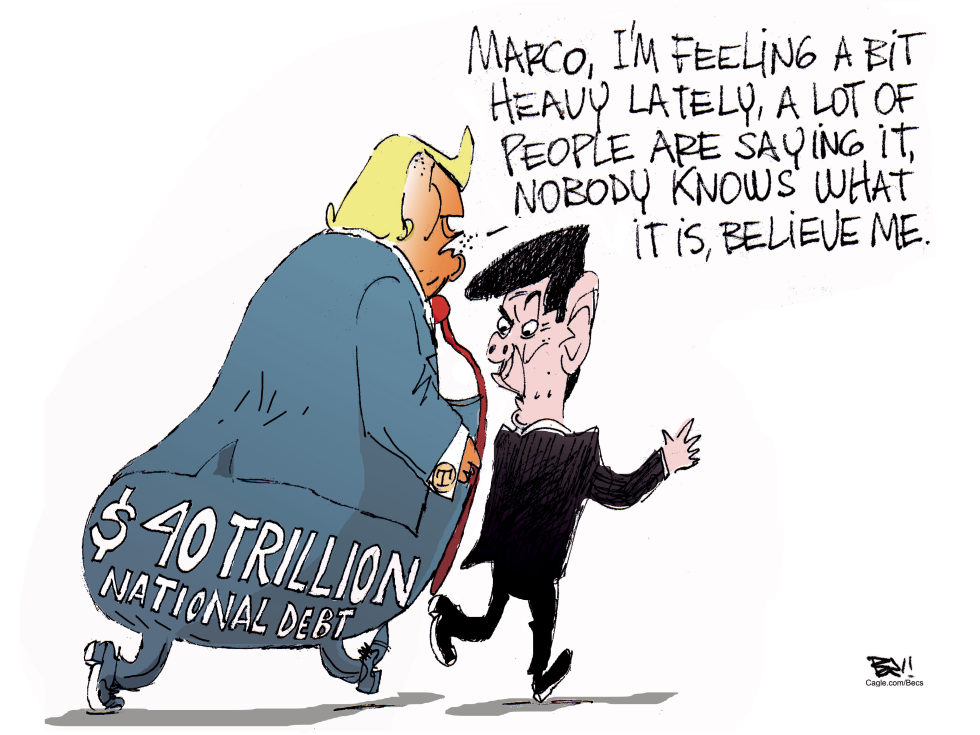
President Trump discussed the national debt with Senator Marco Rubio in early September 2026. The conversation highlighted the $40 trillion figure and public confusion over its scale. The exchange occurs as the administration manages spending priorities and deficit growth. The piece portrays the debt as a personal load that Trump seeks to downplay by blaming external views rather than policy choices.
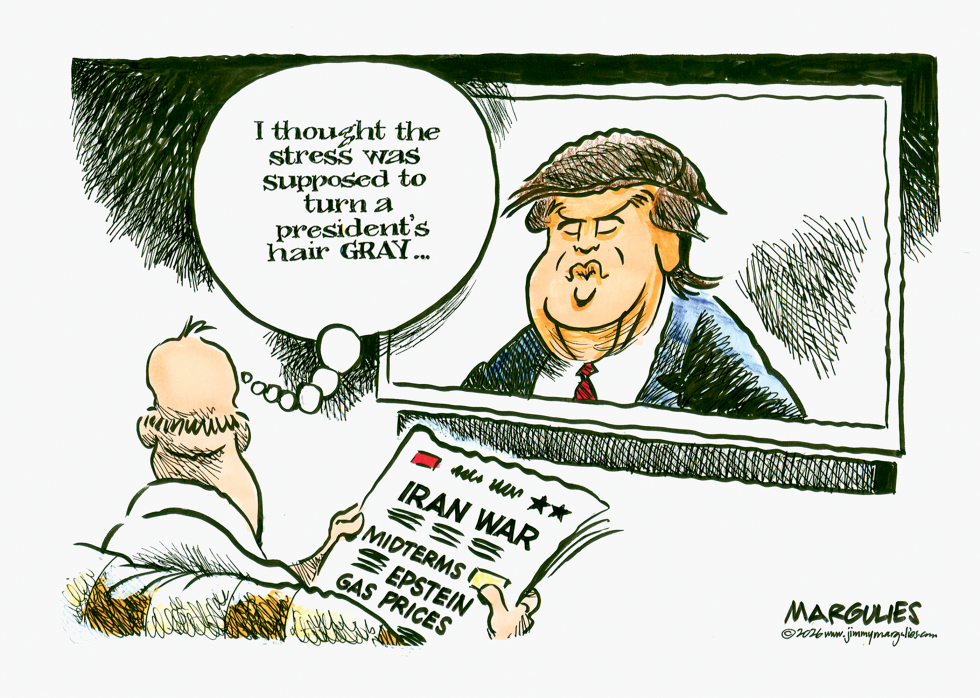
President Donald Trump confronts an Iran war, midterm election pressures, Epstein-related revelations and rising gas prices in September 2026. These overlapping challenges test the administration's capacity to manage foreign conflict and domestic economic strain simultaneously. The cartoon argues that the expected physical toll of such stress on the president has not materialized in the anticipated way.
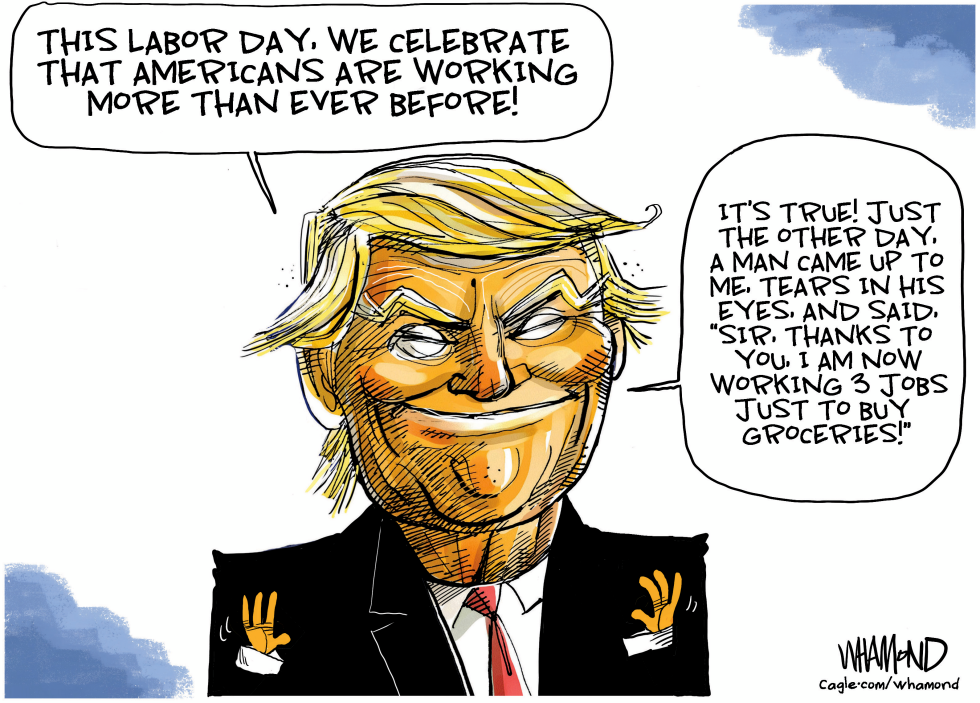
On Labor Day 2026, President Trump highlighted what he described as record employment levels in a public address. He pointed to Americans taking on more work as evidence of economic strength. The remarks come amid ongoing public concern over household costs and wage pressures. Critics argue the comments underscore the gap between official job numbers and the lived experience of workers needing multiple positions to cover basic expenses. The cartoon presents the remarks as tone-deaf to economic strain.
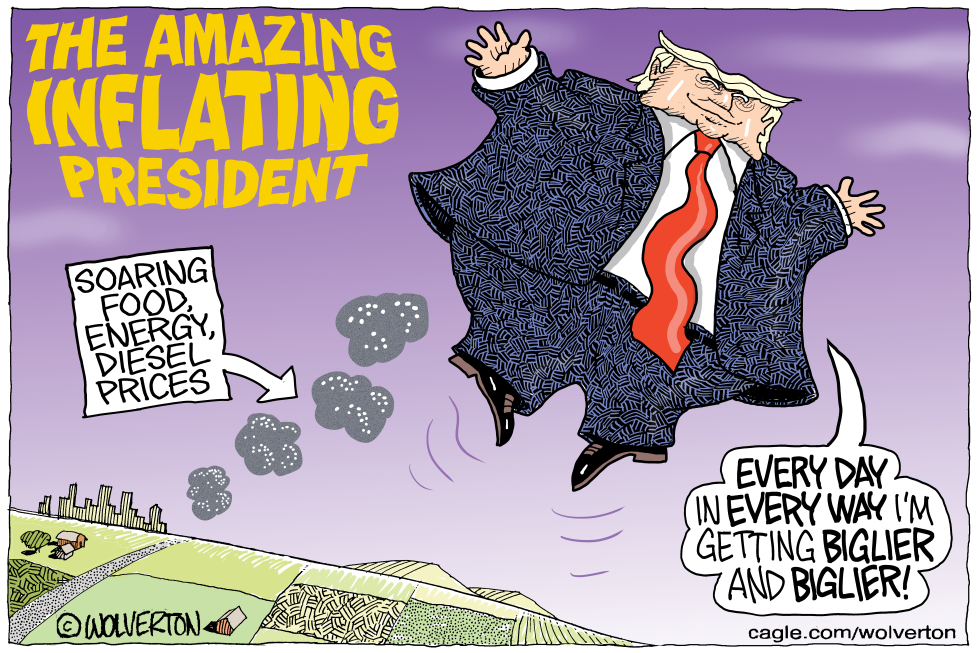
The cartoon depicts Donald Trump as an inflating balloon figure rising above a rural scene with a city skyline. A sign points to gray clouds labeled soaring food energy and diesel prices. Trump declares in a speech bubble that he is getting biglier every day. Published on September 4 2026 the work responds to ongoing concerns over inflation and household costs during the Trump presidency. The visual metaphor connects the president's public presence to the expansion of prices across key sectors.
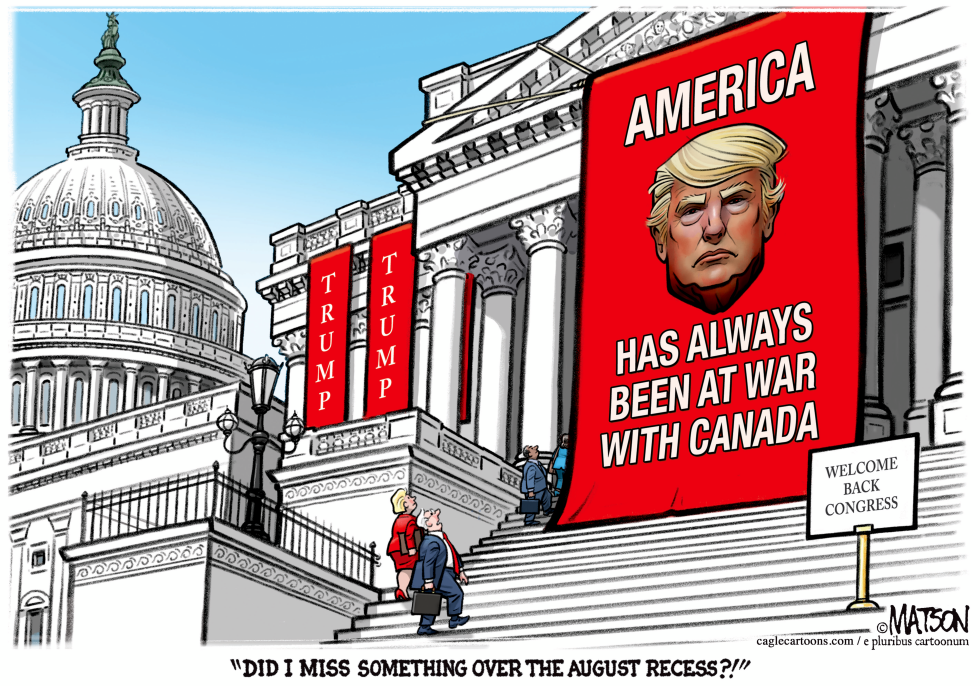
President Trump has intensified trade measures against Canada, prompting comparisons to classic dystopian rhetoric as lawmakers reconvene after the August recess. The move revives long-standing bilateral tensions over tariffs and economic policy. The cartoon frames the development as an attempt to normalize conflict through repeated messaging, underscoring concerns that familiar disputes are being recast as perpetual struggle.