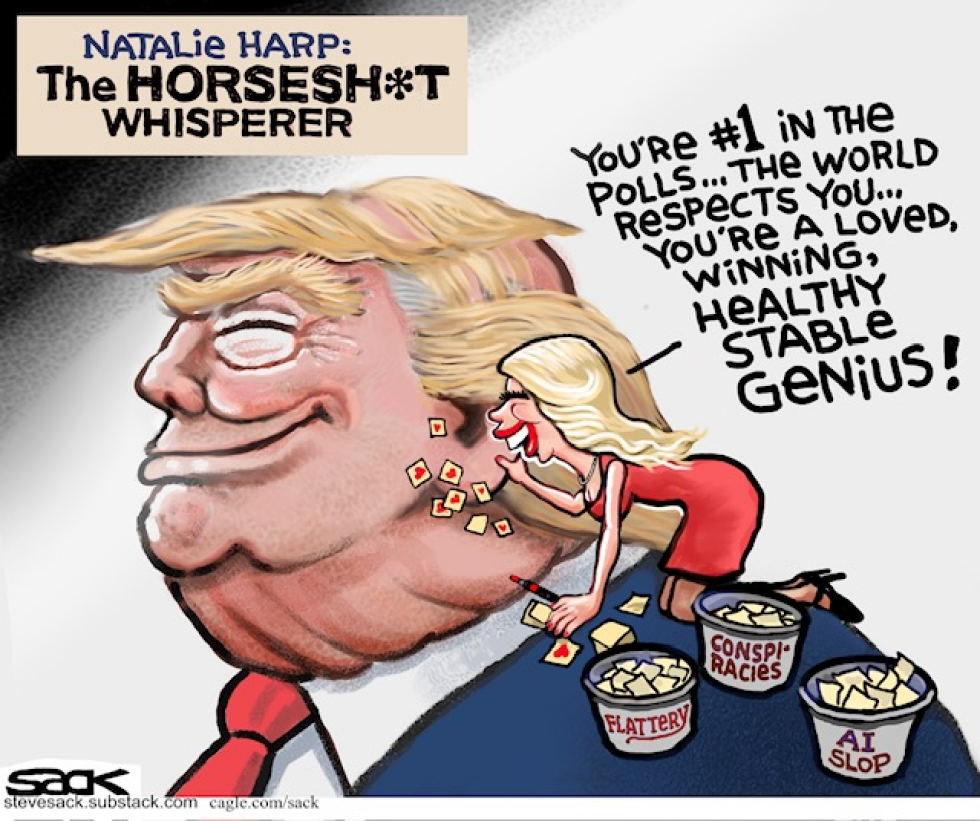
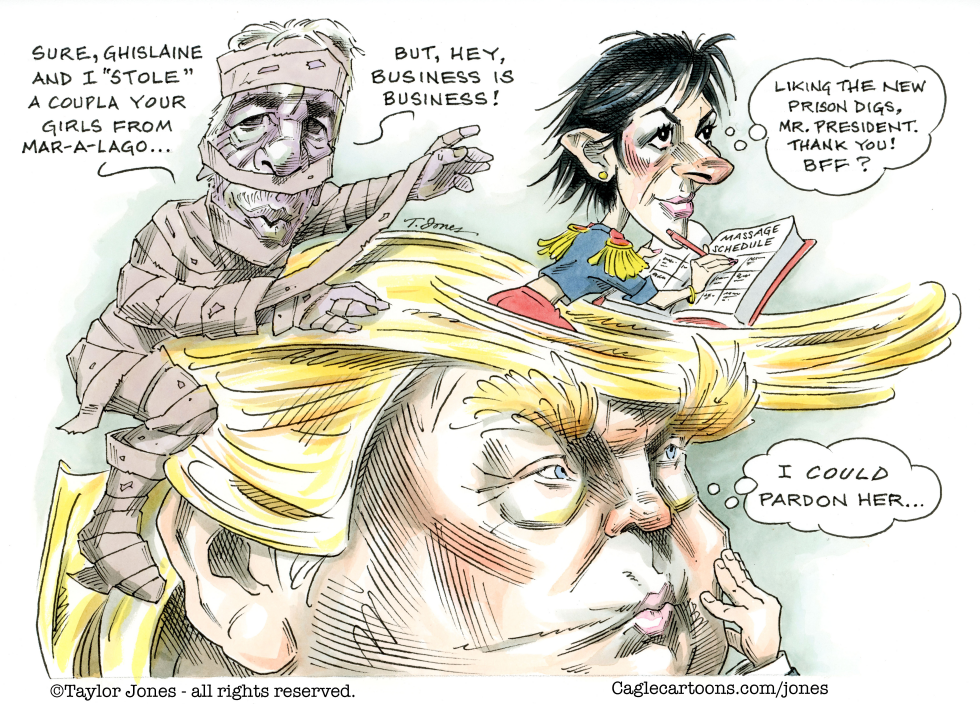
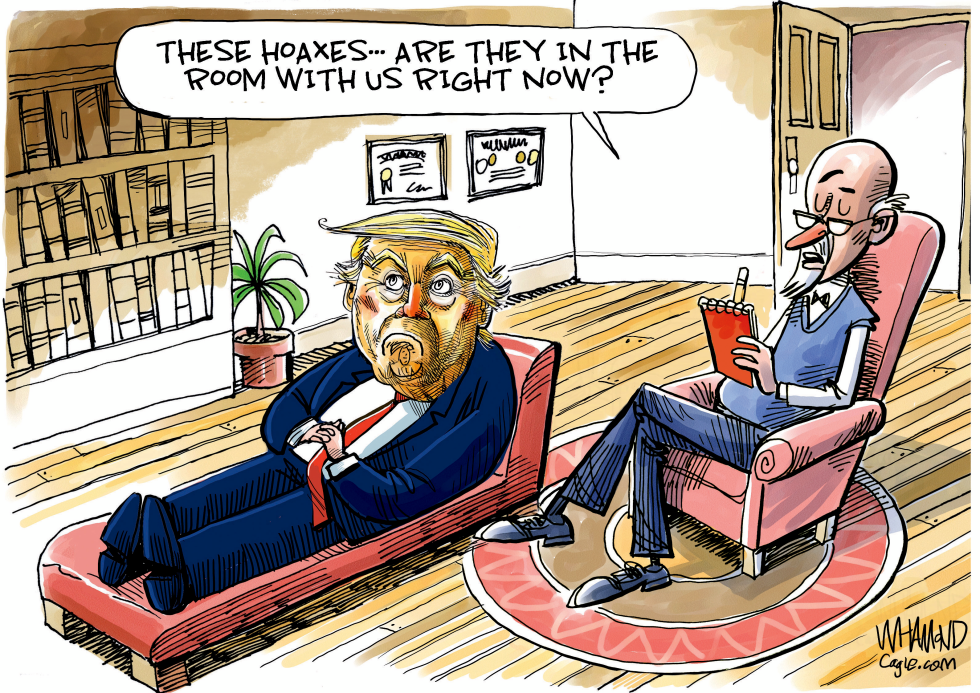
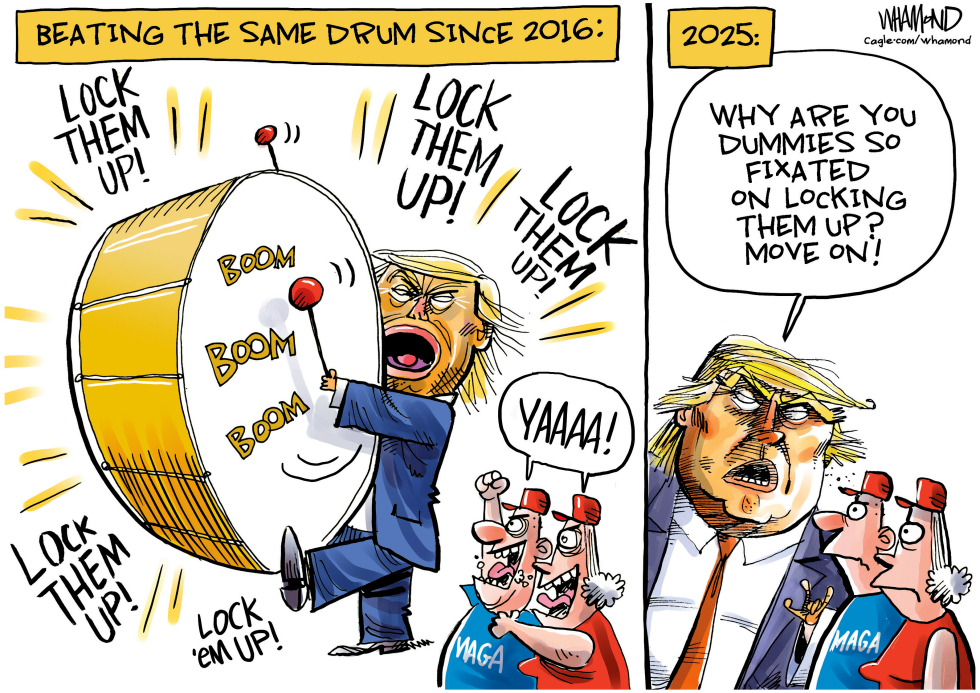
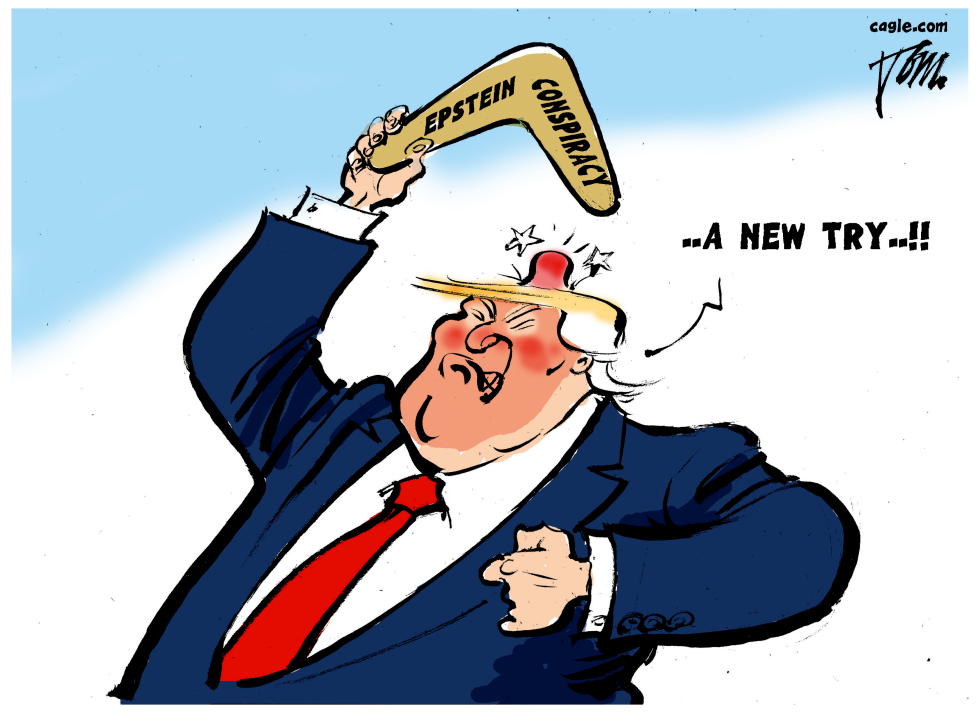
Natalie Harp, a close aide to Donald Trump, has been noted for delivering curated positive updates and affirmations to the former president during his political activities. This ongoing dynamic occurs as Trump navigates public perception challenges and internal circles that mix traditional flattery with newer elements like AI-generated content and conspiracy discussions. The approach matters because it shapes how information reaches a key political figure ahead of future electoral considerations. The piece presents this interaction as an echo chamber reinforced by selective inputs rather than broader scrutiny.
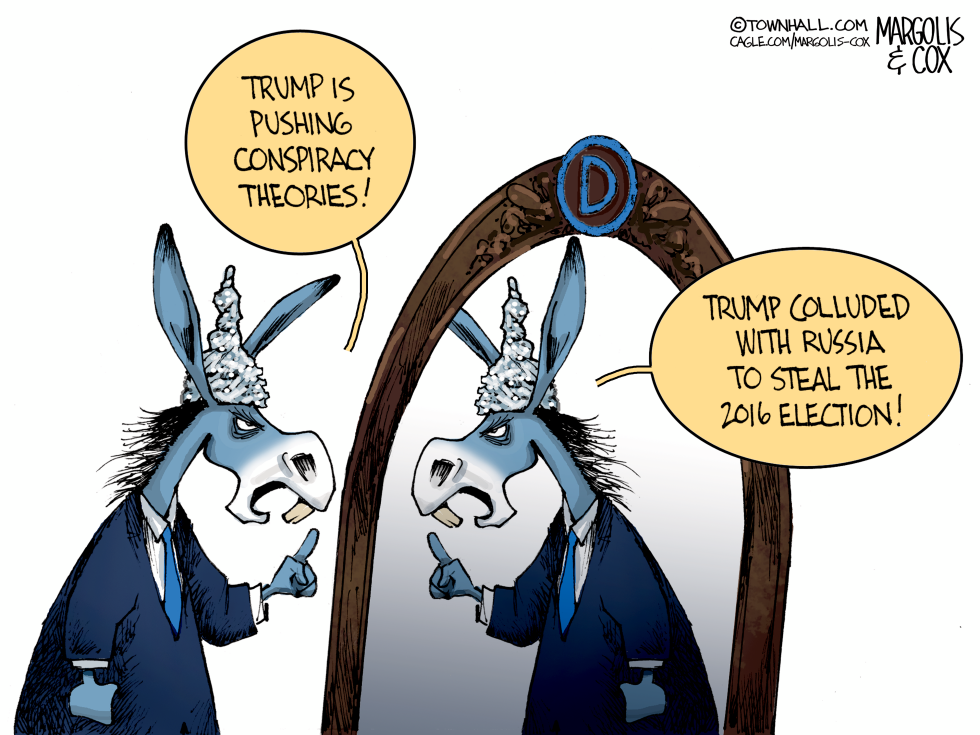
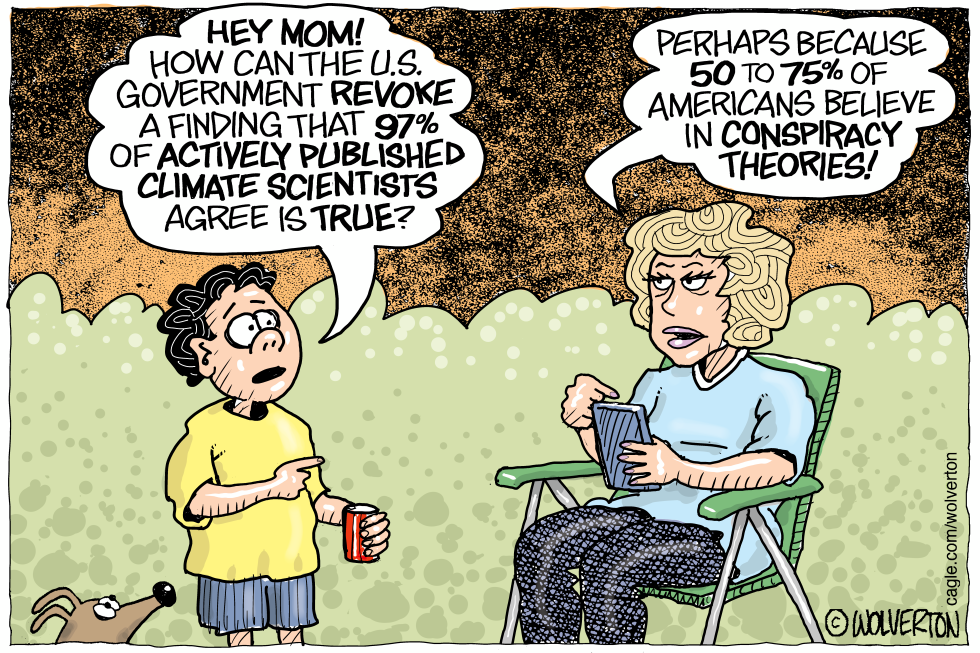
Democrats continue to promote the Russia collusion narrative against Trump even as they criticize him for advancing conspiracy theories. The piece argues this stance reveals inconsistency in how the party treats unproven claims depending on the target.
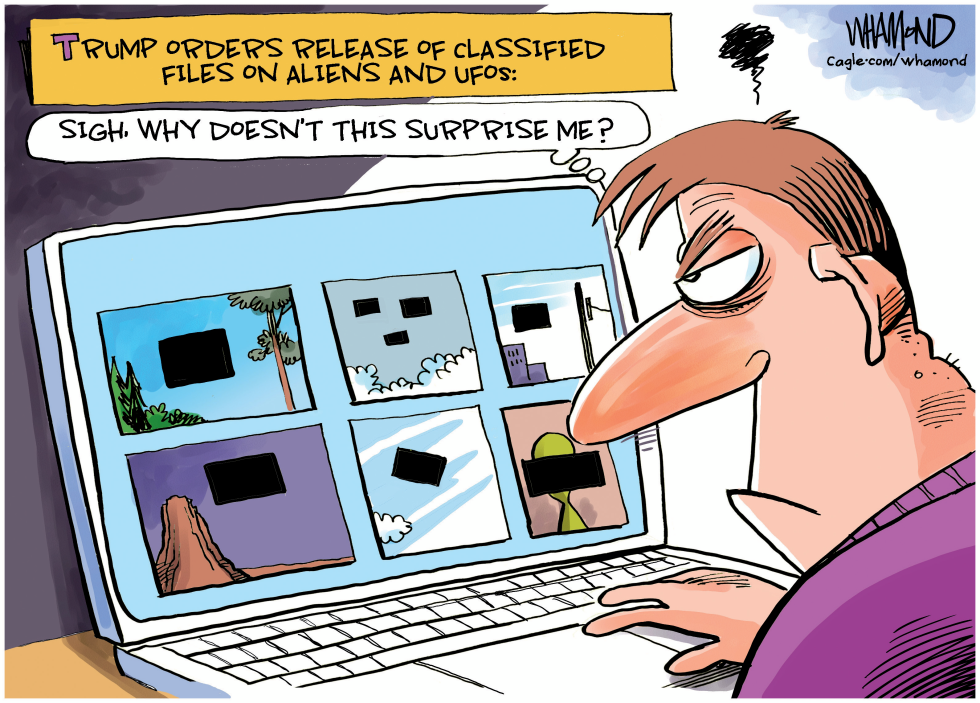
Dave Whamond draws a scene where a man views a laptop displaying Trump-ordered release of classified files on aliens and UFOs, all heavily redacted with black bars. The headline announces the declassification, but the images reveal nothing, from blurred landscapes to censored figures. The man sighs, saying it doesn't surprise him, highlighting themes of distractions and conspiracies. Tags like classified information, extraterrestrial life, UAP, flying saucers, CIA archives, and evidence of ET underscore the satire on empty revelations. The cartoon captures skepticism toward political maneuvers involving secret files.
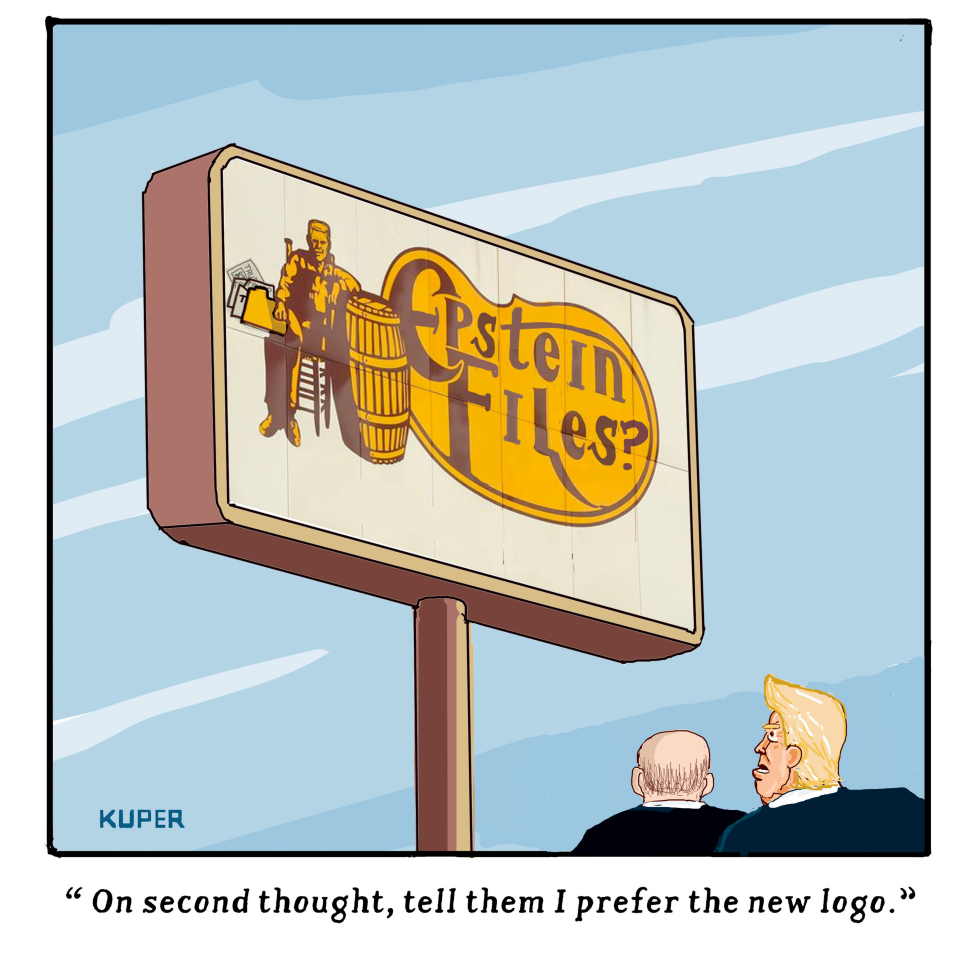
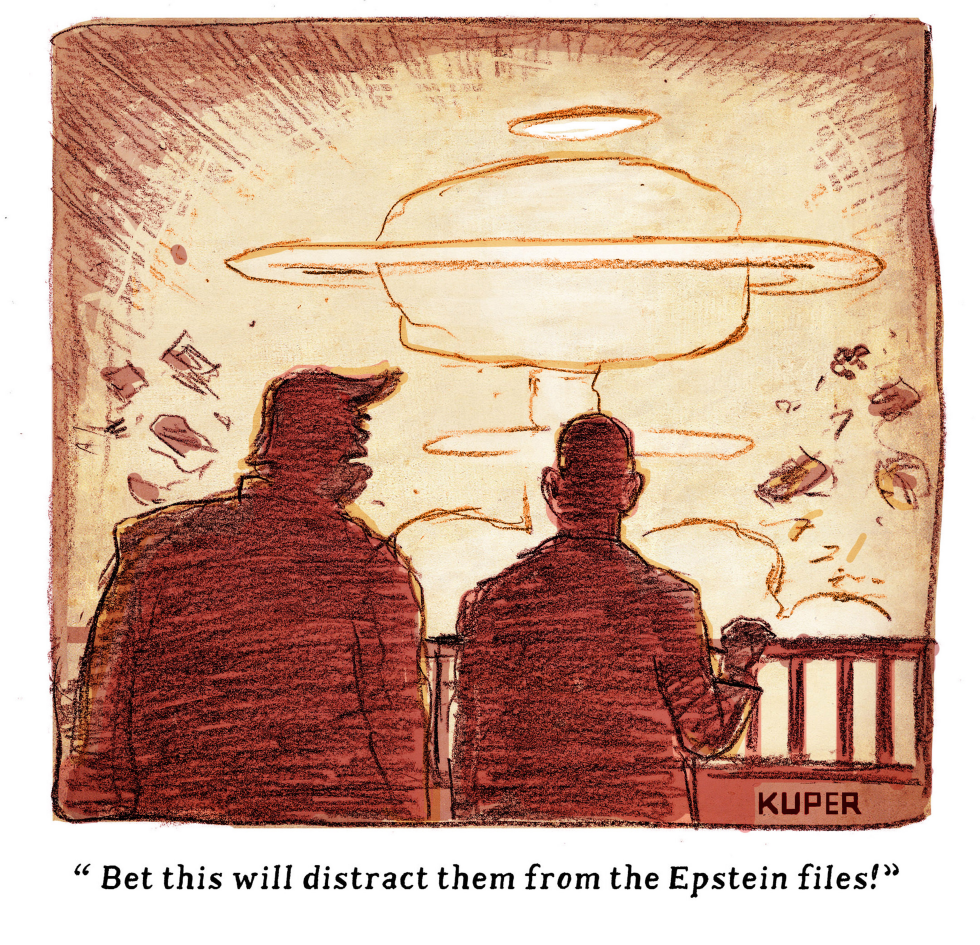
A political cartoon dated July 17, 2025, depicts two men viewed from behind gazing at a large UFO hovering in the sky. Scattered debris floats around the scene. One figure remarks that the object will distract supporters from the Epstein files. The image references ongoing discussions about the release of documents connected to Jeffrey Epstein, the FBI, and figures in the Trump administration including Pam Bondi and Kash Patel. The cartoon highlights tensions over information disclosure and public attention.