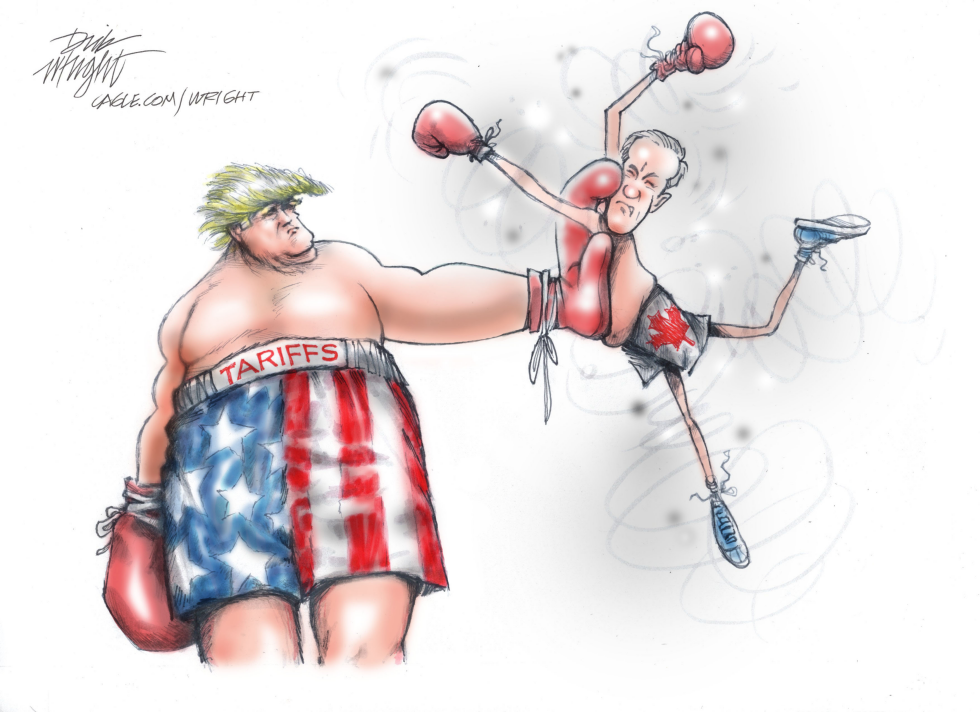
President Trump launched new tariffs on Canadian goods in early September 2026, citing trade imbalances and border issues. The move immediately prompted Canadian countermeasures including duties on US exports. The policy shift disrupts integrated supply chains in autos, energy and agriculture that support millions of jobs on both sides of the border. Markets reacted with volatility as investors weighed the costs of renewed protectionism. The cartoon portrays the tariff campaign as self-inflicted harm that leaves the US exposed to swift Canadian pushback.
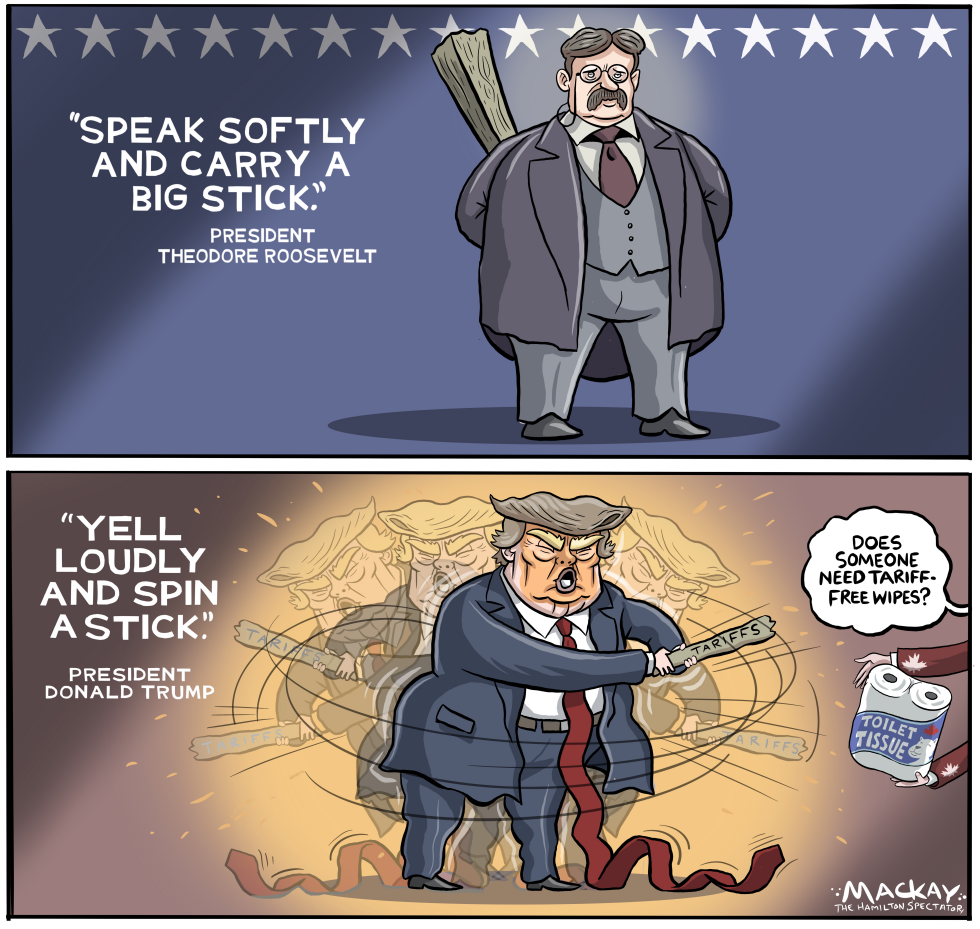
The cartoon by Graeme MacKay contrasts Theodore Roosevelt's famous speak softly and carry a big stick approach with Donald Trump's version of yelling loudly and spinning a stick covered in tariffs. In the lower panel Trump appears dizzy from the motion as a Canadian hand offers toilet tissue labeled tariff-free wipes. The image comments on recent US tariff actions and their impact on Canadian trade relations as of the September 2026 publication date.
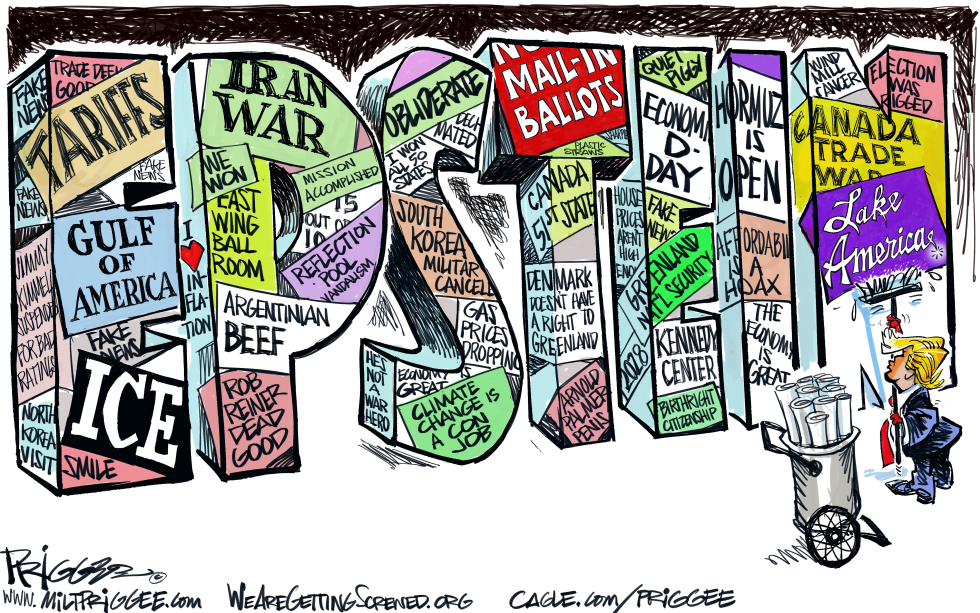
Donald Trump appears in a September 2026 cartoon pushing a cart stacked with signs promoting tariffs, questioning mail-in ballots, and asserting claims about Iran, Canada trade, and domestic issues. The image captures a pattern of public messaging that blends economic nationalism with repeated challenges to established processes. The editorial position frames these statements as a deliberate strategy to keep multiple controversies in motion at once.
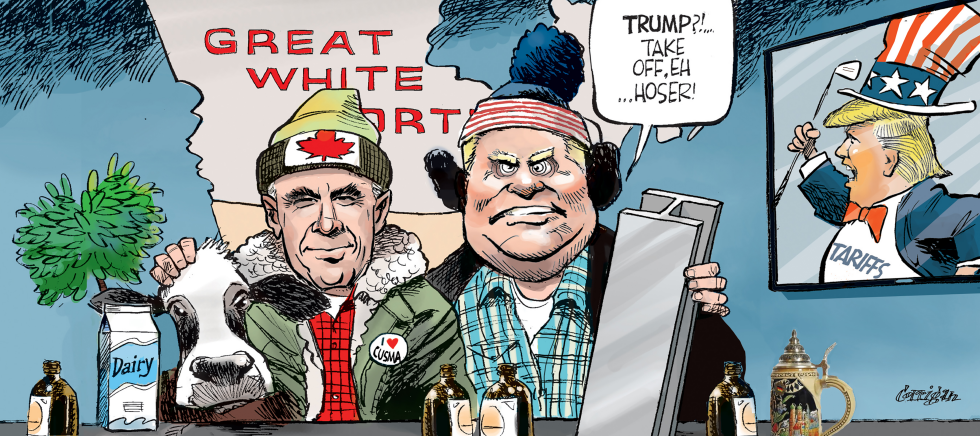
President Trump renewed tariff threats against Canada focused on dairy imports in late August 2026. Canadian leaders responded by highlighting domestic protections and cultural stakes. The move risks straining long-standing trade ties under existing agreements. The cartoon frames the confrontation as a direct challenge to Canadian sovereignty in agriculture. It portrays US policy as aggressive posturing that ignores mutual economic interests.
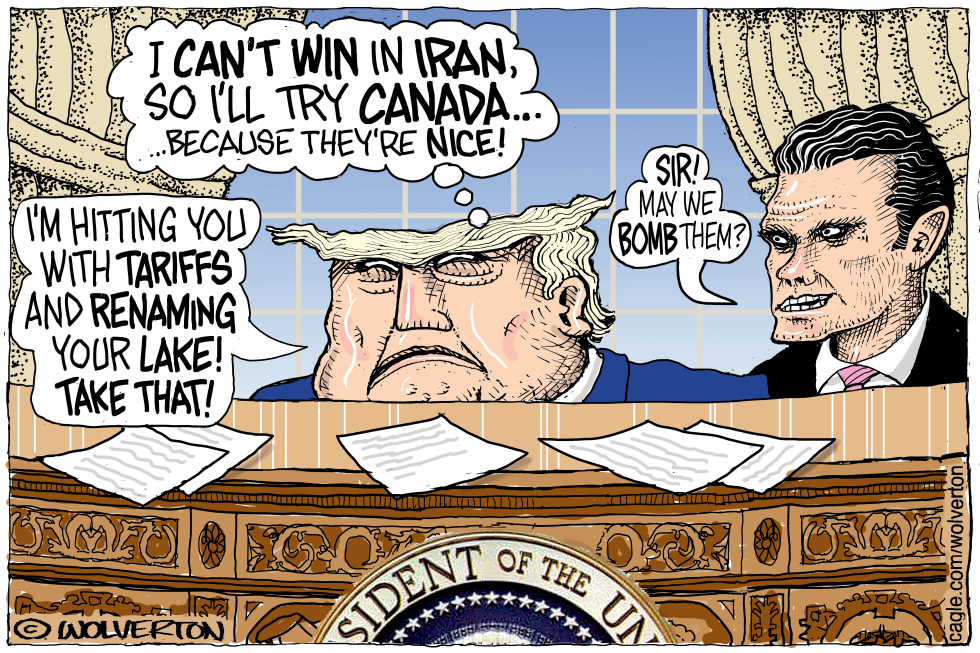
In the cartoon, President Trump appears frustrated at his desk, declaring tariffs and a lake renaming against Canada after setbacks in Iran. His advisor interjects with a suggestion to bomb the northern neighbor. The scene plays on recent trade tensions and foreign policy frustrations as of late August 2026. The visual uses speech and thought bubbles to highlight the shift in targets from a difficult adversary to a more cooperative one. This reflects ongoing debates over tariffs as leverage in international relations.
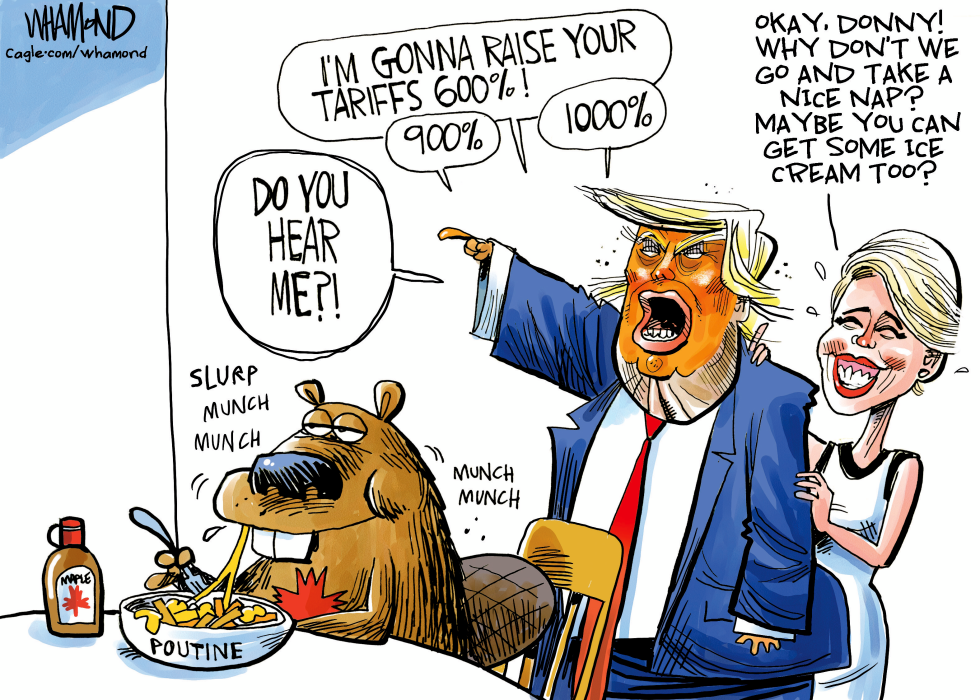
Donald Trump has renewed threats to impose tariffs as high as 1000 percent on Canadian goods. The move targets longstanding trade partners and risks disrupting supply chains for autos, lumber and agriculture. Canada has responded with calls for calm negotiations rather than retaliation. The escalation comes as both nations seek to stabilize economic ties ahead of potential policy shifts. The cartoon portrays the threats as an overreaction best met with indifference and redirection rather than escalation.
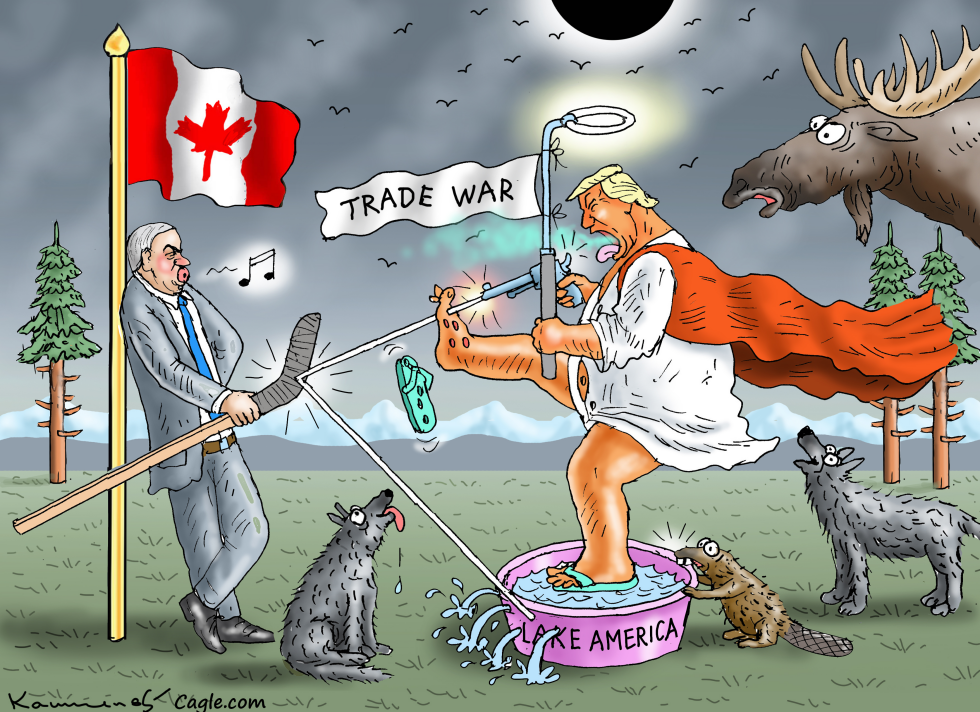
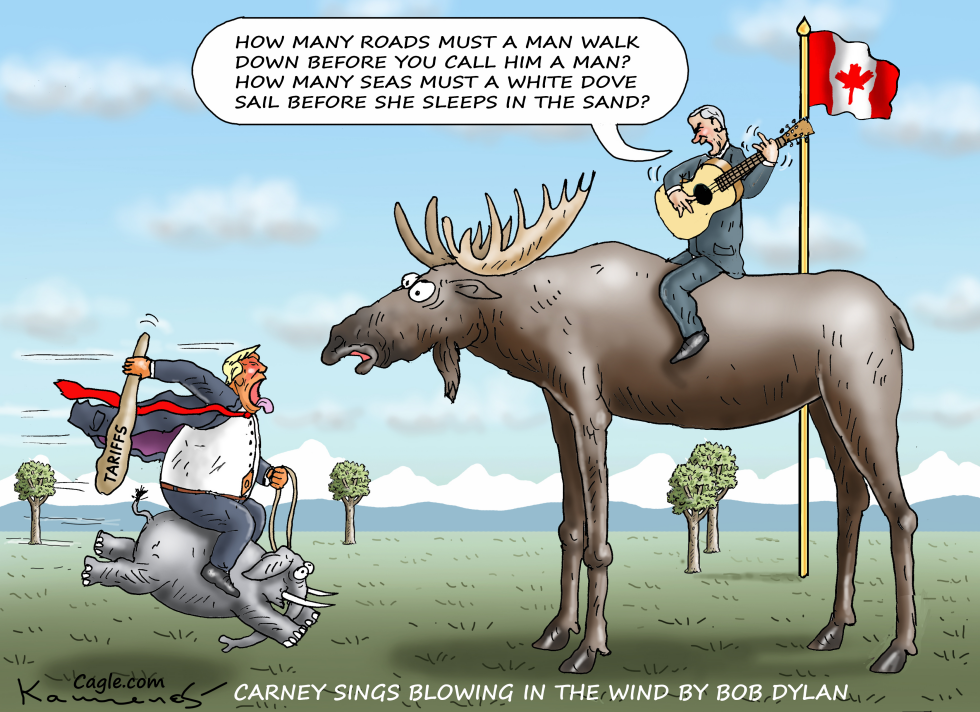
On August 27 2026 President Trump escalated tariffs against Canadian goods in a bid to pressure Ottawa on trade terms. The move drew immediate pushback from Canadian officials including Mark Carney who framed resistance through cultural references to enduring protest songs. The action risks higher consumer costs and strained bilateral relations at a time when supply chains remain fragile. The cartoon portrays the tariff push as a futile assault on Canadian resolve symbolized by the steadfast moose and the defiant singer.
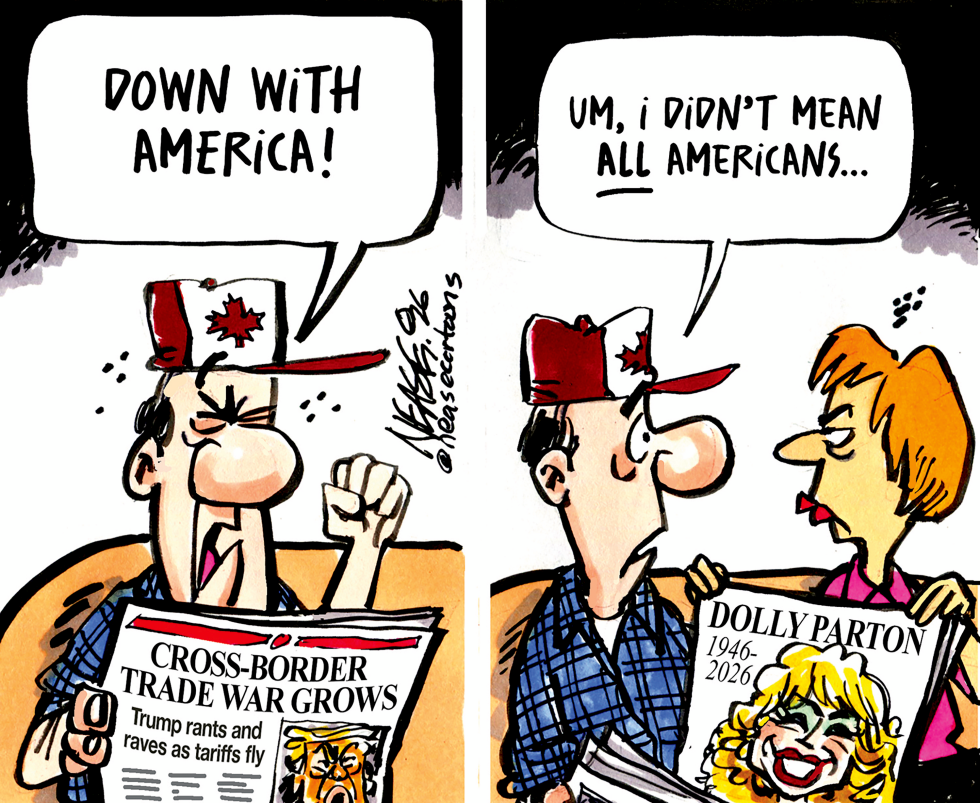
US-Canada trade tensions intensified in August 2026 as tariffs mounted amid heated rhetoric from President Trump. The dispute drew sharp reactions north of the border. The cartoon takes the position that even vocal critics of America make exceptions for beloved figures like Dolly Parton.
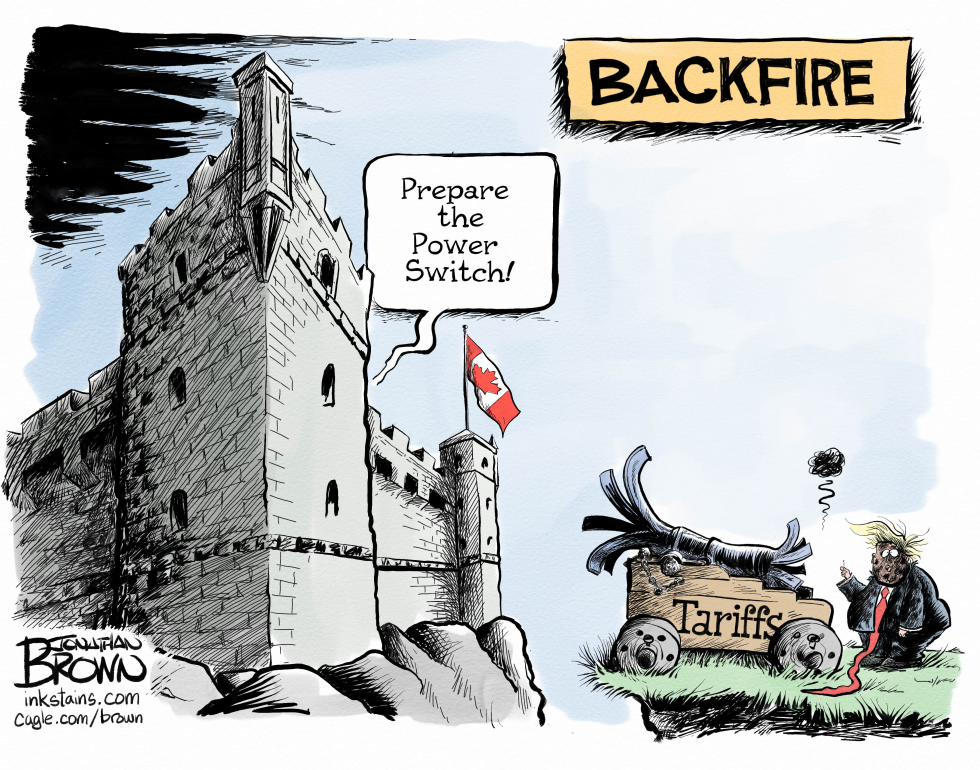
The cartoon shows a Canadian castle flying its flag while a cannon labeled Tariffs explodes backward toward a figure resembling Donald Trump. The scene responds to ongoing trade tensions where U.S. tariffs on Canadian goods prompted retaliatory measures. The visual emphasizes the policy rebounding on its originator rather than achieving intended pressure.
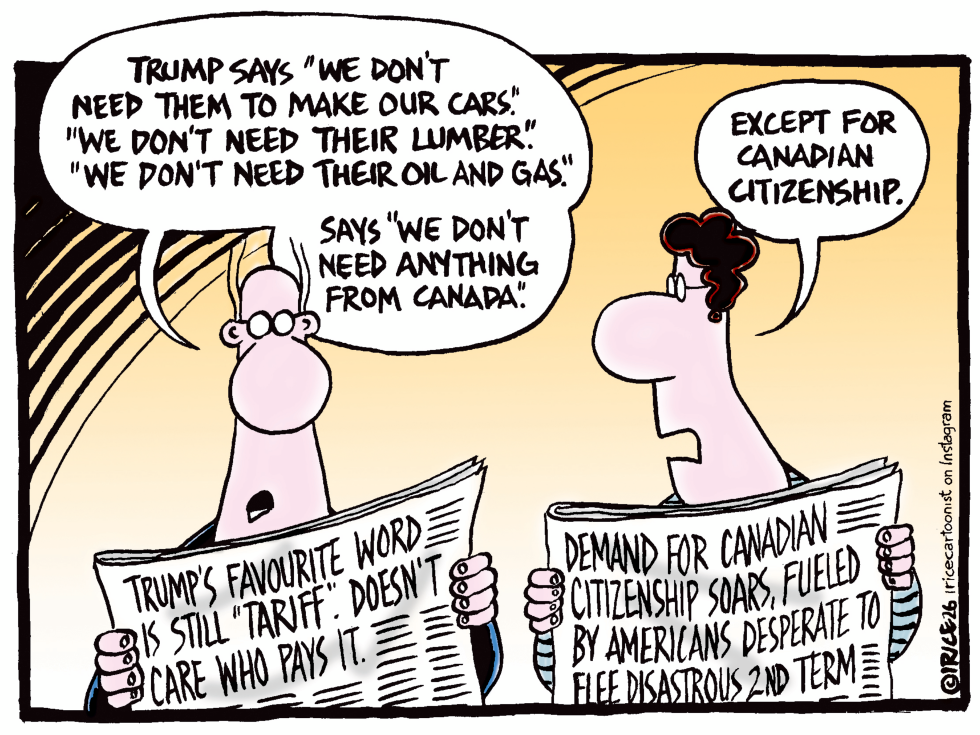
Trump's renewed tariffs on Canadian cars, lumber, oil and gas have triggered a sharp rise in applications for Canadian citizenship from Americans wary of his second term. The move underscores ongoing US-Canada trade friction and domestic policy backlash. The cartoon frames the policy as self-defeating, highlighting the irony of Canadians becoming the one Canadian product still in demand.
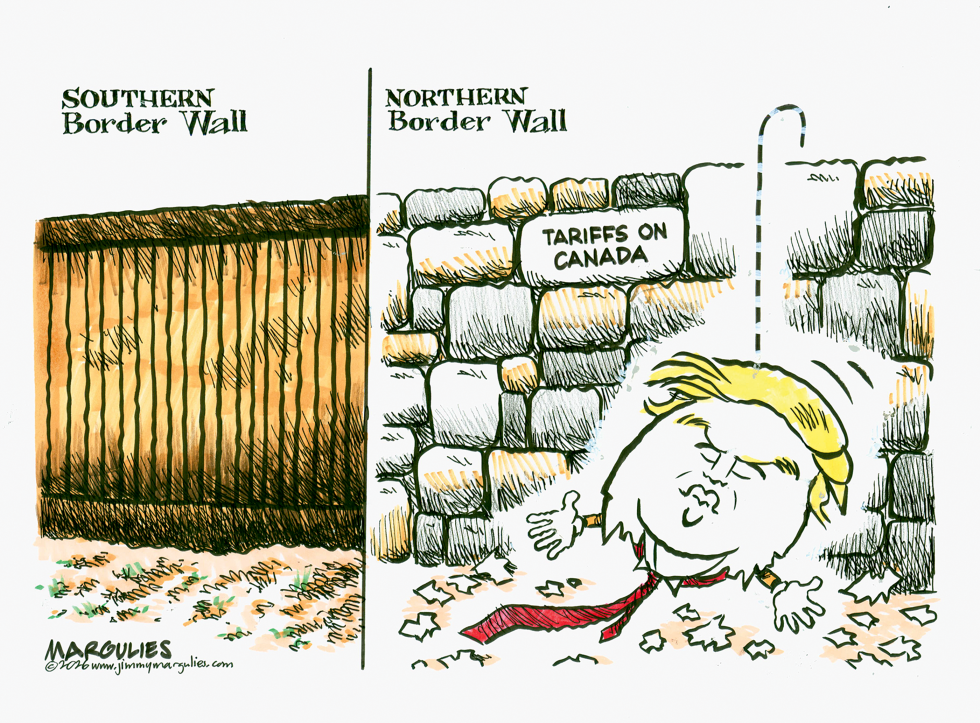
Tariffs targeting Canada have produced immediate political fallout for the administration. The move has drawn attention to trade tensions along the northern border and raised questions about the effectiveness of the policy. The piece portrays the tariffs as directly undermining the president's position.
President Trump imposed new tariffs targeting Canadian goods in August 2026, escalating bilateral trade friction over lumber, dairy and autos. The measures aim to protect U.S. industries and renegotiate terms. Markets reacted with volatility in both countries. The editorial argues the tariffs represent necessary leverage that weakens Canada's position and forces concessions.
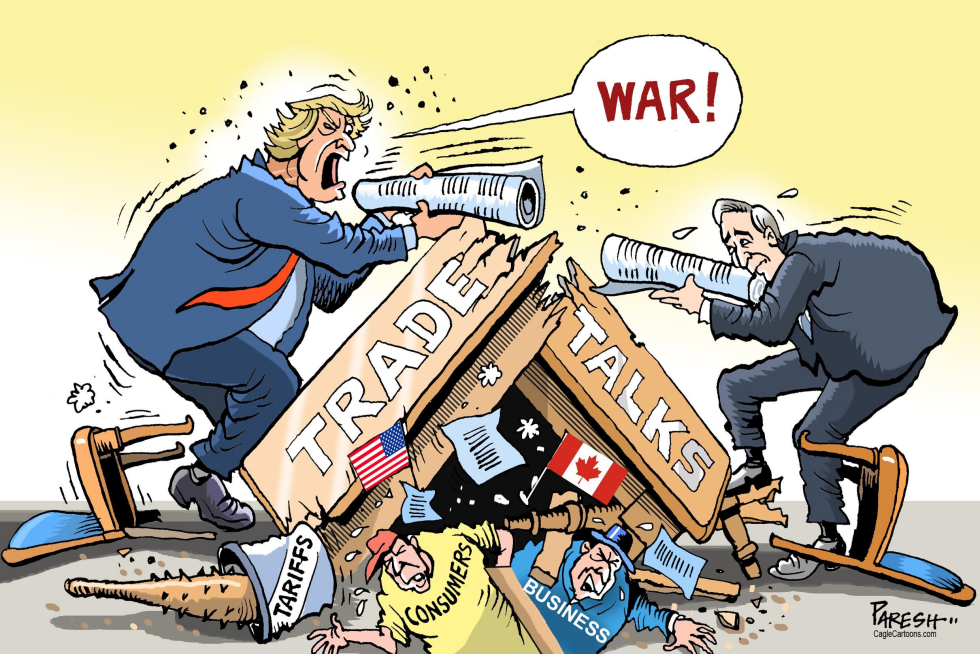
The cartoon depicts former President Donald Trump and a Canadian counterpart locked in combat, wielding rolled documents labeled tariffs and talks that smash apart a table marked trade talks. American and Canadian flags lie amid the debris while two figures representing consumers and business lie pinned underneath. Trump shouts war from a speech bubble. The image responds to ongoing US-Canada trade tensions by illustrating how aggressive tariff measures and failed negotiations harm everyday economic interests on both sides of the border.
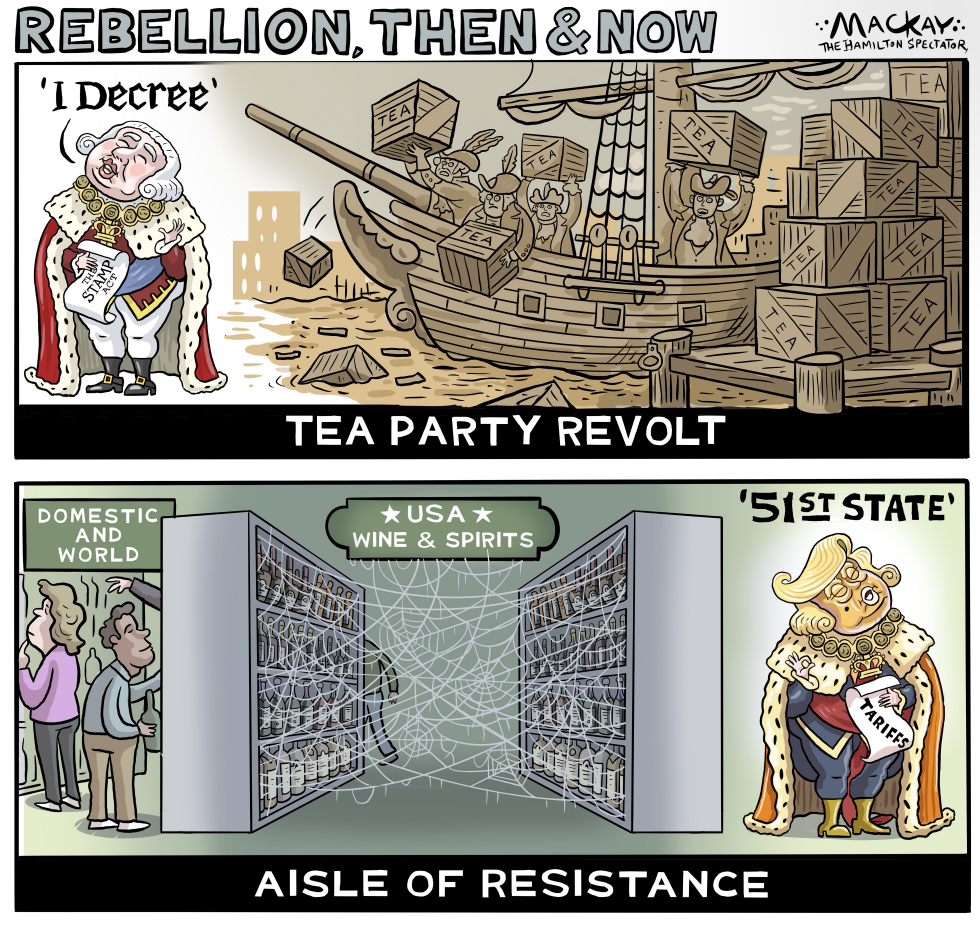
President Trump renewed tariff threats against Canada while floating the idea of the country becoming the 51st state. Canadian consumers responded with a boycott of American wine and spirits, leaving store shelves empty. The cartoon draws a parallel to the Boston Tea Party, casting the tariff policy as a modern decree provoking resistance.
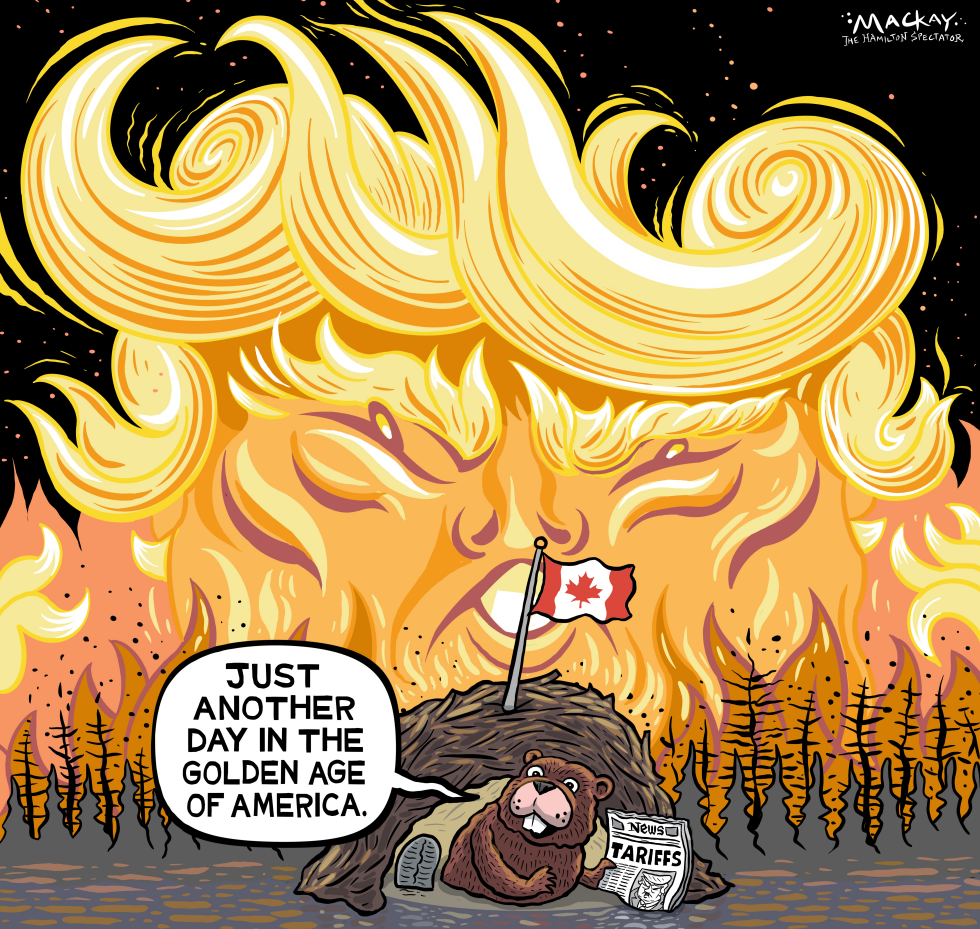
President Trump escalated tariff threats against Canada in mid-August 2026, targeting key exports and prompting Ottawa to brace for economic pressure. The move reignites bilateral trade tensions that have simmered since earlier rounds of duties. The cartoon portrays Canada hunkering down while dismissing the disruption as routine under the current administration.