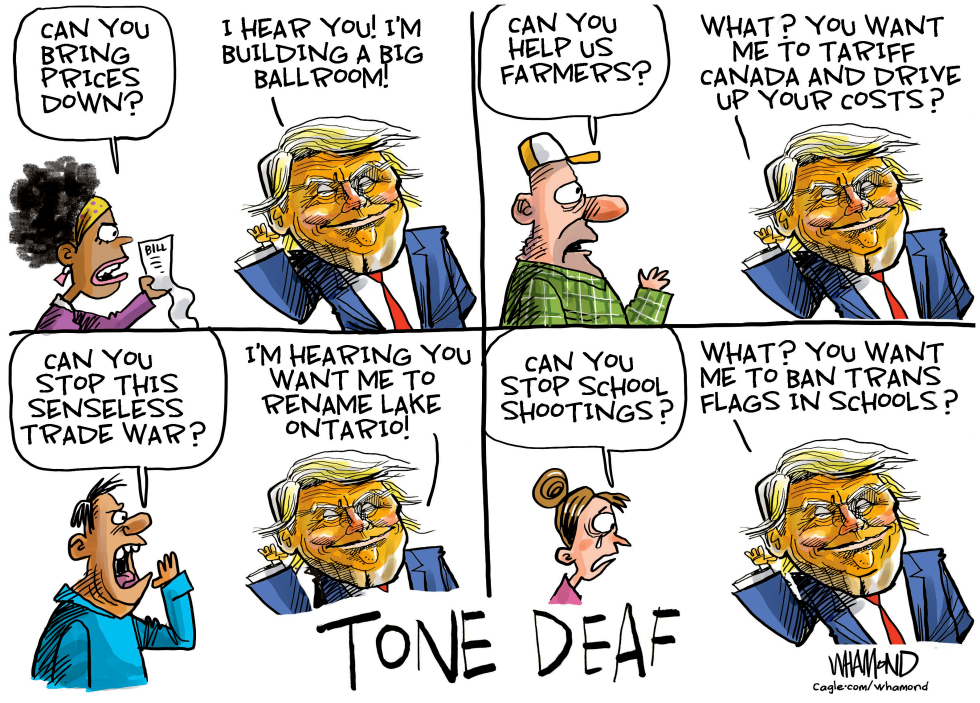
The cartoon by Dave Whamond published September 15, 2026, shows Donald Trump responding to citizen concerns about prices, tariffs on Canada, trade wars, school shootings and transgender flags by pivoting to a ballroom project and renaming Lake Ontario. The four-panel layout underscores a pattern of tone-deaf replies that ignore the original requests.
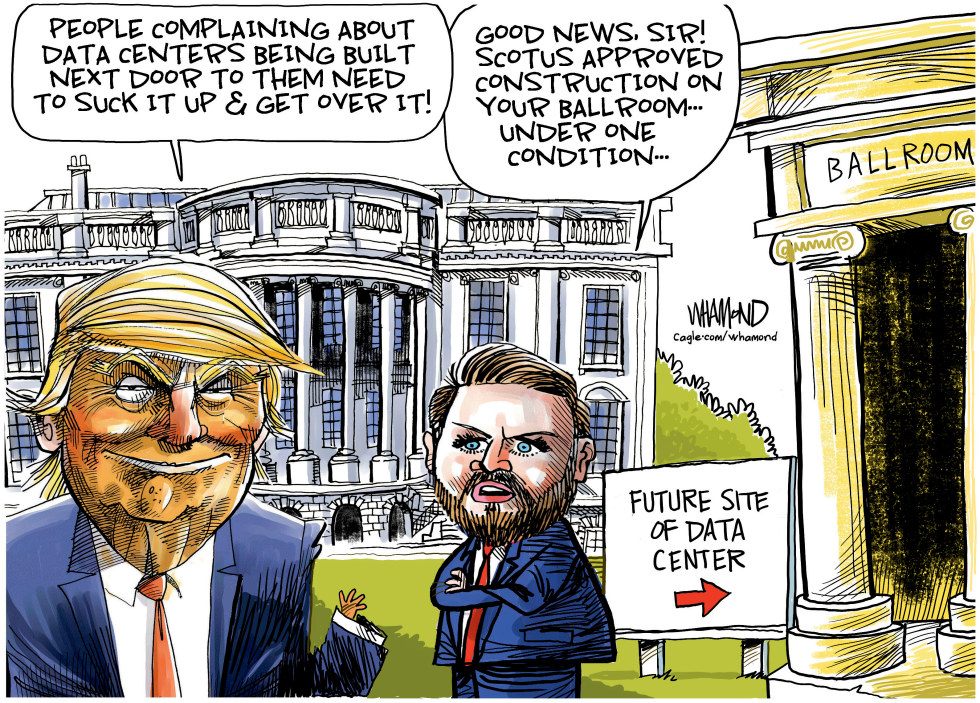
On September 2, 2026, reports emerged that the Trump administration secured Supreme Court approval for a new White House ballroom with the condition that the site also host a data center. The decision comes as communities nationwide protest data center construction near homes. The cartoon depicts Trump dismissing resident complaints while an aide delivers the conditional news. It highlights tensions between executive ambitions and local opposition to large-scale tech infrastructure. The piece argues that such projects prioritize political vanity over community concerns.
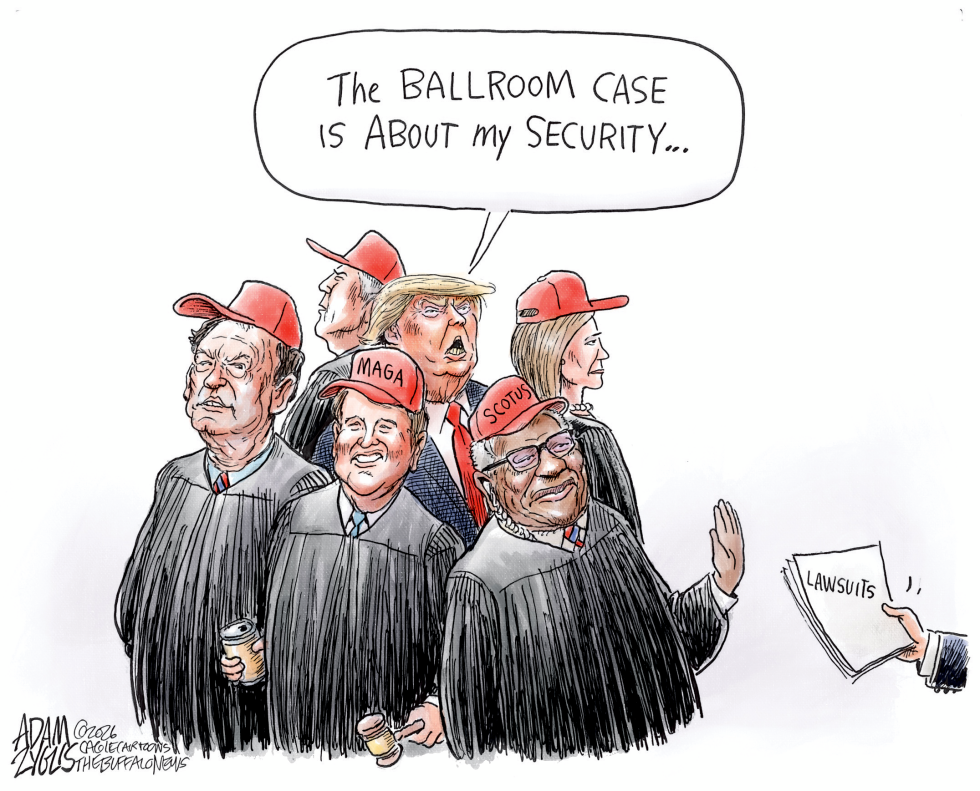
A political cartoon published September 2, 2026, shows Supreme Court justices in judicial robes and red MAGA caps gathered around Donald Trump. One justice declares in a speech bubble that the ballroom case is about my security. A hand extends papers labeled lawsuits from the side. The image comments on recent litigation involving Trump and claims of judicial security concerns tied to the case.
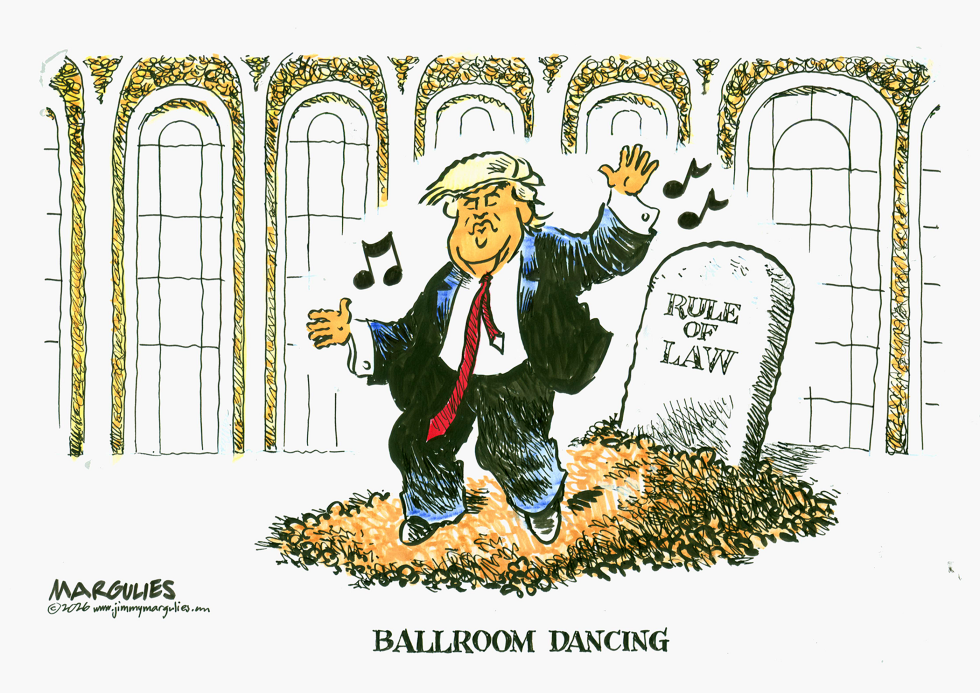
Donald Trump has repeatedly challenged legal institutions through public statements and actions questioning judicial authority. The cartoon responds to this pattern by showing him dancing on the grave of the rule of law. It argues that such behavior undermines core democratic safeguards and normalizes attacks on established legal boundaries.
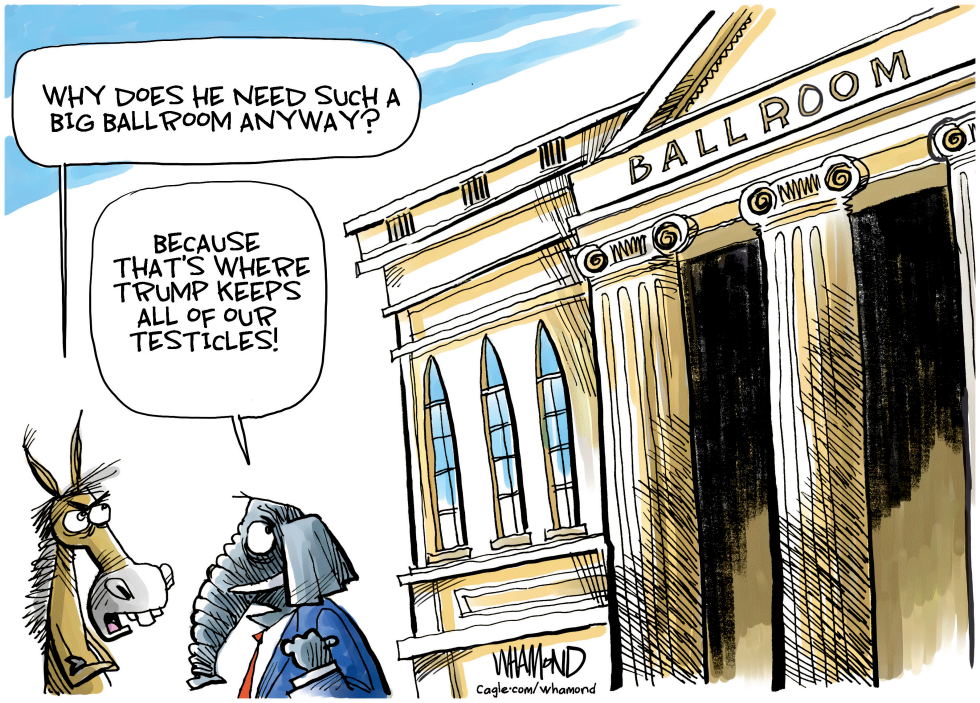
Republicans continue to align closely with Donald Trump on key issues as of early September 2026. The former president maintains strong influence over the party despite leaving office years earlier. This dynamic raises questions about independent decision-making within GOP ranks. The cartoon portrays the Republican elephant explaining to the Democratic donkey that Trump stores the party's resolve in a large ballroom. It critiques the perceived lack of autonomy among Republican leaders.
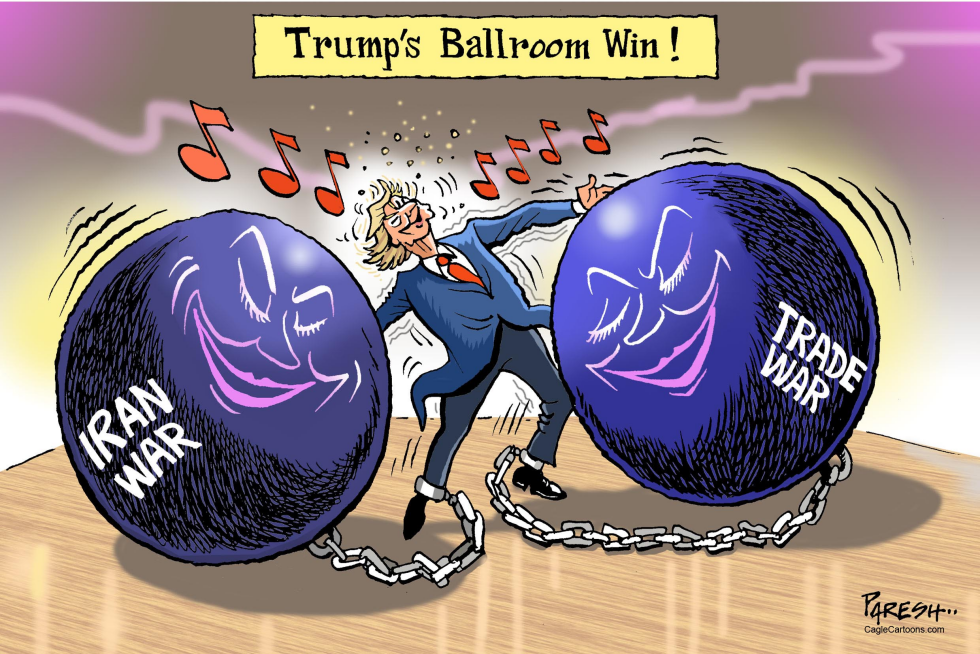
A political cartoon published September 1, 2026, portrays Donald Trump dancing energetically in a ballroom while his ankles are chained to two large balls labeled Iran War and Trade War. The image suggests the president is weighed down by simultaneous foreign policy and economic conflicts. Music notes and a banner reading Trump's Ballroom Win add ironic flair to the scene. The cartoon responds to ongoing tensions involving U.S. relations with Iran and persistent trade disputes. It visually argues that these issues continue to constrain administration actions despite any claimed victories.
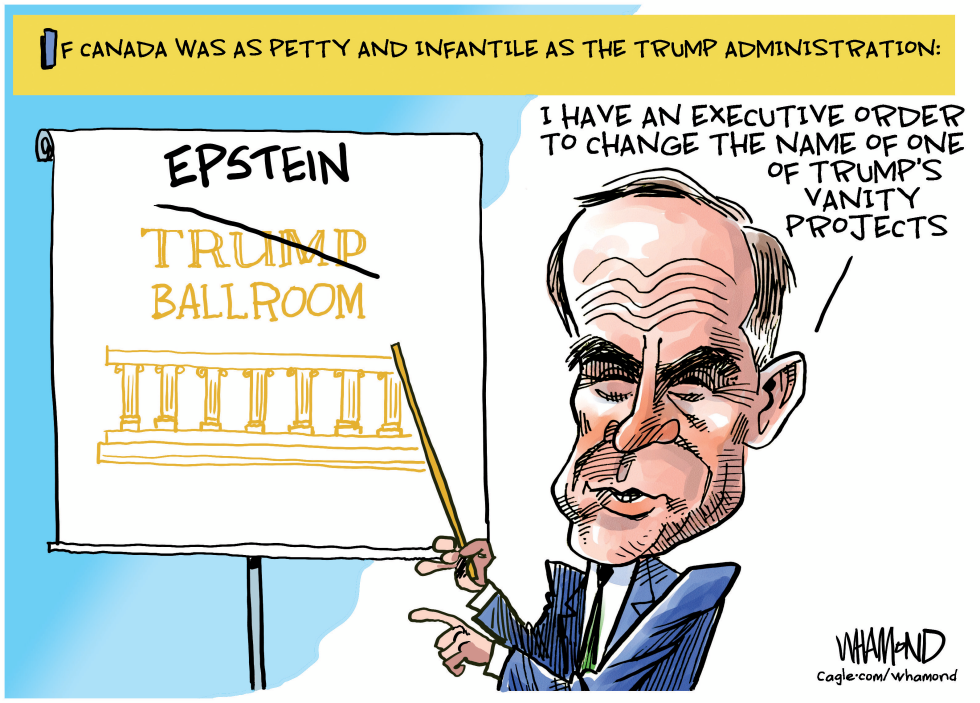
On August 27, 2026, a cartoon depicted Canadian Prime Minister Justin Trudeau issuing a mock executive order to rename a property tied to Jeffrey Epstein as the Trump Ballroom. The move parodies perceived pettiness in the Trump administration's handling of vanity projects and branding disputes. The piece argues that such tit-for-tat gestures underscore how executive actions can devolve into personal score-settling rather than substantive governance.
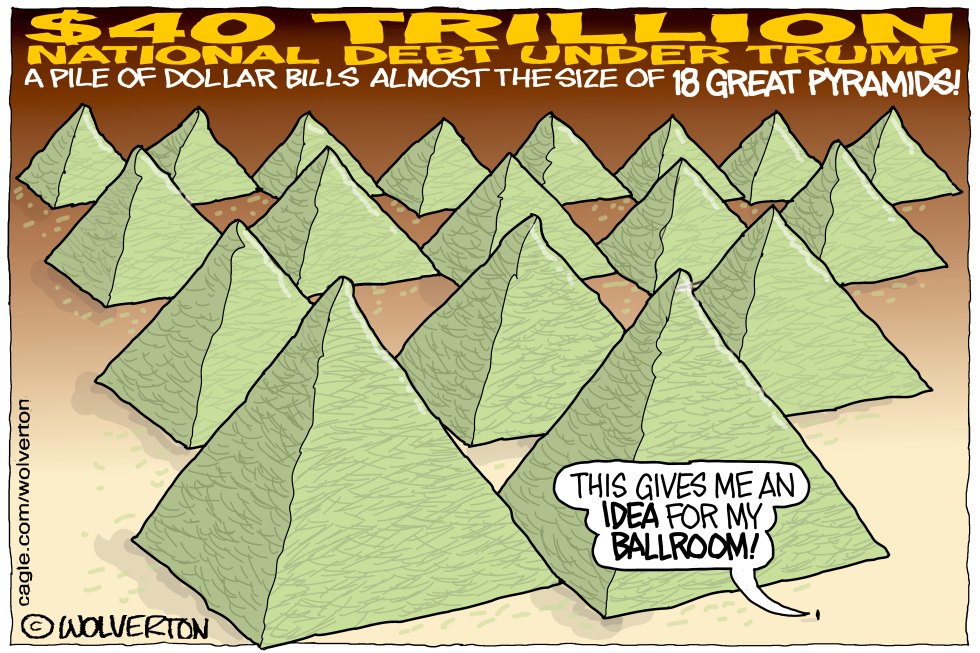
The image presents a field of green pyramids constructed from dollar bills set against a brown and tan background. Large text at the top states the $40 trillion national debt figure under Trump and compares the pile size to 18 great pyramids. A speech bubble emerges from one pyramid in the foreground with a remark about a ballroom idea. The composition places the largest structures toward the front and smaller ones receding into the distance. The visual ties the debt total directly to the current administration period referenced in the text.
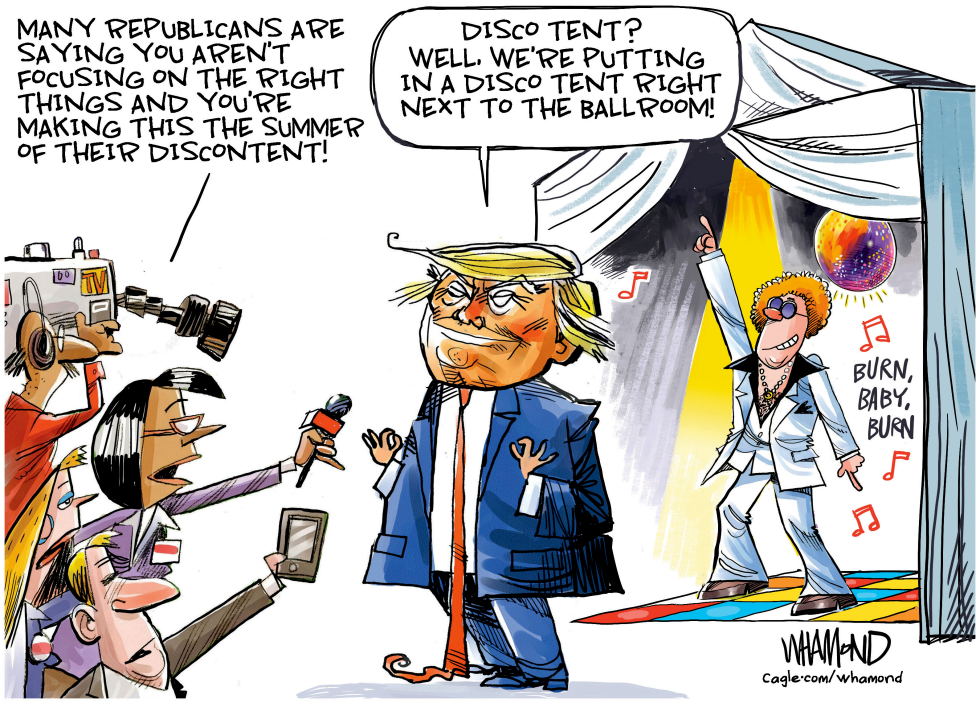
Republicans have publicly criticized Donald Trump for diverting focus from core issues during the summer of 2026, highlighting internal party friction over perceived misplaced priorities. The criticism centers on White House renovation choices that include adding a disco tent adjacent to the ballroom. Trump faces direct questions from the press about these decisions. The editorial position frames the episode as evidence of deepening discontent within the Republican ranks over the president's agenda.
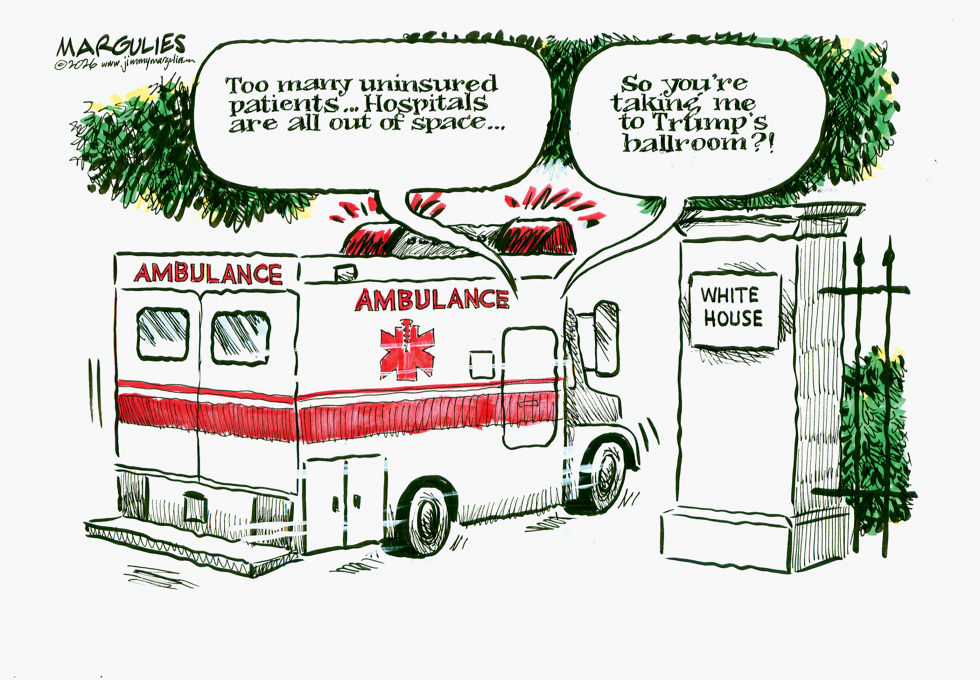
Hospitals across the country report severe overcrowding driven by rising numbers of uninsured patients seeking emergency care. The situation has prompted unusual measures, including the diversion of ambulances. In this context the cartoon depicts an ambulance being directed toward the White House ballroom associated with President Trump. The piece criticizes the administration's handling of the healthcare access problem by highlighting the contrast between medical need and the use of presidential property.