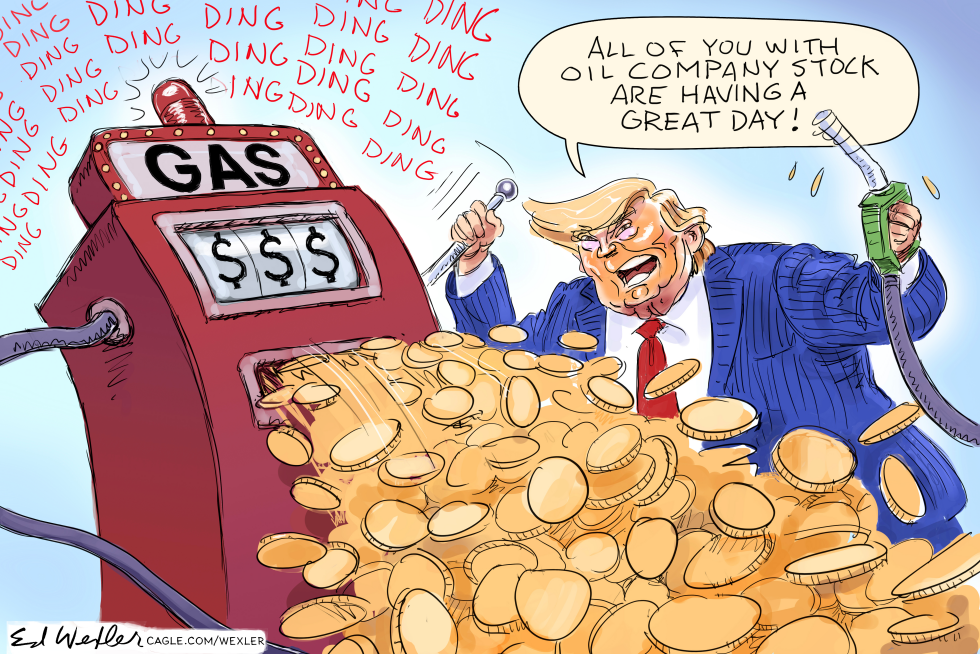
On March 17 2026 the cartoon depicts Donald Trump beside a gas pump dispensing coins instead of fuel. The pump display shows dollar signs while a speech bubble congratulates oil company stockholders. The scene references rising gas prices tied to Middle East tensions and conflict in Iran.
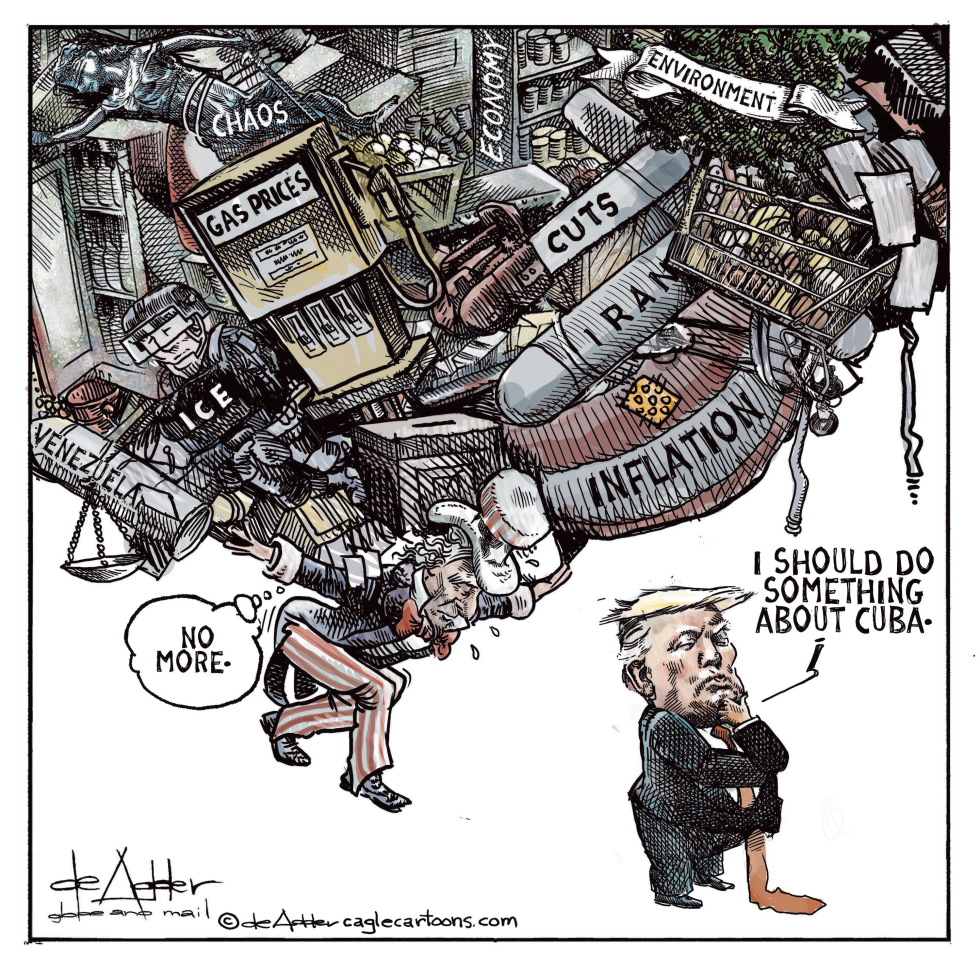
Donald Trump appears in the foreground contemplating action on Cuba. Behind him a swirl of labeled elements shows inflation, gas prices, Iran, Venezuela, ICE, and cuts tied to economy and environment. A second figure says no more. The March 2026 cartoon highlights distraction amid multiple pressures.
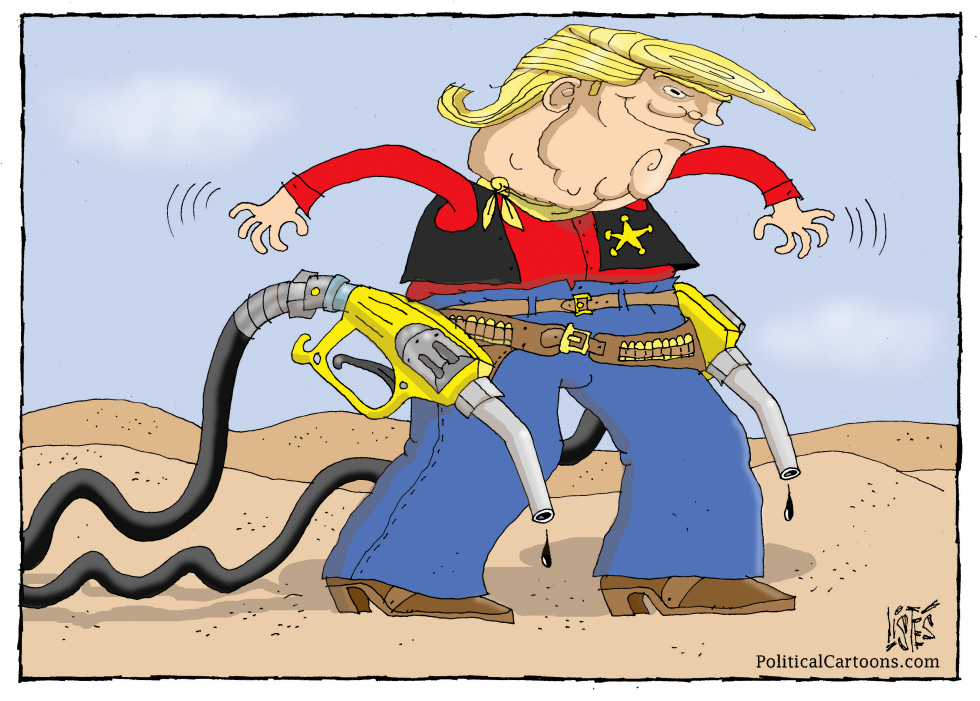
The March 2026 cartoon depicts President Trump as a sheriff in a desert landscape with a gas pump hose attached to his body. Fuel drips from the nozzle onto the sand while the long hose trails behind. The image responds to ongoing concerns over global oil supplies and potential disruptions tied to Iran. Publication occurs during heightened attention to energy markets and U.S. foreign policy in the Middle East.
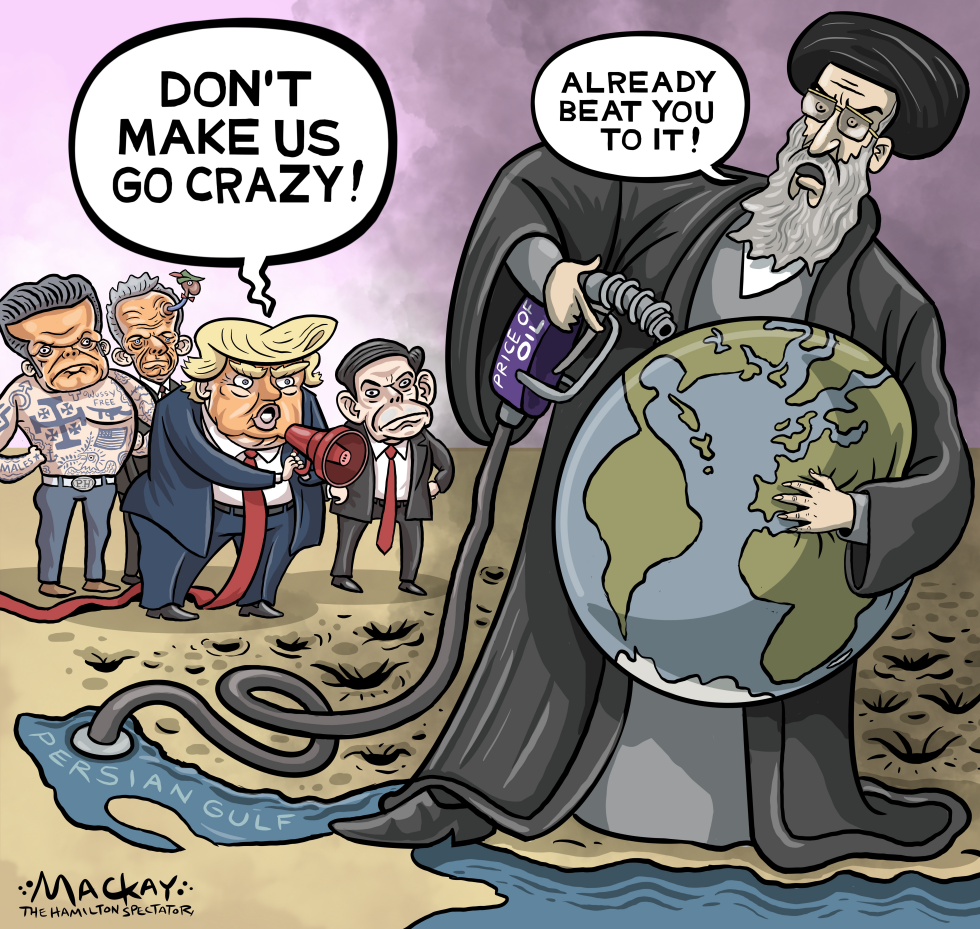
A political cartoon published March 12, 2026, shows Donald Trump and Iran's Ayatollah exchanging threats over oil prices and access to the Persian Gulf. Trump, holding a megaphone, warns against forcing the U.S. side to escalate, while the Ayatollah, gripping a gas pump labeled price of oil attached to a globe, claims to have already matched the move. Three figures stand behind Trump, including recognizable administration members. The scene references ongoing concerns about energy supplies and regional stability in the Middle East.
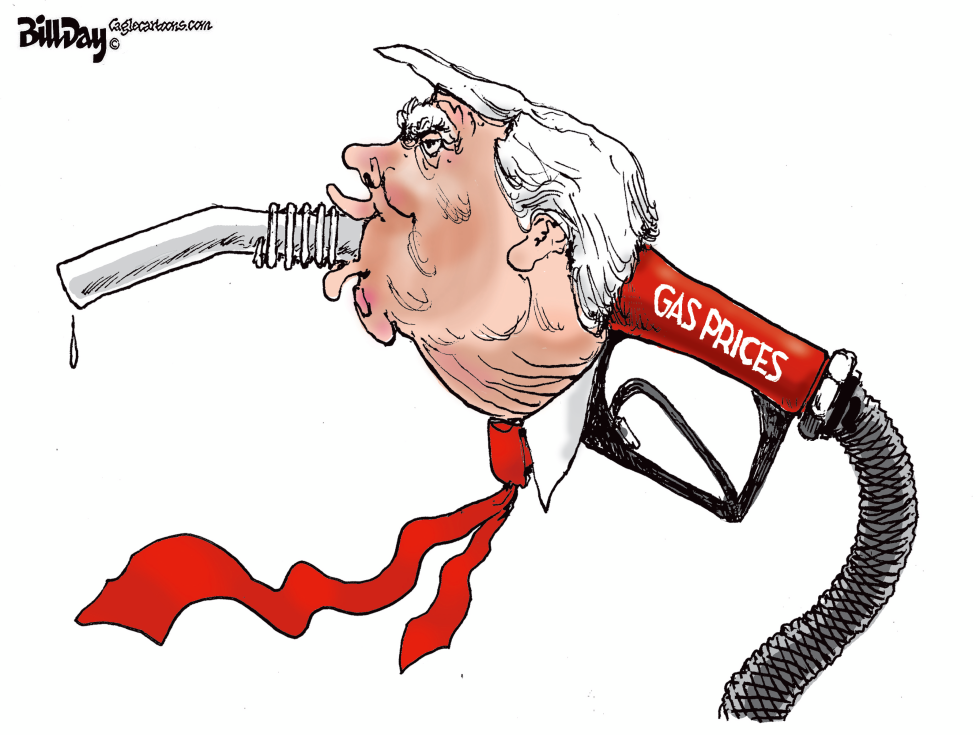
On March 11 2026 Bill Day depicts Donald Trump with his head serving as a gas pump nozzle labeled gas prices. The red tie dangles like a fuel hose. The image responds to ongoing concerns over rising fuel costs linked to tensions involving Iran and the Strait of Hormuz.
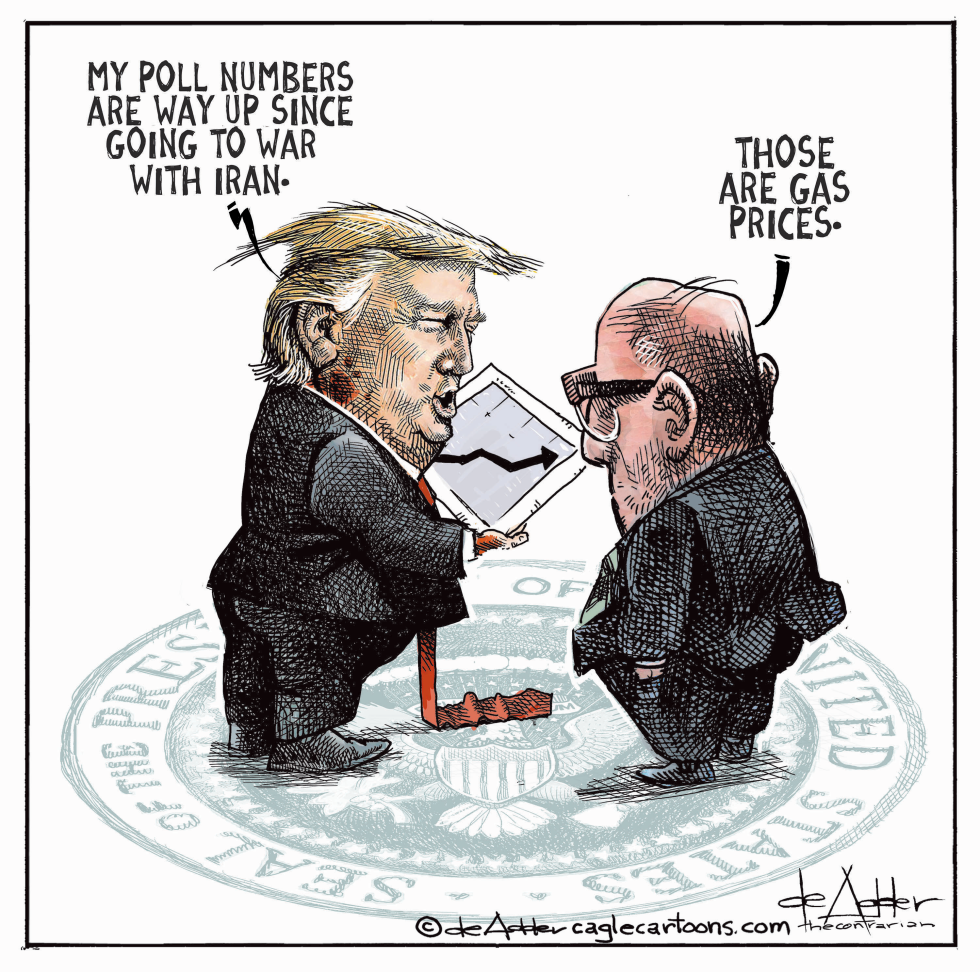
This sharp political cartoon by Michael de Adder captures Donald Trump triumphantly holding a chart of upward trends, claiming his poll numbers have skyrocketed since going to war with Iran. However, a bespectacled Dick Cheney corrects him, revealing those are actually gas prices soaring. The satire highlights the ironic consequences of Middle East conflict on the US economy, blending humor with commentary on presidential approval ratings tied to foreign policy blunders. Incorporating elements of US politics, oil prices, and war economy, the image stands on the presidential seal, emphasizing official folly. It's a witty jab at how leaders might misread economic fallout as personal gains, perfect for editorial discussions on satire and current events.