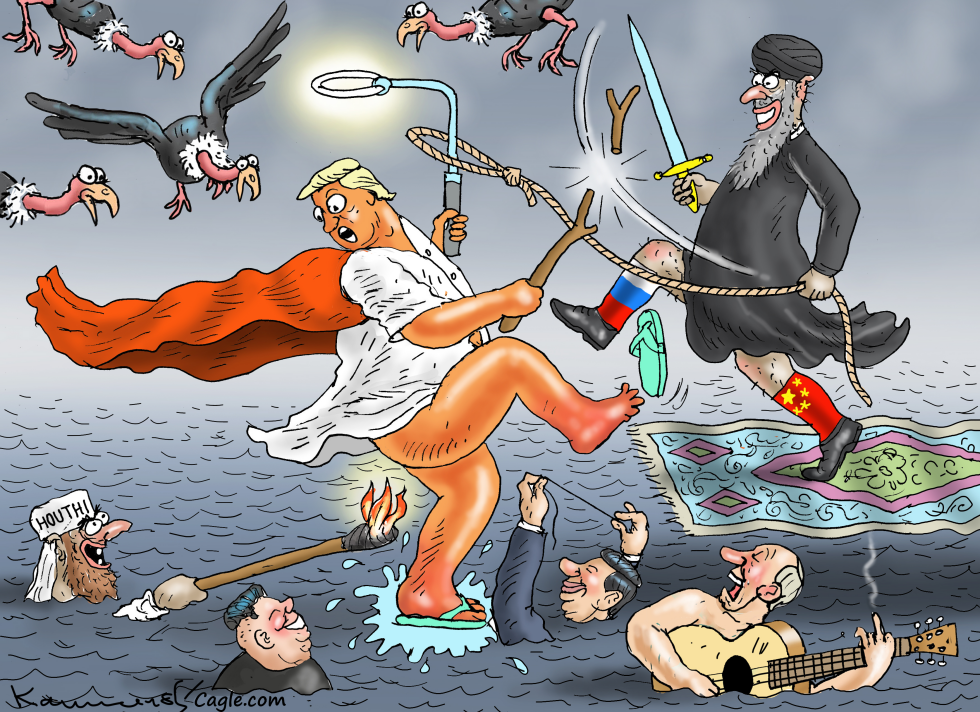
Donald Trump faces mounting complications in Middle East engagements involving Houthi forces and shifting ties with Russia and China. The cartoon portrays these entanglements as self-inflicted disorder that invites scavengers and undermines stability. It critiques the approach as reckless and counterproductive.
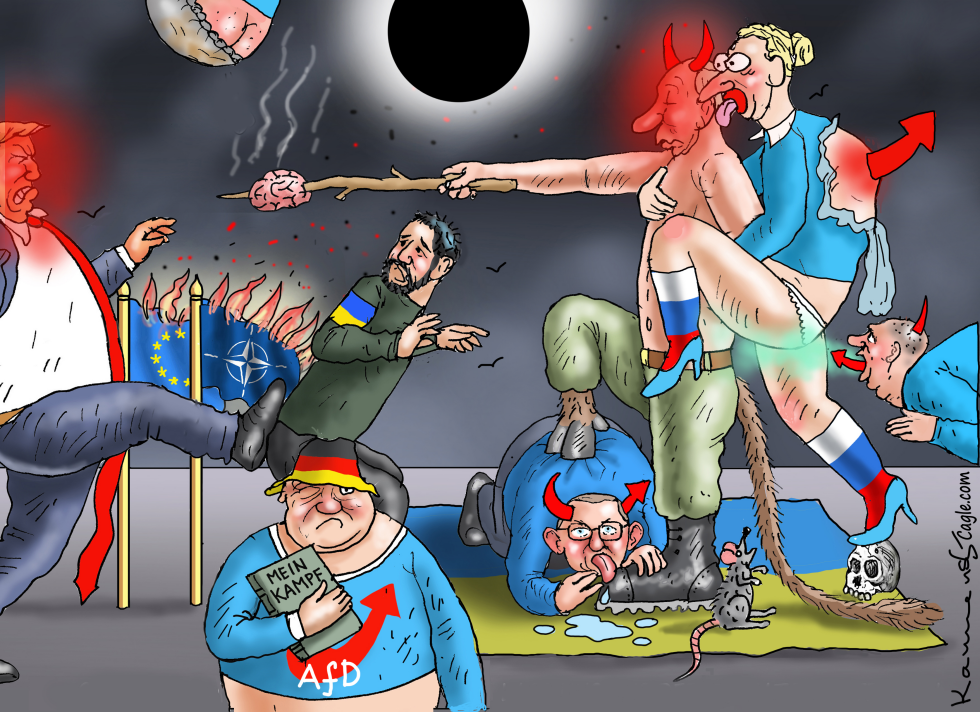
Russian President Vladimir Putin and former President Donald Trump are shown aiding Germany's AfD party in the run-up to elections. The piece argues that external interference from these figures is boosting the far-right German party while harming domestic U.S. political elements.
The Alternative for Germany party faces renewed criticism for its associations with international far-right figures including Donald Trump and apparent sympathy toward Vladimir Putin amid the Russia-Ukraine conflict. The cartoon portrays AfD embracing these influences while rejecting NATO and EU structures. It argues that such alignments expose the party's extremist leanings and undermine Germany's democratic commitments.
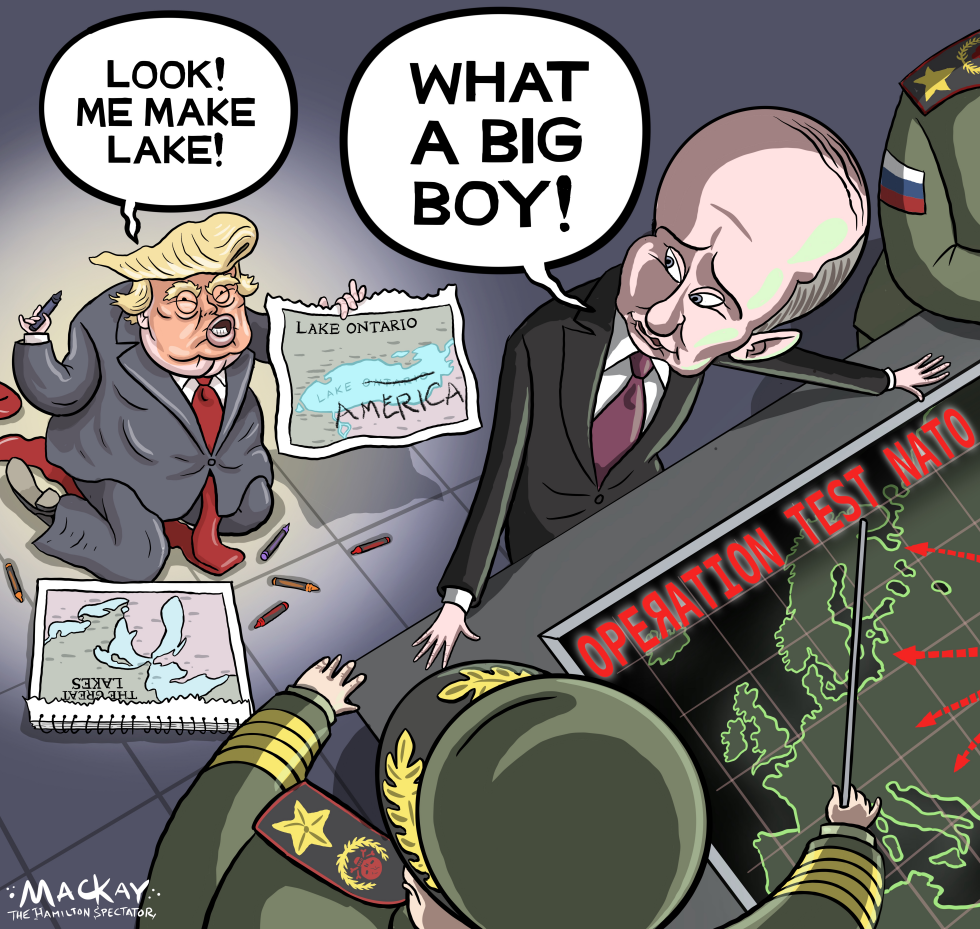
On August 31 2026 Donald Trump presented a hand-altered map renaming Lake Ontario as Lake America during a meeting with Vladimir Putin and Russian military officers reviewing NATO operations. The exchange highlights ongoing tensions over territorial assertions and alliance testing in the Great Lakes region. The cartoon depicts Putin endorsing the claim while officers coordinate a simulated response.
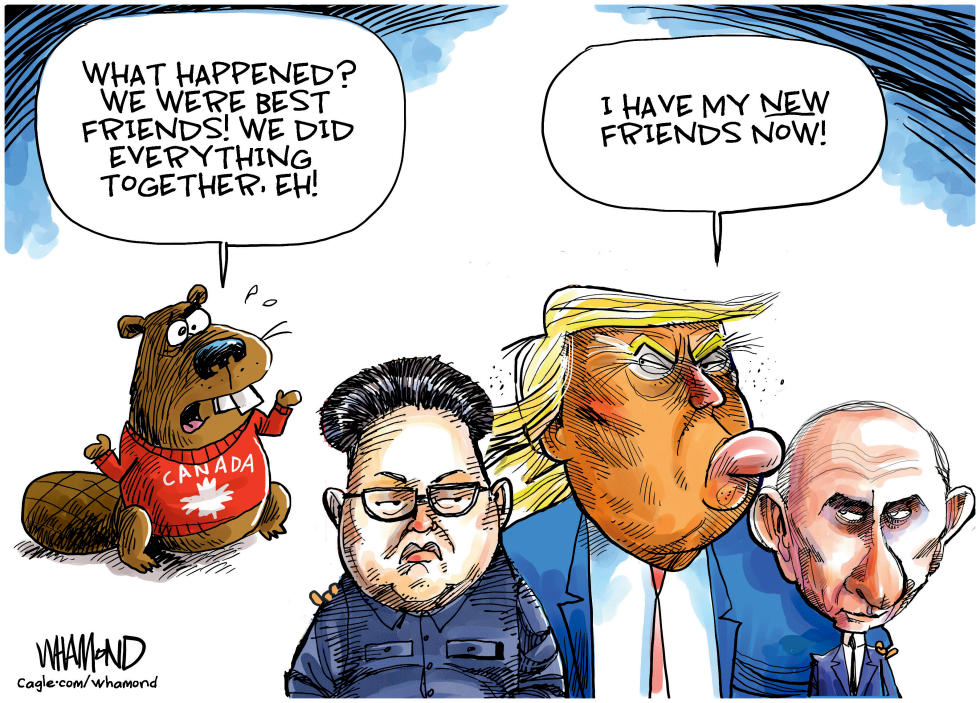
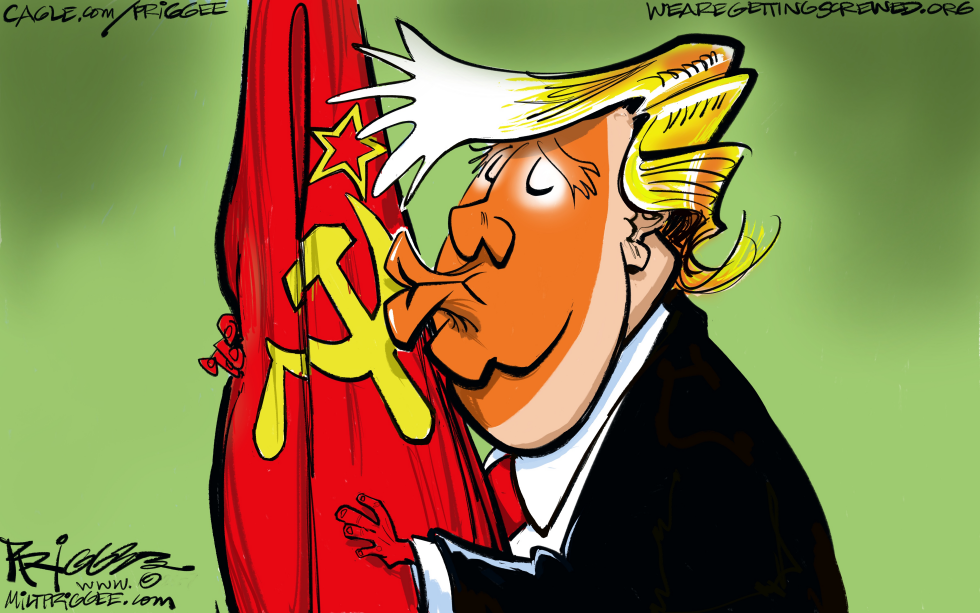
President Trump has redirected diplomatic priorities toward closer ties with Russian President Vladimir Putin and North Korean leader Kim Jong Un. Traditional partners such as Canada now face reduced engagement. The move reflects a broader realignment in U.S. foreign policy that favors authoritarian counterparts over longstanding democratic allies. Observers note the shift carries risks for trade, security cooperation, and international norms. The editorial position criticizes the pivot as shortsighted and damaging to established relationships.
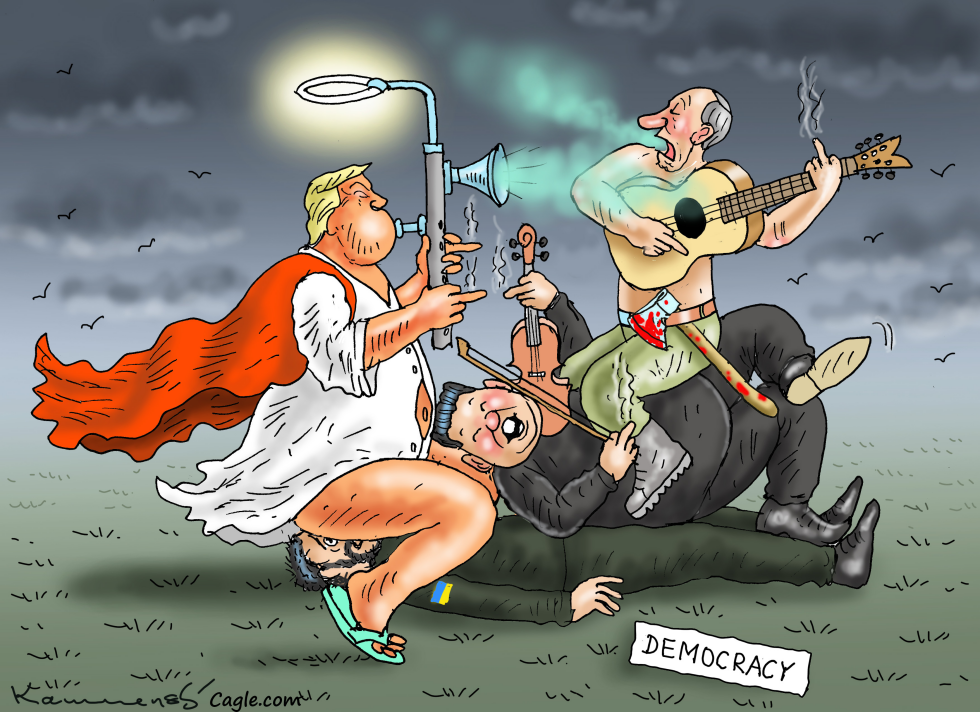
On August 21, 2026, the ongoing Ukraine conflict continued with no resolution in sight as U.S., Russian and Ukrainian leaders remained locked in diplomatic friction. The cartoon responds by depicting the three men as musicians whose finger-pointing and instruments create discord rather than harmony, underscoring the editorial view that personal posturing has overtaken substantive progress toward peace.
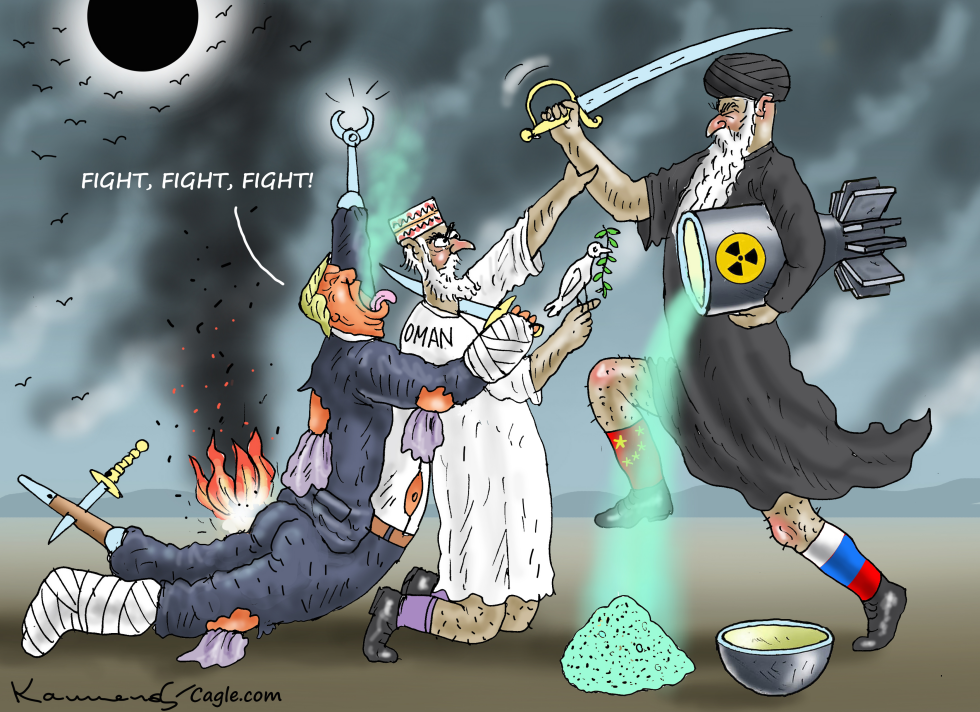
A confrontation involving the former president unfolded in Oman amid regional tensions with a nuclear capable participant. The incident highlights ongoing friction in Middle East diplomacy and arms concerns. The piece portrays the event as a chaotic clash where peace efforts compete with aggressive posturing.
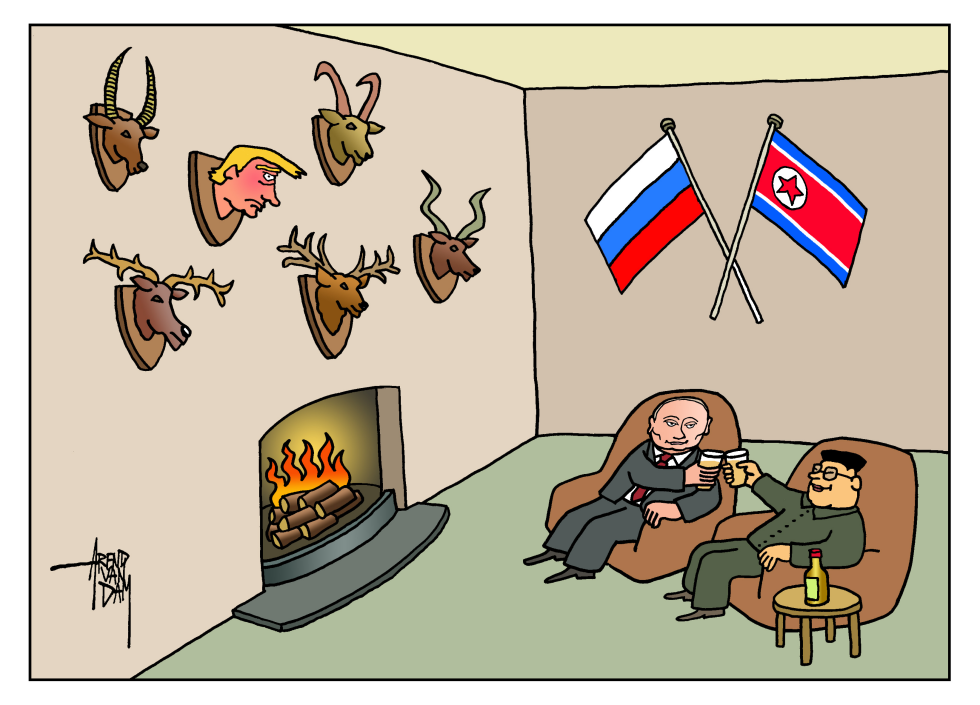
Vladimir Putin and Kim Jong Un appear together in a hunting lodge raising glasses in celebration. A mounted head resembling Donald Trump joins animal trophies on the wall beside the flags of their two nations. The scene reflects ongoing diplomatic alignment between Moscow and Pyongyang amid persistent tensions with Washington over security and sanctions.
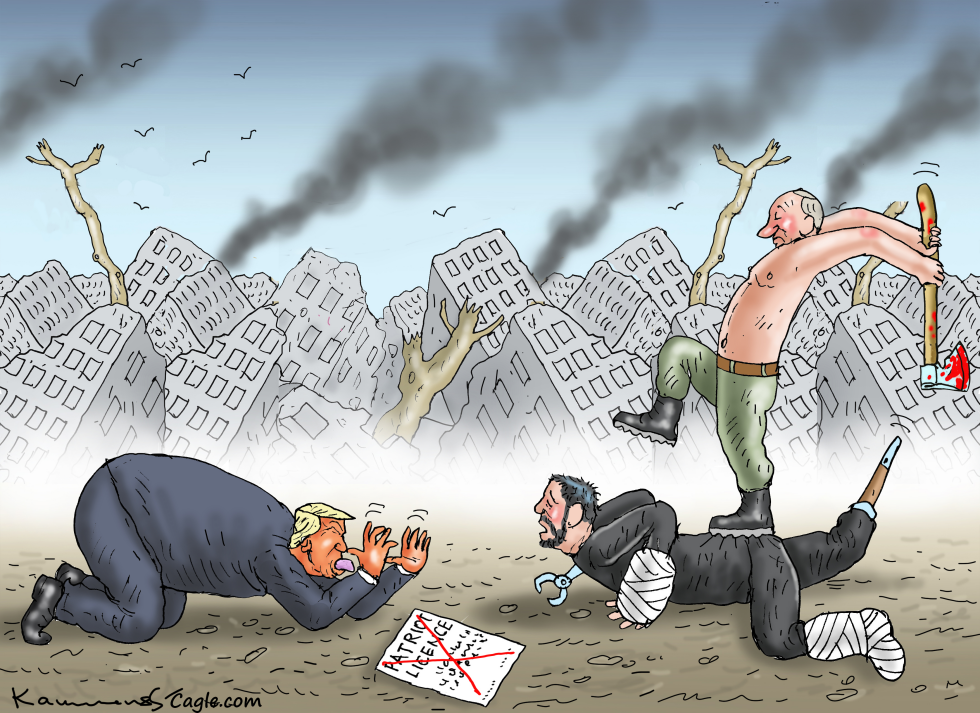
Russian President Vladimir Putin asserted dominance in the ongoing Ukraine conflict as US President Donald Trump and Ukrainian President Volodymyr Zelenskyy faced mounting pressure in mid-2026. The war continued to devastate Ukrainian cities with no immediate resolution in sight. The editorial depicts Putin as the unchallenged power broker leaving both leaders vulnerable and sidelined.
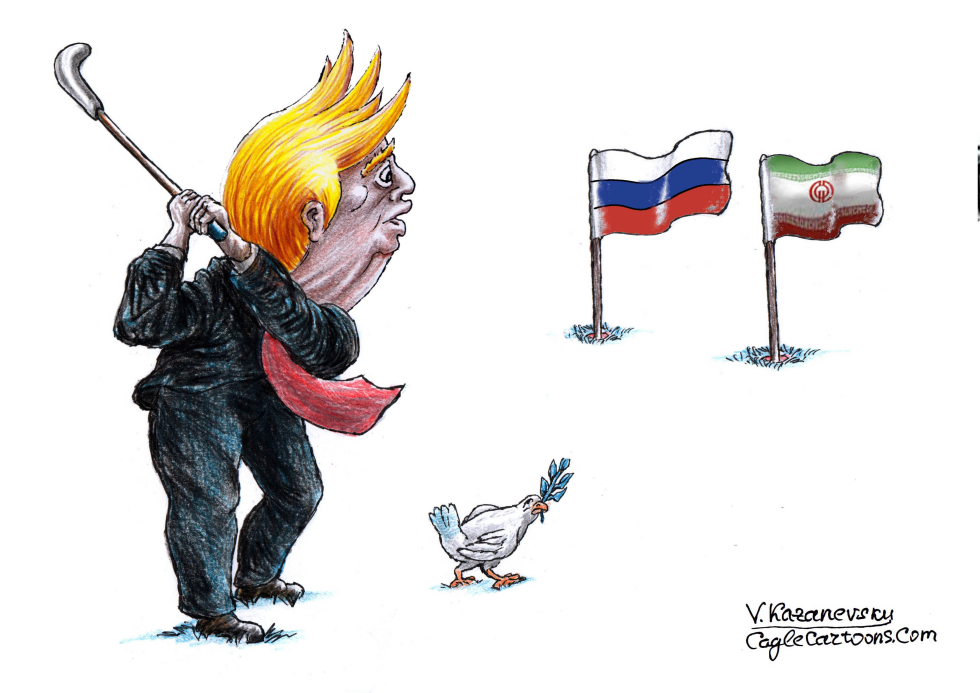
Donald Trump has pursued direct engagement with Russia and Iran on multiple fronts including nuclear talks and regional conflicts. The moves have drawn scrutiny over whether they advance or undermine stability. The editorial takes the position that such efforts amount to an assault on peace rather than a constructive step.
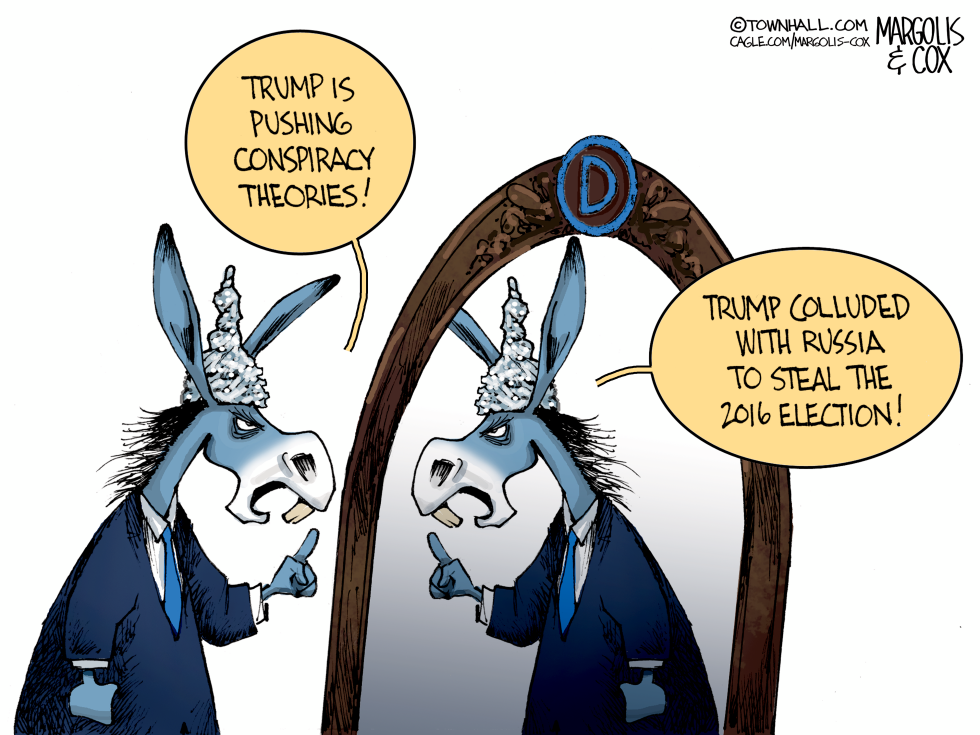
Democrats continue to promote the Russia collusion narrative against Trump even as they criticize him for advancing conspiracy theories. The piece argues this stance reveals inconsistency in how the party treats unproven claims depending on the target.
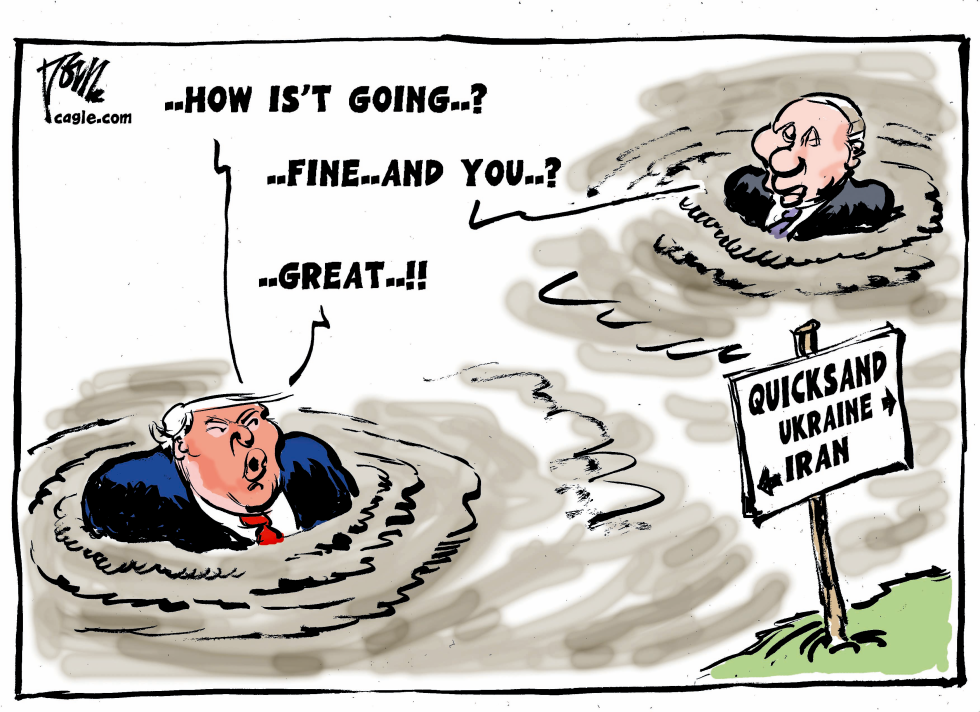
Donald Trump and Vladimir Putin appear neck-deep in quicksand on the date of publication. A sign labels the pit with Ukraine and Iran. The two exchange polite inquiries about how things are going while both continue to sink.
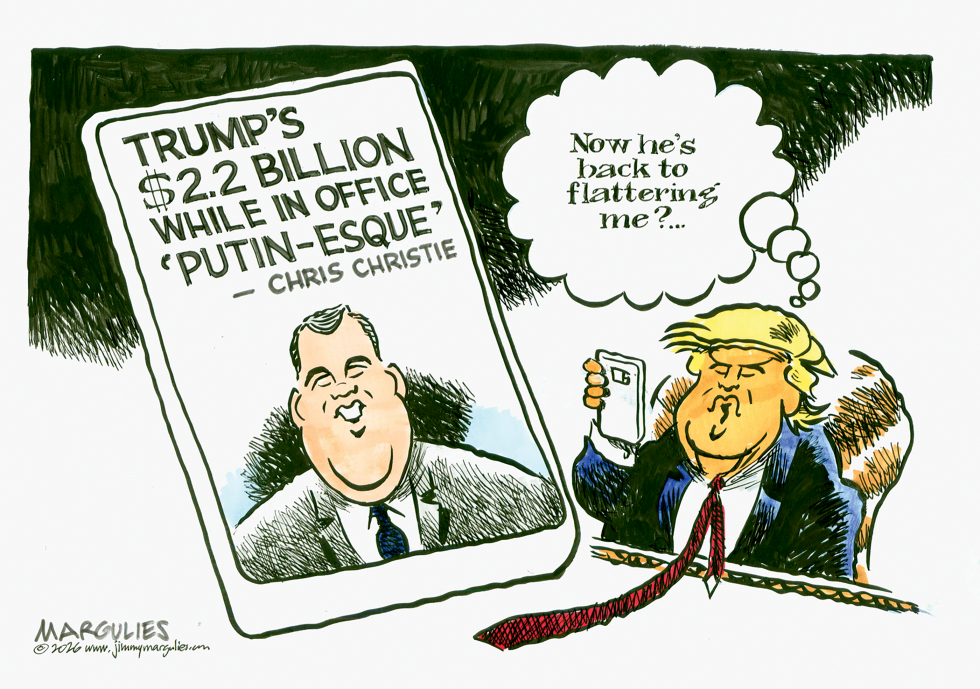
On July 6, 2026, a cartoon depicts Donald Trump examining a phone displaying Chris Christie’s quote labeling his $2.2 billion earnings while in office as Putin-esque. Trump’s thought bubble reveals he interprets the remark as flattery rather than criticism, highlighting an ongoing dynamic between the two figures amid foreign policy references to Russia.