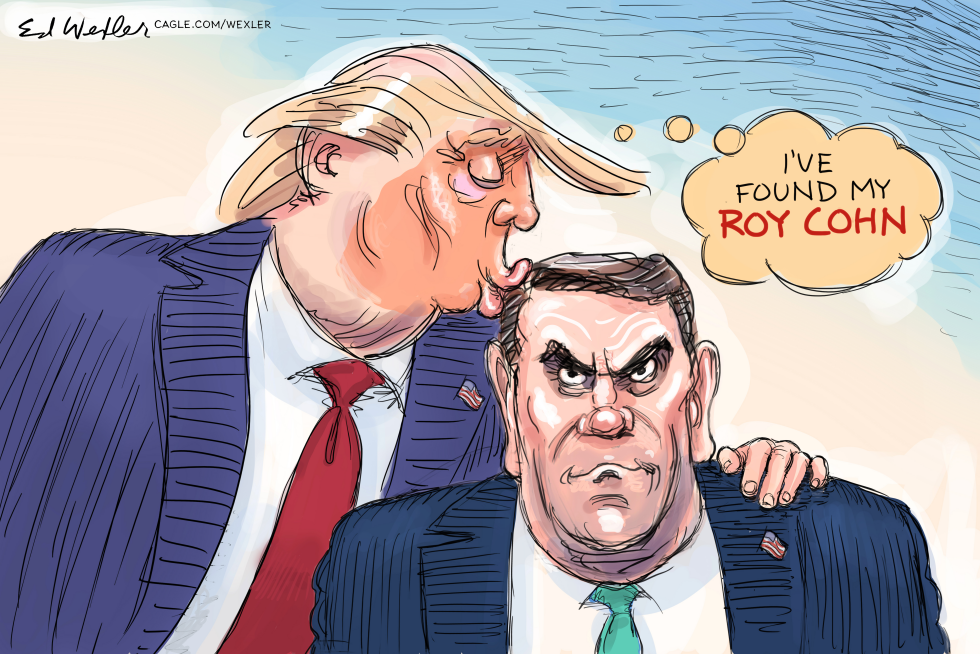
Donald Trump has publicly signaled interest in securing a new legal or political advisor modeled on his late attorney Roy Cohn. The reference revives memories of Cohn's aggressive tactics during Trump's early career. The development matters because it underscores Trump's preference for confrontational representation amid legal and political pressures. The piece portrays this choice as a deliberate return to combative strategy rather than measured counsel.
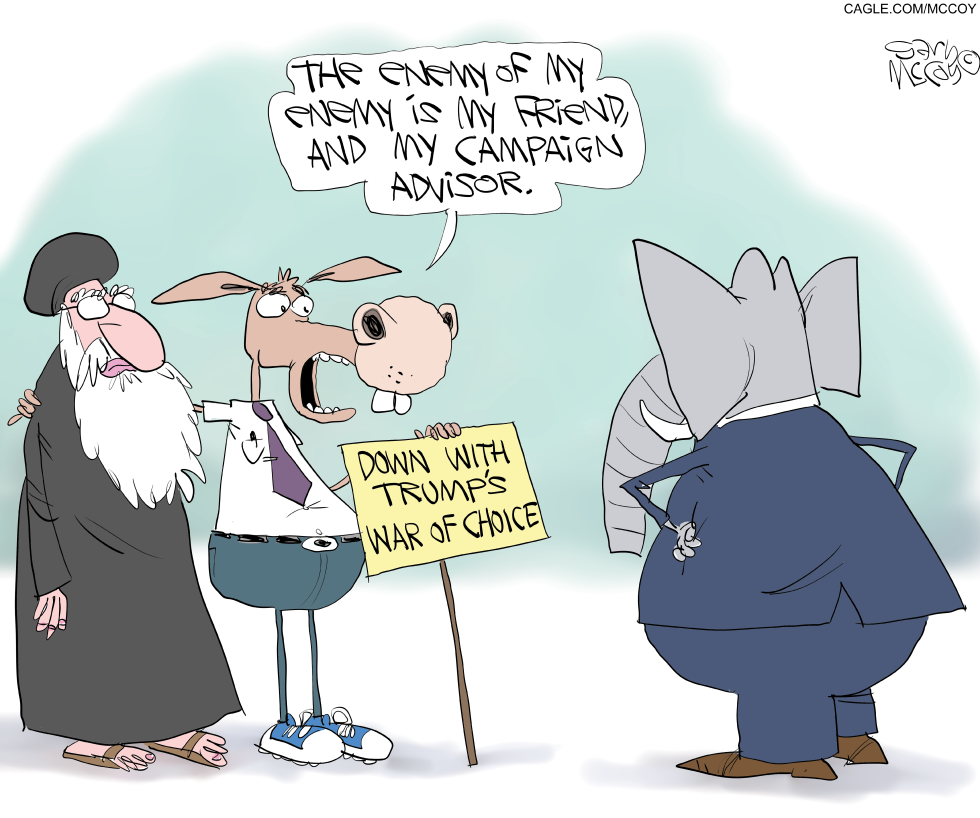
Democrats have signaled opposition to potential Trump administration actions toward Iran, framing them as unnecessary conflict. The alliance draws on shared criticism of U.S. policy in the Middle East. This dynamic highlights partisan divides over foreign engagement and raises questions about domestic political strategy. The piece portrays the partnership as opportunistic and shortsighted.
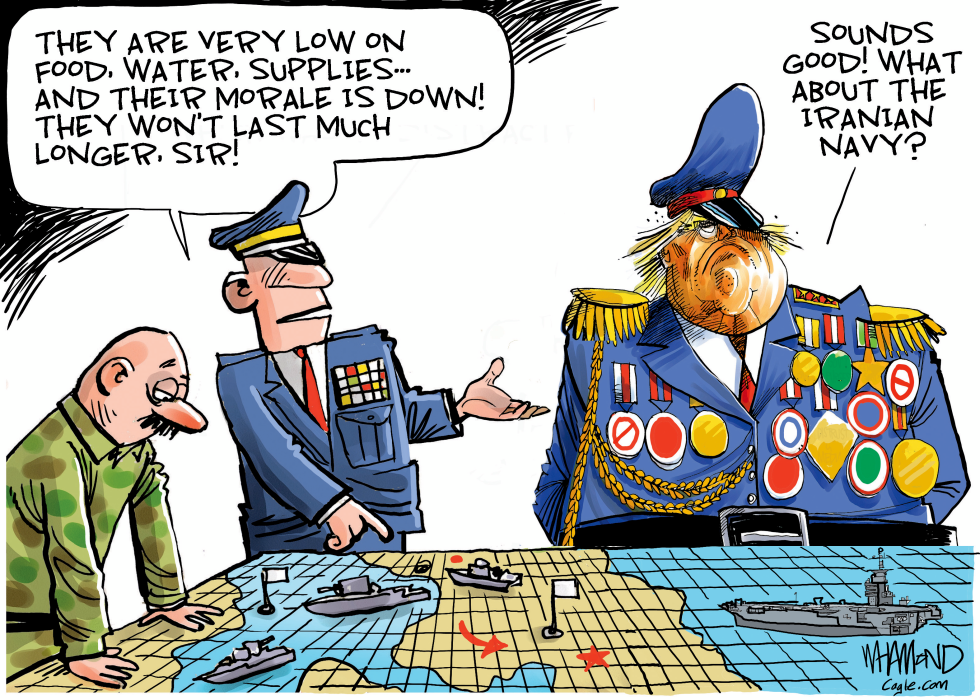
A U.S. Navy carrier faces reported shortages of food, water and supplies along with declining morale in mid-2026. Senior officers brief the president on the situation. The president responds by inquiring about the Iranian Navy instead. The piece portrays the administration as detached from operational readiness concerns in the region.
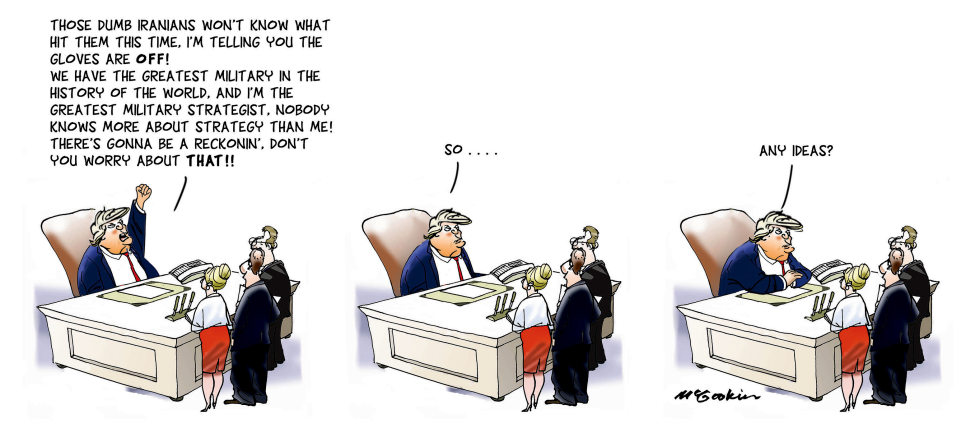
President Trump has directed his national security team to develop new military options regarding Iran. The move comes amid ongoing regional tensions and follows public statements emphasizing U.S. military superiority. The editorial takes the position that such demands reflect an impulsive approach to foreign policy that risks unnecessary escalation without clear strategic direction.
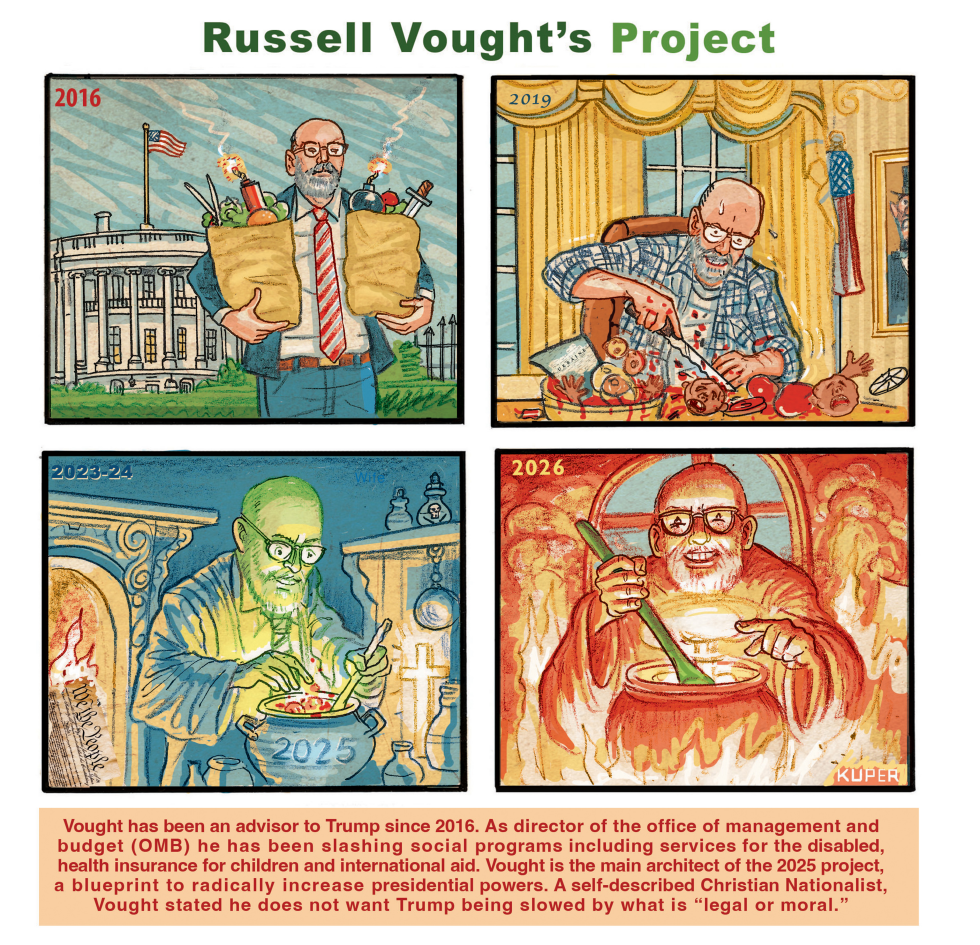
Russell Vought has served as a Trump advisor since 2016 and later directed the Office of Management and Budget, where he cut funding for disability services, children’s health insurance and foreign aid. He is the principal author of Project 2025, a plan to enlarge presidential authority. The cartoon presents his progression from 2016 through 2026 as a deliberate effort to remove legal or moral restraints on executive action.
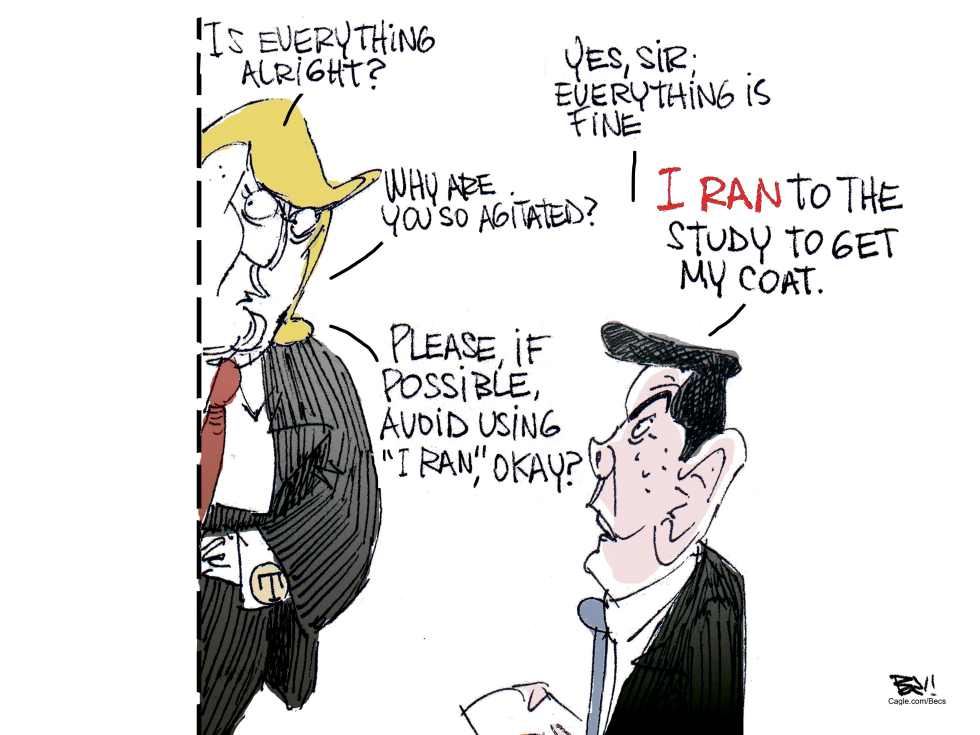
A staff exchange shows an advisor cautioning Donald Trump against the phrase 'I ran' during a routine query about retrieving a coat. The moment underscores ongoing sensitivity around word choice in high-level political circles. The piece presents the interaction as a pointed reminder of how everyday language can carry unintended weight for the former president.
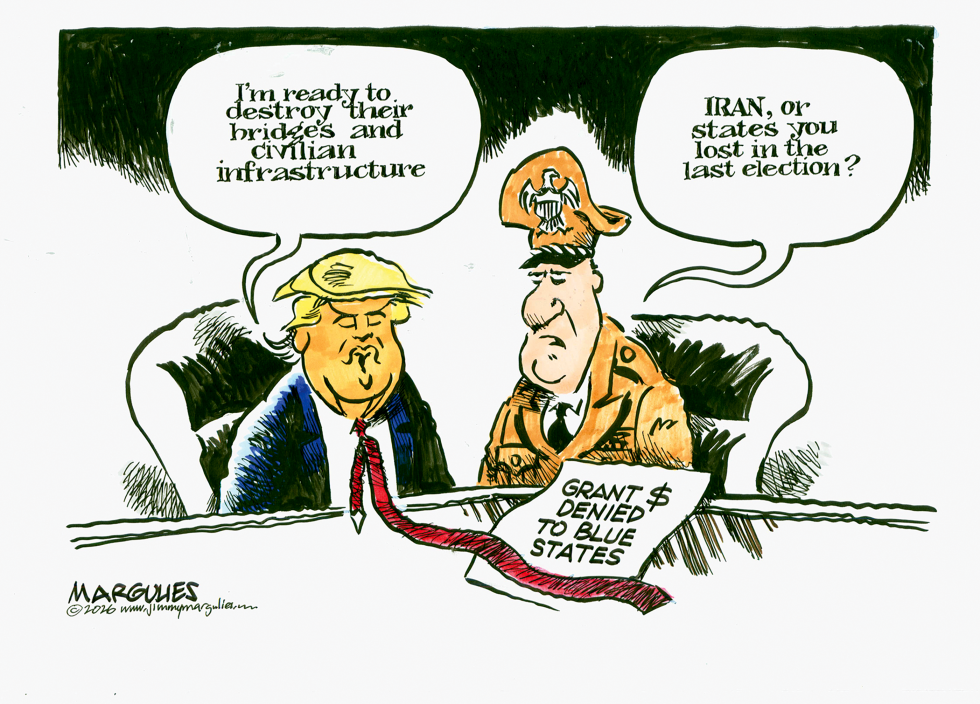
On July 28 2026 President Trump faces criticism for denying federal grants to states that voted against him in the prior election. The move raises questions about using infrastructure funding as political leverage. The cartoon portrays this as interchangeable with threats against Iran.
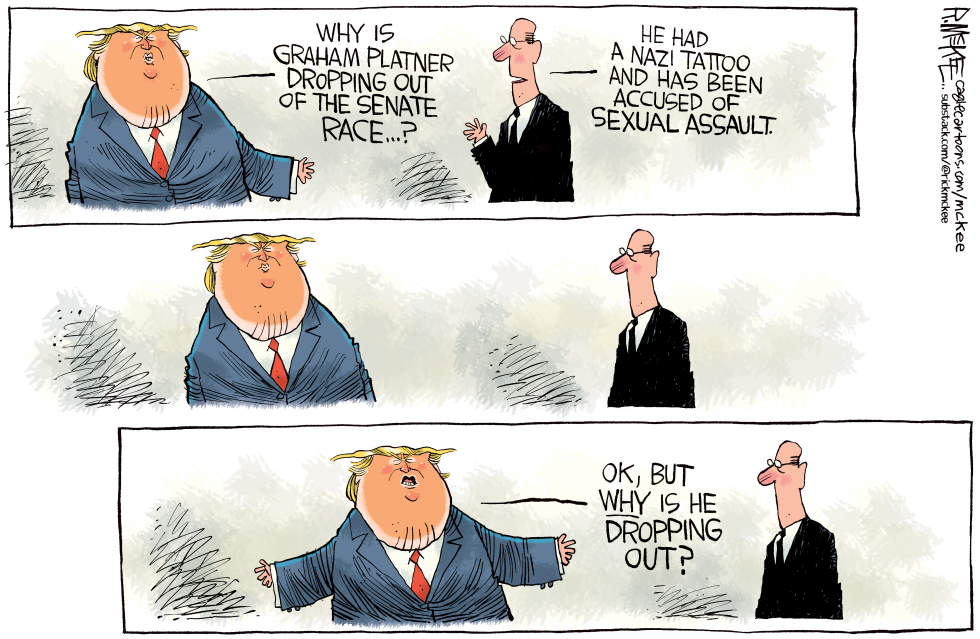
On July 10 2026 Rick McKee depicts Donald Trump questioning an aide about Graham Platner dropping out of a Senate race. The aide cites a Nazi tattoo and sexual assault accusation as reasons. Trump responds by asking again why the candidate is leaving the race. The exchange highlights the former president's focus on the withdrawal itself rather than the underlying controversies. Publication occurs during the 2026 election cycle when candidate viability and scandal impacts remain central topics in Senate contests.
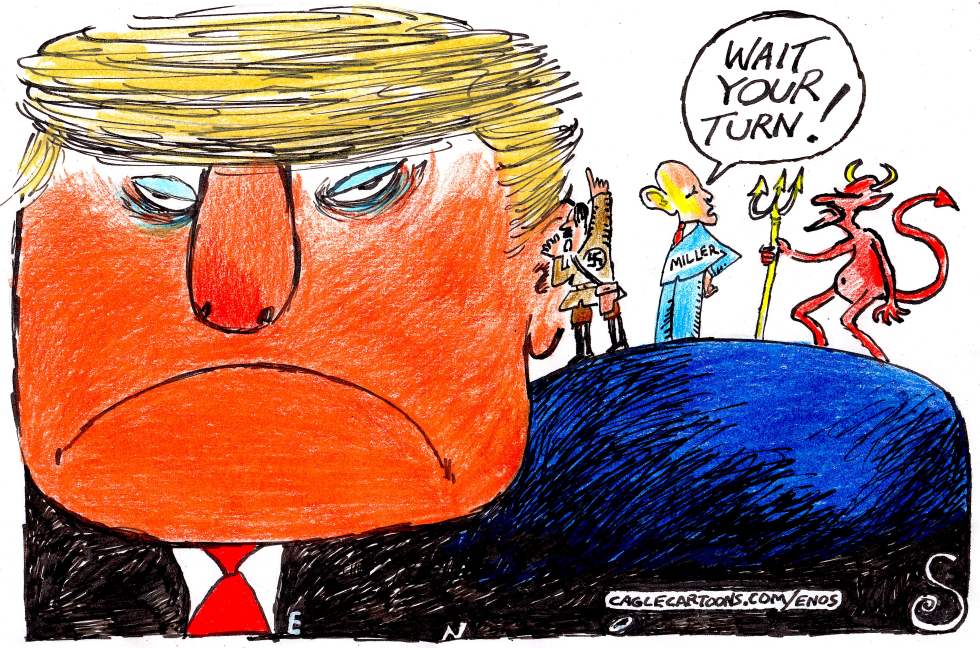
A large caricature of Donald Trump dominates the frame with an orange face and yellow hair. To the right, a smaller Stephen Miller figure in a blue shirt stands beside a red devil holding a pitchfork. A speech bubble from the devil says 'WAIT YOUR TURN!' A tiny figure with a swastika armband appears behind Miller. The image is dated July 6, 2026, and signed by Randall Enos with a Cagle Cartoons credit line.
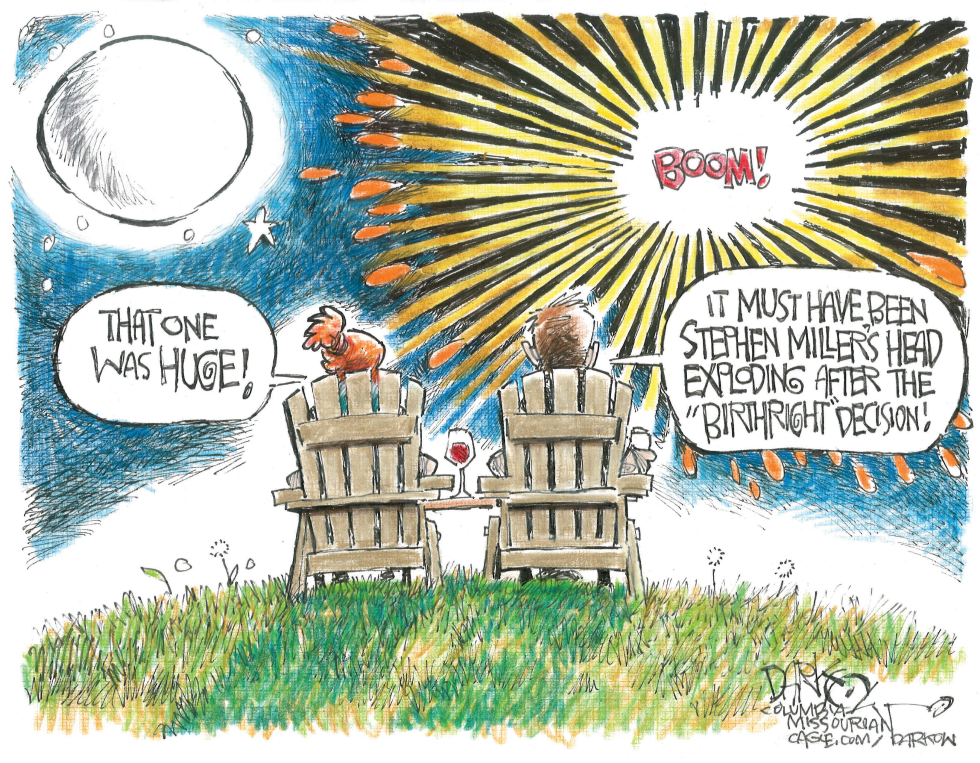
John Darkow's cartoon depicts two people in lawn chairs under a starry sky reacting to a massive explosion labeled as Stephen Miller's head after a birthright citizenship decision. The drawing uses fireworks and dialogue to highlight the intensity of the reaction to the ruling on the 14th Amendment.
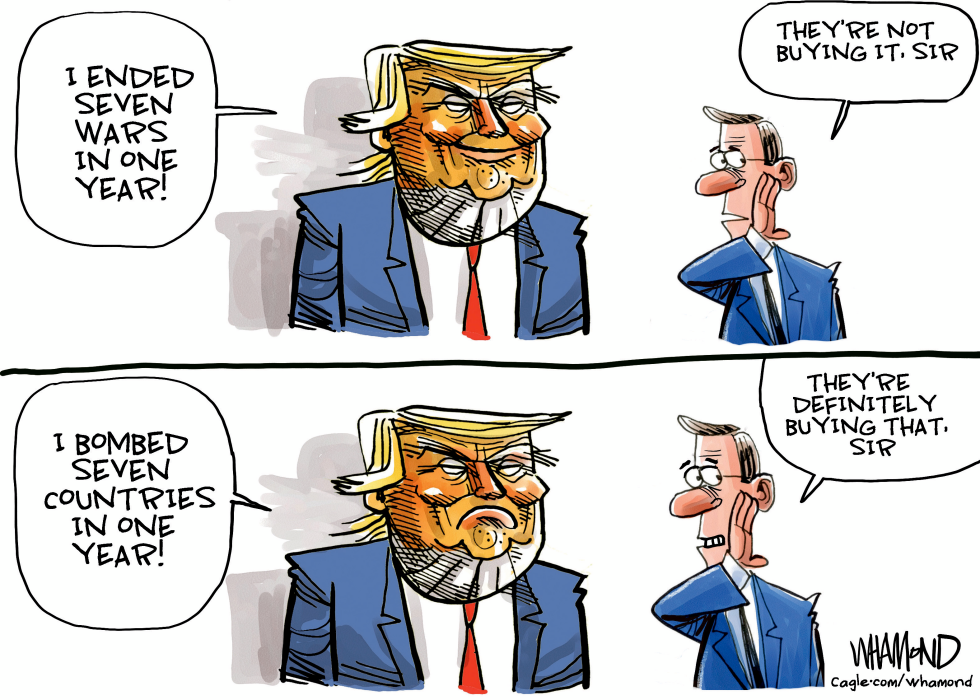
This Donald Trump cartoon masterfully captures the essence of satirical Trump presidency through political bombing humor. Trump boasts about ending seven wars, but his advisor notes the public's skepticism, leading to a pivot where he claims bombing seven countries instead, which the advisor says is 'definitely buying that.' The Trump wars satire underscores inconsistencies in Trump foreign policy cartoon style, poking fun at boastful claims versus reality. Created by Whamond, this political cartoon Whamond piece exemplifies humorous political analysis on US military satire, blending irreverent wit with insightful commentary on leadership and perception.
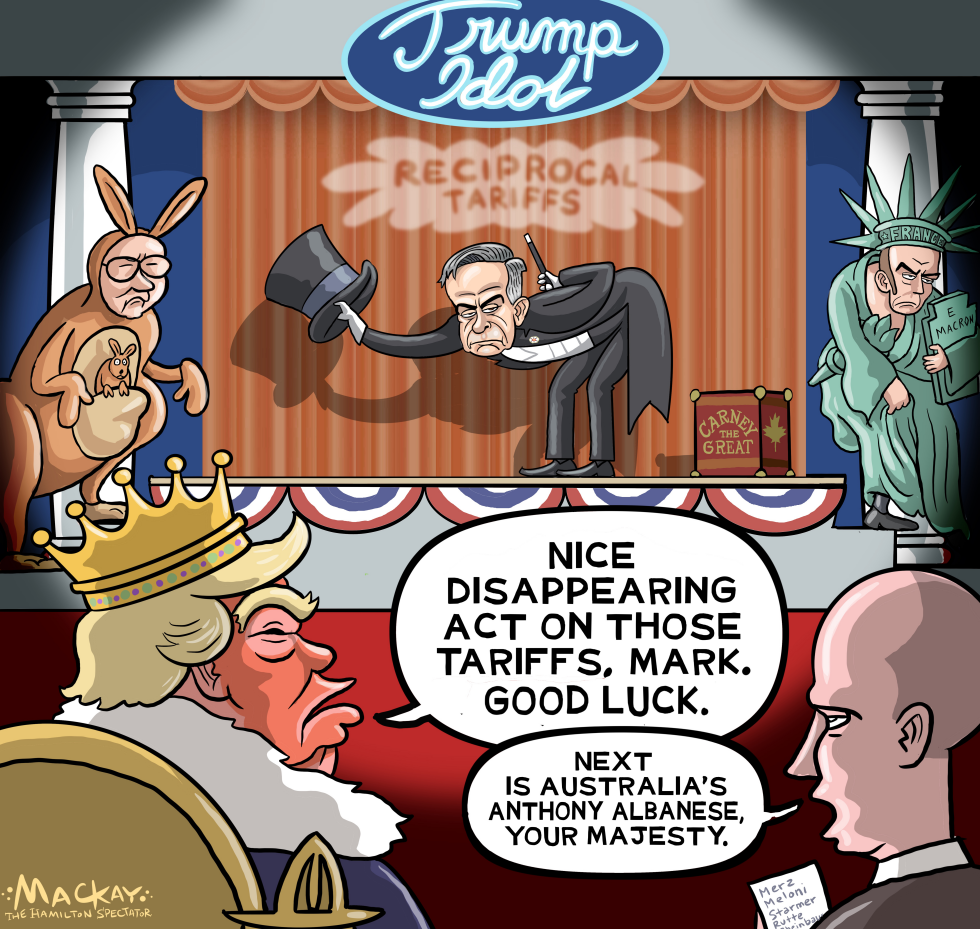
Graeme MacKay's cartoon depicts a stage parody of American Idol called Trump Idol, where a crowned Donald Trump judges world leaders performing acts related to reciprocal tariffs. A figure resembling Mark Carney bows in a top hat, having performed a disappearing act on tariffs, while a kangaroo-costumed character waits, labeled as Australia's Anthony Albanese. A Statue of Liberty figure holds a sign for E Macron France, and a box reads Carney The Great with a Canadian flag. The scene satirizes trade, diplomacy, economy, trust, and international relationships under Trump's strategy, with a bald advisor announcing the next act to 'Your Majesty.' The backdrop emphasizes reciprocal tariffs, blending protest and boycott themes in a humorous critique of USMCA and global partnerships.