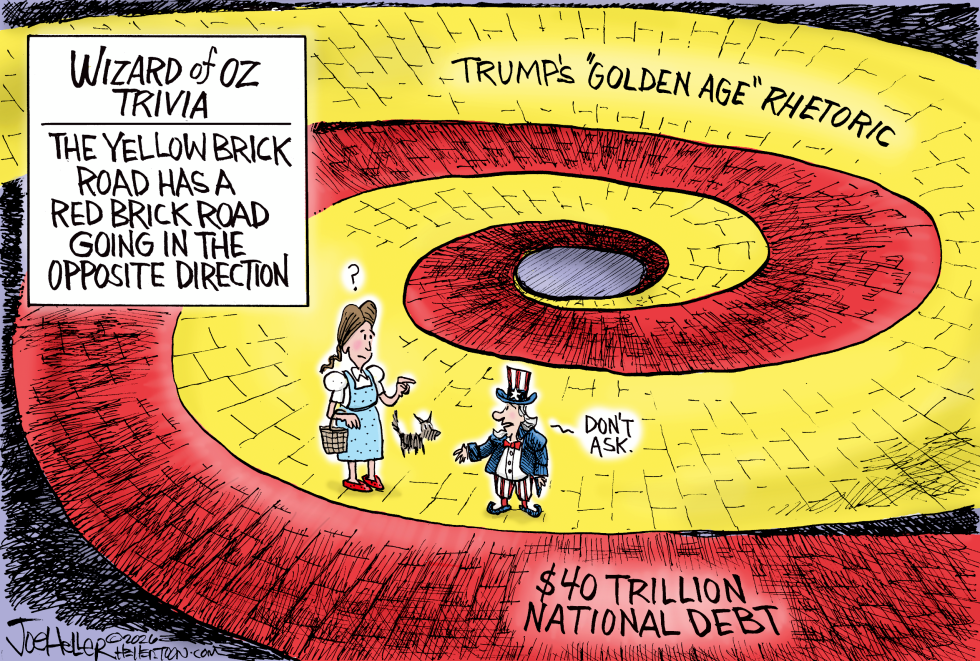
National debt has reached forty trillion dollars amid ongoing debate over fiscal policy. The administration promotes a golden age vision while critics highlight unsustainable borrowing. The piece argues that optimistic rhetoric masks a path leading directly into deeper financial trouble.
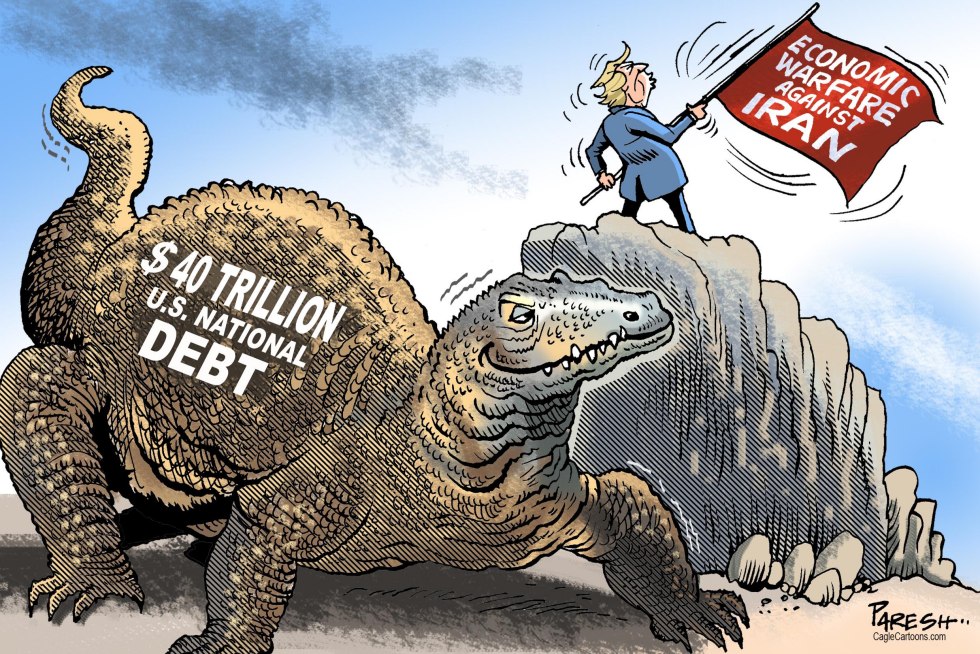
The image depicts Donald Trump standing on a rocky outcrop and waving a red flag reading Economic Warfare Against Iran. Below him a large dinosaur carries the label $40 Trillion U.S. National Debt on its side. The composition places the debt creature in motion near the rock formation. The scene responds to ongoing discussions of U.S. policy toward Iran and the size of federal obligations. The visual places the foreign policy action directly above the debt figure to link the two elements.
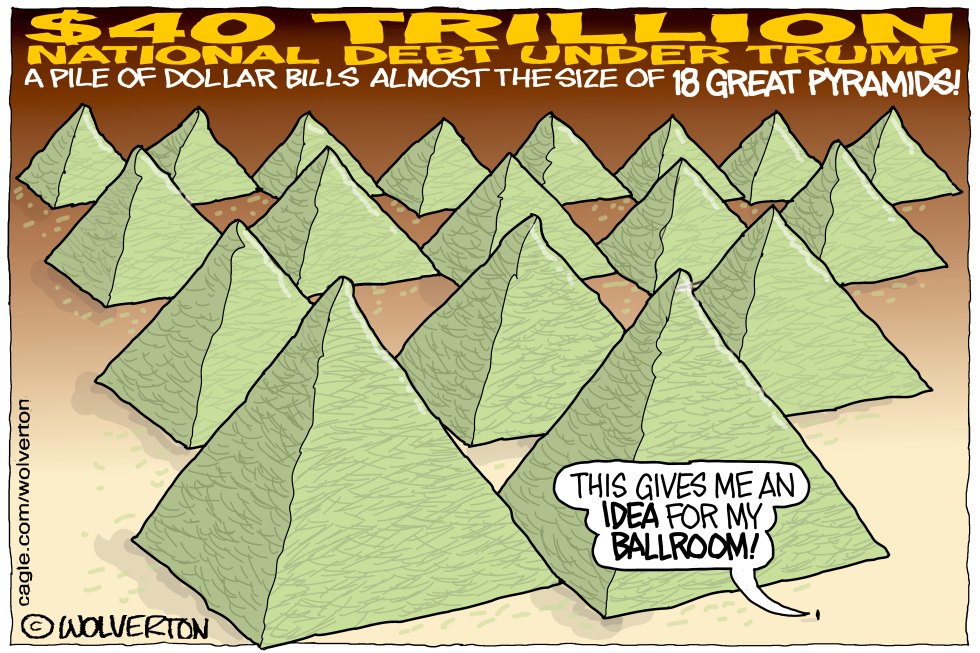
The image presents a field of green pyramids constructed from dollar bills set against a brown and tan background. Large text at the top states the $40 trillion national debt figure under Trump and compares the pile size to 18 great pyramids. A speech bubble emerges from one pyramid in the foreground with a remark about a ballroom idea. The composition places the largest structures toward the front and smaller ones receding into the distance. The visual ties the debt total directly to the current administration period referenced in the text.
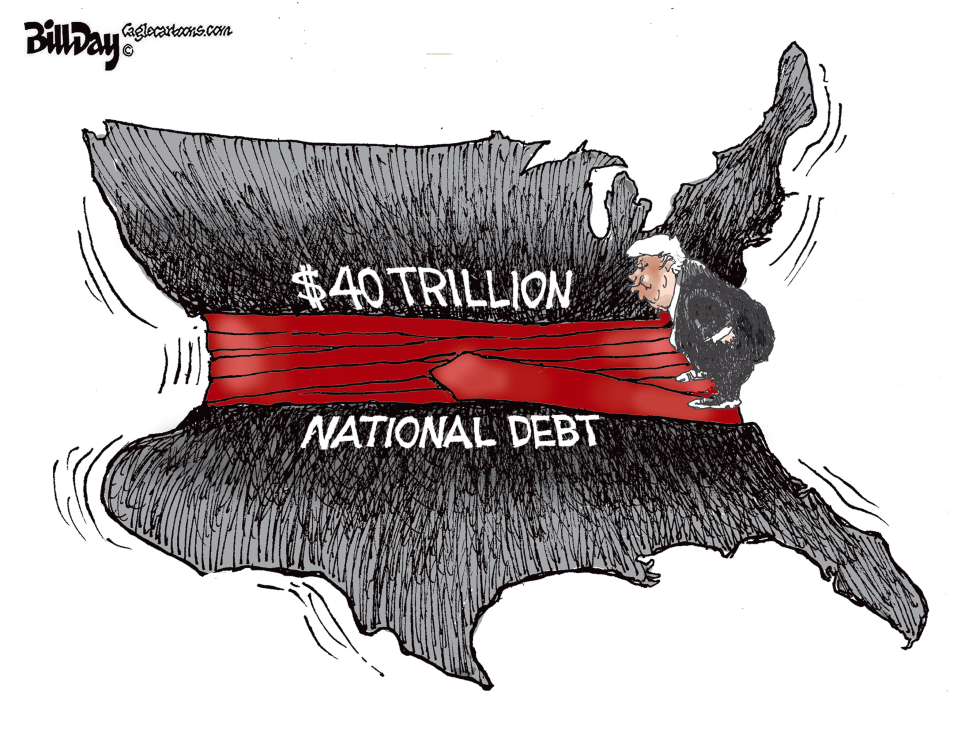
The cartoon shows Donald Trump positioned next to a red band labeled $40 trillion national debt stretched across a shaded map of the United States. The red band cuts through the map with motion lines suggesting strain. Text identifies the debt amount and the national debt label below it. The image responds to ongoing concerns about federal debt levels projected to reach that figure. It places the president in direct visual association with the fiscal challenge.
The cartoon illustrates the rollout of a major GOP budget bill nicknamed the big beautiful bill. It shows billionaires in an exclusive club while a tuxedoed figure presents a $3.8 trillion debt scroll to a distressed man holding a please help sign. The piece critiques how tax cuts for the wealthy add trillions to the national debt with costs passed to middle and lower income groups.