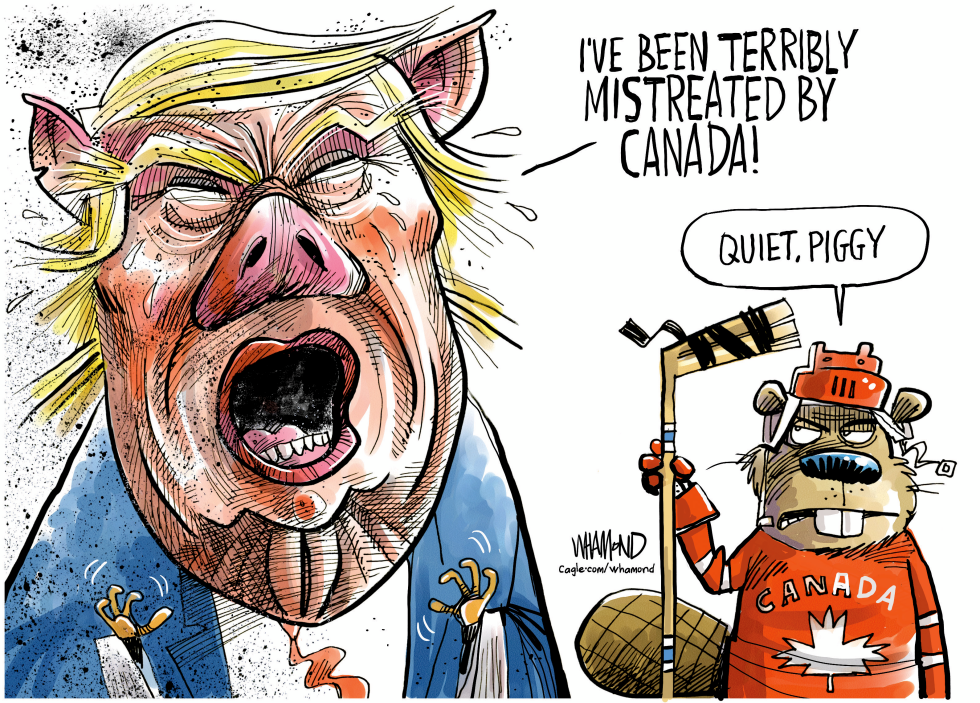
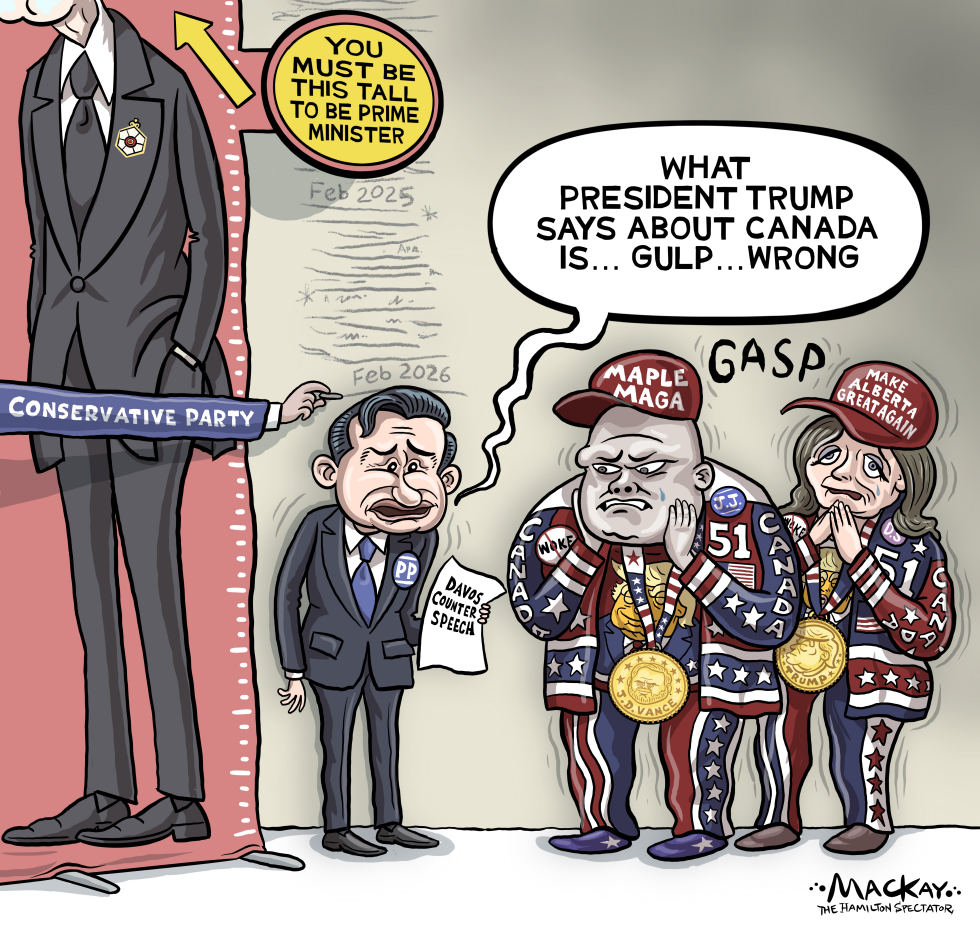
Donald Trump has publicly accused Canada of mistreating the United States in ongoing trade matters. The claim comes amid renewed friction over tariffs and cross border commerce. Canada has responded with its own pointed rebuttal. The exchange highlights persistent strains in bilateral relations. The cartoon portrays the accusation as exaggerated and the Canadian reply as direct. It suggests the US position lacks substance and invites a firm counter.
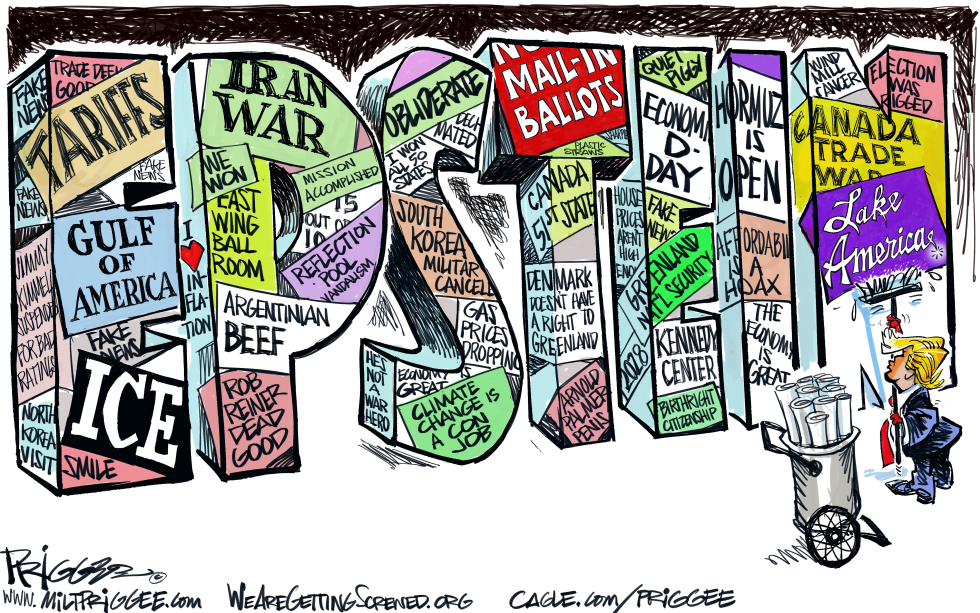
Donald Trump appears in a September 2026 cartoon pushing a cart stacked with signs promoting tariffs, questioning mail-in ballots, and asserting claims about Iran, Canada trade, and domestic issues. The image captures a pattern of public messaging that blends economic nationalism with repeated challenges to established processes. The editorial position frames these statements as a deliberate strategy to keep multiple controversies in motion at once.
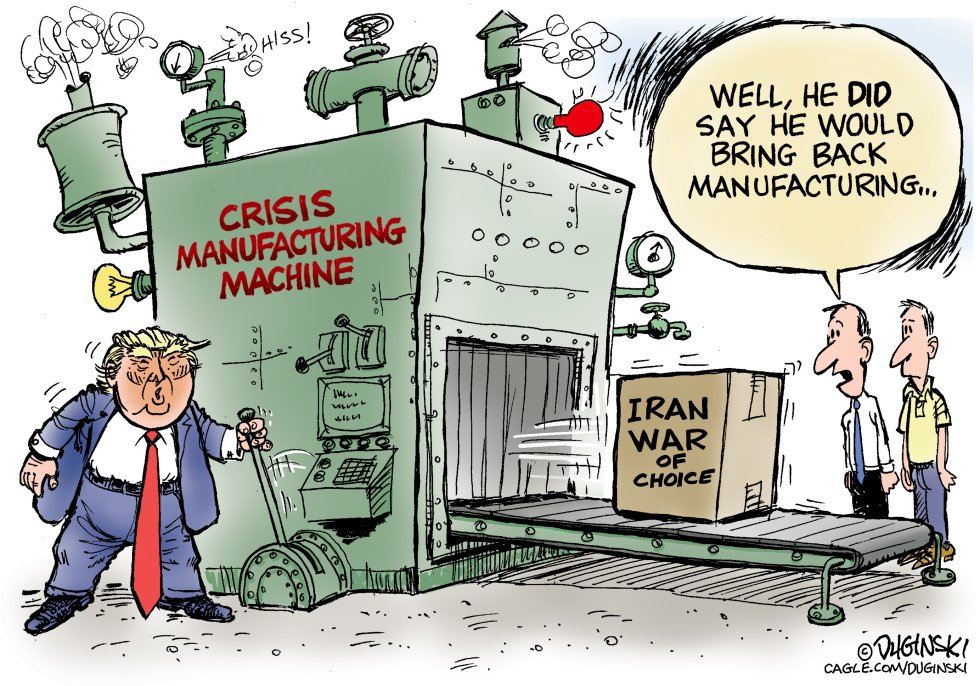
Donald Trump, holding the presidency in 2026, faces renewed scrutiny over foreign policy toward Iran. Recent statements revive campaign pledges to restore domestic manufacturing while tensions with Tehran escalate. The administration\\\'s approach draws criticism for prioritizing confrontation over diplomacy. Observers note the pattern of generating external crises rather than economic gains at home. The cartoon argues that Trump\\\'s actions fulfill a literal version of his manufacturing rhetoric by producing conflict instead of jobs.
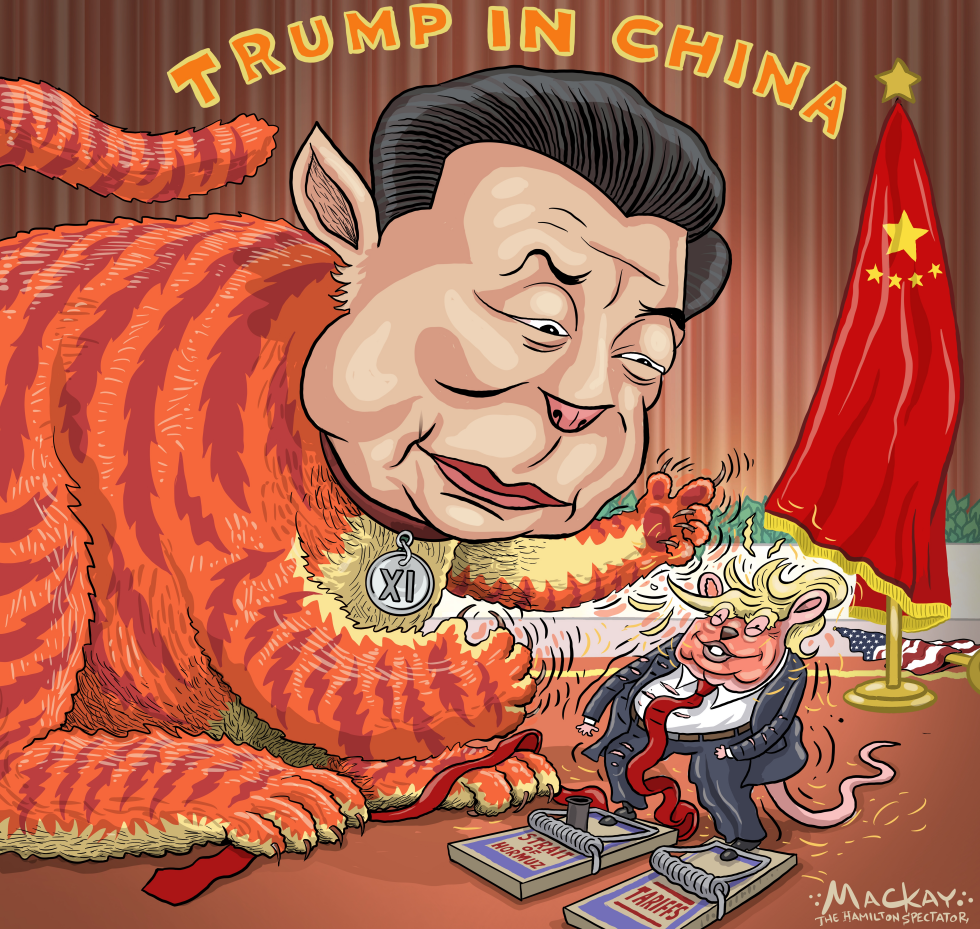
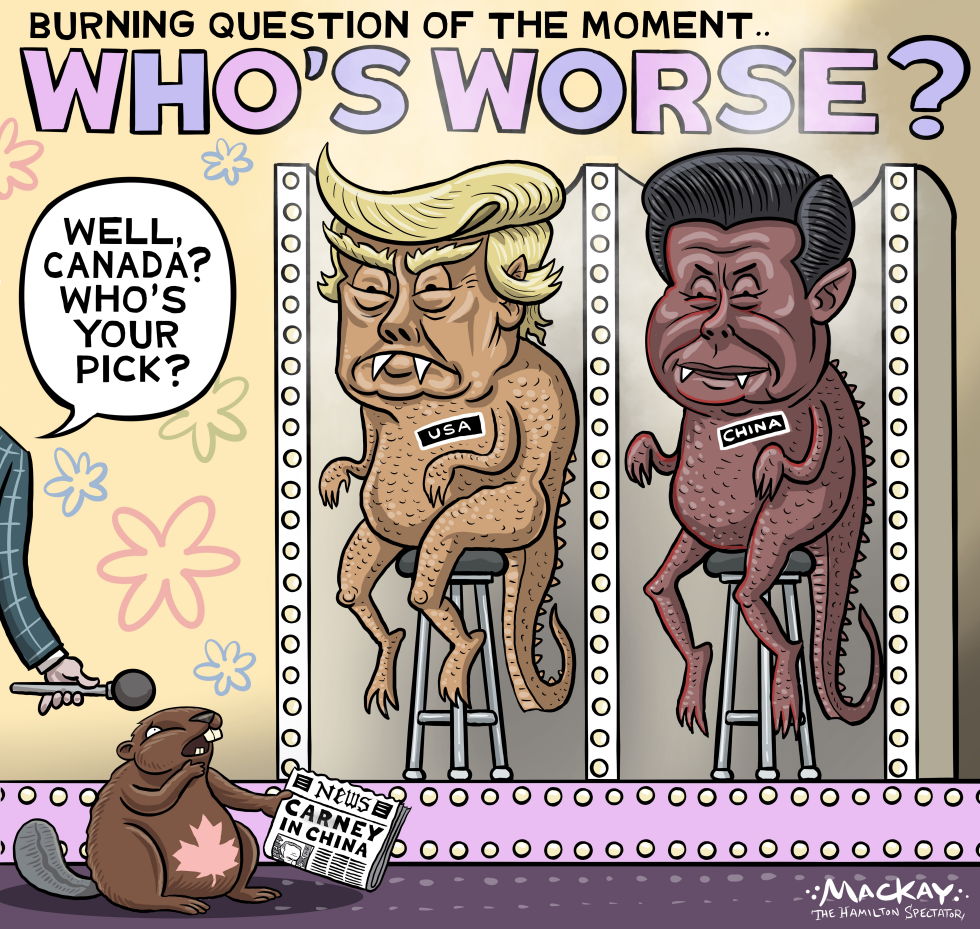
The cartoon shows Canada as a beaver facing a game show choice between monstrous figures representing the USA under Trump and China under Xi. A newspaper references Mark Carney in China amid ongoing trade tensions and protectionism.
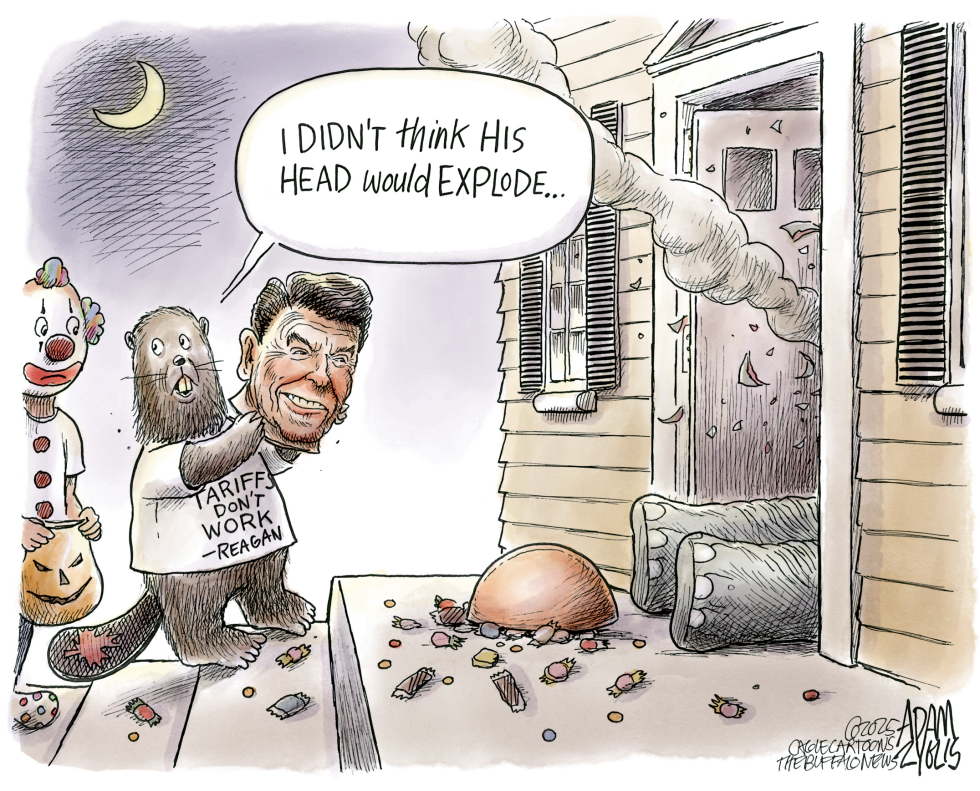
The cartoon depicts a beaver costumed as Ronald Reagan holding a prop head on a damaged porch while a clown stands nearby with a pumpkin bucket. Debris litters the steps after an apparent explosion inside the house. The beaver's shirt quotes Reagan against tariffs. The scene responds to recent Ontario ads criticizing proposed tariffs and their economic effects on Canada-US trade relations around late October 2025.
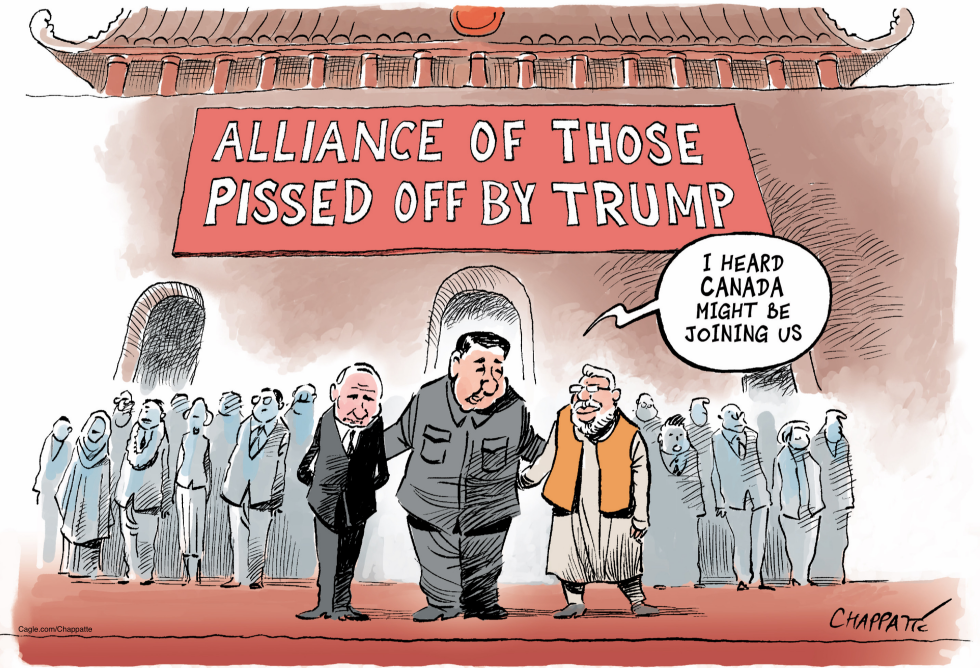
On September 6, 2025, Patrick Chappatte depicts Xi Jinping, Vladimir Putin and Narendra Modi forming an alliance explicitly aimed at Donald Trump. The red banner above them reads Alliance of Those Pissed Off by Trump. Modi suggests Canada may join next. The scene places the three leaders at the center of a building entrance with other figures in the background. The cartoon highlights tensions in international relations tied to recent U.S. policy shifts under Trump.
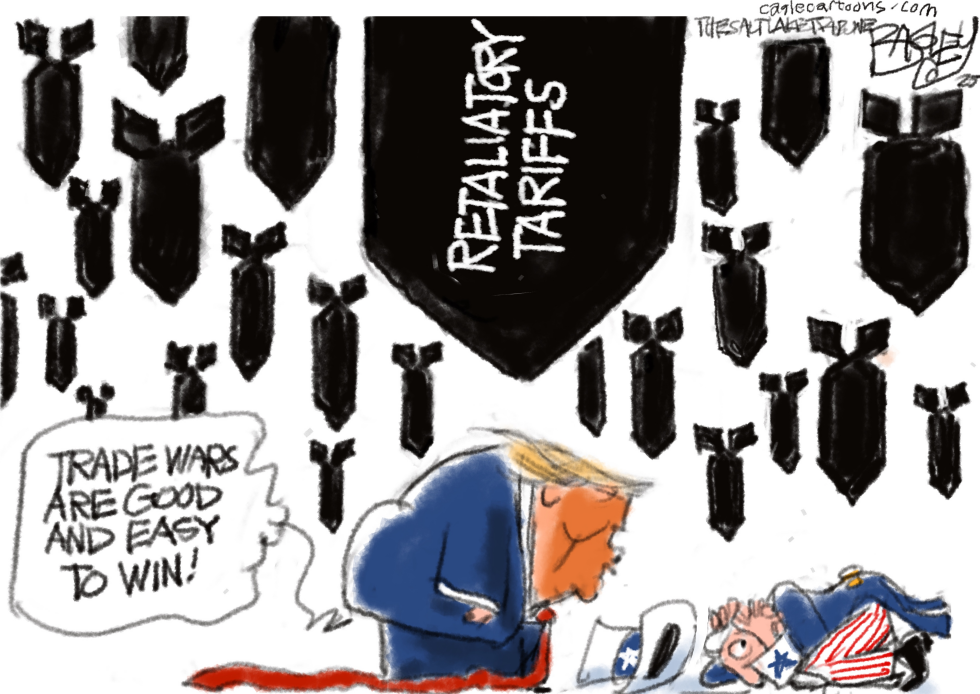
On April 8, 2025, the cartoon depicts Donald Trump proclaiming trade wars easy to win while retaliatory tariff bombs fall around a downed Uncle Sam, reflecting ongoing U.S. tariff policies and international responses from Europe and China.
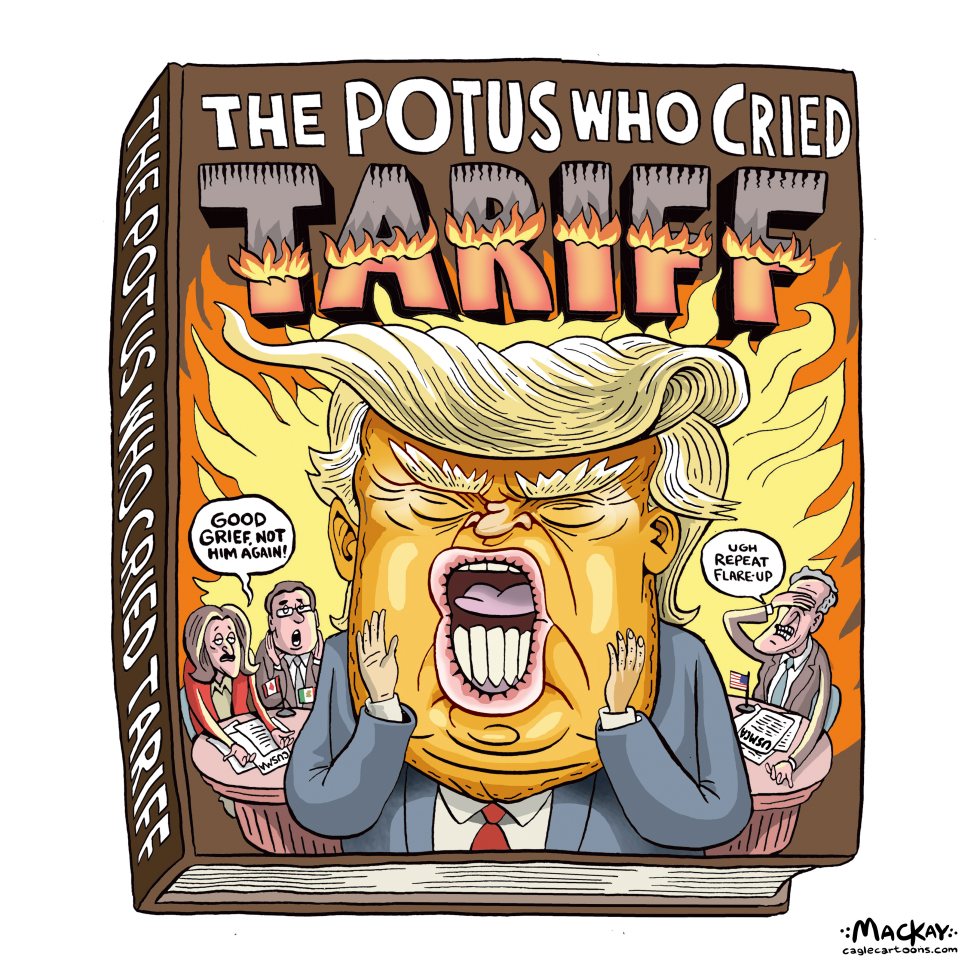
Graeme MacKay's cartoon reimagines Aesop's fable as 'The POTUS Who Cried TARIFF,' with Donald Trump's exaggerated face shouting on a fiery book cover. Representatives from USA, Mexico, and Canada sit at a table, showing exasperation with speech bubbles like 'Good Grief not him again!' and 'Ugh Repeat flare-up?' The tags USA, Mexico, Canada, trade, diplomacy, tariff, Donald Trump, USMCA, NAFTA, The Boy Who Cried Wolf, Aesop, and fable underscore the satire on repeat threats becoming ineffective. This visual pokes at how constant warnings lose impact in international relations.
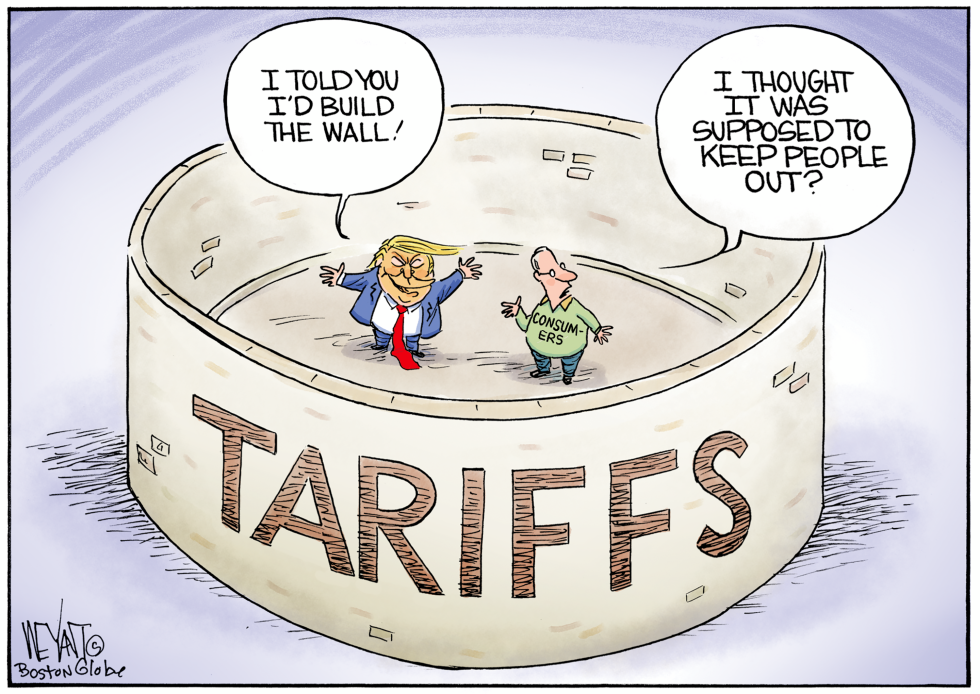
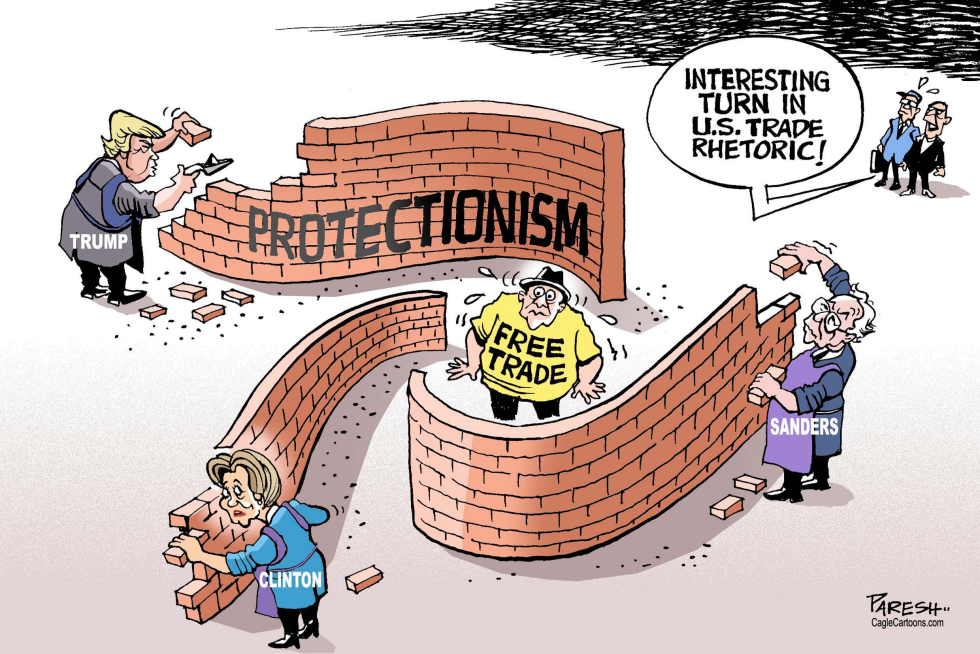
The cartoon shows Trump inside a circular wall labeled 'TARIFFS,' declaring he built the wall, with a figure marked 'CONSUMERS' puzzled that it's supposed to keep people out. Tags like trump, tariffs, threats, Mexico, Canada, China, trade, wall, prisoner, consumers underscore the irony. The image critiques how tariffs meant to protect against foreign threats from Mexico, Canada, and China end up trapping domestic consumers like prisoners. This visual metaphor draws on Trump's famous wall promise, flipping it to show trade policies harming those inside. The dry humor lies in the reversal, where the wall imprisons rather than excludes, commenting on economic fallout.