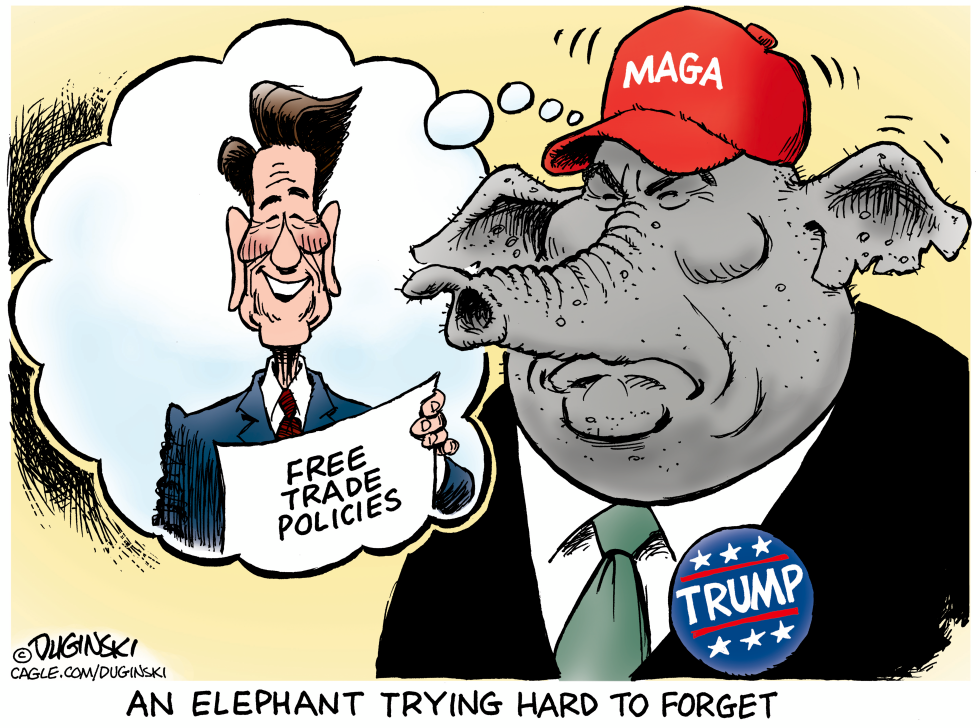
Republicans under Donald Trump have moved away from Ronald Reagan's free trade advocacy toward protectionist policies. The shift reflects internal party tensions over economic strategy and global engagement. The cartoon criticizes the GOP for abandoning a core Reagan principle in favor of current leadership priorities.
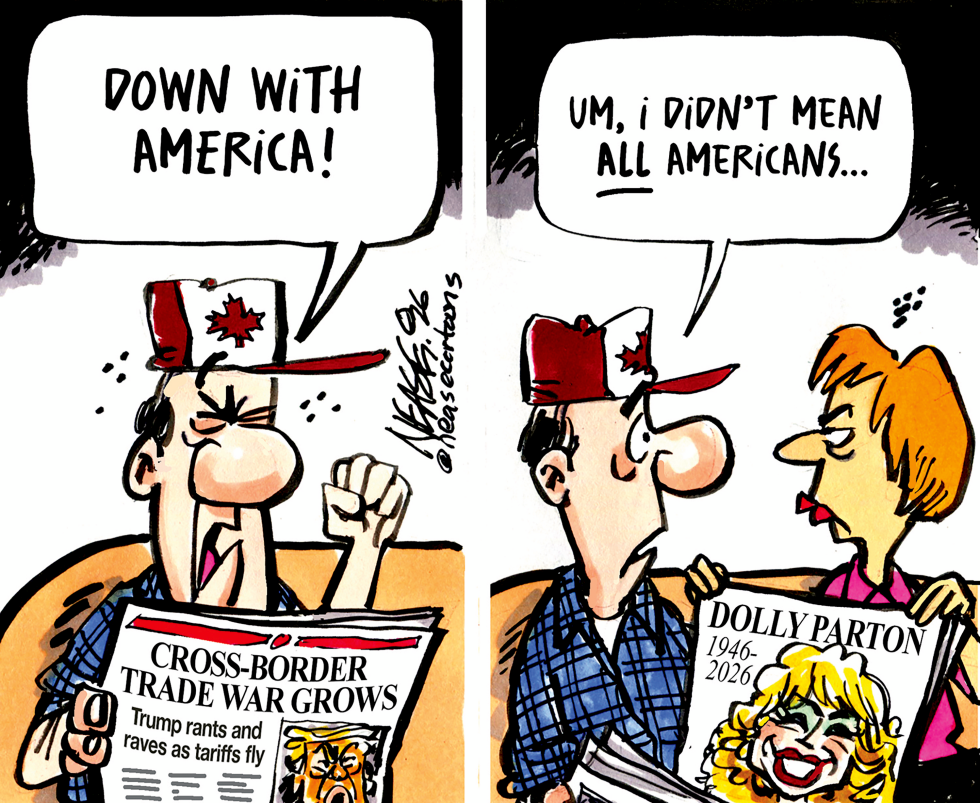
US-Canada trade tensions intensified in August 2026 as tariffs mounted amid heated rhetoric from President Trump. The dispute drew sharp reactions north of the border. The cartoon takes the position that even vocal critics of America make exceptions for beloved figures like Dolly Parton.
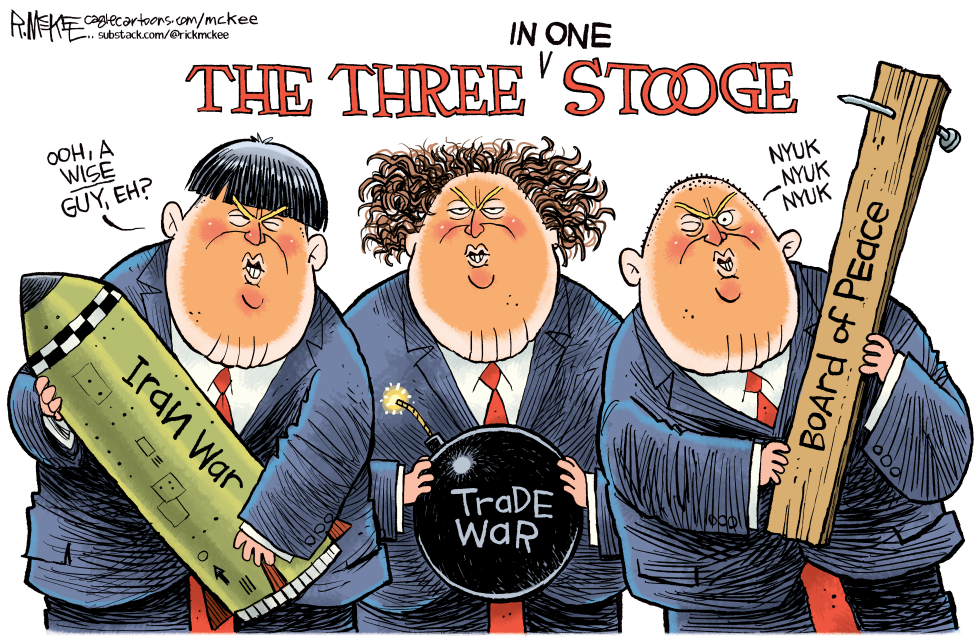
The cartoon depicts three political figures styled as the Three Stooges holding symbols of an Iran War missile, a Trade War bomb and a Board of Peace plank. It responds to ongoing tensions involving Iran policy and trade disputes by using the comedy trio to portray chaotic leadership. The visual argument suggests that efforts at peace coexist with aggressive posturing in both military and economic arenas.
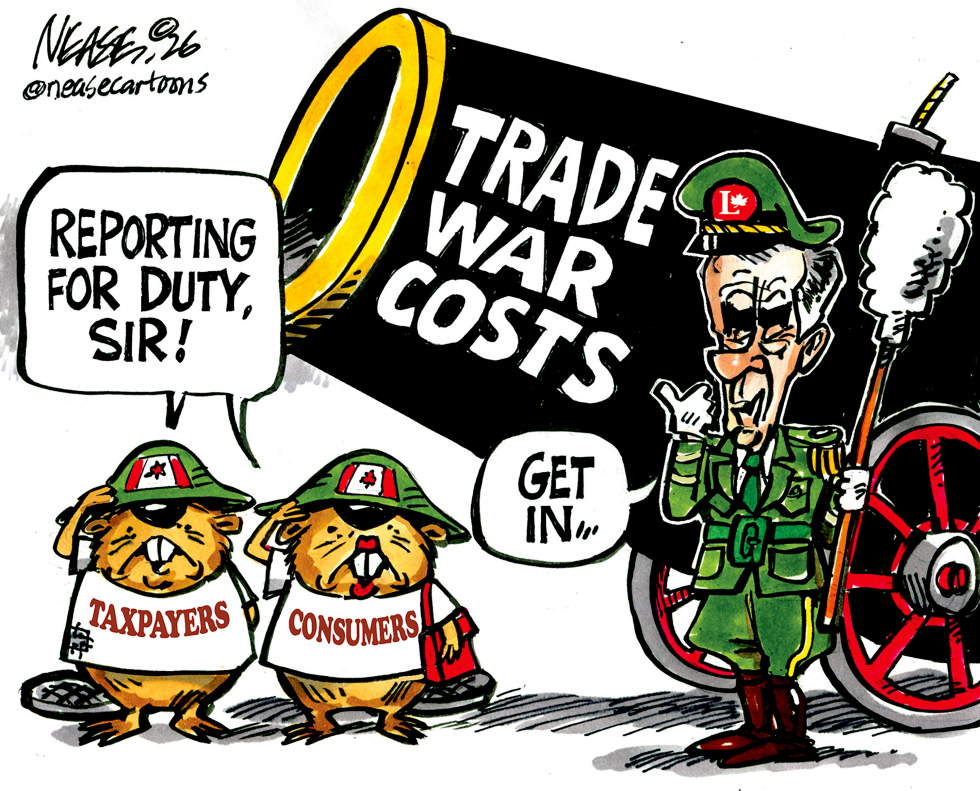
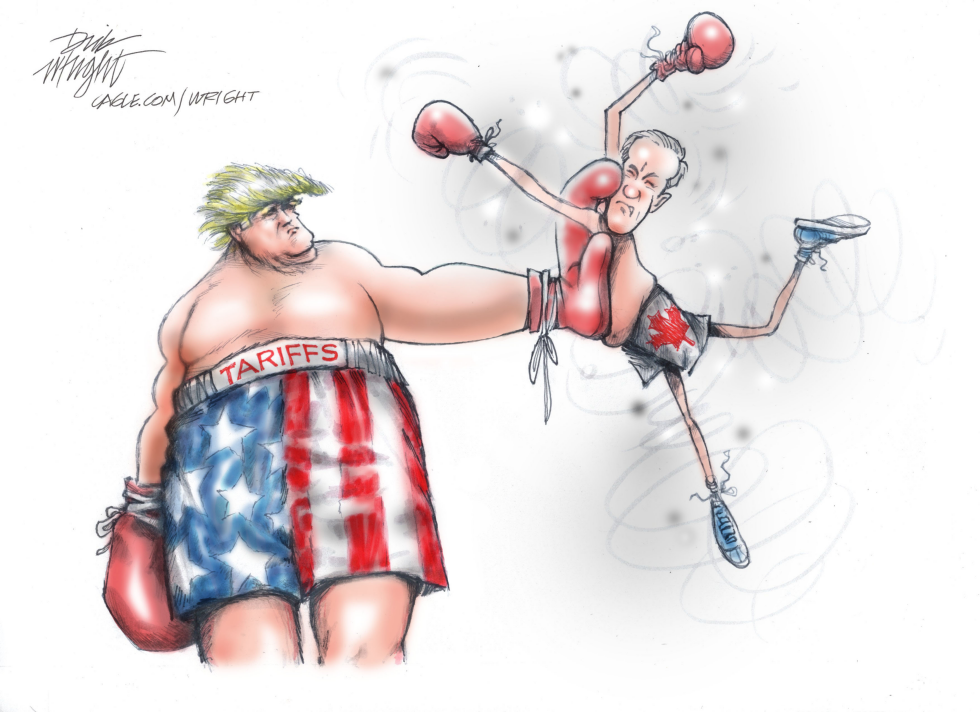
Canadian taxpayers and consumers face rising costs from an ongoing trade dispute. The situation places direct financial pressure on households through higher prices and economic measures. The editorial takes the position that ordinary citizens bear the burden while leadership directs the effort.
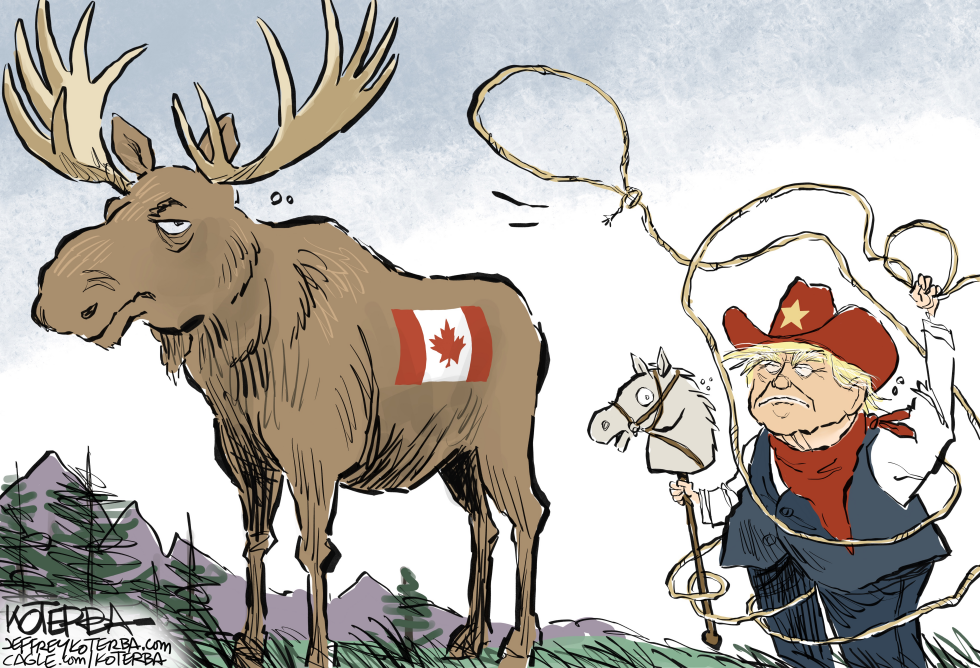
Donald Trump has renewed pressure on Canada over trade and border issues in recent weeks. The moves echo past tariff threats and comments about closer integration. The piece portrays these efforts as clumsy and self-defeating.
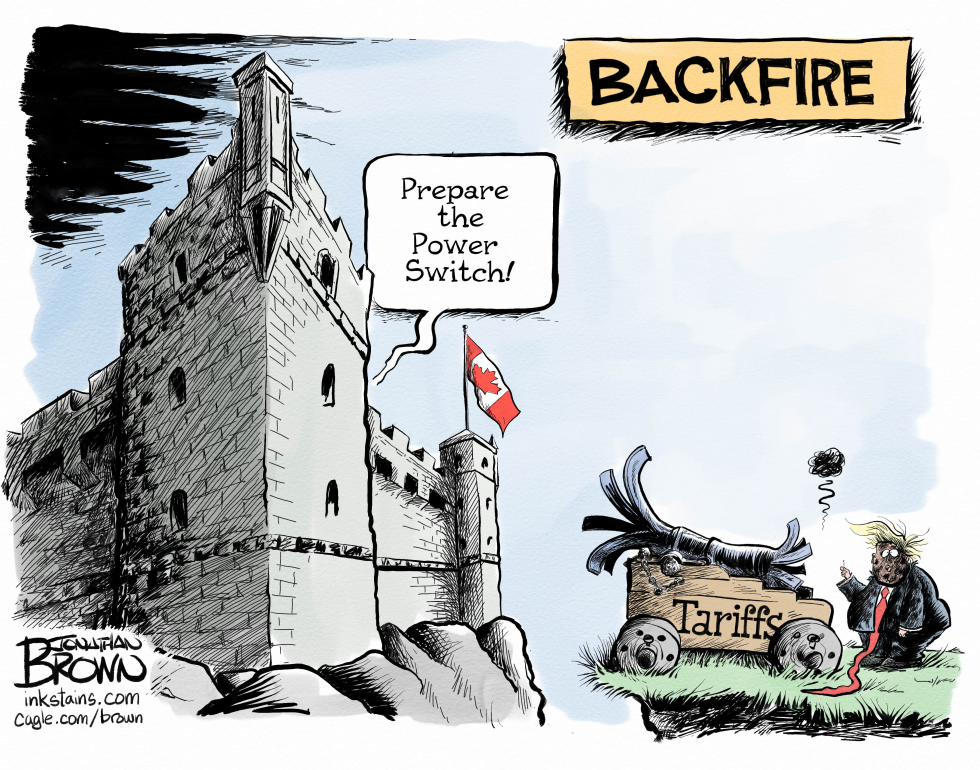
The cartoon shows a Canadian castle flying its flag while a cannon labeled Tariffs explodes backward toward a figure resembling Donald Trump. The scene responds to ongoing trade tensions where U.S. tariffs on Canadian goods prompted retaliatory measures. The visual emphasizes the policy rebounding on its originator rather than achieving intended pressure.
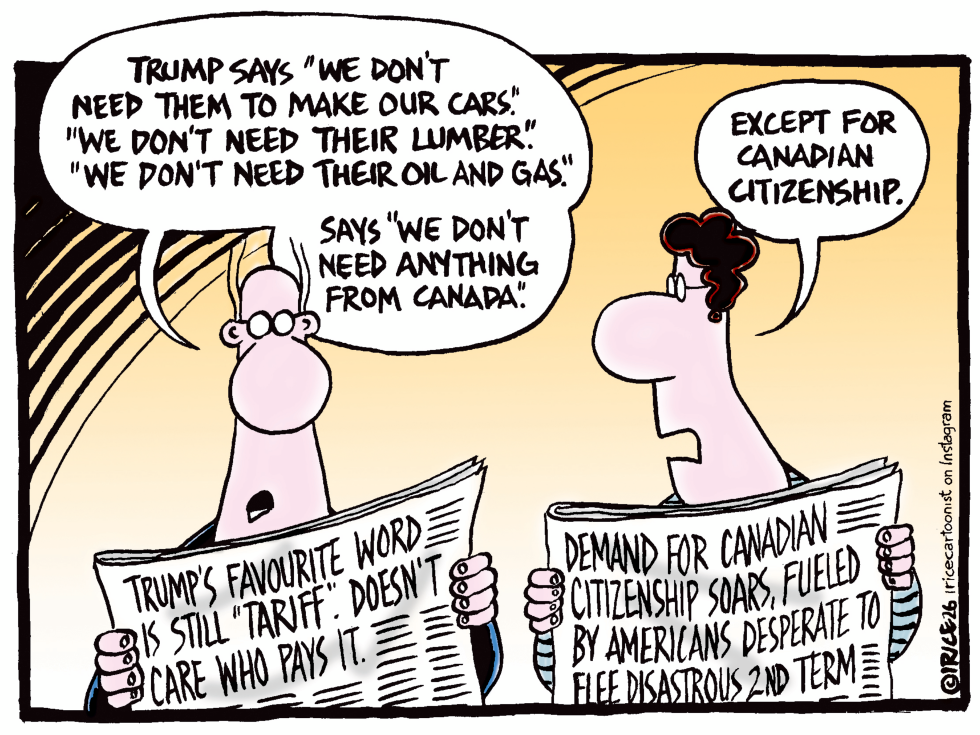
Trump's renewed tariffs on Canadian cars, lumber, oil and gas have triggered a sharp rise in applications for Canadian citizenship from Americans wary of his second term. The move underscores ongoing US-Canada trade friction and domestic policy backlash. The cartoon frames the policy as self-defeating, highlighting the irony of Canadians becoming the one Canadian product still in demand.
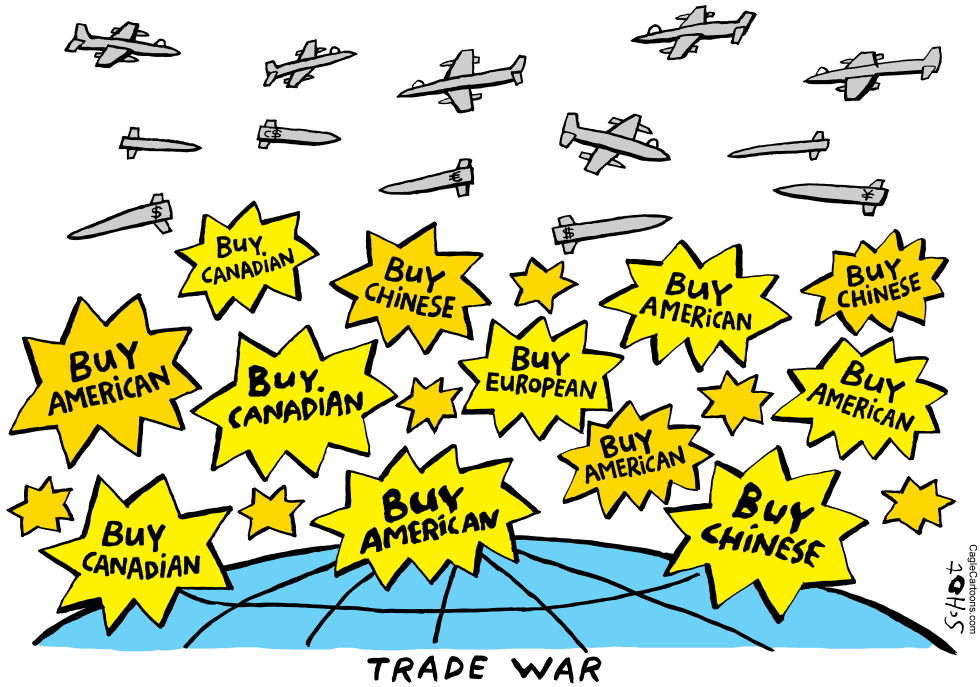
Competing buy national campaigns from multiple countries have intensified trade disputes, raising concerns over economic retaliation and supply chain disruptions. The piece argues these appeals are directly contributing to broader conflict.
President Trump imposed new tariffs targeting Canadian goods in August 2026, escalating bilateral trade friction over lumber, dairy and autos. The measures aim to protect U.S. industries and renegotiate terms. Markets reacted with volatility in both countries. The editorial argues the tariffs represent necessary leverage that weakens Canada's position and forces concessions.
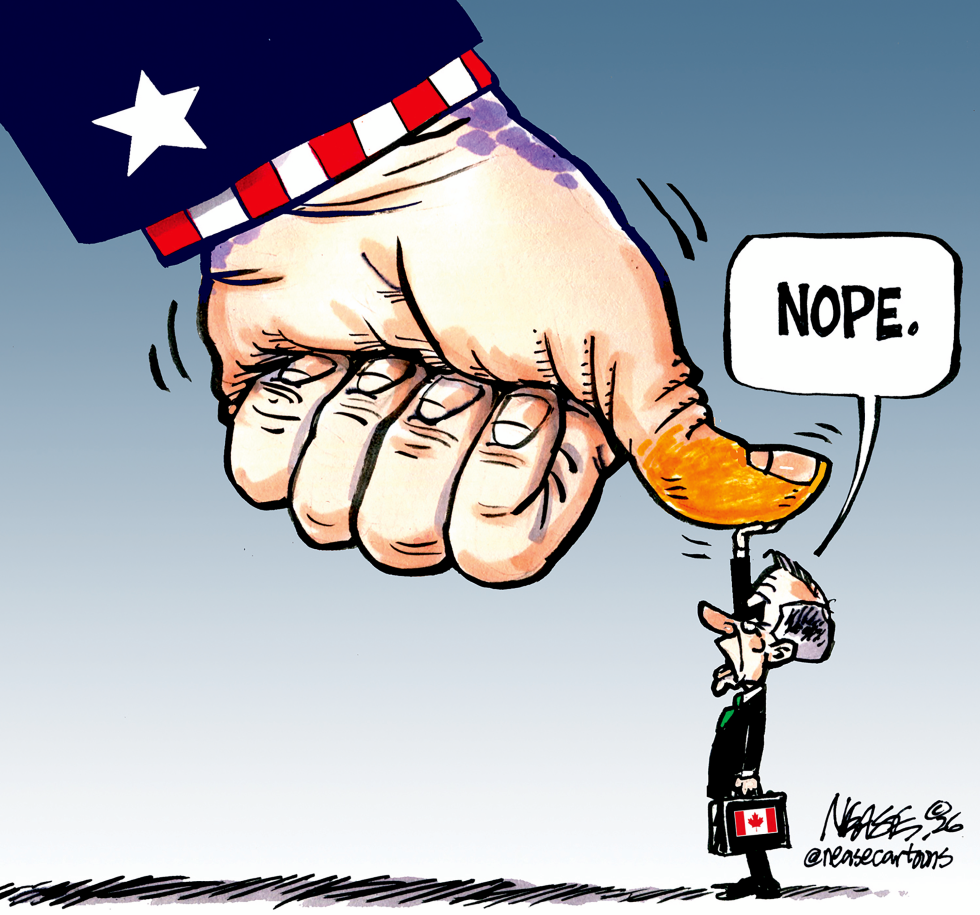
Canada has rejected a US trade offer during bilateral negotiations. The decision highlights ongoing tensions over economic terms between the two neighbors. It matters because trade relations affect supply chains and tariffs across North America. The piece portrays the Canadian stance as a direct refusal to the American proposal.
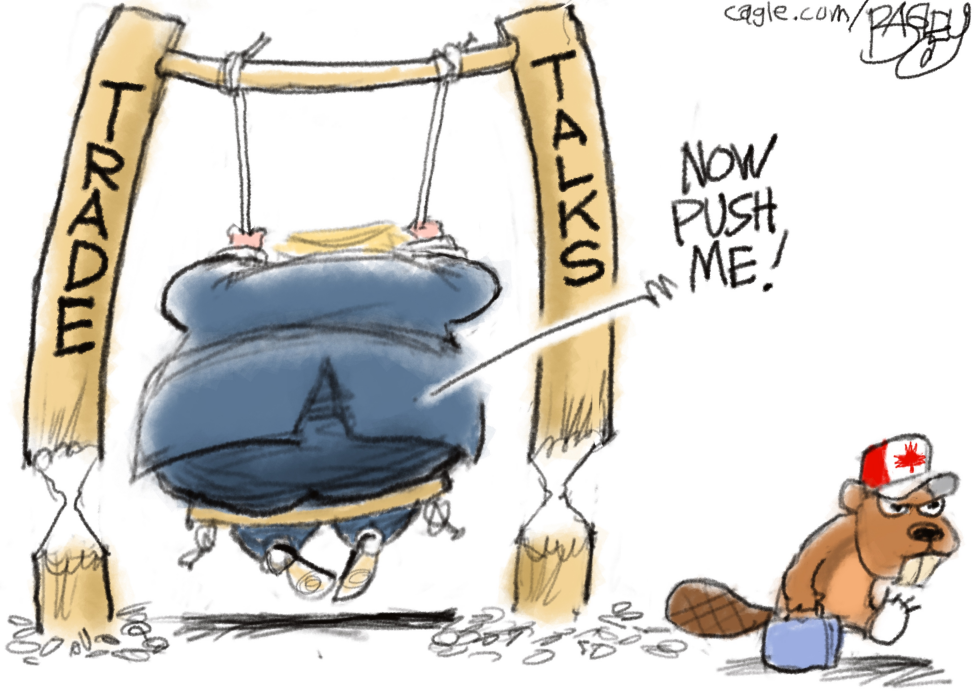
Canada signals intent to advance trade tax measures involving the United States. The move comes amid ongoing bilateral economic friction over tariffs and duties. The development carries weight for cross-border commerce and supply chains. The piece frames the Canadian position as actively pressing the United States forward on the issue.
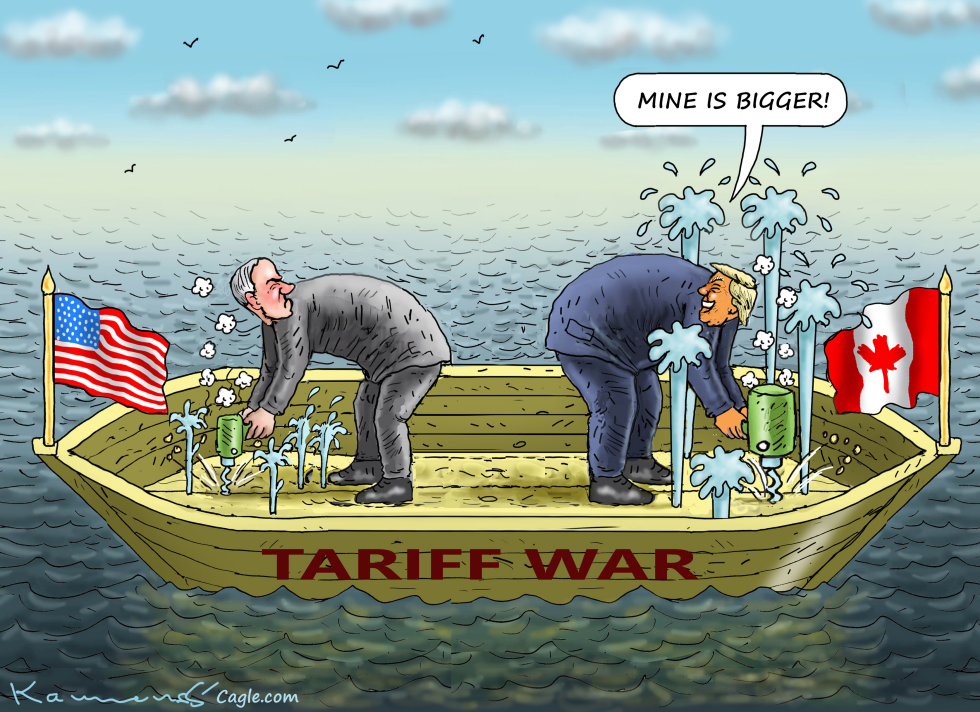
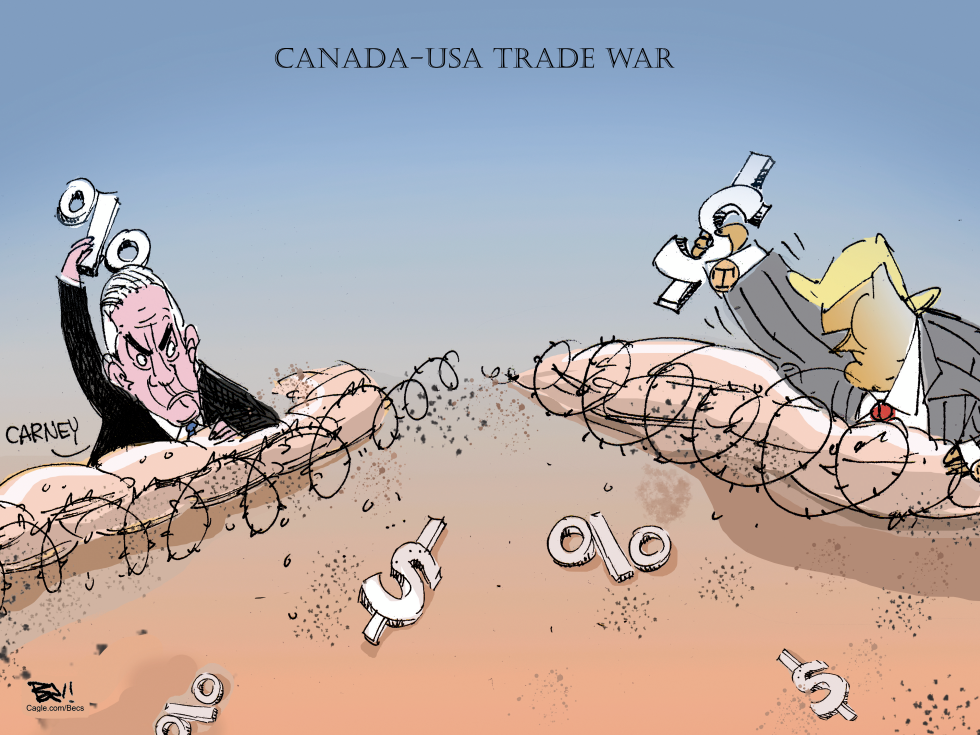
US and Canadian leaders have intensified a tariff dispute through reciprocal trade barriers that threaten cross-border supply chains and consumer prices. The editorial depicts both sides actively undermining their shared economic vessel rather than seeking negotiated relief.
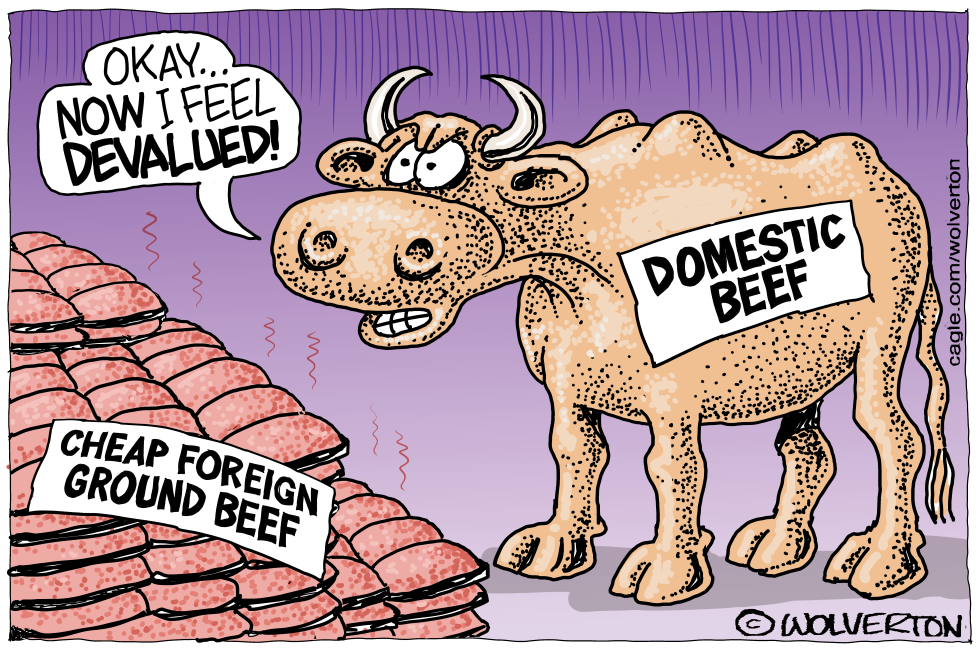
The cartoon depicts a domestic beef cow standing beside stacks of cheap foreign ground beef. The cow, labeled clearly, utters a speech bubble expressing feelings of devaluation. Artist Monte Wolverton uses the visual to address ongoing pressures on the US beef sector from lower-cost imports. The image was published on August 23, 2026. It reflects persistent concerns in agricultural markets where domestic producers compete with foreign supply. The composition places the cow in the foreground with the imported product shown as abundant and lower positioned.
Mark Carney and President Trump clashed over Canada-U.S. trade policies in August 2026, with both sides imposing tariffs and barriers that disrupted cross-border commerce. The dispute centers on economic protections and retaliatory measures affecting businesses and consumers in both countries. The editorial highlights the mutual damage from escalating trade hostilities between the two nations.
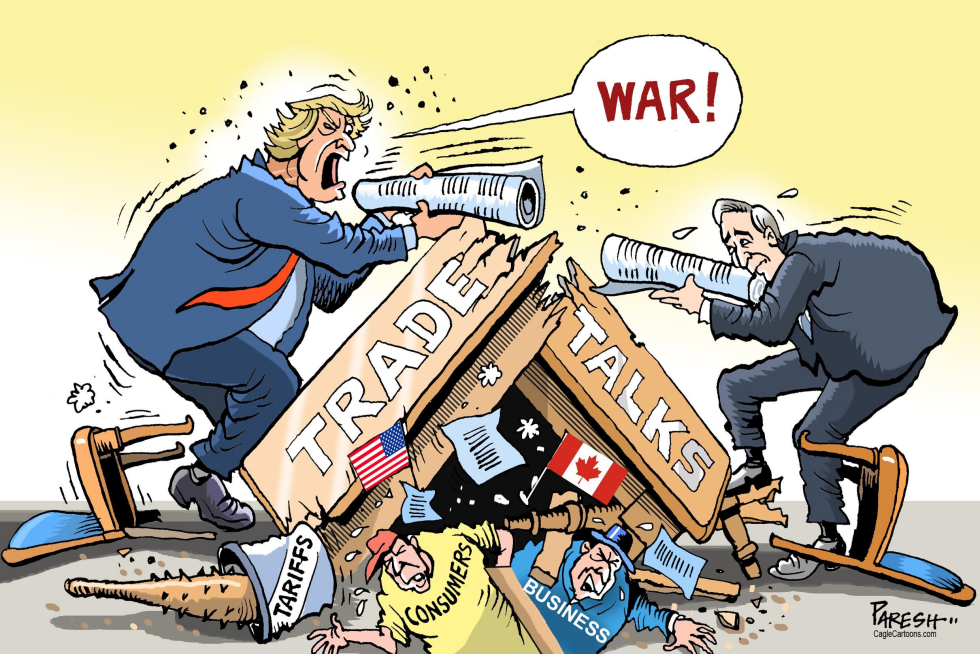
The cartoon depicts former President Donald Trump and a Canadian counterpart locked in combat, wielding rolled documents labeled tariffs and talks that smash apart a table marked trade talks. American and Canadian flags lie amid the debris while two figures representing consumers and business lie pinned underneath. Trump shouts war from a speech bubble. The image responds to ongoing US-Canada trade tensions by illustrating how aggressive tariff measures and failed negotiations harm everyday economic interests on both sides of the border.