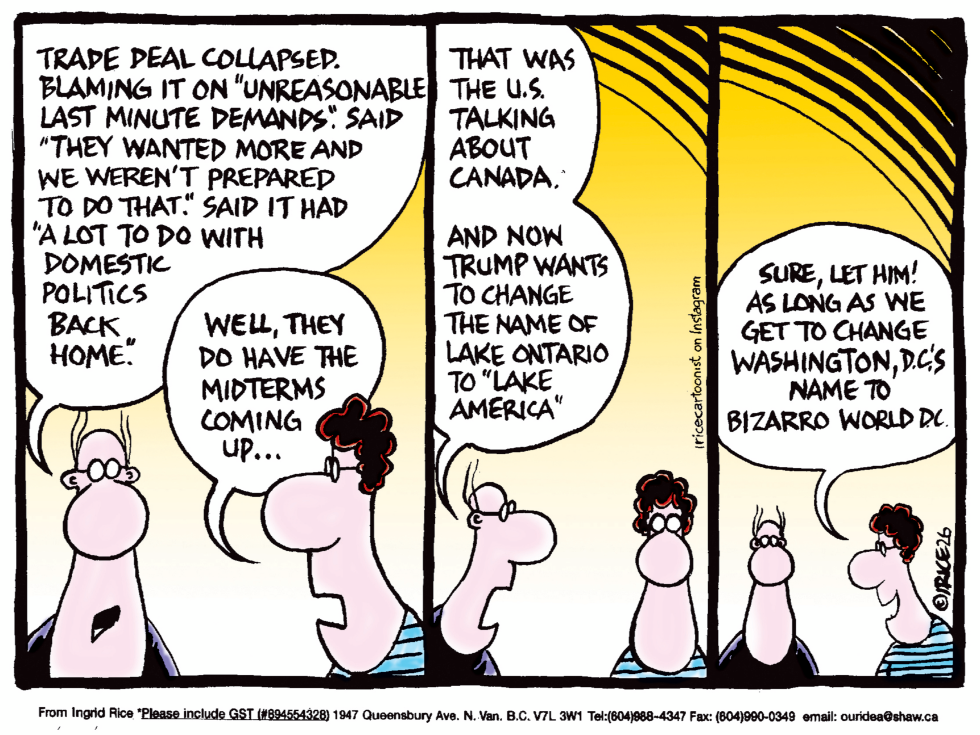
A Canada-U.S. trade deal collapsed after U.S. negotiators cited unreasonable last-minute demands and linked the failure to domestic politics ahead of midterms. President Trump then proposed renaming Lake Ontario to Lake America. Canadian officials responded by offering to rename Washington D.C. to Bizarro World DC if the change proceeds. The exchange highlights how trade tensions and political posturing are escalating between the two countries. The cartoon mocks the name-change idea as emblematic of broader dysfunction in bilateral relations.
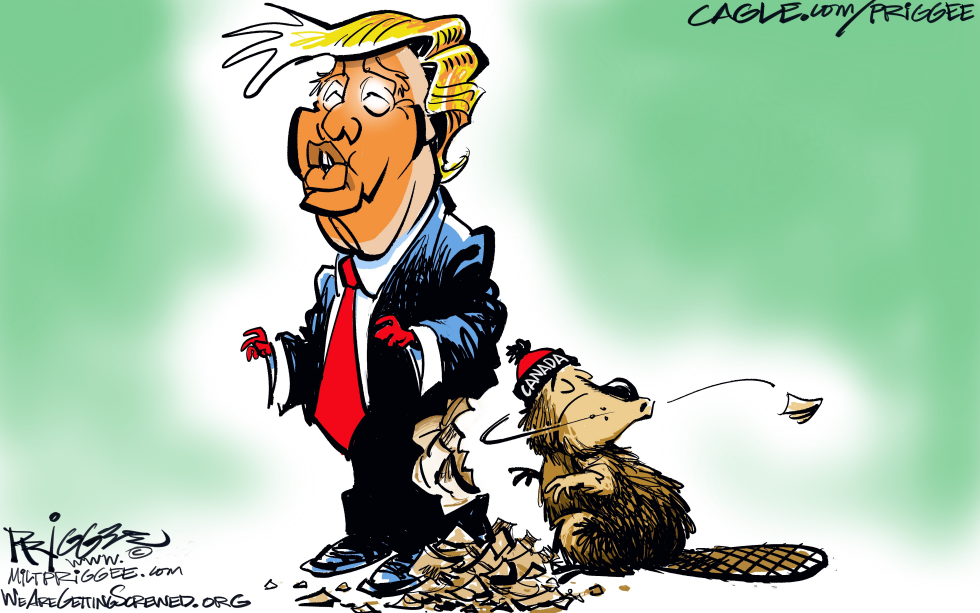
A political cartoon shows Donald Trump with his pants chewed by a beaver wearing a Canada hat. Wood chips litter the ground around his feet. The image captures friction in U.S.-Canada relations as of September 2026. The beaver represents Canada responding to policies from the Trump administration. Trade and diplomatic issues form the backdrop for the visual metaphor.
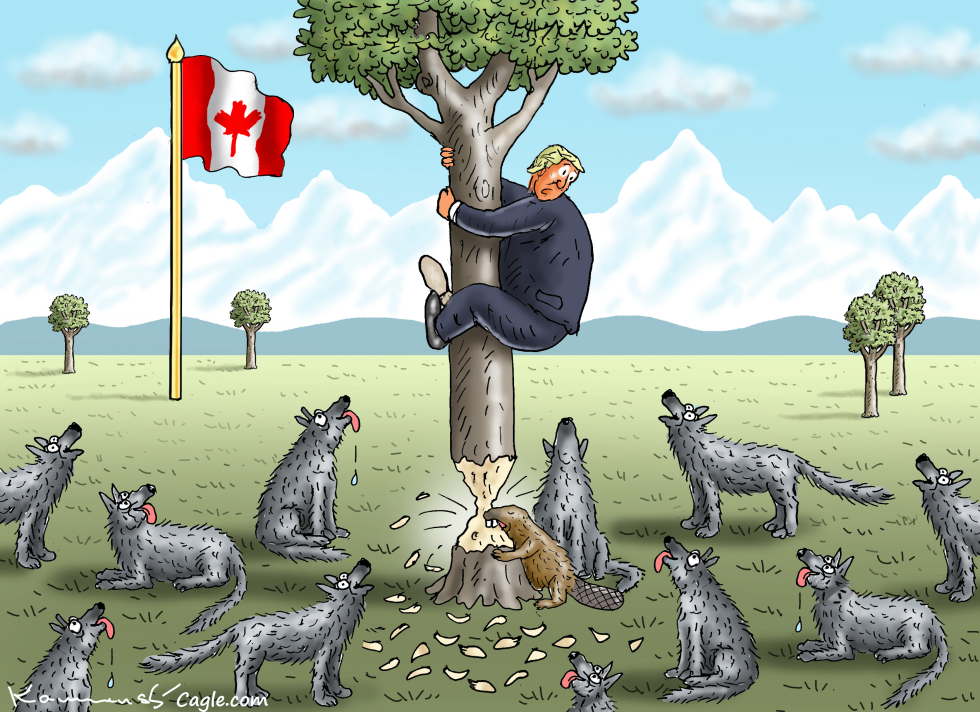
Donald Trump remains entangled in ongoing tensions with Canada over trade and border issues in 2026. The situation highlights persistent friction between the two nations on economic policy. The piece portrays Trump as increasingly isolated by Canadian actions while other actors observe the outcome.
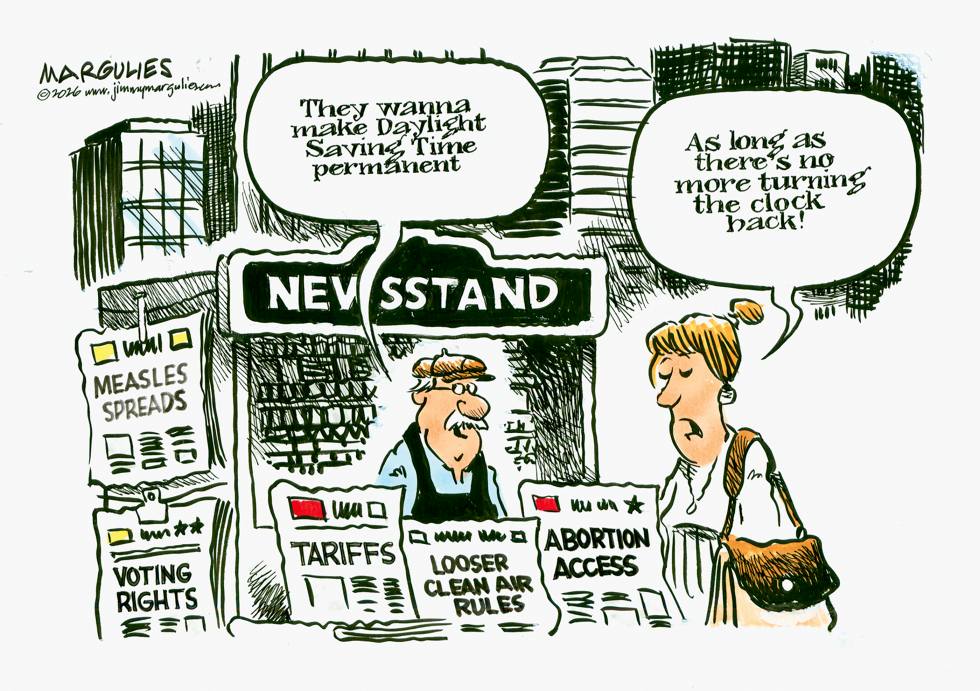
Proposals to make daylight saving time permanent coincide with debates over tariffs, abortion access, voting rights and environmental rules. The cartoon frames these as part of a broader pattern of policy shifts that some view as steps backward.
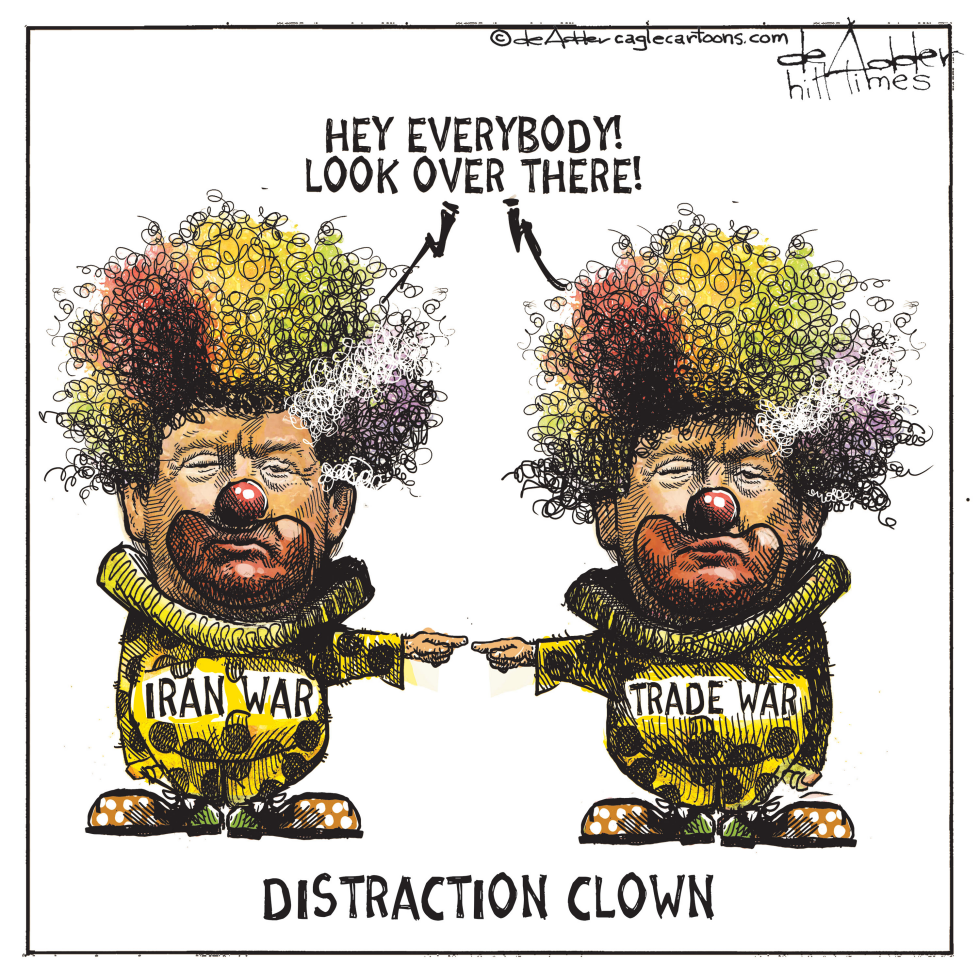
Public attention is being directed toward simultaneous Iran and trade conflicts as potential diversions from other issues. The editorial depicts the two crises as interchangeable distractions promoted by the same source. It argues that leaders are using these flashpoints to shift focus rather than address underlying problems.
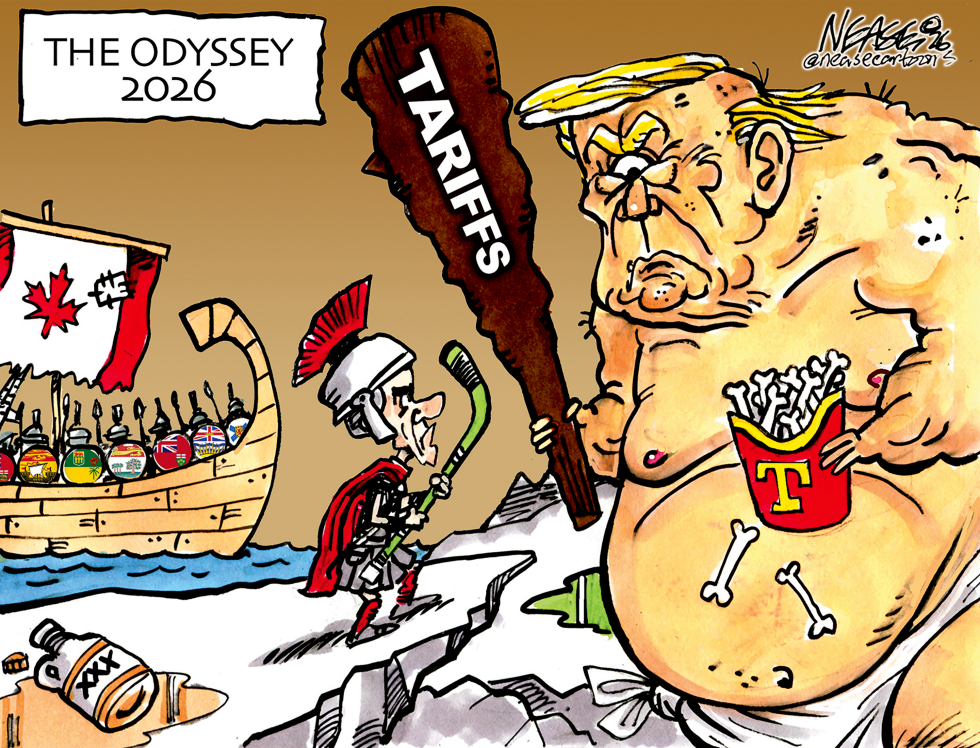
President Trump escalates tariffs on trading partners including Canada in mid-2026. The move targets imports amid ongoing disputes over trade balances and supply chains. Allies respond with coordinated pushback through diplomatic and economic channels. The cartoon casts the confrontation as a one-sided power play by the oversized tariff wielder against smaller coordinated opponents.
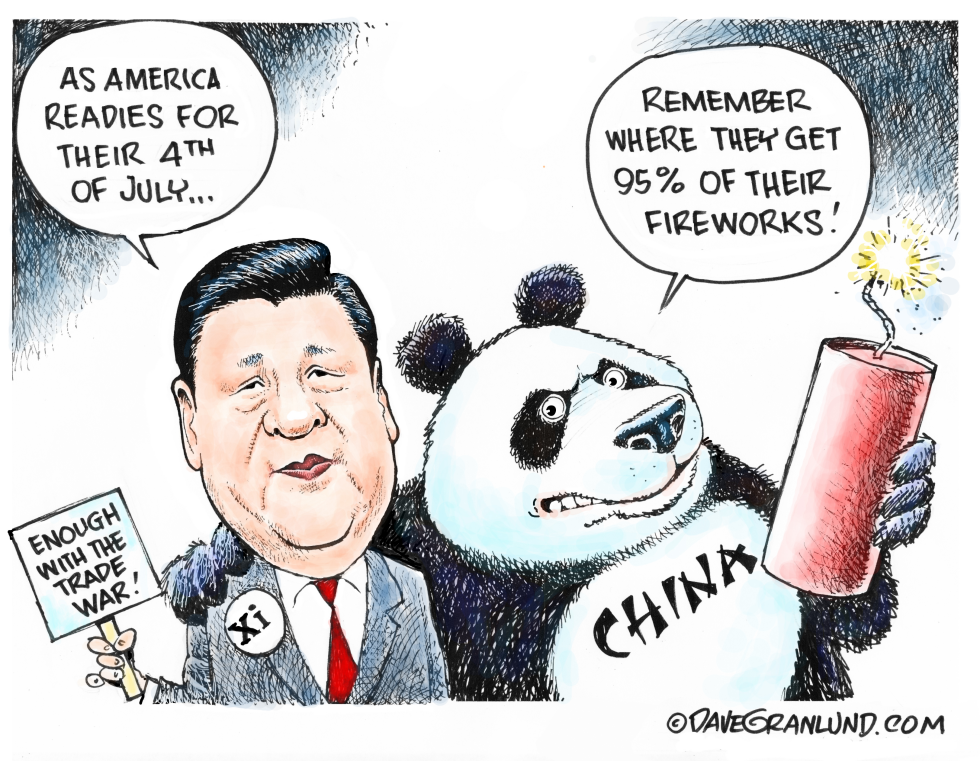
On June 19, 2026, a cartoon by Dave Granlund depicts Chinese leader Xi Jinping alongside a panda representing China. Xi holds a protest sign against the trade war while the panda reminds viewers that China supplies most American fireworks. The image addresses rising costs for July 4th celebrations tied to tariffs and supply issues with the largest provider.
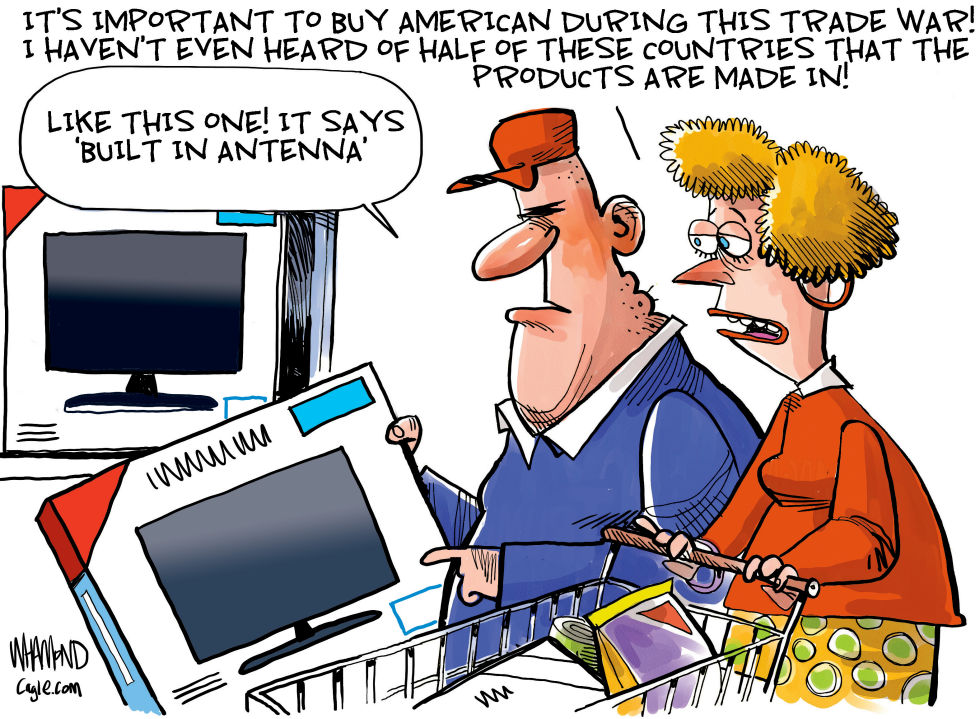
A couple shops for electronics in a store as the man points to a television box labeled built in antenna while declaring support for American goods during an ongoing trade war. The woman reacts with surprise at the label. Large text overhead stresses the importance of domestic purchases because many product origins remain unfamiliar. The scene reflects consumer reactions to tariffs and protectionist policies active in late 2025.
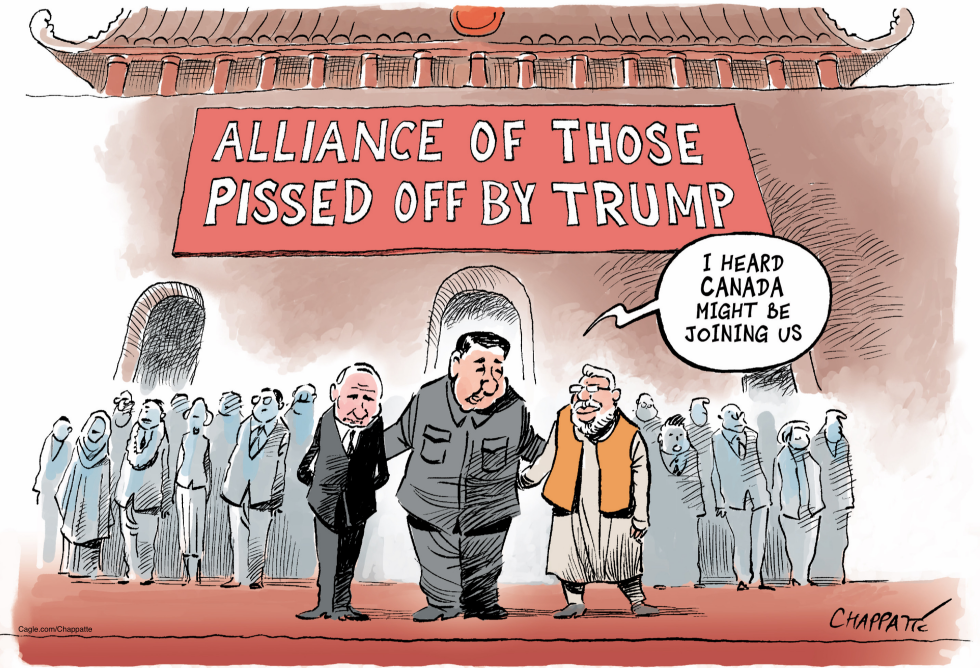
On September 6, 2025, Patrick Chappatte depicts Xi Jinping, Vladimir Putin and Narendra Modi forming an alliance explicitly aimed at Donald Trump. The red banner above them reads Alliance of Those Pissed Off by Trump. Modi suggests Canada may join next. The scene places the three leaders at the center of a building entrance with other figures in the background. The cartoon highlights tensions in international relations tied to recent U.S. policy shifts under Trump.
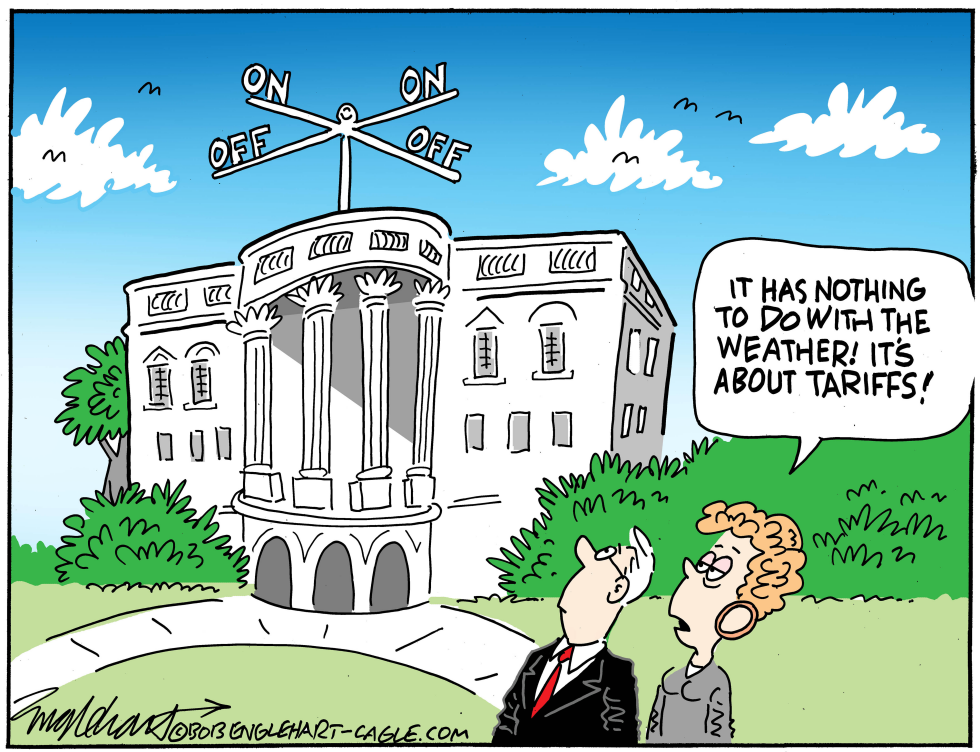
On July 11, 2025, a cartoon depicts the White House with a crossed on-off weather vane atop its roof. A suited man and a woman stand on the lawn, the latter stating in a speech bubble that the issue concerns tariffs rather than weather. The image responds to ongoing Trump administration tariff measures and resulting trade frictions affecting markets and Republican priorities.
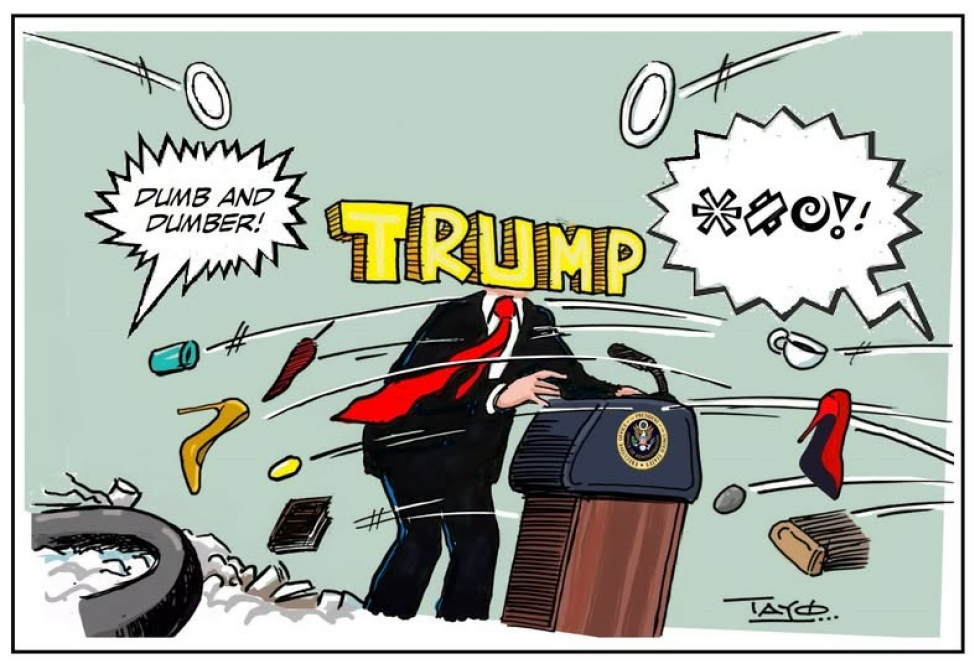
On April 10, 2025, a cartoon depicts President Donald Trump at the podium with his name replacing his head. Debris including shoes, a tire, and a book flies past as speech bubbles label him dumb. The scene references ongoing tariff conflicts with China and resulting economic concerns.
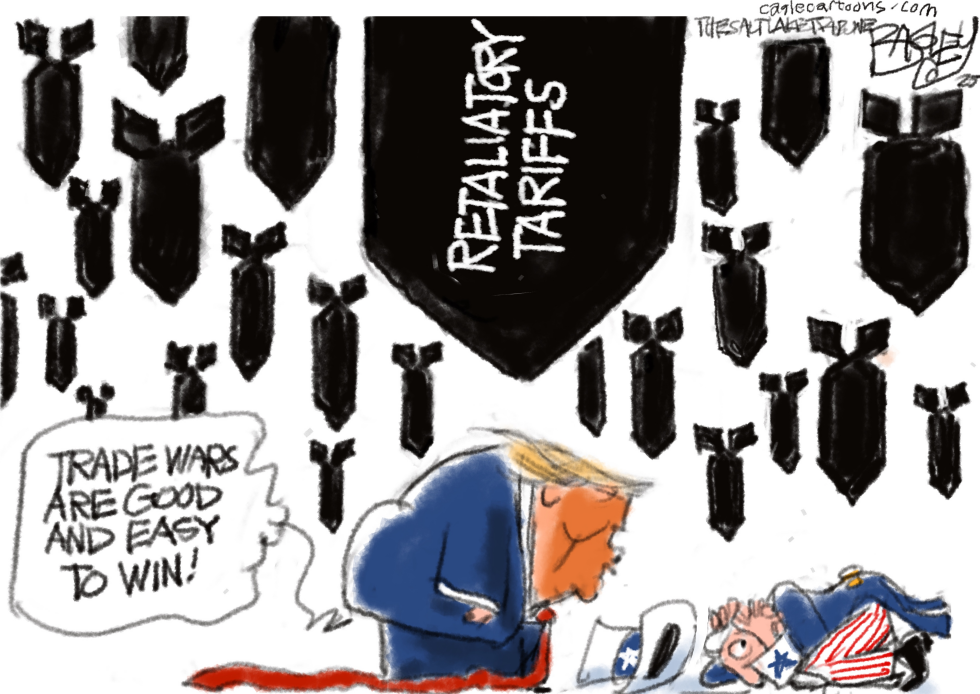
On April 8, 2025, the cartoon depicts Donald Trump proclaiming trade wars easy to win while retaliatory tariff bombs fall around a downed Uncle Sam, reflecting ongoing U.S. tariff policies and international responses from Europe and China.
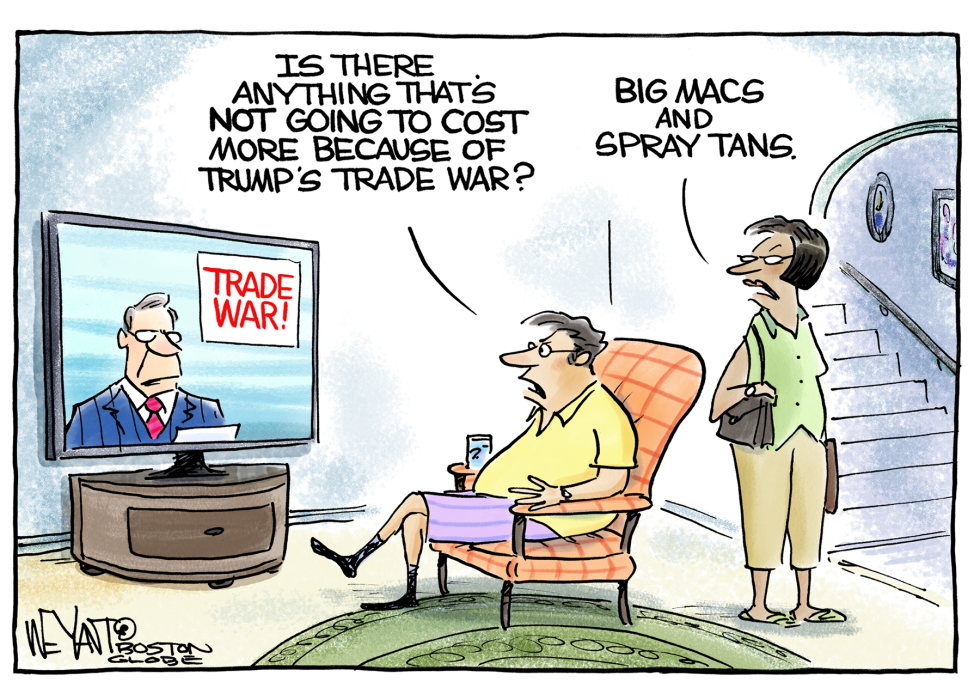
On July 5, 2018, Boston Globe cartoonist Christopher Weyant depicted a living room scene where a television announcer asks if anything will escape higher prices from President Trump's trade war. The wife answers that Big Macs and spray tans will cost more. The cartoon responds to the administration's steel and aluminum tariffs imposed on China, the European Union, Canada and Mexico earlier that year. Those duties prompted retaliatory measures that threatened exports including Harley-Davidson motorcycles. The visual ties the broad policy dispute to ordinary consumer items associated with the president.