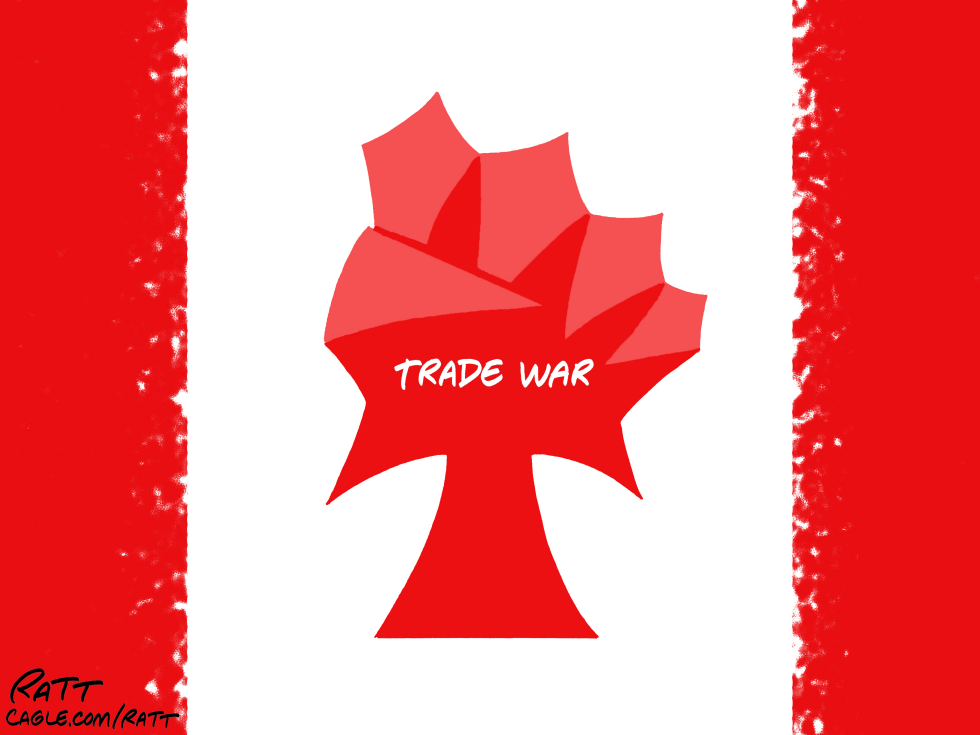
Ongoing US-Canada trade tensions escalated in 2026 with new tariff threats targeting Canadian exports. The dispute threatens key sectors including autos, lumber and agriculture, raising costs for consumers on both sides of the border. Canada has signaled plans to diversify markets and strengthen domestic industry. The cartoon frames the conflict as a direct assault on Canadian sovereignty and economic stability. It portrays the trade war as fracturing national symbols while urging a stronger northern response.
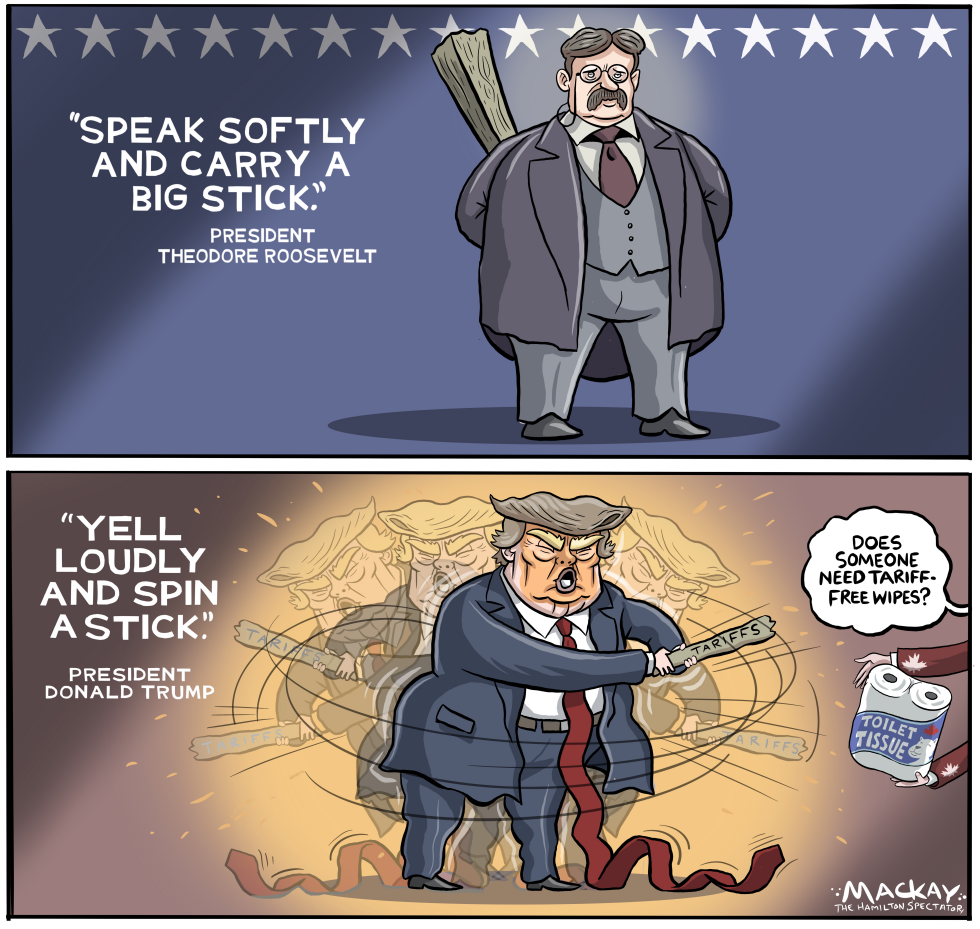
The cartoon by Graeme MacKay contrasts Theodore Roosevelt's famous speak softly and carry a big stick approach with Donald Trump's version of yelling loudly and spinning a stick covered in tariffs. In the lower panel Trump appears dizzy from the motion as a Canadian hand offers toilet tissue labeled tariff-free wipes. The image comments on recent US tariff actions and their impact on Canadian trade relations as of the September 2026 publication date.
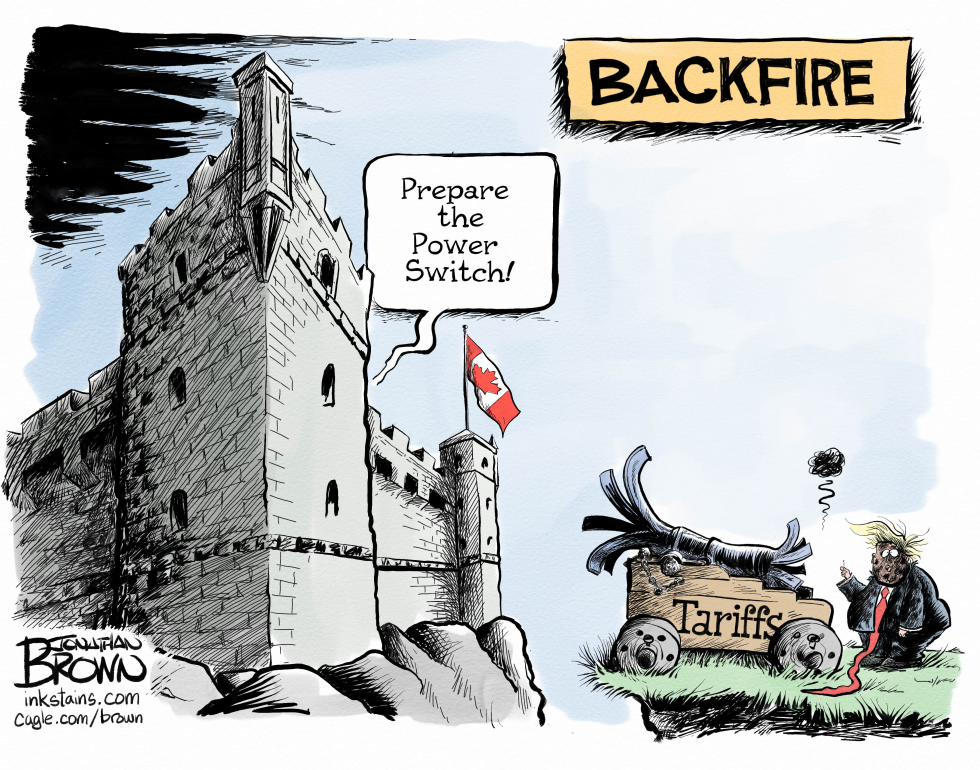
The cartoon shows a Canadian castle flying its flag while a cannon labeled Tariffs explodes backward toward a figure resembling Donald Trump. The scene responds to ongoing trade tensions where U.S. tariffs on Canadian goods prompted retaliatory measures. The visual emphasizes the policy rebounding on its originator rather than achieving intended pressure.
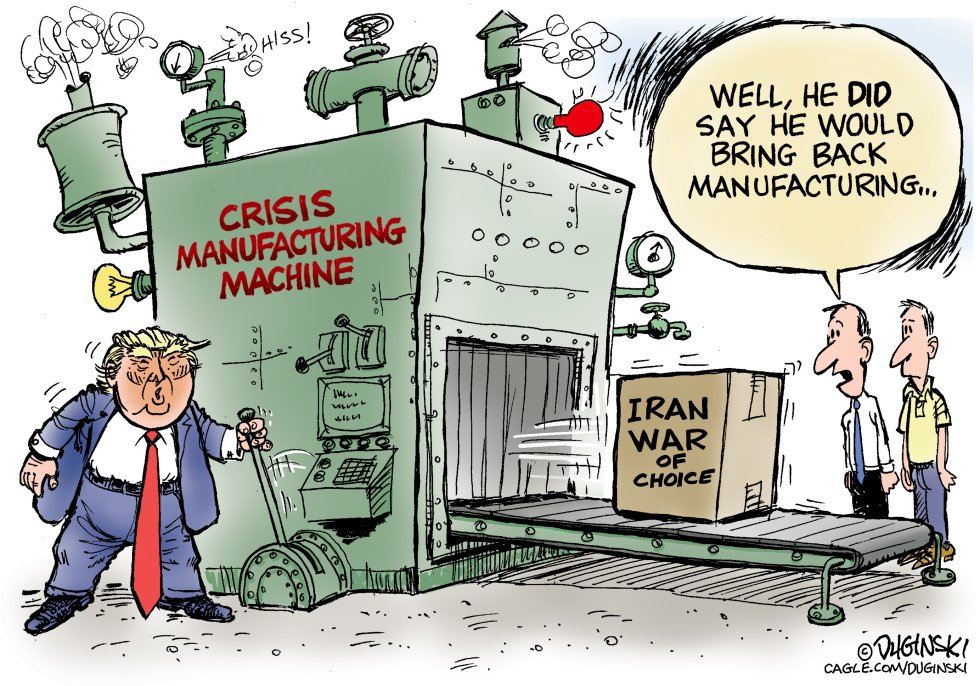
Donald Trump, holding the presidency in 2026, faces renewed scrutiny over foreign policy toward Iran. Recent statements revive campaign pledges to restore domestic manufacturing while tensions with Tehran escalate. The administration\\\'s approach draws criticism for prioritizing confrontation over diplomacy. Observers note the pattern of generating external crises rather than economic gains at home. The cartoon argues that Trump\\\'s actions fulfill a literal version of his manufacturing rhetoric by producing conflict instead of jobs.
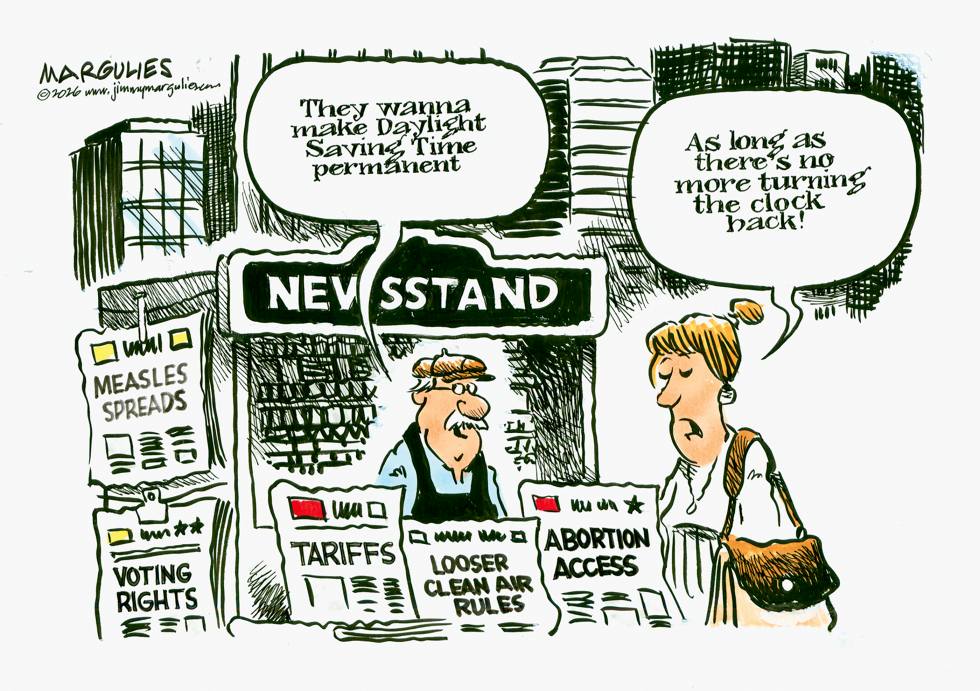
Proposals to make daylight saving time permanent coincide with debates over tariffs, abortion access, voting rights and environmental rules. The cartoon frames these as part of a broader pattern of policy shifts that some view as steps backward.
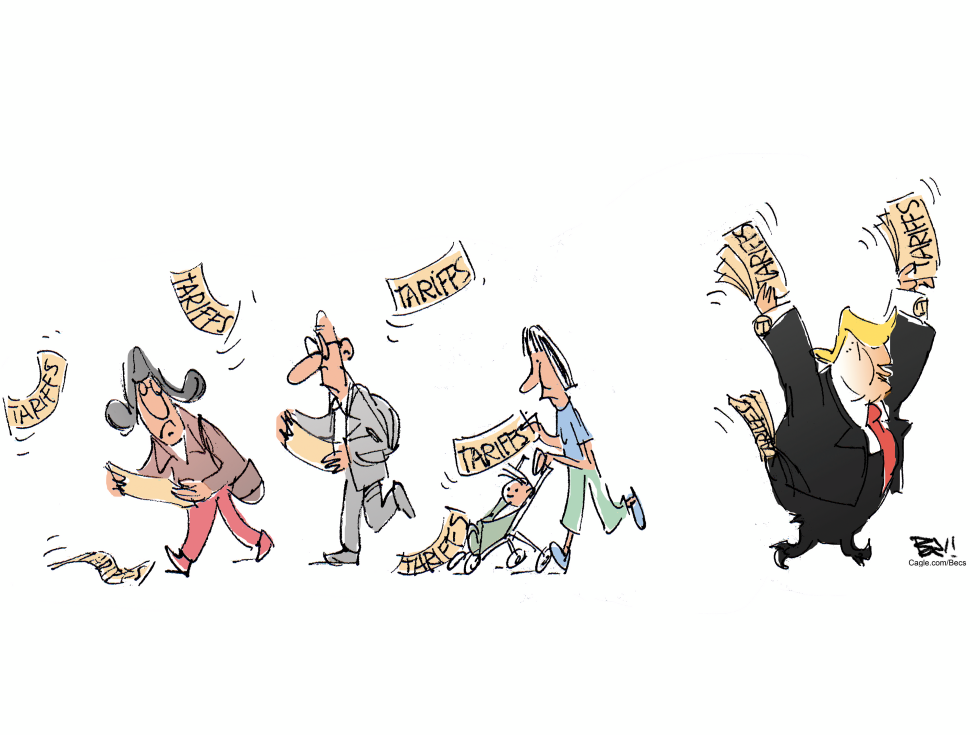
Donald Trump expanded tariffs across trading partners in mid-2026, triggering immediate market volatility and diplomatic pushback. The move raised costs for consumers and businesses reliant on imports. The piece portrays the policy as an indiscriminate barrage that disrupts daily life and global commerce.
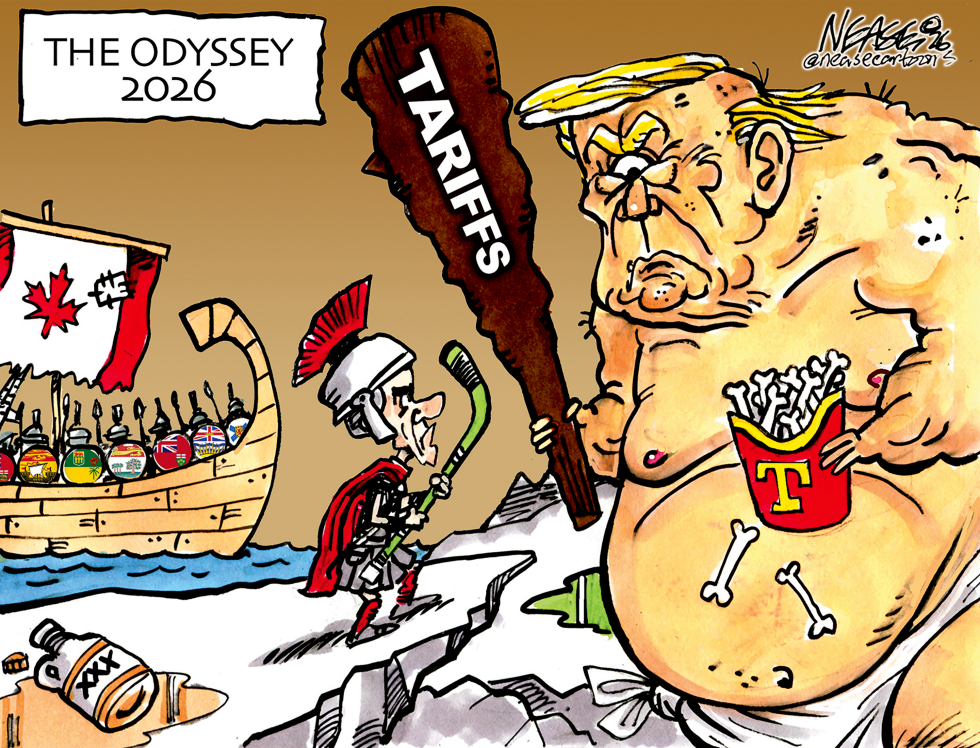
President Trump escalates tariffs on trading partners including Canada in mid-2026. The move targets imports amid ongoing disputes over trade balances and supply chains. Allies respond with coordinated pushback through diplomatic and economic channels. The cartoon casts the confrontation as a one-sided power play by the oversized tariff wielder against smaller coordinated opponents.
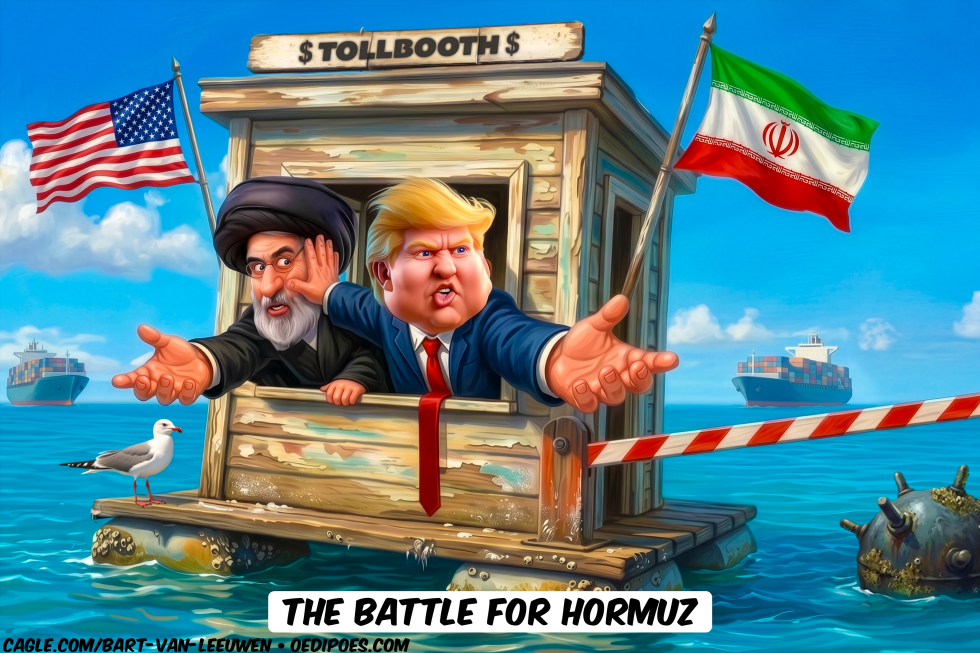
A new political cartoon shows President Trump and Iran's supreme leader sharing a tollbooth positioned across the Strait of Hormuz. Both figures extend their hands toward passing cargo ships while American and Iranian flags fly from the structure. The image comments on ongoing disputes over control of the vital oil shipping route.
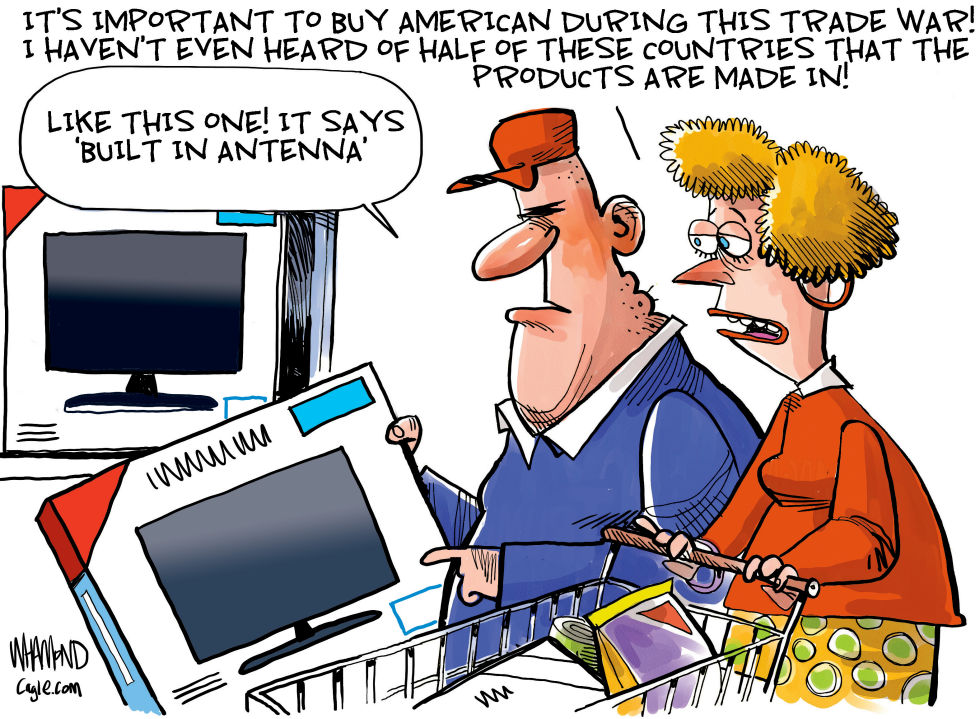
A couple shops for electronics in a store as the man points to a television box labeled built in antenna while declaring support for American goods during an ongoing trade war. The woman reacts with surprise at the label. Large text overhead stresses the importance of domestic purchases because many product origins remain unfamiliar. The scene reflects consumer reactions to tariffs and protectionist policies active in late 2025.
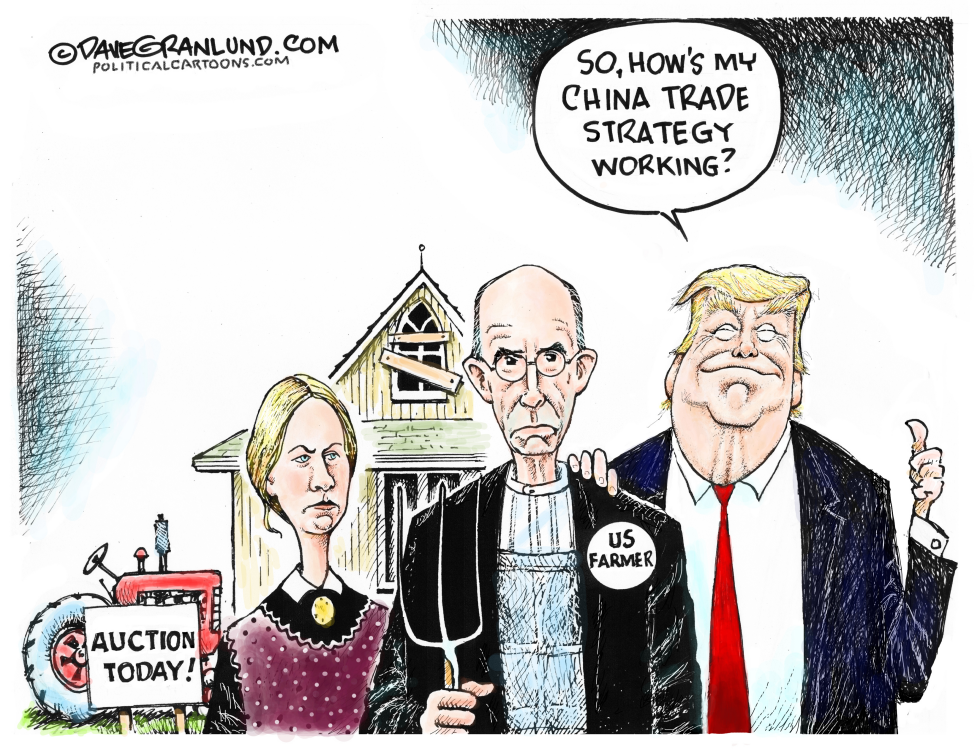
The September 30, 2025 cartoon shows Donald Trump asking a US farmer how his China trade strategy is working. The farmer stands beside a woman in front of a dilapidated farmhouse and a tractor with an auction sign. The image references ongoing effects of tariffs on agricultural exports and rural economies.
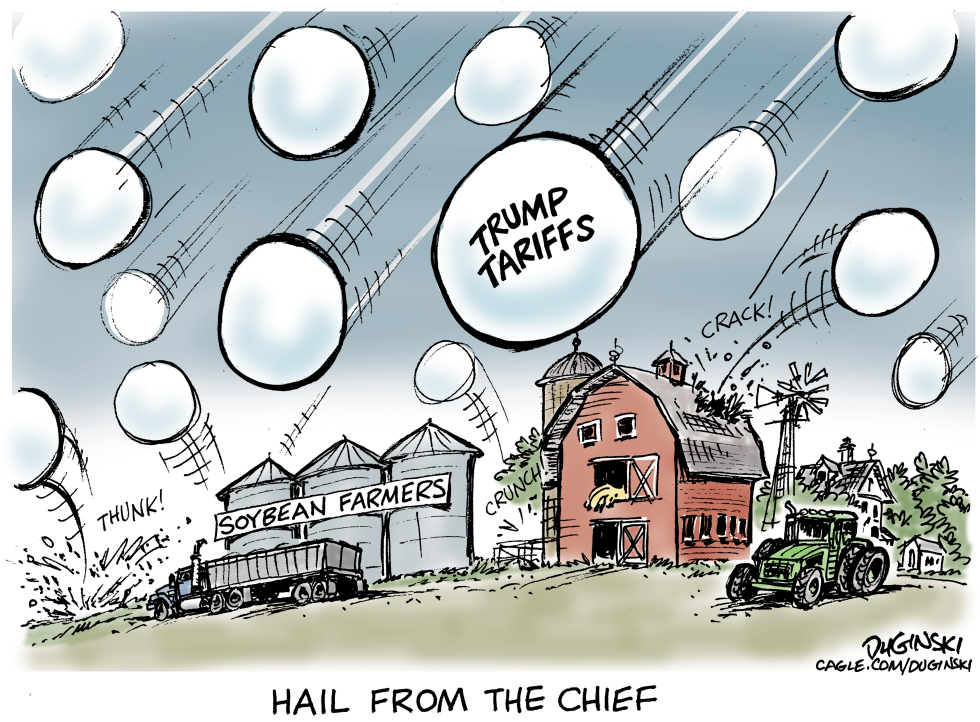
The cartoon shows large hailstones marked Trump tariffs raining down on a soybean farm, cracking a red barn and striking silos labeled soybean farmers. This visual responds to ongoing 2025 trade policies affecting U.S. agriculture and export markets.
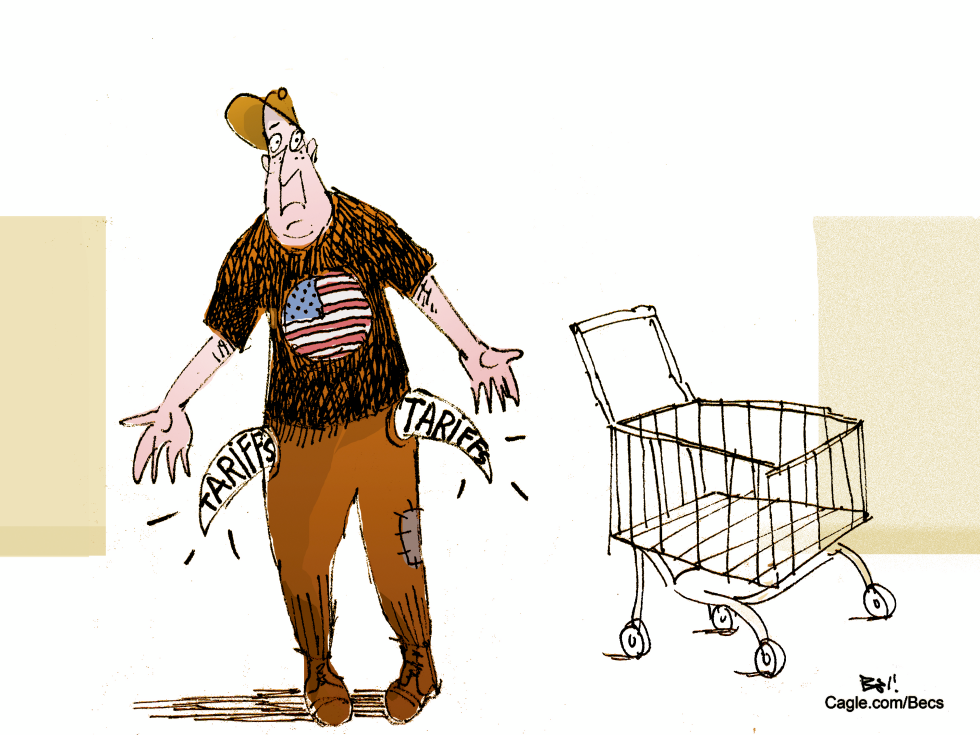
A figure wearing a tattered American flag shirt and brown pants labeled tariffs stands with empty hands next to an empty shopping cart. The scene responds to 2025 tariff increases under the Trump administration that have contributed to higher consumer prices and reduced purchasing power. The image highlights the direct effect on everyday Americans facing inflation and limited spending ability.
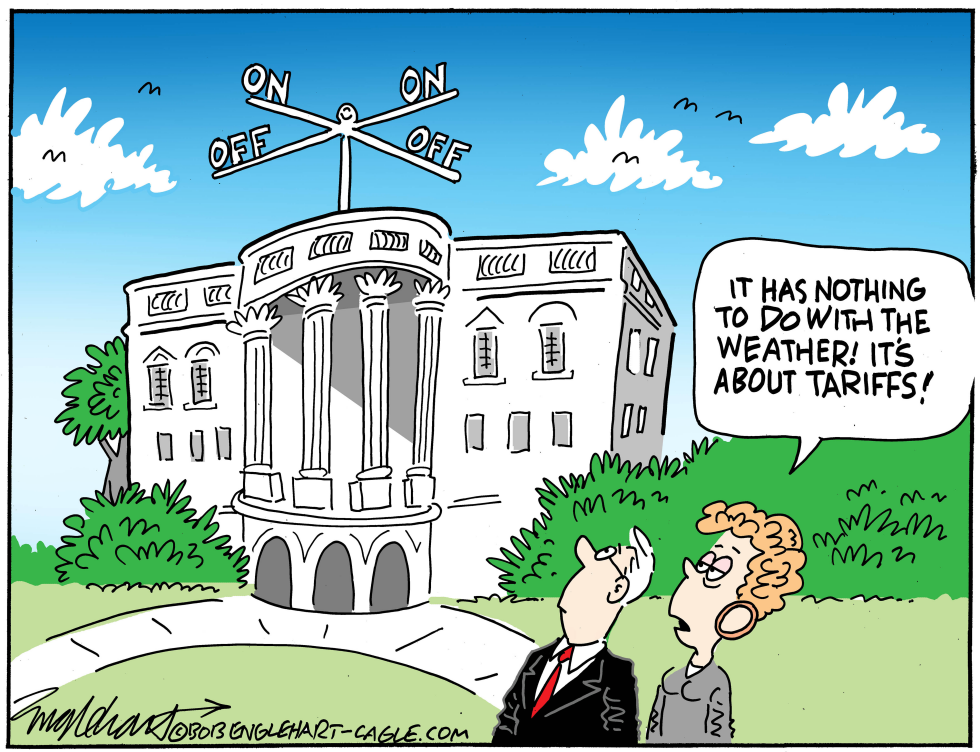
On July 11, 2025, a cartoon depicts the White House with a crossed on-off weather vane atop its roof. A suited man and a woman stand on the lawn, the latter stating in a speech bubble that the issue concerns tariffs rather than weather. The image responds to ongoing Trump administration tariff measures and resulting trade frictions affecting markets and Republican priorities.
On April 25, 2025, a cartoon depicts President Donald Trump dressed in papal vestments atop the White House, holding a banner labeled Tariff Pontiff. A large T with percentage symbols dominates the design. A speech bubble from an unseen observer asks if this means he no longer wants to be king. The image references ongoing tariff policies and trade discussions active in recent weeks.
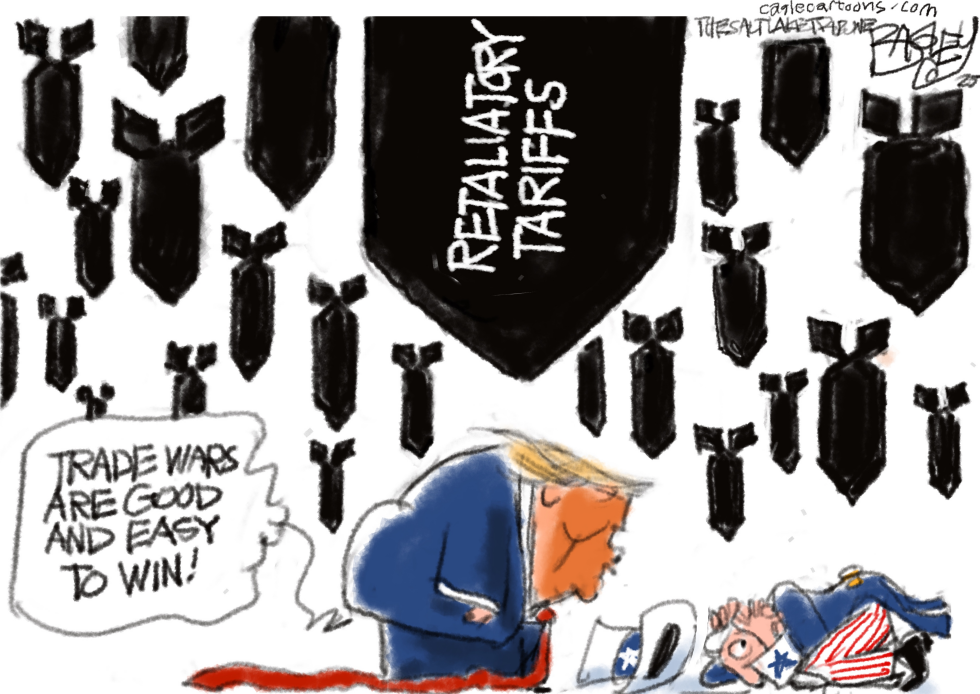
On April 8, 2025, the cartoon depicts Donald Trump proclaiming trade wars easy to win while retaliatory tariff bombs fall around a downed Uncle Sam, reflecting ongoing U.S. tariff policies and international responses from Europe and China.