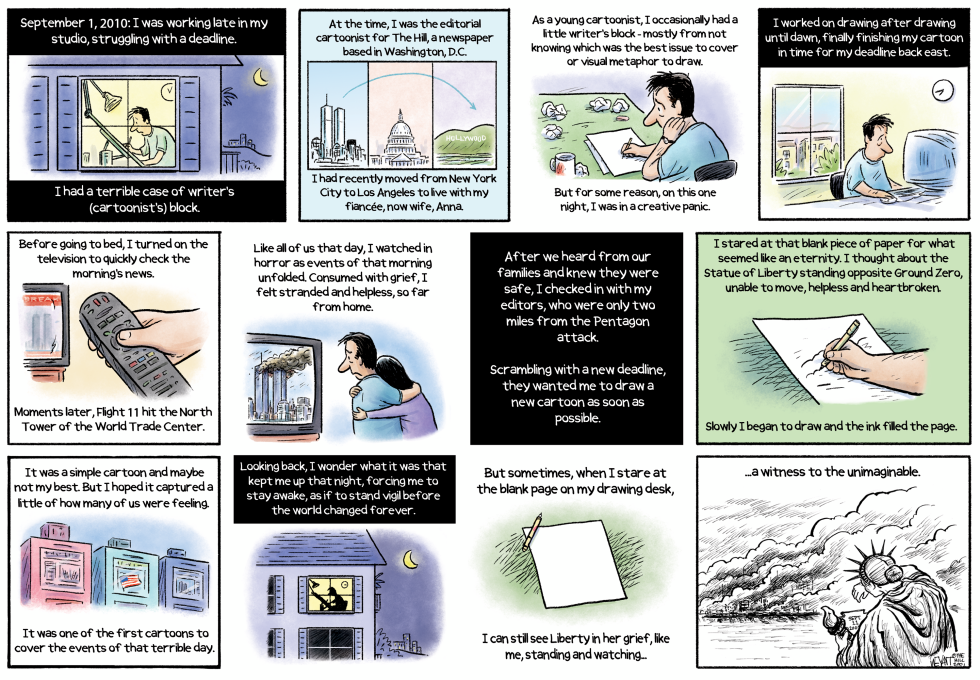
On September 11, 2001, editorial cartoonist Christopher Weyant faced a sudden deadline shift after the attacks on the World Trade Center and Pentagon. Working from Washington, D.C., he checked on family and editors before creating one of the earliest cartoons responding to the events. The piece shows his personal struggle with a blank page that night and the resulting image of the Statue of Liberty standing vigil opposite Ground Zero. The cartoon marks the 25th anniversary by revisiting how the attacks altered the nation and the artist's own sense of purpose.
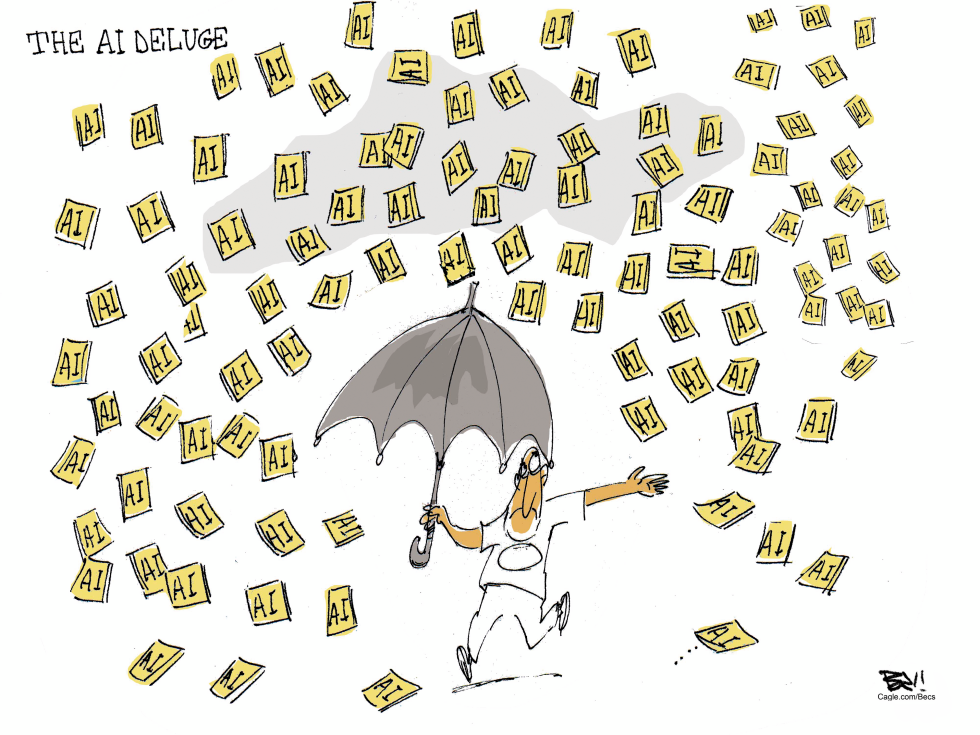
Artificial intelligence has saturated public conversation and workplace planning at an unusual pace. The piece responds to the sheer volume of announcements, tools and claims arriving at once. It suggests shelter rather than comprehension has become the realistic response.
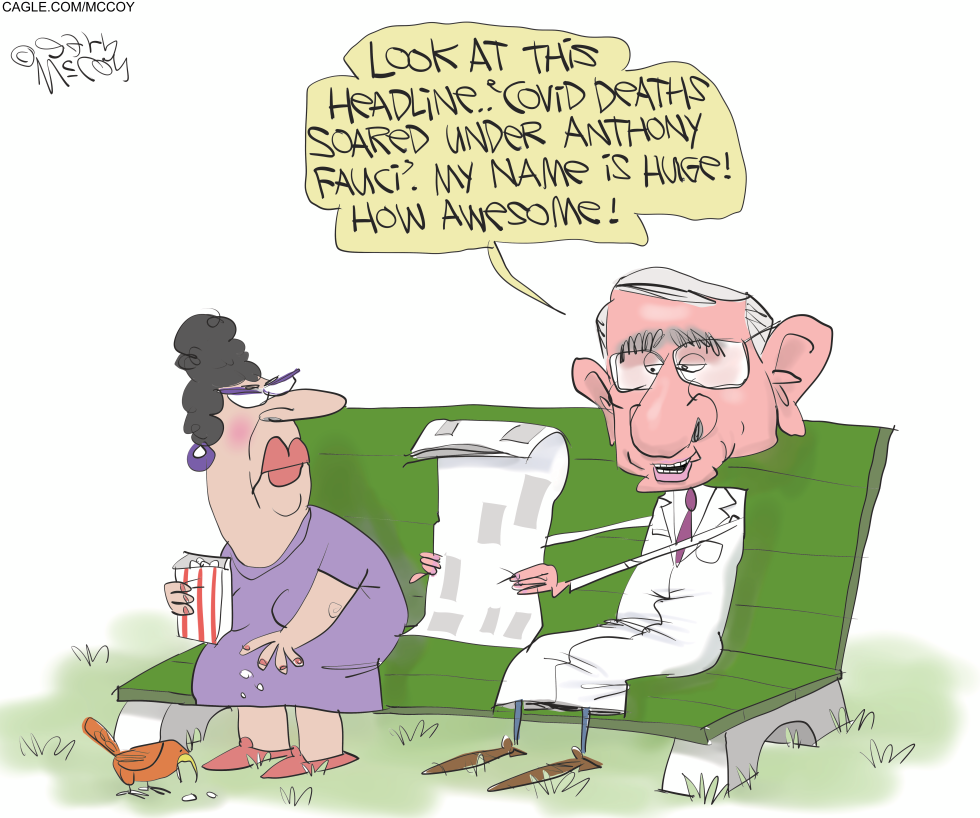
A newspaper headline reports COVID deaths rose under Anthony Fauci. The former health official reacts by celebrating the prominence of his own name in the story. The piece portrays this response as self-absorbed and detached from the human cost of the pandemic.
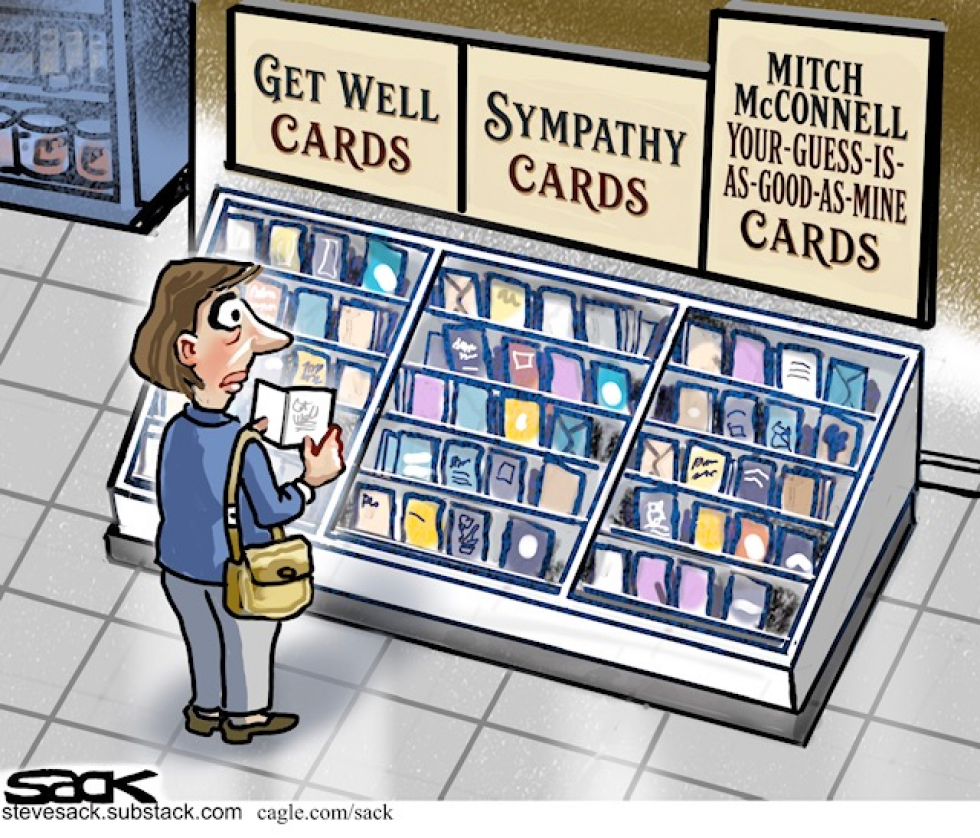
Questions about Mitch McConnell's health and future in Senate leadership have persisted into mid-2026. The Kentucky Republican has faced repeated absences and public episodes that fuel speculation about his capacity to continue. Colleagues in both parties watch closely because his position influences committee assignments and floor strategy. The uncertainty affects legislative timelines on appropriations and judicial matters. The piece argues that the situation leaves observers with little reliable information and treats the ambiguity itself as the central story.
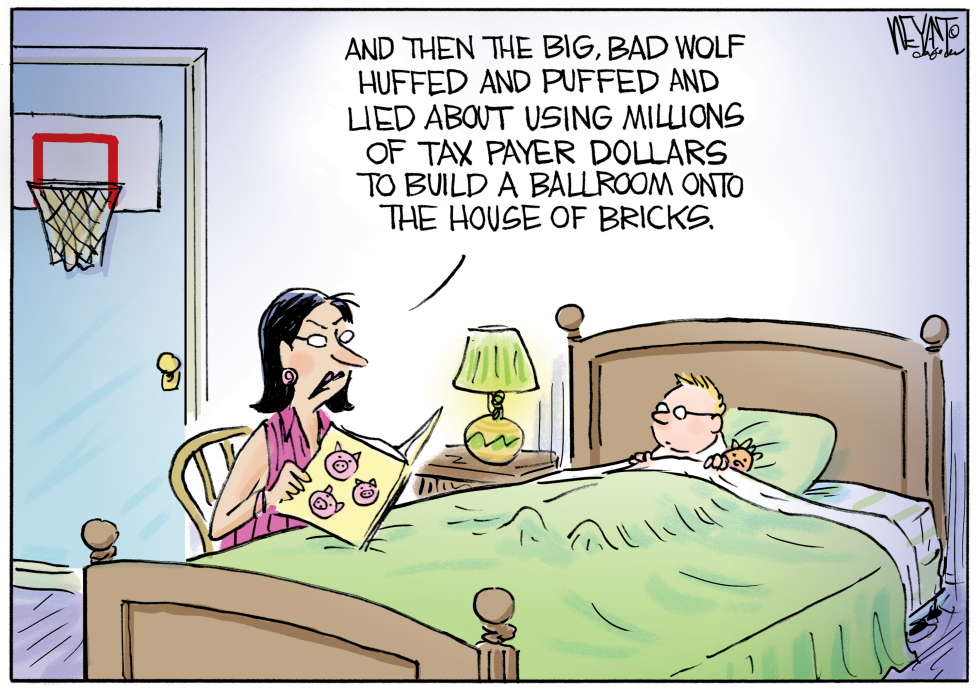
A mother reads a bedtime story to her child, altering the three little pigs tale to accuse the big bad wolf of lying about spending millions of taxpayer dollars to add a ballroom to the house of bricks. The scene unfolds in a child's bedroom with a basketball hoop visible through the door and a green lamp on the nightstand. This image responds to recent controversies over public fund misuse for private or extravagant projects by political figures.
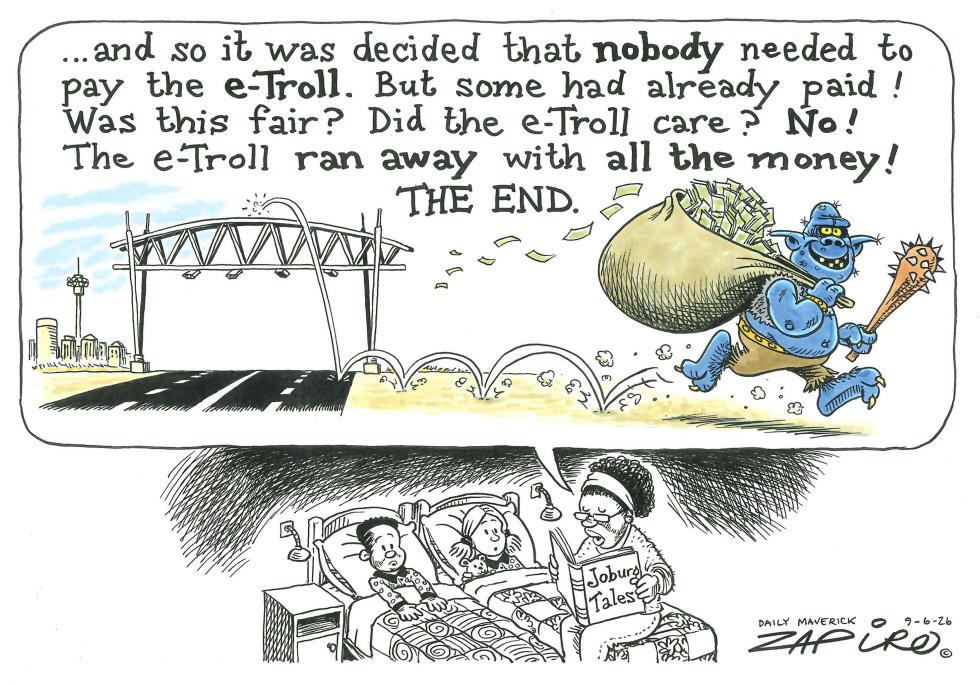
Zapiro's June 2026 cartoon shows an e-troll fleeing a Johannesburg toll plaza with a sack of cash while a grandmother reads the tale to children. The image references ongoing disputes over Gauteng's electronic toll system and missing revenue. The upper panel depicts the toll gantry and city skyline with the troll escaping. The lower panel shows the domestic bedtime scene with the book titled Joburg Tales. The cartoon uses a children's story format to highlight public frustration with the toll collection process.
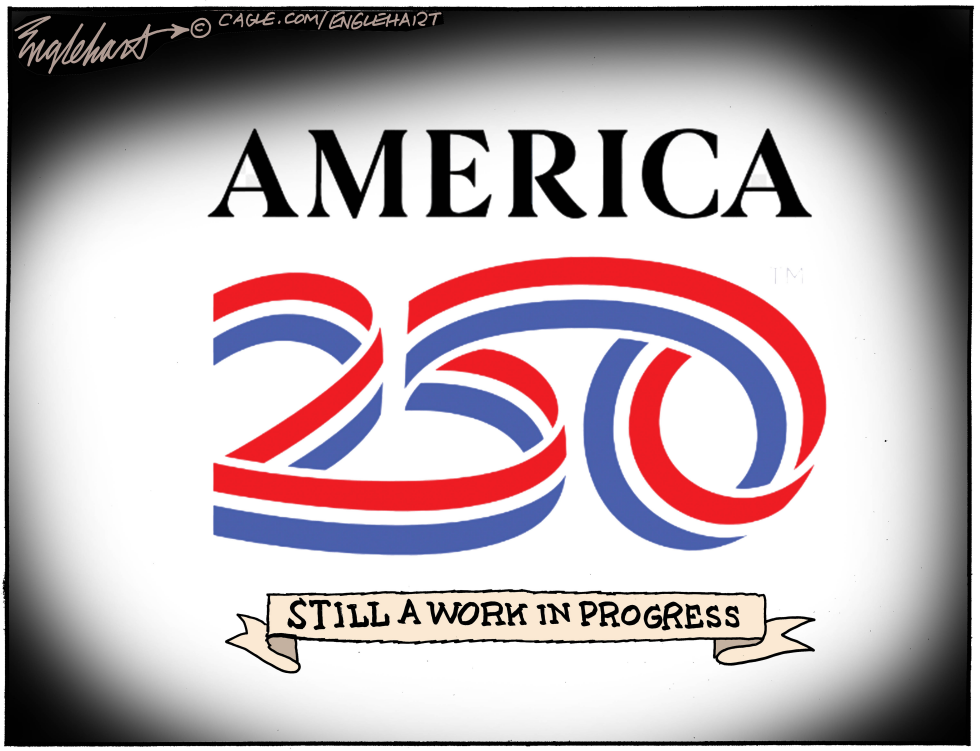
Bob Englehart's June 2026 cartoon marks America's 250th anniversary with a large stylized 250 in patriotic colors under the word AMERICA. A banner across the bottom reads STILL A WORK IN PROGRESS. The image ties directly to the upcoming semiquincentennial on July 4 2026 and offers a simple visual statement about the nation's continuing evolution.
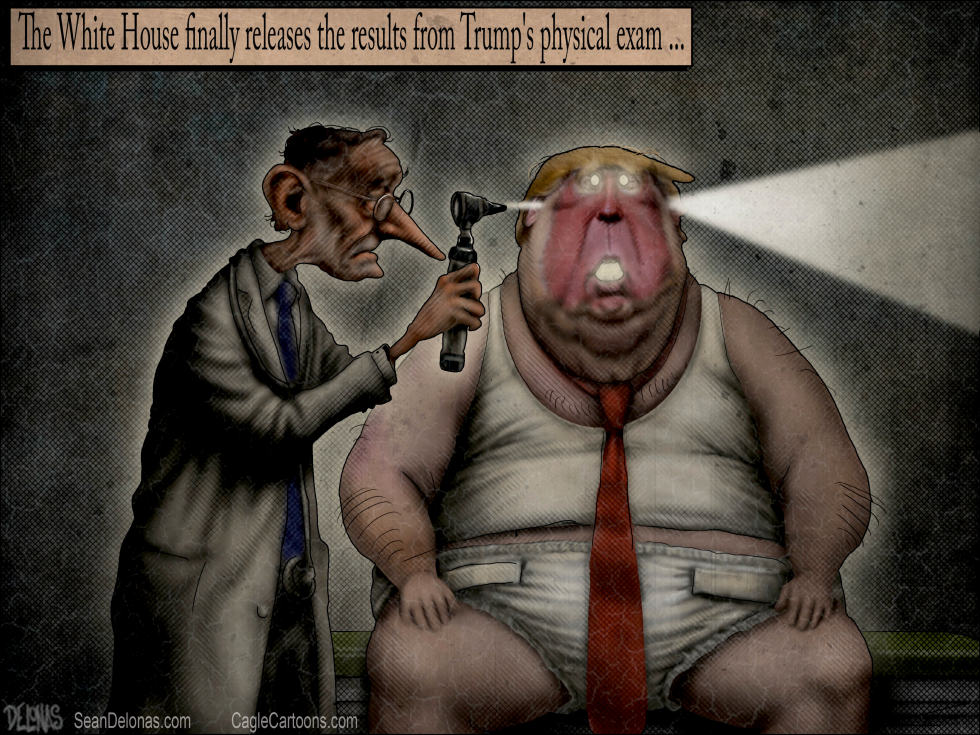
The White House released results from Donald Trump's physical examination on June 1, 2026. The image depicts a physician shining an otoscope light into the eyes of a seated Trump dressed in an undershirt, tie, and briefs. The scene underscores ongoing public interest in the president's fitness amid healthcare policy discussions.
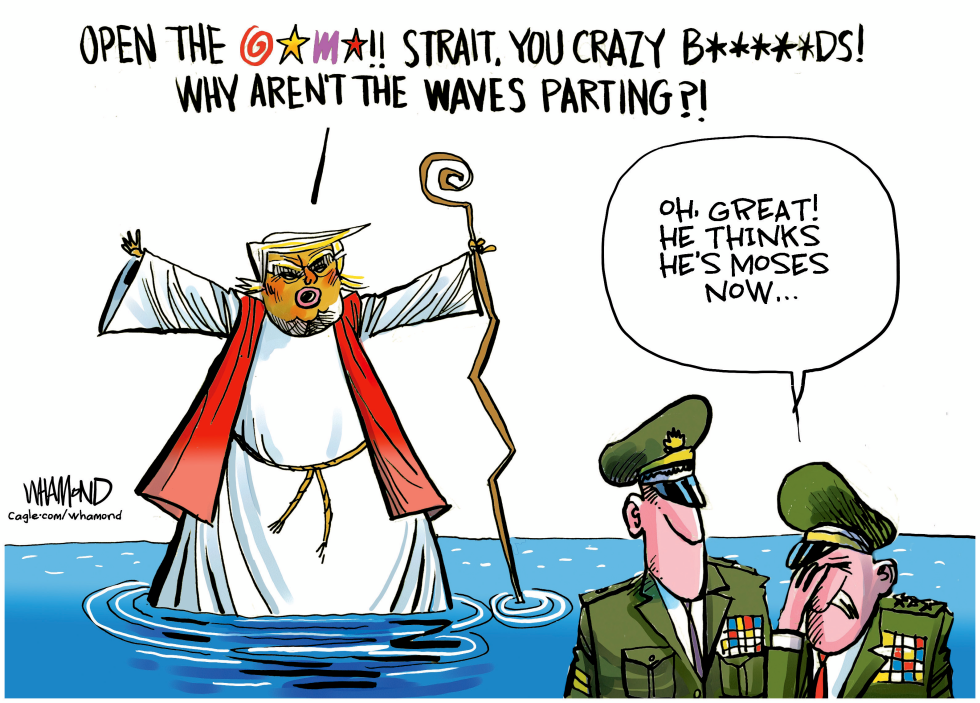
The cartoon shows Donald Trump in Moses robes and holding a staff, standing in the Strait of Hormuz while shouting for the waters to part. Two military officers in the foreground comment on the scene. The image responds to ongoing tensions involving Iran, the strait blockade, and U.S. policy responses as of early May 2026.
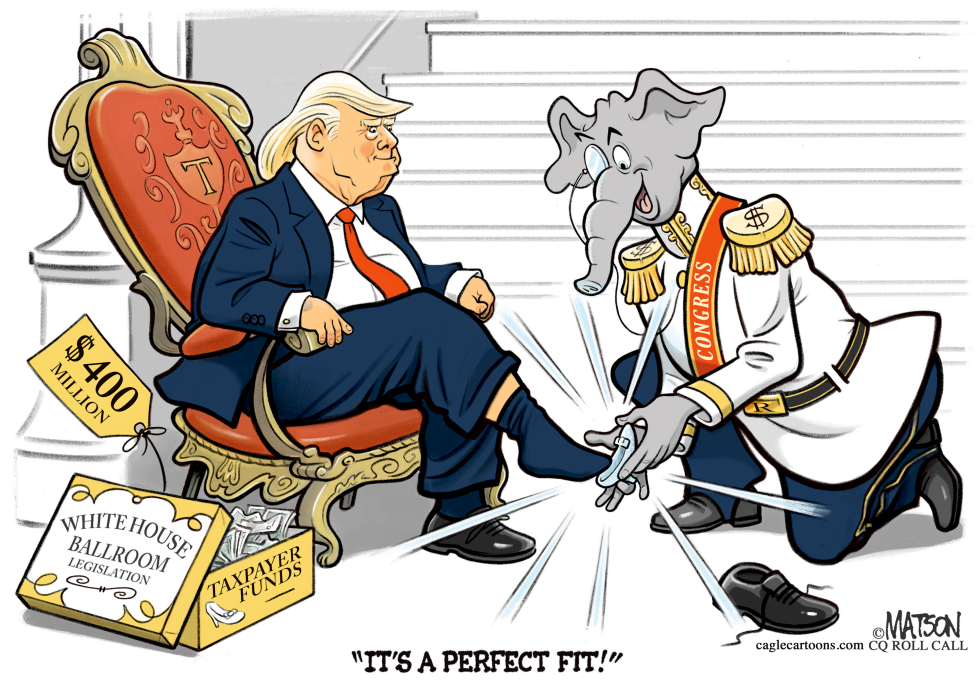
RJ Matson's cartoon depicts President Trump as Cinderella, lounging on a throne while a grinning Congress elephant, adorned with a sash and dollar-sign epaulets, slips a black shoe onto his foot, exclaiming 'It's a perfect fit!!' A box labeled 'White House Ballroom' overflows with 'Taxpayer Funds,' and a $400 million tag dangles nearby. This sharp satire targets Congressional Republicans' approval of hefty taxpayer funding for White House upgrades, echoing the fairy tale but with a political twist on government spending and Donald Trump's influence. The White House Correspondents Association Dinner at the Hilton Hotel lurks in the background tags, highlighting budget priorities amid fiscal debates.
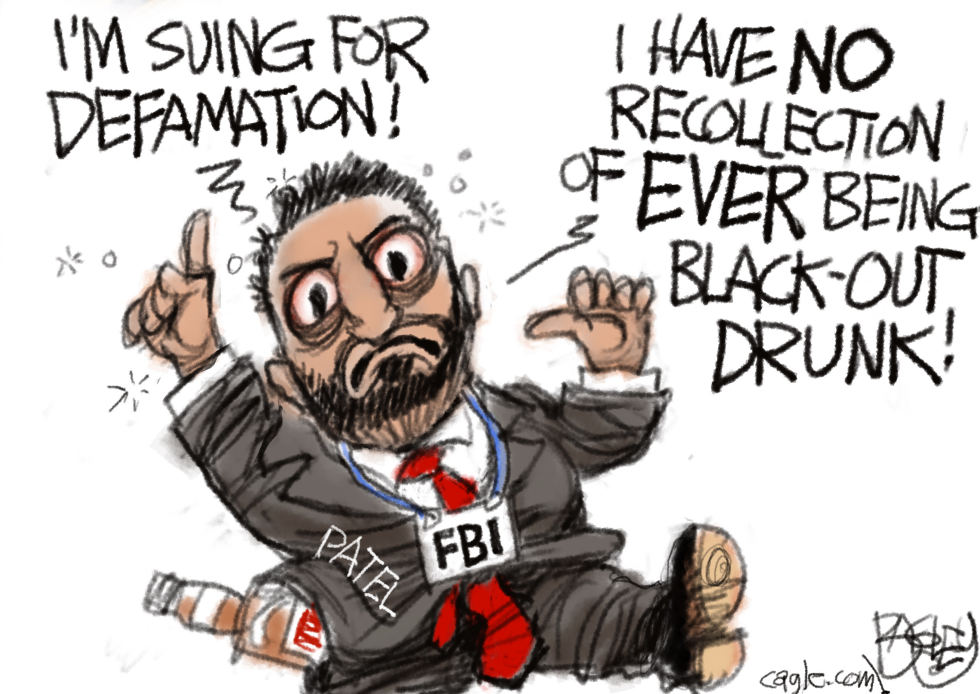
Pat Bagley's cartoon captures a caricatured Kash Patel, sprawled with a liquor bottle, his suit disheveled and FBI badge prominent. He gestures wildly, proclaiming a defamation lawsuit while insisting on no recollection of ever being blackout drunk. The image ties into themes of DUI, corruption, fraud, drinking, drunkenness, alcohol, national security, and terrorism, highlighting irony in a political figure's denial. Such satire underscores the absurdity in public denials, especially for someone eyed for a high-security role. The dry humor pokes at reliability amid scandal tags like Trump, GOP, and MAGA.
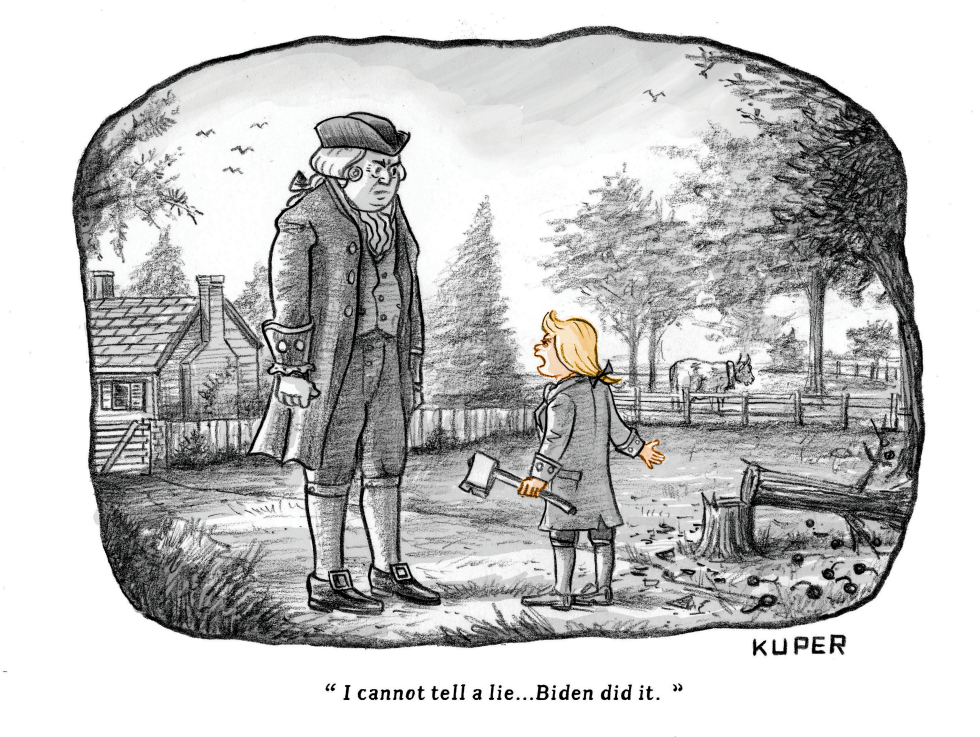
The cartoon reworks the George Washington cherry tree legend with a blonde child resembling Donald Trump holding an axe and declaring Biden responsible for the cut tree. An adult figure in 18th century attire looks on while a horse stands in the background. The scene references ongoing political blame games and recent cabinet tensions involving figures such as Kristi Noem and Pete Hegseth amid rising oil prices and foreign policy friction in the Strait of Hormuz.