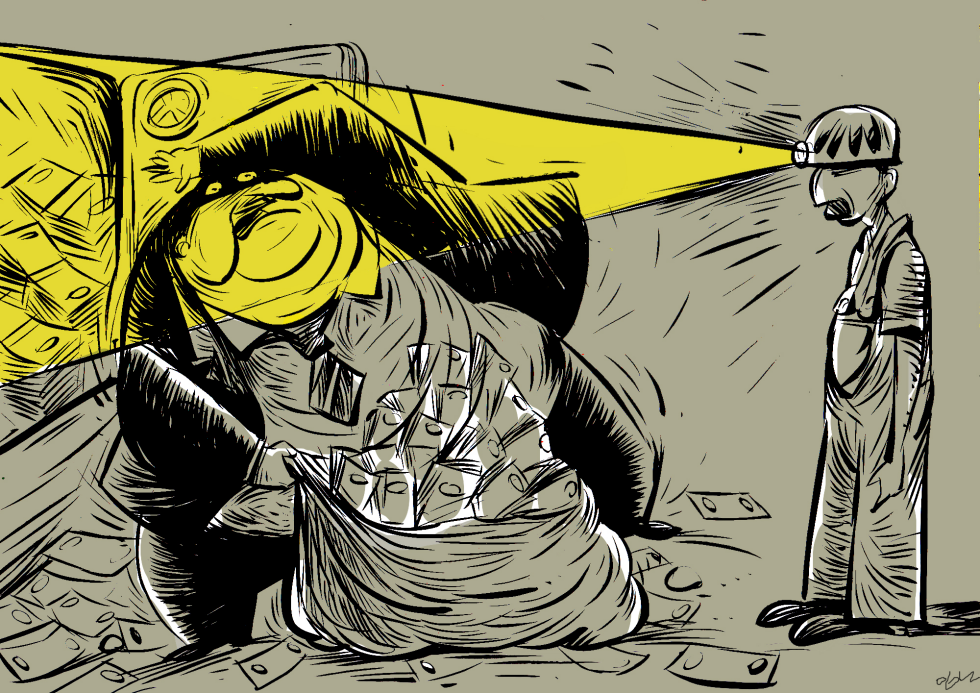
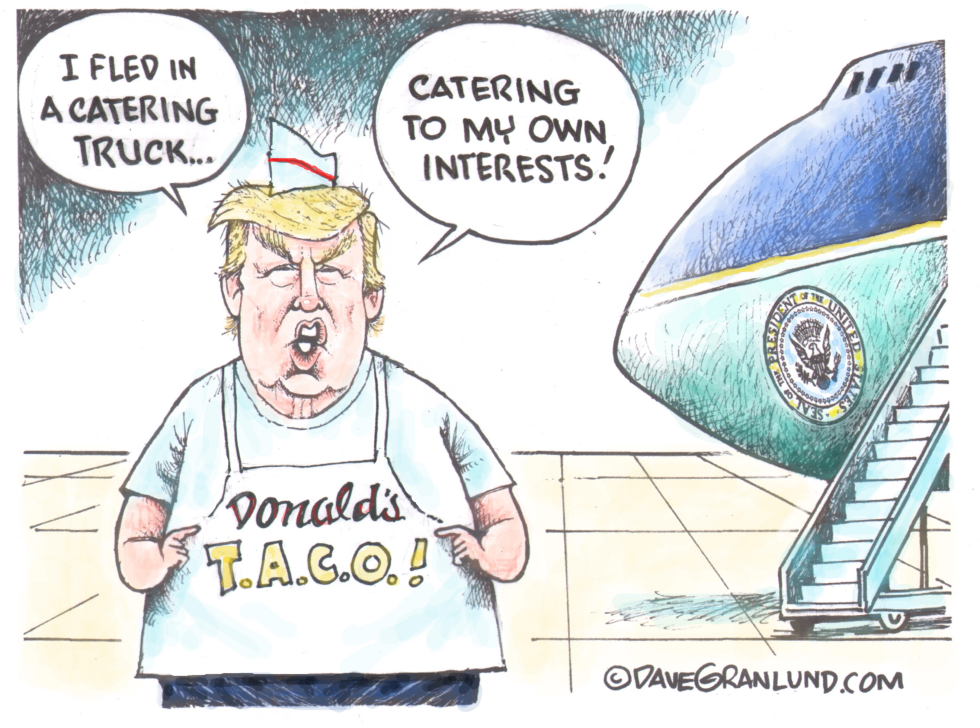
Ongoing concerns about officials and contractors mishandling public resources continue to surface in various jurisdictions. Weak controls allow individuals to divert funds meant for public projects. The cartoon underscores the need for stronger accountability measures to prevent such diversion and restore trust in government spending.
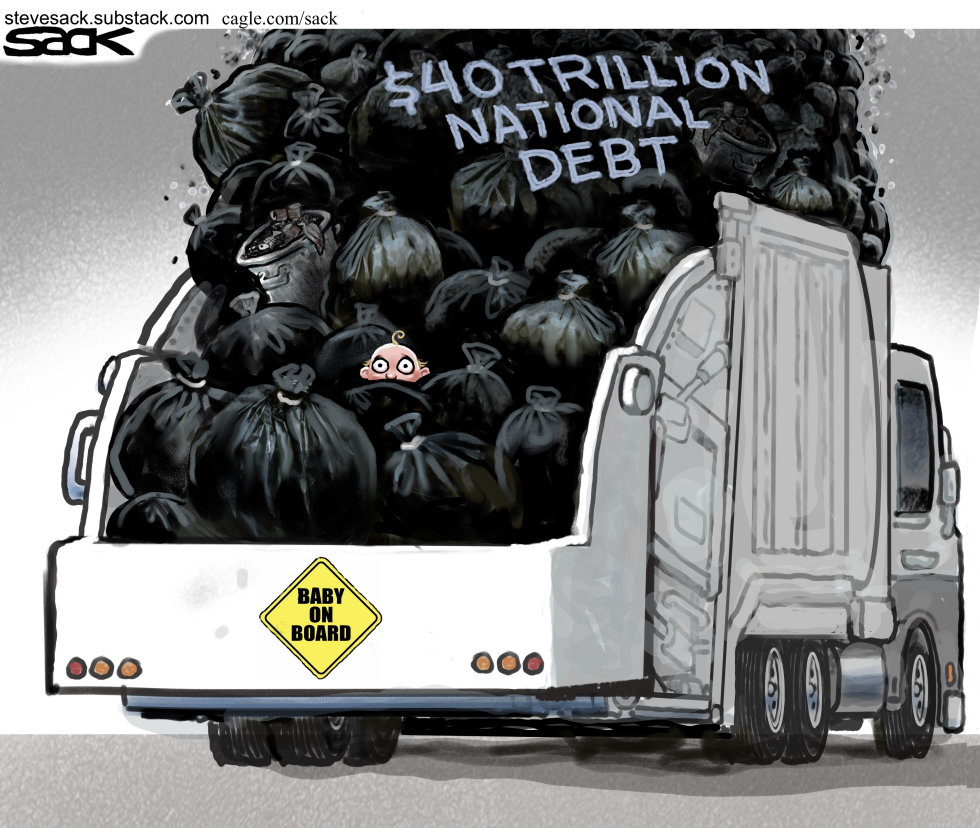
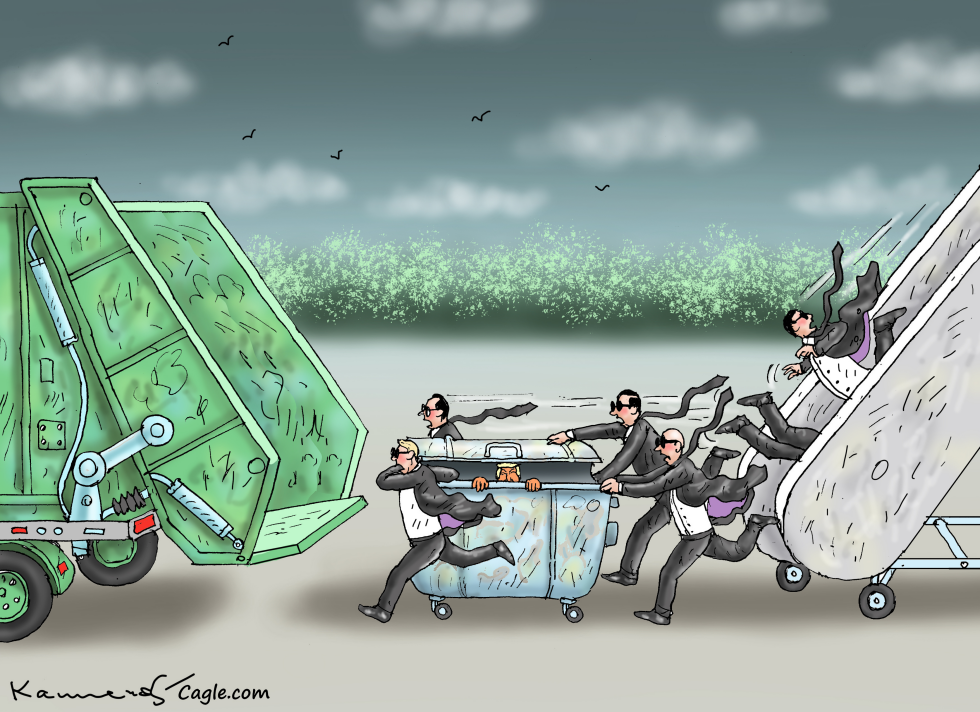
The national debt has climbed to $40 trillion amid persistent federal deficits and rising interest costs. This trajectory threatens long-term economic stability and shifts repayment burdens onto younger Americans. The cartoon argues that current fiscal policies treat future citizens as disposable, loading them into the refuse of unchecked borrowing.
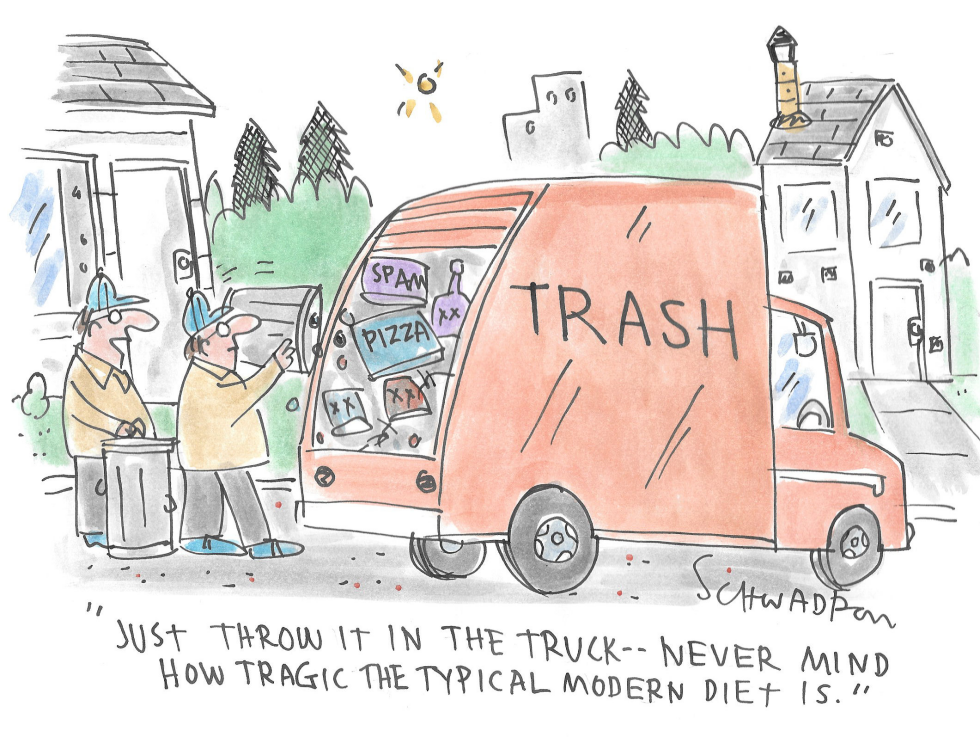
Public discussion continues over the health impacts of widespread junk food consumption and other modern lifestyle habits. The piece takes the position that these elements of daily life are so poor they belong in the garbage.
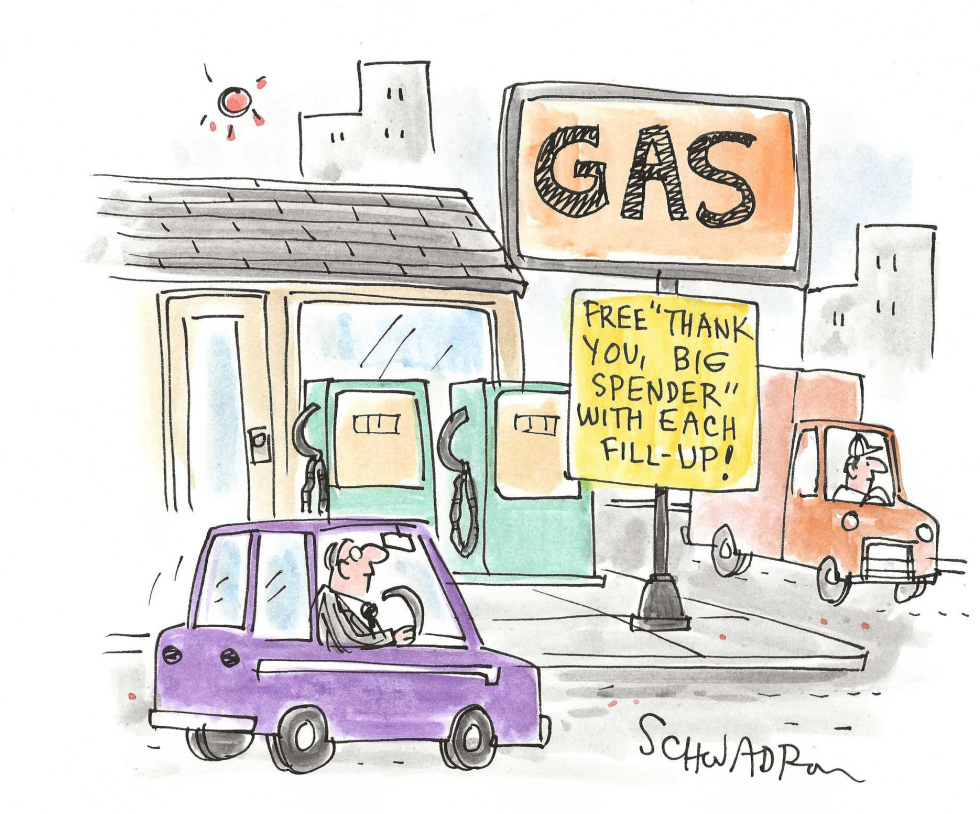
High gasoline prices continue to strain household budgets as drivers face elevated costs at the pump. The cartoon depicts a gas station using a sarcastic promotion that labels every fill-up customer a big spender. This reflects ongoing public frustration with energy costs and their impact on daily commuting and small business operations. The piece takes the position that such prices make routine purchases feel extravagant.
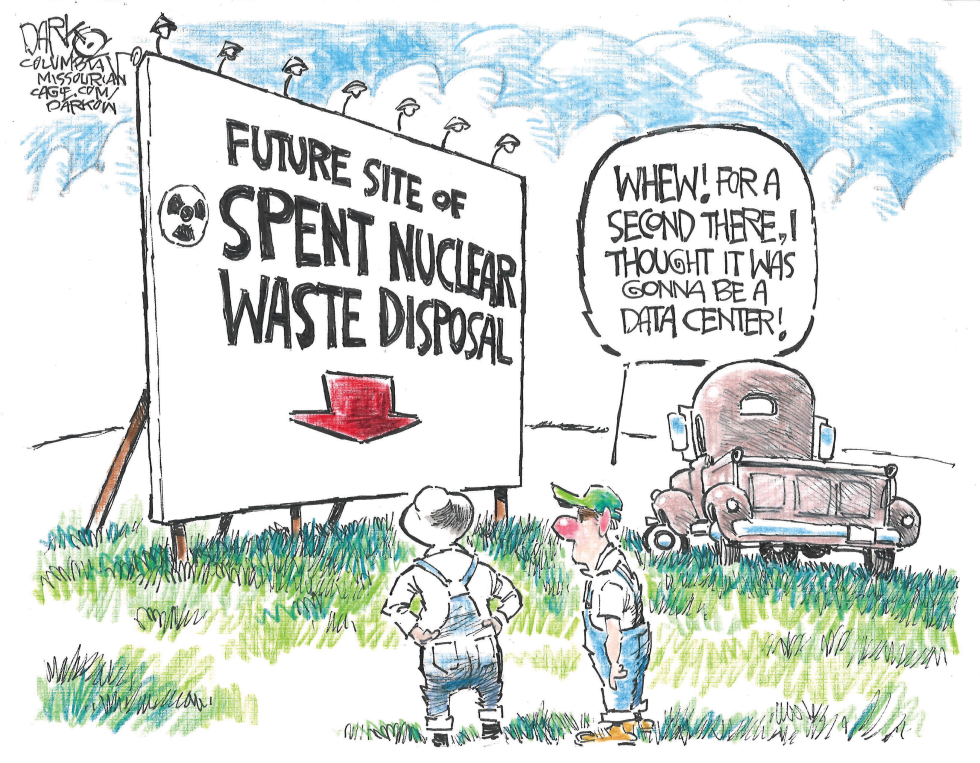
Rural communities continue to face competing proposals for large-scale projects on agricultural land. A planned spent nuclear waste disposal facility draws attention as residents weigh it against potential data center developments that often bring high energy demands and infrastructure changes. The editorial takes the position that such choices reflect broader tensions in siting energy-related facilities versus technology operations in farming areas.
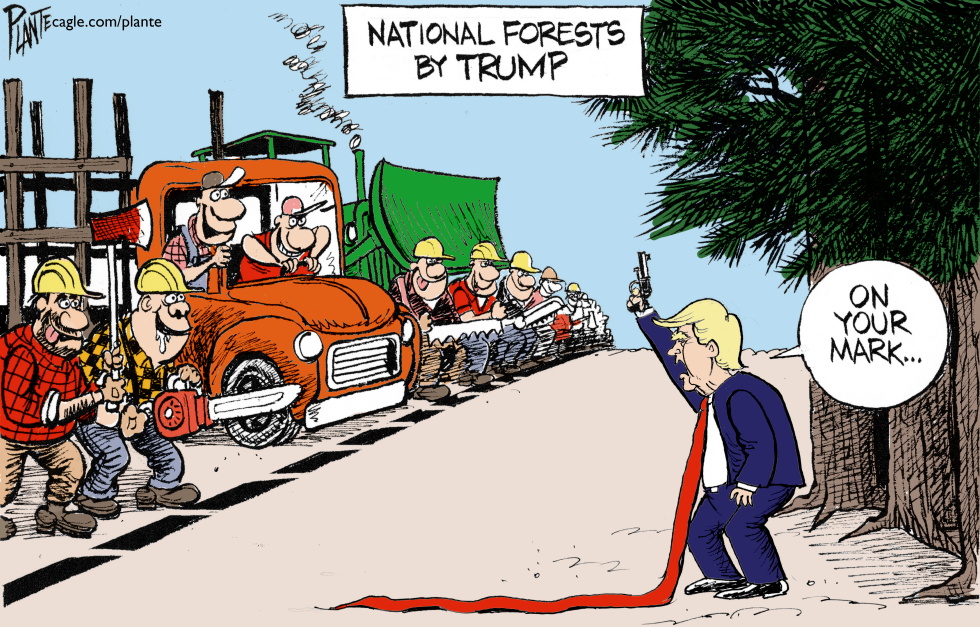
President Trump has directed expanded logging across national forests, ordering crews to begin timber harvests on federal lands. The move opens protected areas to commercial cutting under new administration policy. Critics argue the action prioritizes industry over conservation while supporters cite economic benefits and reduced wildfire risk. The cartoon depicts Trump firing the starting gun to launch the operations.
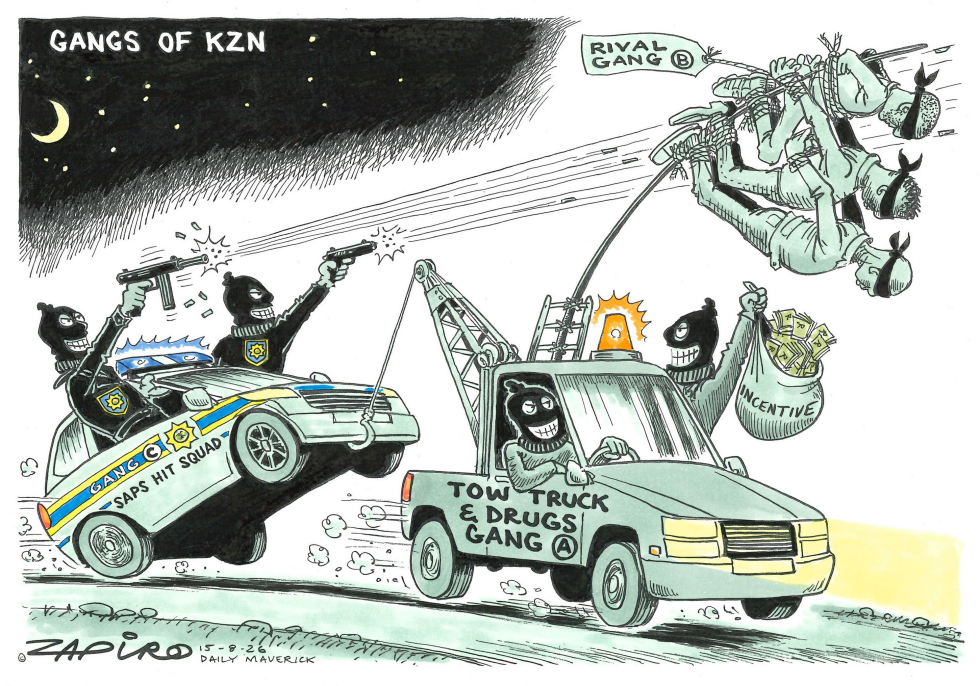
South African police units in KwaZulu-Natal face renewed scrutiny over alleged involvement in gang violence and drug trafficking. Reports detail SAPS members participating in hit squad actions against rival groups while profiting from tow truck schemes and drug incentives. The pattern raises questions about institutional oversight in high-crime provinces. The editorial takes the position that such collusion undermines public safety and demands immediate accountability from national leadership.
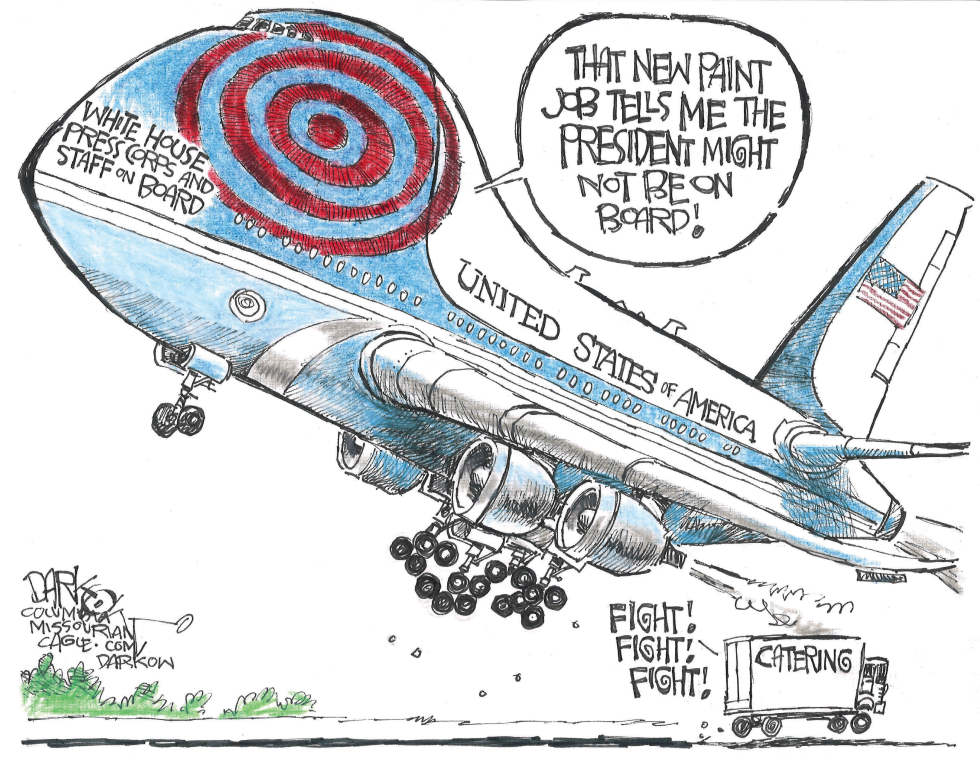
Air Force One appears with a large target painted on its upper fuselage while carrying White House press corps and staff. A nearby catering truck chants fight slogans as the plane descends. The image suggests the president may not be aboard the targeted aircraft. This visual plays on recent tensions surrounding presidential travel and security. The editorial stance highlights perceived risks or distancing from official duties.
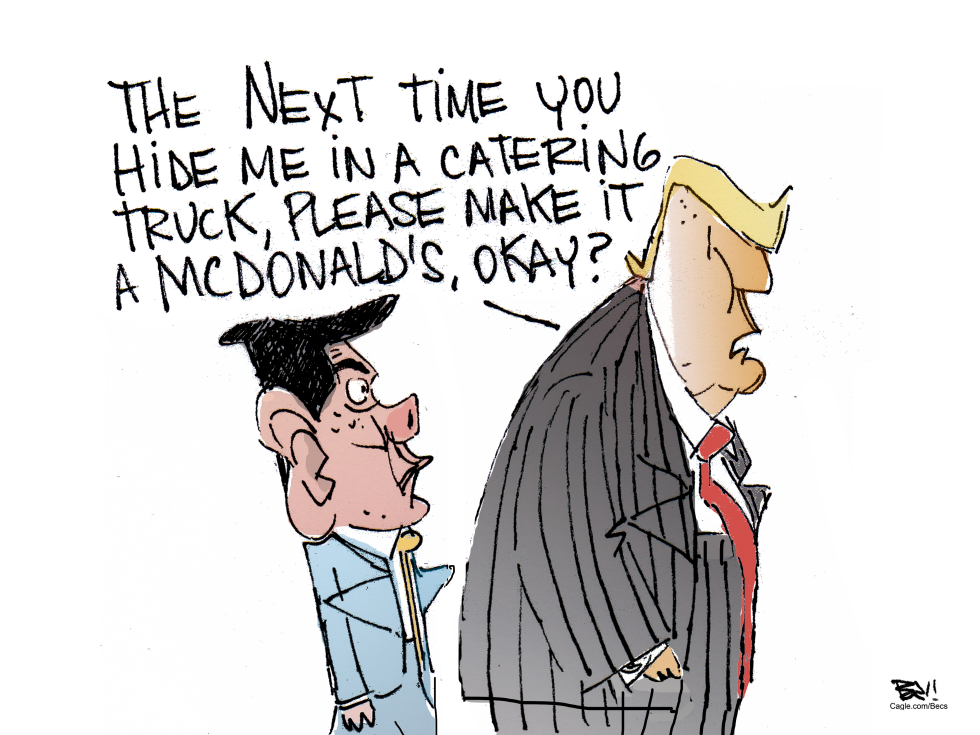
Argentinian President Javier Milei reportedly asked former President Donald Trump to arrange future concealment in a McDonald's catering truck. The request reflects ongoing political ties between the two leaders amid shared economic and foreign policy interests. The piece portrays the exchange as a lighthearted directive on logistics.
In mid-2026, efforts to sideline Donald Trump from political relevance continued through legal and electoral channels following prior election cycles. Allies and opponents alike maneuvered to limit his influence within the Republican Party and broader national discourse. The piece frames these actions as an attempt to consign Trump to political irrelevance, portraying the effort as a collective push by figures in his orbit.
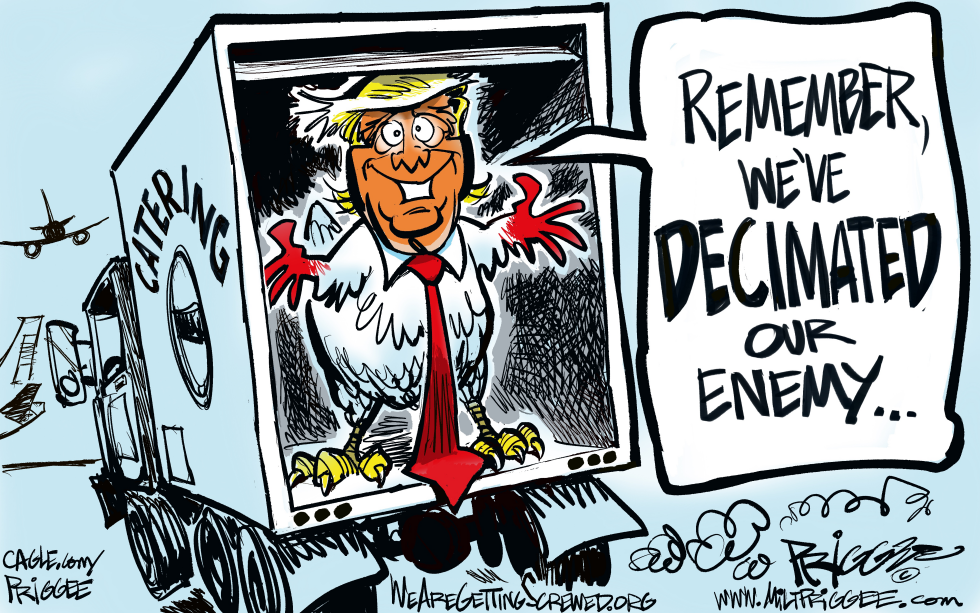
The cartoon by Milt Priggee shows Donald Trump with eagle wings and talons inside an open catering truck at an airport. Trump extends his arms while a speech bubble states he has decimated the enemy. The truck displays catering lettering and the scene includes a website reference to wearegettinggreener.org. The image uses the eagle form to reference national symbols while placing the figure in a service vehicle context.
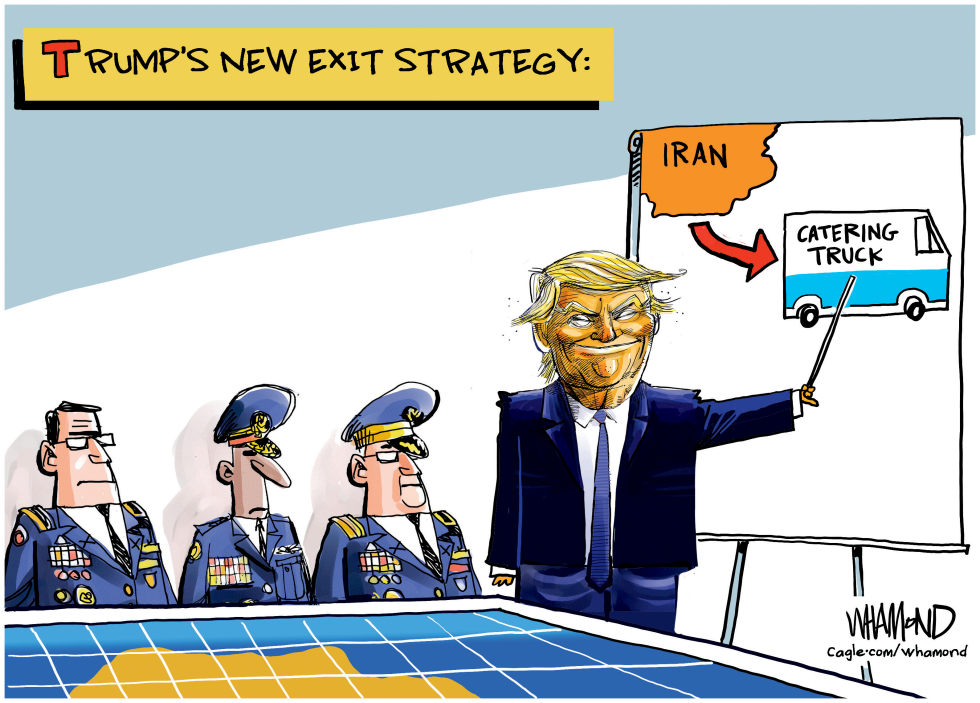
The cartoon depicts Donald Trump addressing three military officers while pointing to a whiteboard labeled Iran with a catering truck illustration. The yellow banner reads Trump's New Exit Strategy. The image uses the catering truck as a visual device for an Iran withdrawal plan. It responds to ongoing discussions about U.S. foreign policy toward Iran in 2026. The composition places Trump in a briefing role with officers seated at a table marked by a grid pattern.
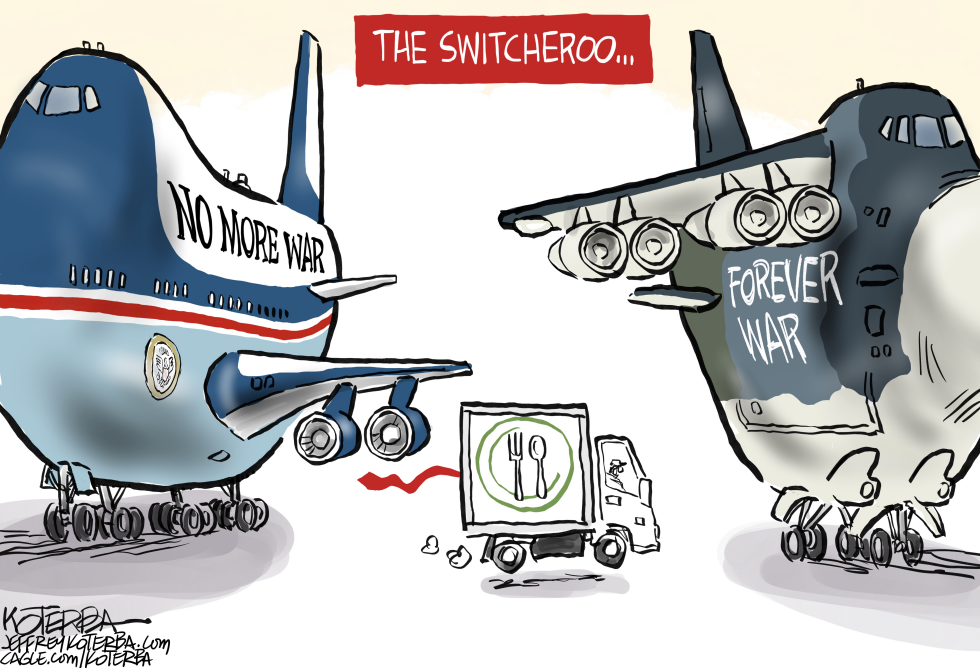
A political shift in military posture draws attention as commitments move from ending wars to sustaining them indefinitely. The editorial critiques the reversal as a cynical about-face on foreign engagements.