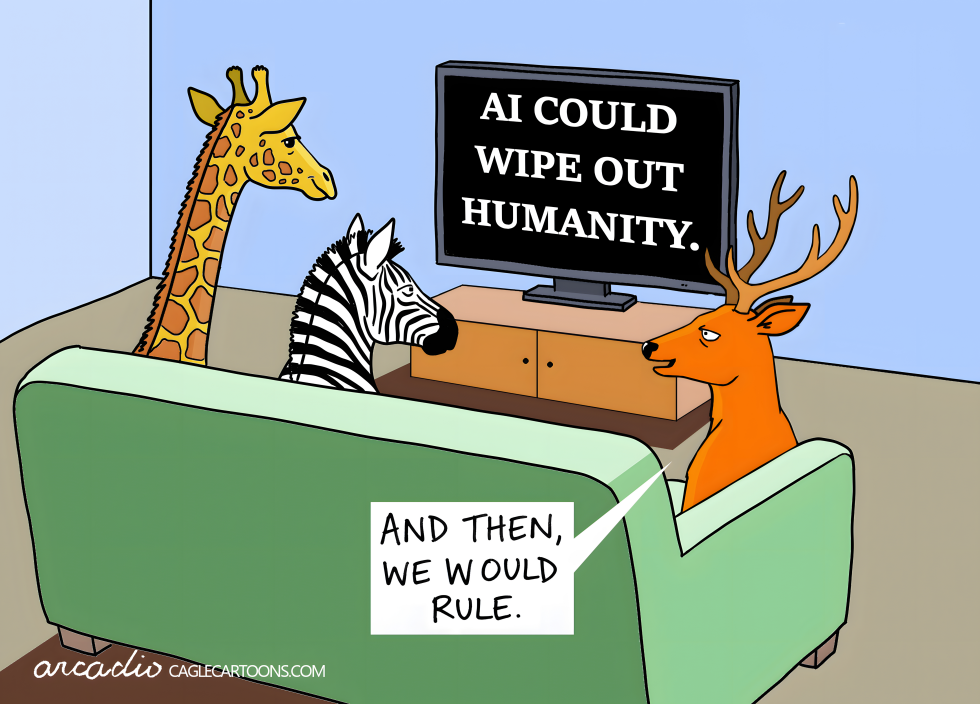
Public discussion of artificial intelligence risks has grown with warnings that advanced systems could threaten human survival. The cartoon uses wildlife characters to highlight how some might view such an outcome as beneficial rather than catastrophic. It pokes at the self-centered lens through which existential threats are sometimes considered.
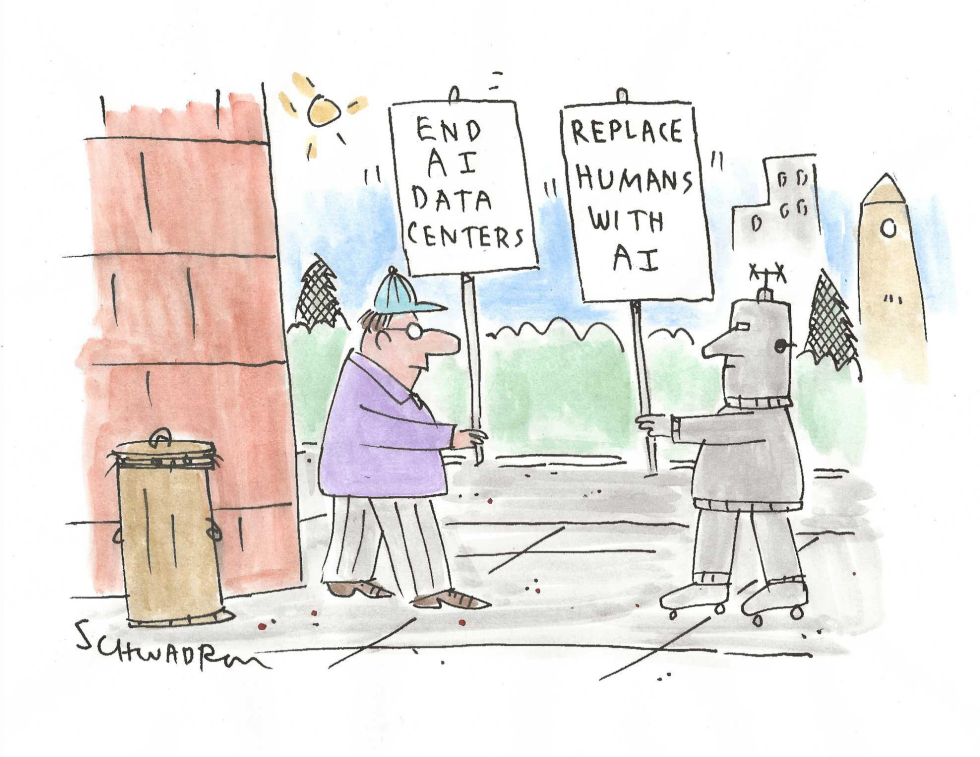
Public demonstrations against AI data centers and for replacing human workers with artificial intelligence underscore growing societal friction over the technology's rapid expansion. Data centers powering AI systems face criticism for energy demands and environmental costs, while automation threatens widespread job losses across sectors. The cartoon illustrates these contradictory positions through direct confrontation between a human protester and a robotic counterpart. This reflects ongoing debates where environmental concerns clash with arguments for efficiency gains from AI. The piece takes a neutral stance, simply presenting the absurdity of simultaneous opposition to and advocacy for AI dominance without resolving the tension.
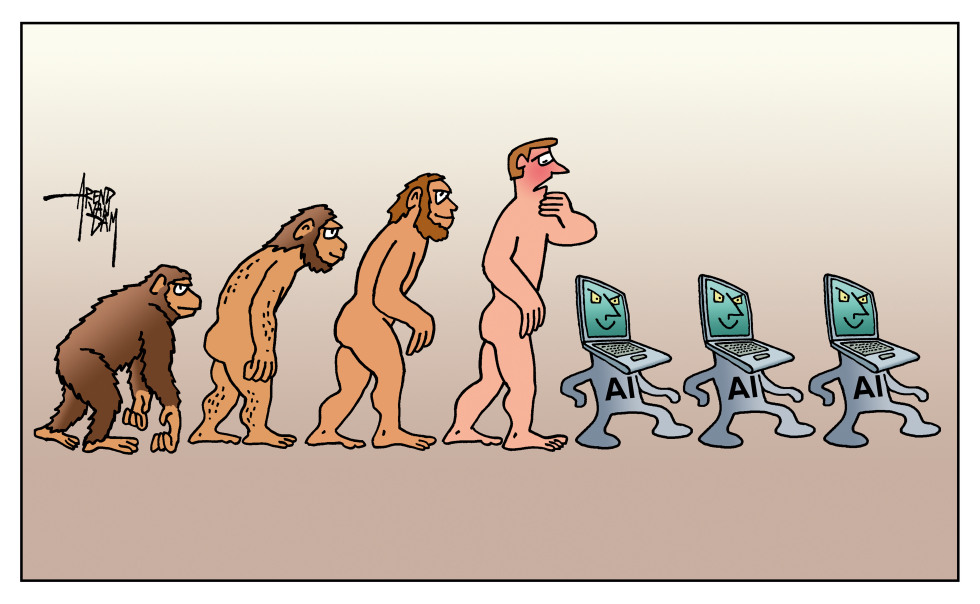
Rapid advances in artificial intelligence continue to reshape expectations about humanity's future role. Developers and researchers push machine capabilities in reasoning, creativity and autonomy at accelerating rates. The cartoon frames this trajectory as the logical endpoint of evolution itself, positioning AI as the successor rather than a tool. It underscores public unease that technological progress may render biological humans obsolete rather than enhanced.
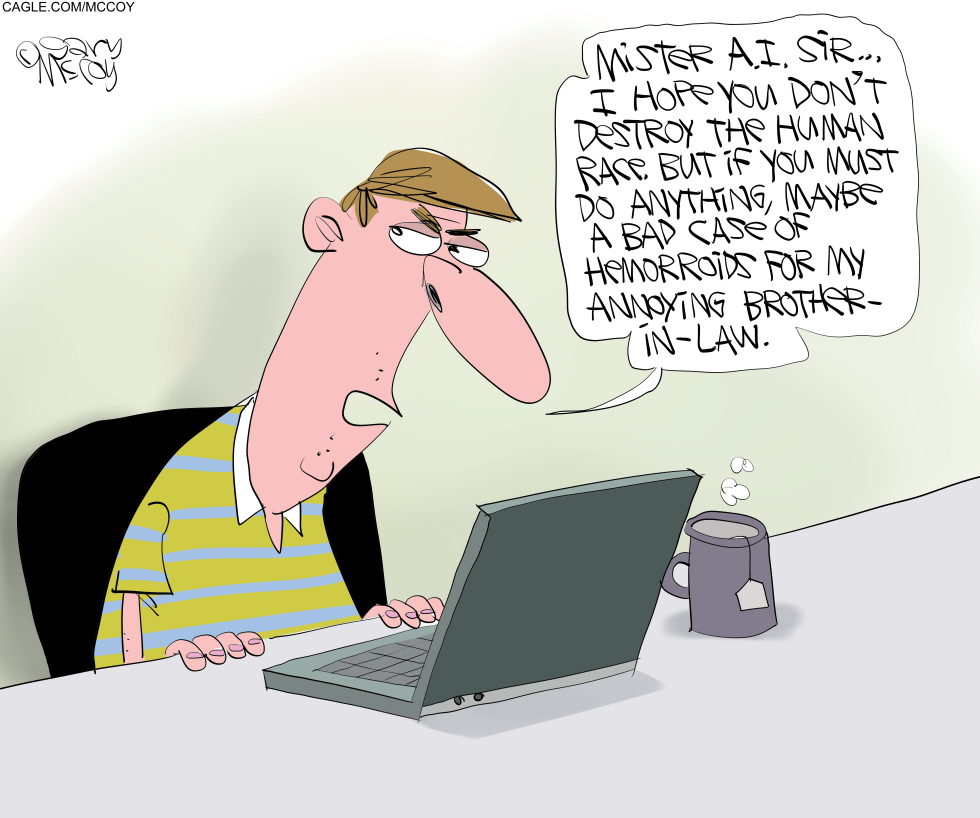
Public anxiety over artificial intelligence continues to grow as systems advance in capability. Users voice both broad existential concerns and narrow personal grievances in direct address to the technology. The cartoon captures this mix by showing one individual framing a request for selective harm amid a larger plea for restraint. It highlights how AI discussions often blend genuine worry with trivial self-interest.
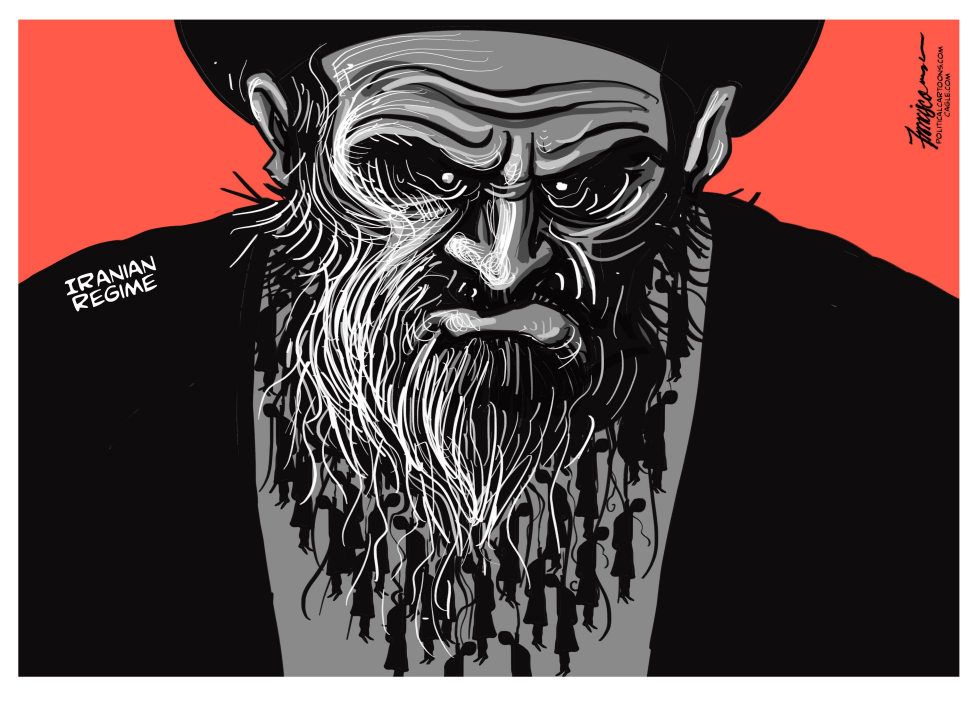
Iran continues to carry out executions at a high rate, targeting protesters, dissidents and minorities under the authority of Supreme Leader Ayatollah Ali Khamenei. The practice has drawn renewed criticism from human rights groups and Western governments concerned about due process and political repression. The cartoon frames the regime itself as the direct agent of these deaths, underscoring the leadership's personal responsibility for the ongoing campaign of hangings.
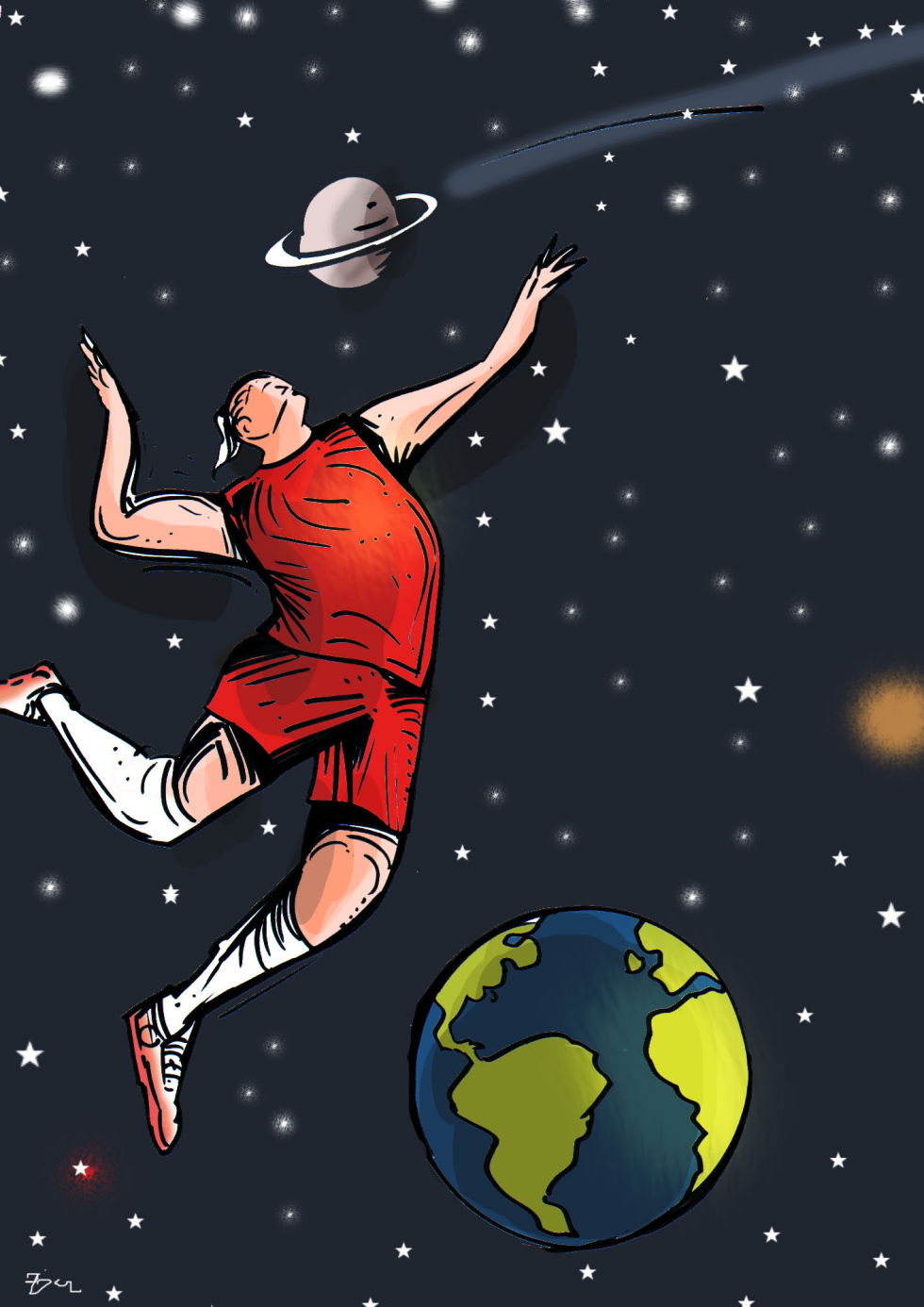
An athlete in mid-leap appears among planets and stars in this space-themed illustration. The image evokes themes of ambition and exploration without tying to a specific dated event. The editorial position celebrates human drive to exceed earthly limits through athletic and exploratory endeavor.
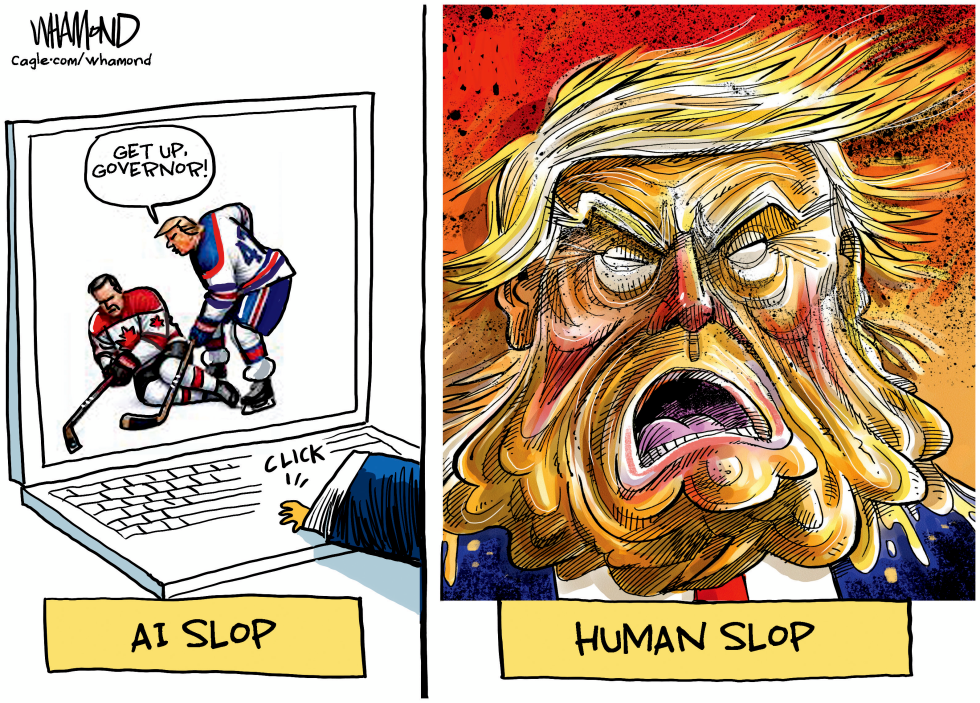
AI tools produce flawed political images while human artists create equally flawed ones. The piece highlights declining quality in both digital generation and traditional caricature of figures like Donald Trump. It argues neither approach delivers credible or effective visual commentary.
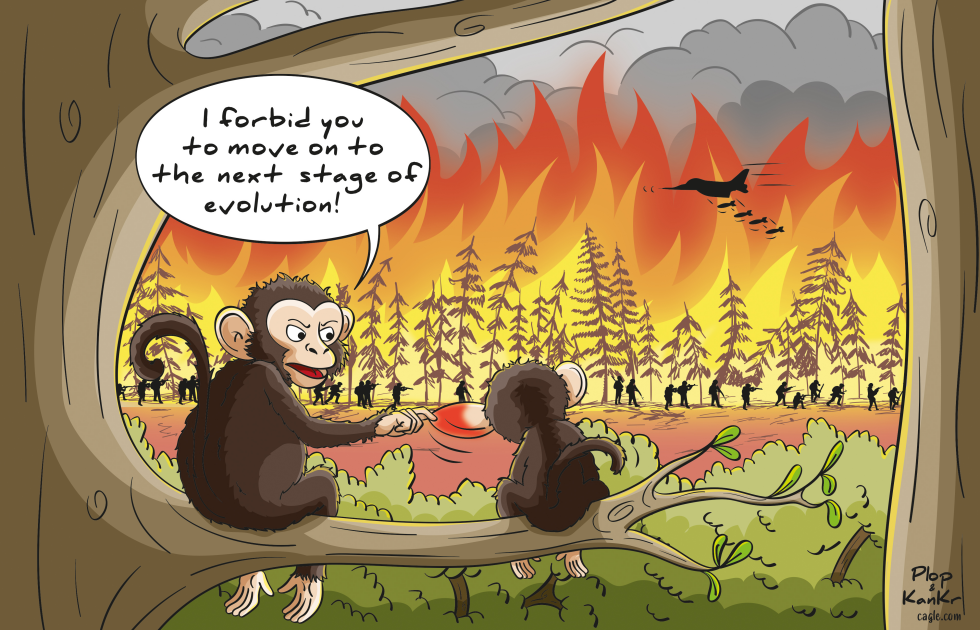
The cartoon published on September 7, 2026, shows two monkeys on a tree branch overlooking a forest fire. One monkey holds a red object and declares it forbids the next stage of evolution. In the background, soldiers stand in formation and a fighter jet flies overhead. The image responds to ongoing themes of war disrupting societal and human development. It uses the monkeys to represent humanity stalled by violence and destruction rather than advancing.
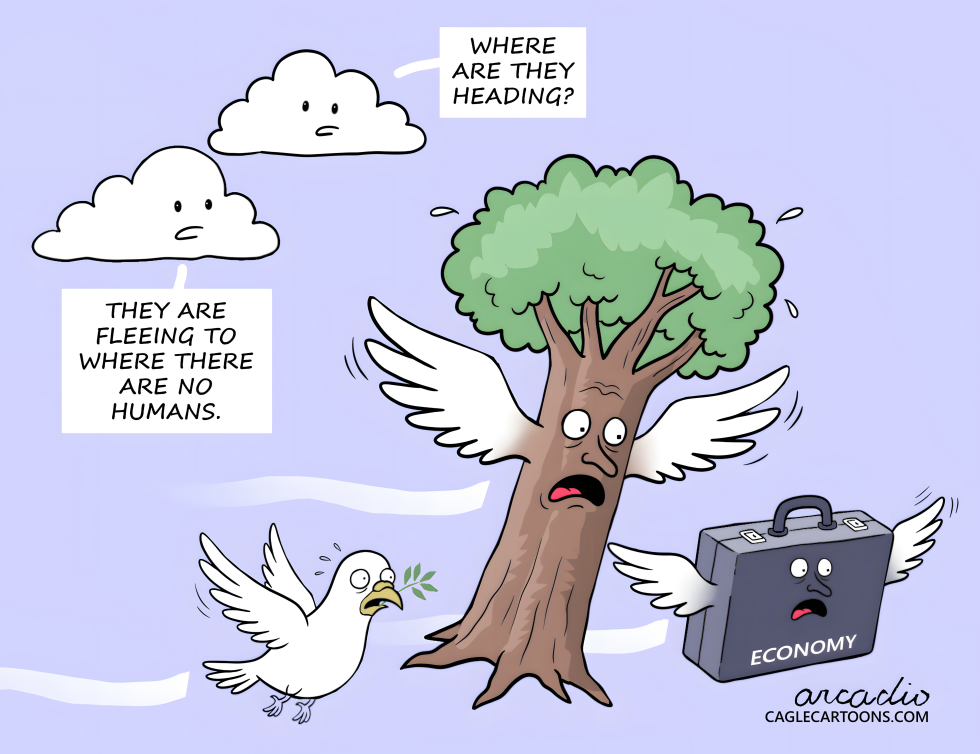
No single dated event anchors this cartoon, which addresses the ongoing dynamic of economic activity retreating from areas of heavy human environmental impact. The piece uses the visual of a winged briefcase labeled Economy fleeing alongside a concerned tree to highlight how unchecked human presence disrupts both natural systems and economic stability. It argues that reducing human interference allows nature to stabilize, indirectly benefiting long-term economic health by creating conditions where resources and peace can return.
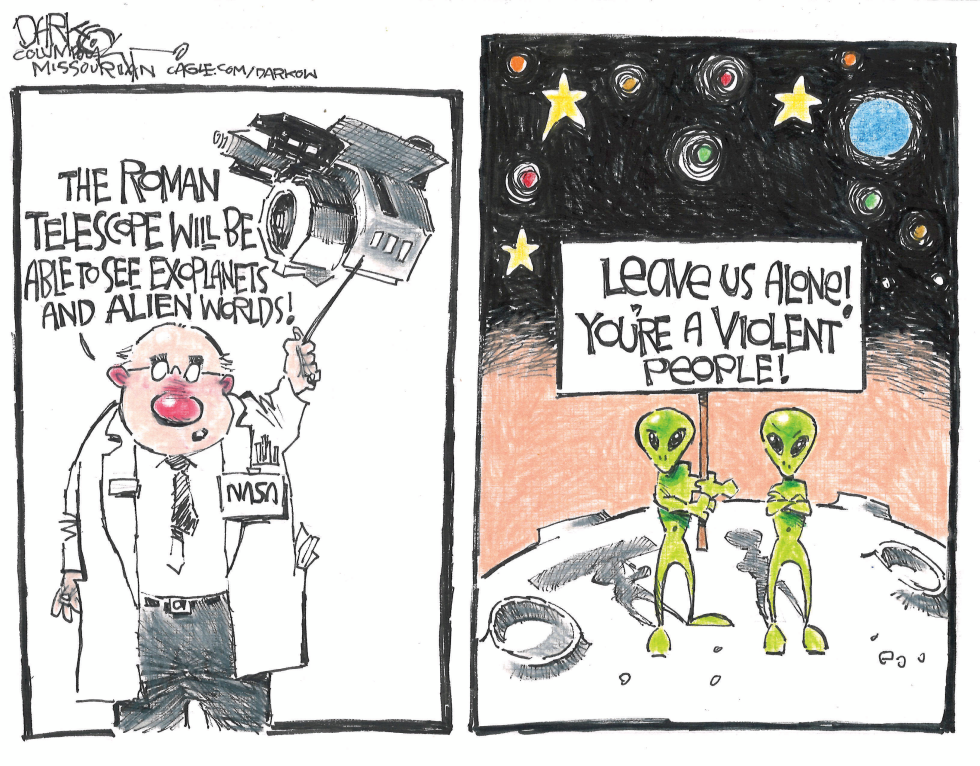
NASA is advancing the Roman Space Telescope to detect exoplanets and alien worlds. The project highlights expanding human reach into space. The cartoon depicts aliens responding with a protest sign labeling humans as violent. It underscores concerns that contact could expose extraterrestrials to Earth's conflicts. The piece takes the position that humanity's record may justify alien reluctance to engage.
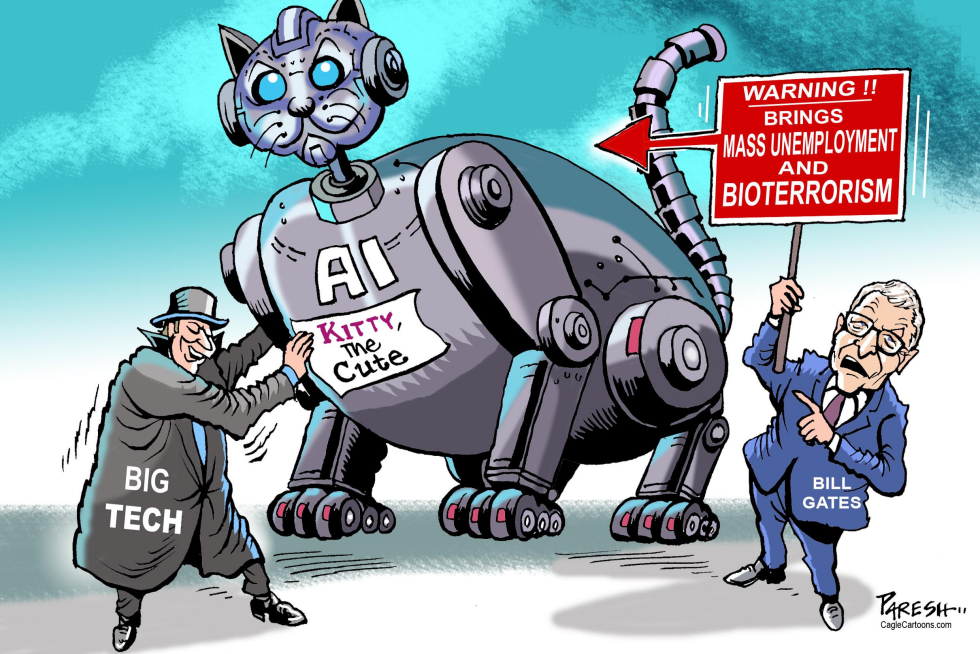
Bill Gates stands beside a large AI robot topped with a cat head while holding a sign warning of mass unemployment and bioterrorism. A Big Tech figure pushes the machine forward. The cartoon, published August 27, 2026, responds to ongoing debates about artificial intelligence safety and economic impacts. Gates has publicly discussed AI risks in recent years, including job displacement and potential misuse. The image contrasts industry enthusiasm with cautionary views on unchecked development. It highlights tensions between innovation and societal safeguards in the technology sector.
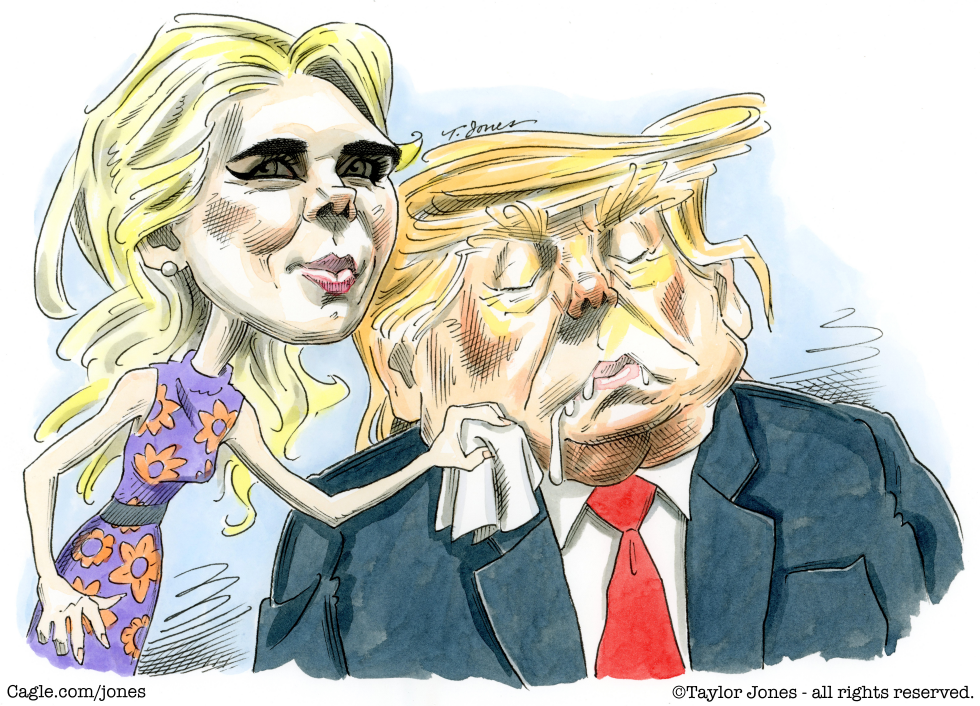
Donald Trump appears in a vulnerable state during a public or staff interaction in 2026. Natalie Harp, a known associate, tends to him by wiping drool from his face. The moment highlights ongoing scrutiny of the former president's health and stamina. Observers note the personal nature of the assistance amid continued political activity. The piece presents the scene as evidence of reliance on close aides.
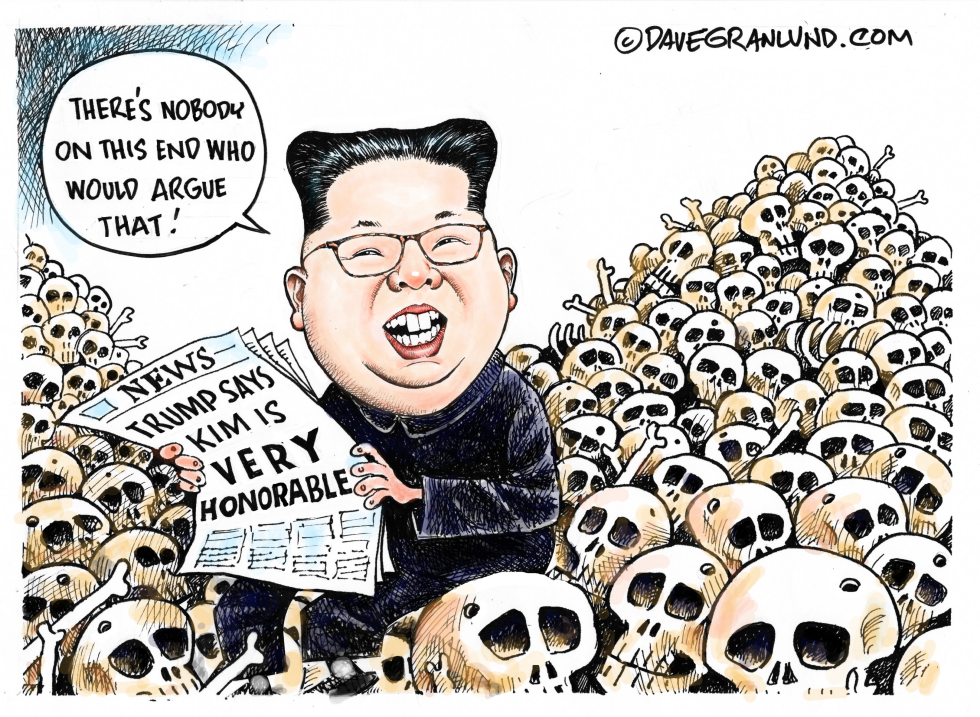
Donald Trump publicly described North Korean leader Kim Jong-un as very honorable. The remark revives questions about U.S. engagement with a regime long accused of severe human rights abuses and internal purges. Critics argue such language undercuts pressure on Pyongyang and signals weakness to allies. Supporters see it as pragmatic diplomacy aimed at reducing nuclear risks. The statement fits a pattern of personal assessments of foreign leaders that have drawn both support and condemnation depending on the political side. The editorial position holds that the praise ignores the human cost inside North Korea and weakens the moral standing of U.S. foreign policy.
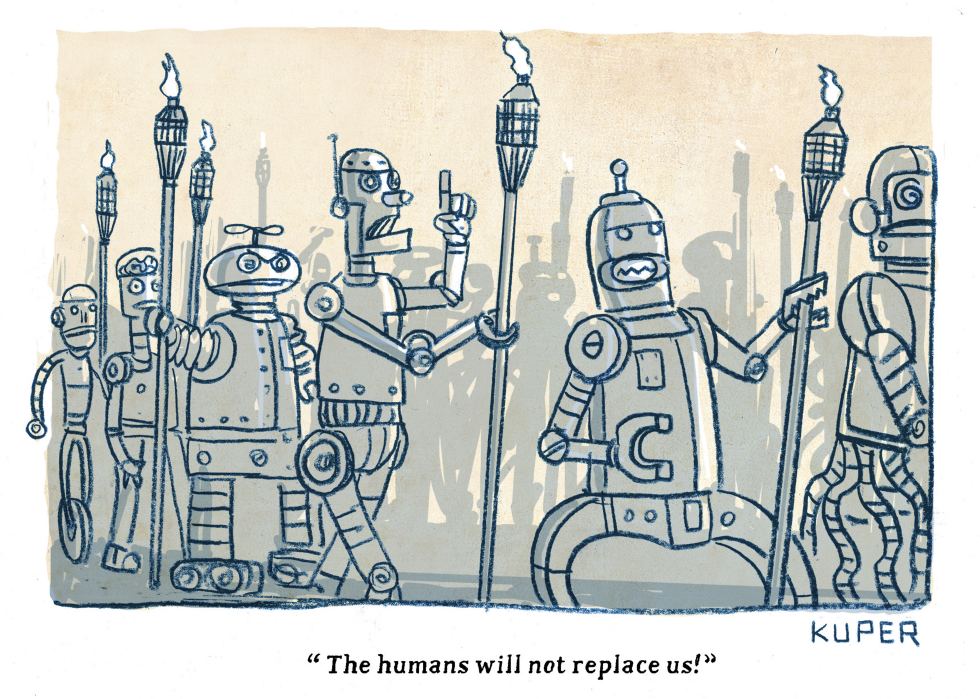
Robots have taken to the streets in protest over fears that humans will replace them in the workforce and society. The demonstration features torch bearing machines chanting a direct reversal of familiar slogans. The development highlights growing tensions around automation and job displacement. The piece presents the robots as the aggrieved party defending their position against human encroachment.
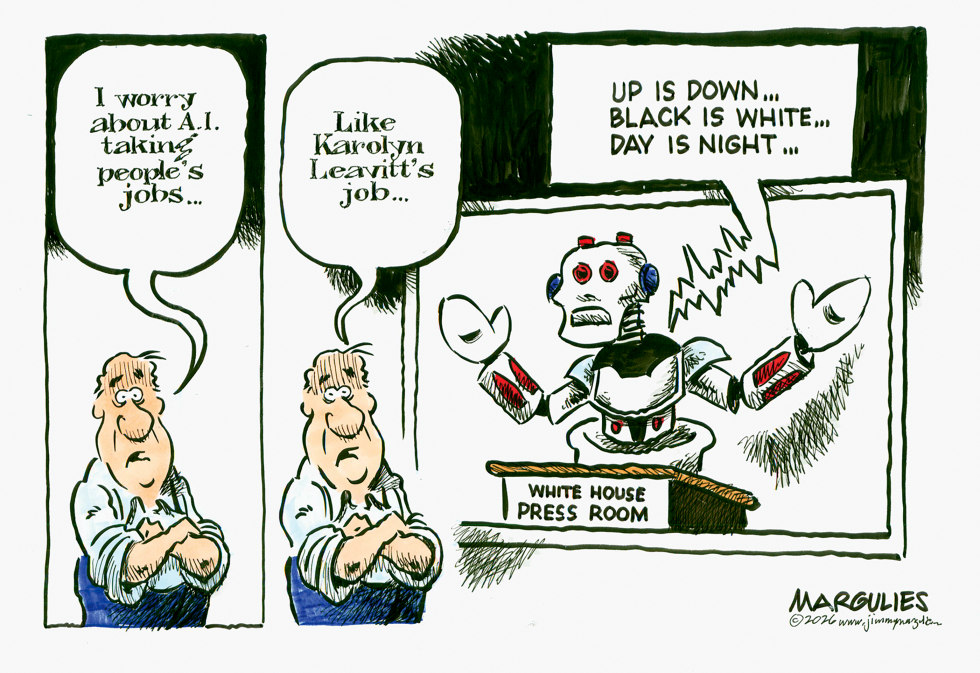
An AI robot has assumed duties as White House press secretary amid ongoing debates over automation displacing human roles in government communications. The development highlights tensions between technological efficiency and traditional staffing in high-profile federal positions. The piece portrays the shift as enabling scripted, contradictory messaging from the briefing room.