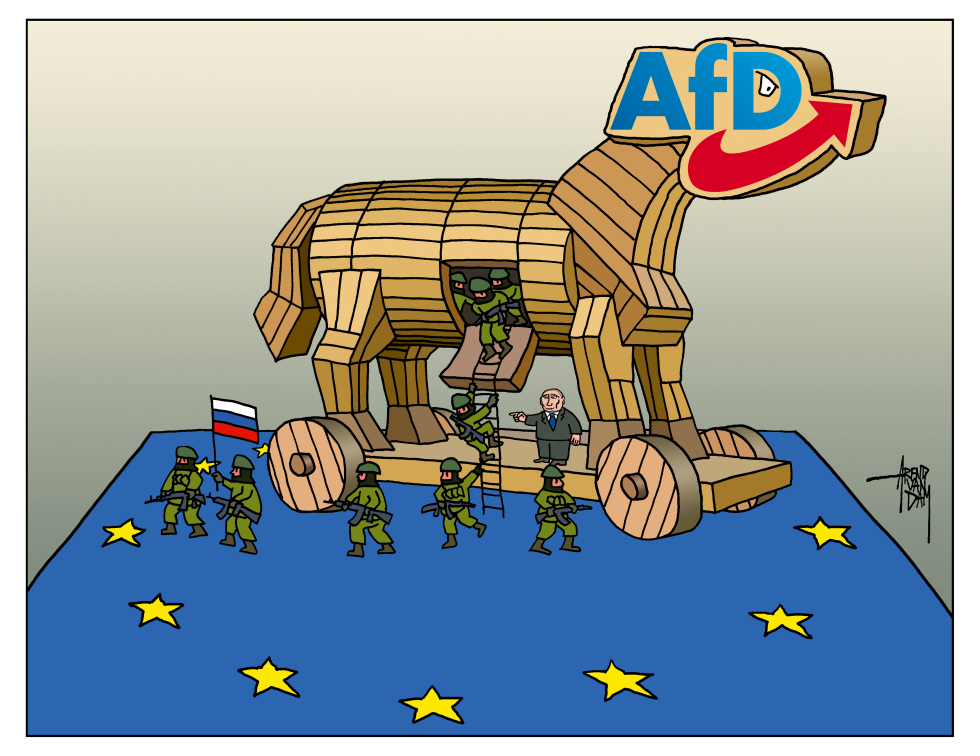
The AfD party in Germany faces accusations of serving as a conduit for Russian influence operations targeting the EU. Vladimir Putin benefits from the far-right group's rising profile ahead of elections, using it to sow division and weaken European unity. The cartoon portrays this dynamic as a classic Trojan horse tactic, with Russian troops emerging from the AfD structure on EU soil. Critics argue the party's policies align too closely with Kremlin interests, undermining NATO and EU cohesion at a critical time. The editorial stance warns that ignoring these ties risks strategic vulnerability for Europe.
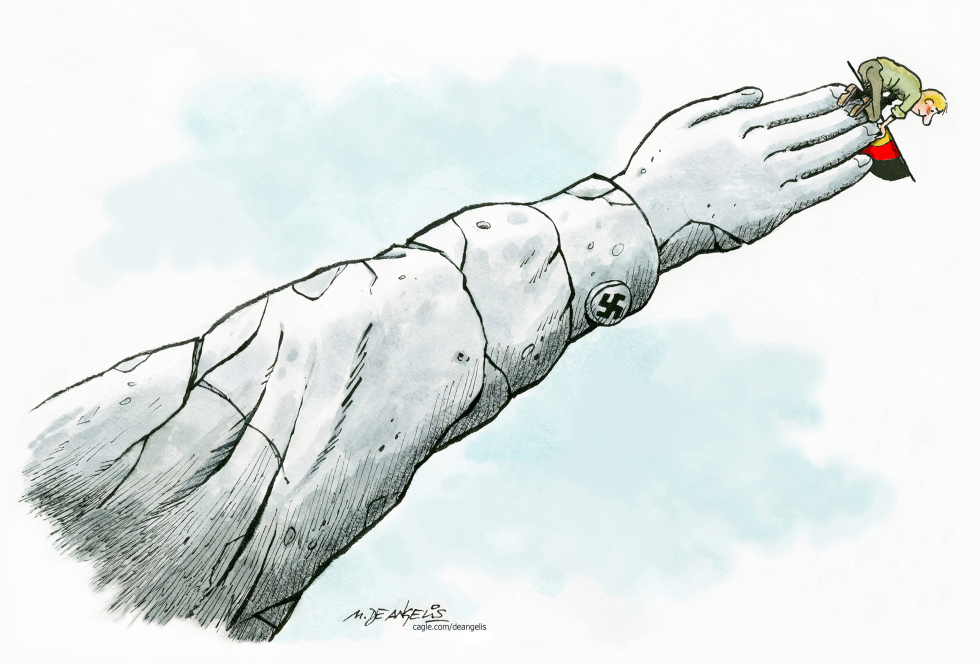
Concerns over far-right political gains in Germany have intensified in recent years, with parties embracing nationalist rhetoric drawing scrutiny for echoing historical extremist movements. The development matters because it tests the resilience of post-war democratic institutions in Europe's largest economy. The cartoon argues that such influences continue to exert a controlling grip on German political life despite decades of denazification efforts.
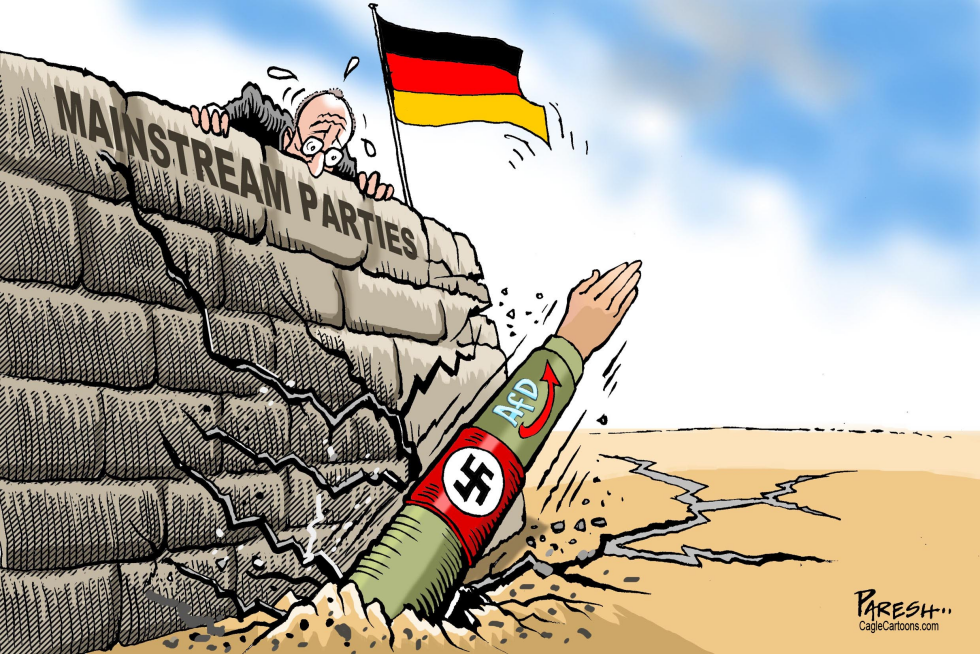
The cartoon depicts Germany's mainstream parties as a fracturing wall under assault from the AfD, portrayed as an extremist force with Nazi imagery. Published on September 10, 2026, it responds to the party's growing electoral strength and its impact on traditional coalitions ahead of key votes. The image shows a distressed mainstream figure atop the wall while the AfD arm breaks through from below, symbolizing how the party's advances erode established political structures. This reflects ongoing concerns about coalition stability and the mainstream's struggle to contain far-right momentum in German politics.
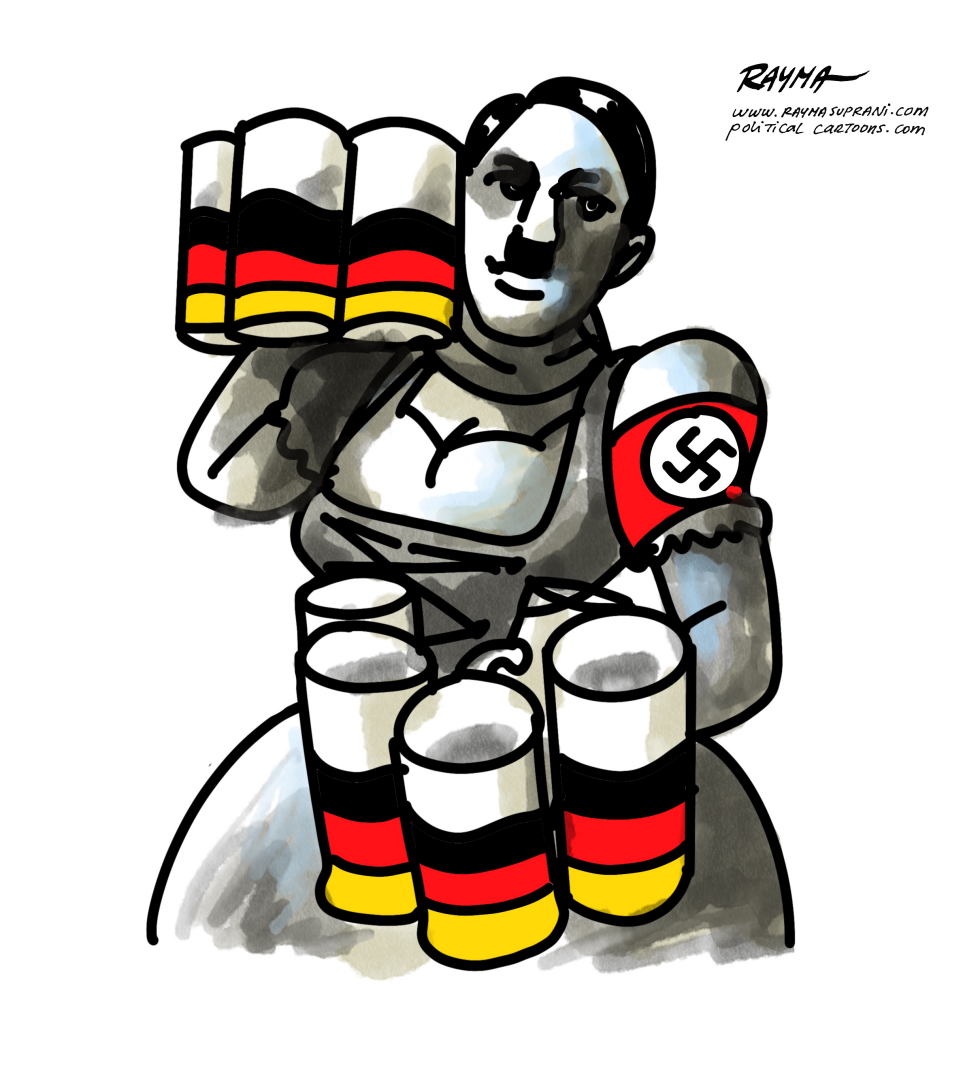
The cartoon depicts a figure resembling Adolf Hitler clad in armor and bearing a swastika armband while surrounded by beer mugs colored like the German flag. It responds to ongoing discussions about far-right movements in Germany by blending historical Nazi references with contemporary beer culture symbols. The work highlights perceived connections between political radicalism and national social customs as of the 2026 publication date. No specific recent event anchors the piece beyond recurring themes of extremism in European politics.
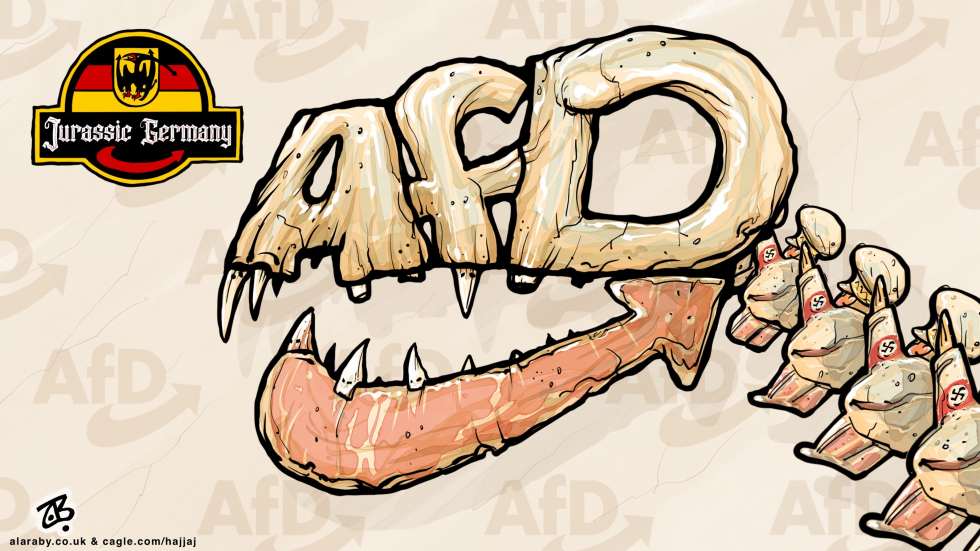
The Alternative for Germany party posted strong results in recent state and national contests, drawing renewed scrutiny over its tolerance for extremist elements. The outcome matters because AfD now holds significant parliamentary seats and influences policy debates on immigration and national identity. The cartoon argues that these gains risk normalizing symbols and rhetoric long associated with Germany's darkest chapter.
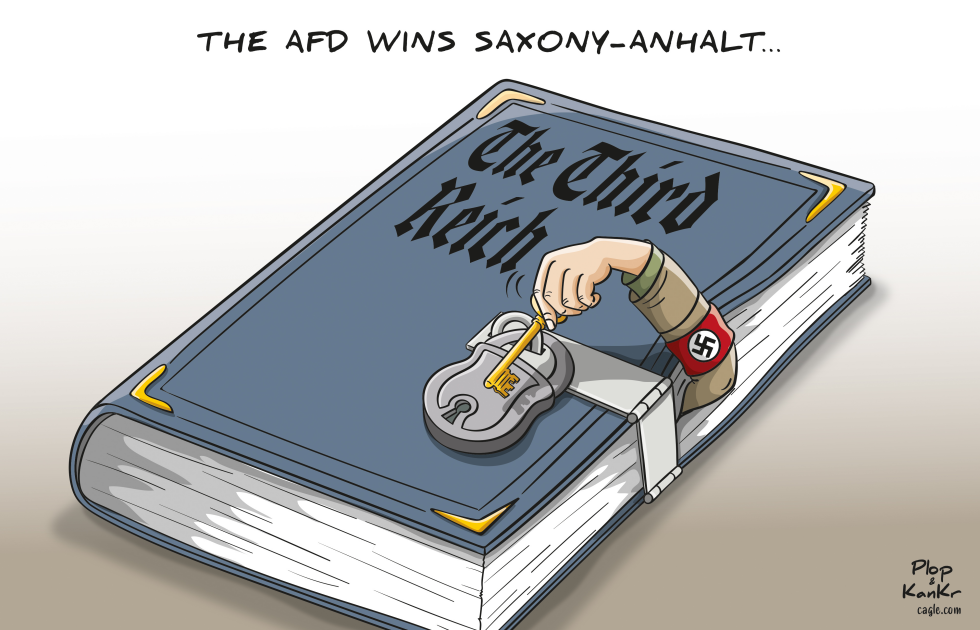
The cartoon responds to the AfD's reported victory in the Saxony-Anhalt state election by showing a hand in a Nazi armband using a key to unlock a large book titled The Third Reich. The image suggests the win revives dangerous historical precedents from Germany's past. It uses the visual metaphor of opening a locked volume to imply that far-right electoral gains could restore authoritarian elements associated with the Nazi era. The publication date places the piece in the context of ongoing debates about the AfD's rising influence in eastern German states.
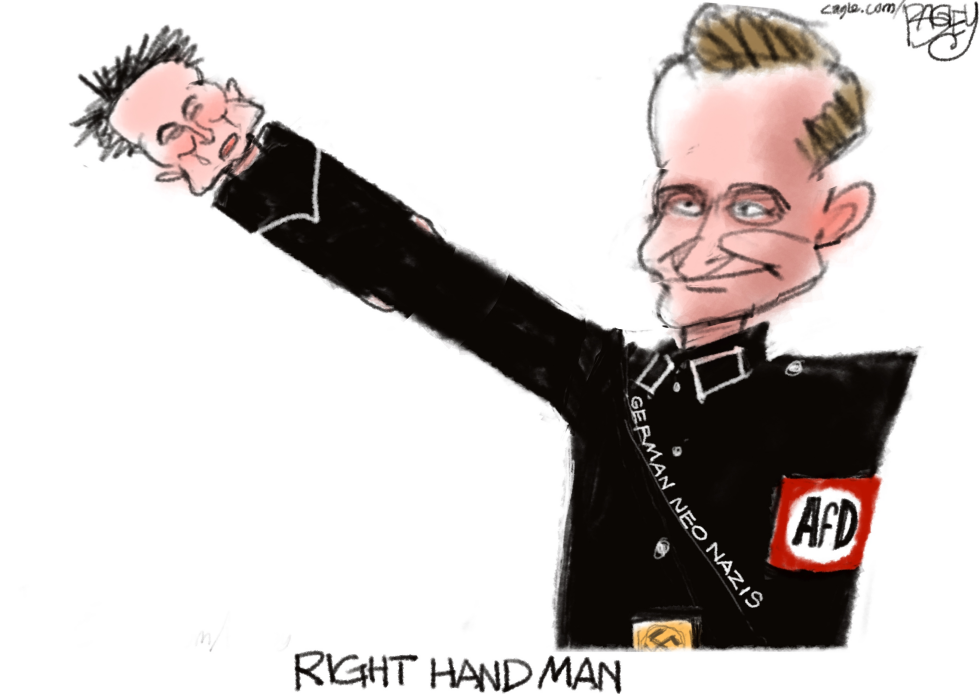
The Alternative for Germany party continues to draw accusations of harboring neo-Nazi elements as recent events spotlight its members and rhetoric. The party has gained electoral ground while facing investigations and public backlash over extremist ties. This development matters because it reflects broader challenges to democratic norms in Europe. The cartoon takes the position that AfD operates as a vehicle for neo-Nazi influence rather than a legitimate political force.
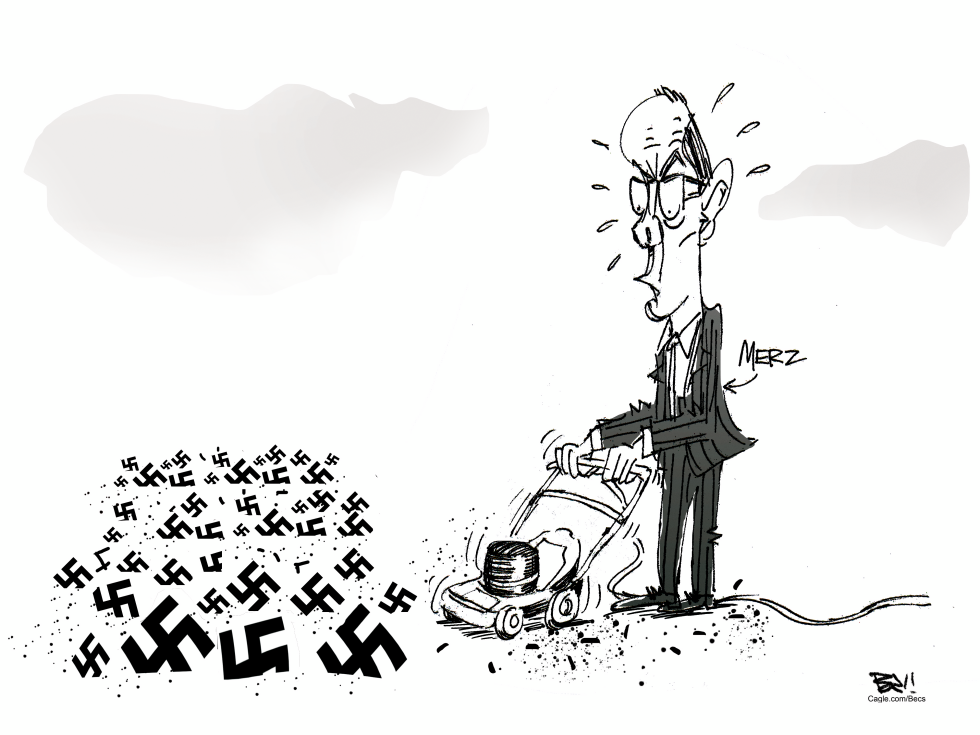
Friedrich Merz, a leading German conservative, has positioned himself against far-right extremism by publicly rejecting Nazi symbols and associated groups. The move comes as Germany faces growing concerns over rising far-right activity ahead of key political contests. Merz's stance aims to draw a clear line separating mainstream conservatism from extremist fringes. The cartoon portrays this effort as a deliberate cleanup of dangerous symbols. It endorses the push to isolate and diminish far-right influence in German politics.
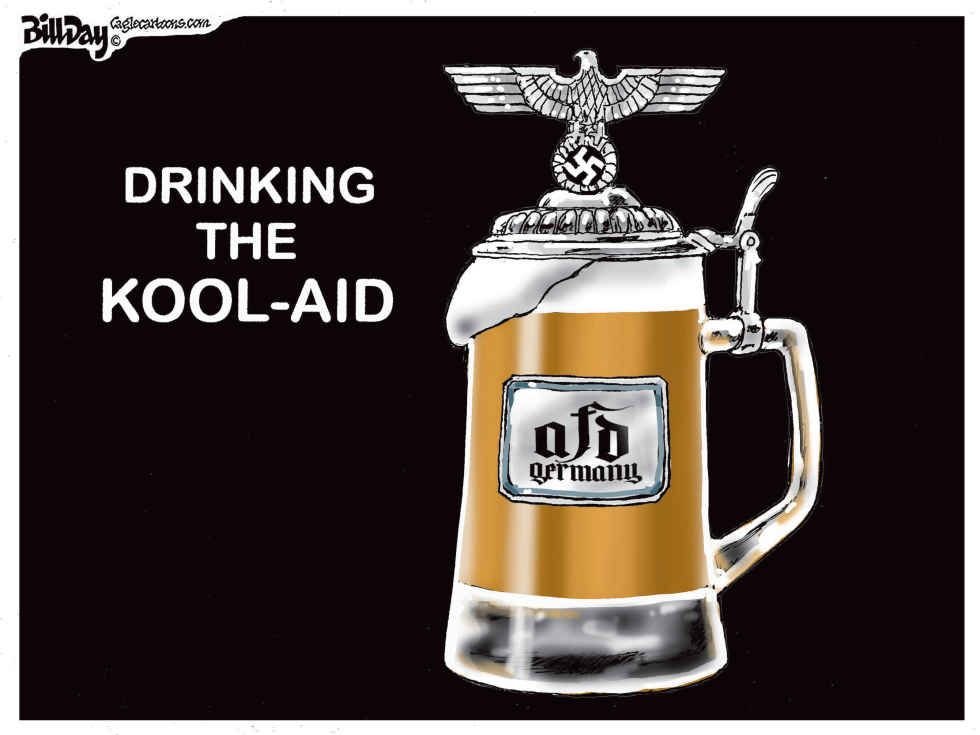
Germany's far-right Alternative for Germany party is gaining ground ahead of elections with rhetoric echoing historical extremism. The party has faced repeated scrutiny for members' Nazi-era references and anti-immigrant stances that courts have flagged as extremist. This development matters because AfD polling strength could reshape coalition math and policy on migration, EU ties, and civil liberties. The cartoon argues that supporters are consuming a toxic ideological brew that risks normalizing authoritarian symbols and eroding democratic norms.
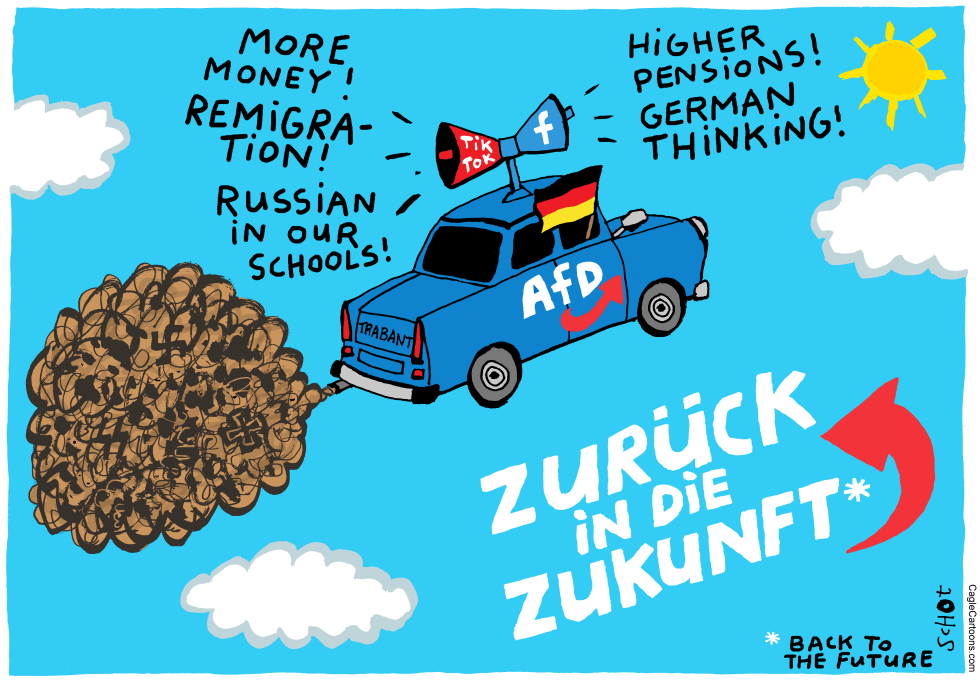
Germany's AfD secured major election gains in 2026 on pledges of remigration, higher pensions and anti-foreign rhetoric. The result raises alarms over the party's tolerance for extremist elements. The cartoon frames the victory as a dangerous retreat into past ideologies rather than genuine progress.
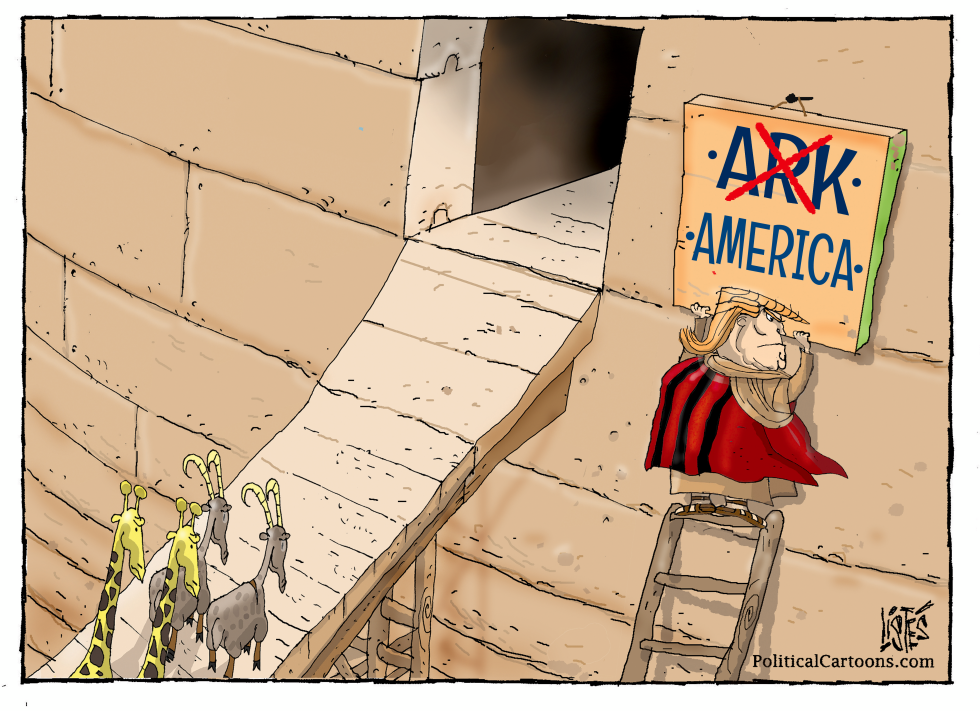
Donald Trump has long inserted his personal branding into public institutions and language. The cartoon responds to this pattern by showing him literally striking through a biblical reference to force an America-first substitution. It argues the impulse reveals unchecked ego rather than policy substance.
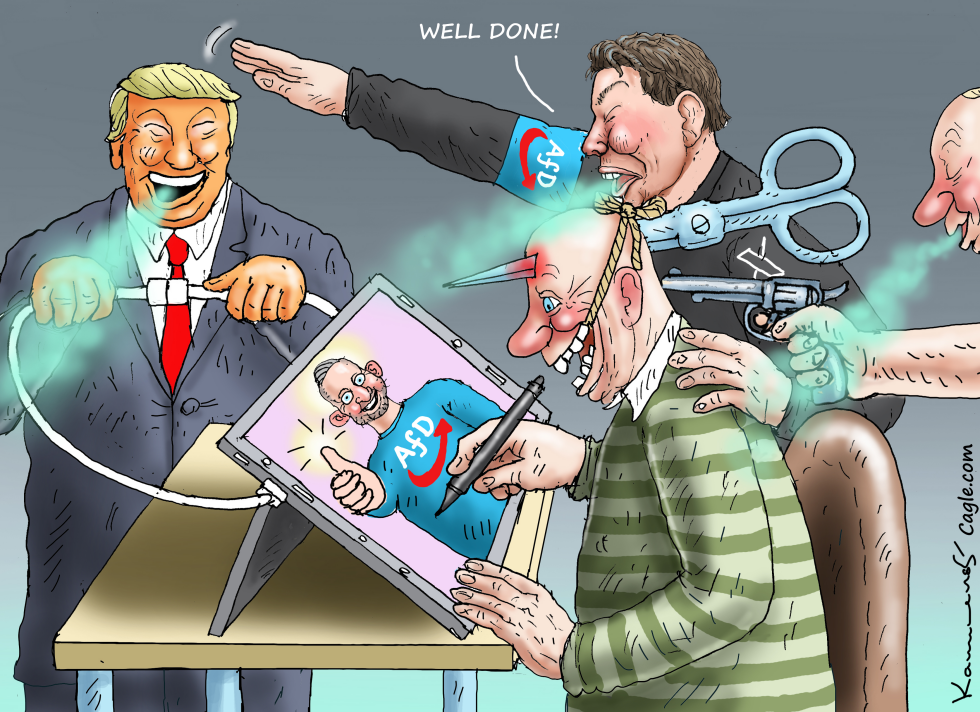
Donald Trump publicly aligned with Germany's Alternative for Germany party in the run-up to federal elections. The move drew scrutiny over foreign influence in European politics. The cartoon portrays the endorsement as reckless and dangerous, highlighting the risks of legitimizing extremist elements.
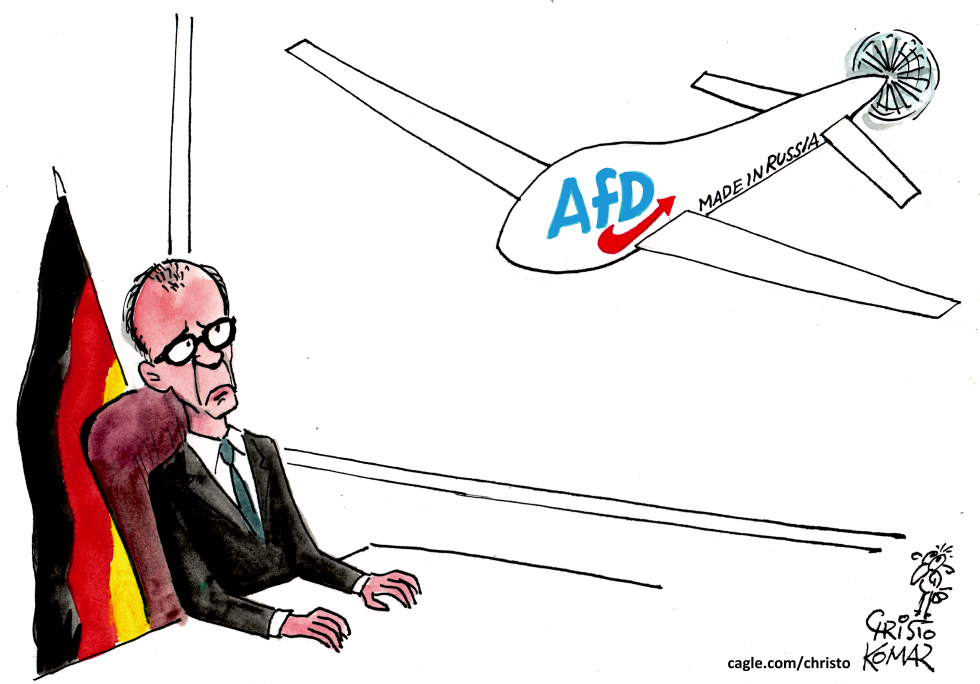
Germany's Alternative for Germany party draws renewed attention for its pro-Russia stance and possible external support. The cartoon uses the image of an AfD-branded plane labeled made in Russia to suggest the party's campaign and positions are shaped by Moscow. This comes amid ongoing debates over foreign interference in European elections and the party's rising poll numbers. Critics argue such ties undermine German sovereignty and democratic processes. The piece takes the view that AfD functions as a vehicle for Russian interests rather than a genuine domestic movement.
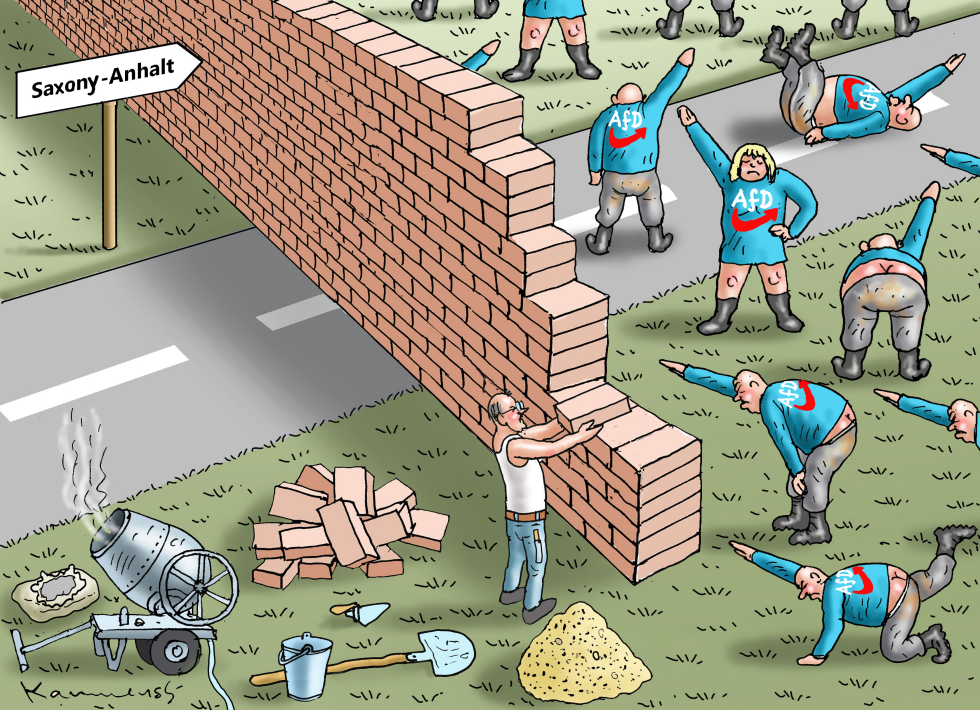
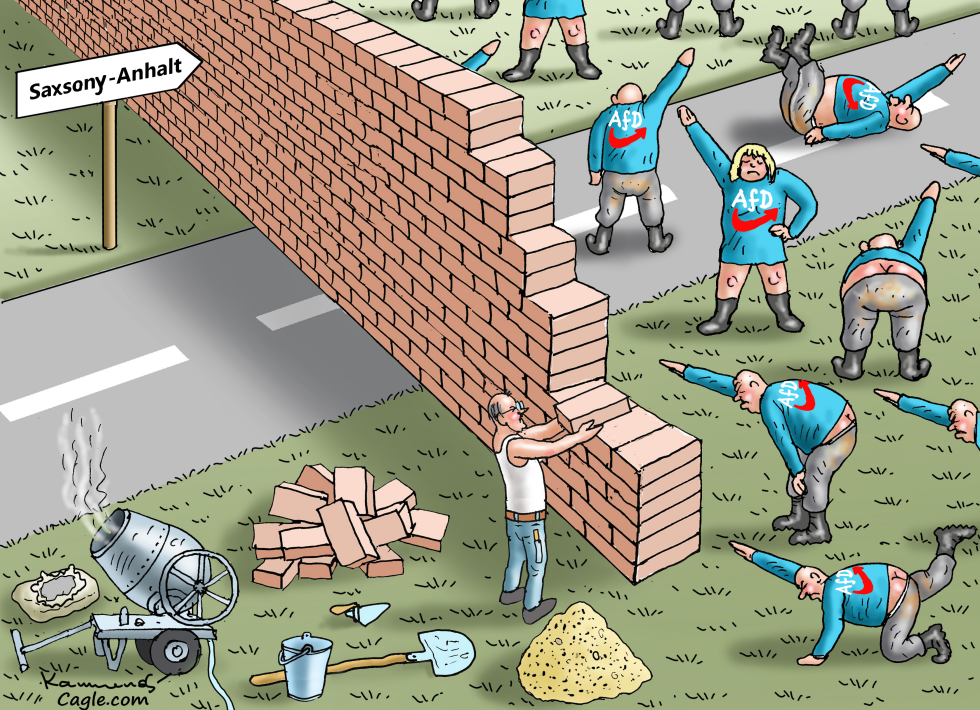
Friedrich Merz has positioned himself as a bulwark against Alternative for Germany advances ahead of state elections in Saxony-Anhalt. The cartoon depicts Merz personally laying bricks for a wall labeled for the eastern state while AfD figures in branded shirts struggle to cross it. The image underscores the CDU leader's strategy of containment rather than engagement with the far-right party. It reflects ongoing debates within German center-right circles about how to address AfD electoral strength without legitimizing its platform. The editorial stance presents the wall-building as a necessary, if blunt, defensive measure.
German opposition leader Friedrich Merz has positioned himself as a bulwark against the Alternative for Germany party ahead of state elections in Saxony-Anhalt. The move comes as AfD polls strongly in eastern regions, prompting mainstream parties to draw sharper lines. Merz's approach emphasizes containment over engagement. The cartoon frames this as literal wall-building, underscoring the defensive posture parties adopt when facing AfD momentum. It highlights the ongoing struggle within German politics to isolate the far-right without ceding ground on immigration and national identity issues that fuel AfD support.