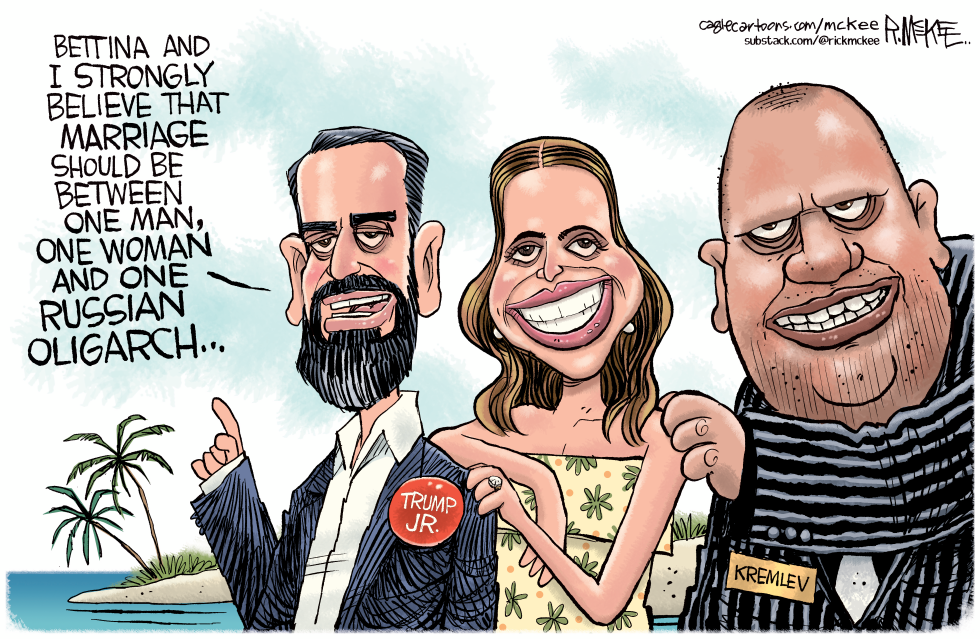
On September 15, 2026, commentary emerged around reports of Russian oligarch involvement in events tied to Donald Trump Jr. and Bettina. The development raises questions about foreign influence on the Trump family. The piece argues such connections undermine claims of independence from external interests.
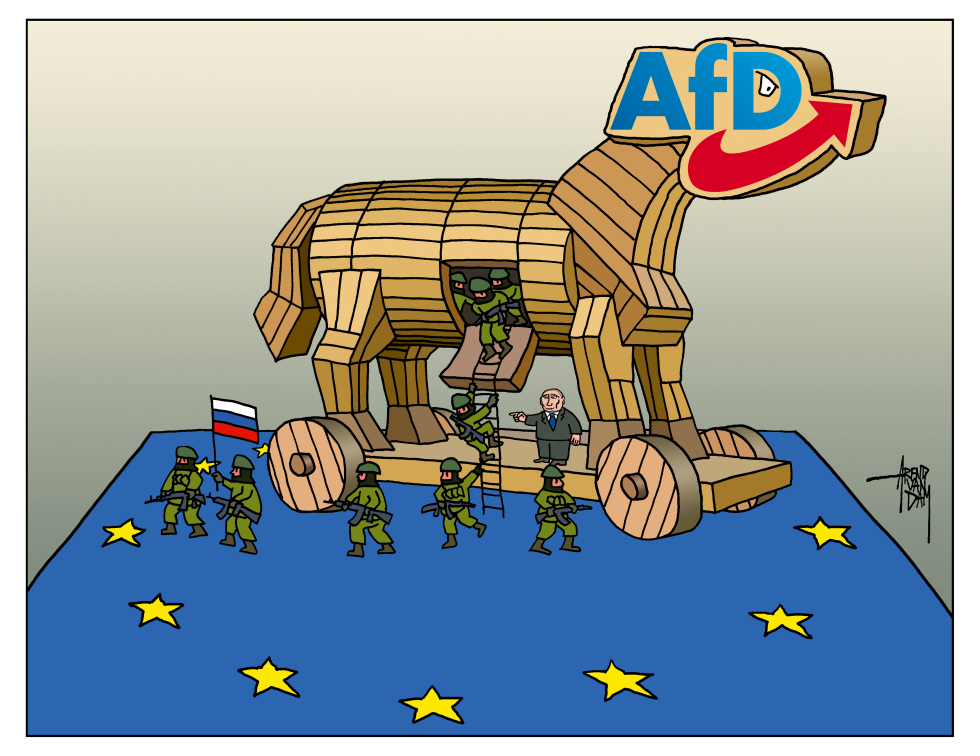
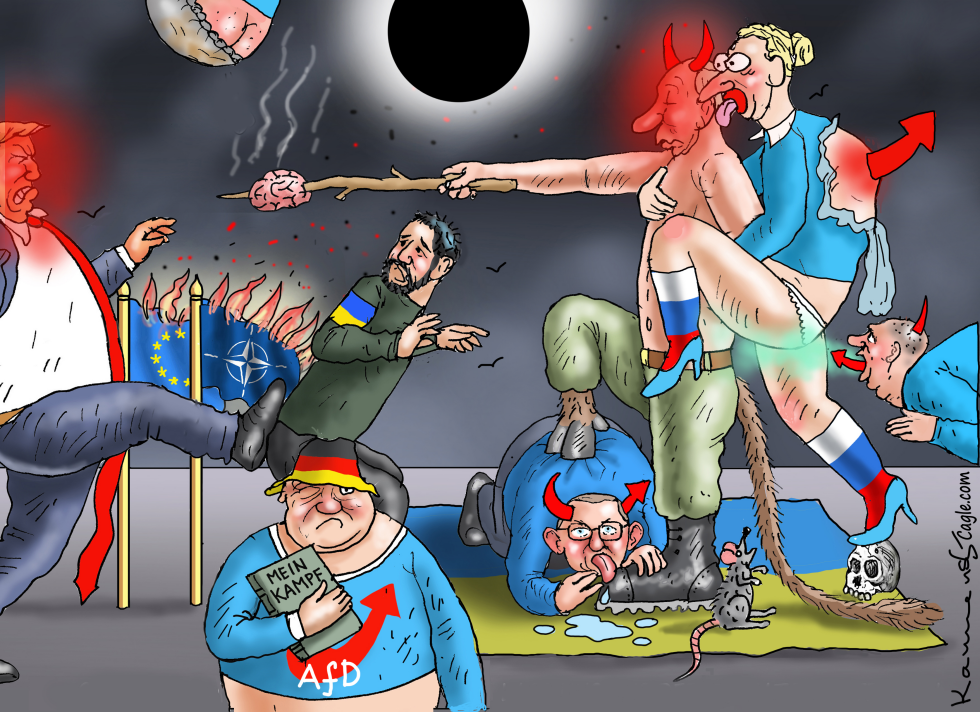
The AfD party in Germany faces accusations of serving as a conduit for Russian influence operations targeting the EU. Vladimir Putin benefits from the far-right group's rising profile ahead of elections, using it to sow division and weaken European unity. The cartoon portrays this dynamic as a classic Trojan horse tactic, with Russian troops emerging from the AfD structure on EU soil. Critics argue the party's policies align too closely with Kremlin interests, undermining NATO and EU cohesion at a critical time. The editorial stance warns that ignoring these ties risks strategic vulnerability for Europe.
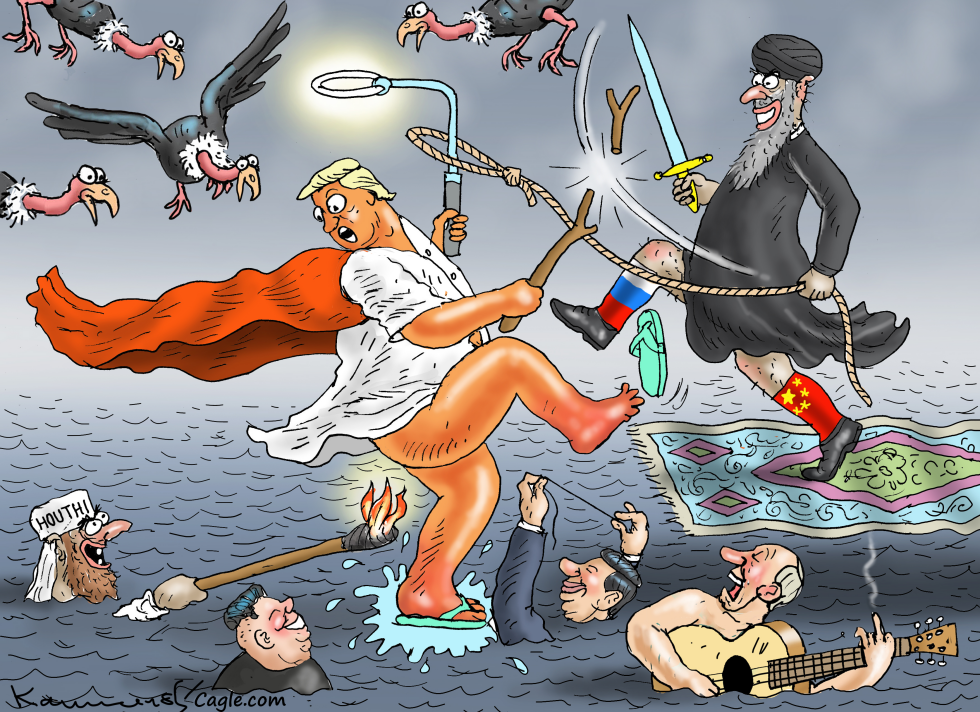
Donald Trump faces mounting complications in Middle East engagements involving Houthi forces and shifting ties with Russia and China. The cartoon portrays these entanglements as self-inflicted disorder that invites scavengers and undermines stability. It critiques the approach as reckless and counterproductive.
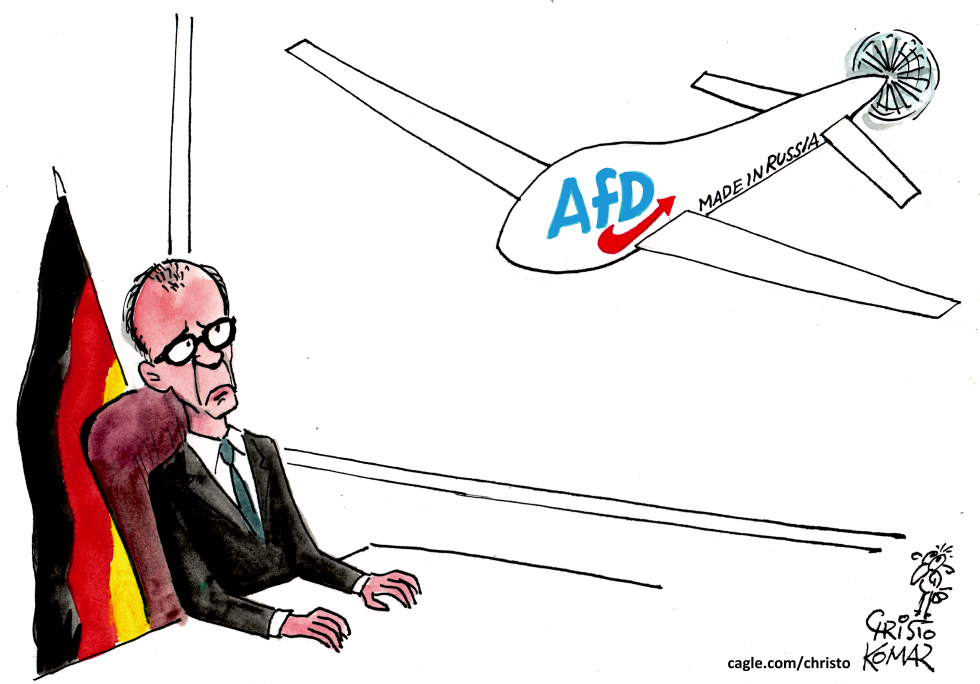
Germany's Alternative for Germany party draws renewed attention for its pro-Russia stance and possible external support. The cartoon uses the image of an AfD-branded plane labeled made in Russia to suggest the party's campaign and positions are shaped by Moscow. This comes amid ongoing debates over foreign interference in European elections and the party's rising poll numbers. Critics argue such ties undermine German sovereignty and democratic processes. The piece takes the view that AfD functions as a vehicle for Russian interests rather than a genuine domestic movement.
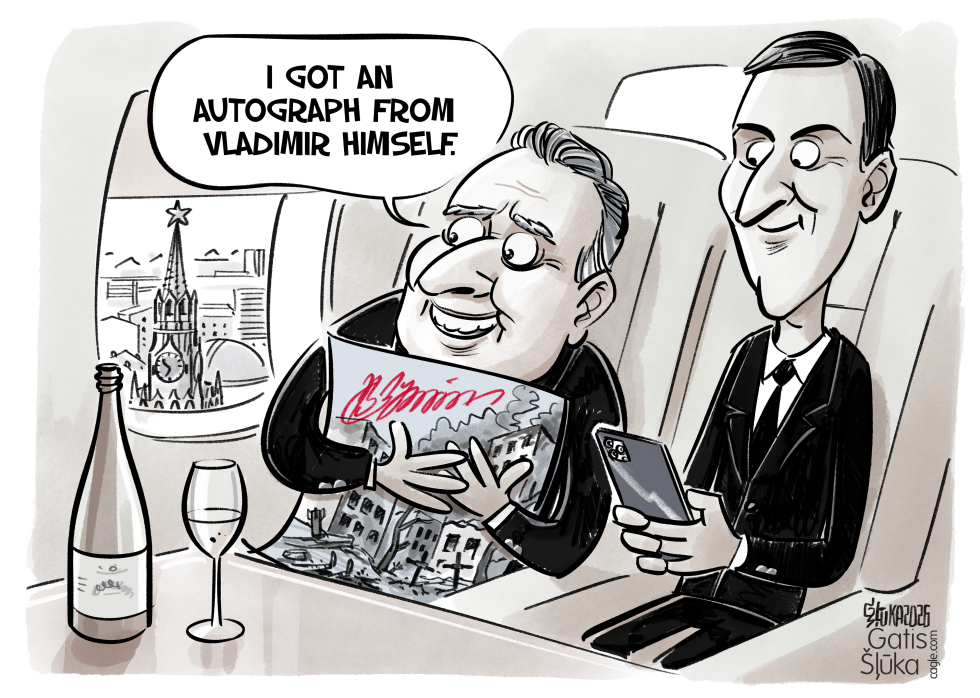
The cartoon depicts a politician on an airplane excitedly showing a colleague an autograph from Vladimir Putin on a book or document. The speech bubble reads that the autograph came from Vladimir himself. A bottle of wine and glass sit on the table, with a view of a city featuring a star-topped tower outside the window. The second man smiles while holding a phone. Published on September 7, 2026, the image comments on political figures maintaining or displaying ties to Russia despite international strains. The visual emphasizes the politician's enthusiasm for the souvenir as a point of pride.
The Alternative for Germany party faces renewed criticism for its associations with international far-right figures including Donald Trump and apparent sympathy toward Vladimir Putin amid the Russia-Ukraine conflict. The cartoon portrays AfD embracing these influences while rejecting NATO and EU structures. It argues that such alignments expose the party's extremist leanings and undermine Germany's democratic commitments.
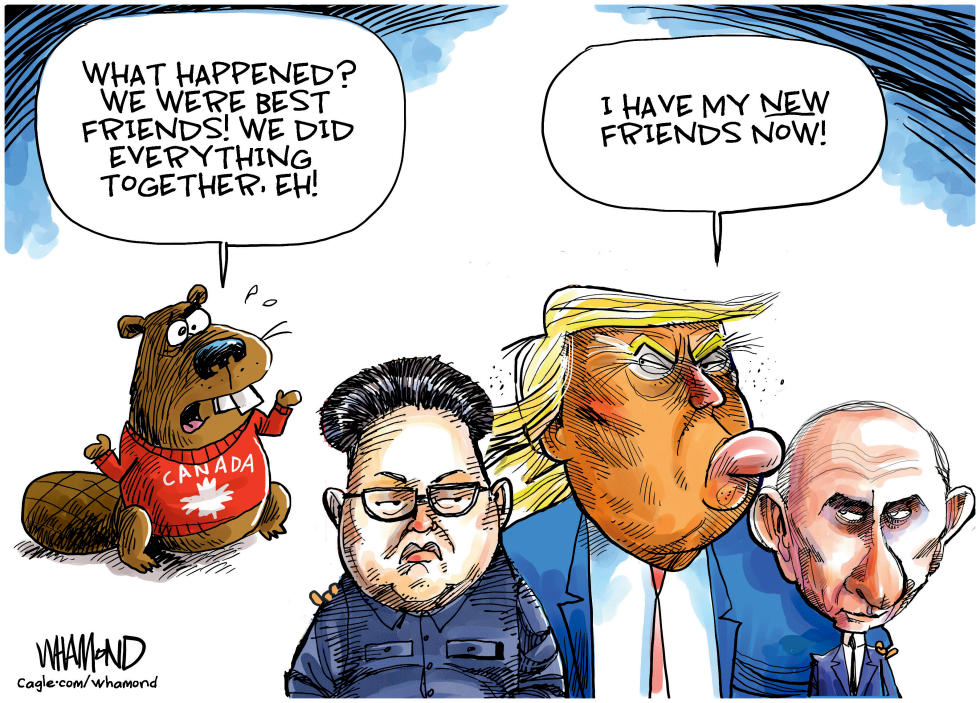
President Trump has redirected diplomatic priorities toward closer ties with Russian President Vladimir Putin and North Korean leader Kim Jong Un. Traditional partners such as Canada now face reduced engagement. The move reflects a broader realignment in U.S. foreign policy that favors authoritarian counterparts over longstanding democratic allies. Observers note the shift carries risks for trade, security cooperation, and international norms. The editorial position criticizes the pivot as shortsighted and damaging to established relationships.
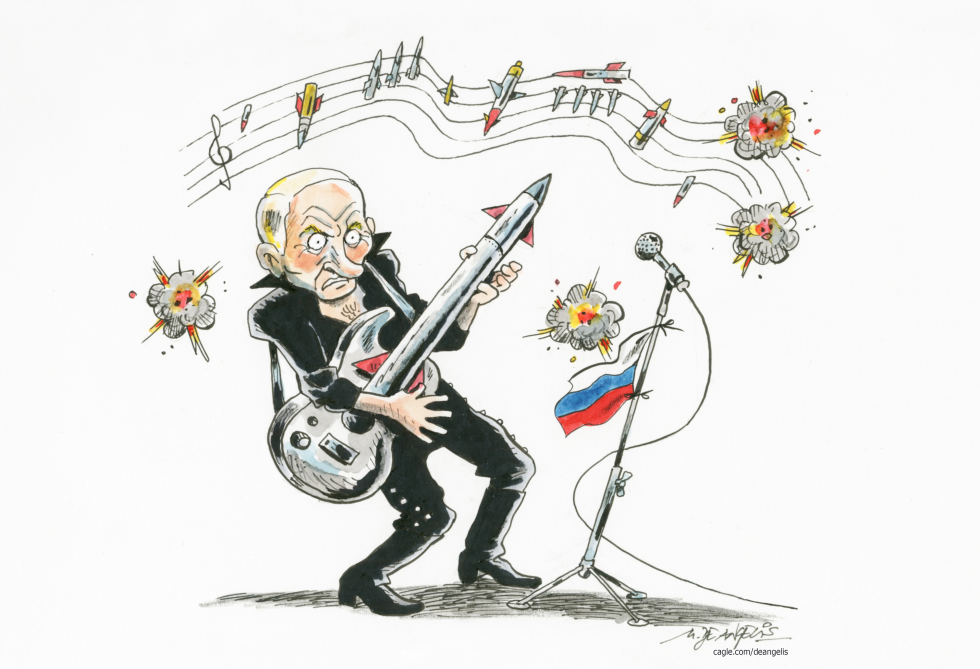
Russian President Vladimir Putin continues directing missile strikes in the Ukraine conflict, maintaining pressure on Kyiv through repeated aerial attacks. The imagery frames this sustained military campaign as a theatrical rock performance. The piece critiques the leader's embrace of destructive weaponry as spectacle rather than strategy.
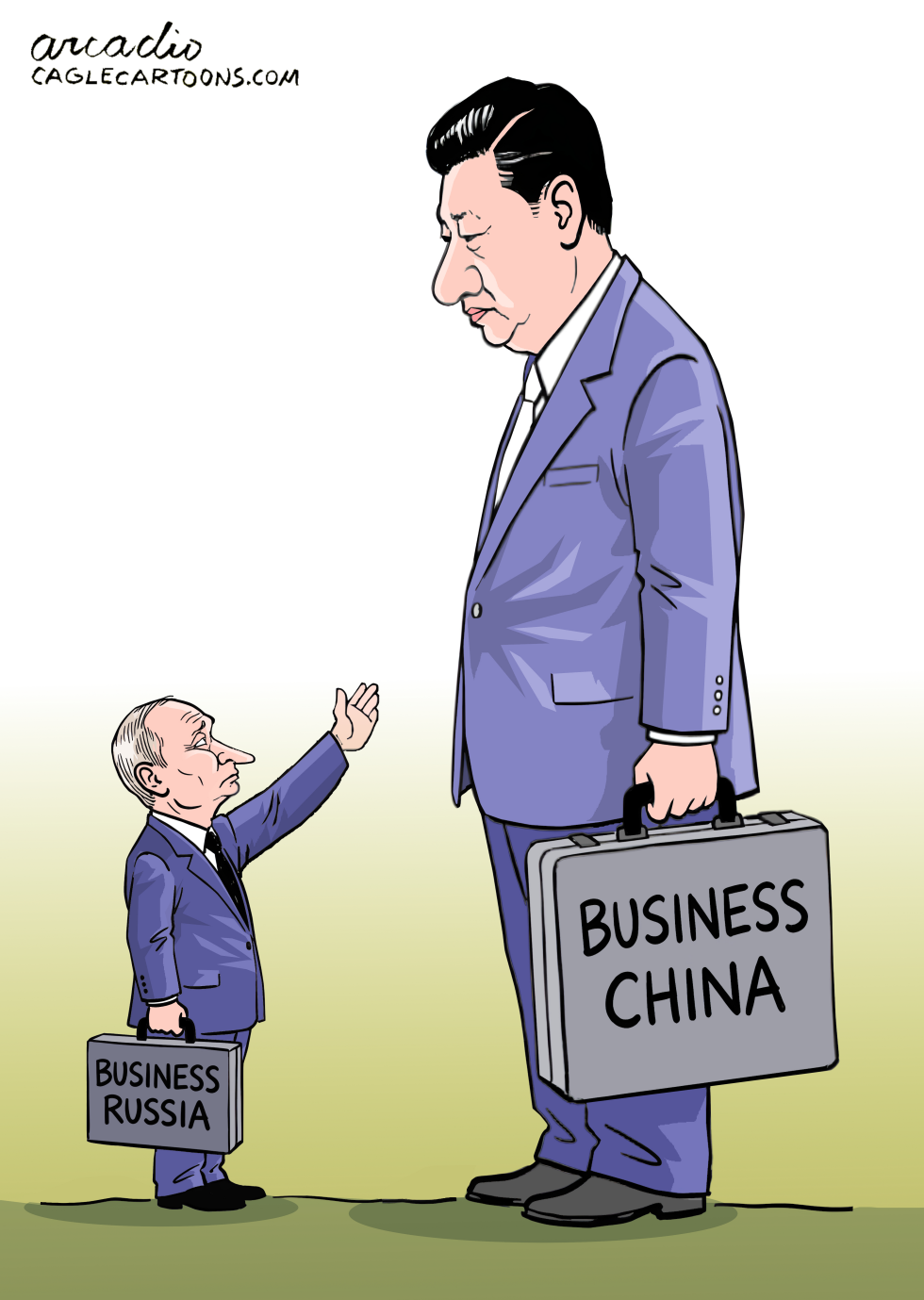
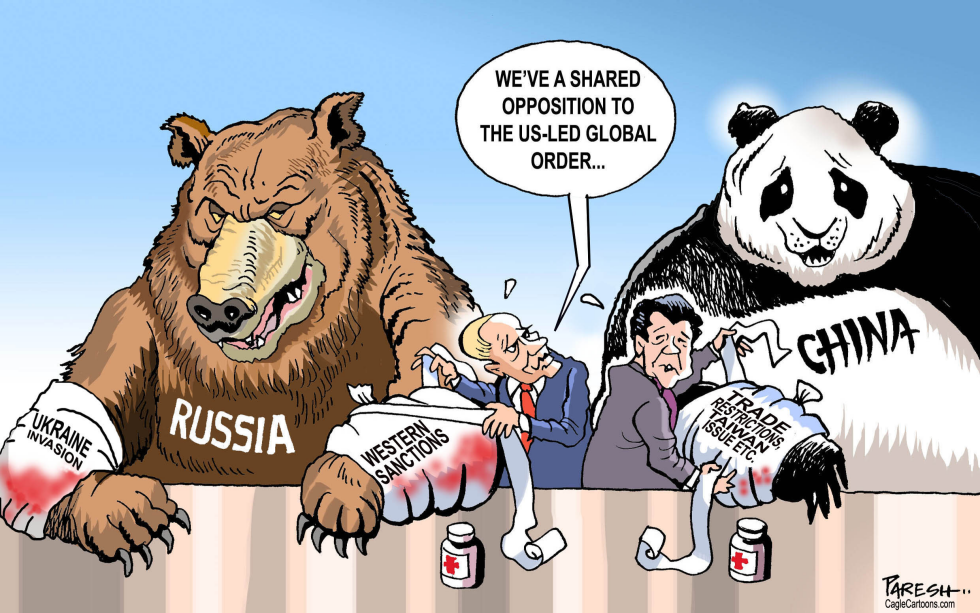
China and Russia continue deepening economic cooperation amid Western sanctions on Moscow. Xi Jinping's government provides critical markets and technology to Russia while extracting favorable terms. The cartoon underscores the unequal power dynamic in their partnership.
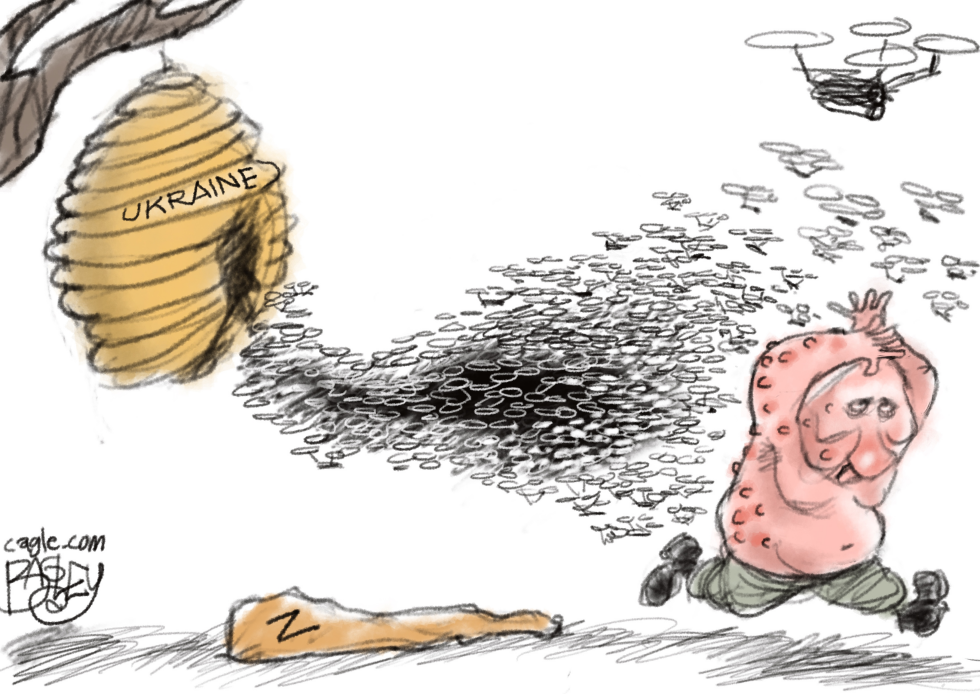
A beehive labeled Ukraine releases a dense swarm of bees that engulfs a distressed shirtless figure marked with red spots. The figure raises hands to its head as a drone hovers nearby and a broken object bearing a Z rests on the ground. The scene responds to ongoing Ukraine-Russia tensions active in early July 2026.
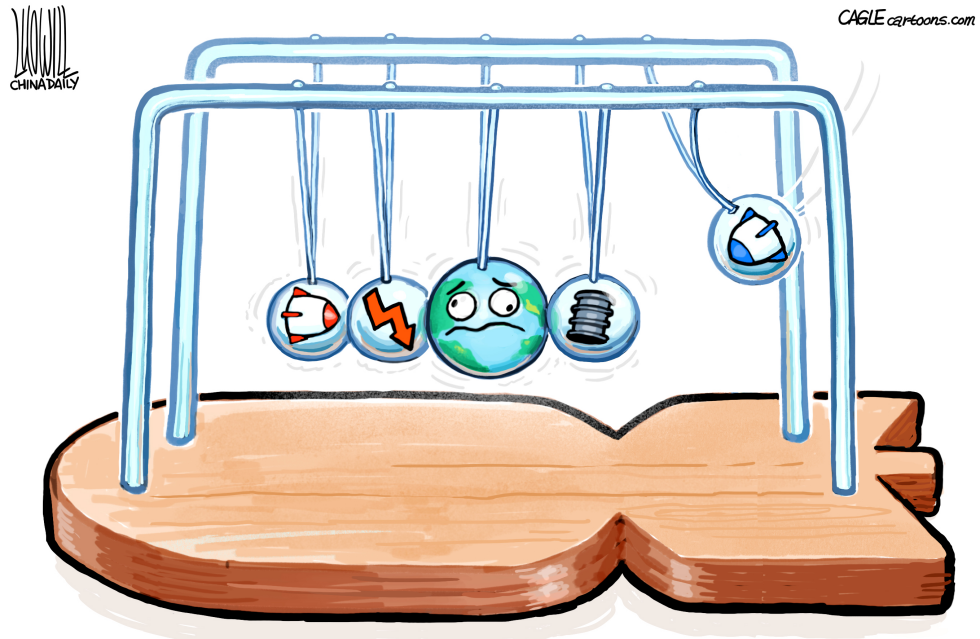
A Newton's cradle setup features spheres marked with a missile, lightning bolt, sad-faced Earth, stacked bombs, and a helmeted orb. The device rests on a wooden base resembling a map fragment. The image highlights ongoing global tensions tied to military actions and energy resources as of mid-2026.
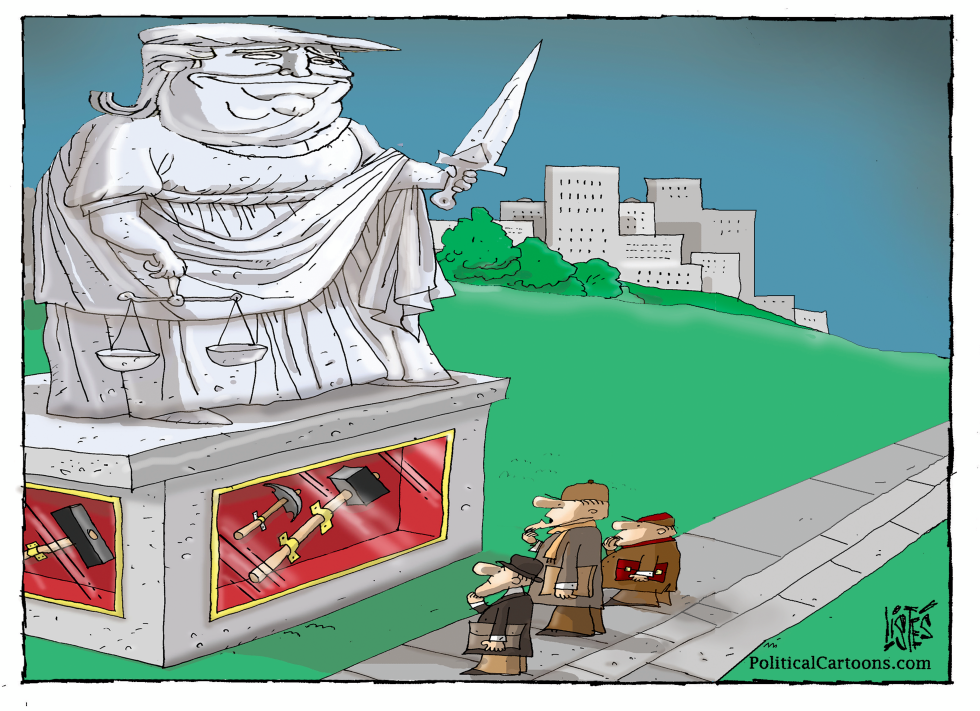
The cartoon depicts a statue resembling Donald Trump in the robes of justice, holding a sword and unbalanced scales. The pedestal displays a hammer and sickle. Three figures in coats stand nearby on a path, one holding a red book. The scene is set against a cityscape dated to February 2026.
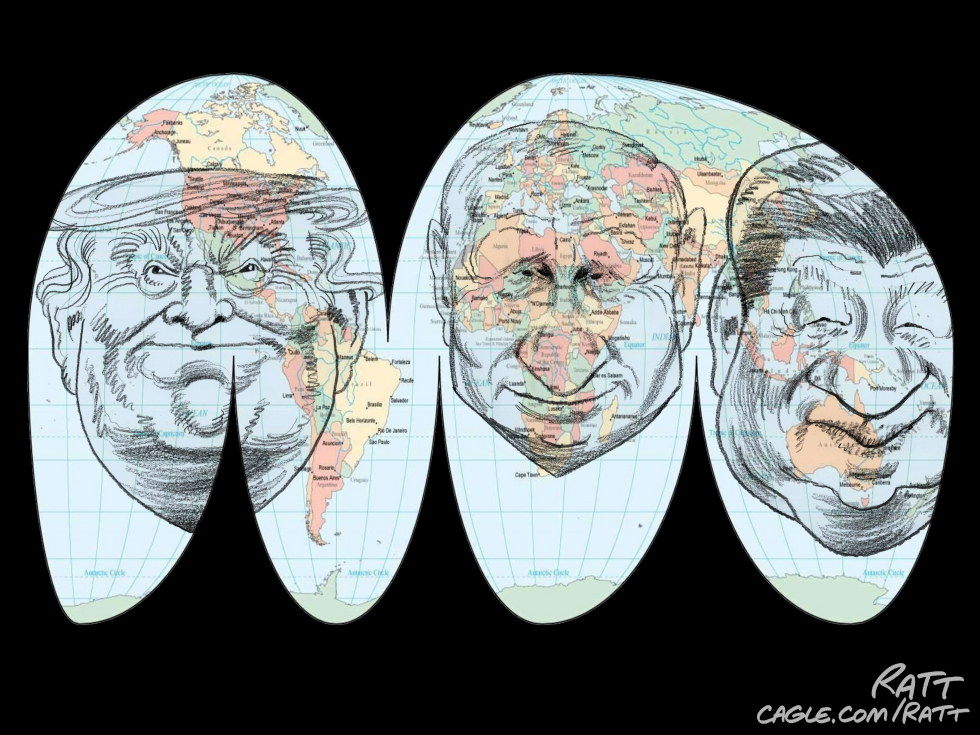
The January 2026 cartoon depicts Donald Trump Vladimir Putin and Xi Jinping as oversized globes whose faces bear detailed world maps. It responds to renewed talk of spheres of influence involving Venezuela Greenland Russia and China.
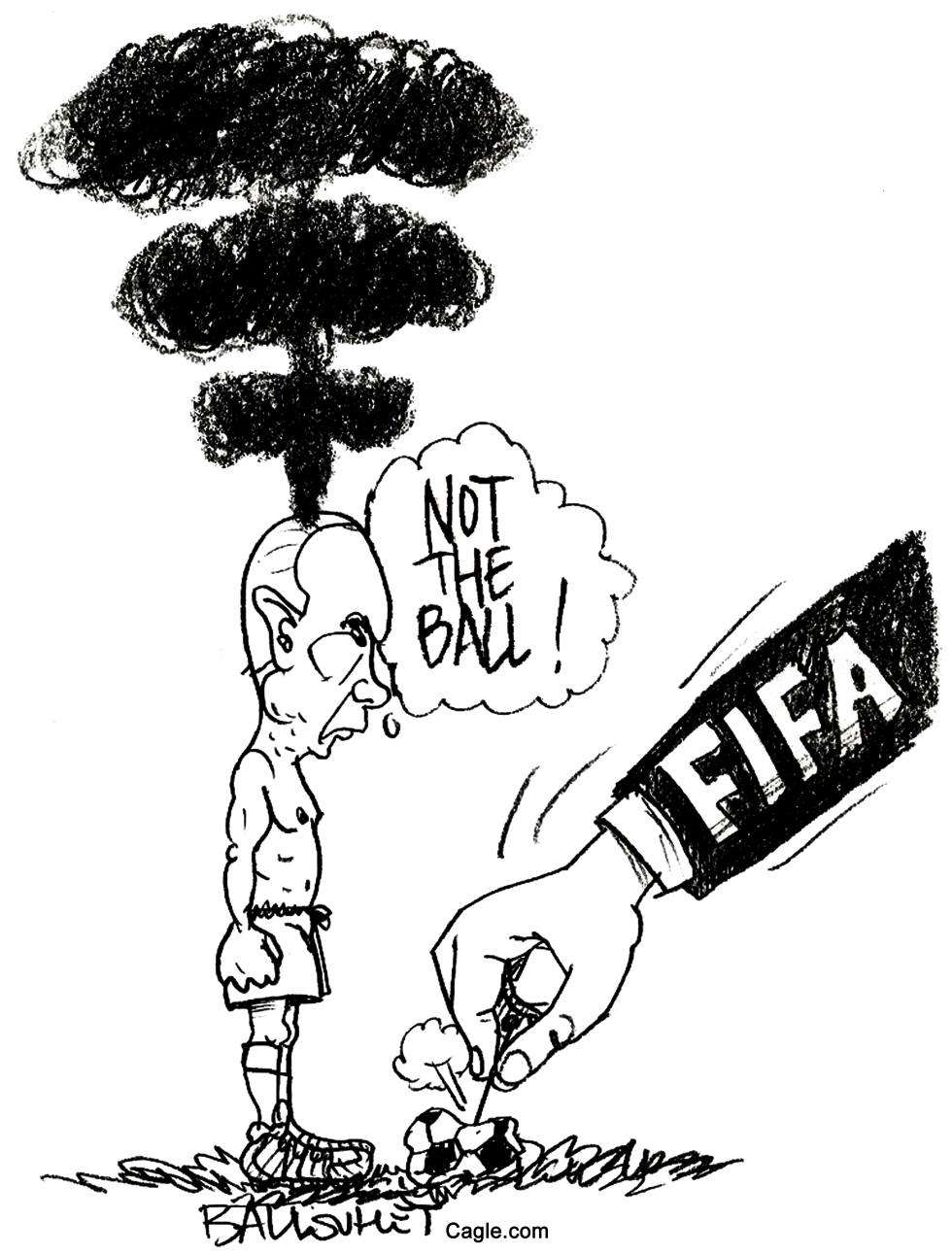
On March 11 2022 FIFA barred Russia from the World Cup and other soccer competitions due to the invasion of Ukraine. The cartoon shows a shirtless Vladimir Putin standing under a storm cloud as a hand labeled FIFA kicks away a ball marked Ukraine. Putin reacts with dismay in a thought bubble reading not the ball. The image captures the immediate sporting consequences of the military action that began weeks earlier.