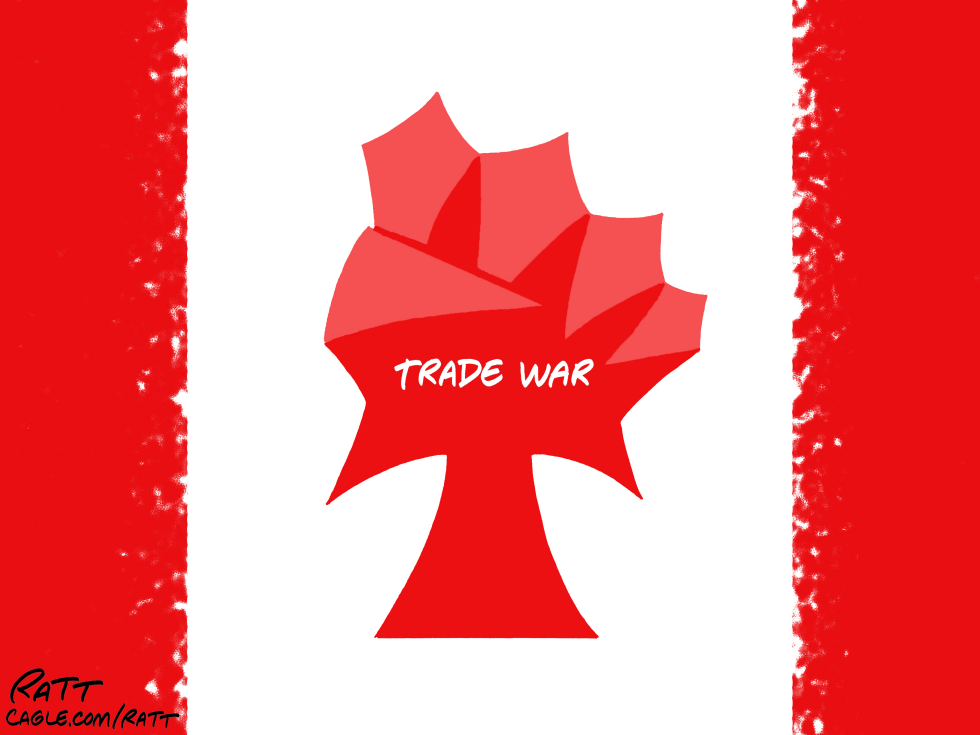
Ongoing US-Canada trade tensions escalated in 2026 with new tariff threats targeting Canadian exports. The dispute threatens key sectors including autos, lumber and agriculture, raising costs for consumers on both sides of the border. Canada has signaled plans to diversify markets and strengthen domestic industry. The cartoon frames the conflict as a direct assault on Canadian sovereignty and economic stability. It portrays the trade war as fracturing national symbols while urging a stronger northern response.
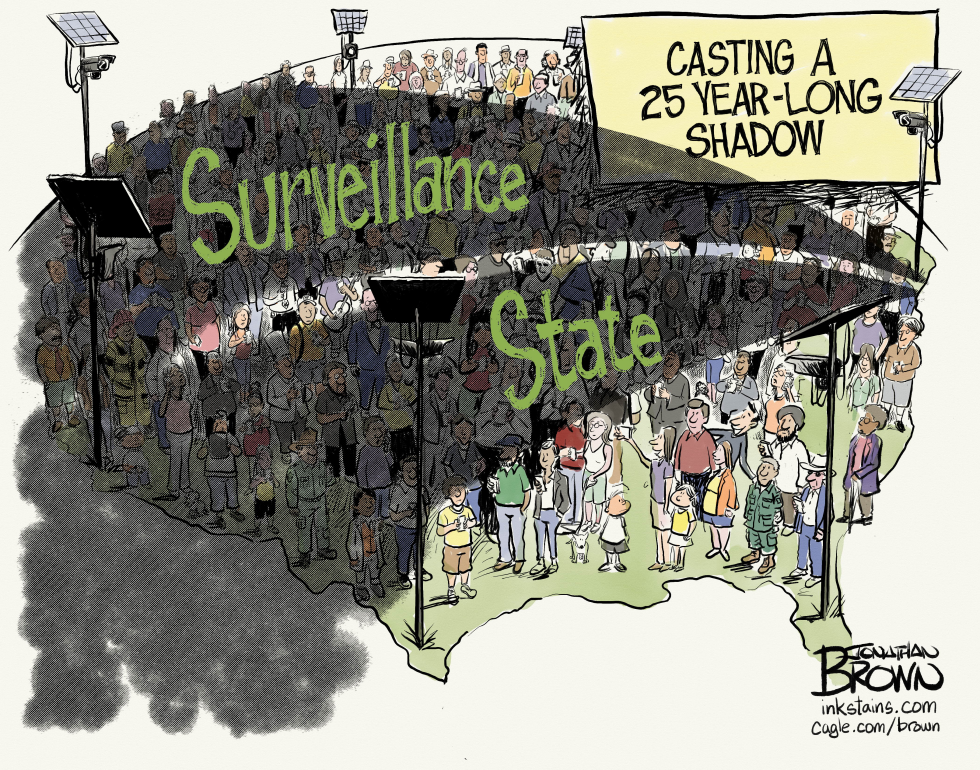
The cartoon depicts a dense crowd of Americans standing on a map of the United States, partially obscured by a large dark shadow cast by surveillance cameras mounted on poles. The words 'Surveillance State' appear prominently in green lettering across the scene, while a sign in the upper right reads 'CASTING A 25 YEAR-LONG SHADOW.' The image comments on the lasting effects of expanded government surveillance programs that began after the September 11 attacks, now spanning a quarter century. It illustrates how these measures continue to influence daily life and public spaces in 2026.
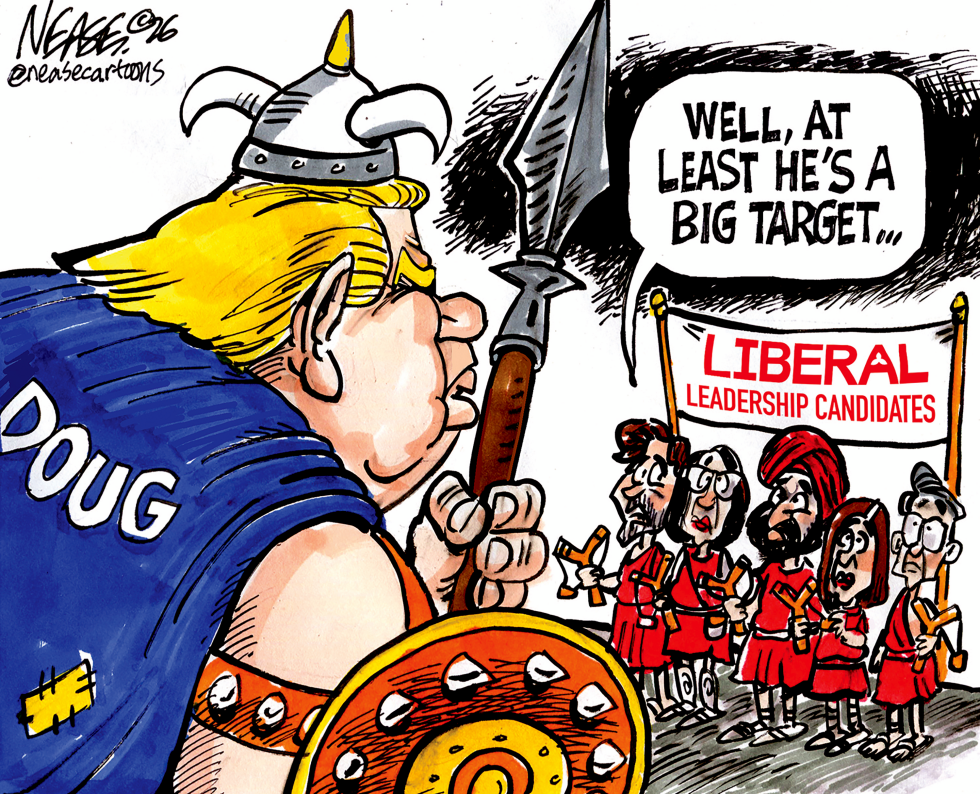
Liberal leadership candidates have identified a prominent opponent as their primary focus in an ongoing contest. The opponent, labeled Doug, appears as a large and visible figure in the political landscape. This dynamic highlights how one individual can dominate attention during a party’s internal selection process. The piece presents the situation as an opportunity for the candidates to rally around a clear adversary rather than internal divisions.
Donald Trump announced he had called off a major military strike on Iran in favor of a pending nuclear deal. The move drew immediate skepticism from Iranian officials who questioned both the threat and the agreement. The cartoon highlights the disconnect between the announcement and Tehran\'s response.
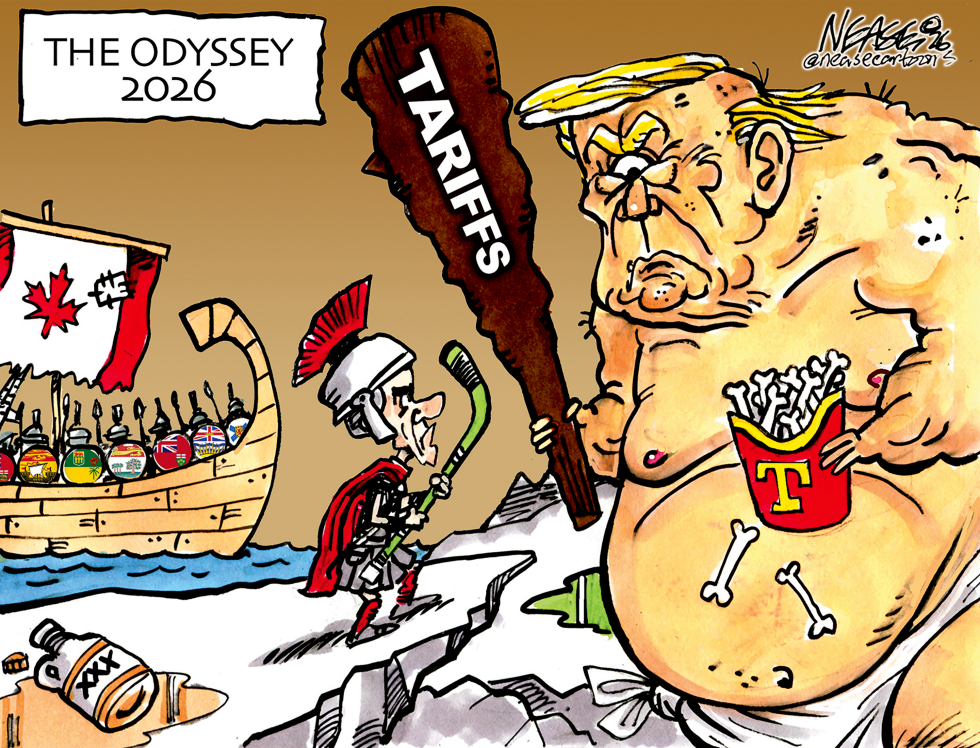
President Trump escalates tariffs on trading partners including Canada in mid-2026. The move targets imports amid ongoing disputes over trade balances and supply chains. Allies respond with coordinated pushback through diplomatic and economic channels. The cartoon casts the confrontation as a one-sided power play by the oversized tariff wielder against smaller coordinated opponents.
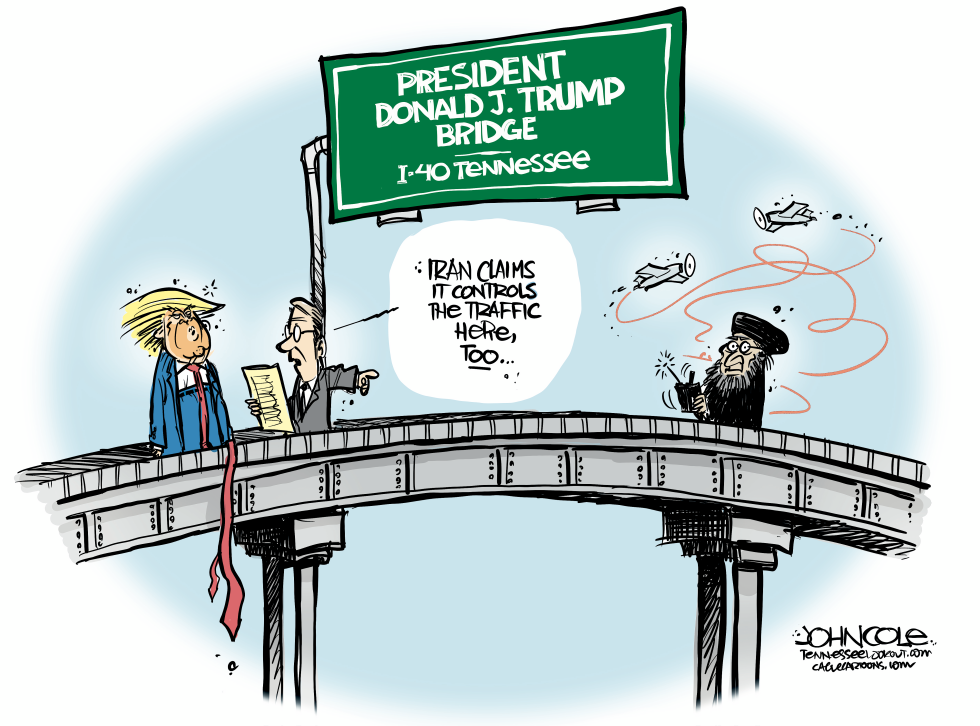
President Donald J. Trump attended the naming of the President Donald J. Trump Bridge on I-40 in Tennessee. The event drew attention when an Iranian figure appeared to claim control over traffic on the span. The development highlights ongoing tensions with Iran over shipping lanes and international routes. The cartoon frames the claim as an extension of Iran's broader pattern of asserting dominance over key passages. It positions the bridge naming as a domestic moment overshadowed by foreign threats.
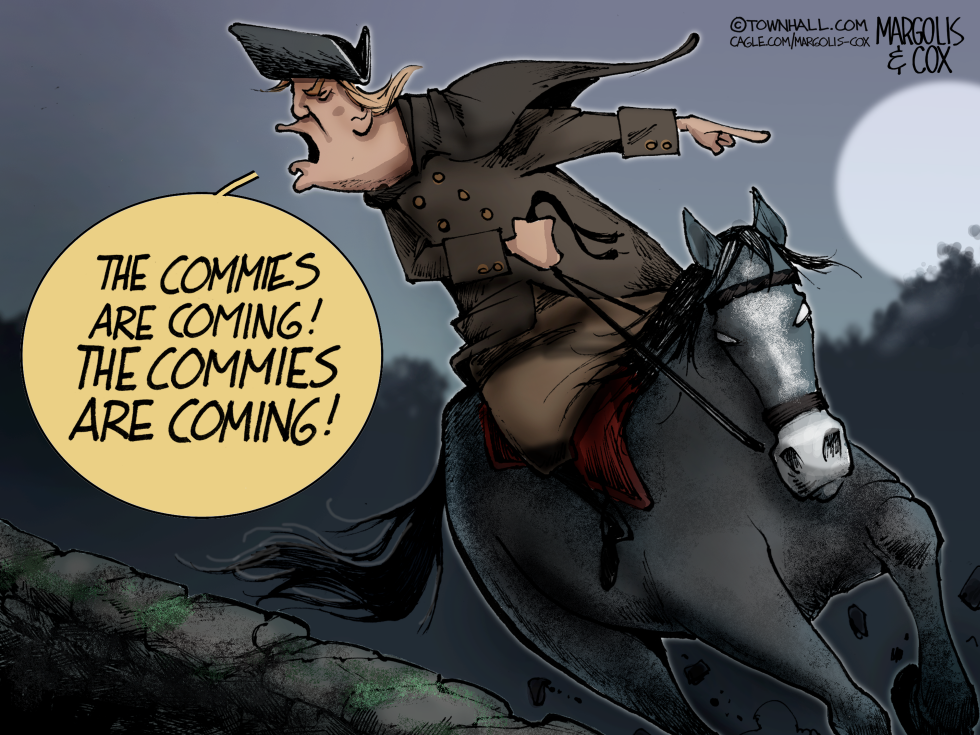
A rider on a dark horse gallops across rocky ground at night under a full moon. The figure, with blonde hair and dark coat, leans forward and points ahead while shouting a repeated warning about communists arriving. The scene draws on a historical ride motif updated to current concerns about communist influence. Publication occurred on July 5, 2026, amid ongoing political debates over foreign policy threats.
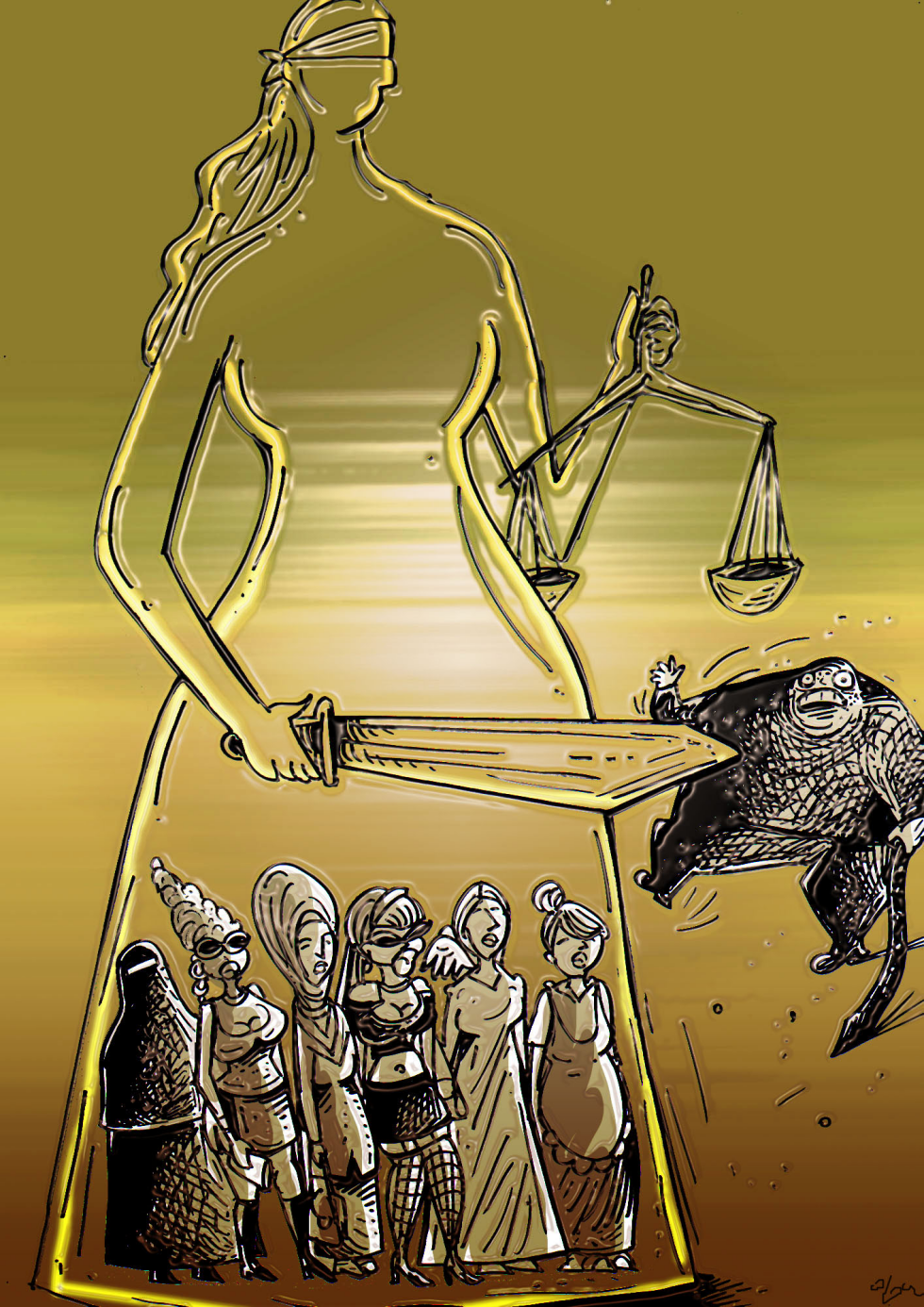
The justice system continues to face scrutiny over its ability to protect vulnerable populations amid ongoing debates about fairness and representation. Public attention remains on how courts and legal symbols address threats to safety and equality. The piece argues that justice must actively confront dangers while encompassing the diversity of those it serves.
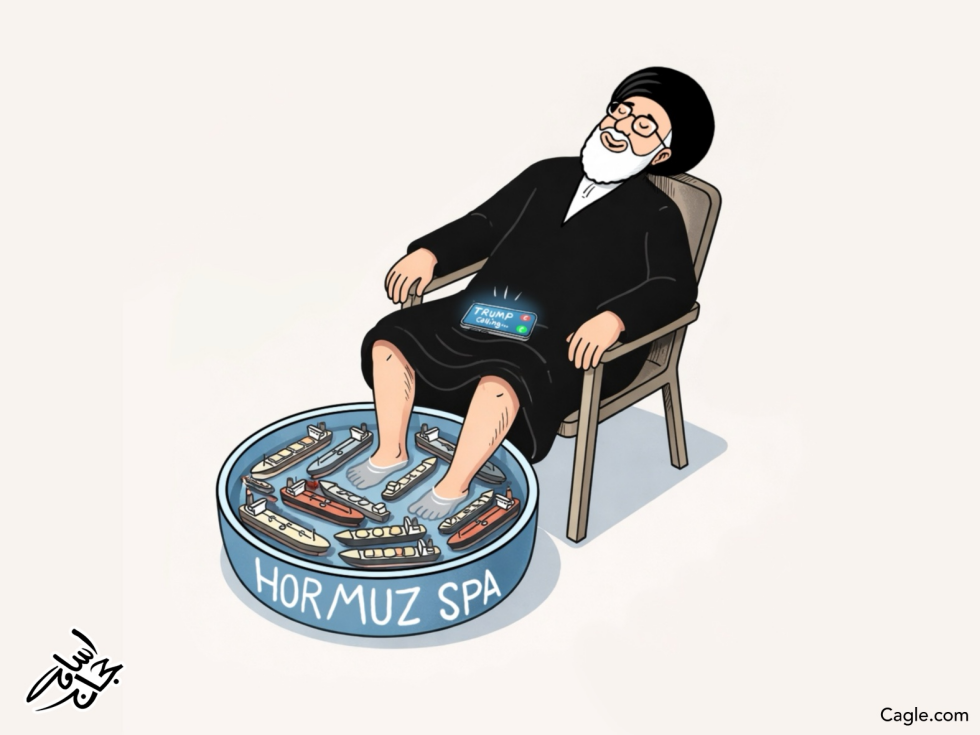
Osama Hajjaj draws an Iranian leader, resembling a cleric in black robes and turban, slouched in a chair with feet immersed in a blue basin labeled Hormuz Spa. Tiny ships float around his feet, evoking the Strait of Hormuz. A phone on his lap displays Trump with a green light, implying a call or alert. The scene captures dry satire on Iran-Trump relations, with the spa pun highlighting control over vital shipping lanes. Tags like Hormuz, Iran, Donald Trump, spa, and political cartoon underscore the humor in geopolitical friction.
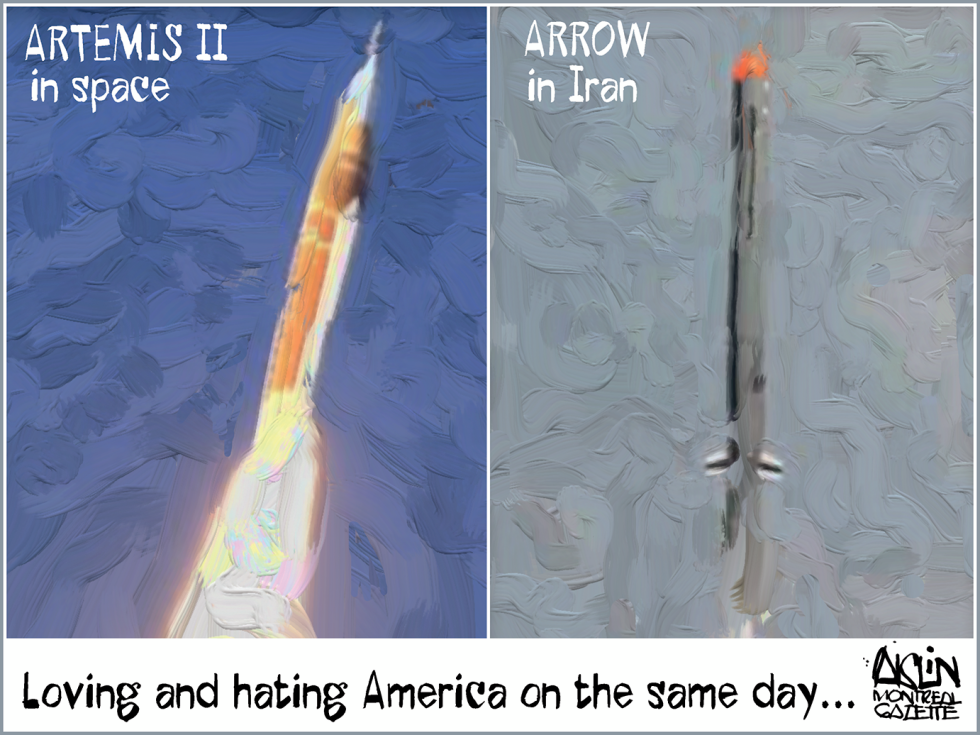
In this irreverent political cartoon, a vibrant Artemis II space launch rockets upward in a blue expanse on the left, symbolizing American innovation and triumph in US space exploration. Contrasting sharply on the right, a stark Arrow in Iran points downward with an orange glow against a gray sky, evoking geopolitical tension and Iranian weaponry. The caption 'Loving and hating America on the same day....' ties it together, offering a humorous take on the bipolar view of America in world news. With its simple yet effective composition, the artwork captures the absurdity of global perceptions, blending satire on international conflict with admiration for NASA's feats. This piece underscores the dichotomy in how the world engages with American power, from awe at space missions to ire over foreign policy frictions.
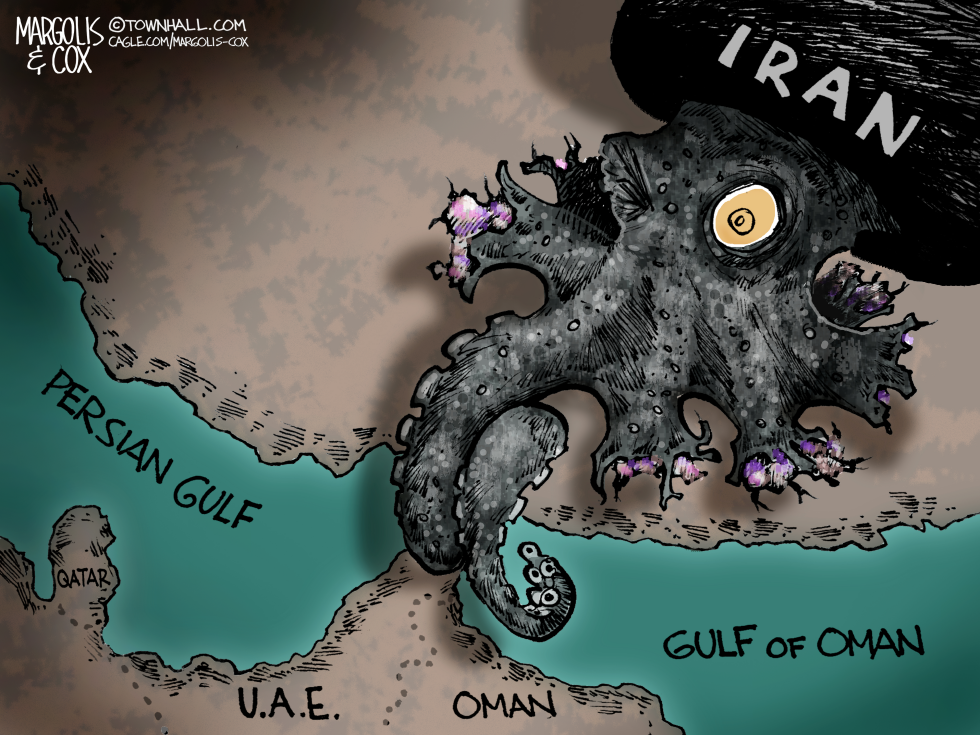
Cartoons like this one from Margolis and Cox cut straight to the absurdity of international posturing. Here, an oversized octopus labeled 'Iran' looms over a simplified map of the Persian Gulf and Gulf of Oman, its tentacles coiling tightly around the Strait of Hormuz. The creature's single eye glares out, while purple-tipped suckers grip the landmasses labeled Qatar, UAE, and Oman. It's a classic visual metaphor for control, poking at Iran's threats to block this crucial oil route. waterway. Such images remind editors how satire distills complex geopolitics into something shareable, even if the humor lands dry as desert sand. With tags like Iran Strait of Hormuz blockade, Persian Gulf tension, octopus metaphor, Middle East satire, oil route choke, and strategic dominance, the piece fits neatly into discussions of global energy security.
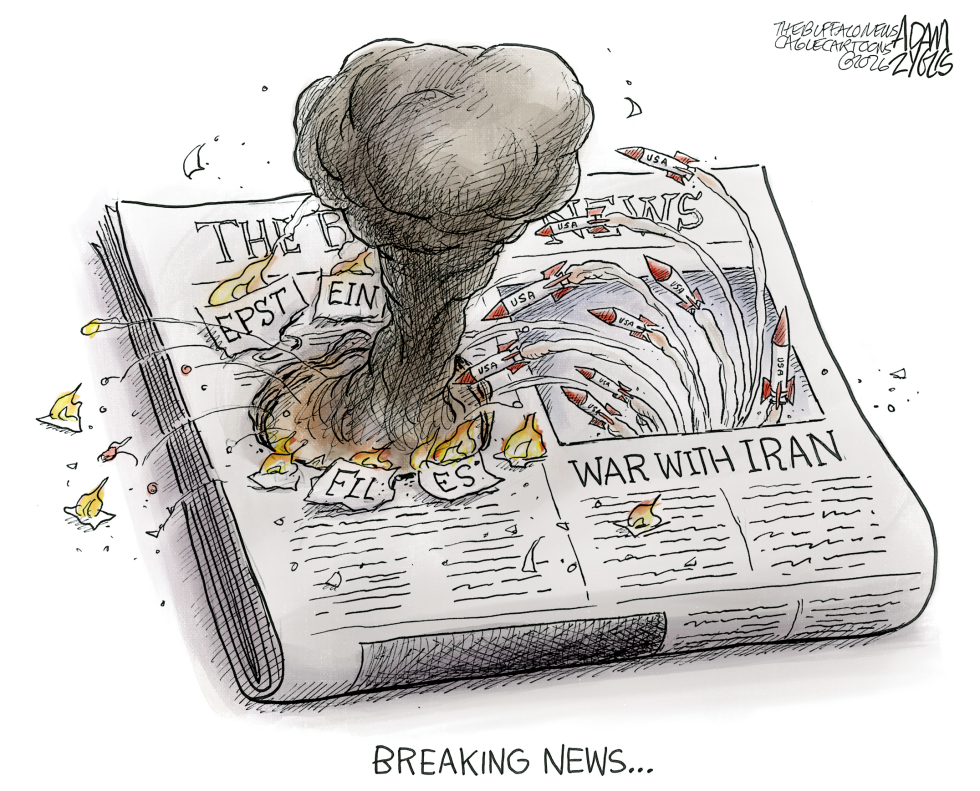
Dive into Adam Zyglis's political cartoon where breaking news morphs into a nuclear explosion, symbolizing media sensationalism around the Epstein files and war with Iran. USA missiles and Iran conflict visuals underscore geopolitical tension, while the exploding headlines serve as a sharp journalism critique. This satirical illustration captures the chaos of fake news explosion, reminding us how sensational stories can overshadow substance in today's fast-paced media landscape. With irreverent humor, it questions the ethics of turning tragedies into spectacles, blending satire with insightful commentary on news consumption.
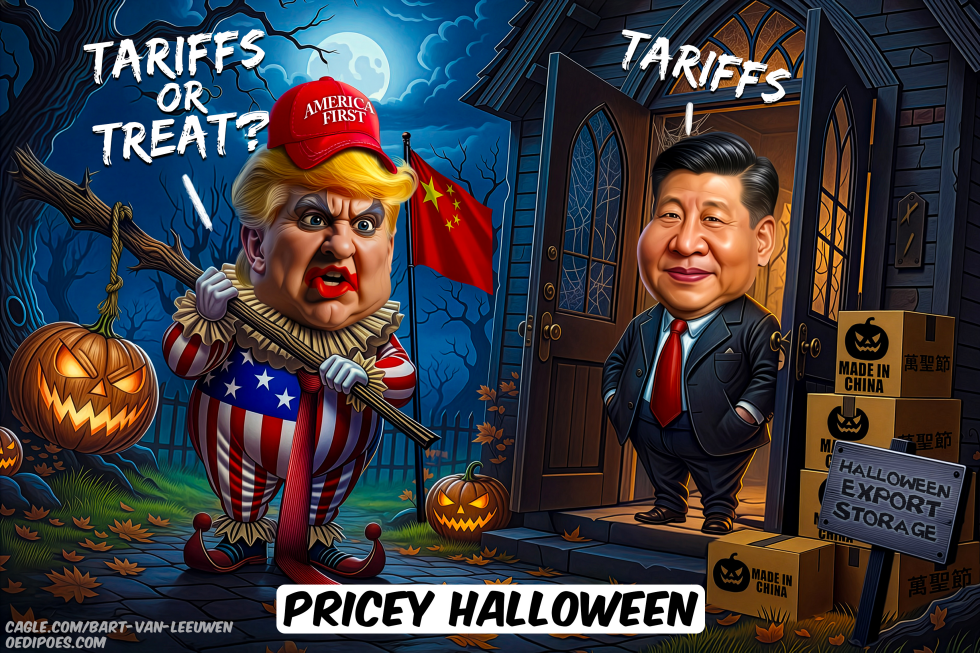
On October 4 2025 the cartoon depicts Donald Trump in a jester costume confronting Xi Jinping outside a house stacked with Chinese made Halloween goods. The scene highlights the impact of proposed tariffs on imported holiday products and resulting higher consumer prices in the United States.
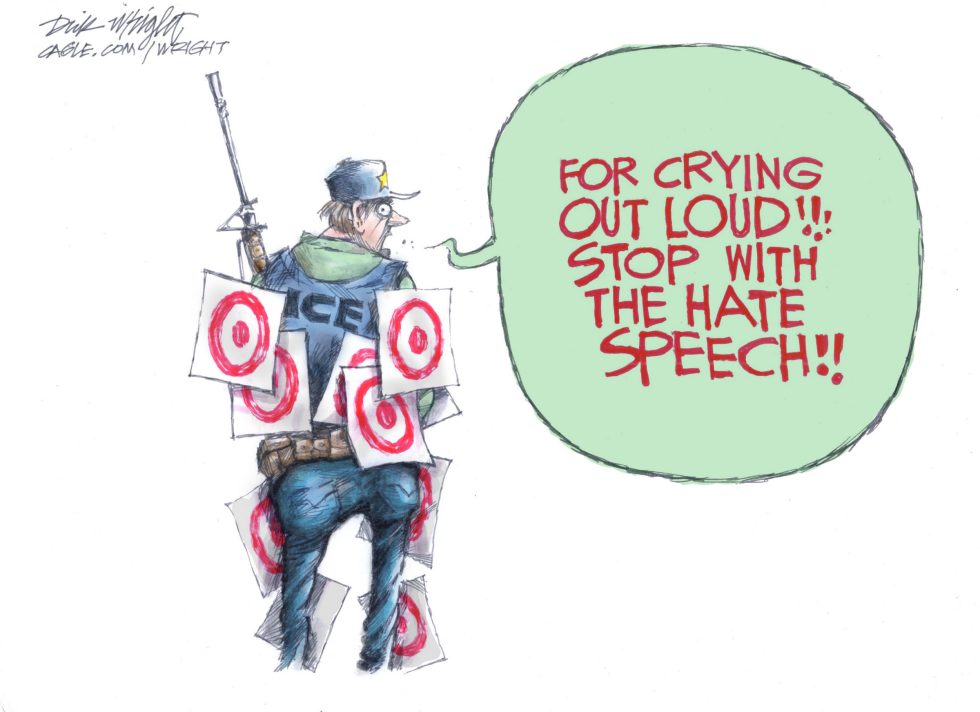
An ICE agent appears with multiple paper targets affixed to his back and legs while holding a rifle. The figure speaks out against hate speech directed at immigration enforcement. The image responds to ongoing debates over sanctuary policies and reported incidents involving agents in 2025.