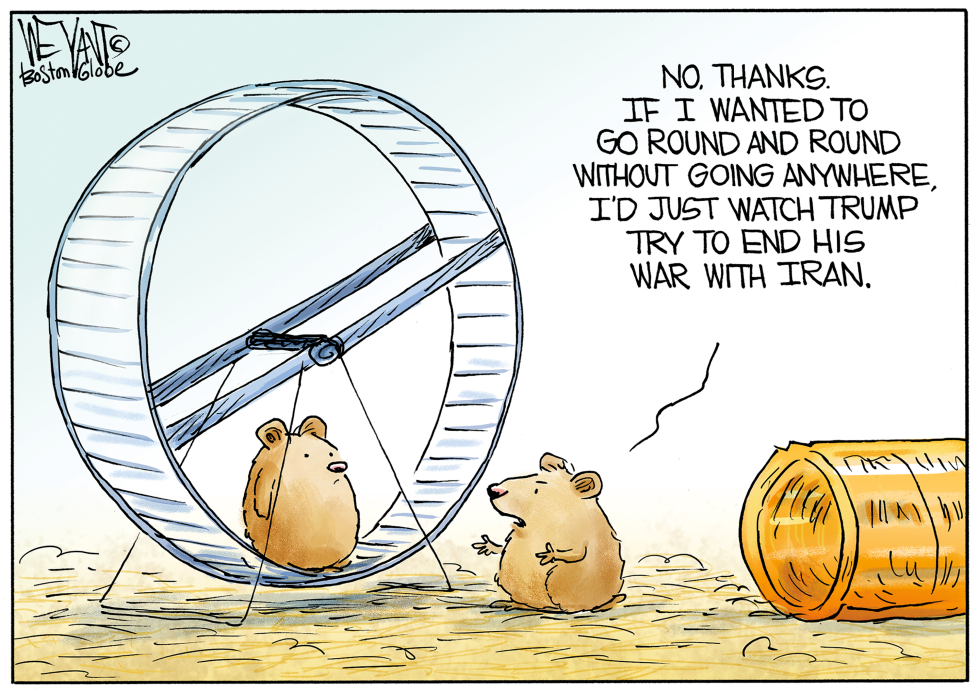
President Trump continues efforts to resolve the ongoing conflict with Iran through repeated diplomatic rounds. The situation remains stalled with no clear progress after multiple attempts. Observers note the repetitive nature of the process without advancement. The piece portrays the hamster's refusal as a commentary on the futility of the approach.
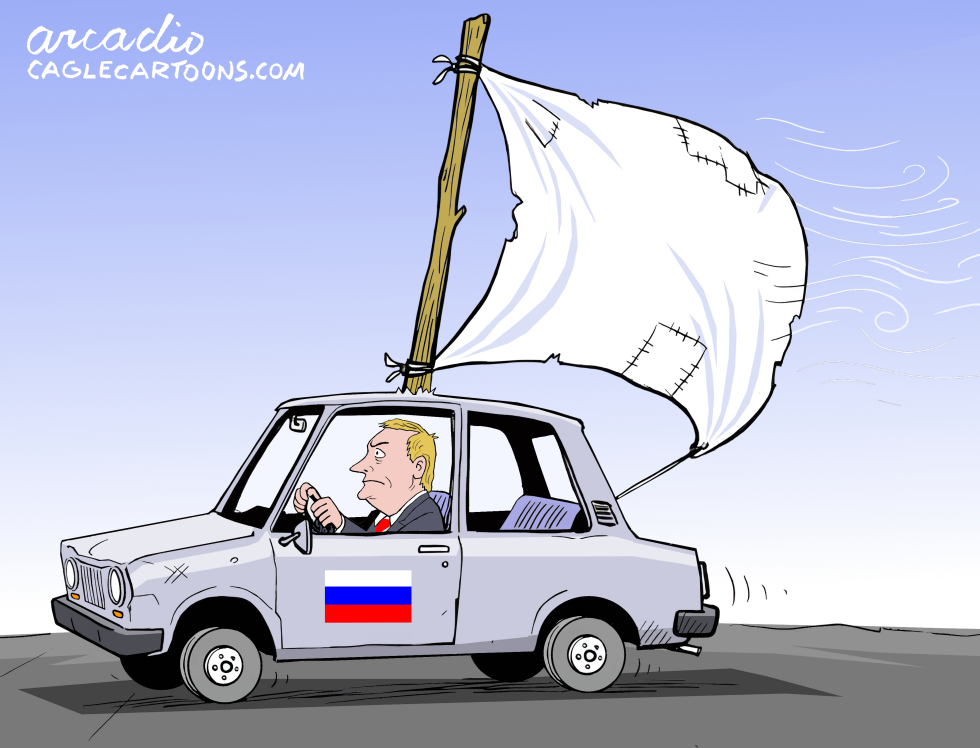
The image depicts a Russian leader driving a small car marked with the national flag while a large white flag on a wooden pole extends from the vehicle. The scene shows the driver gripping the wheel with a forward gaze as the flag billows behind. This visual responds to ongoing developments in Russia's international posture during mid-2026. The white flag serves as a direct symbol of capitulation amid continued geopolitical tensions. The composition places the action on an open road under clear skies to emphasize the motion and the gesture.
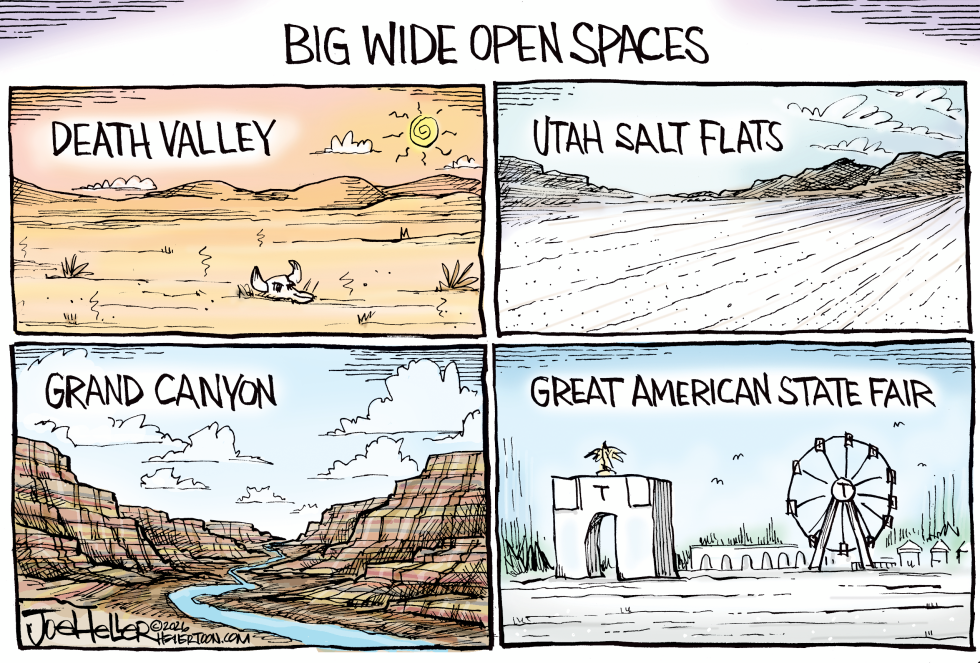
A four-panel illustration titled Big Wide Open Spaces places Death Valley, Utah Salt Flats, and the Grand Canyon next to the Great American State Fair. Each panel shows wide horizons in the natural settings while the fair panel includes a Ferris wheel, entrance gate, and tents. The comparison highlights scale differences between remote landscapes and a populated event ground. The piece appeared online on July 2, 2026.
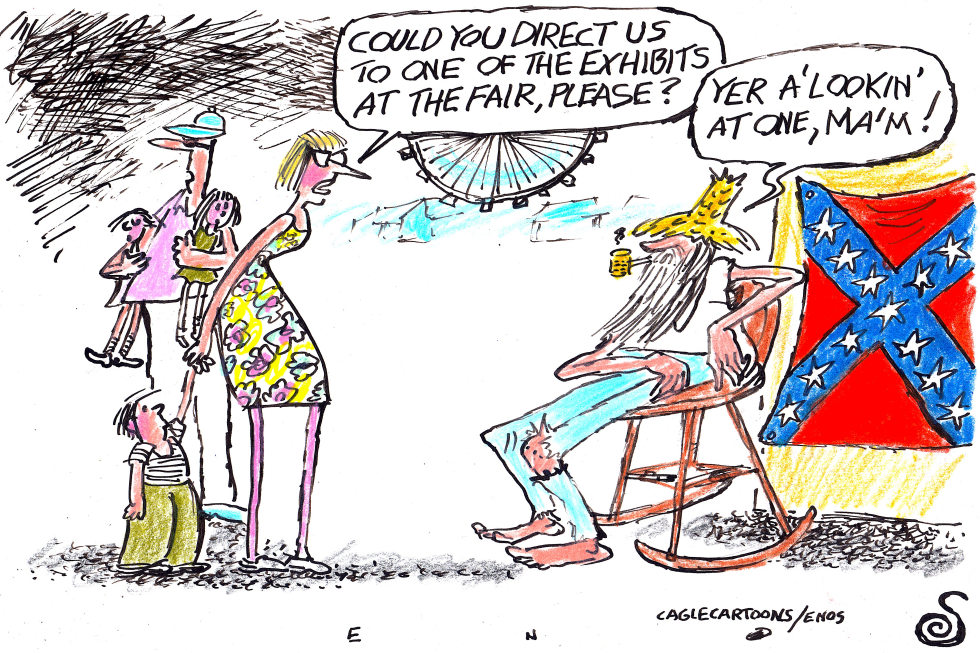
A family approaches a man seated in a rocking chair beside a large Confederate battle flag at a fairground and asks for directions to exhibits. The man replies that they are already looking at one. The scene includes a Ferris wheel in the background and several children with the parents.
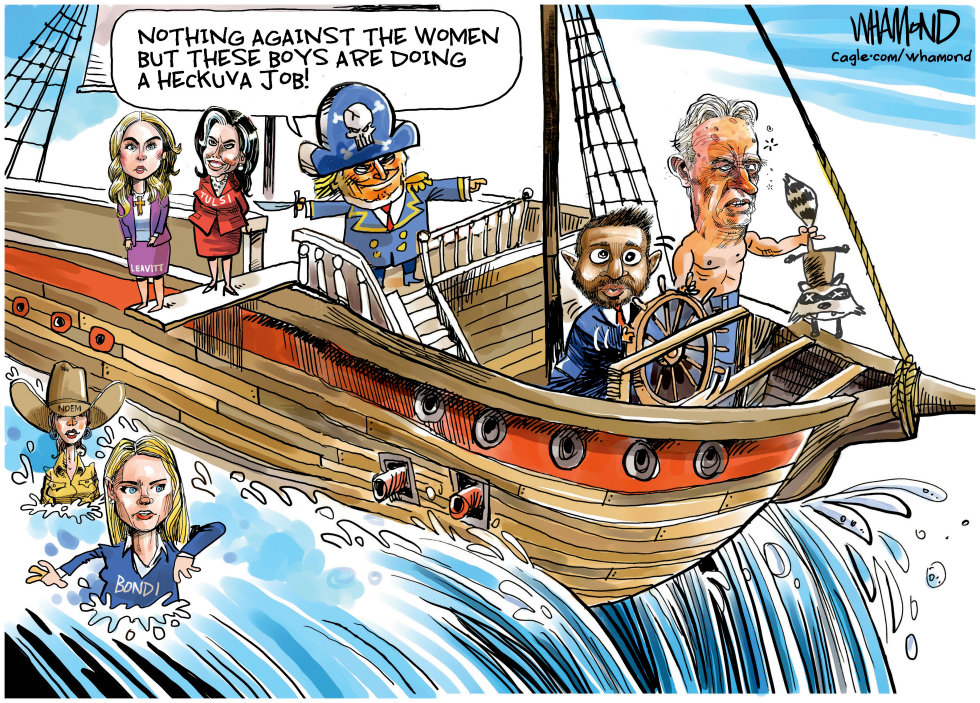
Dave Whamond's cartoon shows a wooden pirate ship tilting over waves, with a figure resembling Trump in a skull cap saying 'Nothing against the women but these boys are doing a heckuva job!' Women labeled Leavitt and Tulsi stand on a plank, another labeled Bondi splashes in water wearing a cowboy hat. A suited man steers, a shirtless man holds a raccoon, tying into tags like AG Pam Bondi ousted, Trump loyalist, walking the plank, Kristi Noem, Tulsi Gabbard, dead women walking, Kash Patel, incompetence, Trumps kooky cabinet, and ship metaphor for political upheaval.
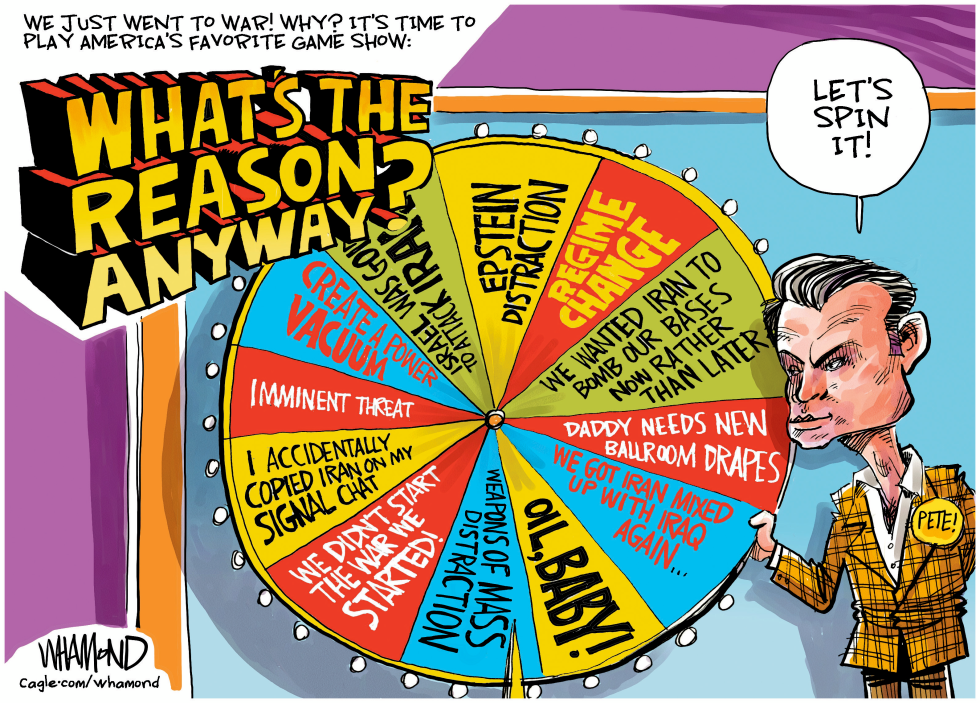
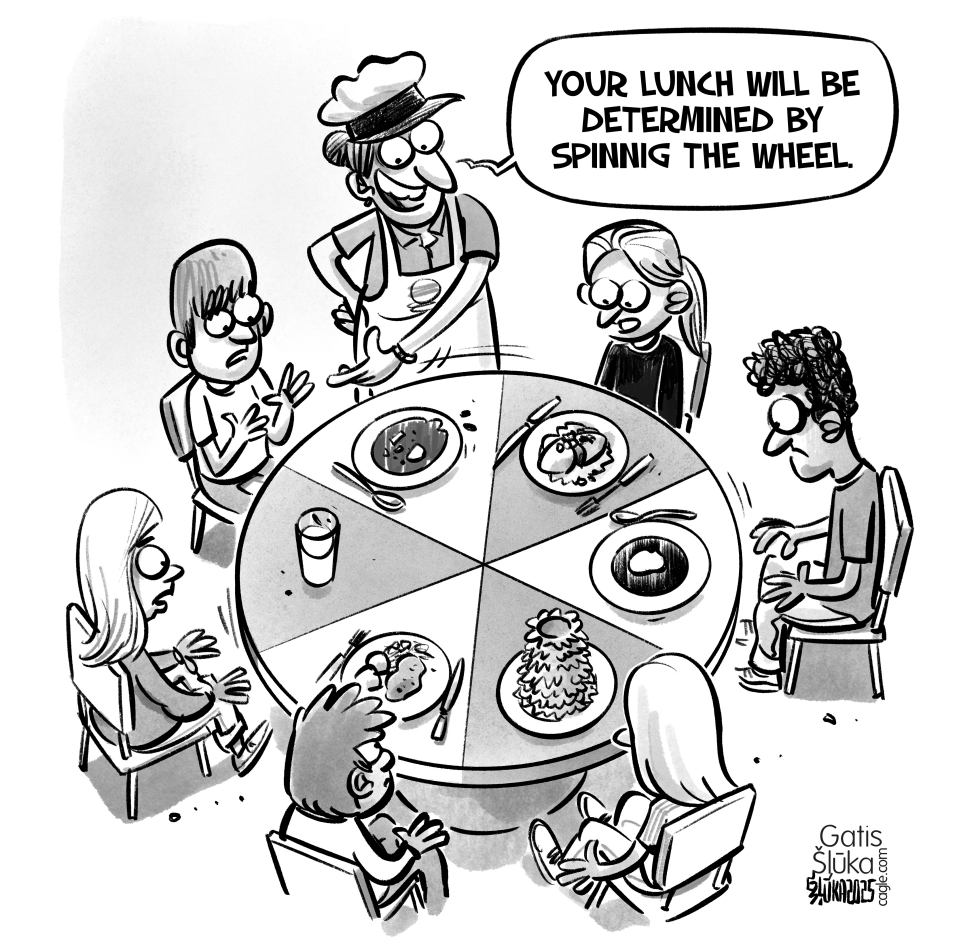
Dive into this biting political cartoon where America's war decisions are reduced to a game show parody wheel, featuring options like 'Imminent Threat,' 'Oil, Baby!,' and 'Regime Change.' The irreverent satire targets US foreign policy, highlighting how military interventions often spin on flimsy pretexts, from accidental escalations to resource grabs. With a host eagerly spinning the wheel, the artwork cleverly critiques the absurdity of war justifications, blending humor with insightful commentary on geopolitical cynicism. Tags like political cartoon, war justifications, and military intervention humor underscore its viral potential in today's polarized discourse.
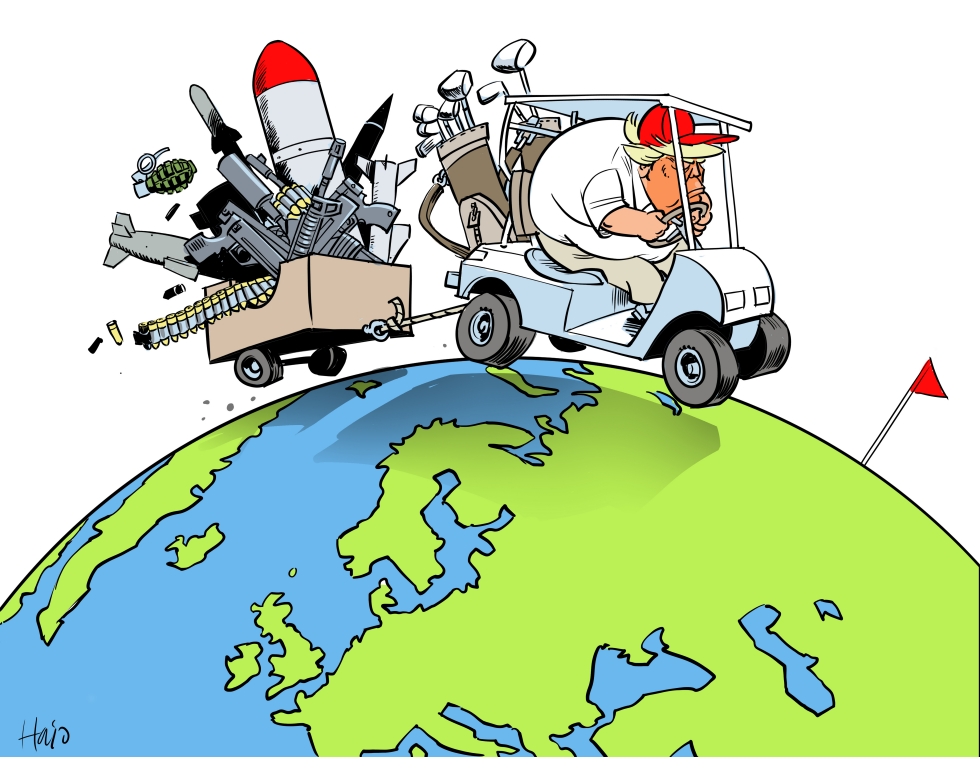
On January 14 2026 the image shows President Trump driving a golf cart across a globe while towing a trailer stacked with missiles rifles and grenades. The scene places the vehicle above the Western Hemisphere with a red flag marker ahead on the sphere. The composition links the president's posture and the military load to ongoing defense and foreign policy themes.
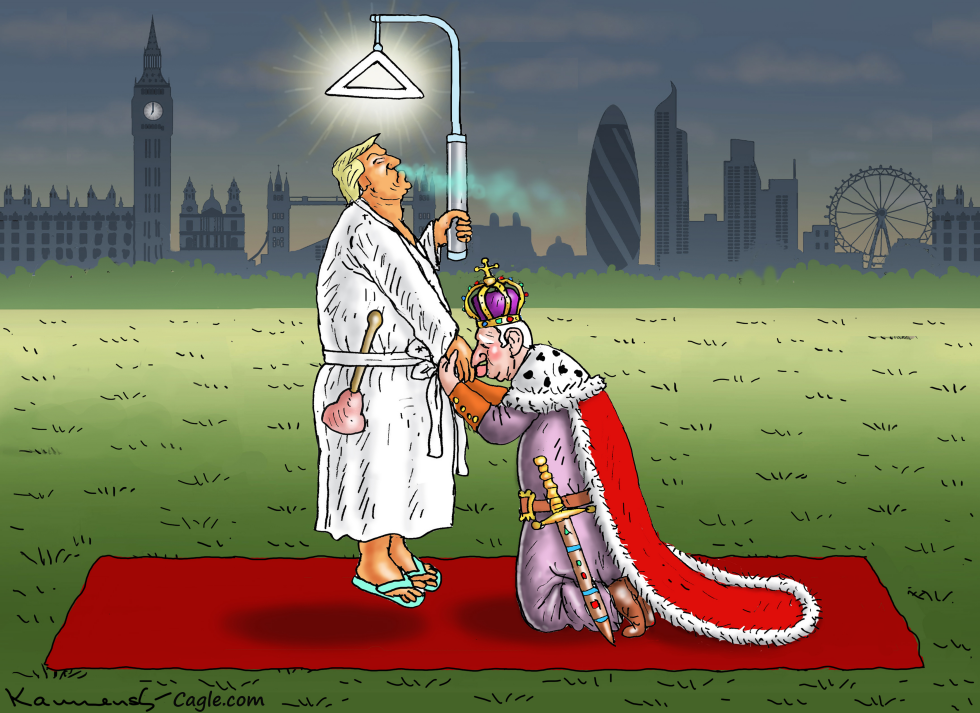
The cartoon shows a blonde man in a white robe and flip-flops, puffing smoke, standing on grass with a glowing triangular light overhead. He holds a small crown toward a kneeling figure in purple robes, crown, and red cape on a red carpet. London icons like Big Ben, the Gherkin, and London Eye fill the dark sky background. Tags such as Trump, King Charles, UK, Fascism, God, and Visit frame this direct visual. The scene stays straightforward, with no hidden layers beyond the visible elements. Kamensky's style keeps it clear, poking at power dynamics without overcomplicating the obvious setup.
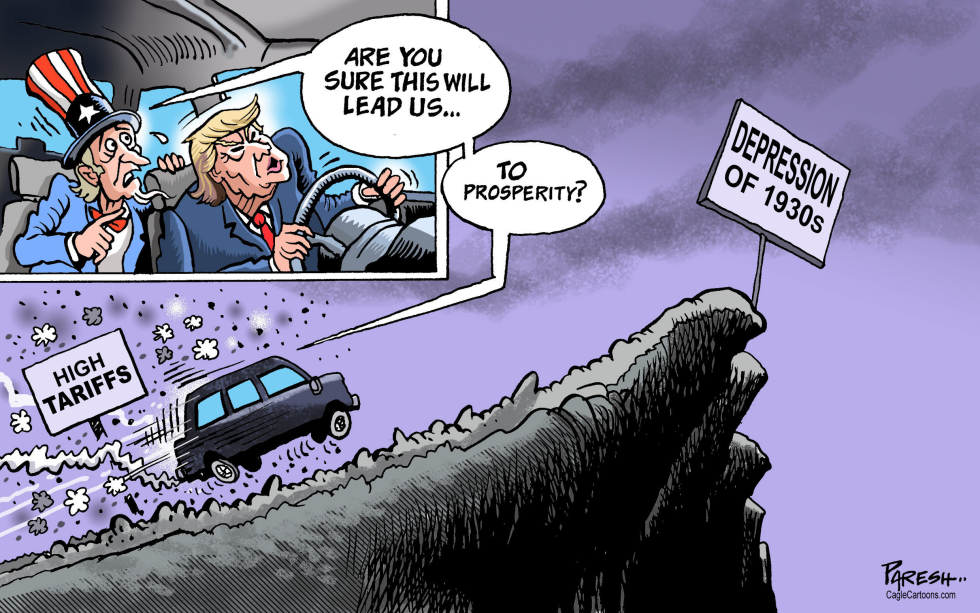
In this April 2025 cartoon, President Donald Trump is depicted at the wheel of a vehicle marked high tariffs, speeding toward a cliff edge labeled Depression of 1930s. Uncle Sam sits in the passenger seat, sweat visible, asking if the route leads to prosperity. The image draws a direct parallel between current tariff policies and the trade barriers of the 1930s that deepened the Great Depression. The visual argument highlights concerns over economic fallout from aggressive import and export duties.