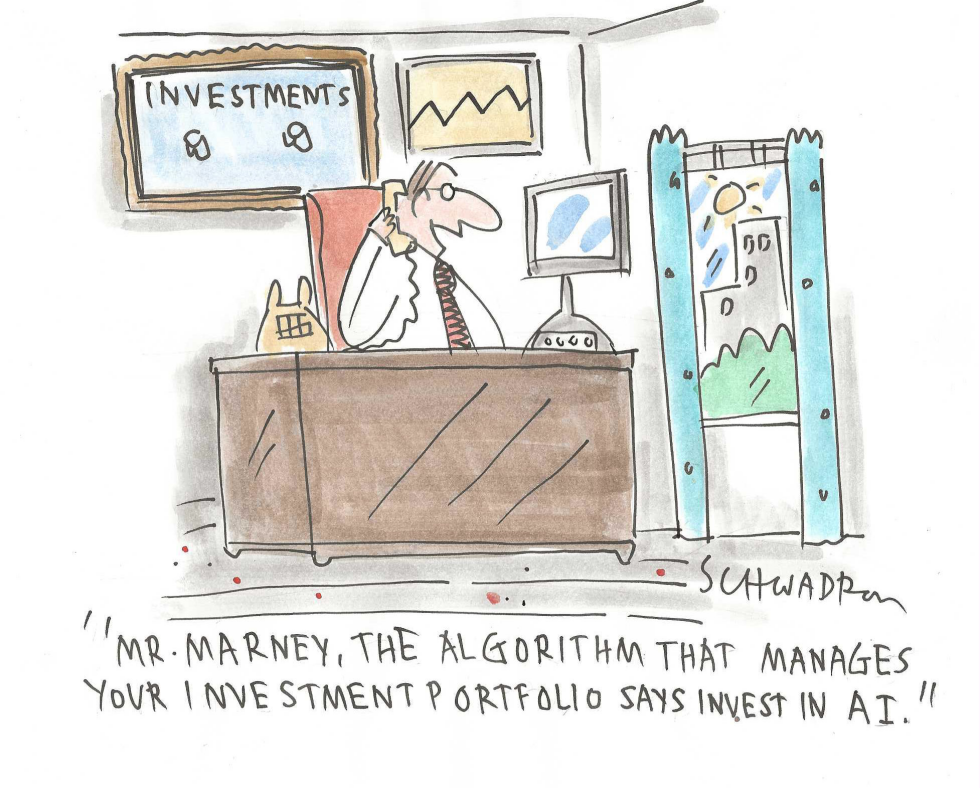
Financial institutions have expanded use of algorithmic systems to oversee client portfolios, with many such tools now directing capital toward artificial intelligence companies. The trend raises questions about self-reinforcing investment cycles where the managing software favors its own sector. The cartoon highlights the circular logic of automated recommendations that benefit AI developers and related stocks.
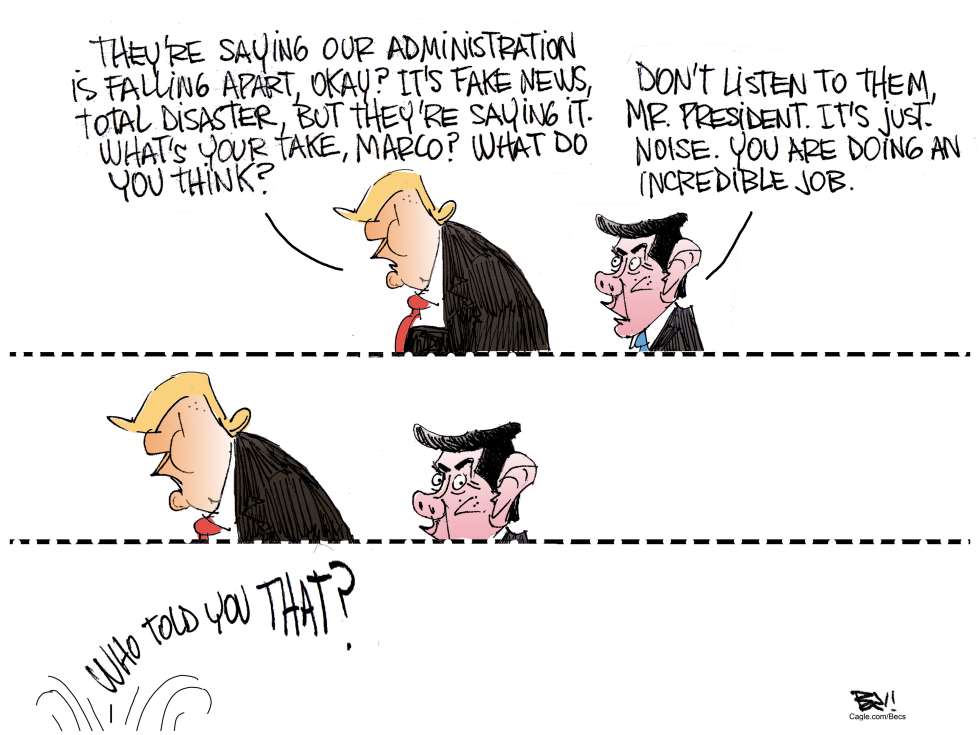
President Trump asked Senator Marco Rubio for his assessment of reports that the administration is in disarray, labeling them fake news. Rubio dismissed the reports as noise and praised Trump's performance. Trump responded by questioning who had told Rubio that assessment. The exchange highlights tensions over loyalty and information flow inside the administration. The cartoon portrays Rubio's positive reply as triggering suspicion rather than reassurance.
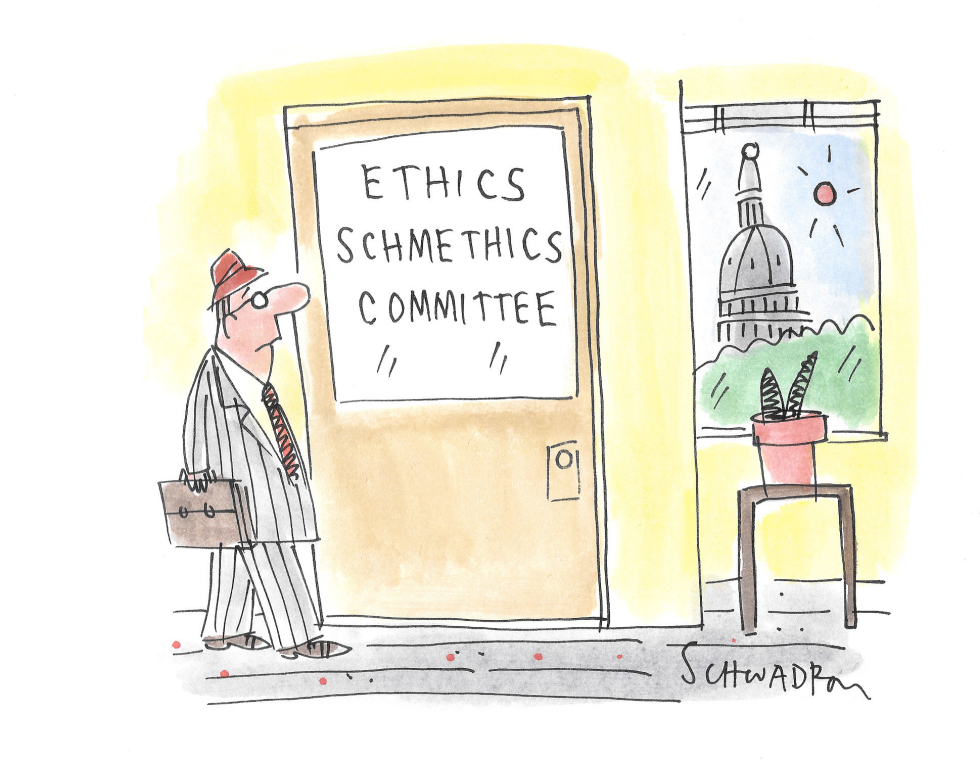
Congress continues to sideline meaningful ethics oversight, with lawmakers showing little interest in strengthening or even respecting the chamber's ethics committee. The panel exists on paper but carries little practical weight in daily operations. This dynamic matters because weak internal standards erode public trust in legislative institutions and invite outside influence. The cartoon captures the prevailing attitude that ethics rules are an afterthought rather than a core responsibility.
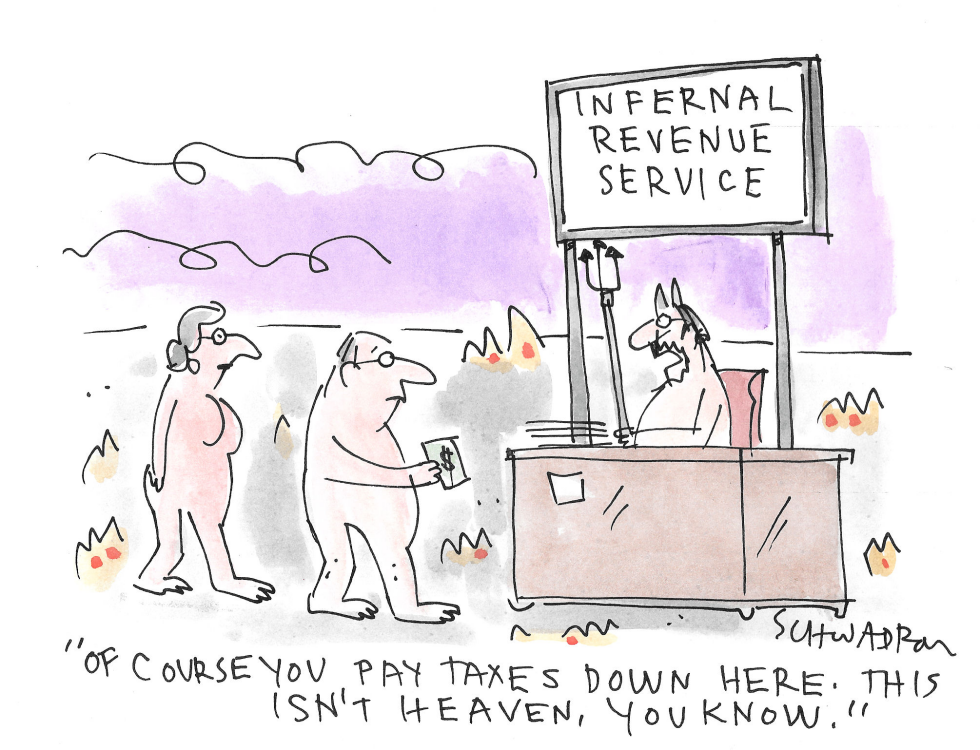
The long-standing adage that only death and taxes are certain receives fresh treatment in a cartoon depicting an IRS outpost operating in hell. No specific policy change or ruling prompted the piece, which instead plays on the enduring public frustration with tax collection as an inescapable force. The editorial stance pokes at bureaucratic persistence, suggesting the tax man follows citizens beyond the grave with the same relentless efficiency seen in life.
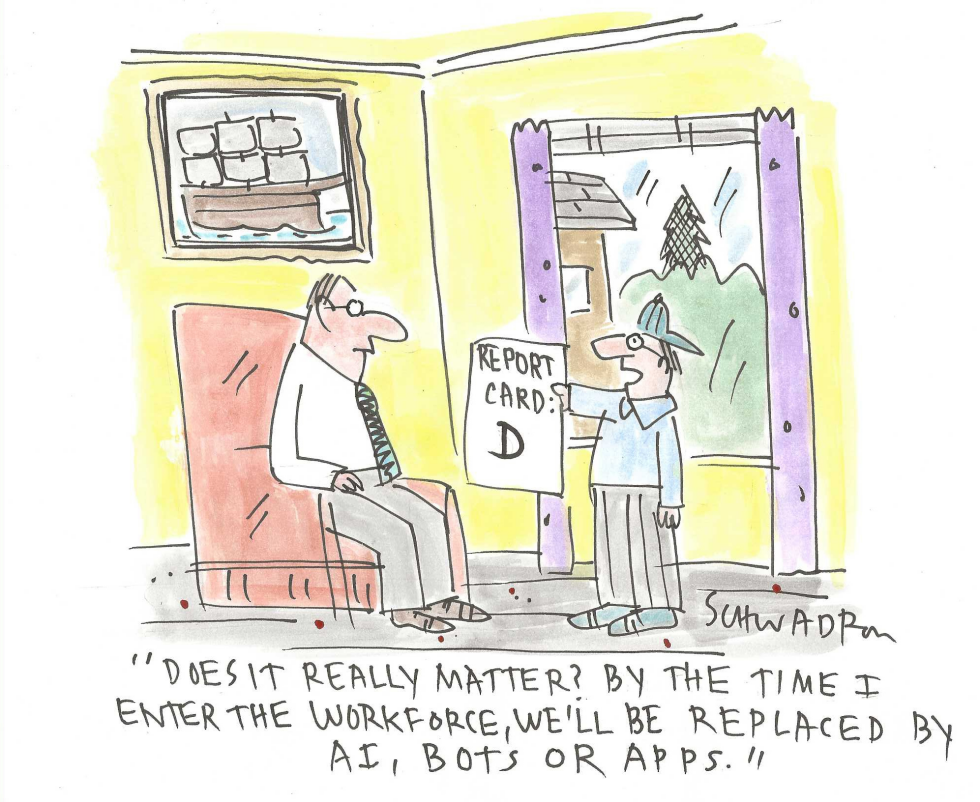
Rising student skepticism about academic effort stems from widespread predictions that AI and automation will eliminate many jobs before today's students graduate. The cartoon responds to this dynamic by showing a student using those forecasts to shrug off a poor grade. It highlights how fears of technological displacement may undermine motivation in schools. The piece suggests such excuses reflect a broader cultural shift where traditional education credentials appear less relevant. The editorial stance questions whether this mindset accelerates the very problems it cites.
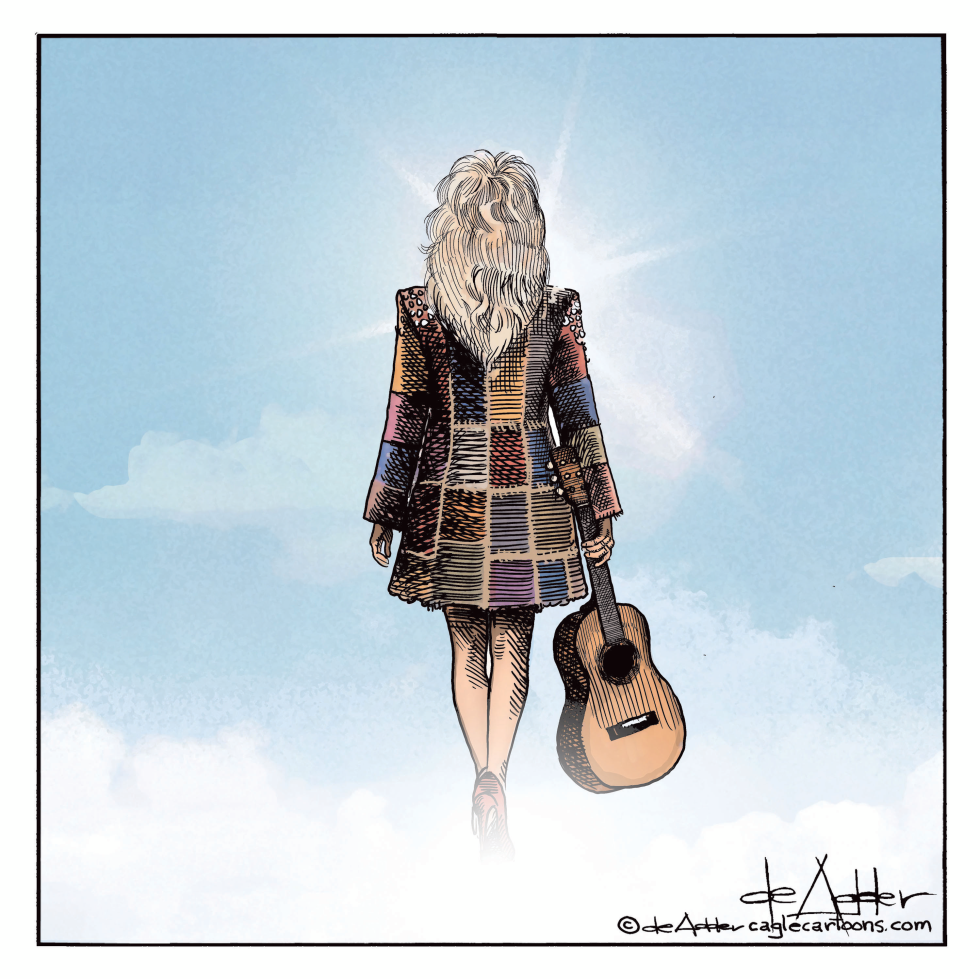
Dolly Parton remains a defining voice in American music with decades of hits and business success. Her public image continues to emphasize authenticity and generosity. The image captures her enduring presence without tying to any specific recent event.
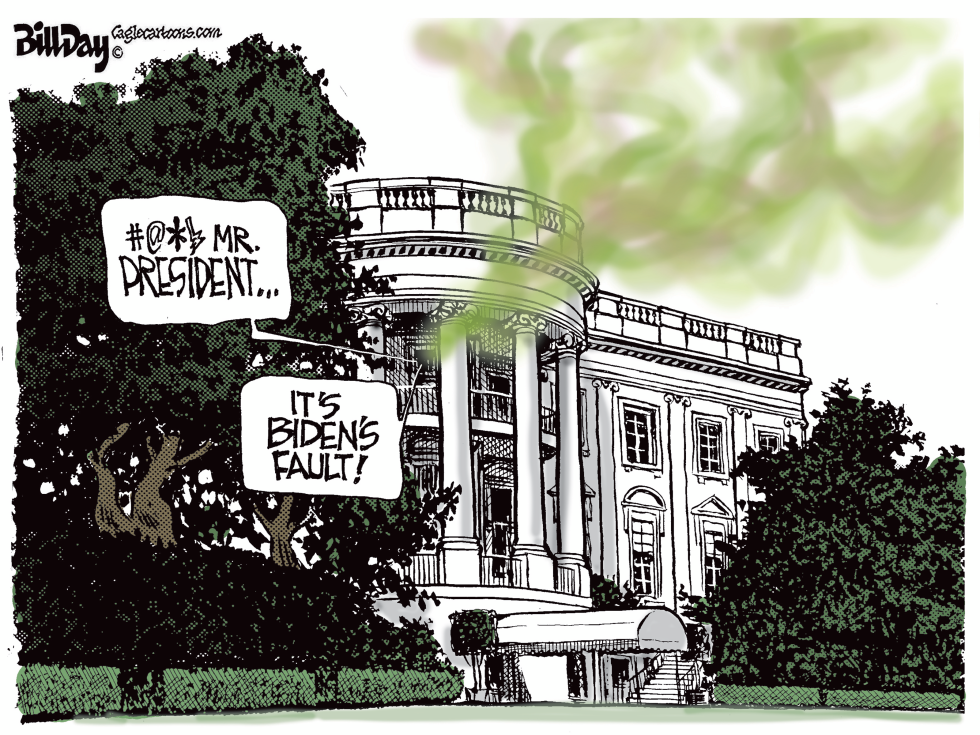
Political discourse continues to center on former President Biden even after his term, with critics attributing various problems to his leadership. The White House remains a focal point for such discussions. The piece takes the position that persistent efforts to assign fault to Biden reflect deeper partisan divisions rather than specific new developments.
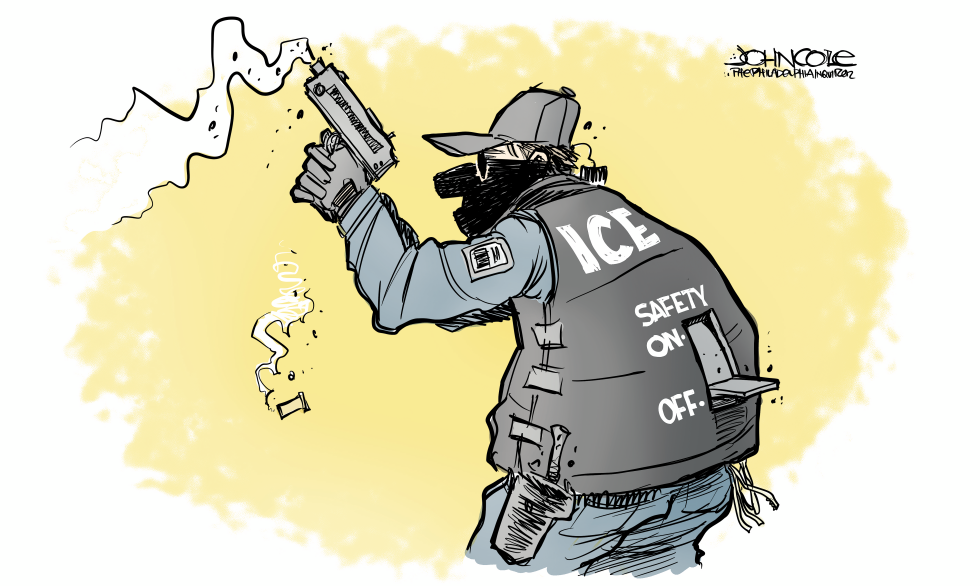
An ICE agent is shown firing a handgun during what appears to be an enforcement action. The vest safety toggle sits in the off position while smoke and a bullet exit the barrel. The image highlights concerns over firearm handling protocols within immigration enforcement operations and questions whether basic safety measures are being followed in the field.
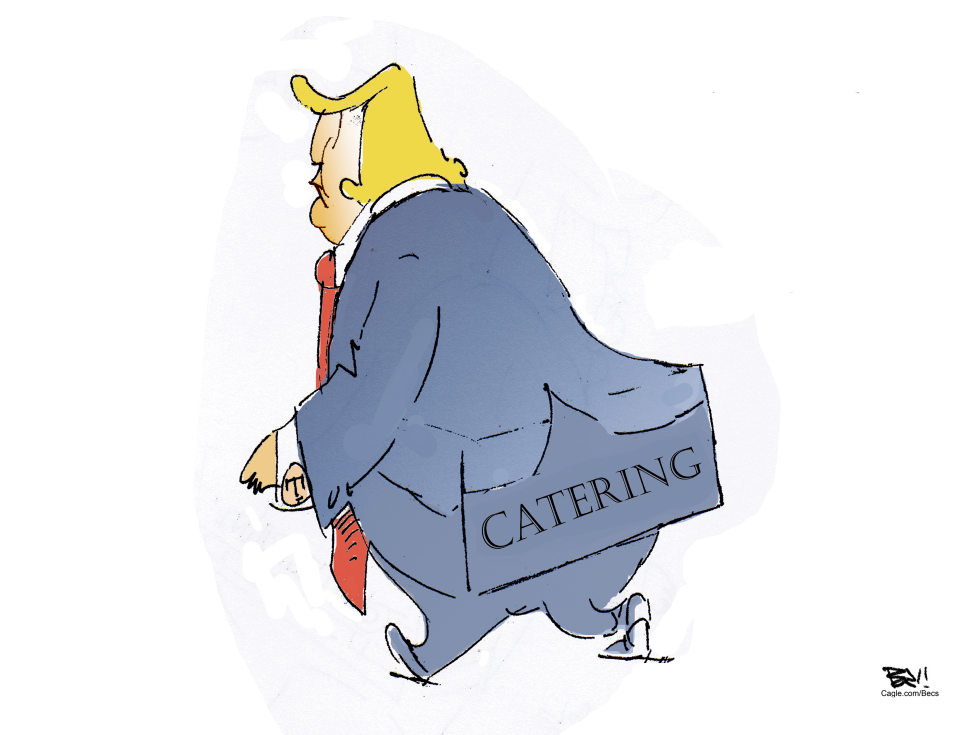
Donald Trump remains a central figure in U.S. politics as of mid-2026. The image responds to ongoing debates about his business ties and political influence. Observers continue to examine how former and current roles intersect with commercial interests. The piece presents Trump as aligned with catering services in a literal visual sense. This framing underscores questions about priorities and external influences on his actions.
Donald Trump faces ongoing scrutiny over expanding allegations of misconduct and deception in public office. Recent developments have heightened concerns among associates about the accumulating impact. The editorial takes the position that these issues are intensifying and demand accountability.
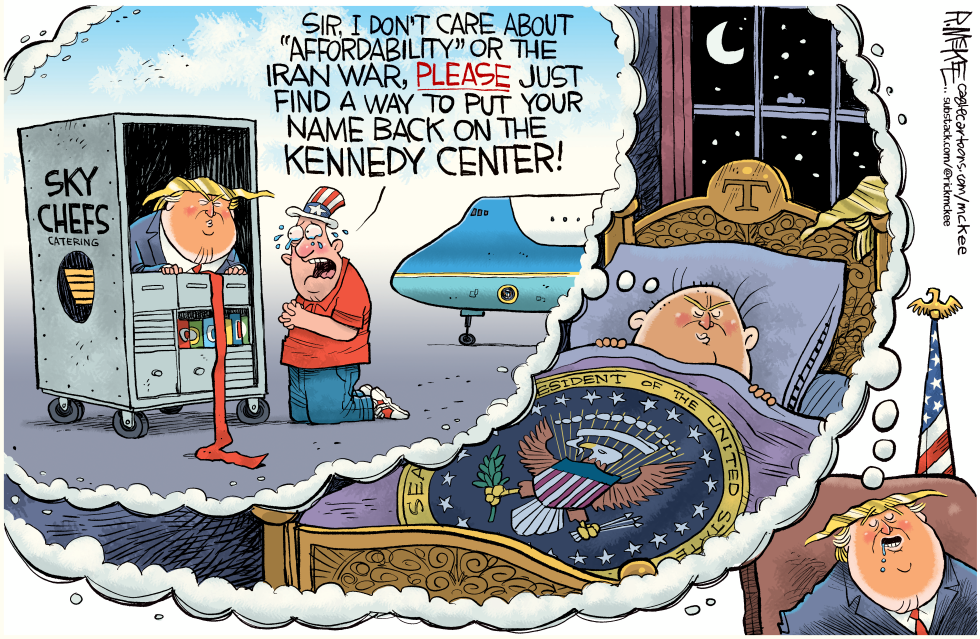
Donald Trump has repeatedly expressed interest in attaching his name to prominent public institutions. The Kennedy Center, a major arts venue in Washington, has drawn his attention as a potential target for rebranding. Critics argue such moves distract from pressing national issues including foreign conflicts and domestic spending. The cartoon depicts this fixation as a nighttime preoccupation that sidelines other responsibilities.
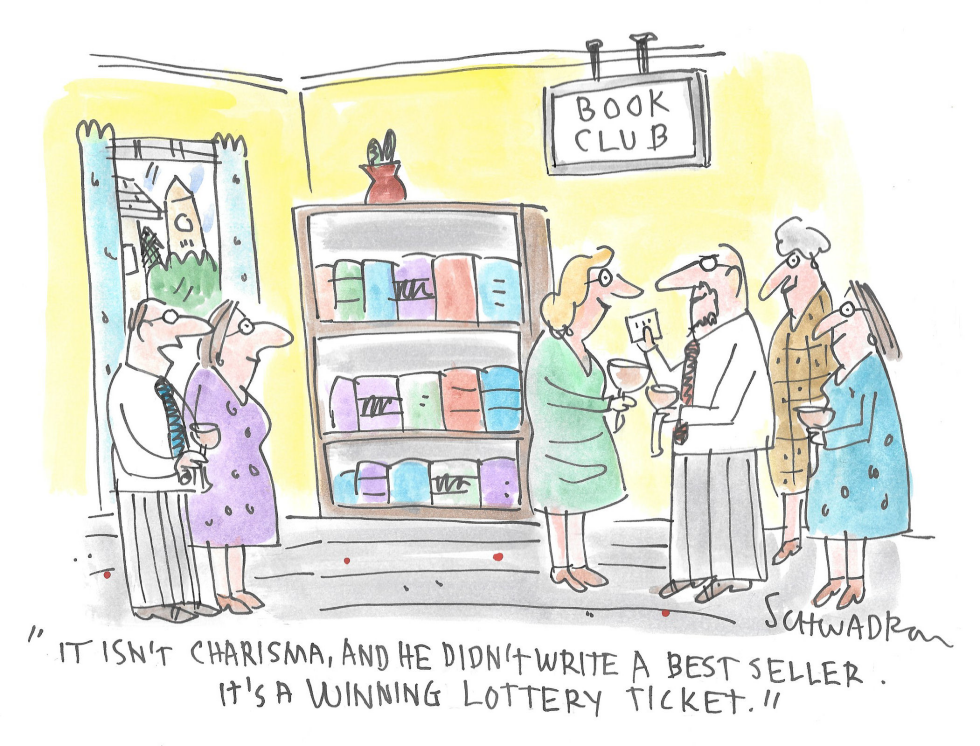
A book club gathering turns on a revelation about its leader's success. Members learn that a winning lottery ticket, not literary achievement or personal charisma, explains the group's draw. The situation highlights how unexpected windfalls can shape social circles and perceived status in casual settings. The piece presents the discovery as a straightforward explanation that undercuts assumptions about talent or appeal driving group interest.
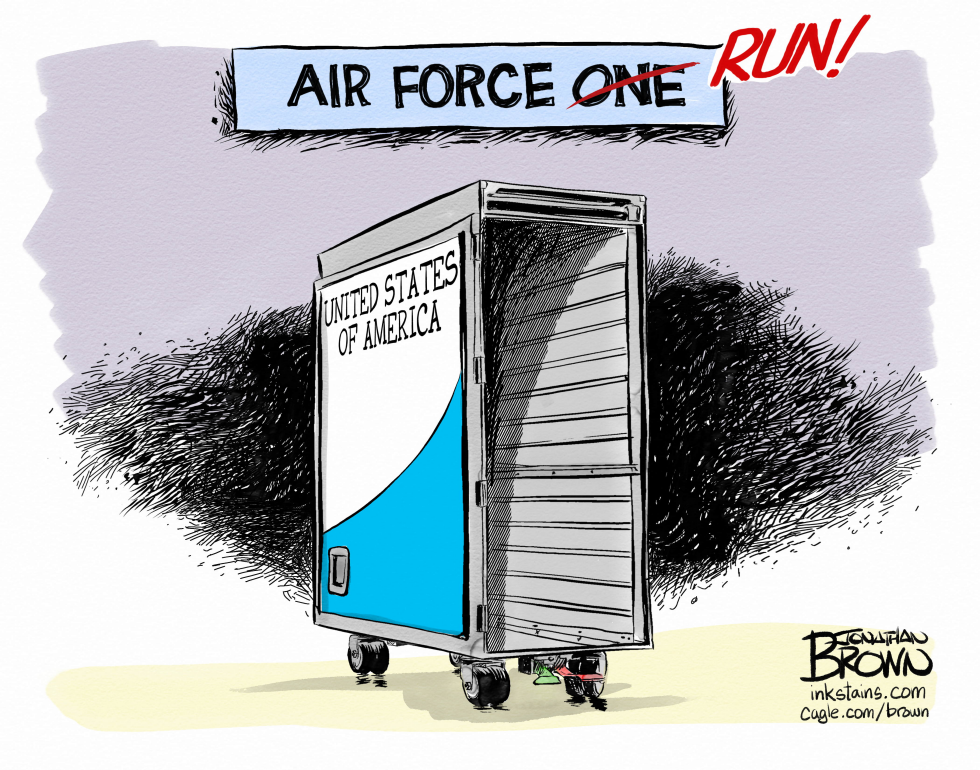
A wheeled airline catering cart occupies the center of the frame, painted in the livery of the presidential aircraft: white upper body, curved blue lower panel, and UNITED STATES OF AMERICA lettered down the side. Its full height door hangs open on empty wire shelving. Above it a pale blue placard reads AIR FORCE ONE, with ONE struck through in red and RUN! added beside that word in the same color. Two neckties poke out from between the casters underneath, one of them the long red tie Donald Trump is known for, the only trace of the men folded up inside. The drawing responds to reports that Trump sheltered in an airline galley cart against an assassination threat traced to Iran, turning the most recognizable branding in presidential aviation into an instruction to flee. Jonathan Brown signed the lower right corner alongside inkstains.com and Cagle.com/brown.
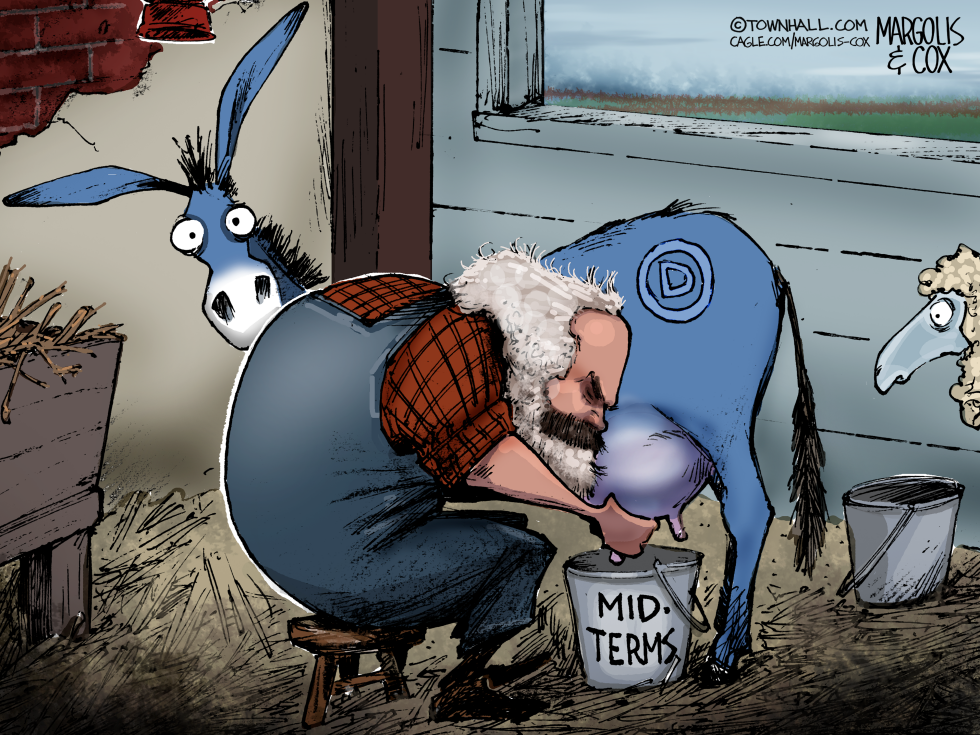
Democrats face ongoing questions about ideological influences from socialist thinkers as they prepare midterm strategies. The piece portrays Karl Marx directly engaging the party symbol to extract electoral gains. It argues that such roots undermine the party's mainstream appeal and long-term viability.
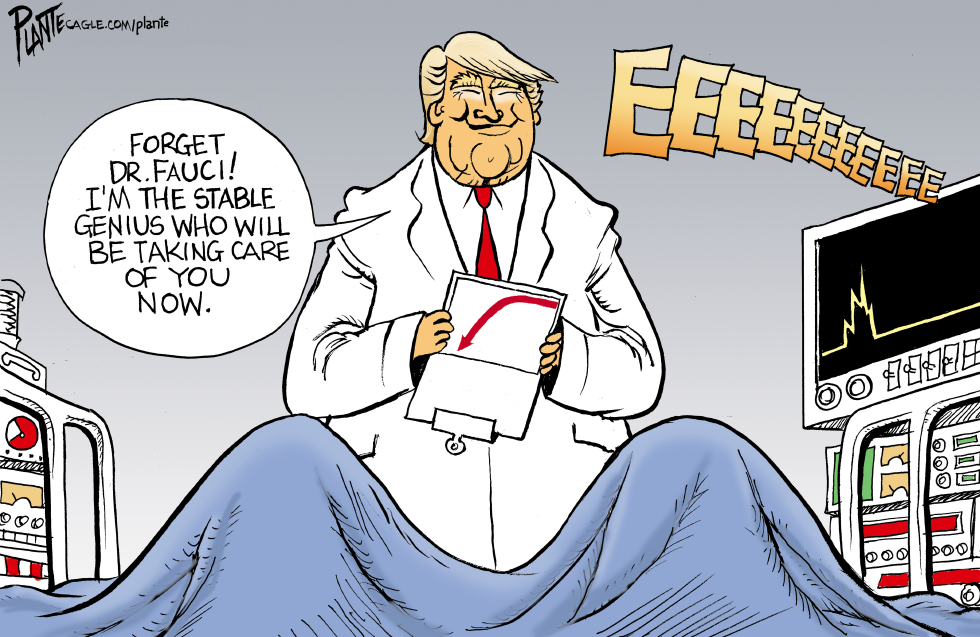
Donald Trump appears in a physician's coat asserting control over patient care and dismissing Dr. Fauci. The depiction occurs amid ongoing debates over federal health policy leadership and executive influence on medical decisions. The piece argues that such assertions risk undermining established expertise in public health administration.