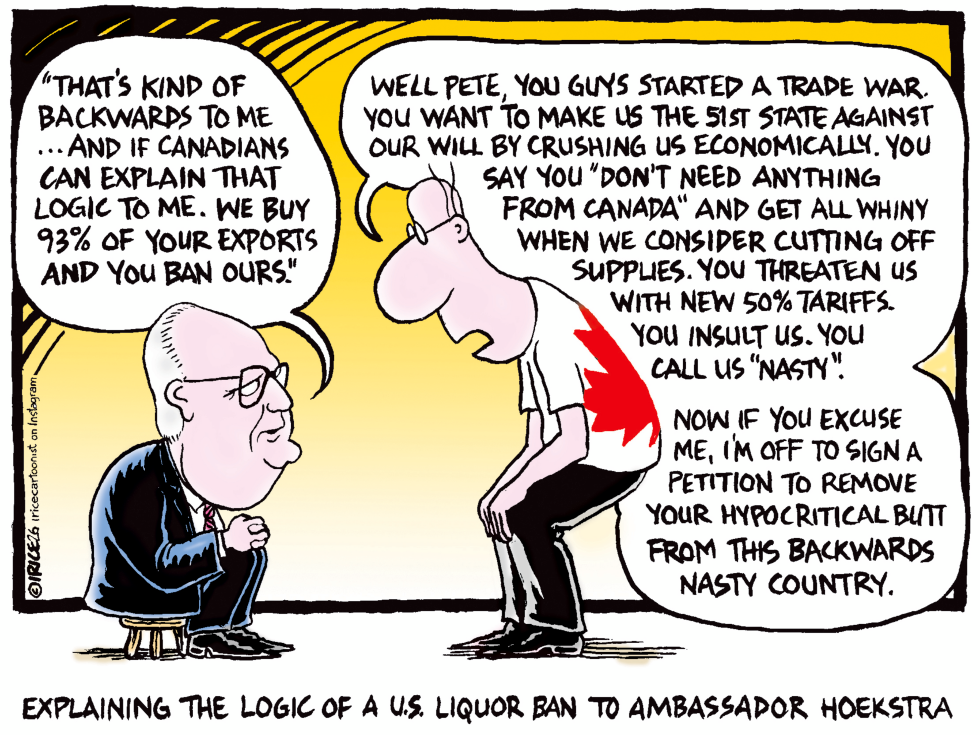
The United States has enacted a liquor ban targeting Canadian products as part of broader trade measures. Ambassador Hoekstra receives direct criticism over the policy's economic impact and perceived hypocrisy. The response underscores Canada's role as a major buyer of U.S. exports and its readiness to retaliate with supply cuts and petitions.
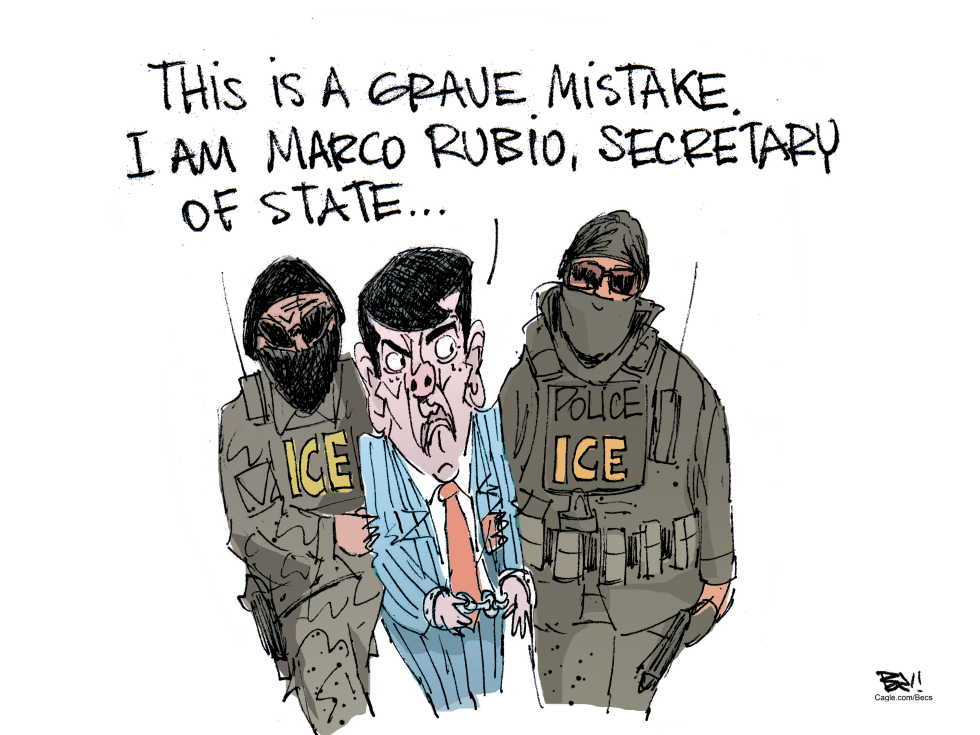
ICE agents detain a high-ranking official who identifies himself as Marco Rubio, Secretary of State, during what appears to be a mistaken arrest. The incident highlights ongoing tensions around immigration enforcement practices and the risk of errors in high-profile cases. The piece takes the position that such detentions reflect broader overreach in agency operations.
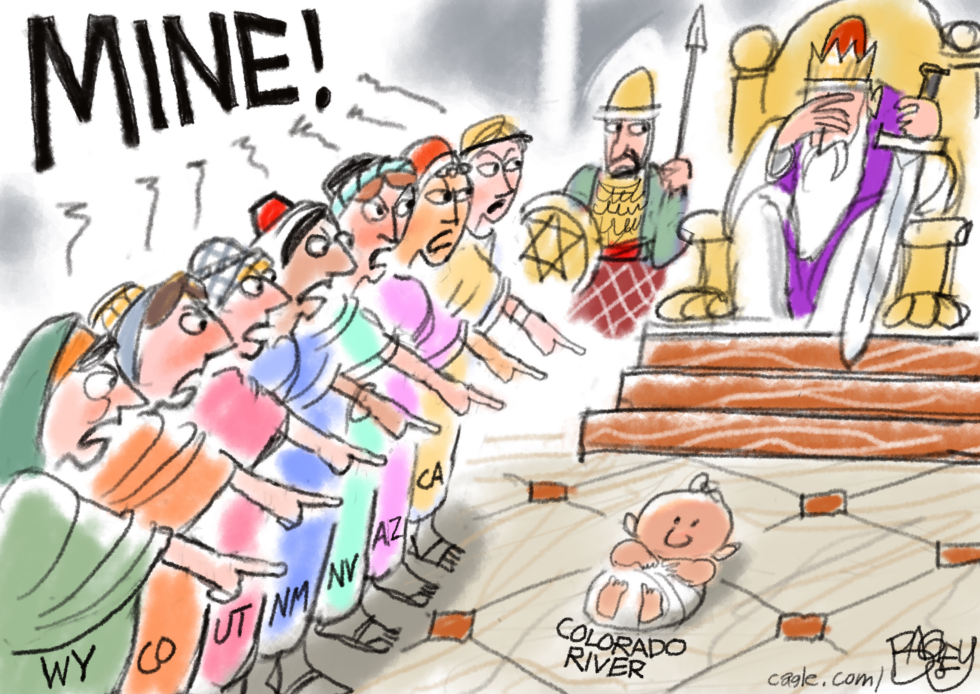
Western states continue long-running negotiations over limited Colorado River water supplies amid persistent drought conditions. The seven basin states have struggled for years to agree on reduced allocations required by declining reservoir levels. The dispute affects millions of users across agriculture, cities and tribes. Recent federal calls for deeper cuts have heightened tensions without producing a final compact. The cartoon frames the states as claimants in a classic judgment scenario, underscoring the zero-sum nature of the fight.
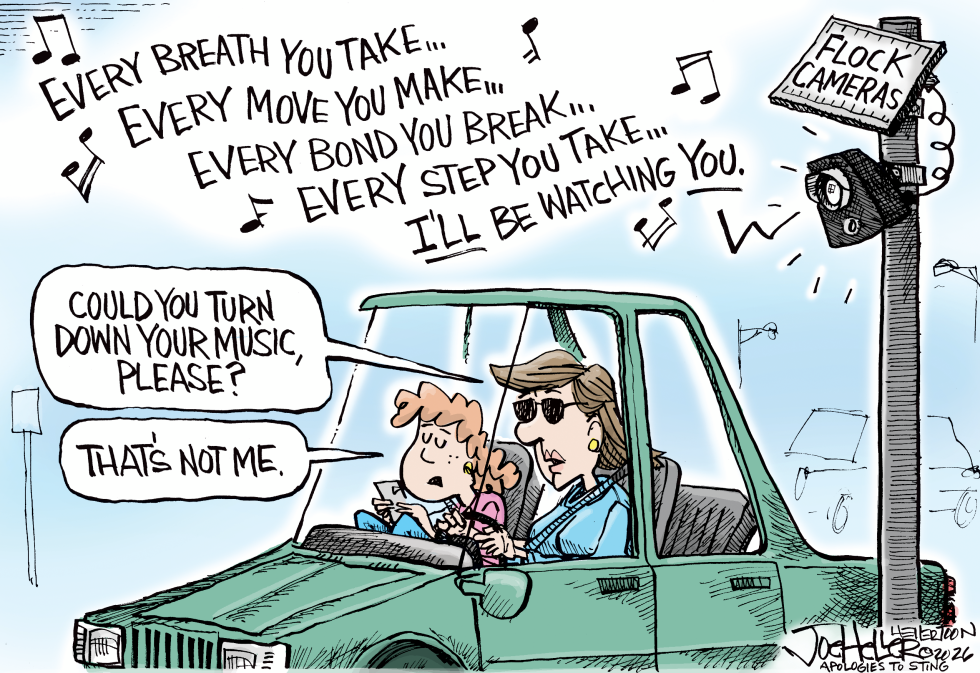
Police departments across the country have expanded use of Flock license-plate readers that capture vehicle movements in real time. The technology raises questions about data retention and warrantless tracking of citizens. The cartoon portrays the cameras as an omnipresent watcher echoing a classic song about surveillance.
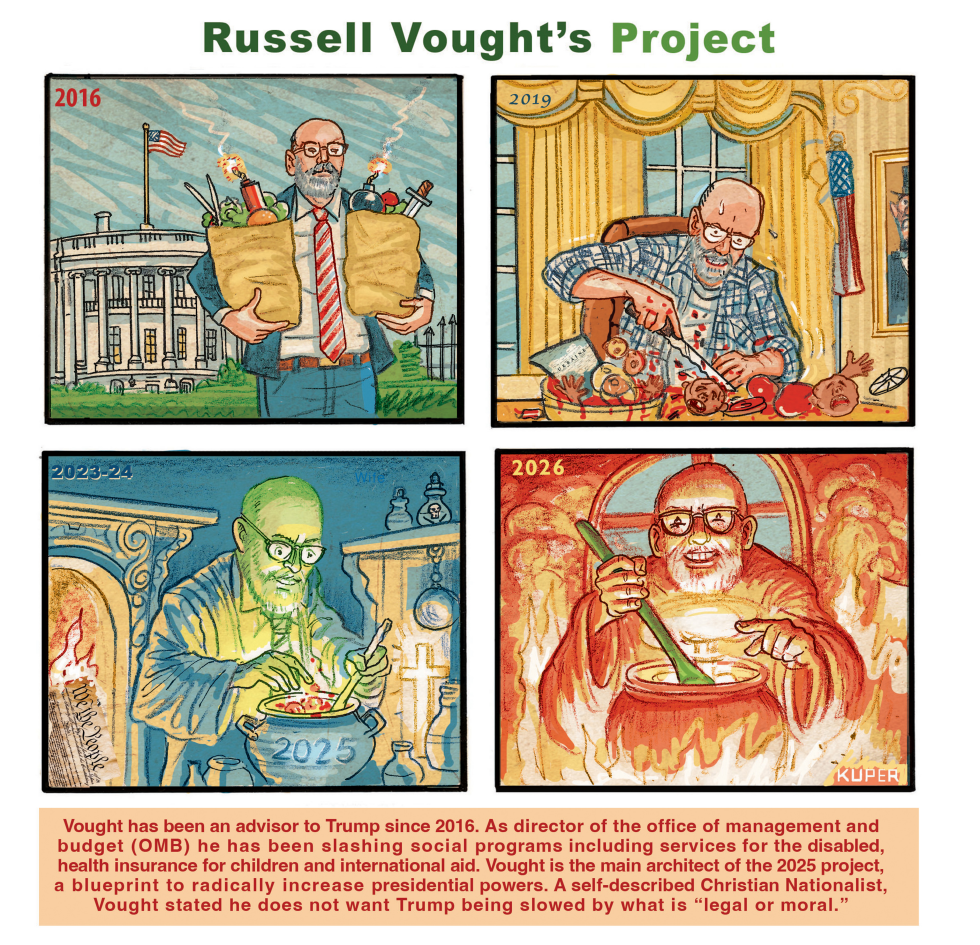
Russell Vought has served as a Trump advisor since 2016 and later directed the Office of Management and Budget, where he cut funding for disability services, children’s health insurance and foreign aid. He is the principal author of Project 2025, a plan to enlarge presidential authority. The cartoon presents his progression from 2016 through 2026 as a deliberate effort to remove legal or moral restraints on executive action.
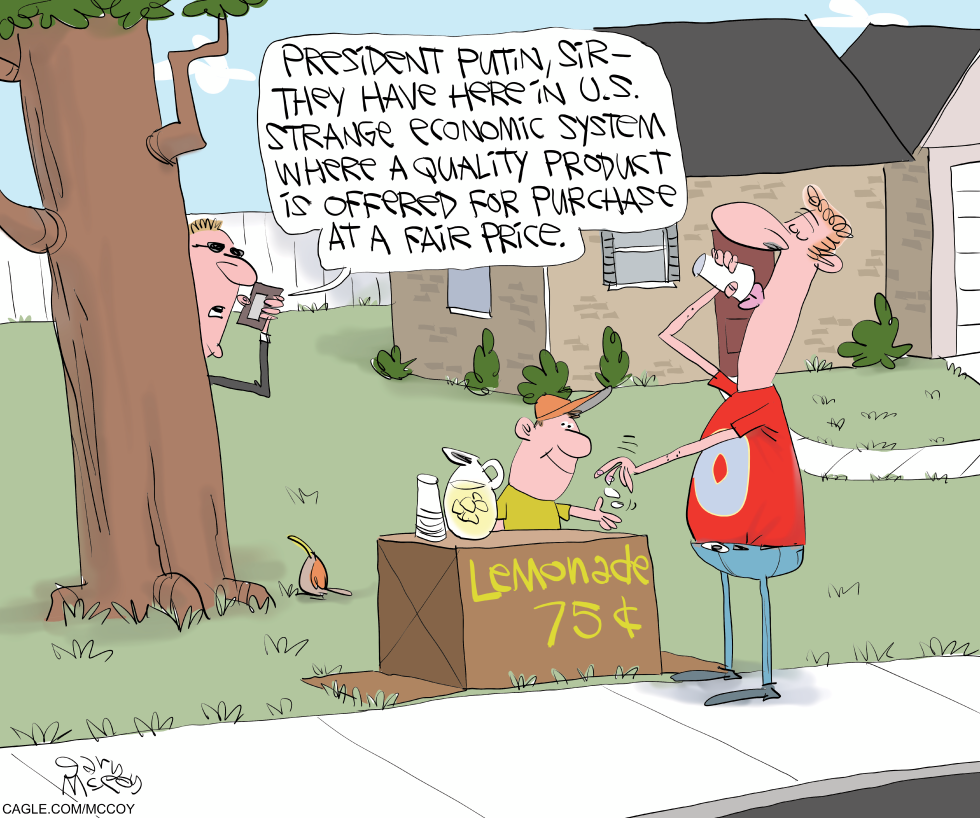
A cartoon depicts a man explaining the U.S. free-market system of offering quality goods at fair prices to President Putin during a phone call next to a child's lemonade stand. The scene underscores the perceived strangeness of American capitalism from a Russian perspective. The editorial position critiques the disconnect between market-driven economies and state-controlled systems.
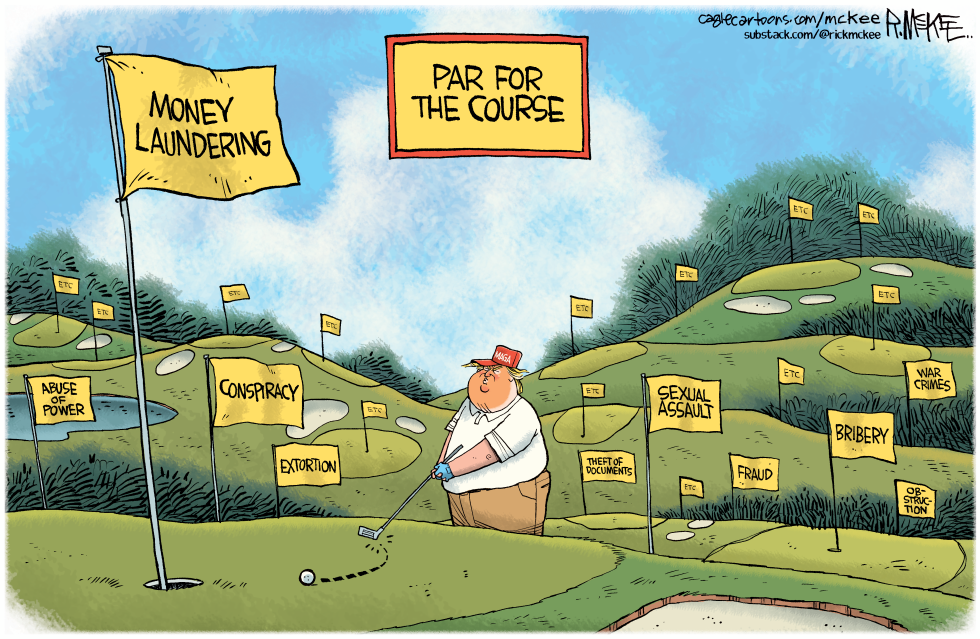
Donald Trump appears on a golf course in an editorial cartoon dated August 6 2026. Multiple yellow flags label alleged offenses including money laundering, conspiracy, extortion, sexual assault, bribery, fraud and obstruction. The piece responds to ongoing legal and political scrutiny of the former president. It frames these issues as routine for Trump through the visual metaphor of a golf course. The editorial position presents the allegations as expected elements of his record.
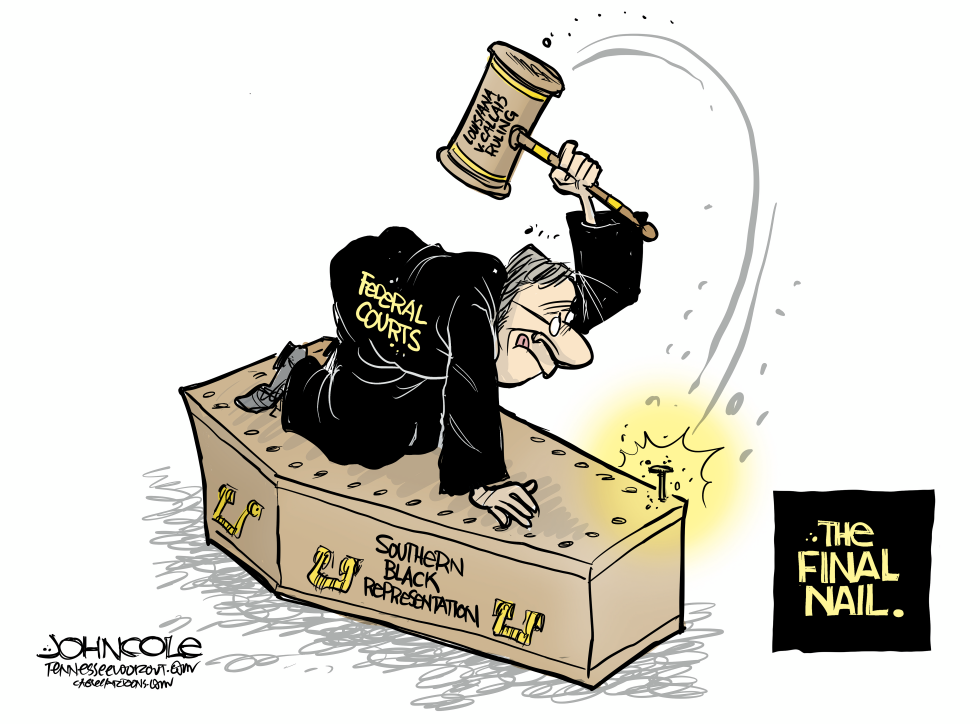
A federal court ruling on Louisiana redistricting has reduced black congressional representation across southern states. The decision follows ongoing litigation over district maps and voting access. It matters because it alters the number of majority-minority seats available in Congress. The piece argues the ruling delivers a decisive setback to those representation gains.
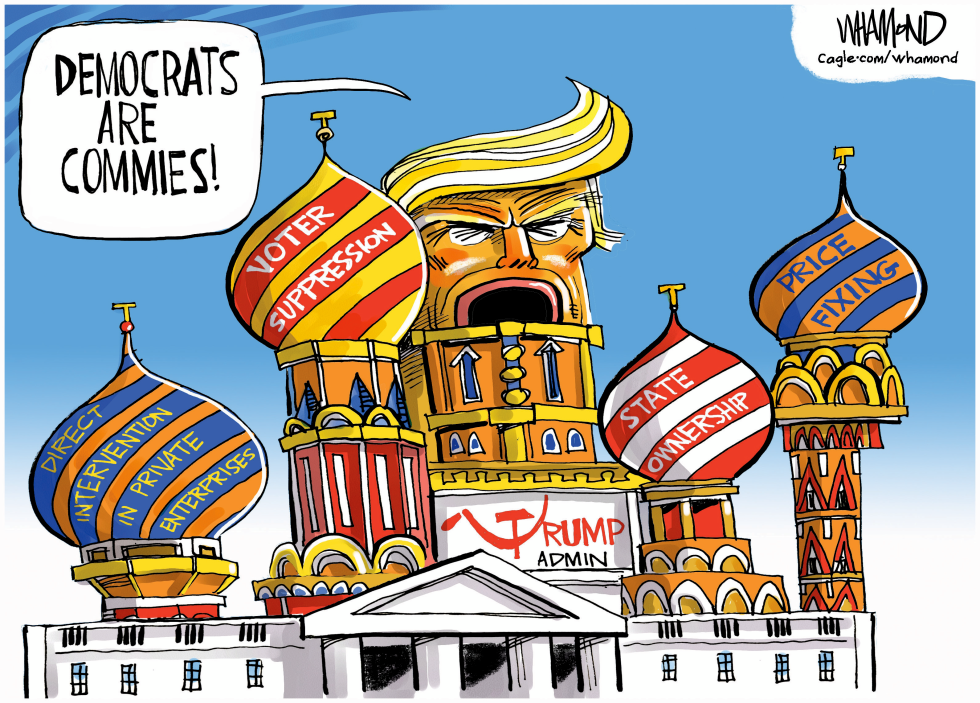
Donald Trump has renewed attacks labeling Democrats as communists amid ongoing debates over election rules and economic interventions. The accusation revives Cold War-era rhetoric in current political discourse. The piece portrays the Trump administration itself as adopting the very state-control measures it condemns.
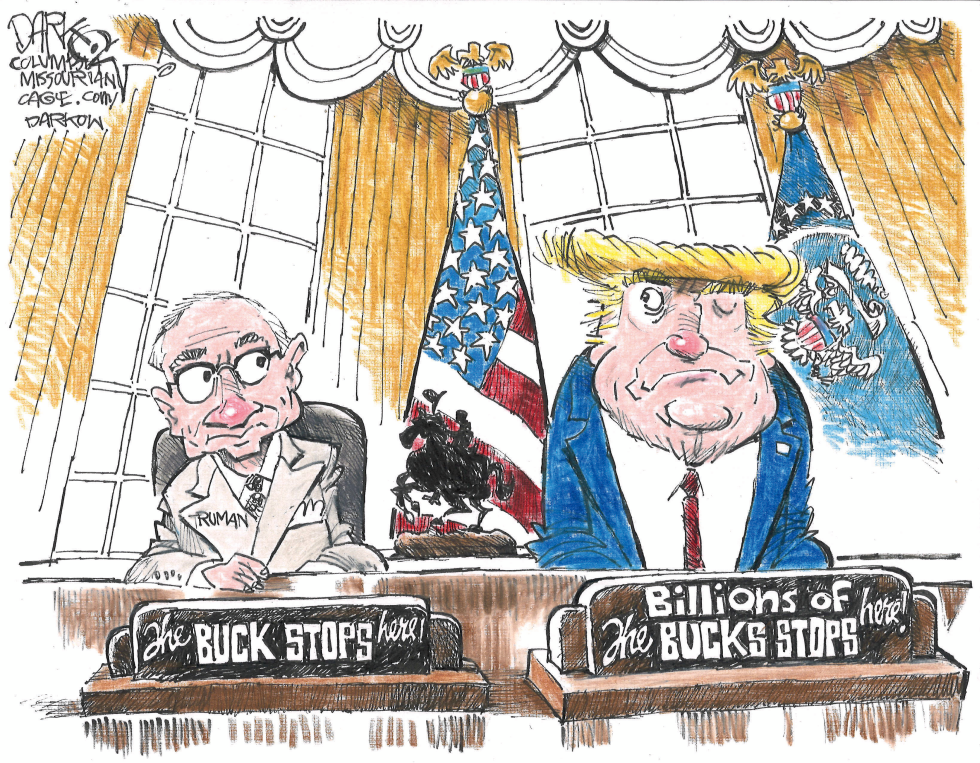
The cartoon responds to ongoing debates over presidential priorities in 2026. It contrasts Harry Truman's famous accountability motto with a version focused on financial gain. The piece argues that current leadership emphasizes monetary concerns over traditional responsibility.
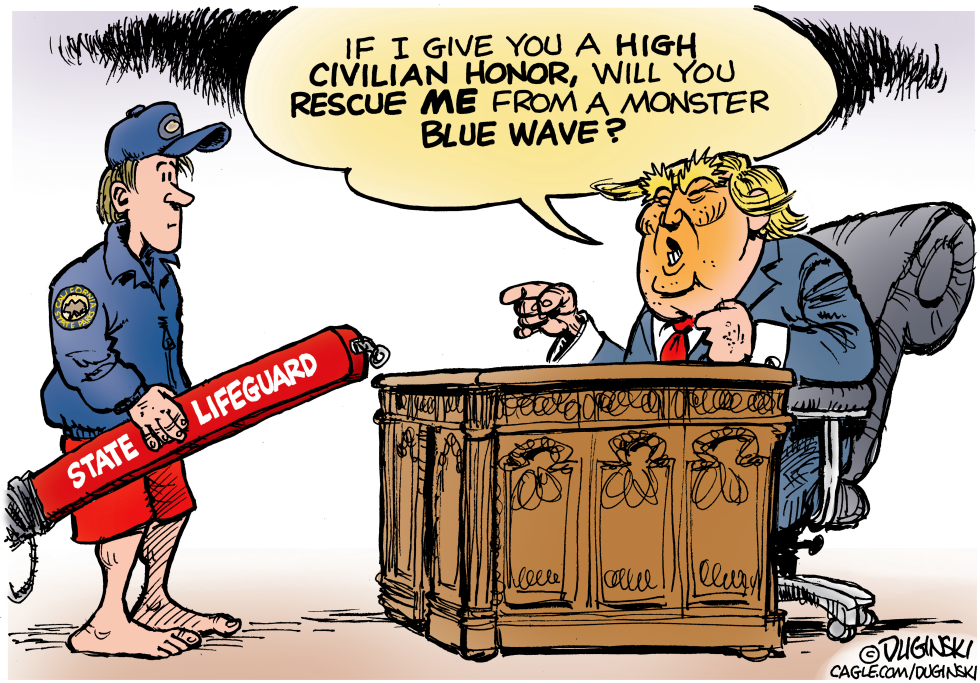
Donald Trump appealed to a California state lifeguard for rescue from an anticipated Democratic electoral surge, offering a high civilian honor in return. The request highlights concerns over midterm or future election outcomes. The piece portrays the overture as a desperate bid for political survival.
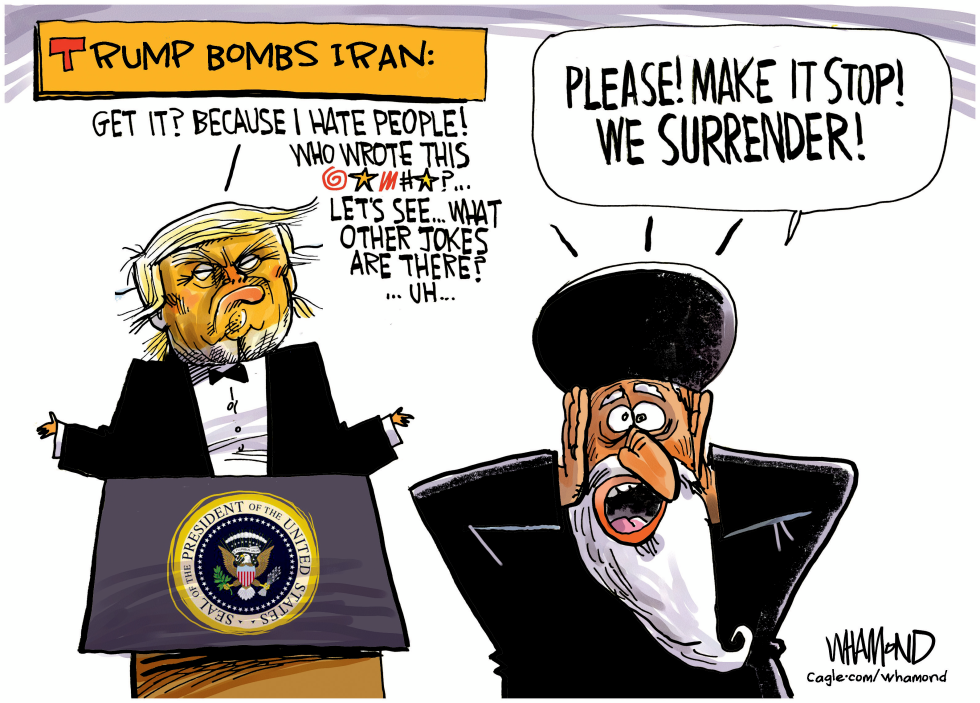
President Trump ordered strikes on Iran in late July 2026, prompting an immediate public plea for surrender from Iranian leadership. The action escalates tensions in the Middle East and raises questions about U.S. military objectives. The editorial takes the position that the strikes reflect personal animus rather than strategic necessity and mocks the president's framing of the operation.
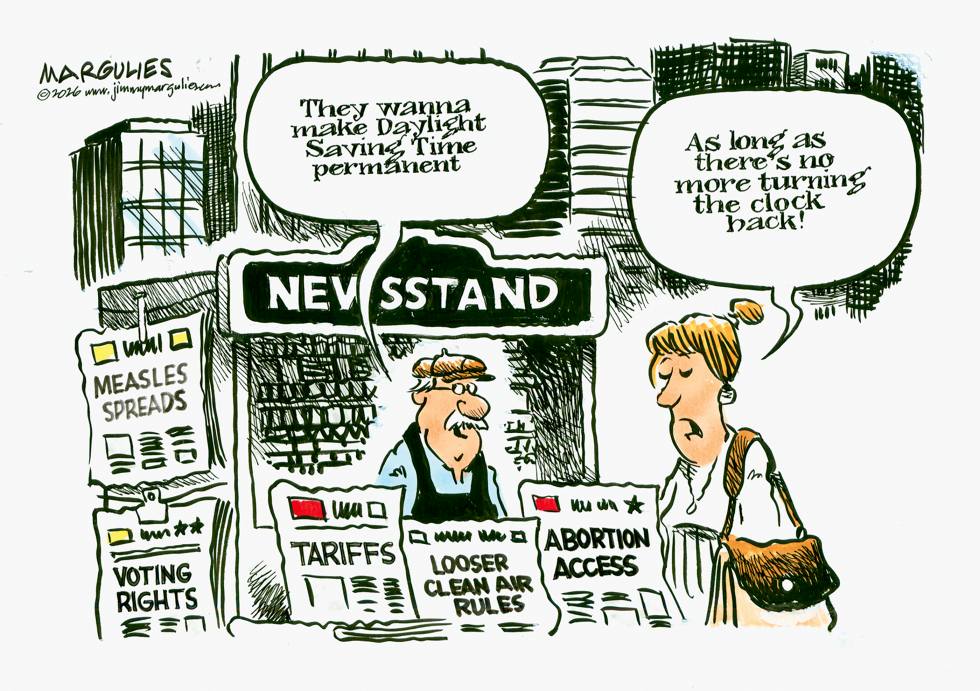
Proposals to make daylight saving time permanent coincide with debates over tariffs, abortion access, voting rights and environmental rules. The cartoon frames these as part of a broader pattern of policy shifts that some view as steps backward.
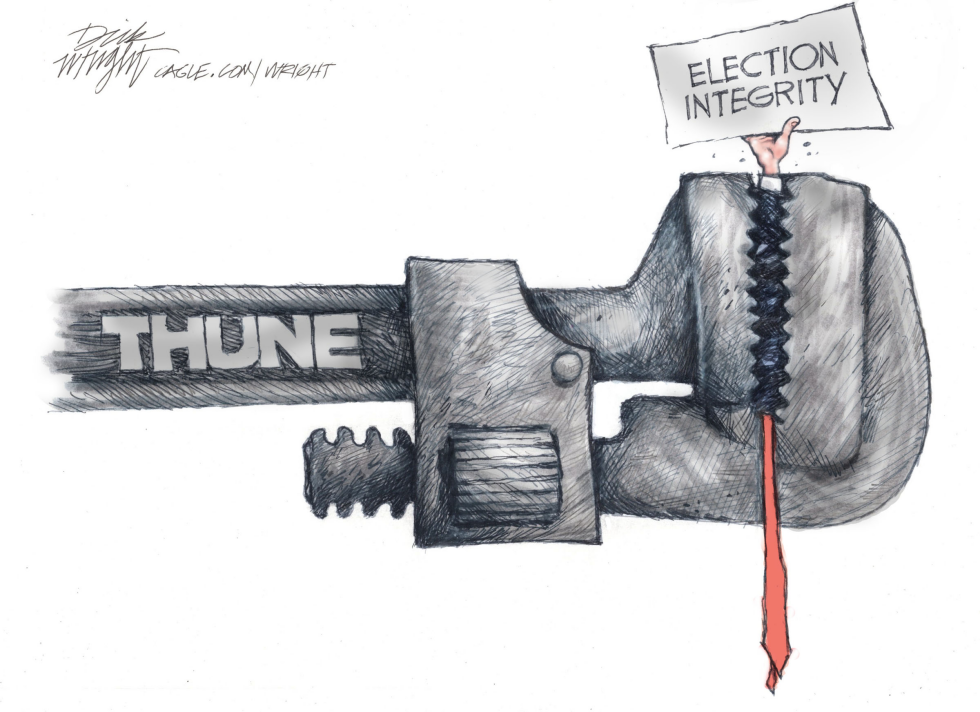
Senate Majority Leader John Thune has placed a procedural hold on the Save America Act, preventing a floor vote on election integrity reforms. The move comes amid ongoing partisan disputes over voting procedures and certification standards. The cartoon portrays Thune as deliberately stalling the measure through institutional leverage.