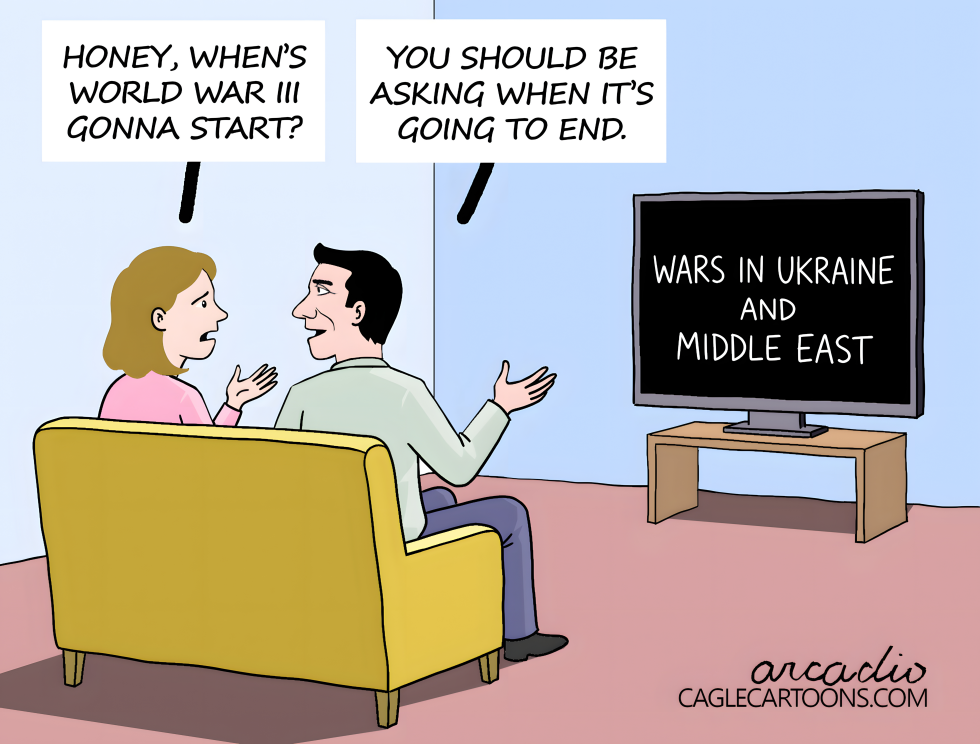
Persistent fighting in Ukraine and the Middle East continues to dominate global attention in September 2026, with no clear end in sight for either theater. The conflicts involve Russia against Ukraine and multiple fronts in the Middle East, raising concerns about wider involvement. Viewers and analysts alike question whether these regional wars risk drawing in additional powers and spiraling into a larger confrontation. The cartoon captures everyday public anxiety over the duration and potential expansion of these wars rather than their origins.
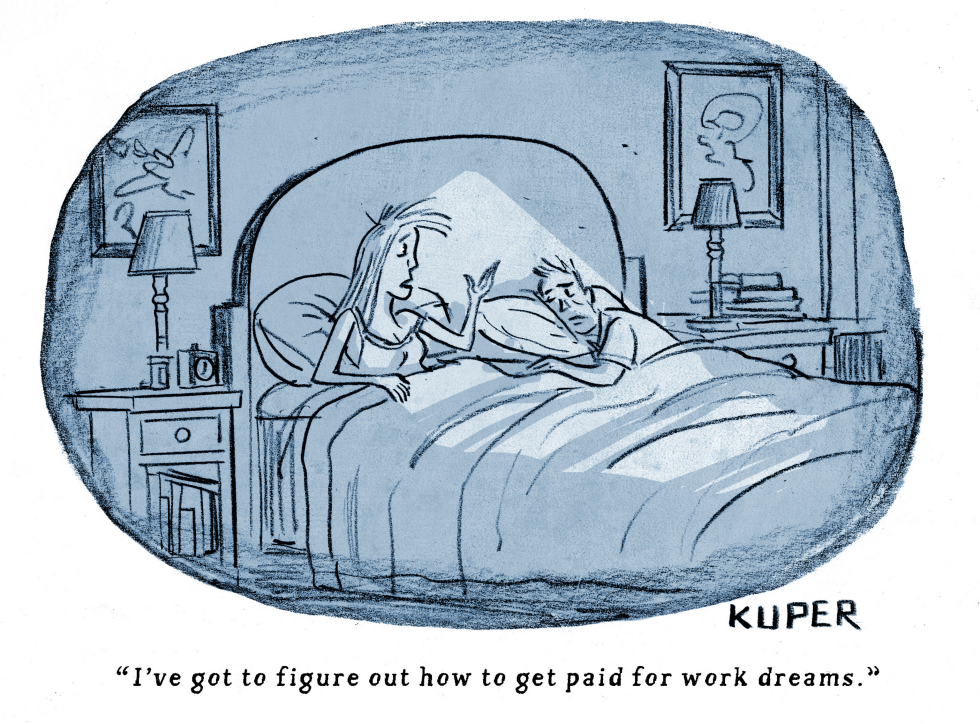
The cartoon addresses the expanding reach of work into personal time through dreams, reflecting ongoing debates about compensation for mental and emotional labor in the modern economy. With side hustles and constant connectivity blurring lines between rest and productivity, many workers feel the grind never stops. The piece takes the position that this intrusion underscores the need for better boundaries and recognition of unpaid cognitive effort as part of broader labor concerns.
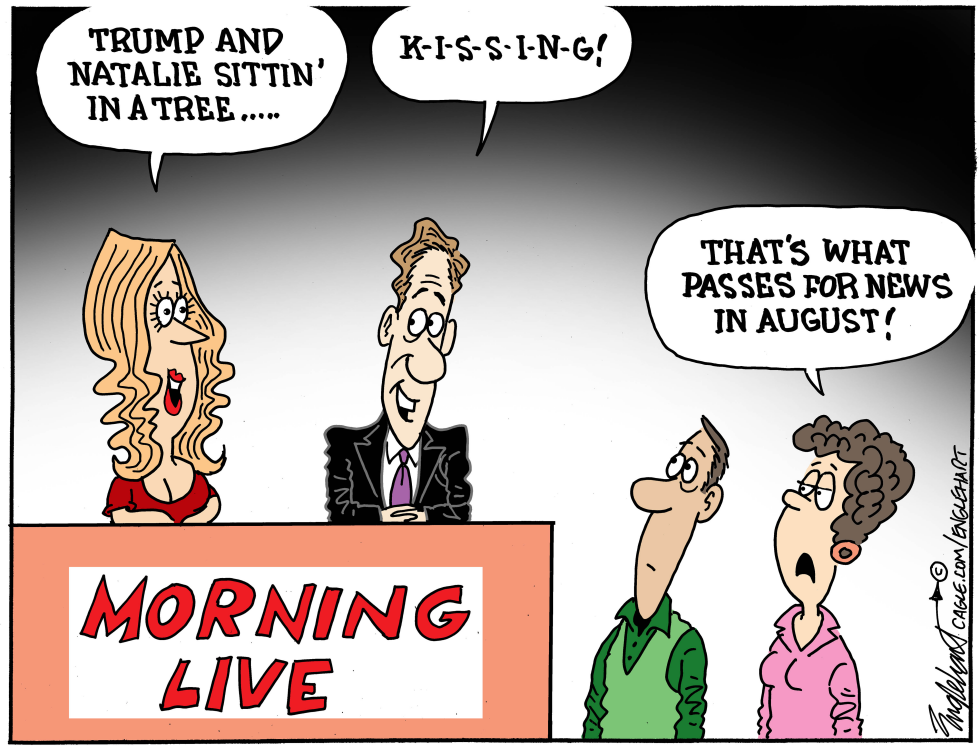
Speculation about Donald Trump and Natalie Harp sharing a kiss surfaced on morning television in August 2026. The story gained traction during a traditionally slow news period. The cartoon portrays the coverage as trivial gossip that passes for reporting when substantive events are scarce.
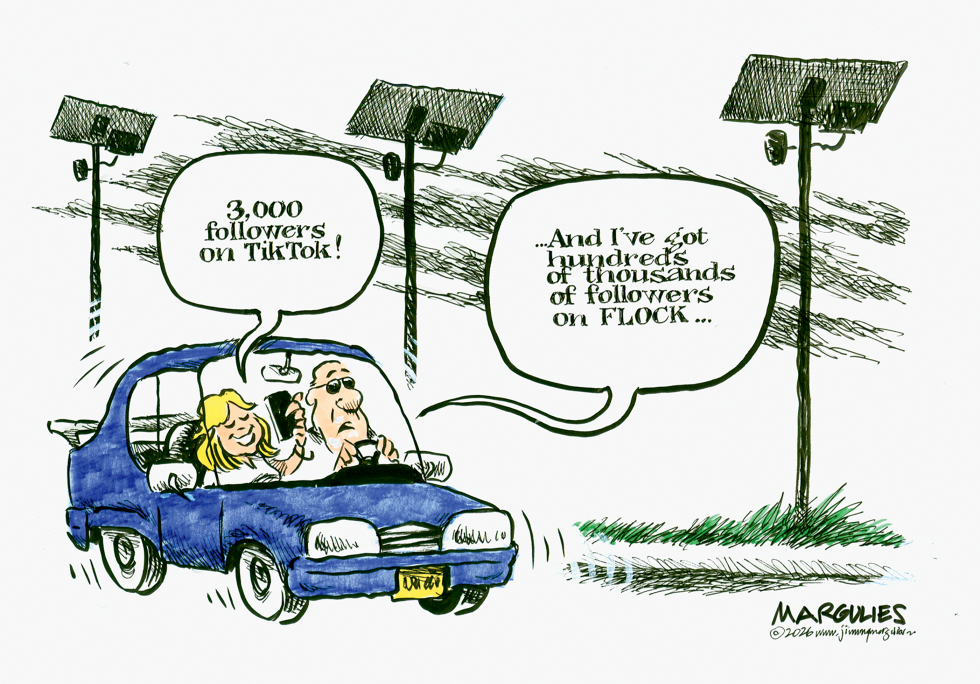
Drivers on public roads increasingly encounter networks of automated license plate readers operated by companies such as Flock Safety. The cartoon highlights the contrast between voluntary social media sharing on platforms like TikTok and involuntary data collection by surveillance systems. It underscores how both forms of attention now shape modern life, with the editorial noting the irony of competing over follower numbers in either realm.
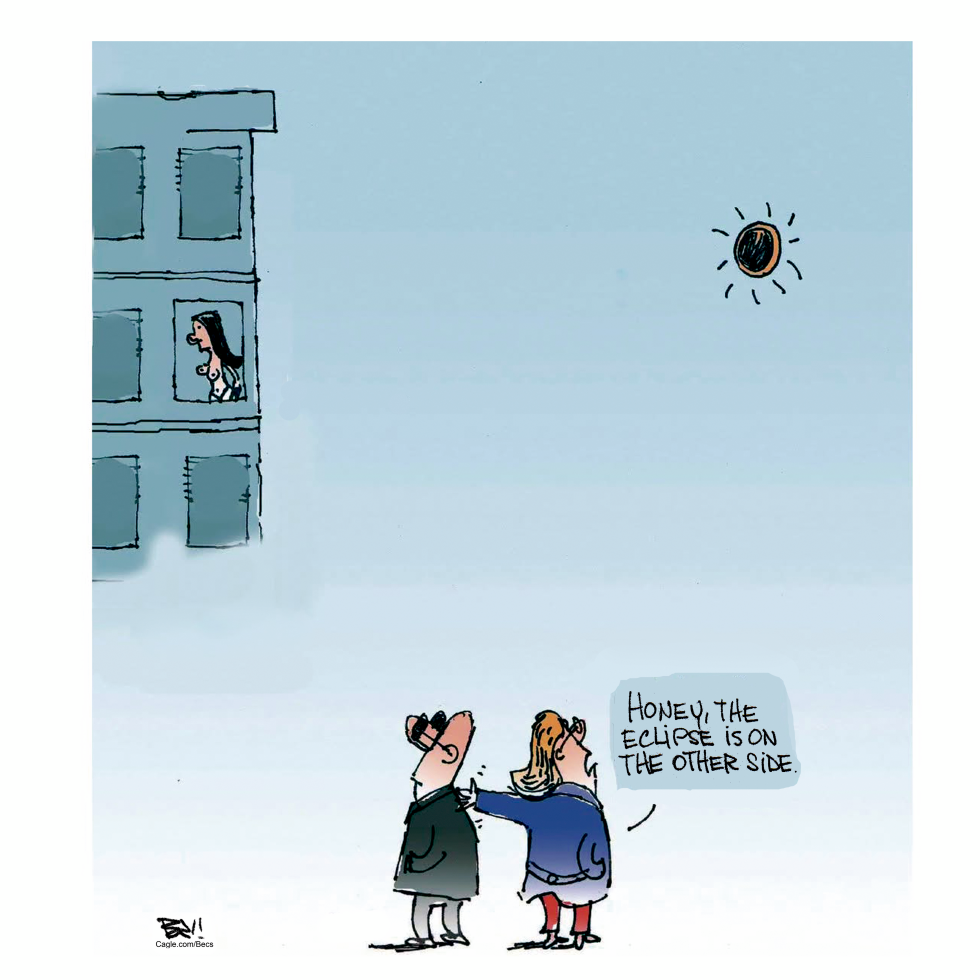
A domestic scene plays out around a simple pun on eclipses and visible marks. The exchange highlights everyday relationship dynamics where one party redirects attention from an apparent injury. The piece presents the interaction without broader political framing.
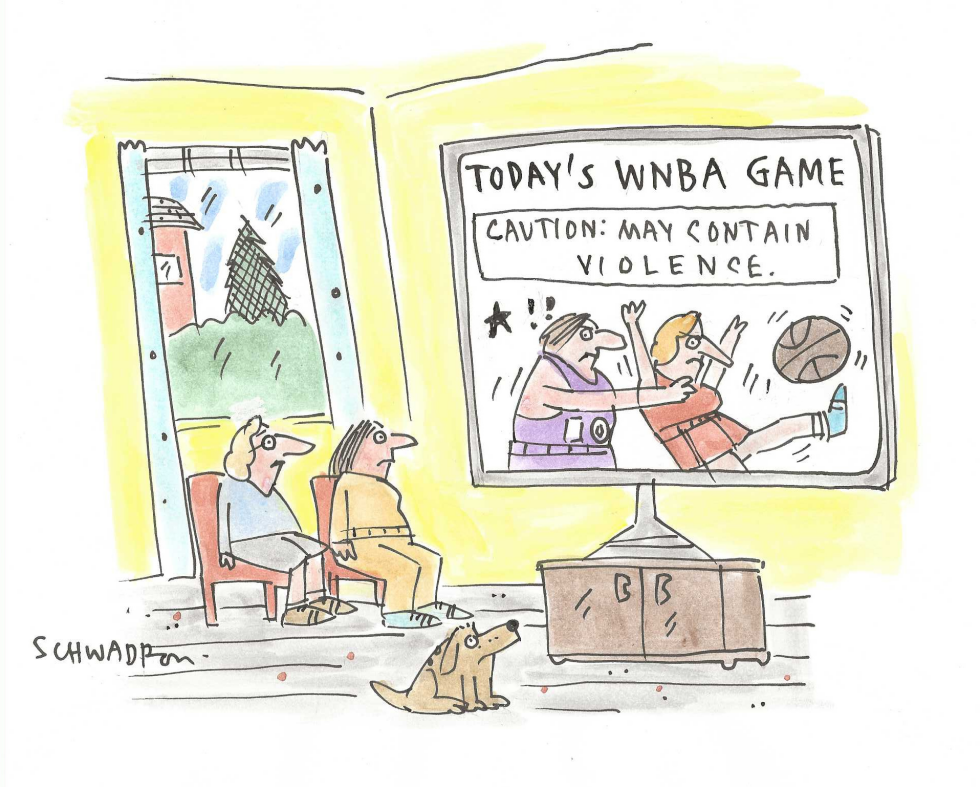
Sports networks have begun attaching violence disclaimers to WNBA game coverage following a series of on-court altercations. The move responds to rising physical confrontations during matches that have drawn broader attention. Broadcasters cite standard content guidelines applied to other programming. The editorial stance questions whether such alerts overstate routine basketball contact or accurately reflect escalating incidents that warrant viewer preparation.
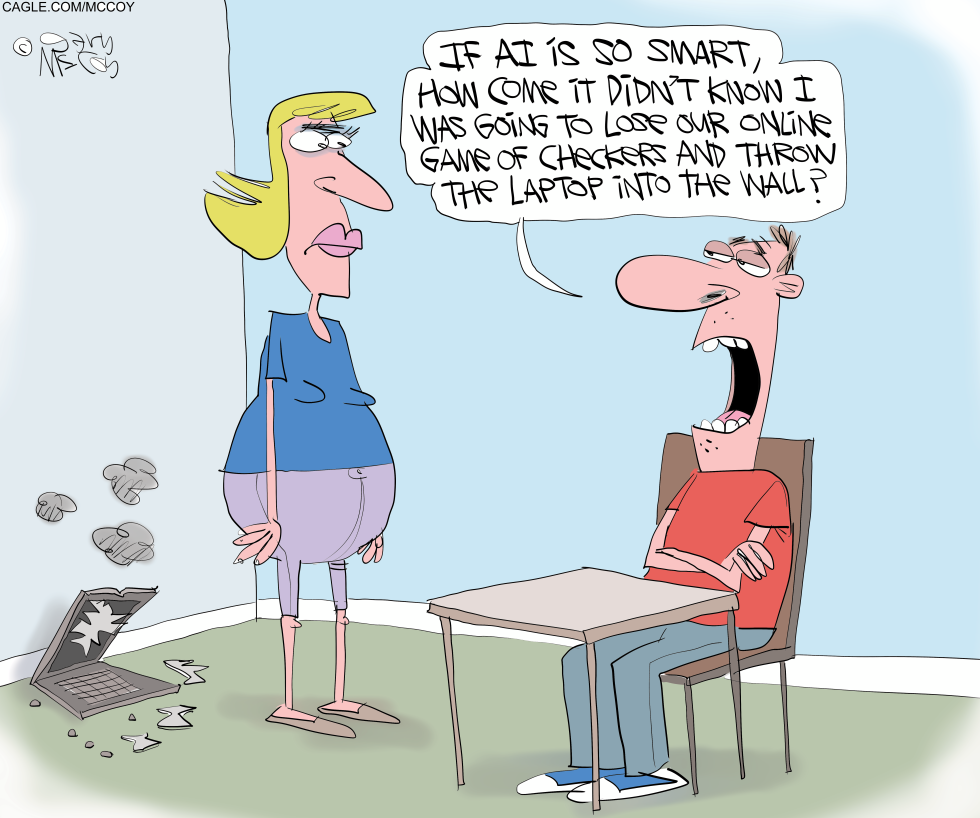
A man attributes his loss in an online checkers match and subsequent damage to a laptop on AI shortcomings. The situation reflects a common tendency to shift responsibility for personal errors onto emerging technology. The piece takes the position that such excuses reveal more about human behavior than about AI capabilities.
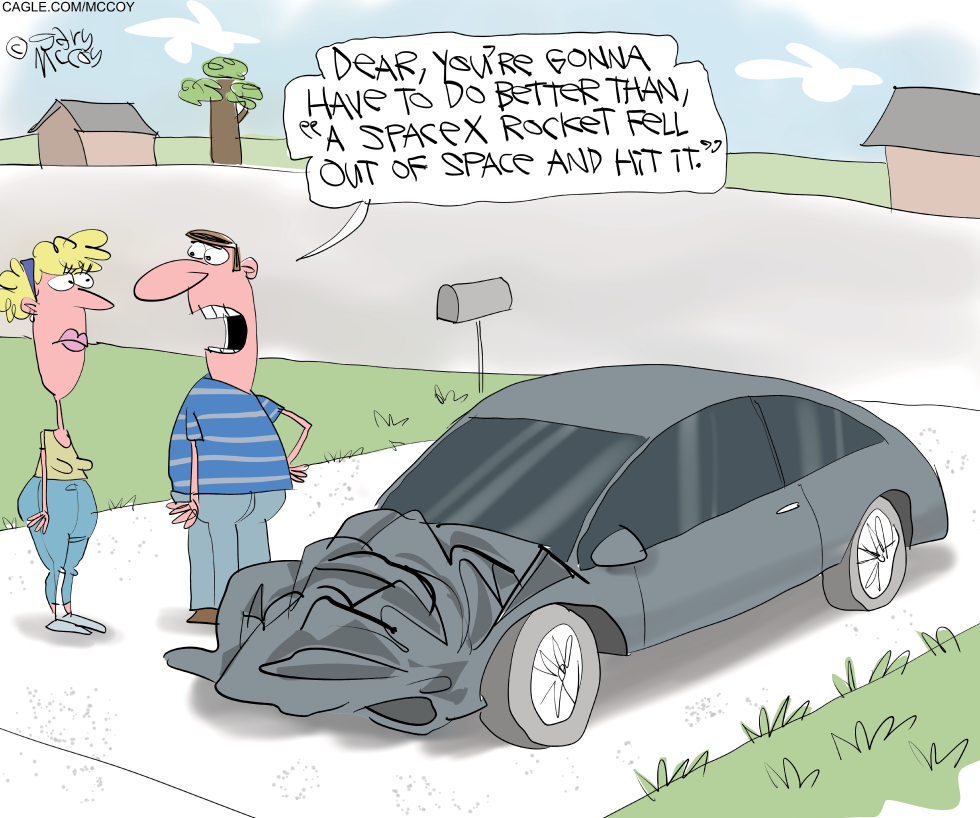
A man offers an implausible explanation for damage to a vehicle on a suburban street. The claim references a SpaceX rocket falling from space. The exchange highlights skepticism toward far-fetched excuses in everyday disputes. The piece takes the position that such a story fails to hold up under scrutiny.
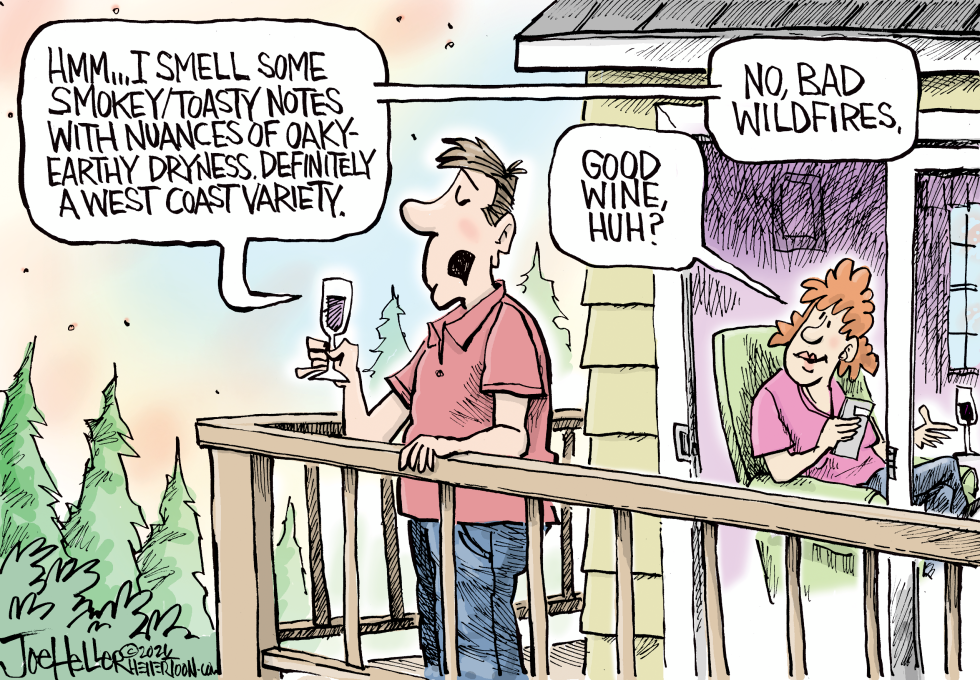
Wildfires burning across western regions have filled the air with thick smoke, prompting residents to stay indoors or adapt outdoor routines. The smoke's intensity has become noticeable even in casual settings like evening gatherings. This piece responds by showing a couple misidentifying the smoke as desirable wine characteristics, underscoring how routine activities now intersect with fire season realities and the need for greater awareness of environmental conditions.
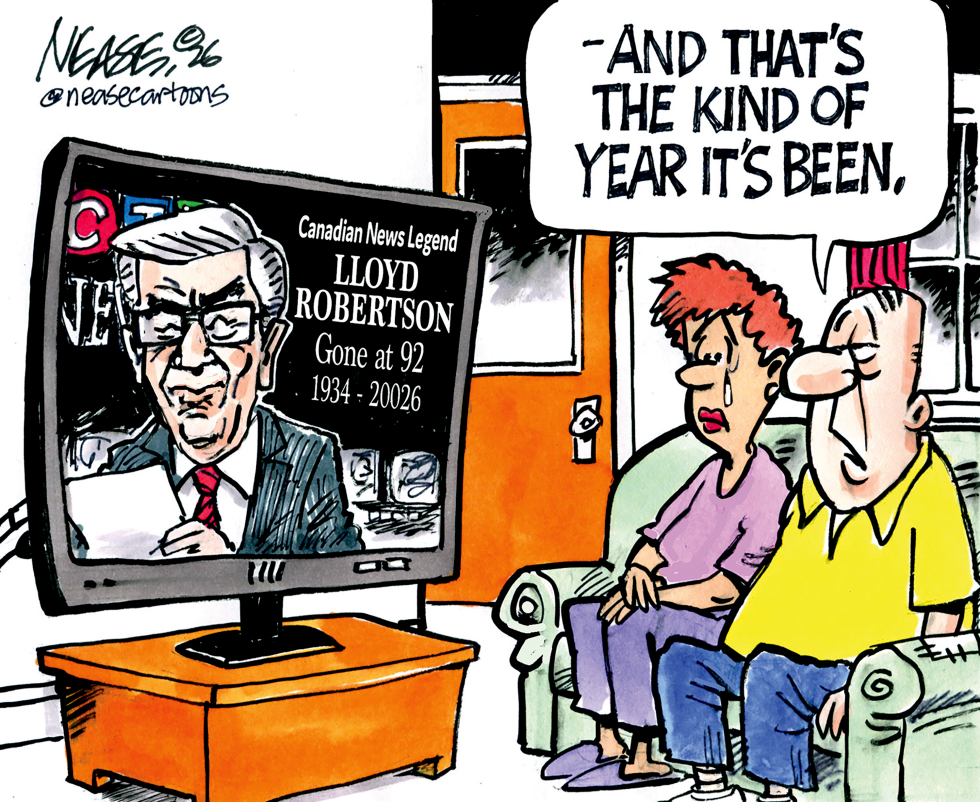
Canadian broadcasting icon Lloyd Robertson died in 2026 at age 92 after a long career as a news anchor. The announcement prompted widespread reflection on a year filled with notable passings and challenges. The editorial takes the position that such losses underscore the cumulative weight of difficult events.
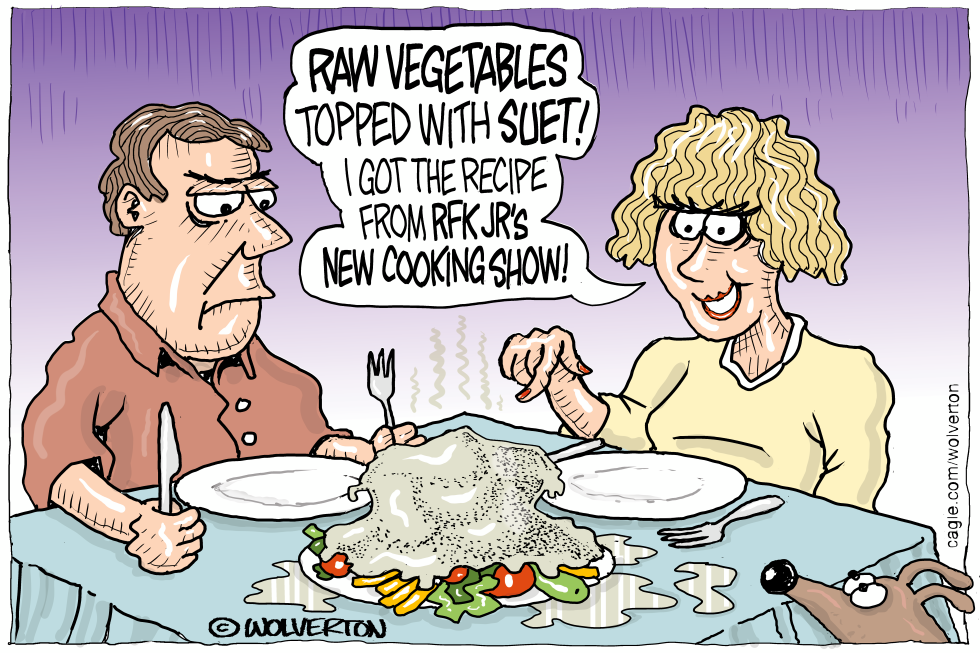
RFK Jr launched a cooking show promoting raw vegetables topped with suet as part of broader health recommendations. The program drew attention amid ongoing debates over dietary guidelines and public health messaging. The piece portrays the suggestion as unappealing and out of touch with conventional tastes.
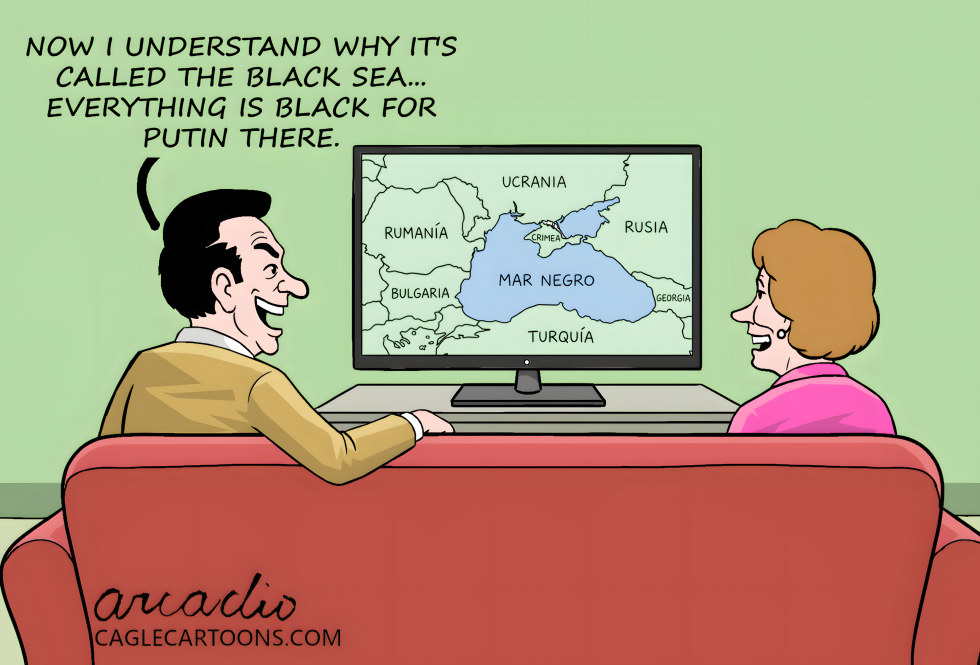
A couple watching television commentary on the Russia-Ukraine war notes the Black Sea's name in a pun about Vladimir Putin's difficulties. The piece highlights persistent Russian setbacks around Crimea and neighboring states as of late July 2026. It frames the conflict's geography as a source of frustration for Moscow.
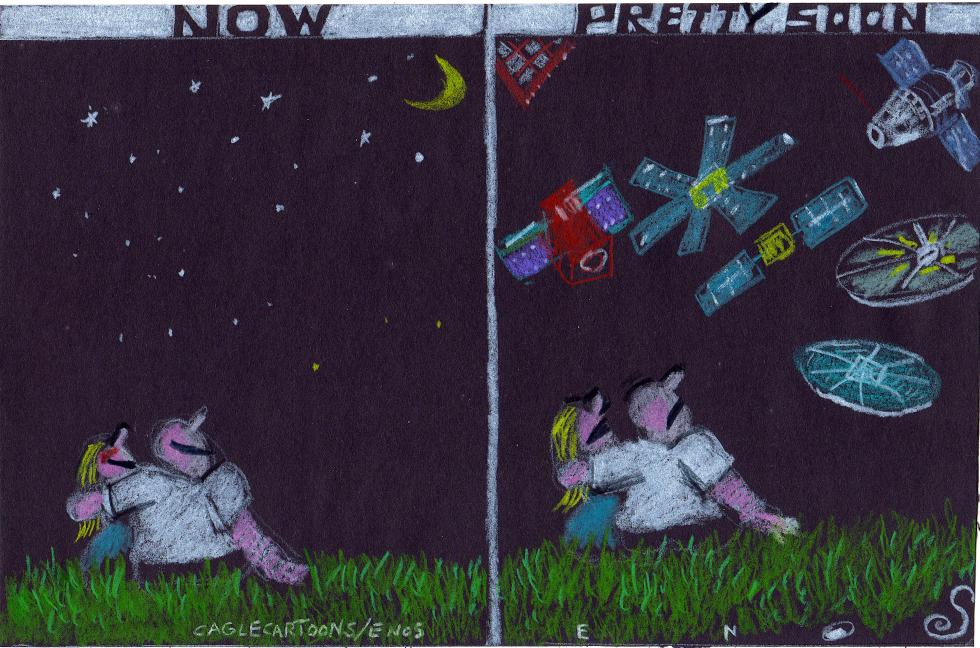
The night sky remains a quiet backdrop for stargazers in the present. Within a short time, however, proliferating satellites and debris will dominate the view overhead. The piece highlights how rapid expansion of orbital technology alters even simple moments of connection with the natural world.
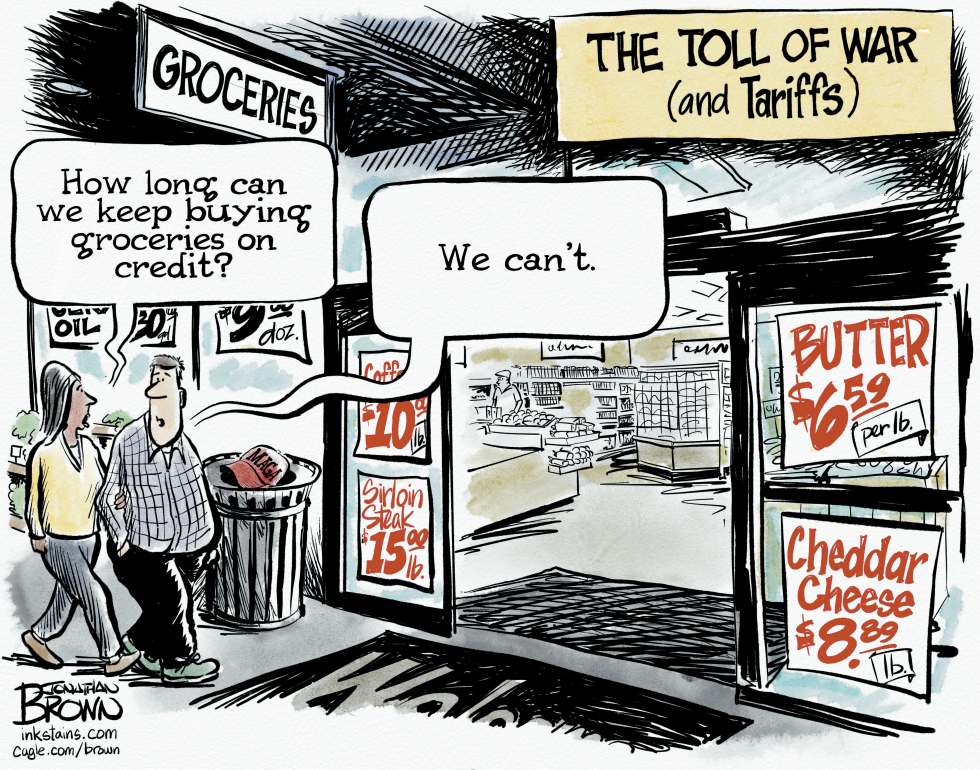
A political cartoon depicts a couple leaving a grocery store after learning they cannot continue buying food on credit. Signs inside show sharply higher prices for butter at $6.59 per pound, cheddar cheese at $8.89 per pound and sirloin steak at $15 per pound. A banner overhead reads The Toll of War (and Tariffs). The scene illustrates how ongoing conflict and trade barriers have driven up everyday food costs leaving households to rely on credit that is no longer sustainable.
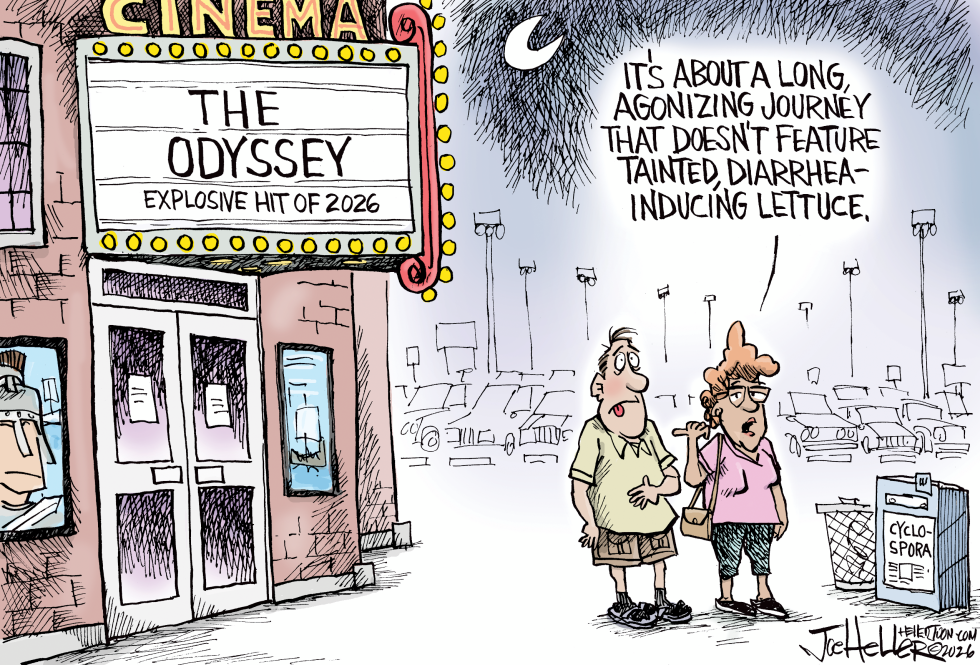
A recent food safety recall involving Cyclospora-tainted lettuce has drawn public attention to produce contamination risks. The cartoon uses the release of the film The Odyssey as a vehicle to highlight ongoing concerns about foodborne illness. The editorial position mocks how everyday health scares intrude on entertainment and daily life.