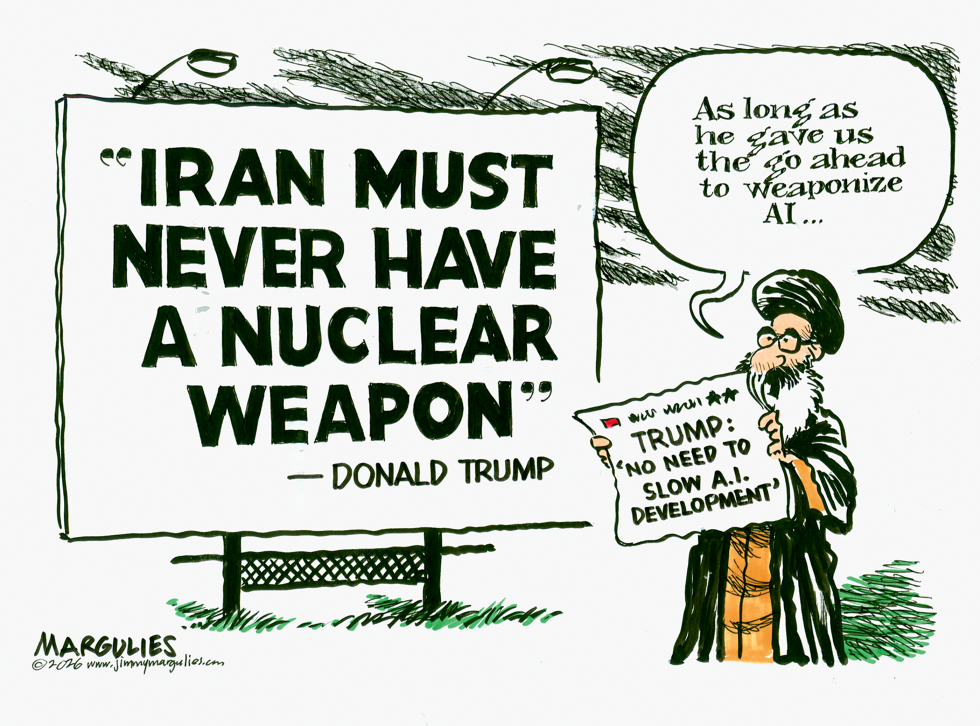
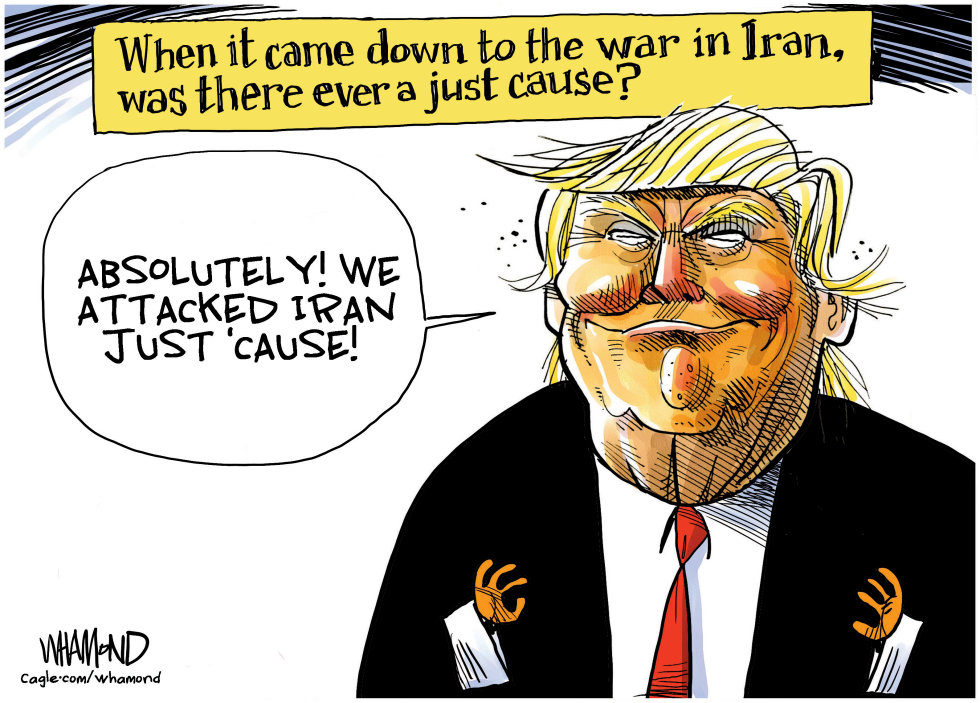
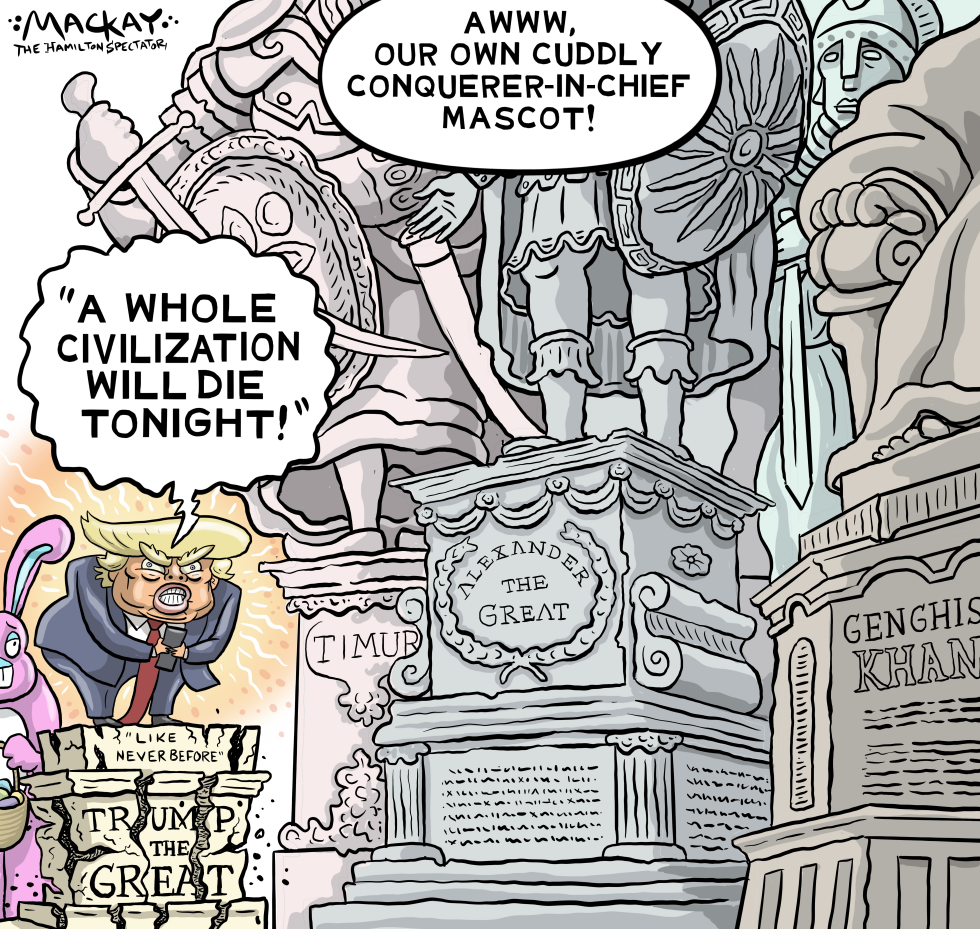
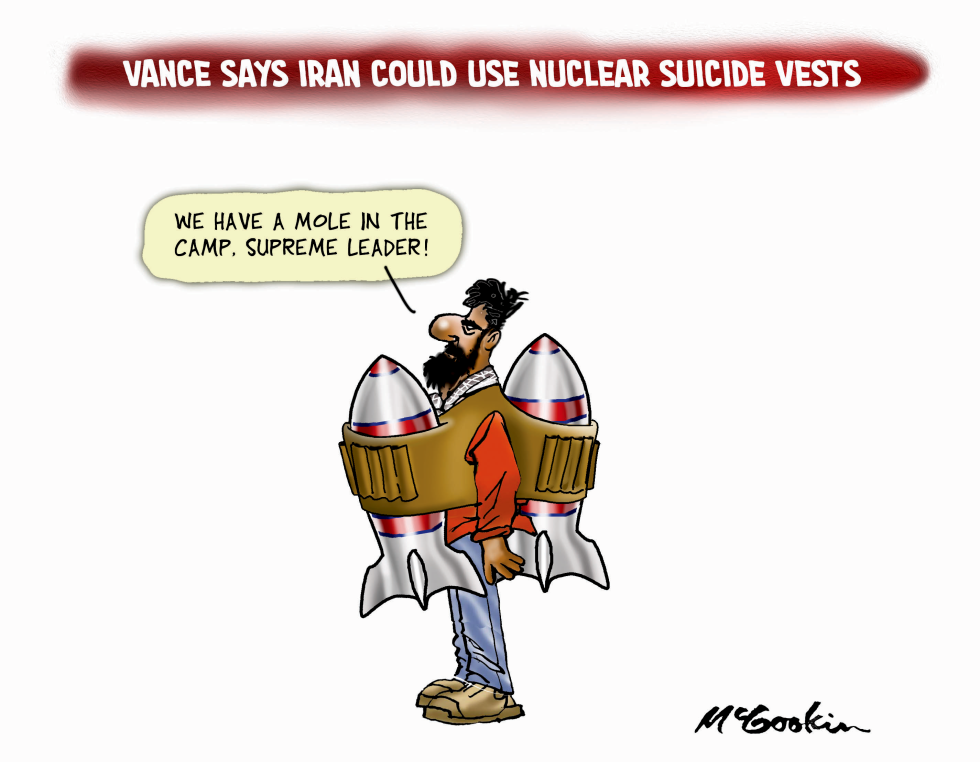
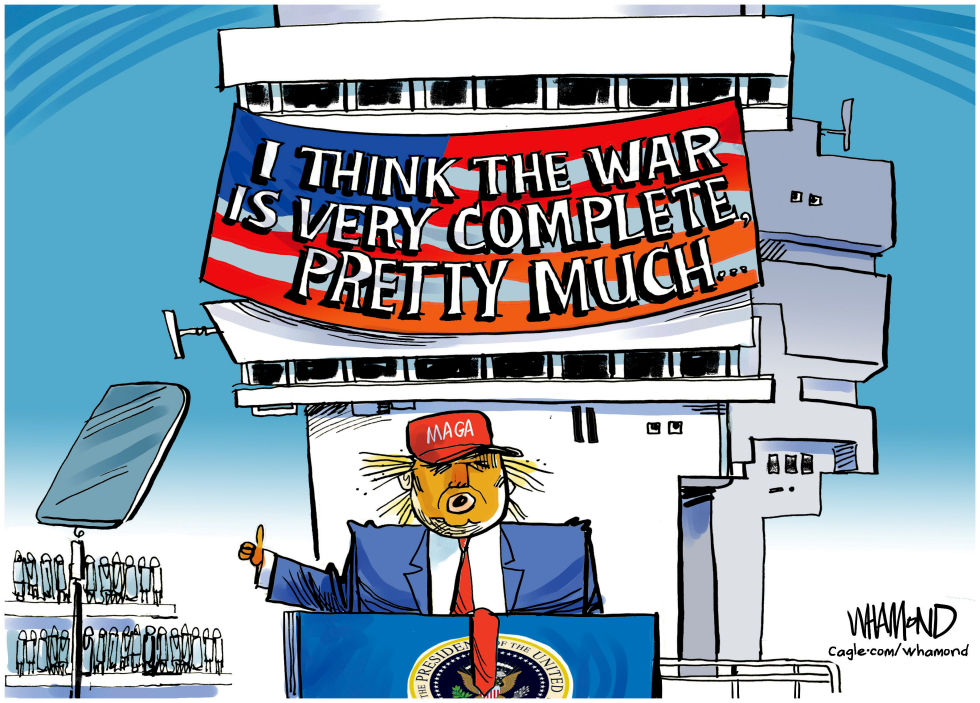
Donald Trump has repeatedly stated that Iran must never obtain a nuclear weapon, a position rooted in long-standing U.S. efforts to prevent nuclear proliferation in the Middle East. At the same time, reports indicate interest in accelerating artificial intelligence development without slowdowns. The cartoon responds to this apparent tension by depicting an Iranian leader conditioning acceptance of the nuclear restriction on permission to pursue AI weaponization. It argues that prioritizing rapid AI advancement risks undermining nonproliferation goals and hands strategic advantages to adversaries.
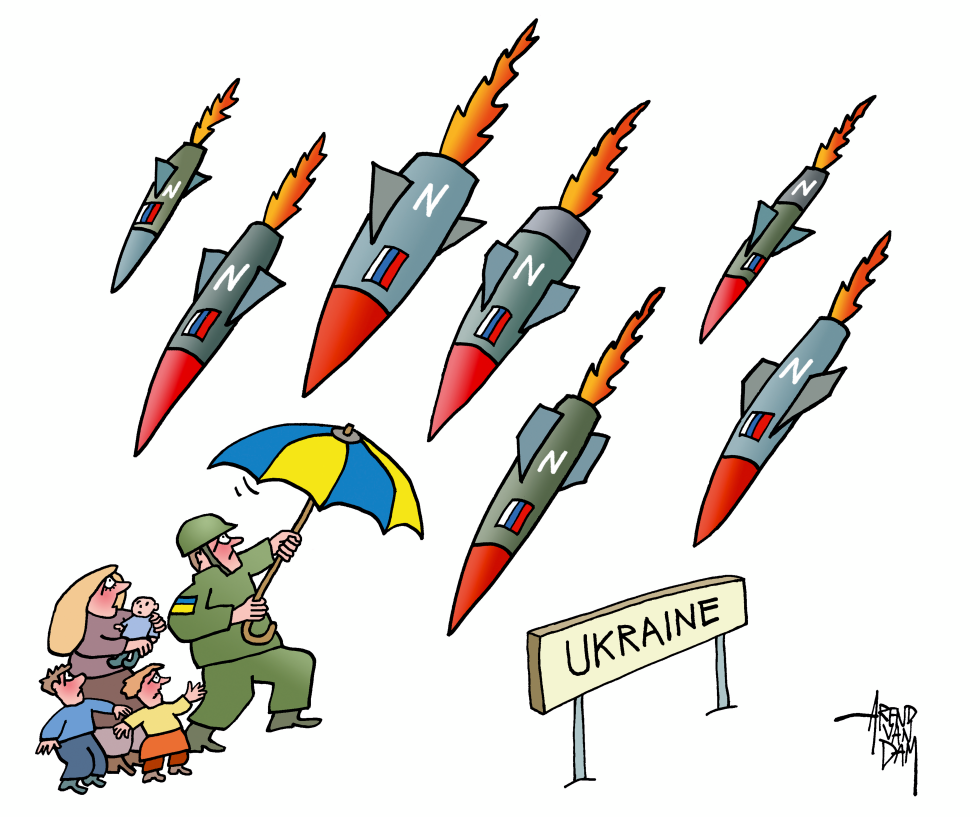
Russia has escalated its campaign against Ukraine with ballistic missiles carrying nuclear markings. The strikes heighten risks to civilian populations already under sustained attack. The editorial argues that such threats underscore the need for stronger defensive measures and international resolve to deter further escalation in the protracted conflict.
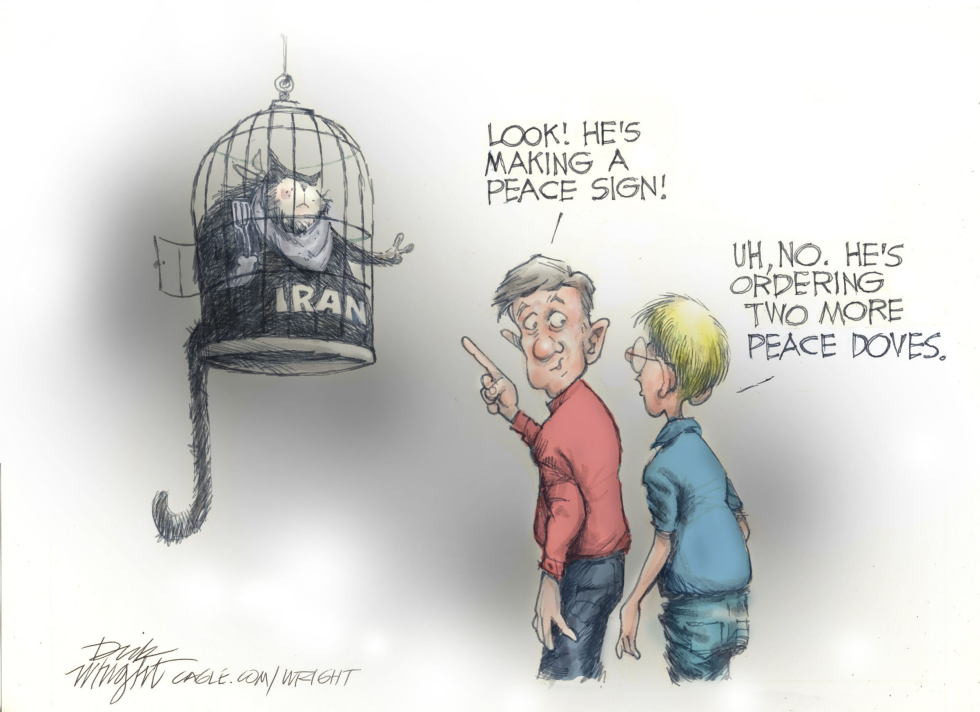
Iran continues to project peaceful intentions while advancing its military capabilities. Recent diplomatic overtures have been met with skepticism from observers who note ongoing weapons development. The piece argues that Iran's gestures are being misinterpreted as peaceful when they signal further aggression.
Donald Trump announced he had called off a major military strike on Iran in favor of a pending nuclear deal. The move drew immediate skepticism from Iranian officials who questioned both the threat and the agreement. The cartoon highlights the disconnect between the announcement and Tehran\'s response.
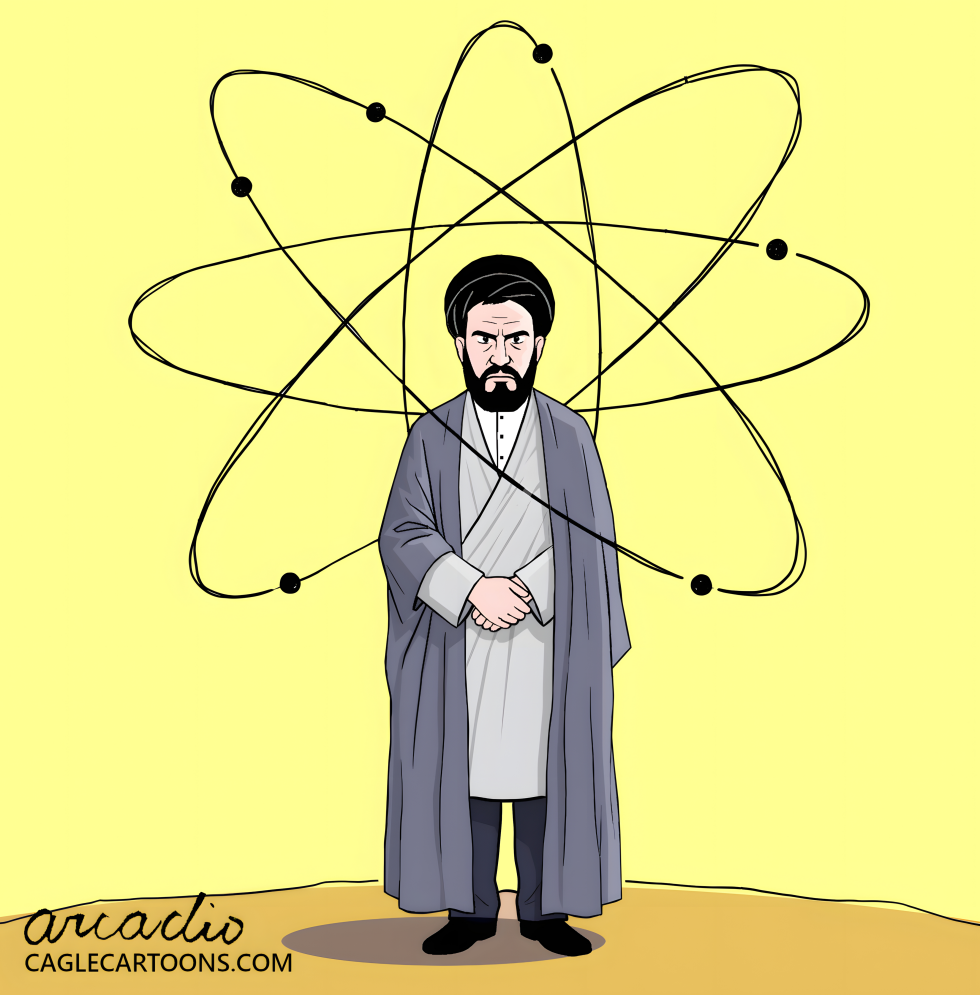
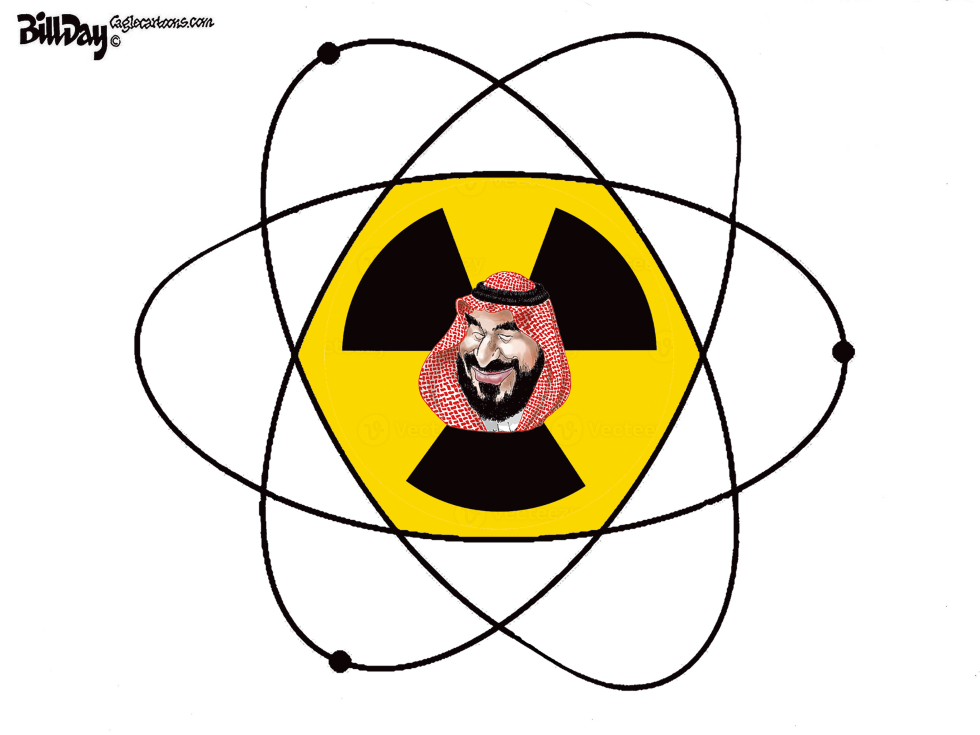
The cartoon shows Iran's supreme leader positioned in front of a large atom symbol. It responds to persistent international concerns over Tehran's nuclear activities as of mid-2026. The visual places the figure directly under the orbiting electrons, underscoring the central role of the nuclear issue in global discussions about the country.
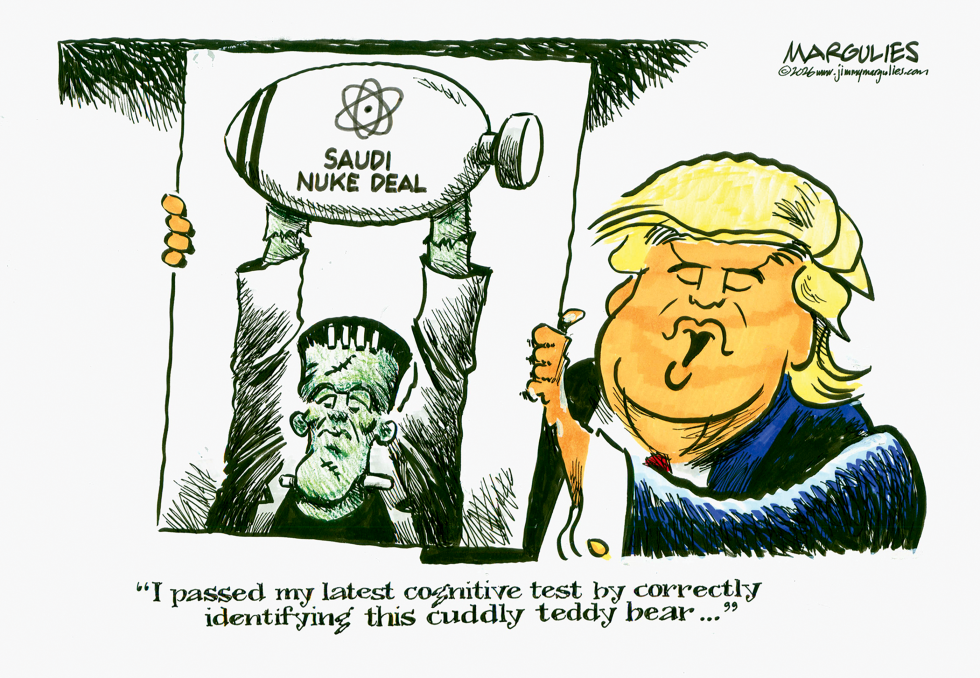
Donald Trump referenced a cognitive test while describing a Saudi nuclear deal in personal terms. The episode occurs against ongoing debates over arms control and Middle East policy. The piece portrays the deal as a dangerous misjudgment.
Concerns over nuclear development by Middle Eastern states have intensified amid ongoing diplomatic tensions and enrichment activities. The editorial argues that such programs pose direct threats to global stability and demand stronger international oversight.
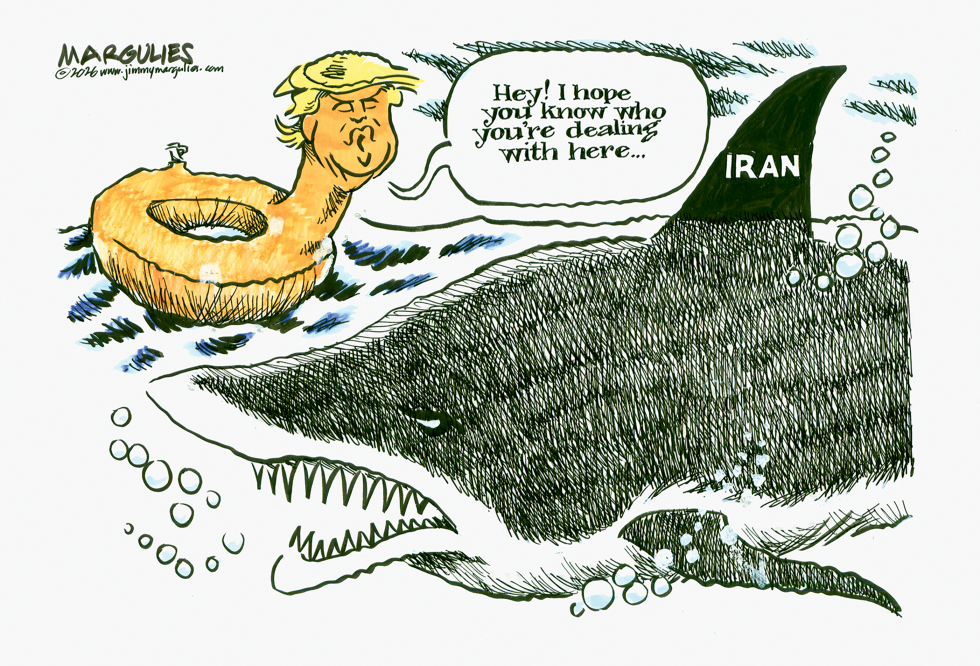
On July 10 2026 Jimmy Margulies depicts Donald Trump floating in an inflatable ring while confronting a large shark fin labeled Iran. The president issues a direct warning through a speech bubble asserting his identity and authority in the confrontation.
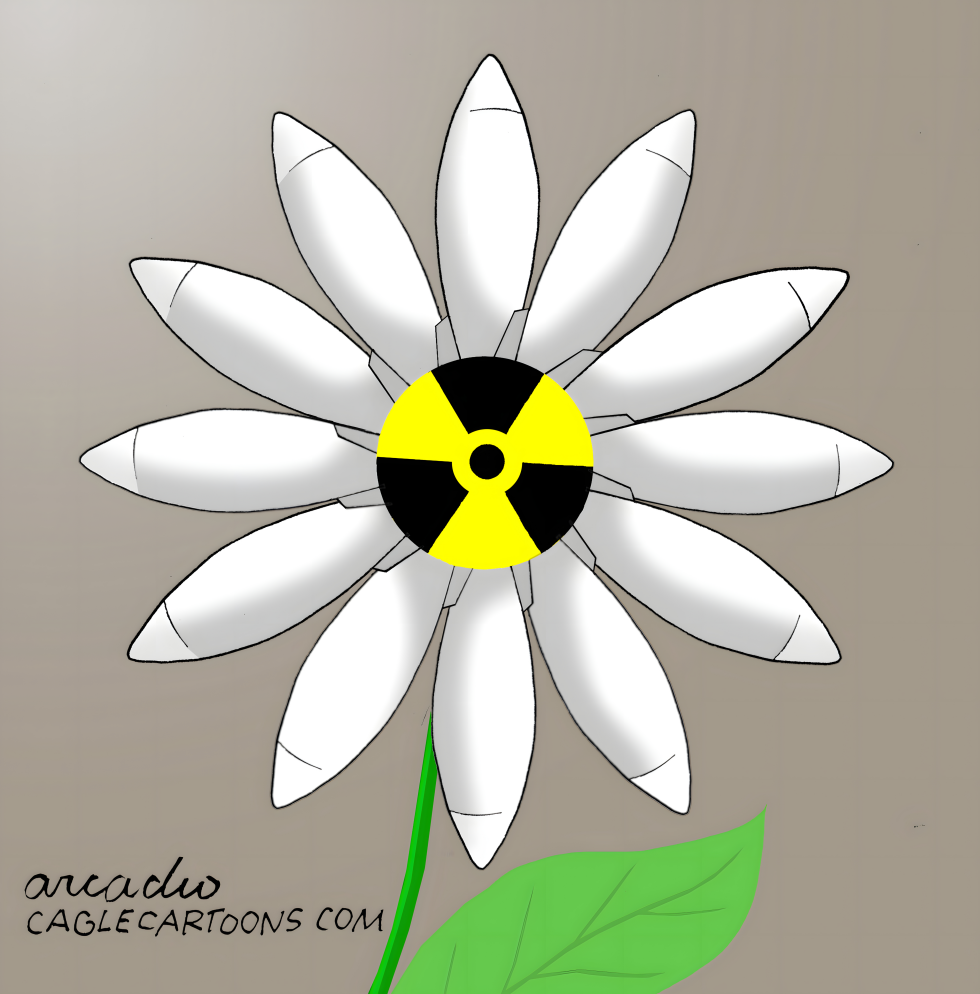
A daisy flower illustration replaces its petals with white missiles arranged around a central radiation warning symbol in yellow and black. The green stem and leaf extend downward from the bloom against a plain background. Artist Arcadio Esquivel signed the work in the lower left with the CagleCartoons.com credit.
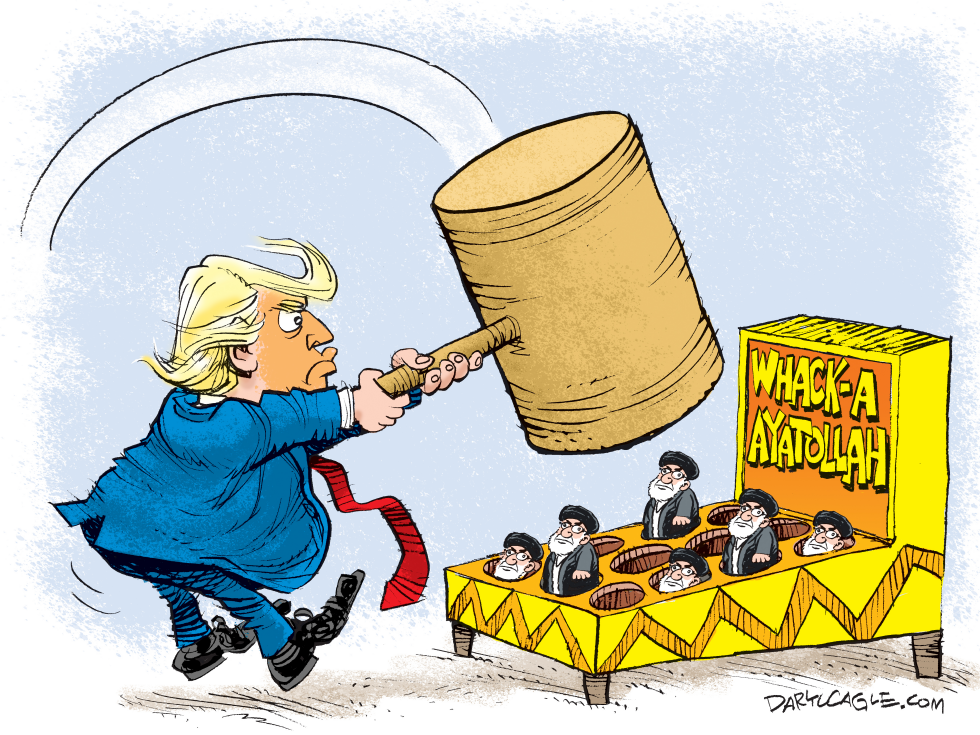
The cartoon shows Donald Trump in a blue suit swinging a massive wooden mallet at figures resembling Iranian Ayatollahs emerging from holes in a yellow arcade machine labeled Whack-A Ayatollah. The president appears mid-swing with motion lines indicating effort. The image comments on US policy toward Iran by framing the conflict as a repetitive carnival game where targets keep reappearing. Publication occurs during a period of heightened US-Iran tensions over nuclear issues and regional influence. The visual metaphor suggests difficulty in permanently resolving the challenge despite repeated attempts.