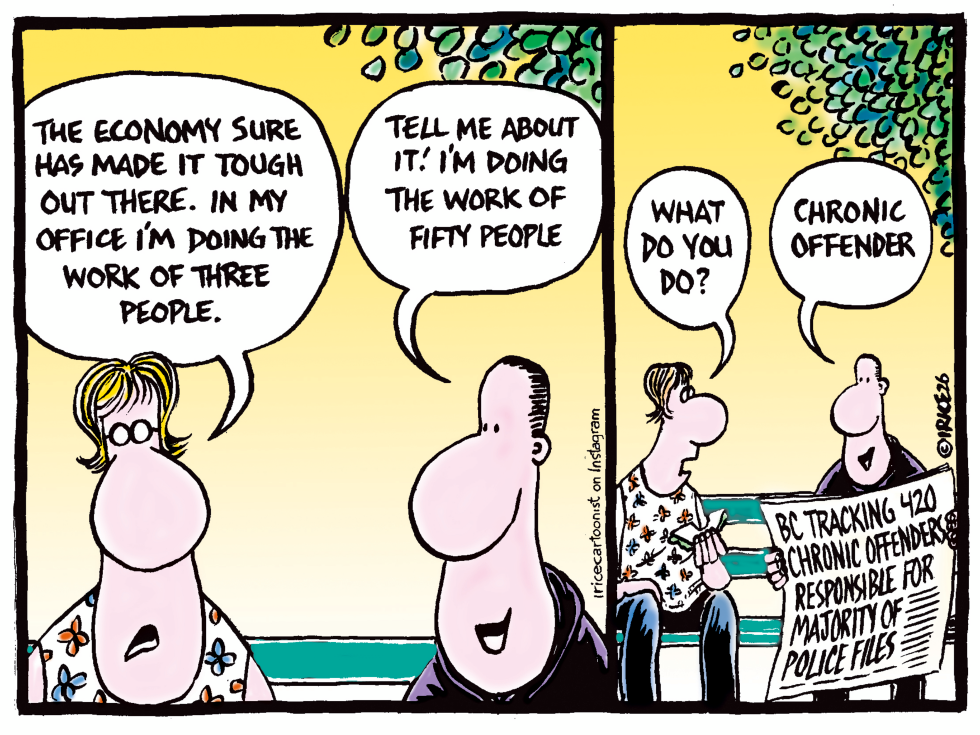
In a two-panel scene dated July 5 2026, office workers discuss heavy workloads caused by economic conditions, with one claiming to handle the work of three people and another fifty. The exchange shifts when a man on a bench identifies himself as a chronic offender, while a nearby newspaper headline reports British Columbia tracking 420 such individuals responsible for the majority of police files.
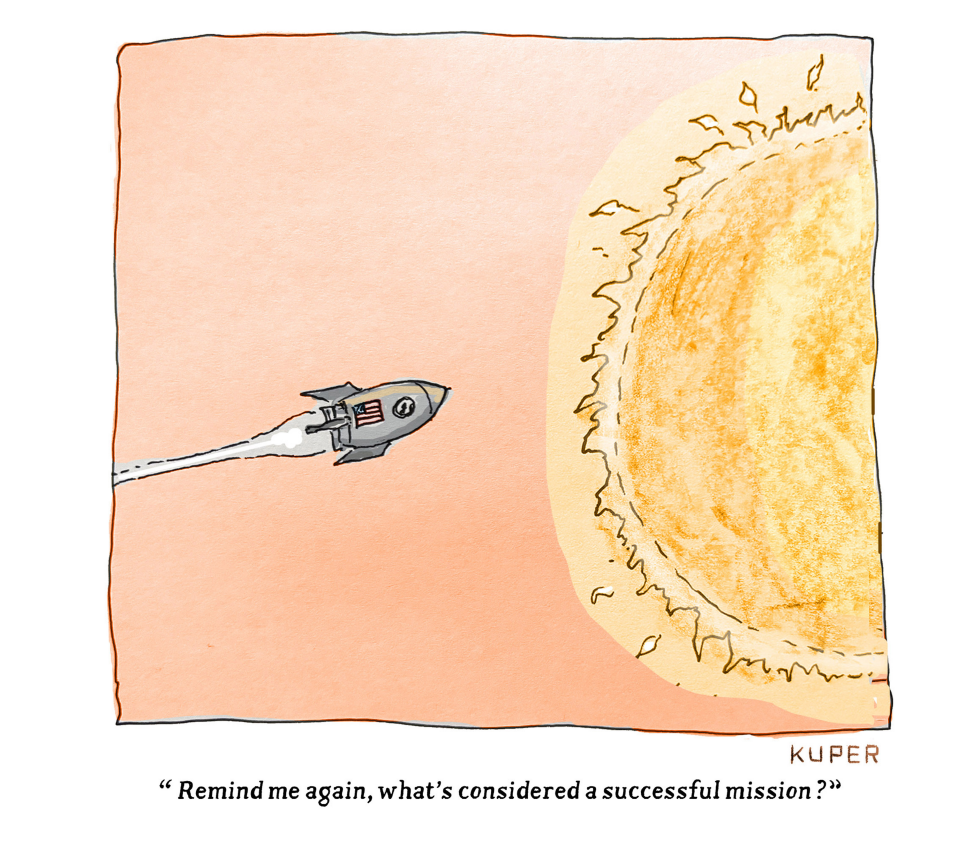
The cartoon shows a US-flagged missile streaking toward a large fiery orb, evoking an ill-defined strike on Iran. The caption questions the meaning of a successful mission. Published amid reports of Iranian nuclear activity and regional tensions, the image critiques the absence of an exit strategy. It references potential economic fallout such as closed shipping lanes and higher oil prices. The work also nods to internal administration finger-pointing involving JD Vance. Overall the piece underscores the hazards of military action without a coherent plan.
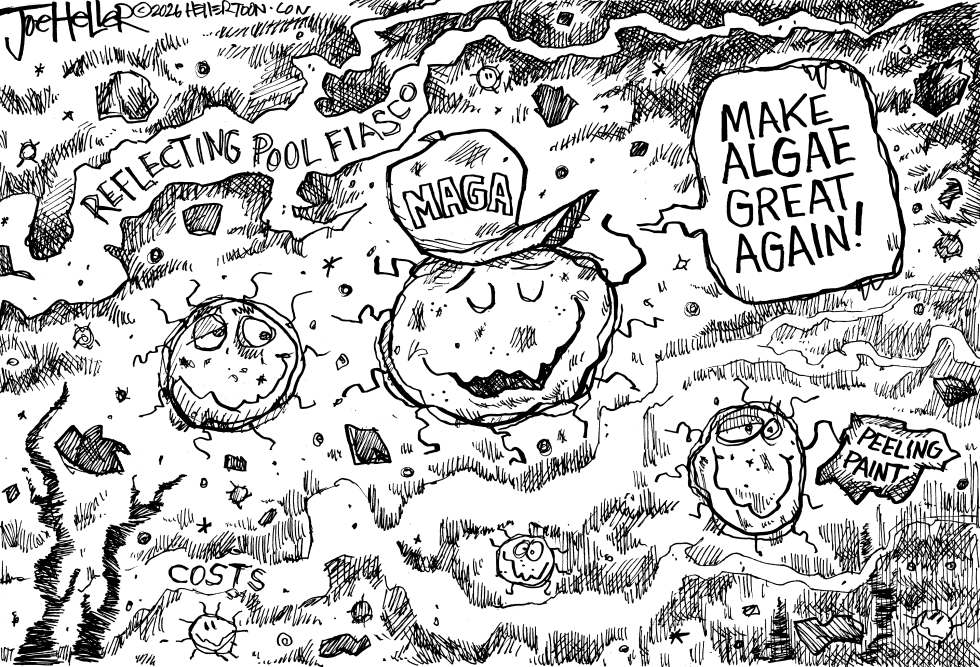
A political cartoon depicts the National Mall reflecting pool overrun by personified algae blobs bearing a MAGA label and the slogan Make Algae Great Again. Cracked surfaces, peeling paint signs, and scattered costs labels underscore ongoing maintenance problems. The June 2026 image uses visual exaggeration to comment on infrastructure shortcomings at a prominent federal site.
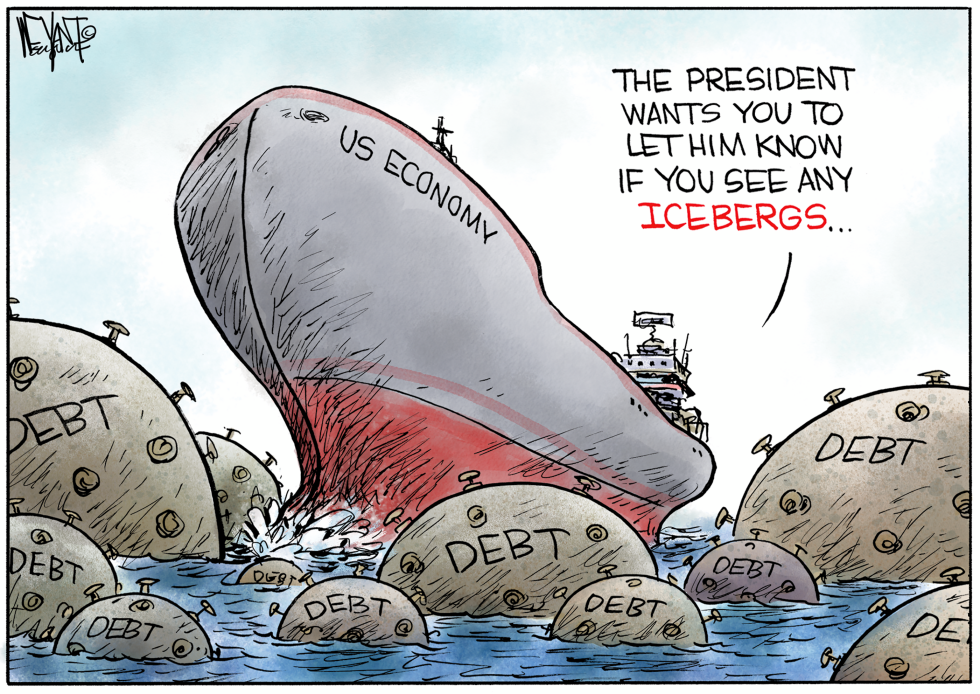
This political cartoon illustrates the US Economy as a massive ship labeled accordingly, dramatically sinking after colliding with numerous icebergs each marked 'DEBT.' A speech bubble from the ship warns to alert the president about icebergs, evoking the Titanic disaster in a clear metaphor for economic peril. Incorporating tags such as economy, debt, budget, inflation, prices, and costs, the image critiques fiscal irresponsibility. The artwork by Christopher Weyant uses simple lines and colors to emphasize the collision's impact, with water splashing and the ship's hull damaged. Such cartoons often highlight how mounting debt threatens stability, drawing parallels to historical maritime tragedies for satirical effect. The composition places the ship at an angle, surrounded by floating debt bergs, underscoring inevitable crisis if warnings go unheeded.
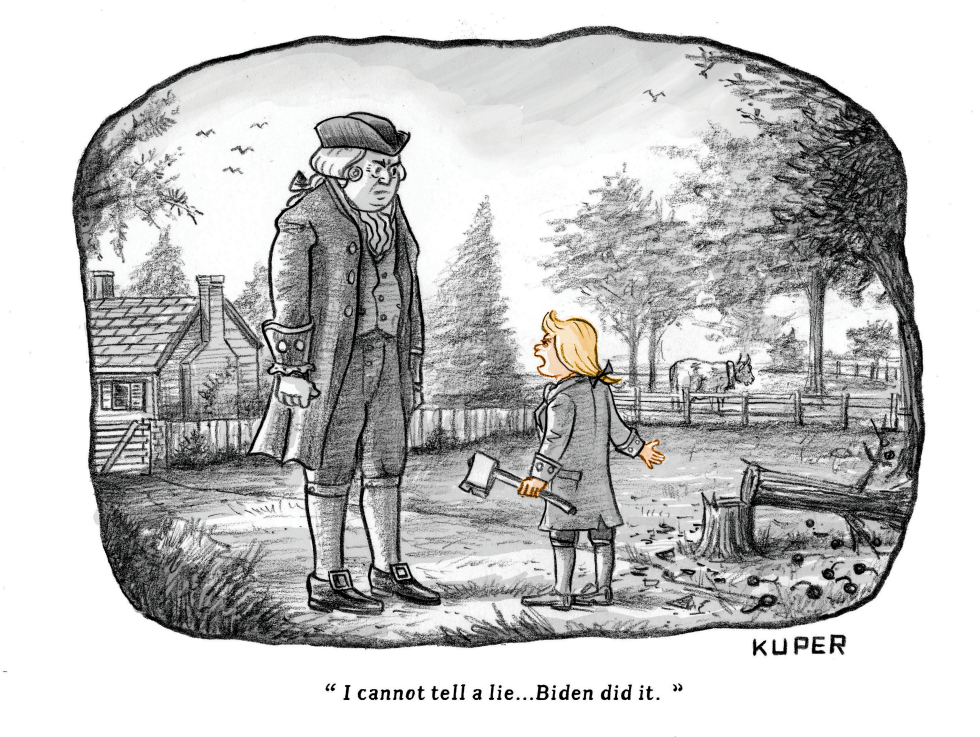
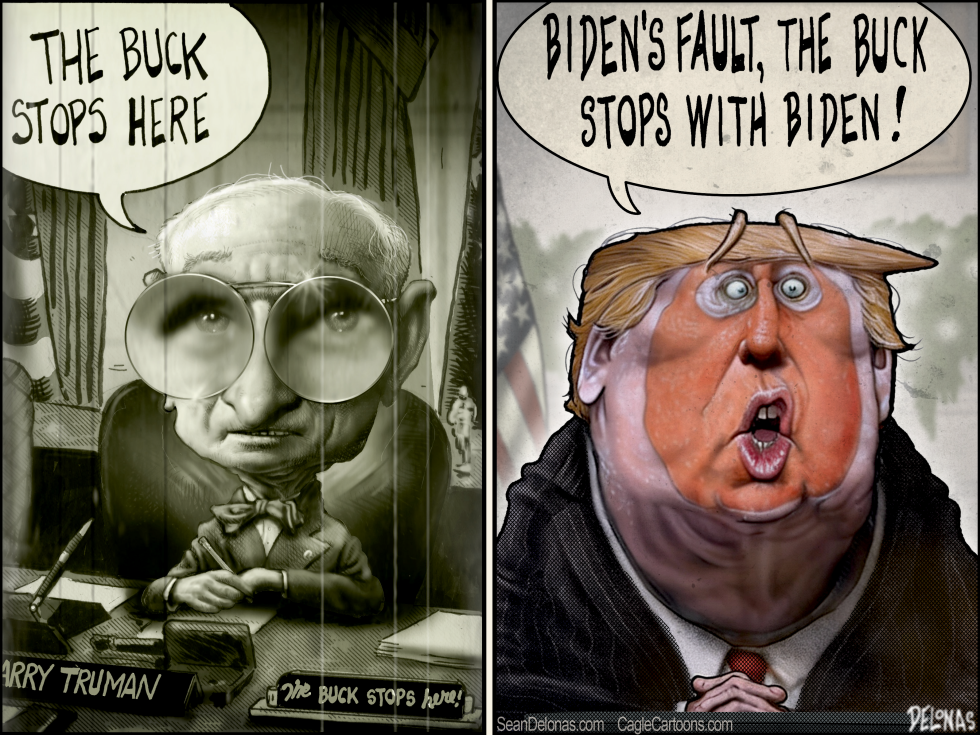
The cartoon reworks the George Washington cherry tree legend with a blonde child resembling Donald Trump holding an axe and declaring Biden responsible for the cut tree. An adult figure in 18th century attire looks on while a horse stands in the background. The scene references ongoing political blame games and recent cabinet tensions involving figures such as Kristi Noem and Pete Hegseth amid rising oil prices and foreign policy friction in the Strait of Hormuz.
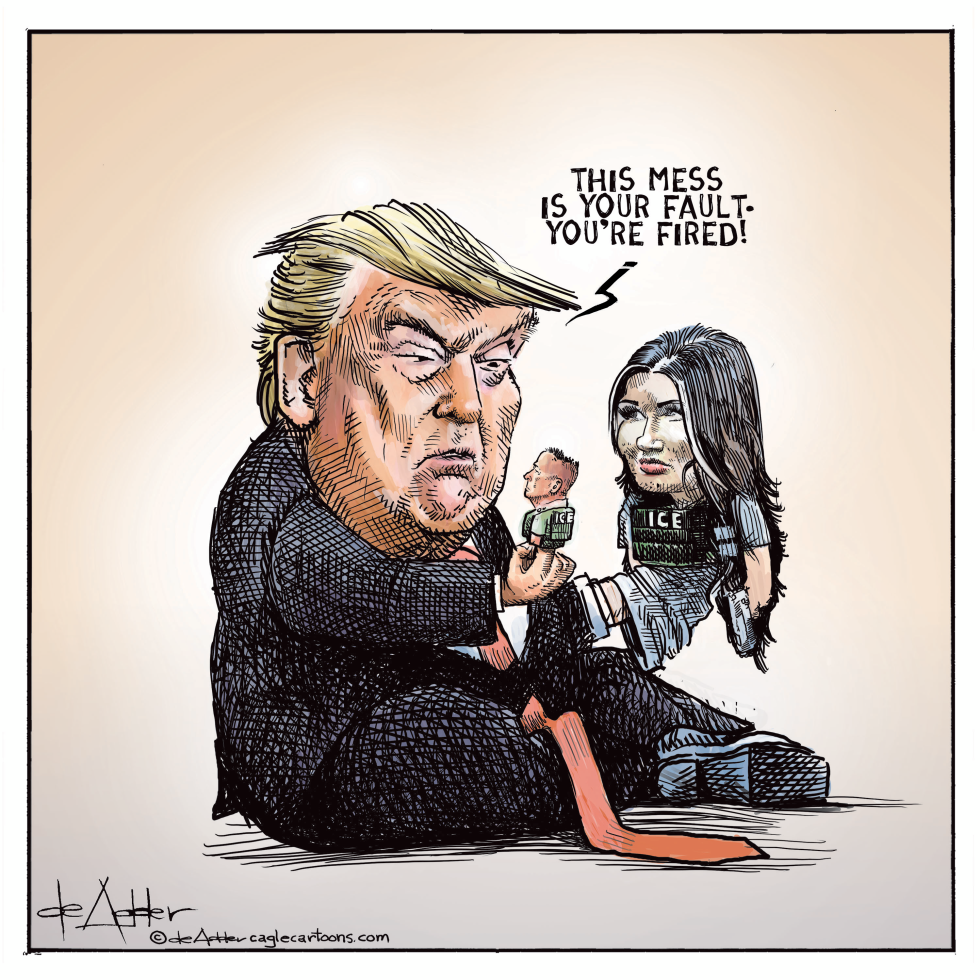
This biting political cartoon by Michael de Adder captures Donald Trump in a childish tantrum, holding and firing a diminutive Kirstjen Nielsen as an ICE agent clutching a separated baby, symbolizing the border crisis and family separation policies. The image skewers the Trump administration's immigration policy failures, with Trump shifting blame for the humanitarian mess at the US border. Through exaggerated caricature, it highlights themes of accountability, political satire, and the human cost of harsh enforcement, making it a viral-worthy jab at leadership in US politics.
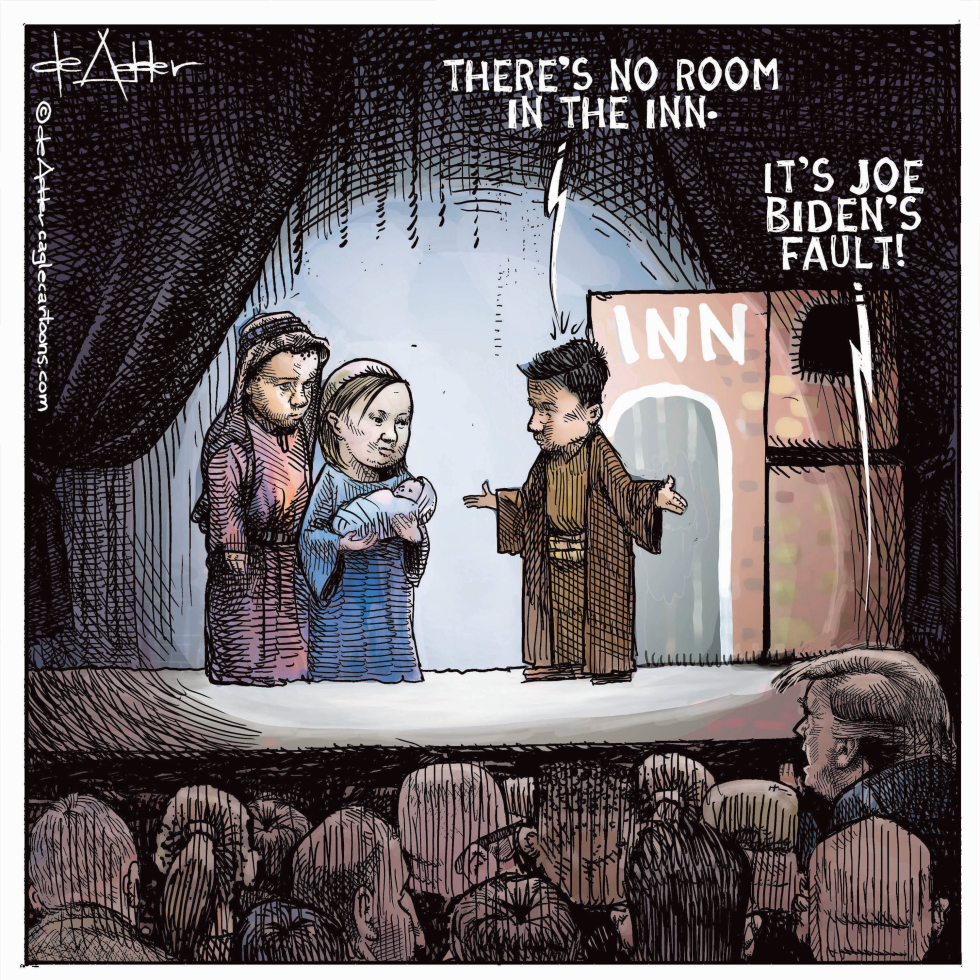
The cartoon depicts a stage performance of the nativity story, with figures resembling Mary, Joseph, and baby Jesus facing an inn with no room. From the audience, a caricature of Trump yells that it's Joe Biden's fault. Tags like Trump, nativity, blame, Joe Biden, president, and Christmas capture the satirical blend of biblical tale and modern politics. The scene unfolds on a simple stage with a crowd watching, emphasizing the humor in attributing ancient events to current leaders. Dry wit shines through in the absurdity of Trump's outburst, a nod to ongoing blame games in the economy and beyond.
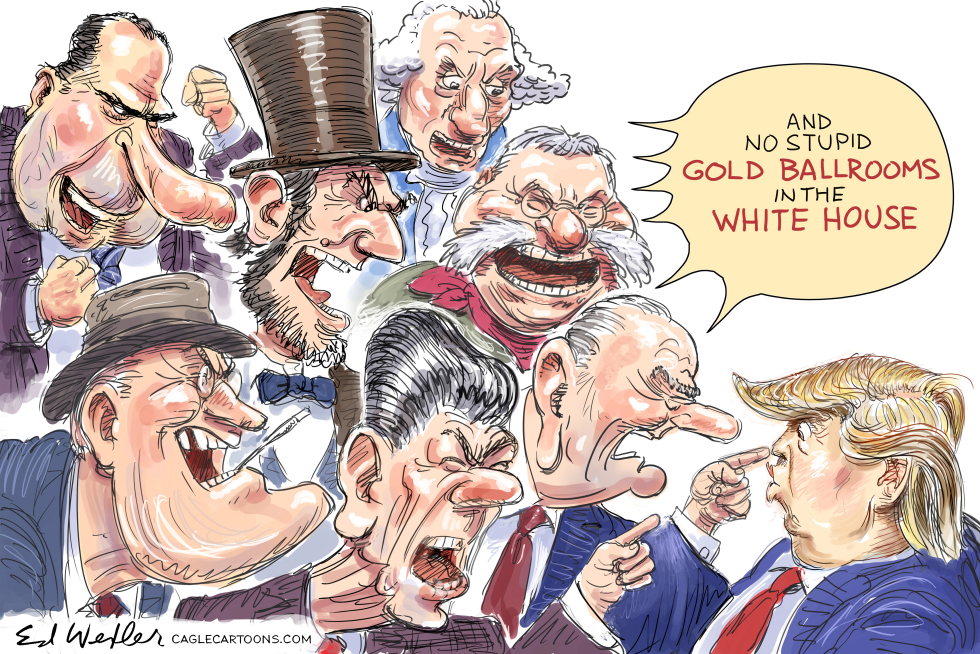
A group of past U.S. presidents appears in a 2025 cartoon by Ed Wexler, confronting Donald Trump about a proposed gold ballroom addition to the White House. The speech bubble from the group states their opposition to the ostentatious project. The image draws on themes of fiscal responsibility and poor optics for such a legacy undertaking. Trump is shown on the right, facing the cluster of figures. The date places this in the context of ongoing discussions about presidential projects and White House modifications.
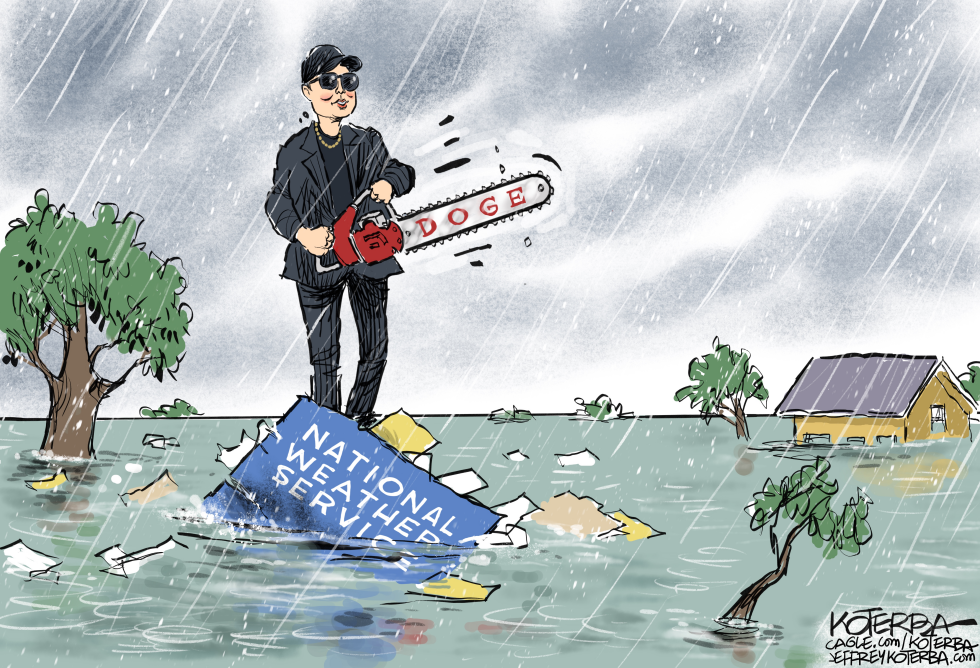
The cartoon depicts Elon Musk atop a partially submerged National Weather Service sign while wielding a chainsaw labeled DOGE. Heavy rain falls across a flooded Texas landscape with damaged homes and trees. The image responds to recent flooding events and proposed reductions to NOAA and weather services under the Department of Government Efficiency initiative. Musk's role in DOGE places him at the center of debates over federal spending cuts. The visual links agency reductions directly to diminished forecasting capacity during the Texas tragedy.