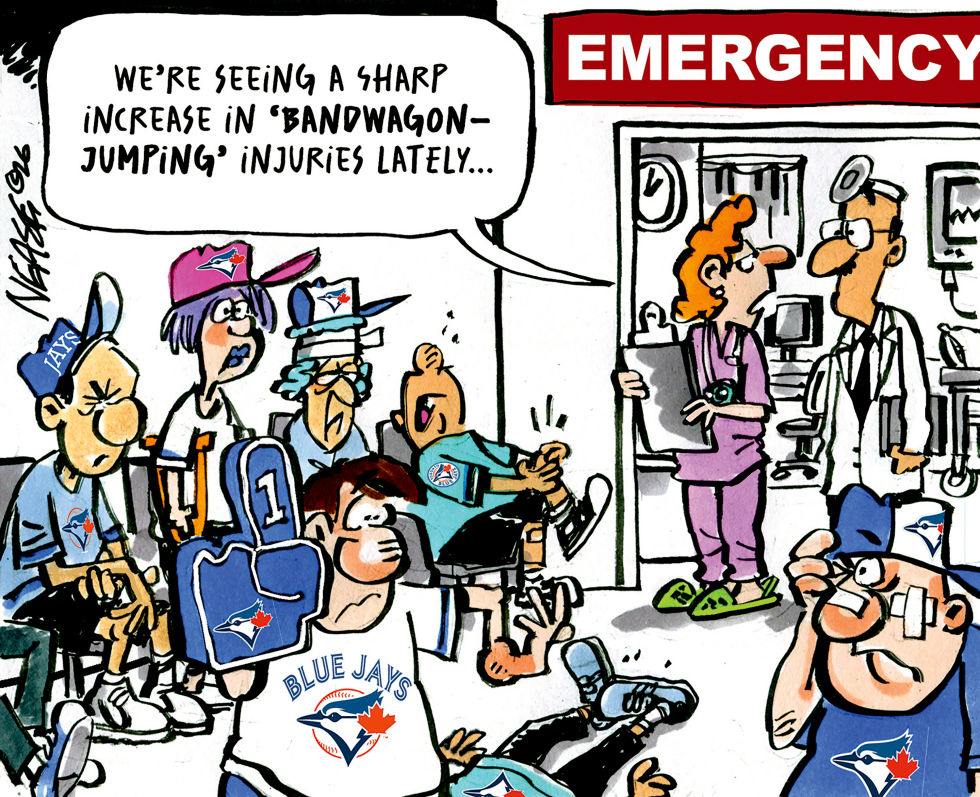
The Toronto Blue Jays' strong 2026 season has triggered a wave of self-proclaimed fans rushing to join the bandwagon. This sudden popularity spike has produced a humorous but pointed wave of reported injuries from overeager jumping. The cartoon uses the emergency room setting to highlight the fleeting nature of such support. It critiques how success attracts insincere followers who abandon teams during leaner times. The piece argues that genuine fandom requires consistency rather than opportunistic enthusiasm during winning streaks.
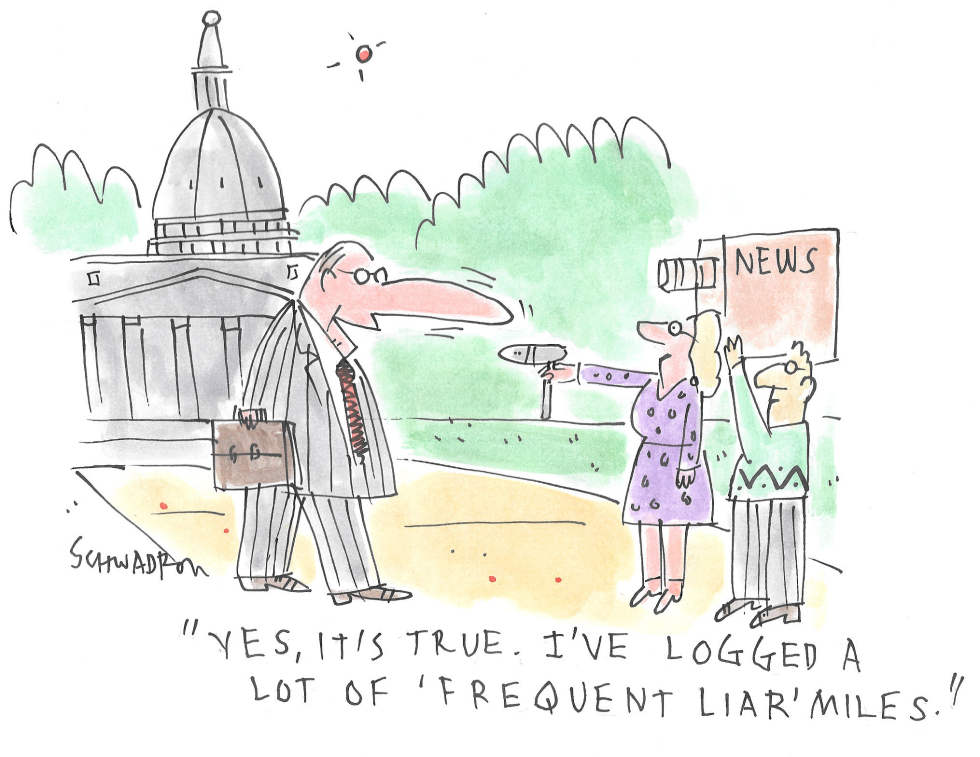
A Capitol politician carrying a briefcase marked GB faces a news interview outside the building and openly acknowledges logging many frequent liar miles. The exchange highlights routine political deception as a normalized practice rather than an exception. The cartoon frames the admission as unremarkable business for those in government.
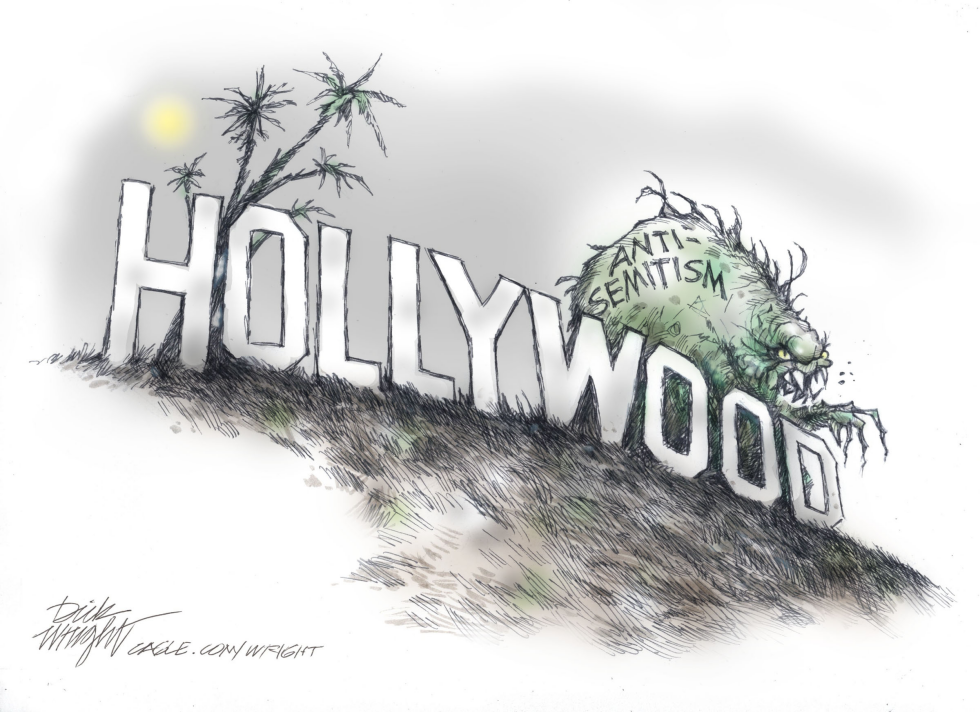
Antisemitism has surged in public discourse and institutions, including entertainment circles, prompting concern over its impact on creative communities and public discourse. The piece frames this hostility as a direct assault on Hollywood itself. It takes the position that such prejudice must be confronted as a destructive force undermining cultural institutions.
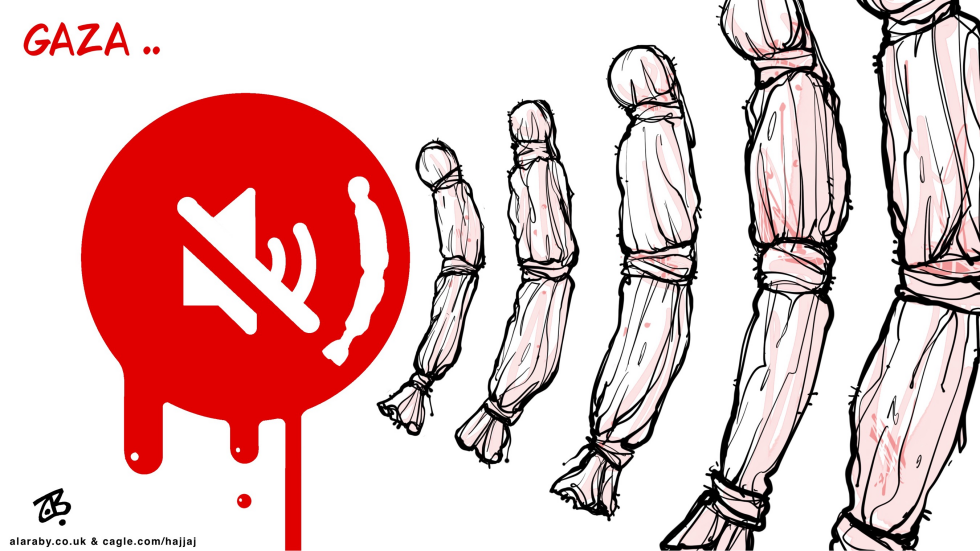
Ongoing conflict in Gaza continues to draw international attention to civilian casualties and restrictions on reporting. The piece responds to persistent calls for attention amid claims of media and global silence. It positions the mute symbol as a direct critique of inaction on reported suffering. The editorial stance emphasizes the need to break that silence and acknowledge the human cost in the region.
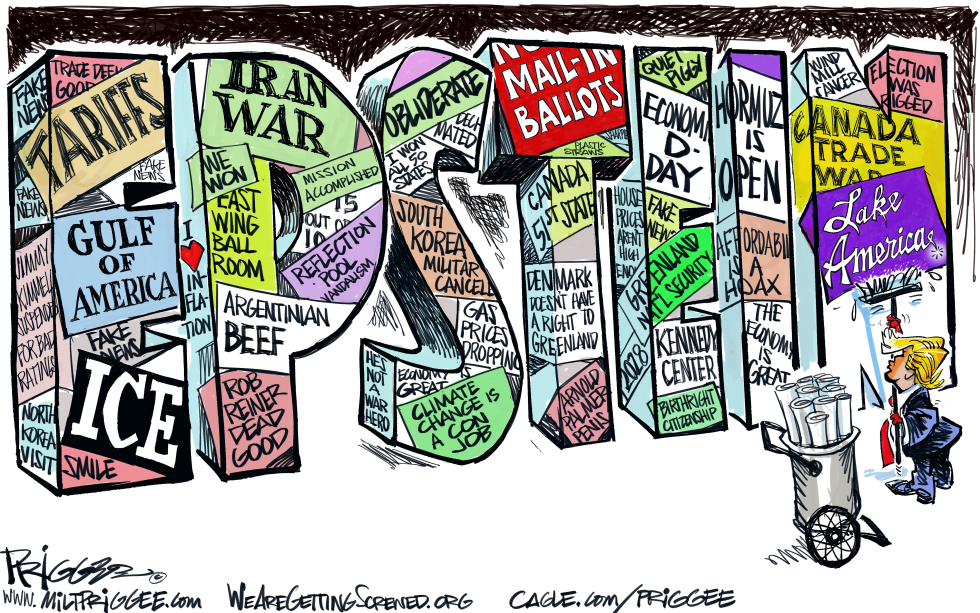
Donald Trump appears in a September 2026 cartoon pushing a cart stacked with signs promoting tariffs, questioning mail-in ballots, and asserting claims about Iran, Canada trade, and domestic issues. The image captures a pattern of public messaging that blends economic nationalism with repeated challenges to established processes. The editorial position frames these statements as a deliberate strategy to keep multiple controversies in motion at once.
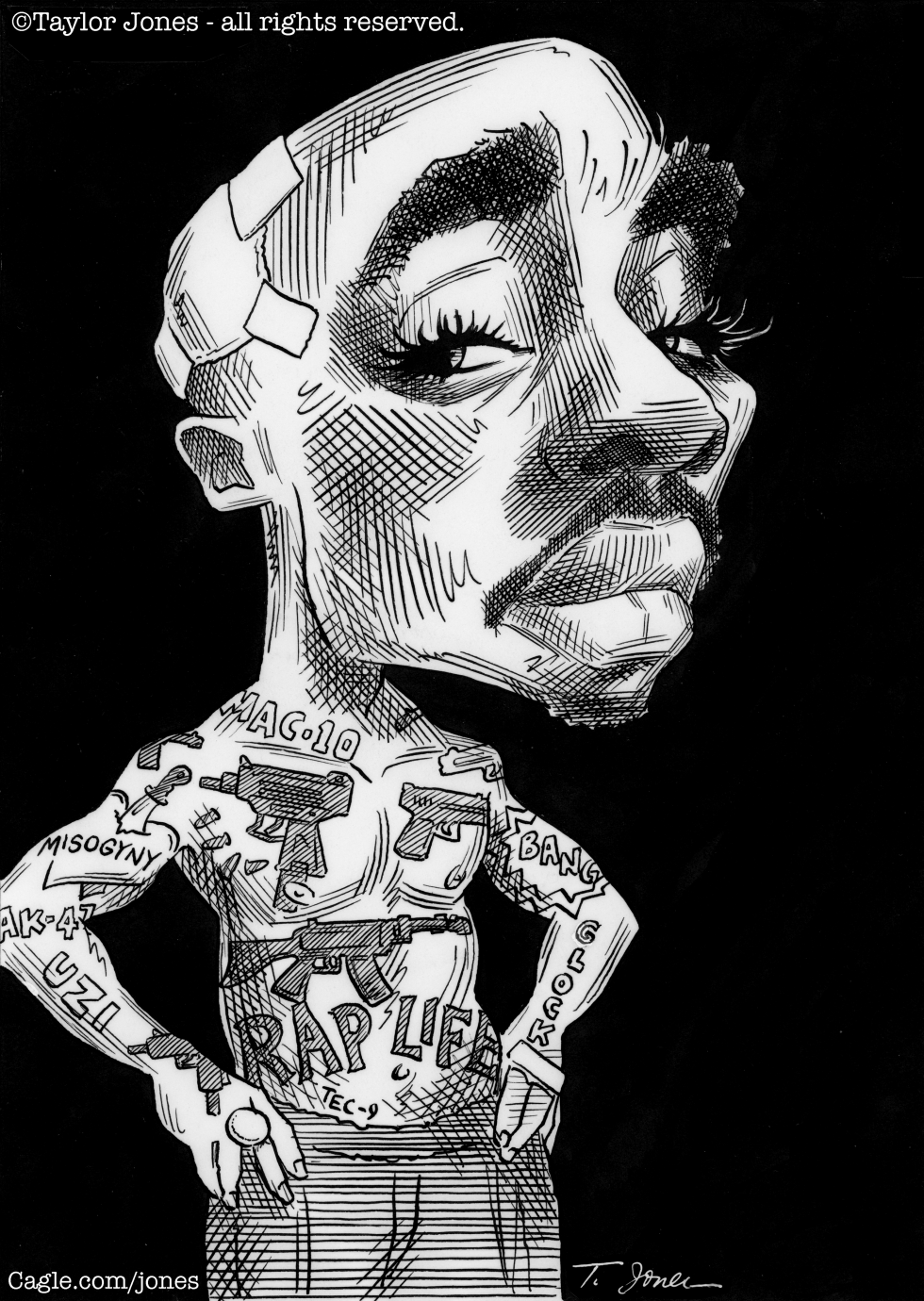
The caricature of Tupac Shakur covered in gun tattoos and the word misogyny responds to the persistent association of rap with firearm imagery and anti-woman themes. It underscores how such elements in hip-hop culture continue to shape public perceptions of the genre and its icons long after Shakur's death. The piece takes the position that these symbols remain central to the rapper's enduring image and the broader problems they represent.
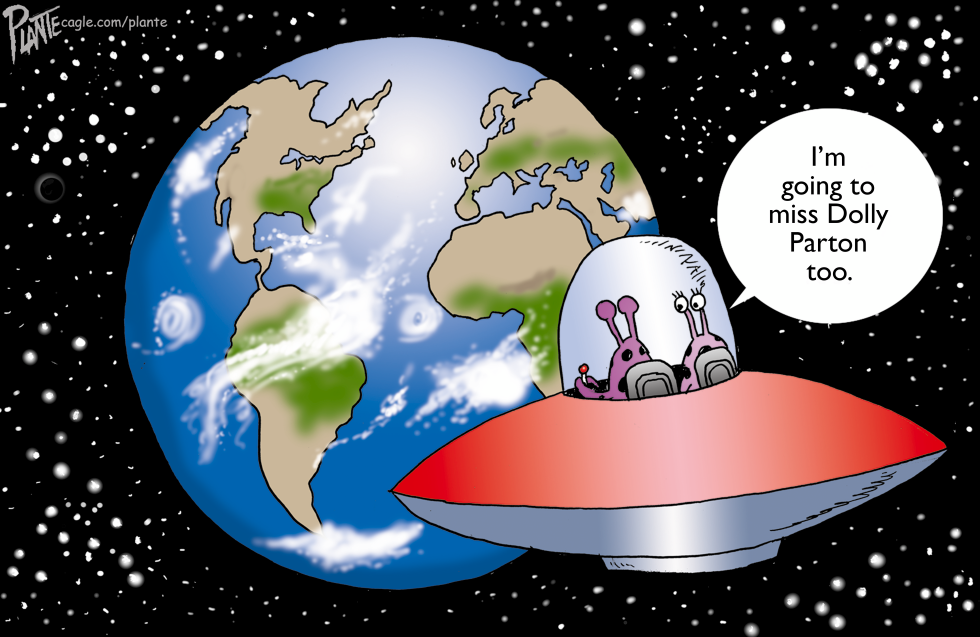
Dolly Parton maintains an unmatched level of public affection decades into her career. Her music, philanthropy, and persona have made her a recognizable figure worldwide. The cartoon uses the alien visitors to underscore how far that recognition extends. It presents her departure or absence as something even outsiders would notice and regret. The editorial stance celebrates her enduring appeal without tying it to any single news event.
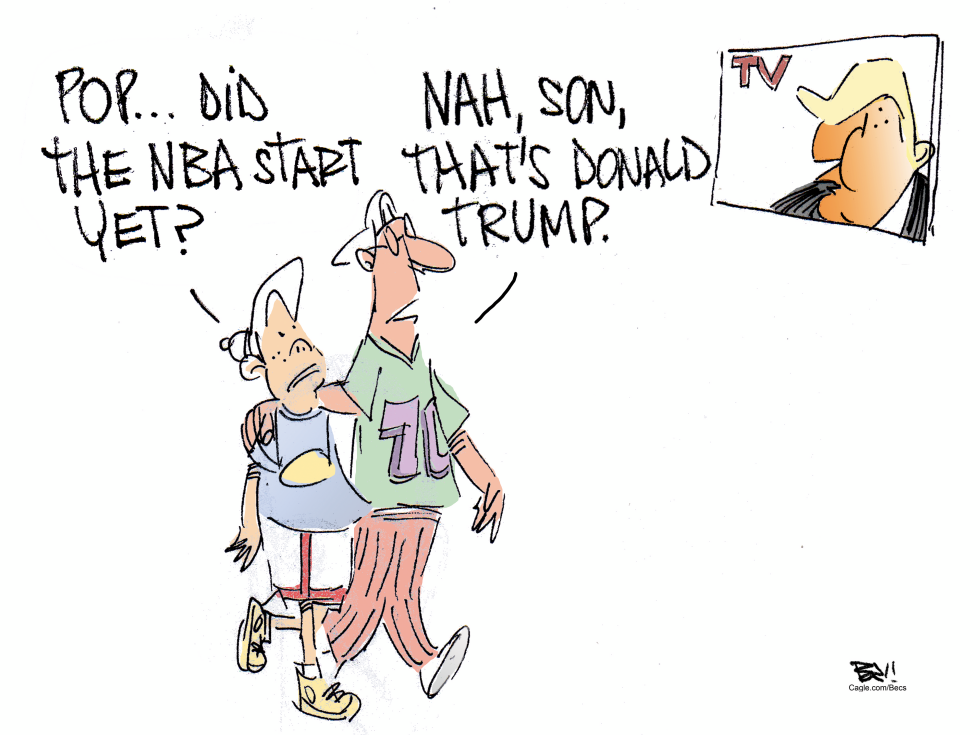
A father and son discuss the start of the NBA season while watching television. The son inquires whether the game has begun. The father replies that the figure shown is Donald Trump. The exchange highlights ongoing public attention to Trump's public profile and media presence. The piece presents the mix-up as a lighthearted comment on how Trump's image appears in everyday contexts.
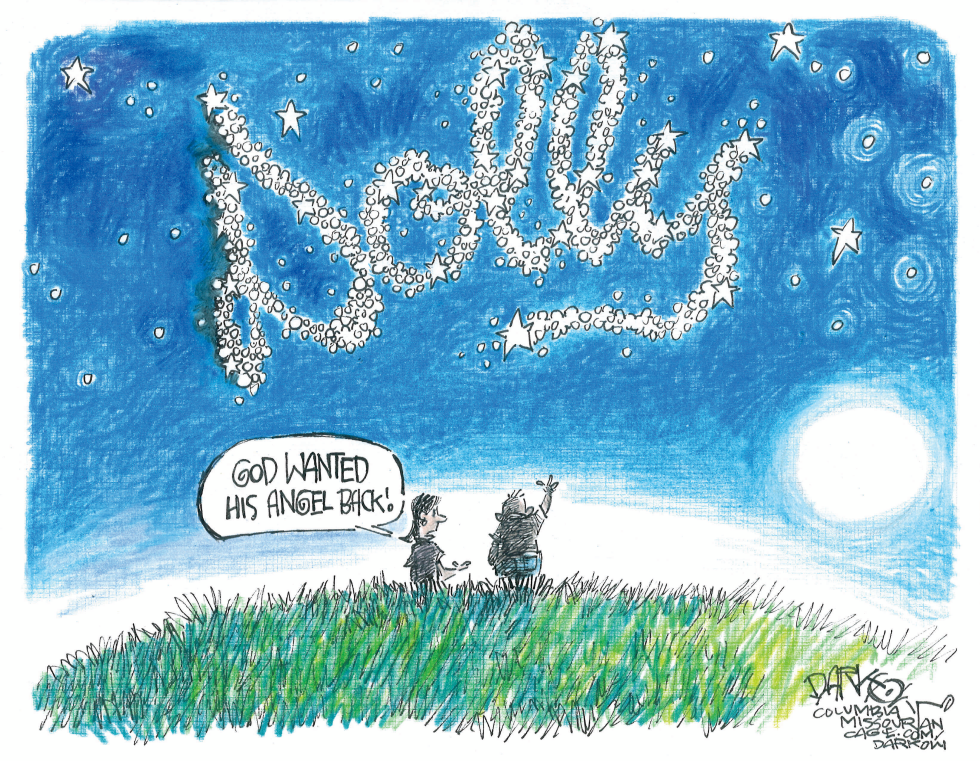
The entertainment world marks the passing of a beloved icon whose name appears spelled in stars as a celestial tribute. The phrase God wanted his angel back captures widespread sentiment of loss. The piece reflects public admiration and the sense of a divine claim on the departed star.
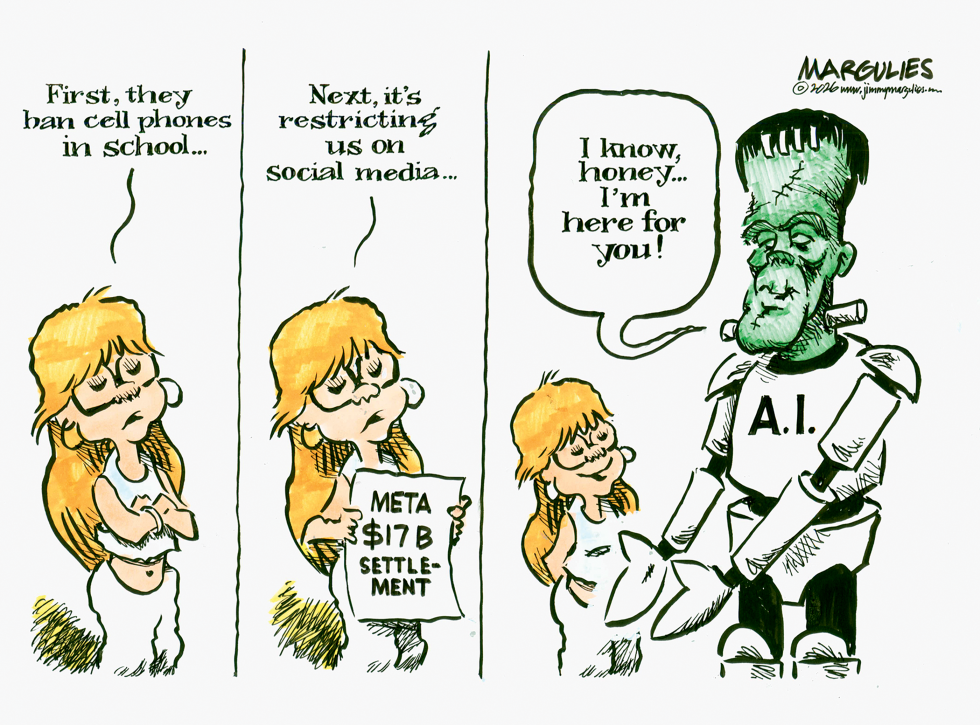
A $17 billion Meta settlement and expanding school cell phone bans have accelerated restrictions on teen social media use. The developments raise questions about how young users will fill the gap left by reduced platform access. The cartoon frames artificial intelligence as the unexpected beneficiary, positioning an AI Frankenstein figure as a comforting presence for a disappointed girl. This visual argument suggests that limits on social media may simply shift reliance toward unregulated AI tools rather than solving underlying concerns about youth screen time.
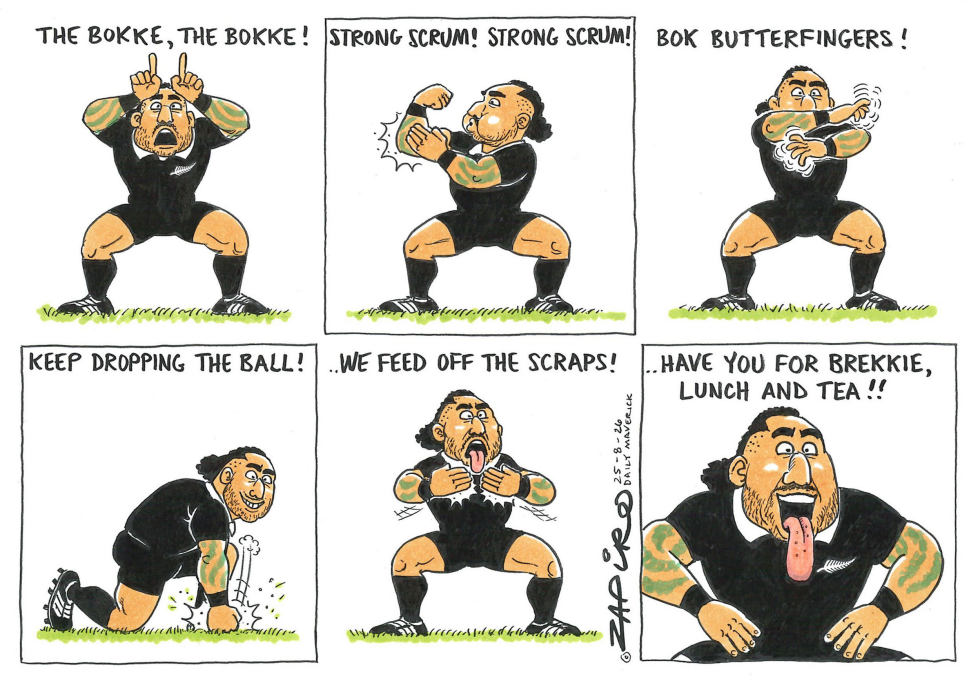
The Springboks rugby team faced ongoing criticism for handling errors and scrum vulnerabilities in matches against strong opponents like the All Blacks. The cartoon uses repeated failure motifs to argue that South African performance has deteriorated into consistent mistakes that opponents exploit easily.
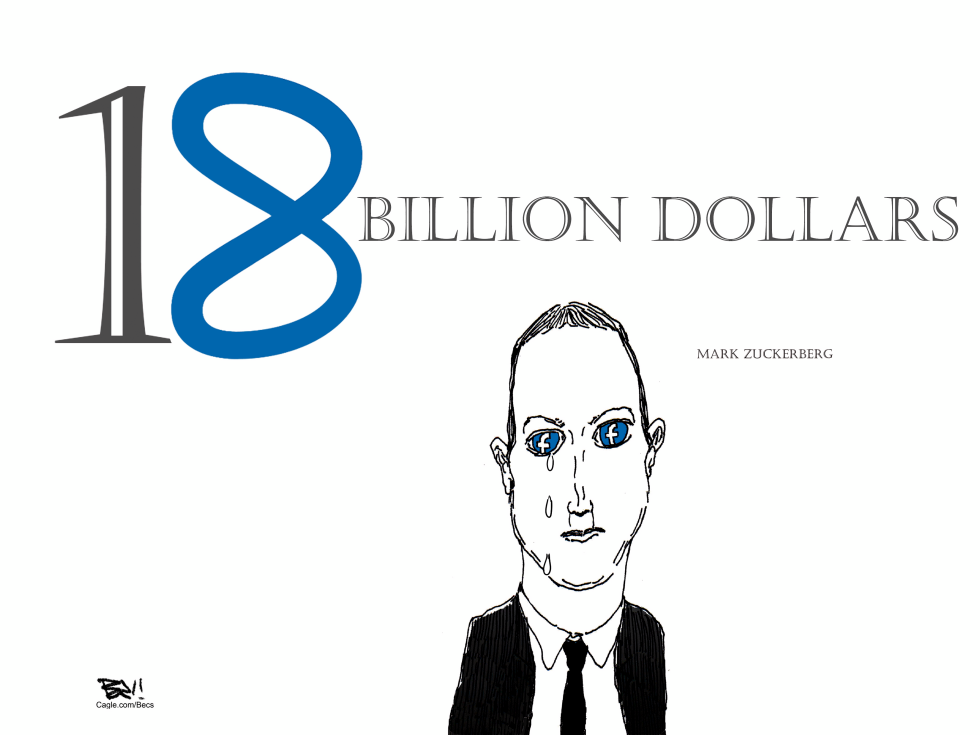
Meta Platforms reported a significant valuation drop that erased 18 billion dollars from Mark Zuckerberg's holdings. The loss reflects broader volatility in social media stocks and investor concerns over advertising revenue. Zuckerberg's public profile makes the personal financial impact a focal point for discussions on tech wealth. The piece portrays the event as a moment of visible distress for the executive. It underscores how quickly billionaire fortunes tied to public companies can shift with market sentiment.
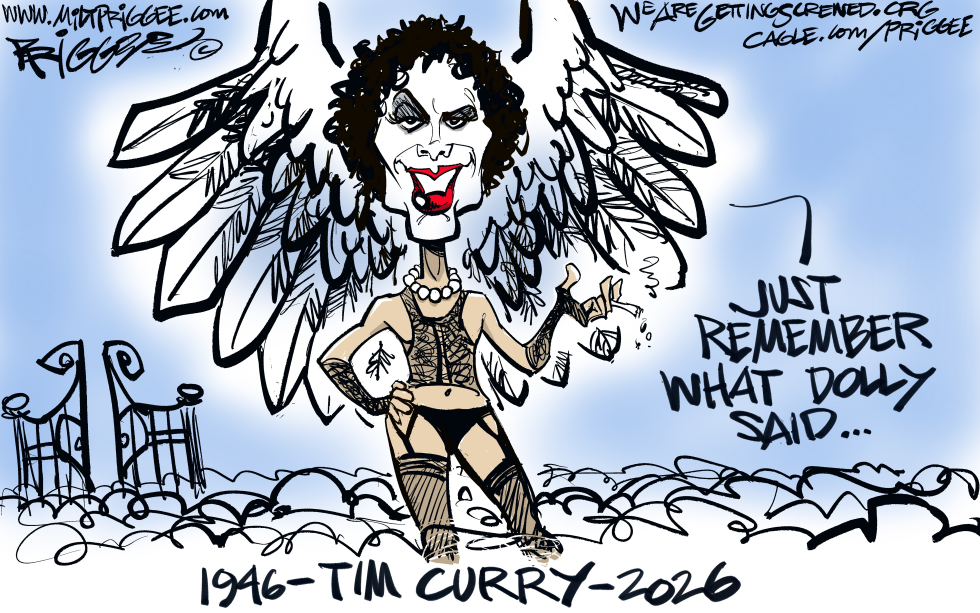
The cartoon marks the passing of Tim Curry by depicting the actor as an angel in his iconic Rocky Horror attire. It incorporates a reference to Dolly Parton, suggesting her words offer comfort or perspective amid the loss. The image serves as a lighthearted memorial blending pop culture elements with themes of remembrance.
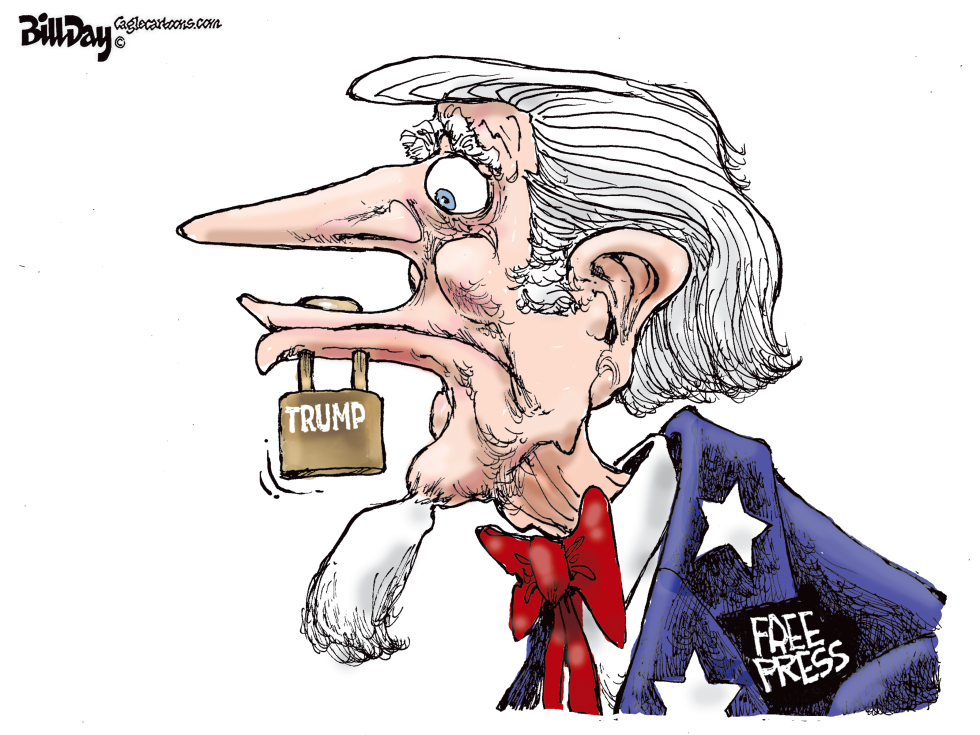
Donald Trump, holding office in 2026, faces renewed scrutiny over efforts to limit press access and information flow. Critics argue these moves undermine democratic oversight. The cartoon portrays the administration as actively securing or restricting the free press through direct control.
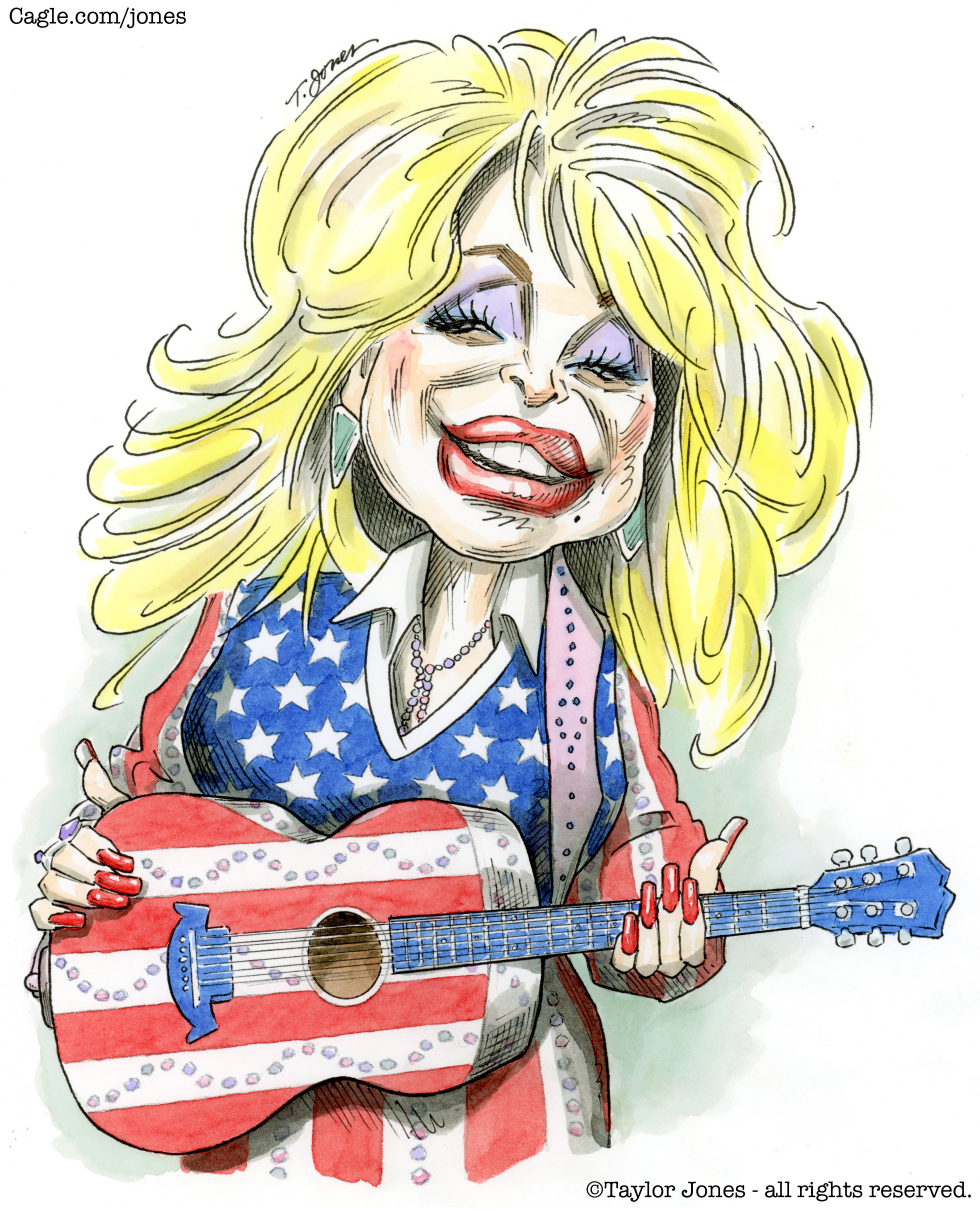
Dolly Parton appears in a vibrant portrait holding a guitar covered in American flag colors. The image captures her long standing role as a prominent figure in American entertainment without tying to any specific recent event.