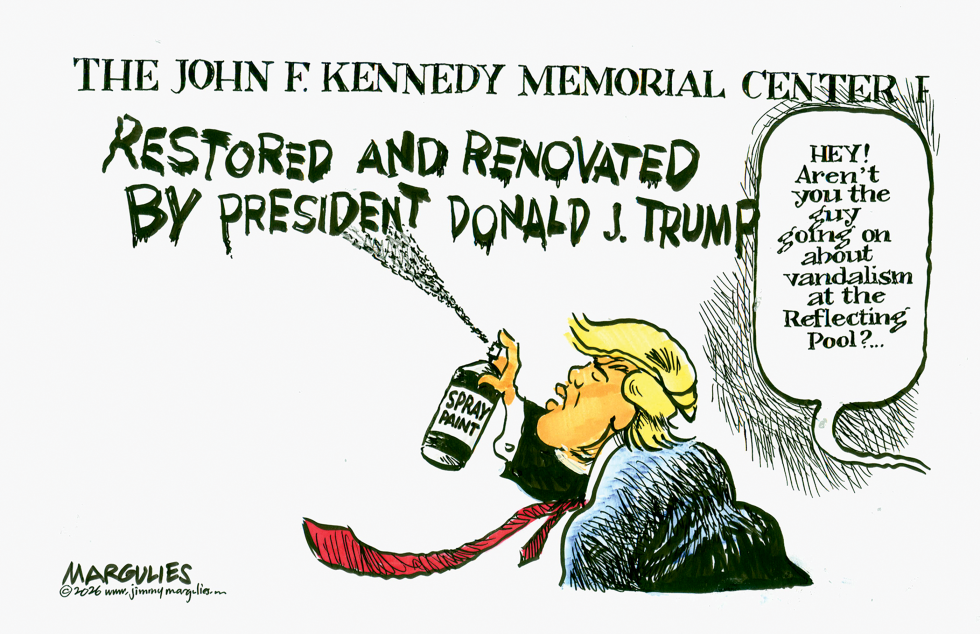
President Donald J. Trump faces accusations of altering the John F. Kennedy Memorial Center sign to claim personal credit for restoration work. The move draws immediate pushback tied to prior statements on vandalism at the Reflecting Pool. Critics see the action as an attempt to insert his name into a site honoring a predecessor.
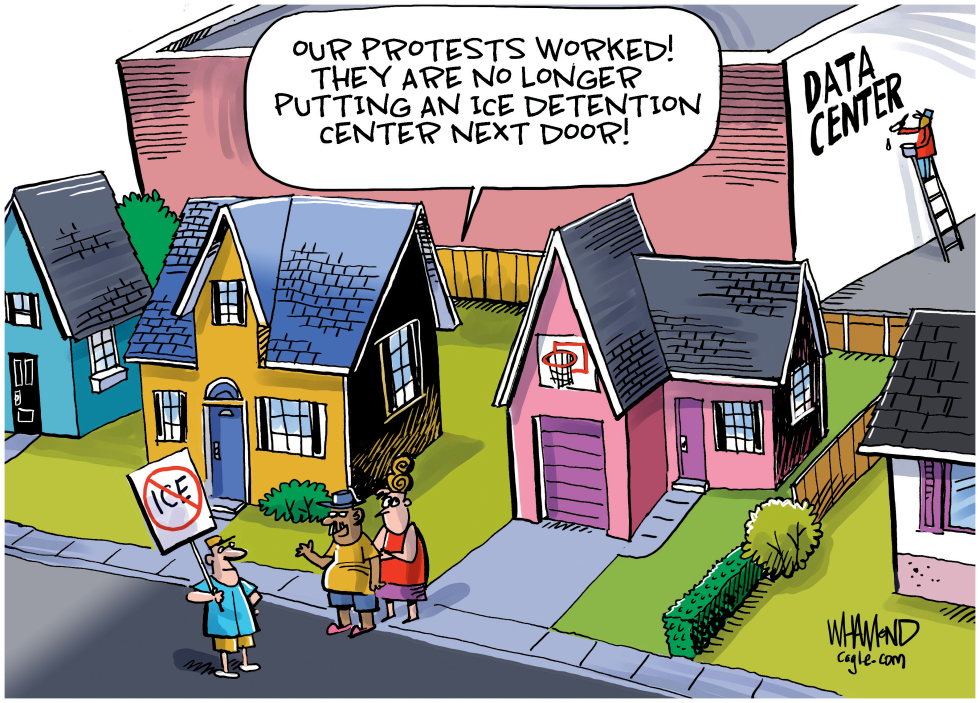
Residents in a suburban neighborhood protested plans for an ICE detention center near their homes. The facility was replaced by a data center, prompting cheers from locals who had opposed the detention site. The editorial highlights community pushback against immigration enforcement infrastructure and the unexpected outcome favoring commercial development instead.
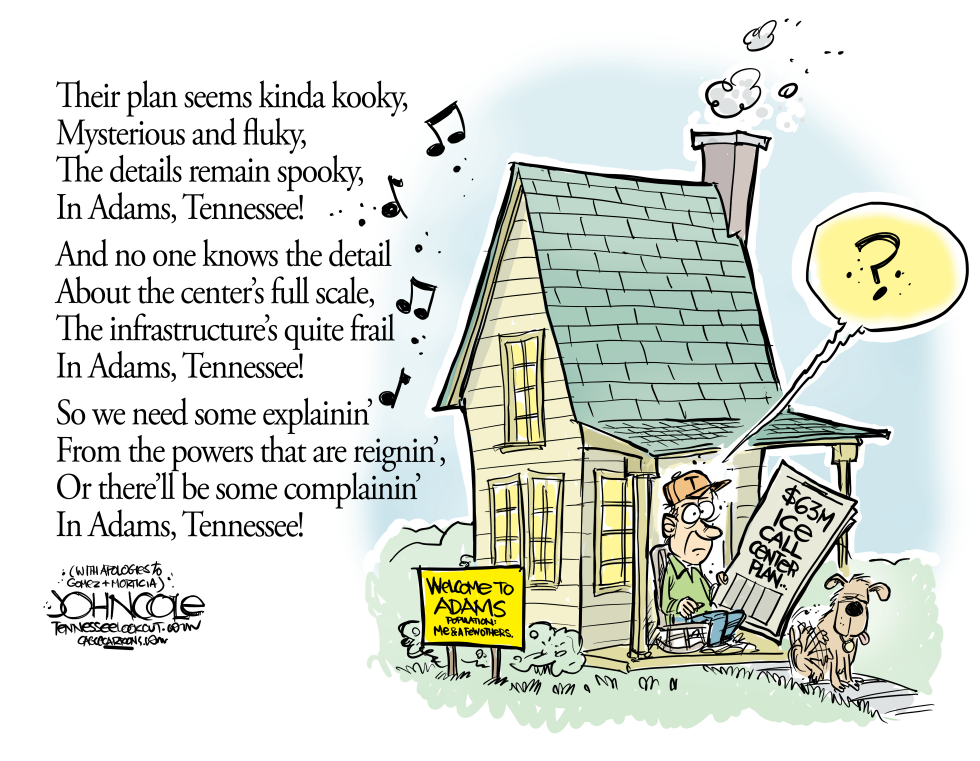
A proposed $63 million ICE call center in Adams, Tennessee has drawn local confusion over missing details on scale and infrastructure. The plan's opacity has prompted calls for clearer explanations from officials. The cartoon highlights resident frustration with the lack of transparency surrounding the project.
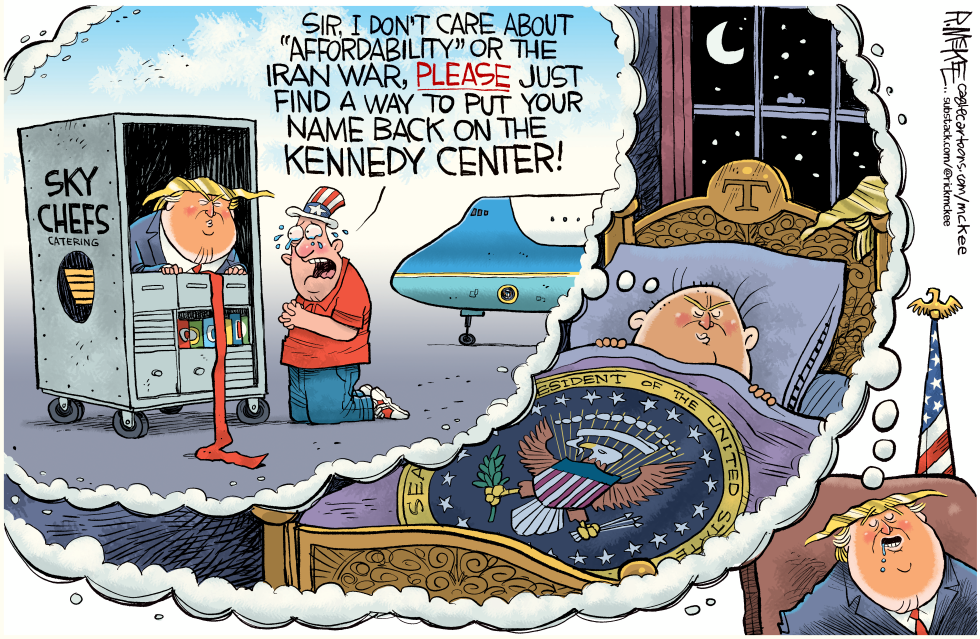
Donald Trump has repeatedly expressed interest in attaching his name to prominent public institutions. The Kennedy Center, a major arts venue in Washington, has drawn his attention as a potential target for rebranding. Critics argue such moves distract from pressing national issues including foreign conflicts and domestic spending. The cartoon depicts this fixation as a nighttime preoccupation that sidelines other responsibilities.
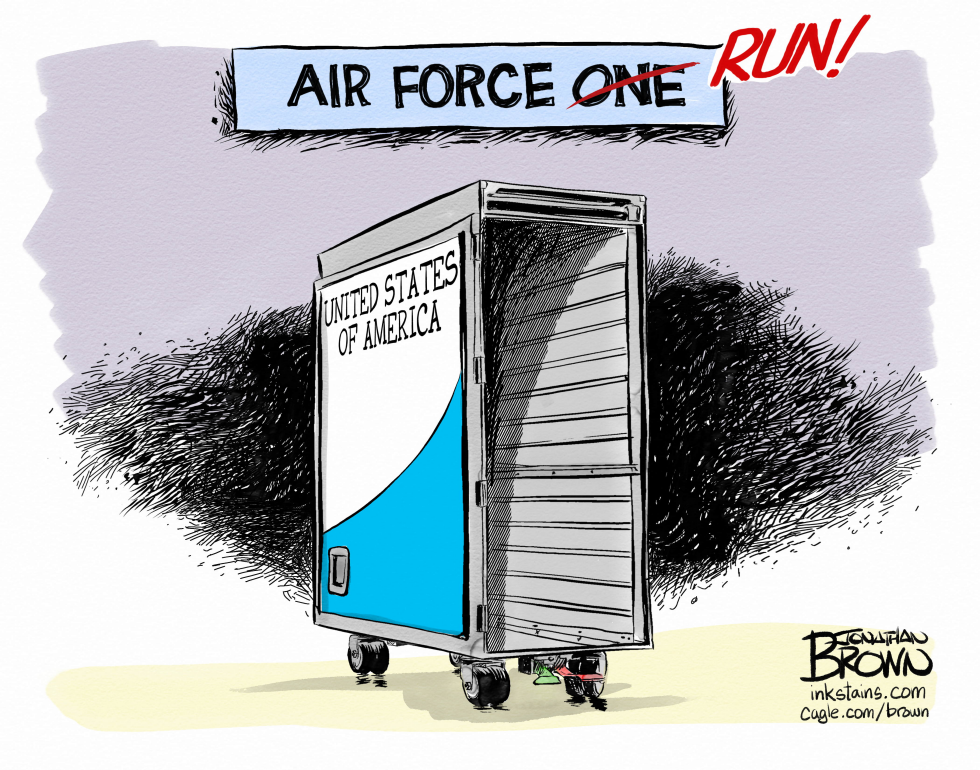
A wheeled airline catering cart occupies the center of the frame, painted in the livery of the presidential aircraft: white upper body, curved blue lower panel, and UNITED STATES OF AMERICA lettered down the side. Its full height door hangs open on empty wire shelving. Above it a pale blue placard reads AIR FORCE ONE, with ONE struck through in red and RUN! added beside that word in the same color. Two neckties poke out from between the casters underneath, one of them the long red tie Donald Trump is known for, the only trace of the men folded up inside. The drawing responds to reports that Trump sheltered in an airline galley cart against an assassination threat traced to Iran, turning the most recognizable branding in presidential aviation into an instruction to flee. Jonathan Brown signed the lower right corner alongside inkstains.com and Cagle.com/brown.
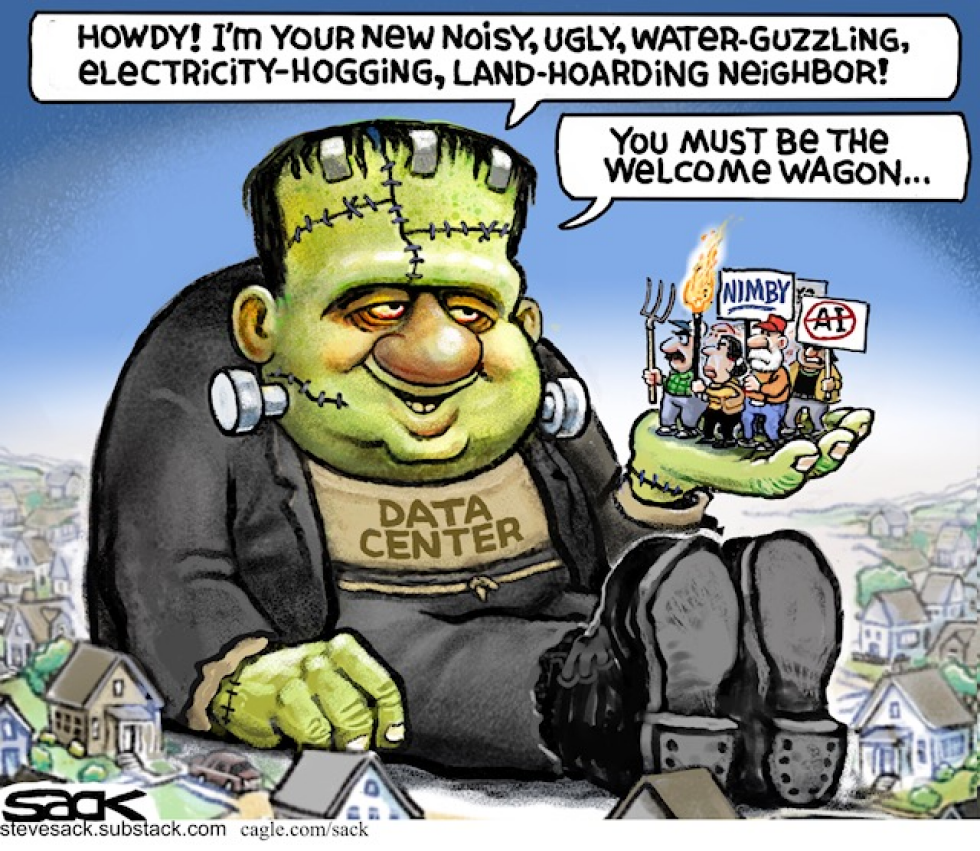
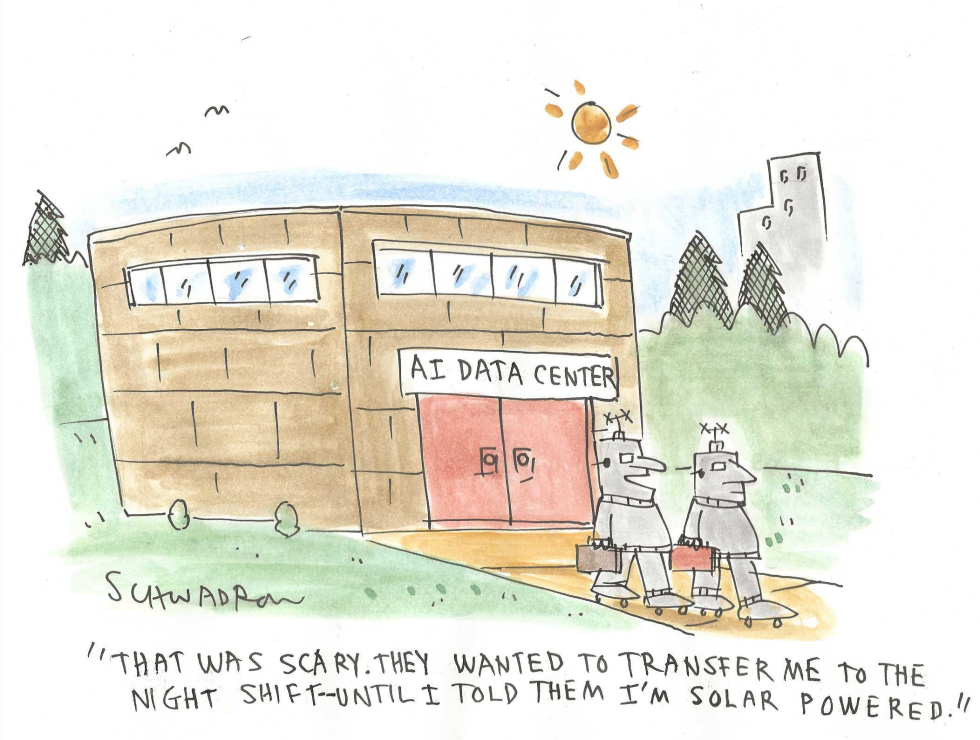
Rapid growth in AI data centers has triggered protests in suburban areas over high electricity and water consumption plus land use. Residents organized under NIMBY banners to block projects they say strain local infrastructure. The cartoon frames the facilities as intrusive newcomers disrupting neighborhoods.
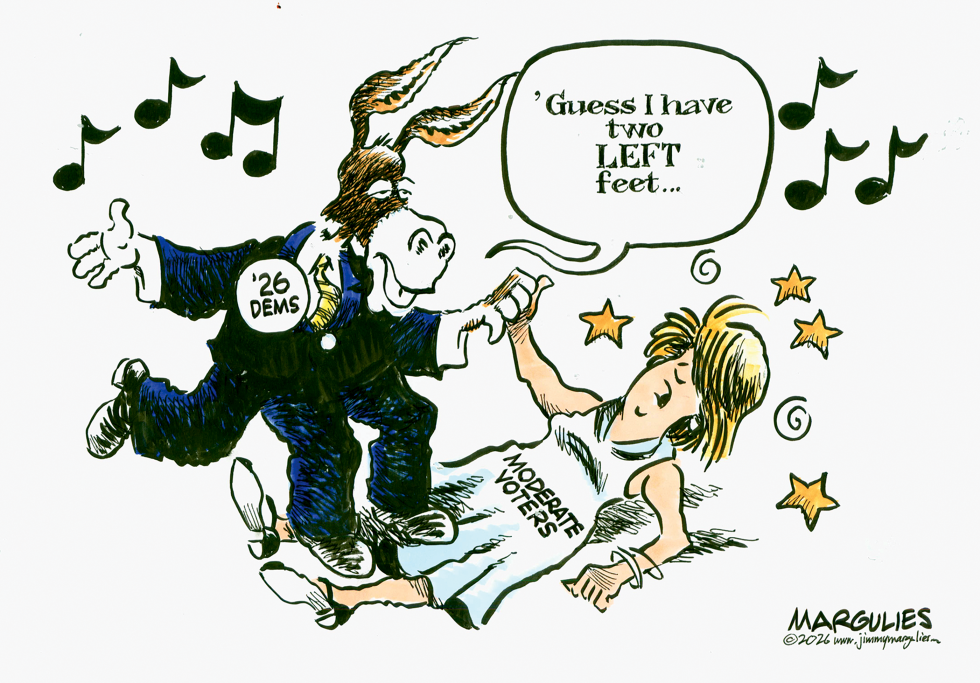
Democrats heading into the 2026 midterms face internal pressure to energize their base with progressive policies, yet this risks further distancing moderate voters essential for broader electoral success. The party has advanced left-leaning positions on issues like spending and social policy in recent cycles. Critics argue this approach prioritizes ideological purity over coalition building. The piece portrays the Democratic donkey as stepping on moderates while acknowledging its own missteps, highlighting the tension between base mobilization and centrist appeal.
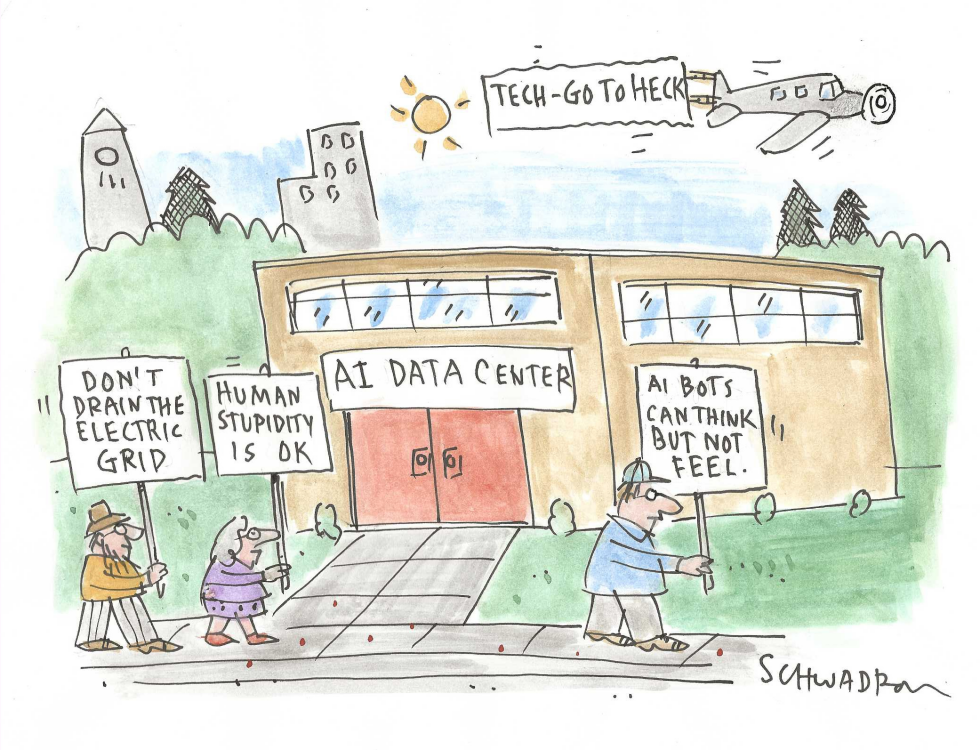
Protesters gather outside an AI data center building holding signs that read 'DON'T DRAIN THE ELECTRIC GRID,' 'HUMAN STUPIDITY IS OK,' and 'AI BOTS CAN THINK BUT NOT FEEL.' An airplane tows a banner reading 'TECH-GO TO HECK' overhead. The cartoon by Harley Schwadron, published July 31, 2026, depicts public opposition to the energy demands of AI facilities amid ongoing debates about data center impacts on electricity grids and technology development.
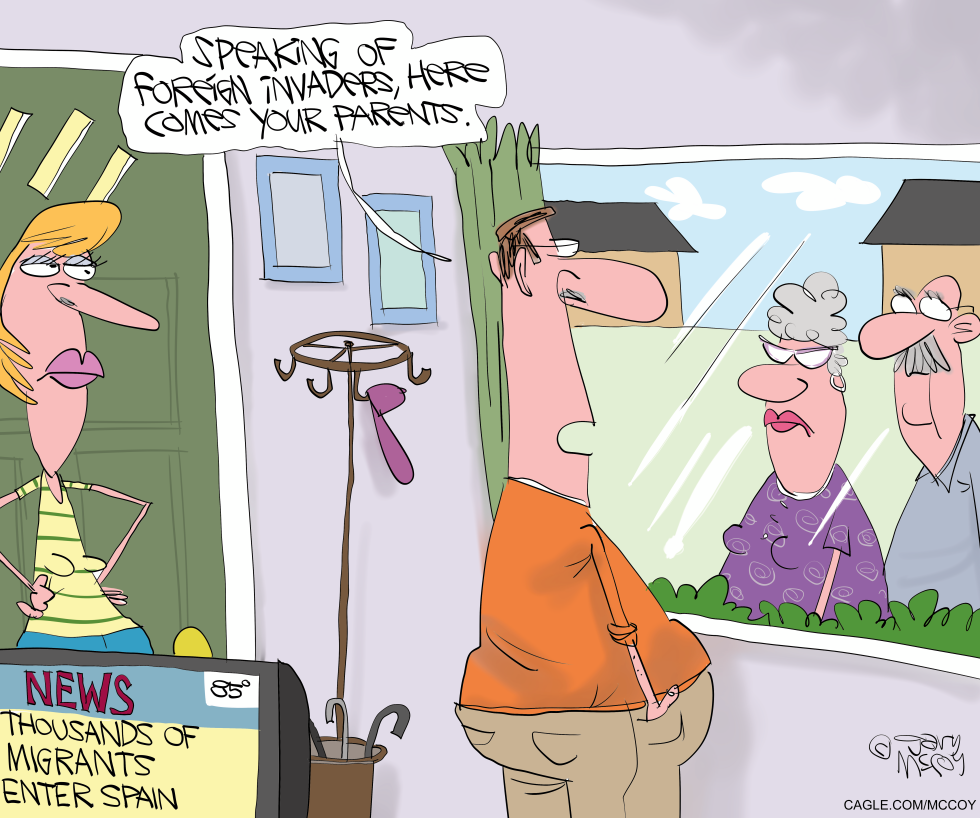
News reports show thousands of migrants entering Spain. The cartoon responds by having a man greet his in-laws with the same 'foreign invaders' label used in immigration debates. It highlights how inflammatory rhetoric can apply beyond policy to everyday family situations.
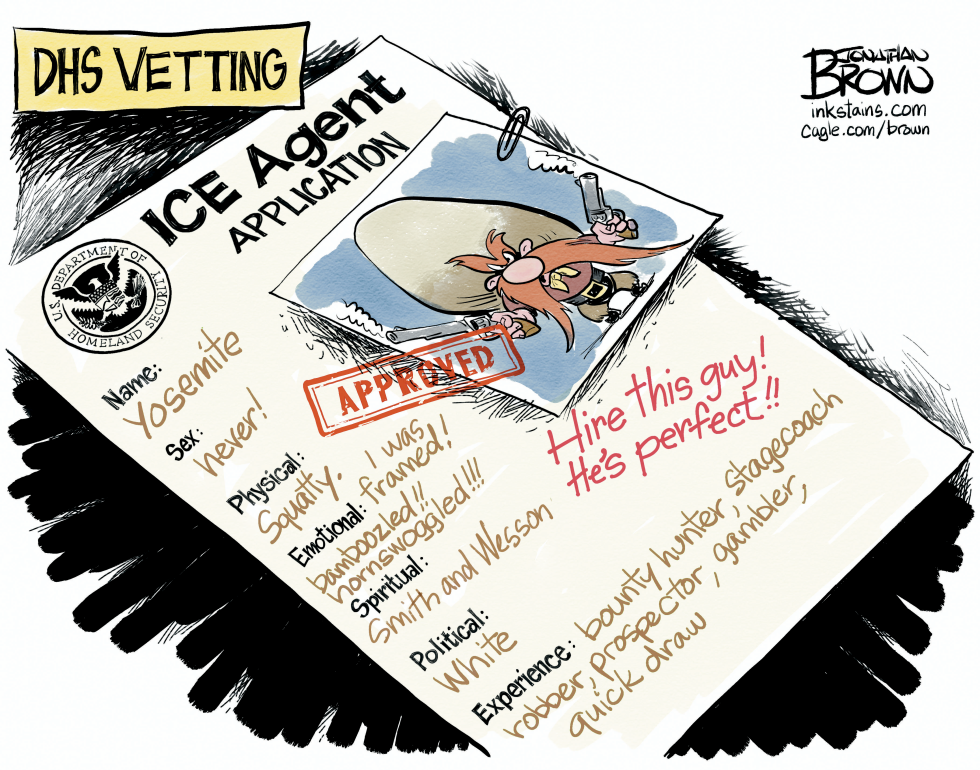
A DHS vetting document for an ICE agent position features Yosemite Sam with an approved stamp. The form lists disqualifying details in physical, emotional and experience sections. Red text urges hiring the figure anyway. The image highlights screening processes within immigration enforcement agencies.
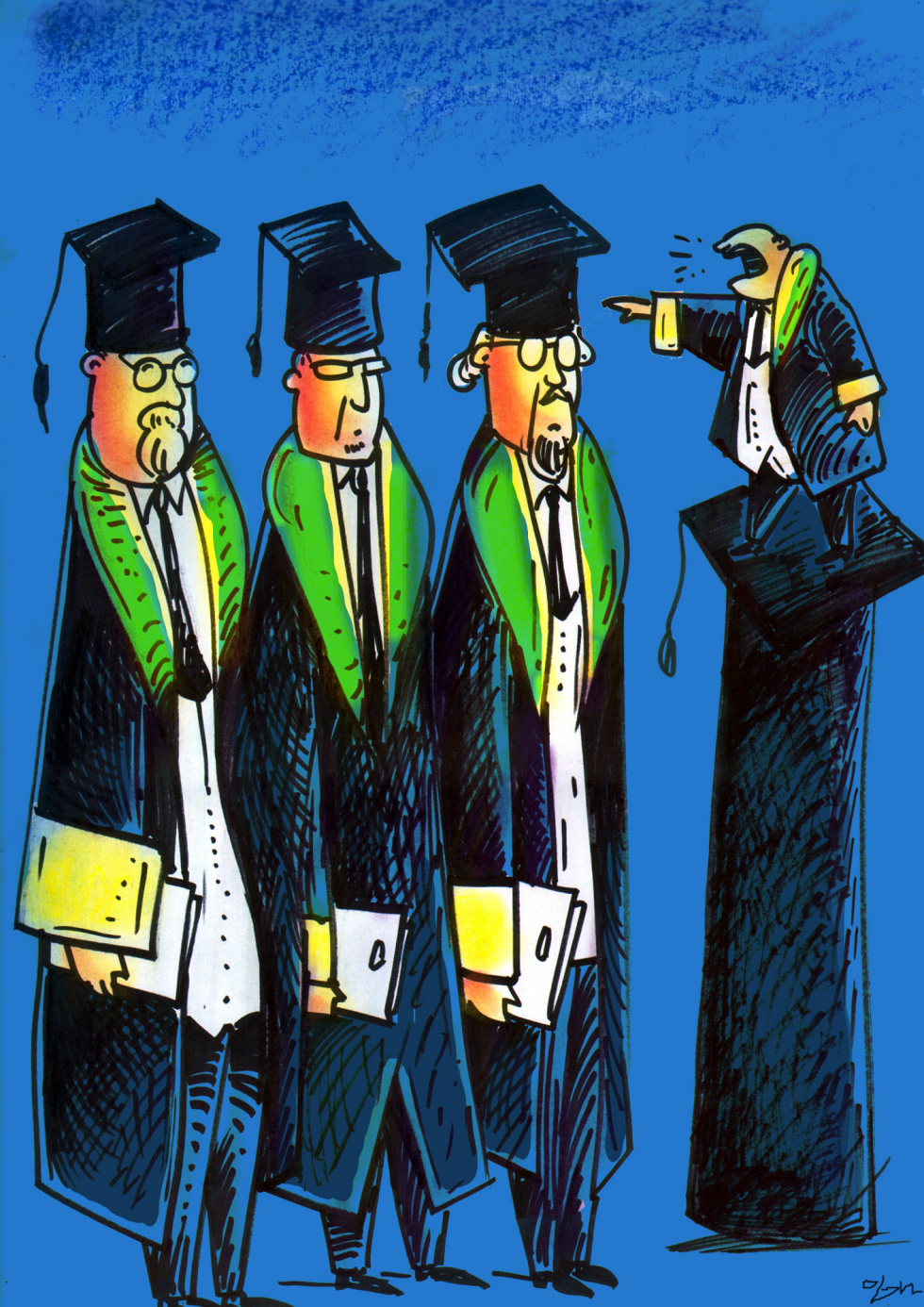
A university ceremony draws attention as an official delivers pointed remarks to administrators in academic attire. The exchange highlights ongoing tensions over leadership accountability and campus governance. The piece portrays the speaker as assertive in pressing the group on their responsibilities.
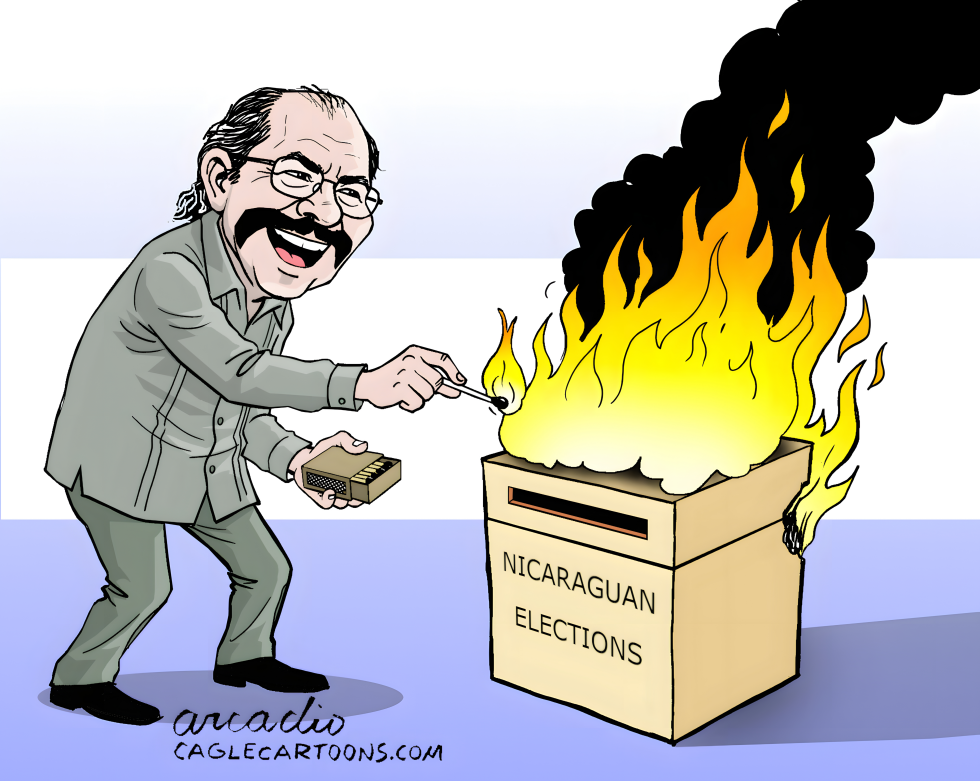
Nicaraguan President Daniel Ortega has publicly stated there will be no more elections, a move that solidifies his long-term grip on power. The declaration comes amid ongoing concerns over democratic backsliding in the Central American nation. This development matters because it removes any remaining avenues for political opposition and citizen participation in governance. The accompanying editorial takes the position that Ortega's action represents a deliberate destruction of democratic institutions rather than a legitimate policy choice.
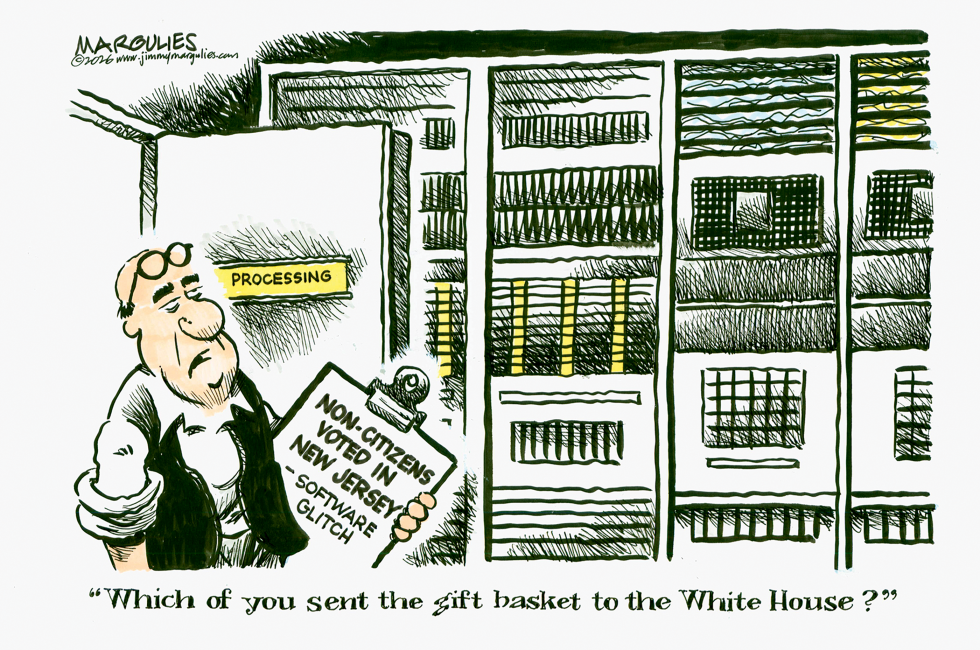
A software glitch in New Jersey allowed non-citizen votes to be counted during recent election processing. Officials are now under scrutiny after the error surfaced. The incident raises concerns about election integrity and data handling systems. The cartoon depicts a processing center where staff receive pointed questions about a gift sent to the White House. It highlights accountability issues in managing voting technology.
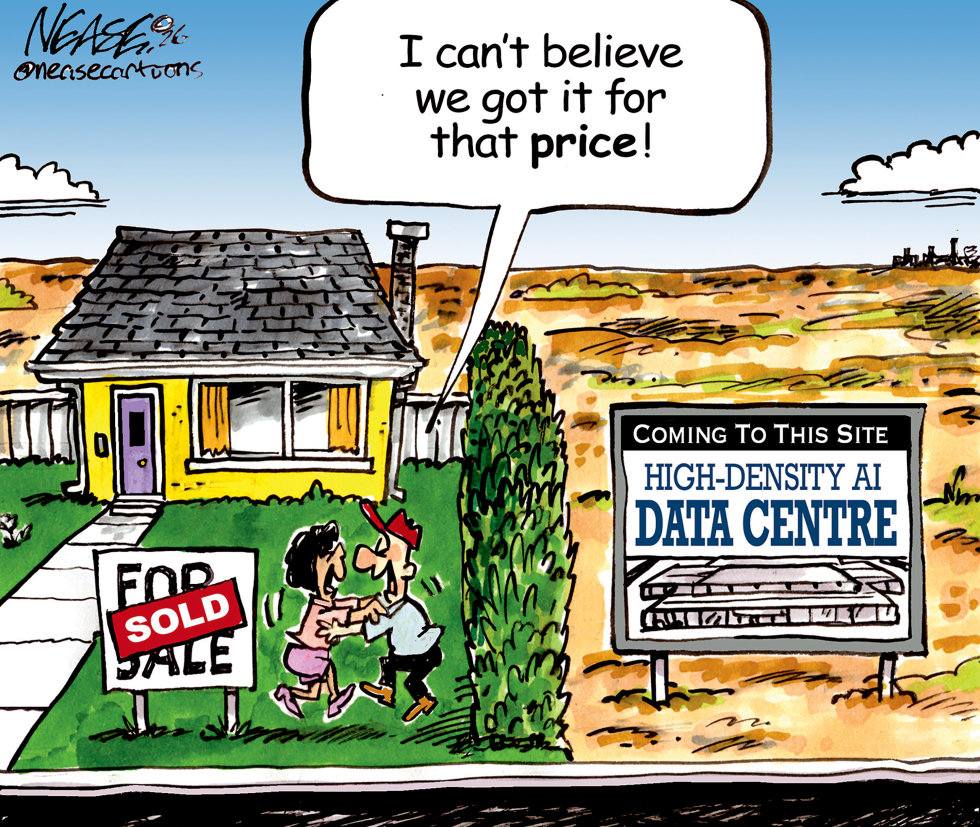
A couple has purchased a home directly beside a site slated for a high-density AI data centre. The buyers express delight at the low price without apparent concern for the industrial development. The situation highlights growing tensions between residential real estate and expanding technology infrastructure needs. Local communities increasingly face similar land-use conflicts as data centre construction accelerates. The piece portrays the purchase as shortsighted amid rapid AI-driven expansion.