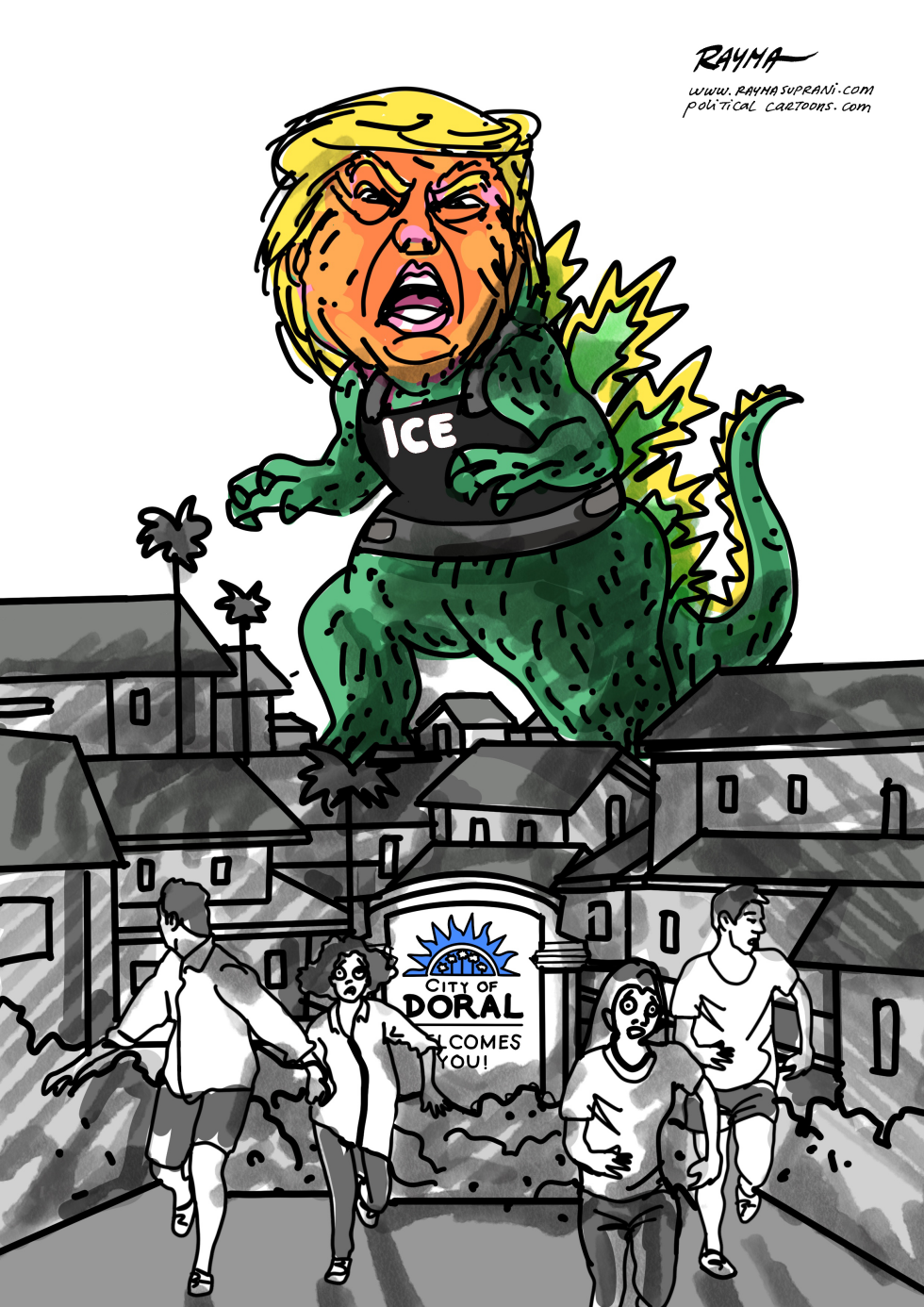
The image shows a large figure resembling Donald Trump dressed as an ICE agent towering over the city of Doral. People run from the scene near a welcome sign. The work addresses immigration enforcement policies active in Florida during 2026.
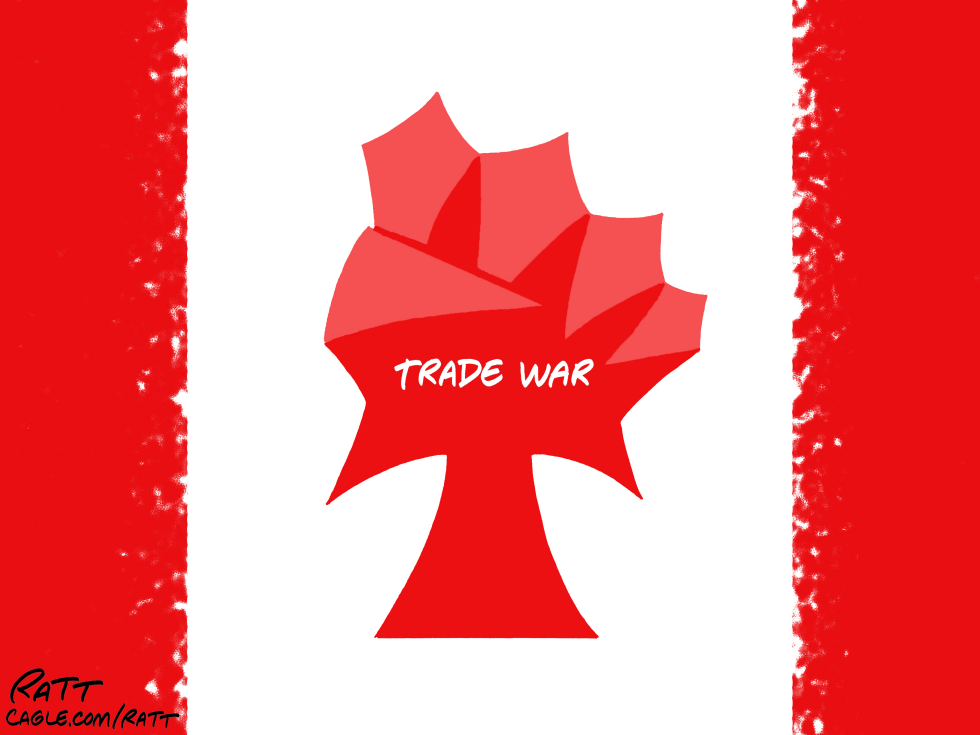
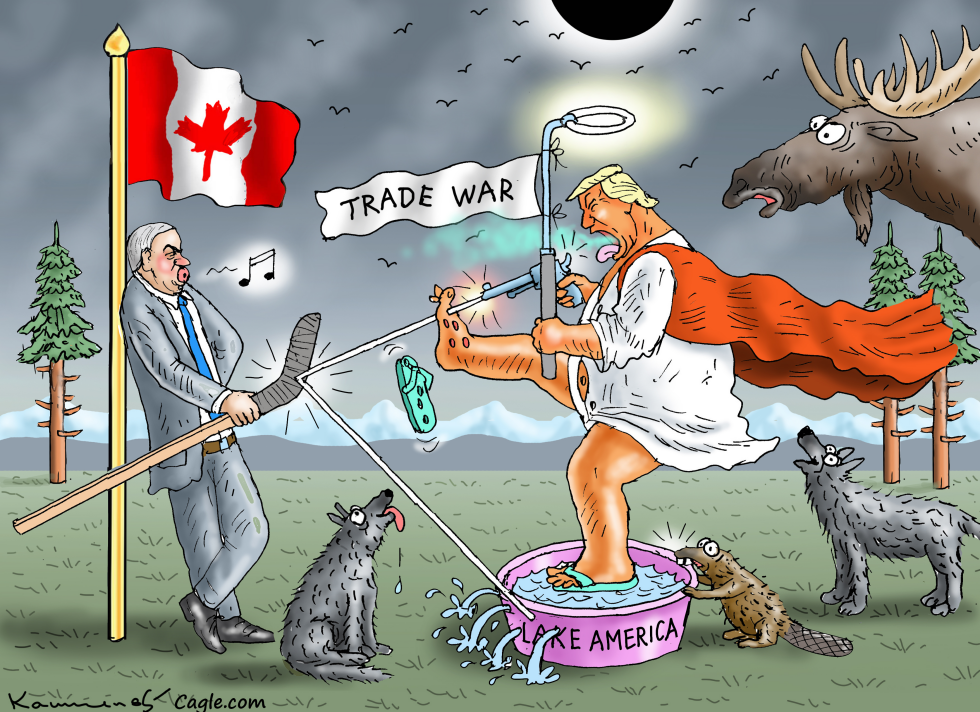
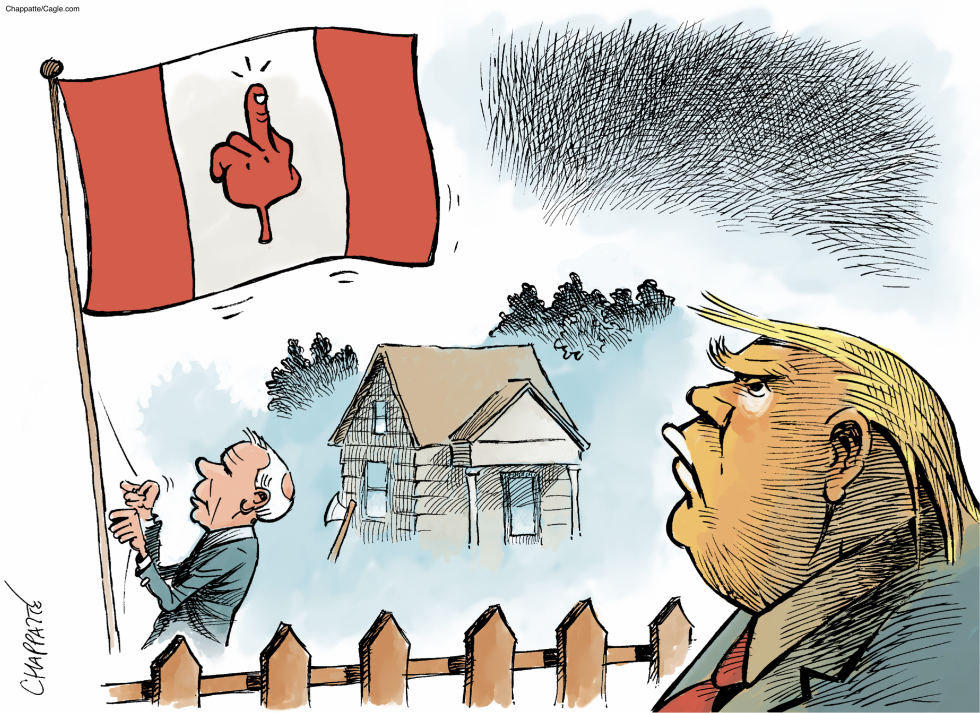
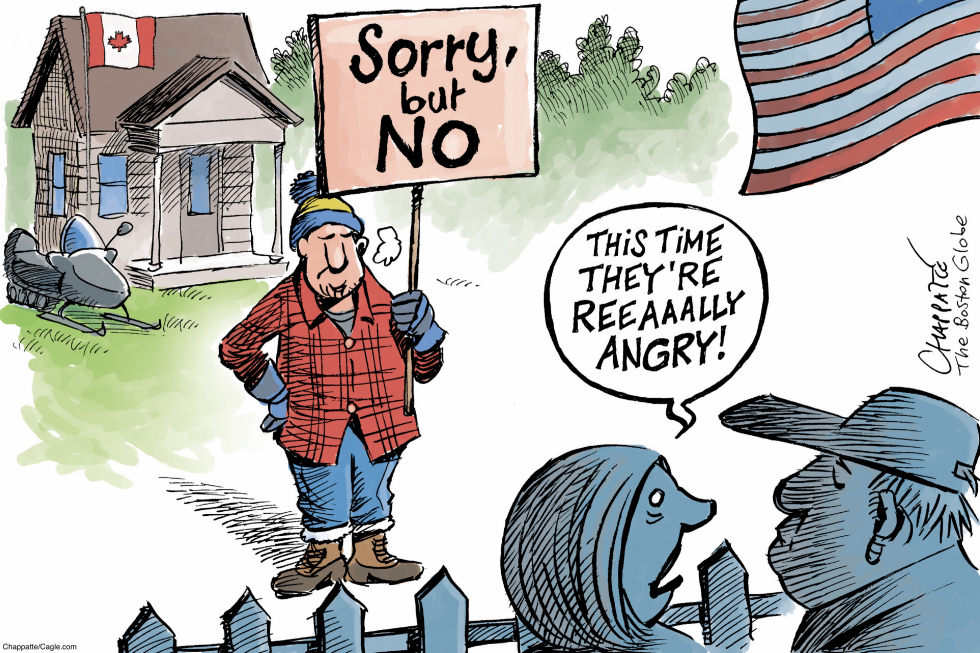
Ongoing US-Canada trade tensions escalated in 2026 with new tariff threats targeting Canadian exports. The dispute threatens key sectors including autos, lumber and agriculture, raising costs for consumers on both sides of the border. Canada has signaled plans to diversify markets and strengthen domestic industry. The cartoon frames the conflict as a direct assault on Canadian sovereignty and economic stability. It portrays the trade war as fracturing national symbols while urging a stronger northern response.
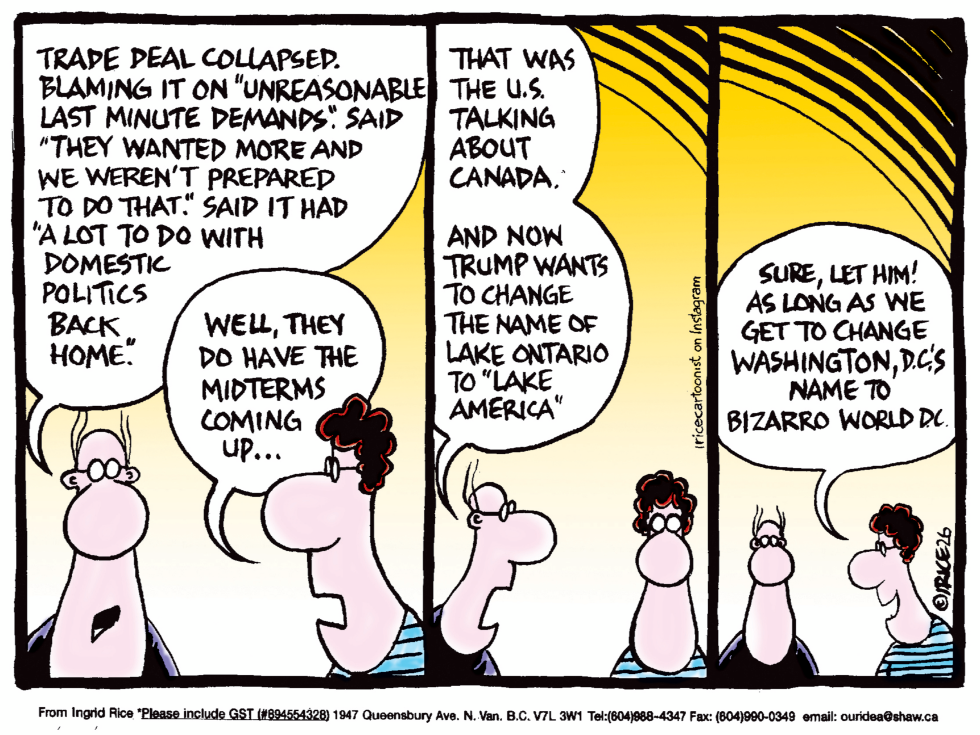
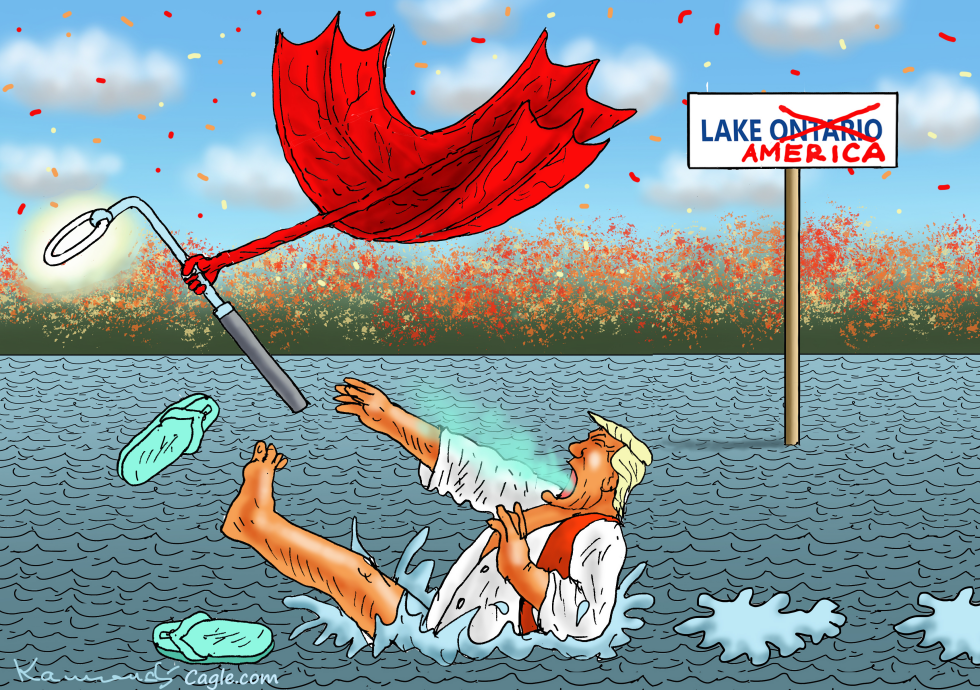
A Canada-U.S. trade deal collapsed after U.S. negotiators cited unreasonable last-minute demands and linked the failure to domestic politics ahead of midterms. President Trump then proposed renaming Lake Ontario to Lake America. Canadian officials responded by offering to rename Washington D.C. to Bizarro World DC if the change proceeds. The exchange highlights how trade tensions and political posturing are escalating between the two countries. The cartoon mocks the name-change idea as emblematic of broader dysfunction in bilateral relations.
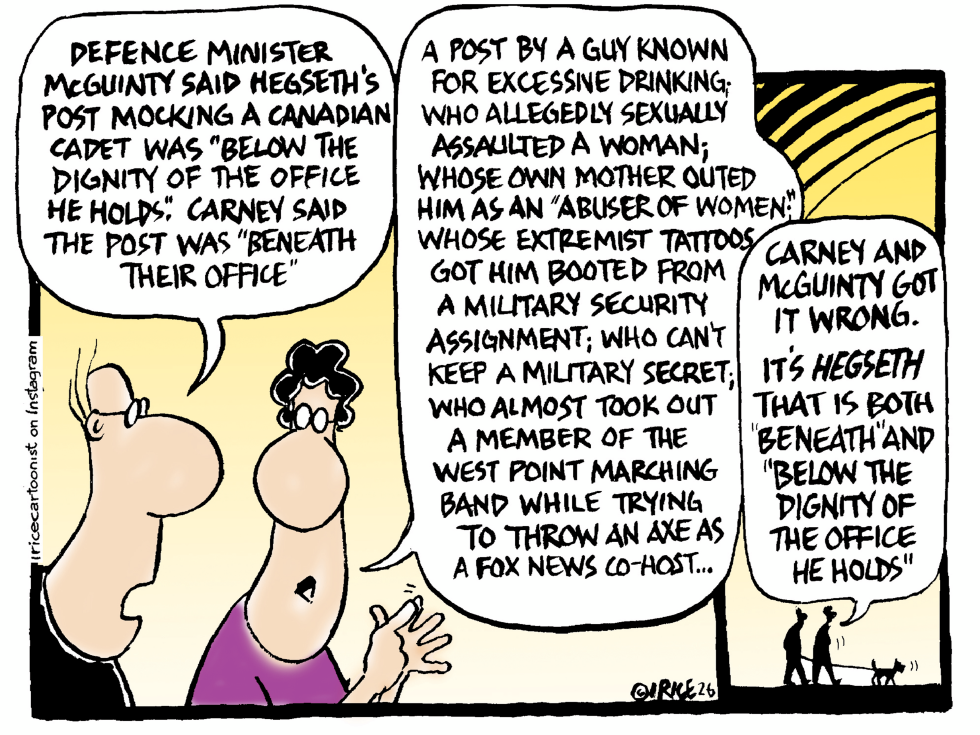
Canadian Defence Minister David McGuinty and Mark Carney publicly condemned a social media post by Pete Hegseth mocking a Canadian cadet, calling it beneath the dignity of the office. The remarks came amid Hegseth's nomination process for a senior U.S. defense position. The cartoon argues the ministers have the assessment backward, pointing instead to Hegseth's history of alleged misconduct, security clearance problems, and public incidents as the true disqualifiers. This reflects ongoing debate over nominee vetting standards and cross-border political commentary on U.S. appointments.
President Trump launched new tariffs on Canadian goods in early September 2026, citing trade imbalances and border issues. The move immediately prompted Canadian countermeasures including duties on US exports. The policy shift disrupts integrated supply chains in autos, energy and agriculture that support millions of jobs on both sides of the border. Markets reacted with volatility as investors weighed the costs of renewed protectionism. The cartoon portrays the tariff campaign as self-inflicted harm that leaves the US exposed to swift Canadian pushback.
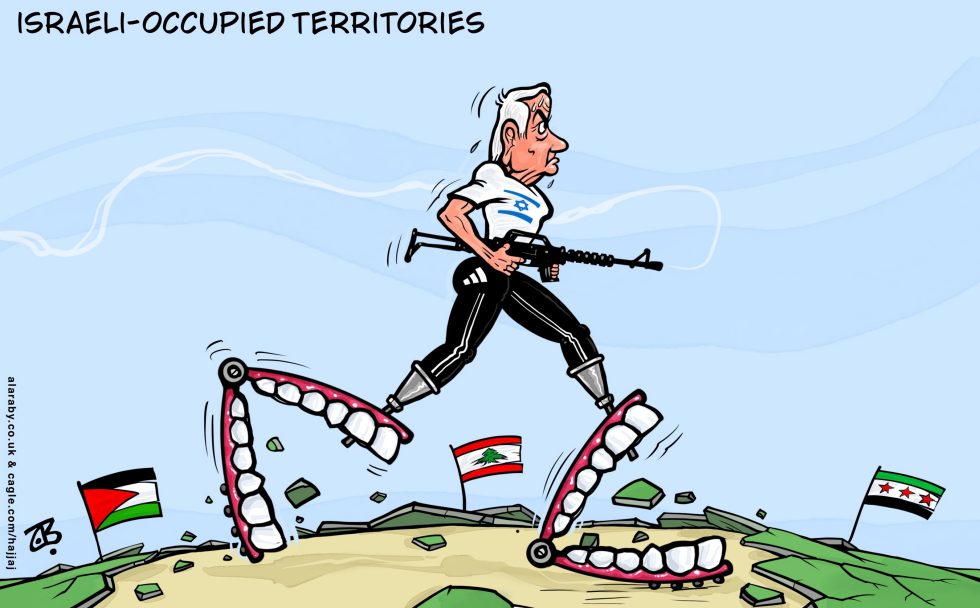
Israeli Prime Minister Benjamin Netanyahu has maintained policies of territorial control and military operations in areas bordering Israel including Gaza the West Bank southern Lebanon and parts of Syria. These actions have drawn international scrutiny over sovereignty violations and regional stability. The cartoon frames the policy as aggressive expansion that damages neighboring states.
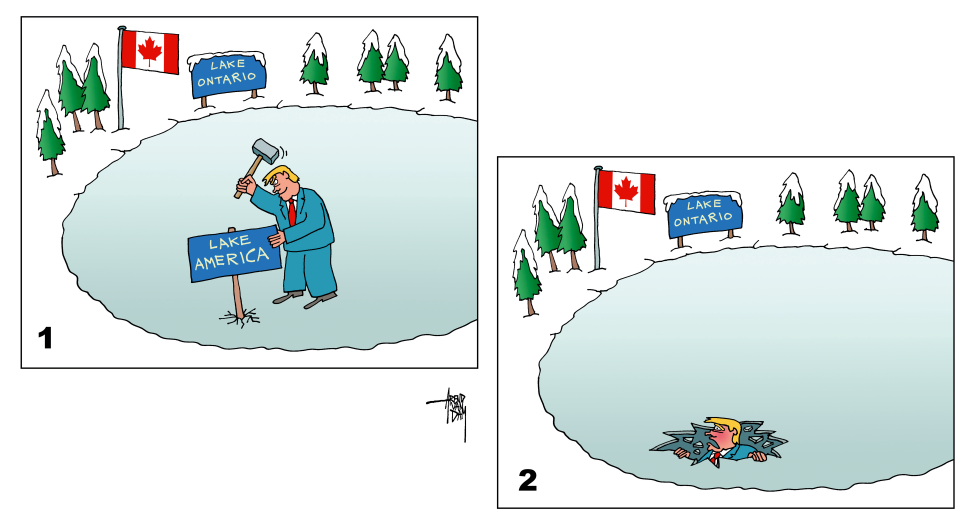
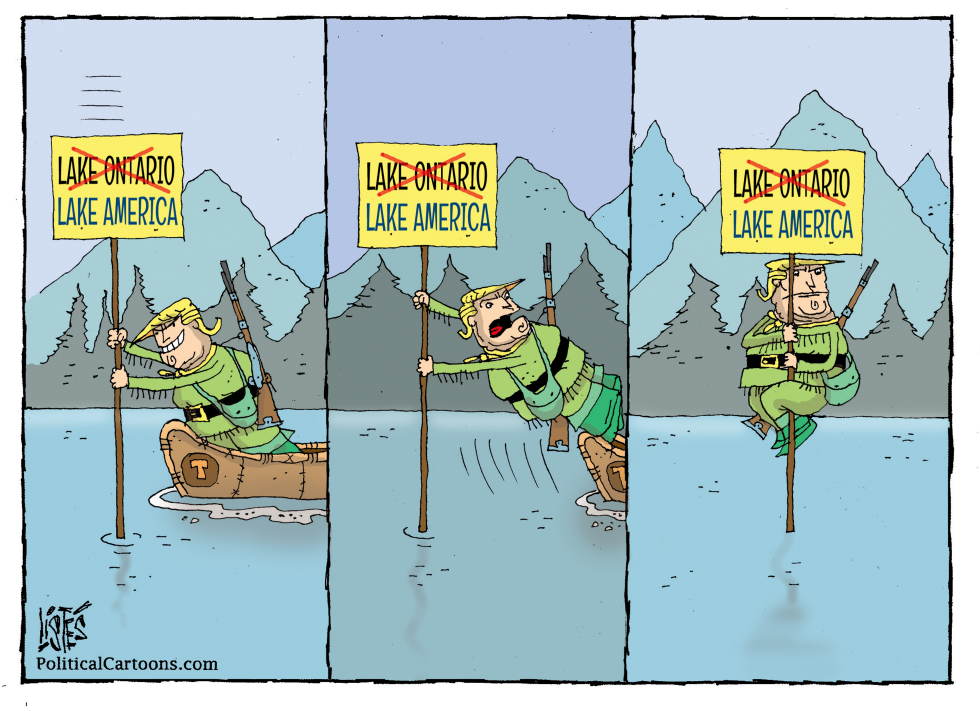
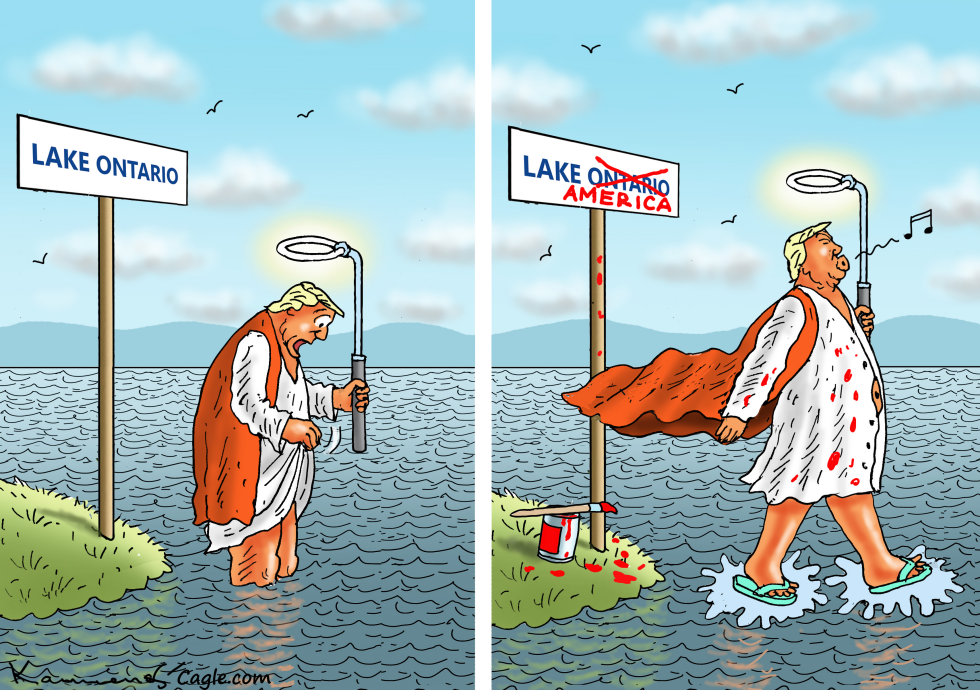
Donald Trump directed an aide to plant a Lake America sign on the frozen surface of Lake Ontario in a symbolic claim on Canadian waters. The move was part of ongoing US-Canada friction over shared resources and border definitions. The ice broke, sending the figure through the surface. The episode underscores the practical limits of unilateral US assertions against a close neighbor whose cooperation remains essential on trade, security, and environmental issues. The cartoon presents the effort as self-defeating and poorly timed.
Donald Trump has floated the idea of reclassifying parts of the Great Lakes as exclusively American territory amid ongoing trade and border disputes with Canada. The move has drawn sharp criticism from Canadian officials and environmental groups concerned about resource management. The cartoon portrays the effort as a futile struggle against established geography and international norms.
Donald Trump directed the renaming of Lake Ontario to Lake America in a move targeting shared U.S.-Canada waters. The action underscores ongoing tensions over border resources and national identity. The piece portrays the effort as an overreaching nationalist gesture that ignores international boundaries and practical realities.
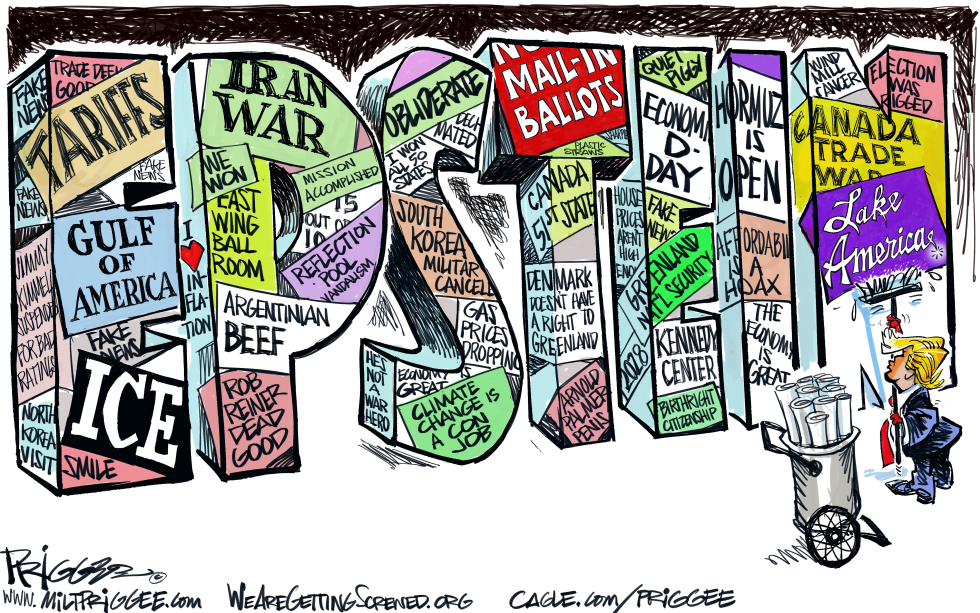
Donald Trump appears in a September 2026 cartoon pushing a cart stacked with signs promoting tariffs, questioning mail-in ballots, and asserting claims about Iran, Canada trade, and domestic issues. The image captures a pattern of public messaging that blends economic nationalism with repeated challenges to established processes. The editorial position frames these statements as a deliberate strategy to keep multiple controversies in motion at once.
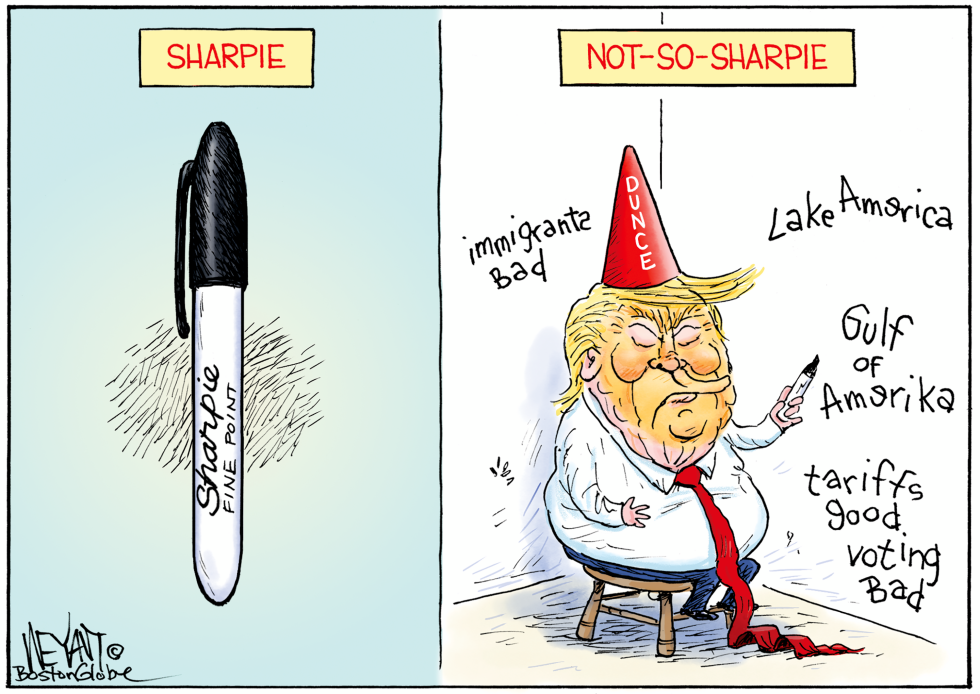
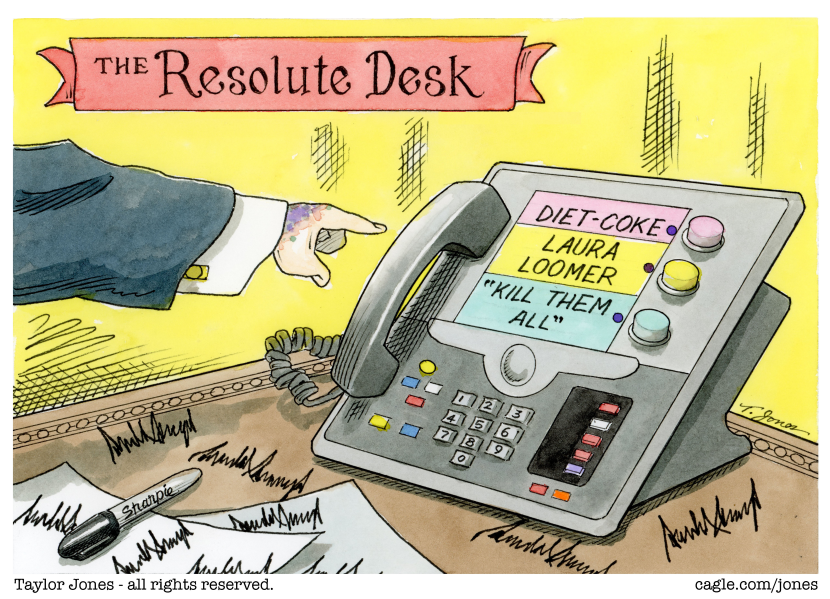
Donald Trump has continued to issue statements on tariffs, immigration enforcement and voting procedures that contain repeated factual inaccuracies. These comments have drawn renewed attention to his approach to governance. The cartoon portrays him as uninformed on these topics through the dunce cap and misspelled labels.
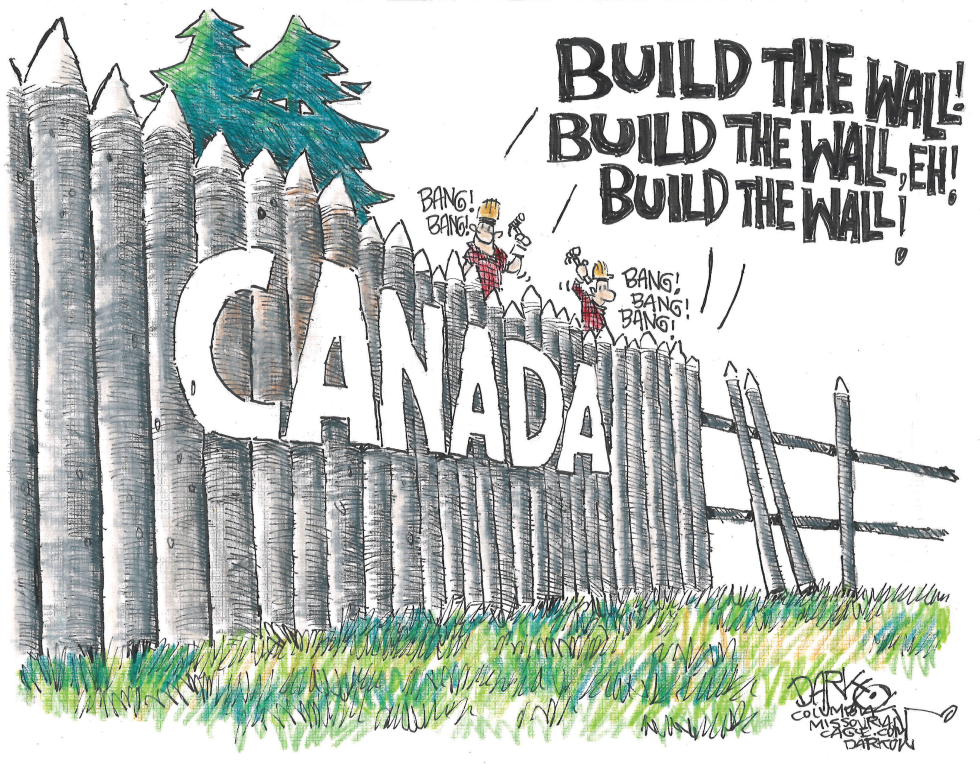
Canada has begun construction of a substantial border barrier along its southern frontier, echoing long-standing calls for stricter immigration controls. Officials cite rising cross-border movements and security concerns as justification for the project. The move marks a notable policy shift for a country historically open to migration. The cartoon portrays this development with pointed irony, highlighting the adoption of aggressive enforcement tactics previously associated with other nations.
Donald Trump has moved to rename Lake Ontario as Lake America in a symbolic gesture tied to national branding efforts. The action underscores ongoing debates over executive reach into geographic and cultural symbols. Critics view the move as an extension of personal branding into public spaces. The piece portrays the effort as self-aggrandizing and detached from practical governance concerns.