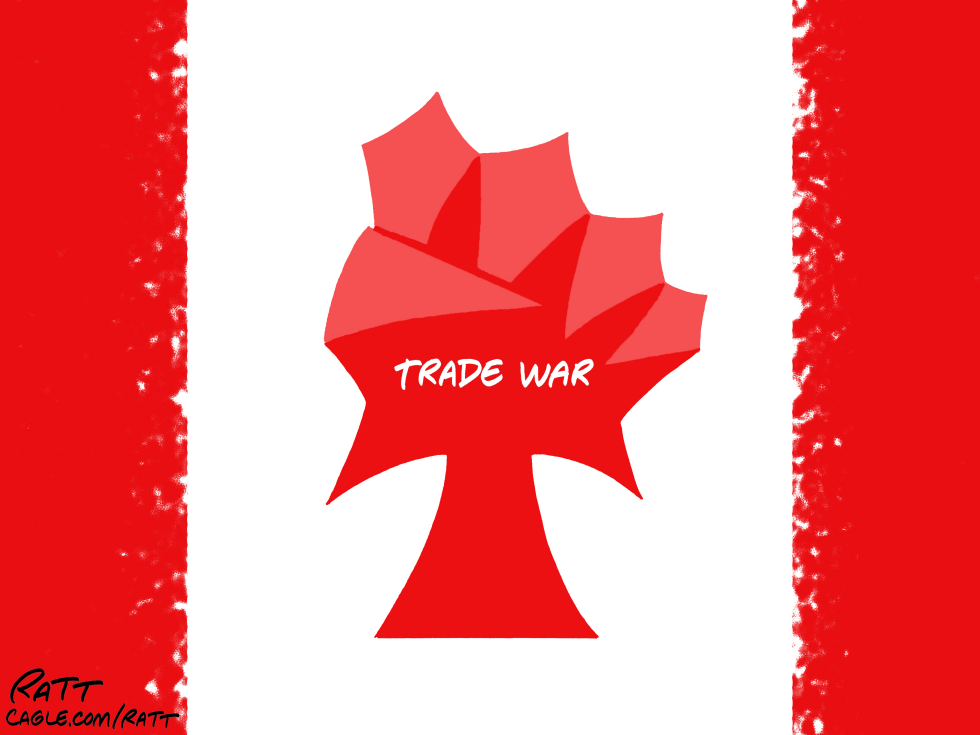
Ongoing US-Canada trade tensions escalated in 2026 with new tariff threats targeting Canadian exports. The dispute threatens key sectors including autos, lumber and agriculture, raising costs for consumers on both sides of the border. Canada has signaled plans to diversify markets and strengthen domestic industry. The cartoon frames the conflict as a direct assault on Canadian sovereignty and economic stability. It portrays the trade war as fracturing national symbols while urging a stronger northern response.
Sundar Pichai, CEO of Google and Alphabet, announced plans to invest $200 billion in new AI data centers to support rapid expansion of artificial intelligence systems. The move comes as polls show most Americans oppose such facilities due to noise, pollution, and heavy water consumption. Pichai has described AI as more transformative than electricity or fire and has acknowledged a high risk of existential threats from the technology, while expressing confidence that humanity can avoid catastrophe. The editorial cartoon frames this corporate push as aggressive and tone-deaf to local opposition and environmental limits.
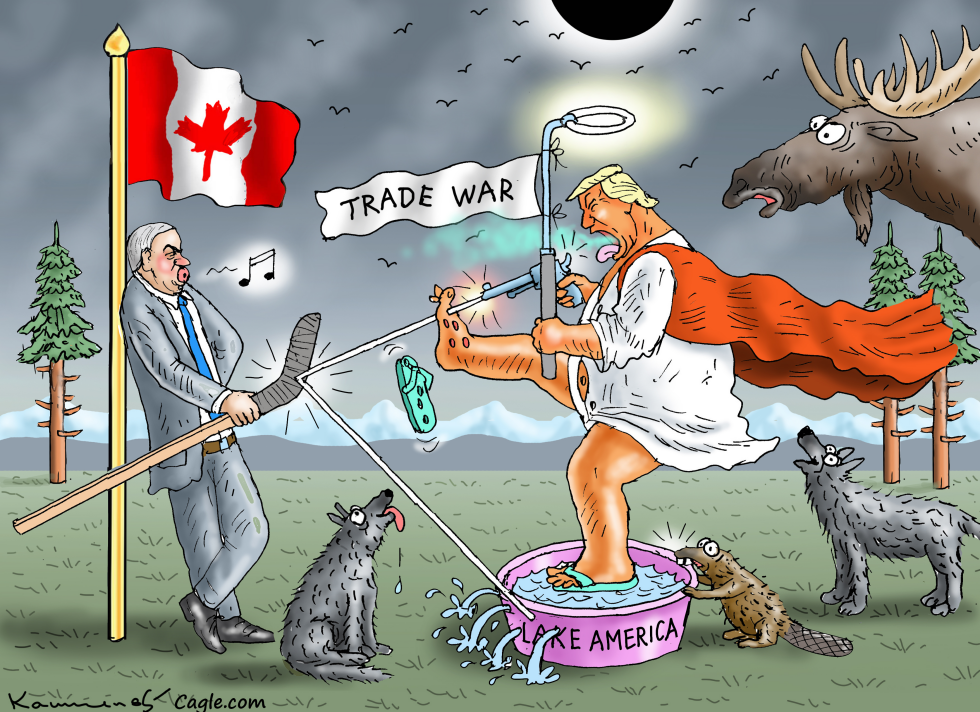
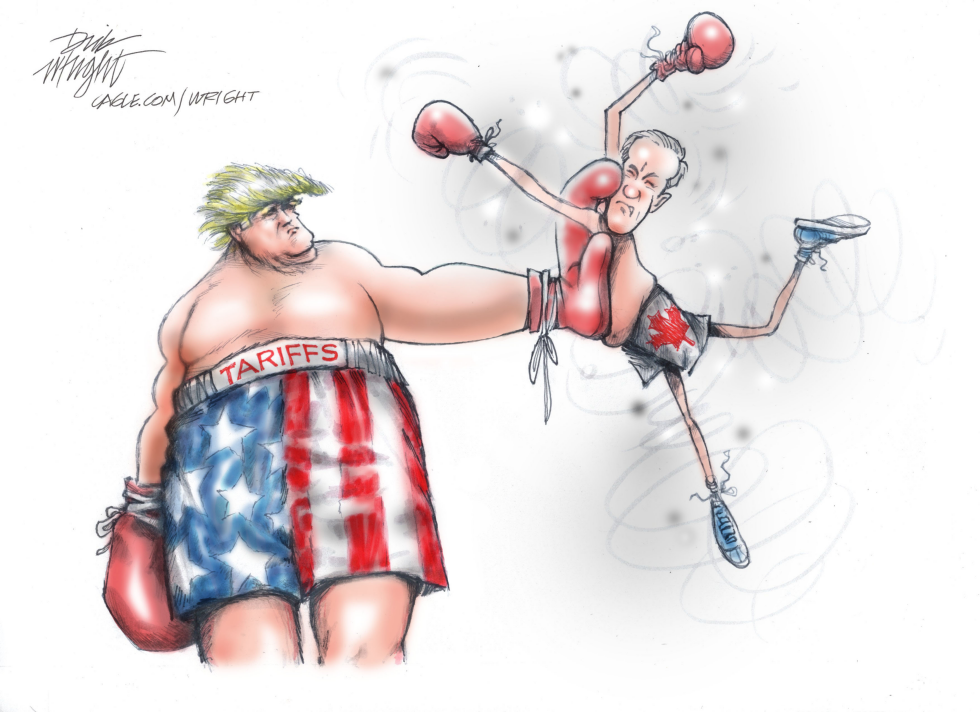
President Trump launched new tariffs on Canadian goods in early September 2026, citing trade imbalances and border issues. The move immediately prompted Canadian countermeasures including duties on US exports. The policy shift disrupts integrated supply chains in autos, energy and agriculture that support millions of jobs on both sides of the border. Markets reacted with volatility as investors weighed the costs of renewed protectionism. The cartoon portrays the tariff campaign as self-inflicted harm that leaves the US exposed to swift Canadian pushback.
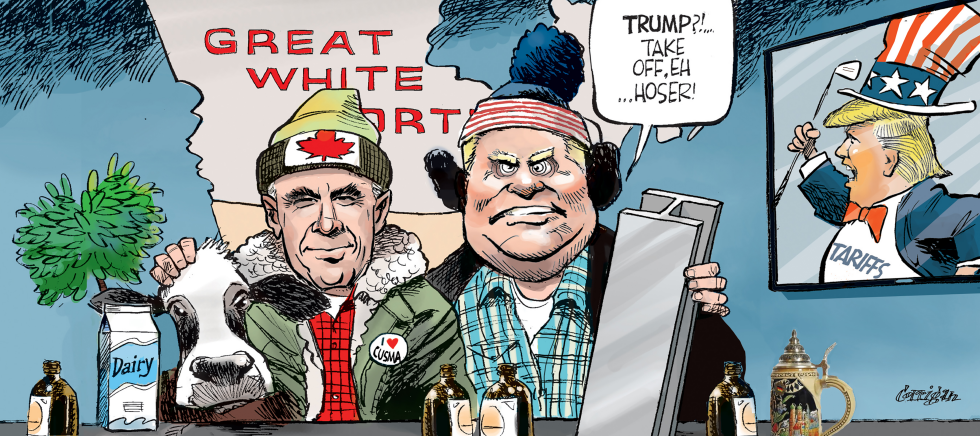
President Trump renewed tariff threats against Canada focused on dairy imports in late August 2026. Canadian leaders responded by highlighting domestic protections and cultural stakes. The move risks straining long-standing trade ties under existing agreements. The cartoon frames the confrontation as a direct challenge to Canadian sovereignty in agriculture. It portrays US policy as aggressive posturing that ignores mutual economic interests.
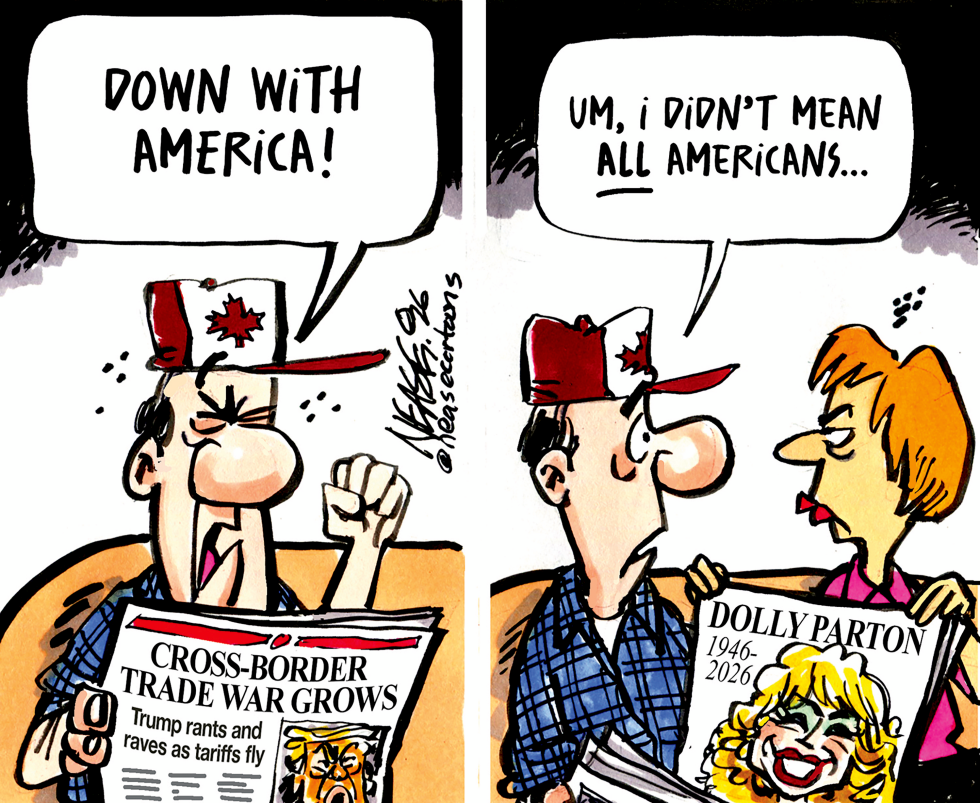
US-Canada trade tensions intensified in August 2026 as tariffs mounted amid heated rhetoric from President Trump. The dispute drew sharp reactions north of the border. The cartoon takes the position that even vocal critics of America make exceptions for beloved figures like Dolly Parton.
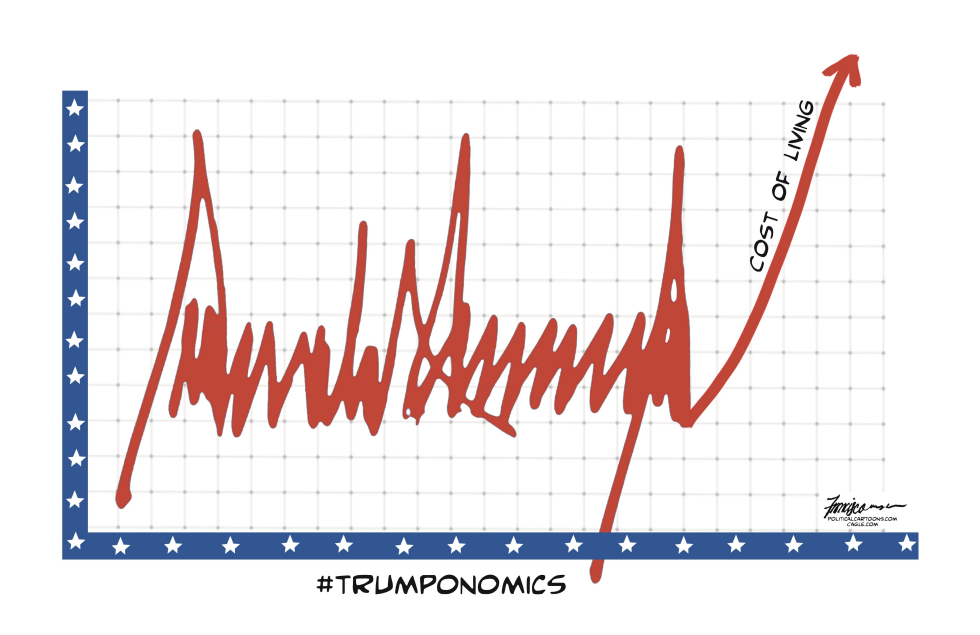
A new graph depicts the term Trumpnomics as a volatile red line that ends in a sharp upward spike labeled cost of living. The image responds to ongoing public concern over inflation and household expenses under the current administration. Critics argue that recent economic measures have failed to contain price growth. Supporters point to other factors such as global supply chains. The piece takes the position that Trumpnomics directly contributes to higher living costs.
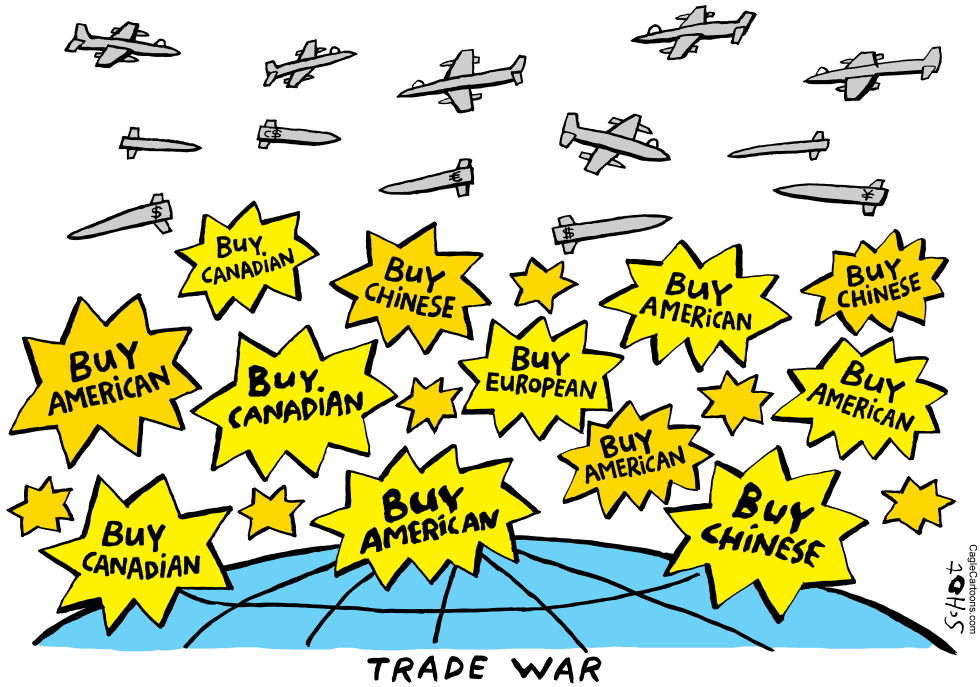
Competing buy national campaigns from multiple countries have intensified trade disputes, raising concerns over economic retaliation and supply chain disruptions. The piece argues these appeals are directly contributing to broader conflict.
President Trump imposed new tariffs targeting Canadian goods in August 2026, escalating bilateral trade friction over lumber, dairy and autos. The measures aim to protect U.S. industries and renegotiate terms. Markets reacted with volatility in both countries. The editorial argues the tariffs represent necessary leverage that weakens Canada's position and forces concessions.
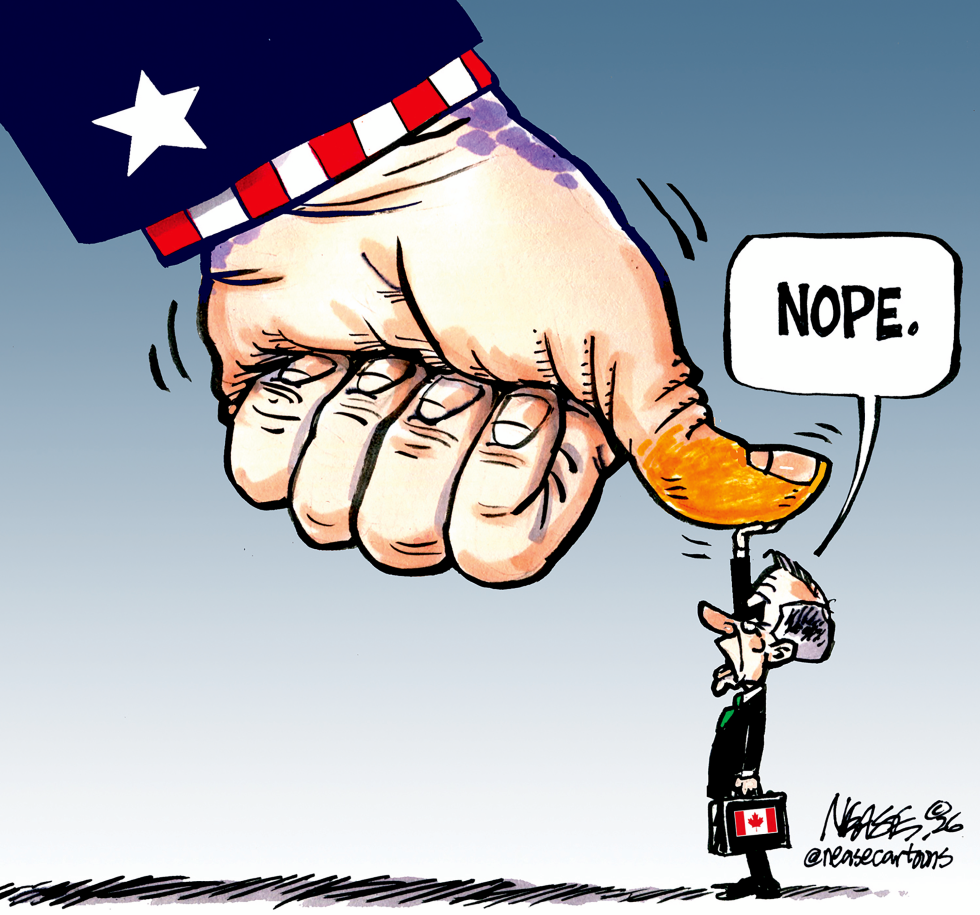
Canada has rejected a US trade offer during bilateral negotiations. The decision highlights ongoing tensions over economic terms between the two neighbors. It matters because trade relations affect supply chains and tariffs across North America. The piece portrays the Canadian stance as a direct refusal to the American proposal.
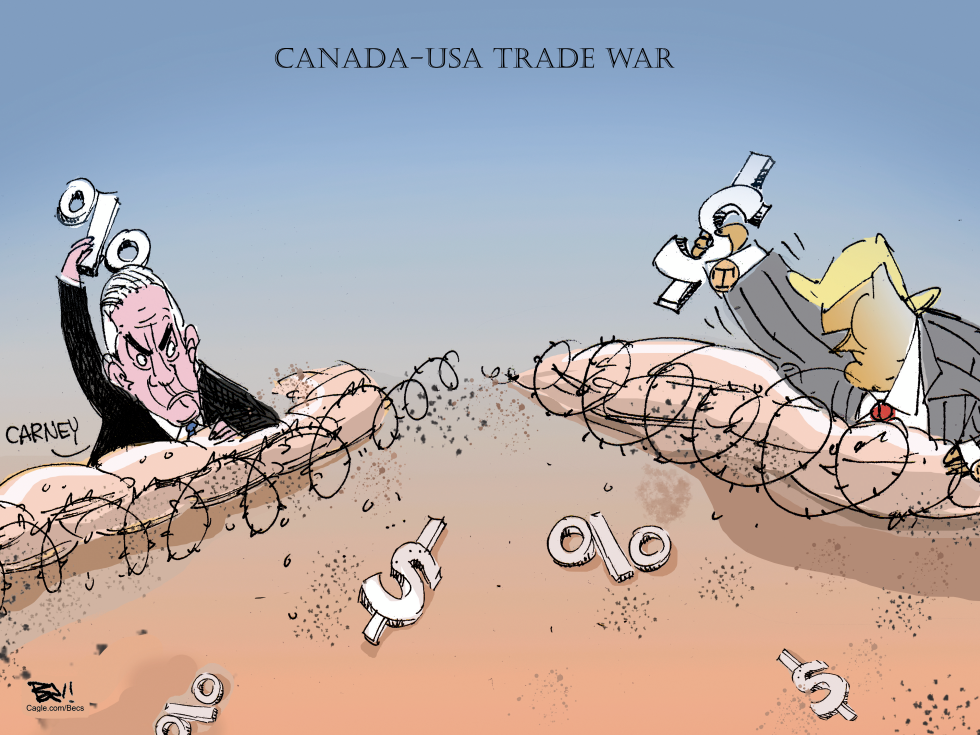
Mark Carney and President Trump clashed over Canada-U.S. trade policies in August 2026, with both sides imposing tariffs and barriers that disrupted cross-border commerce. The dispute centers on economic protections and retaliatory measures affecting businesses and consumers in both countries. The editorial highlights the mutual damage from escalating trade hostilities between the two nations.
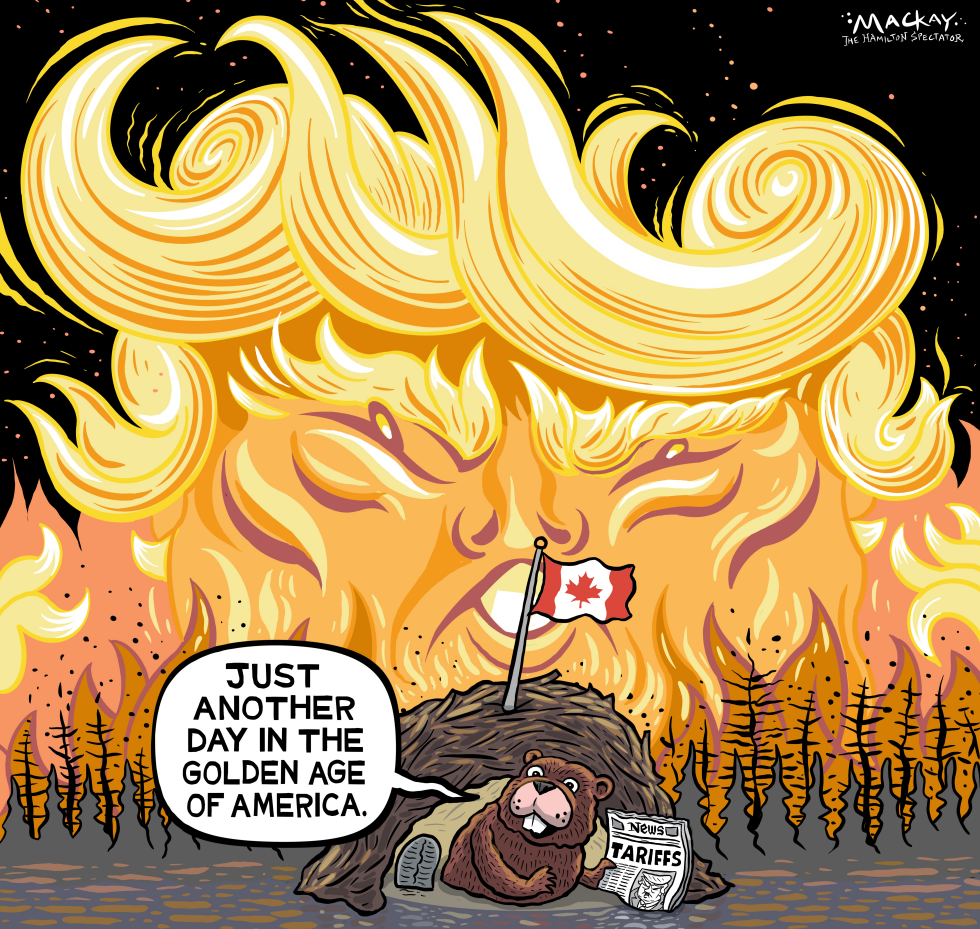
President Trump escalated tariff threats against Canada in mid-August 2026, targeting key exports and prompting Ottawa to brace for economic pressure. The move reignites bilateral trade tensions that have simmered since earlier rounds of duties. The cartoon portrays Canada hunkering down while dismissing the disruption as routine under the current administration.
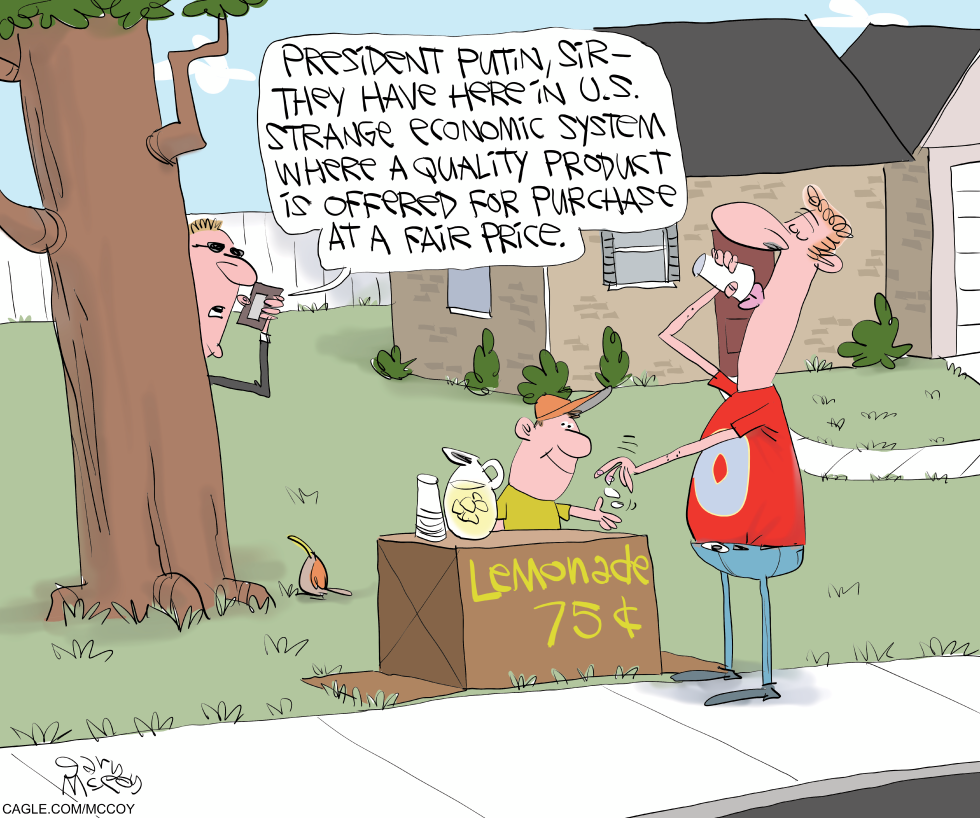
A cartoon depicts a man explaining the U.S. free-market system of offering quality goods at fair prices to President Putin during a phone call next to a child's lemonade stand. The scene underscores the perceived strangeness of American capitalism from a Russian perspective. The editorial position critiques the disconnect between market-driven economies and state-controlled systems.
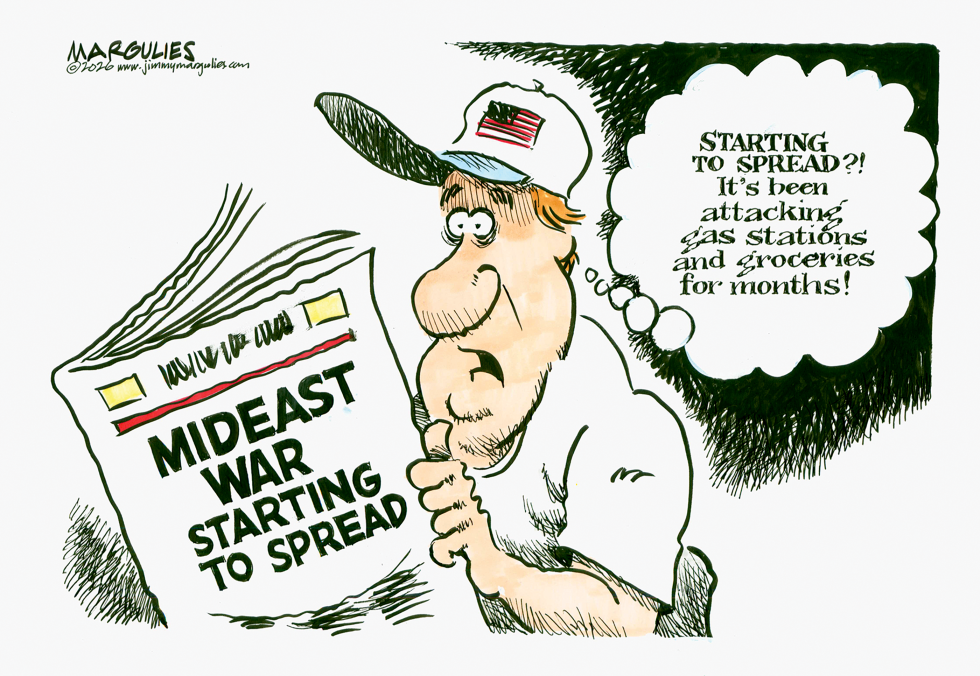
A newspaper headline declares the Mideast war starting to spread, prompting public reaction over its effects on daily costs. The piece highlights how energy and food prices have already risen due to ongoing regional conflict. It takes the position that the economic consequences for Americans have been evident long before any formal expansion of the fighting.
A man holds a sign protesting AI data centers taking land and resources. A Native American protester responds with skepticism. The July 2026 cartoon addresses growing conflicts between technology infrastructure and land use claims.
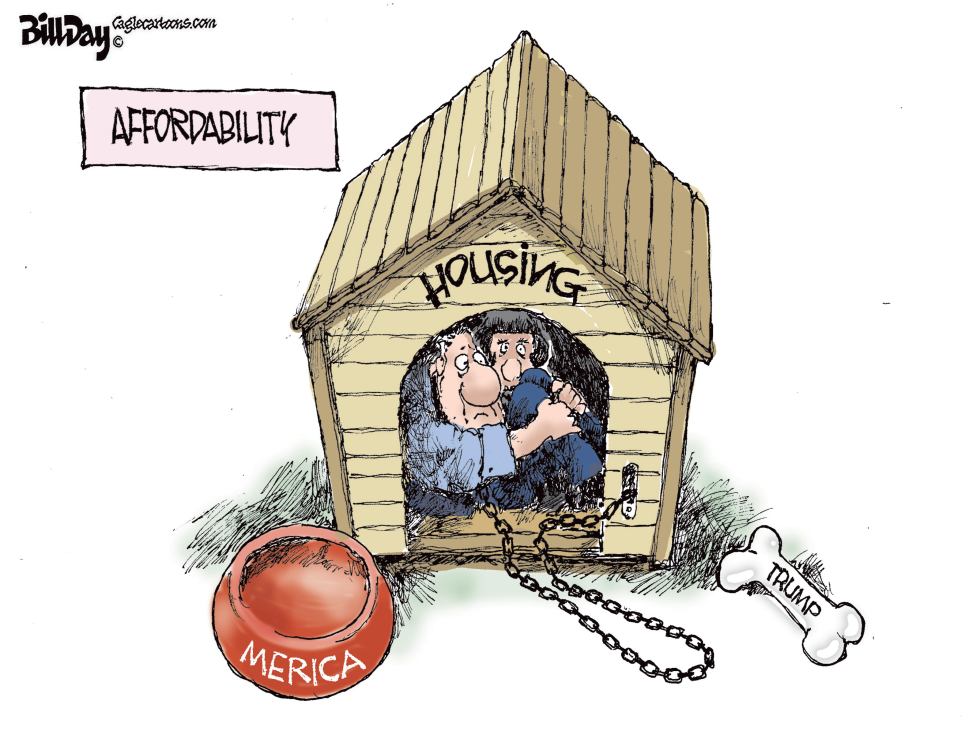
A couple appears confined inside a doghouse labeled housing on June 25 2026. A chain connects them to a bowl marked Merica while a bone labeled Trump lies nearby and an affordability sign stands above. The scene addresses housing costs during the period.