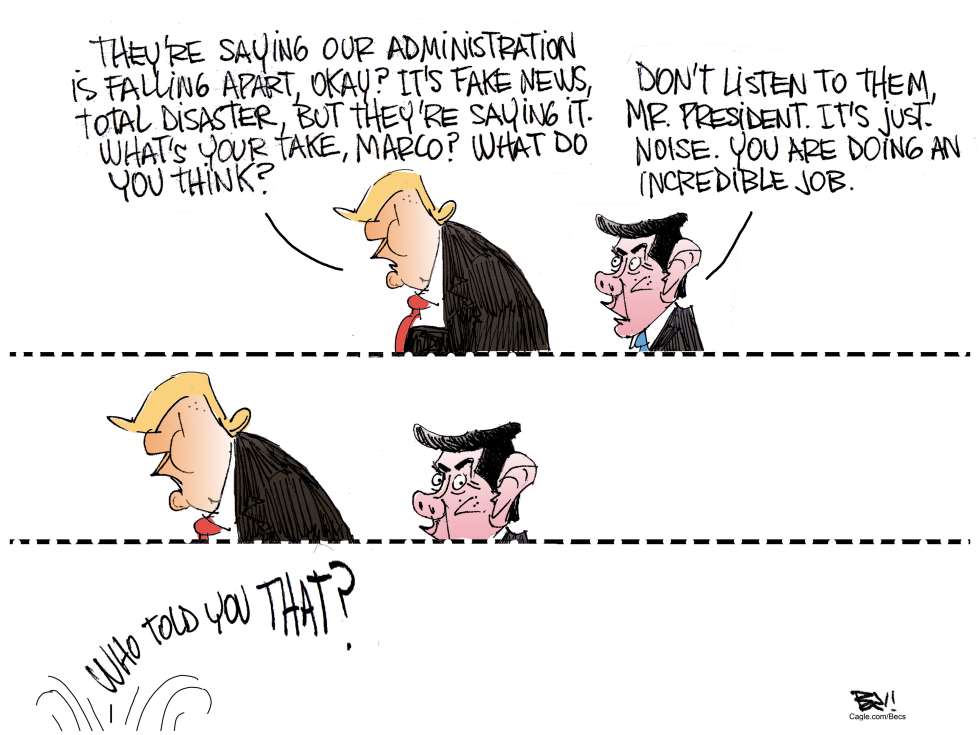
President Trump asked Senator Marco Rubio for his assessment of reports that the administration is in disarray, labeling them fake news. Rubio dismissed the reports as noise and praised Trump's performance. Trump responded by questioning who had told Rubio that assessment. The exchange highlights tensions over loyalty and information flow inside the administration. The cartoon portrays Rubio's positive reply as triggering suspicion rather than reassurance.
Donald Trump has publicly offered $5000 payments to Americans who follow his directives, framing the incentive as a direct reward for alignment. The pledge has drawn immediate questions from his own base about the status of related DOGE checks previously promised. The move underscores ongoing efforts to maintain supporter enthusiasm through financial inducements. Critics view the tactic as an attempt to convert political loyalty into personal obedience. The cartoon highlights the transactional nature of the offer and the skepticism it has already generated among core supporters.
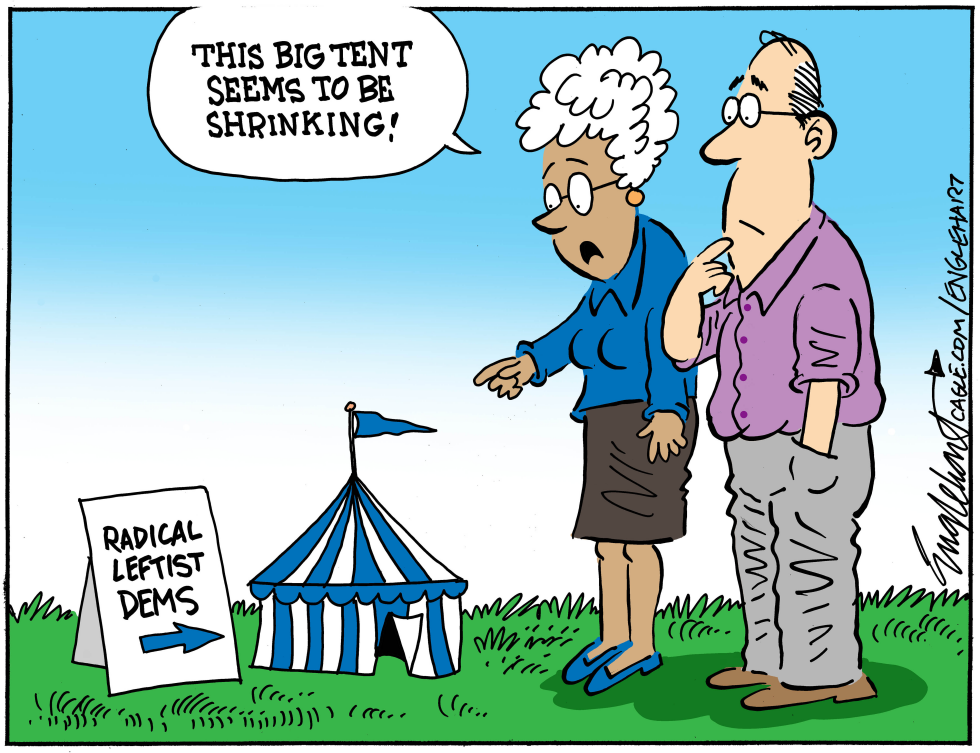
Democratic Party figures have grown concerned that the traditional big tent coalition is contracting as radical leftists consolidate control over the party's direction and messaging. The shift sidelines moderates and narrows the range of acceptable views within the organization. This dynamic raises questions about the party's ability to maintain broad electoral appeal in upcoming cycles. The editorial takes the position that the exclusionary turn is self-defeating and accelerates the party's isolation from mainstream voters.
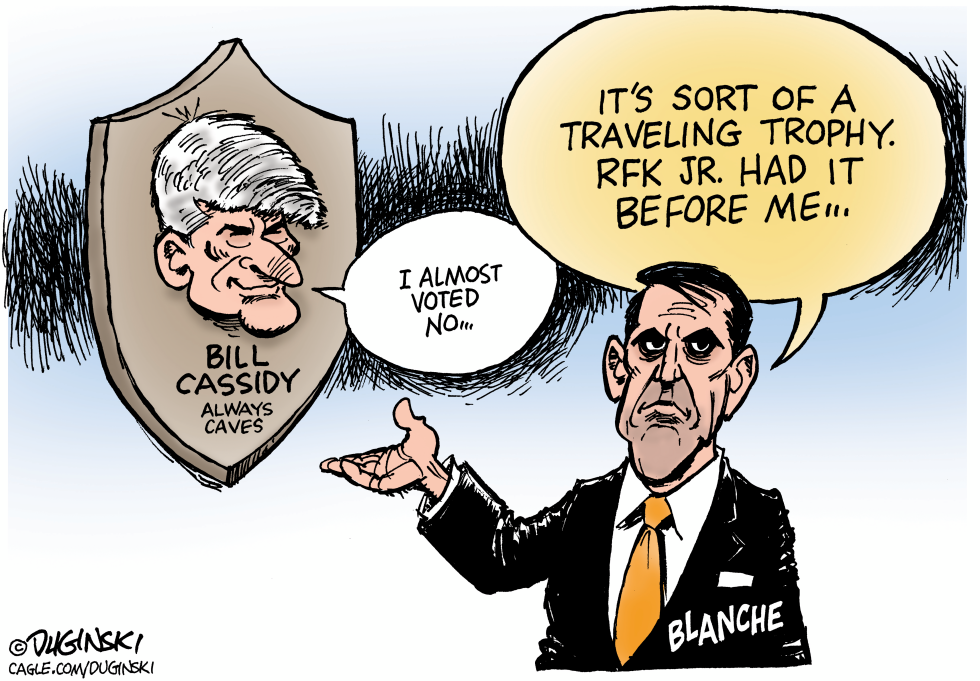
Todd Blanche, recently confirmed to a senior administration post, has mounted a shield bearing Sen. Bill Cassidy\'s likeness on his office wall. The Louisiana Republican, long viewed as a potential swing vote, backed the nomination despite earlier signals of hesitation. RFK Jr. reportedly displayed the same item during his own tenure. The arrangement underscores ongoing tensions within the GOP over loyalty tests and confirmation battles. The piece portrays Cassidy\'s support as another instance of yielding under pressure rather than a principled stand.
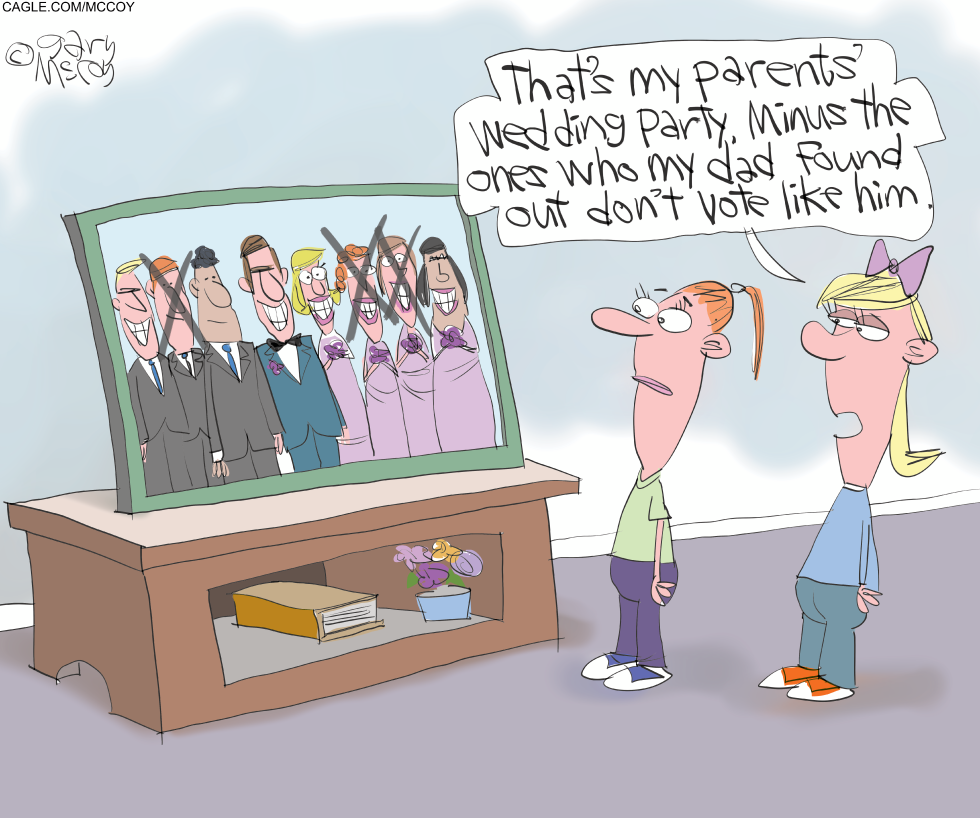
A television displays a wedding party photo with multiple guests marked out by large X's. Two children stand in front of the screen. The girl with the ponytail explains that her father removed family members from the wedding party after discovering they do not vote the same way he does. The scene highlights how political disagreements can fracture family events and relationships.
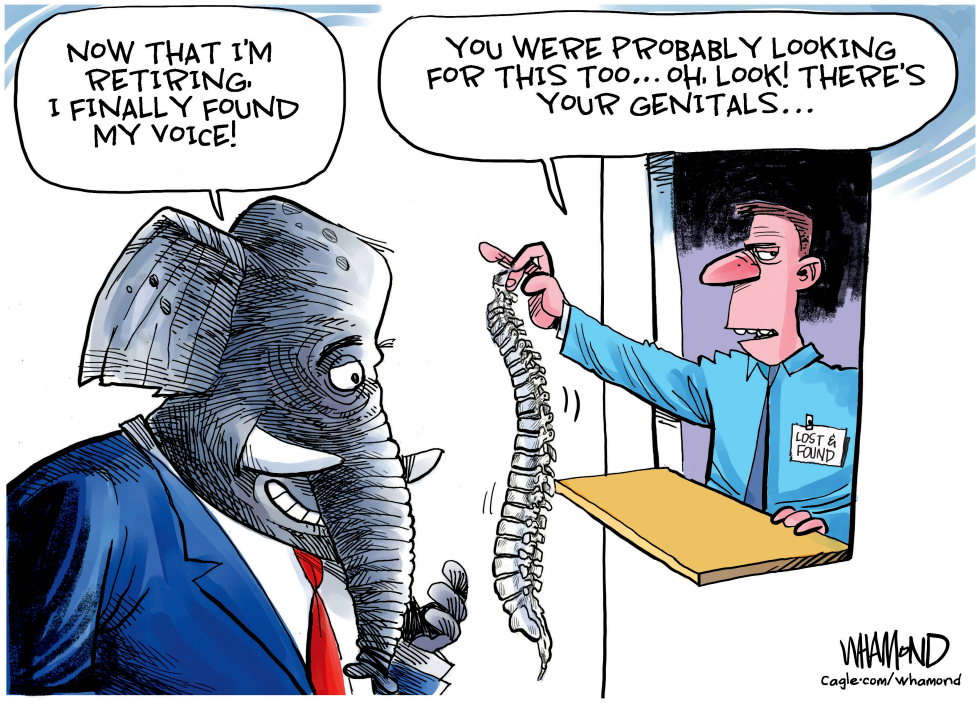
The image shows an elephant character in a suit next to a lost and found counter where a man holds a spine and a sign reads lost and found. Two speech bubbles contain text about retiring and finding a voice along with genitals.
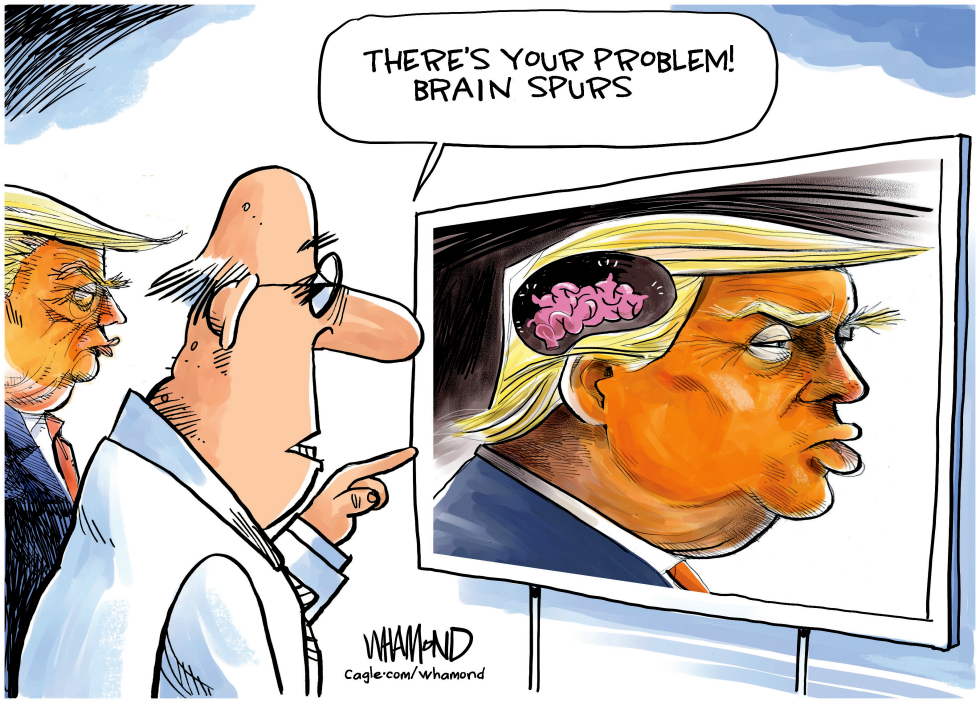
A physician in a lab coat points to a medical screen displaying Donald Trump's profile with an exposed brain labeled bone spurs. The speech bubble declares the diagnosis as the source of the problem.
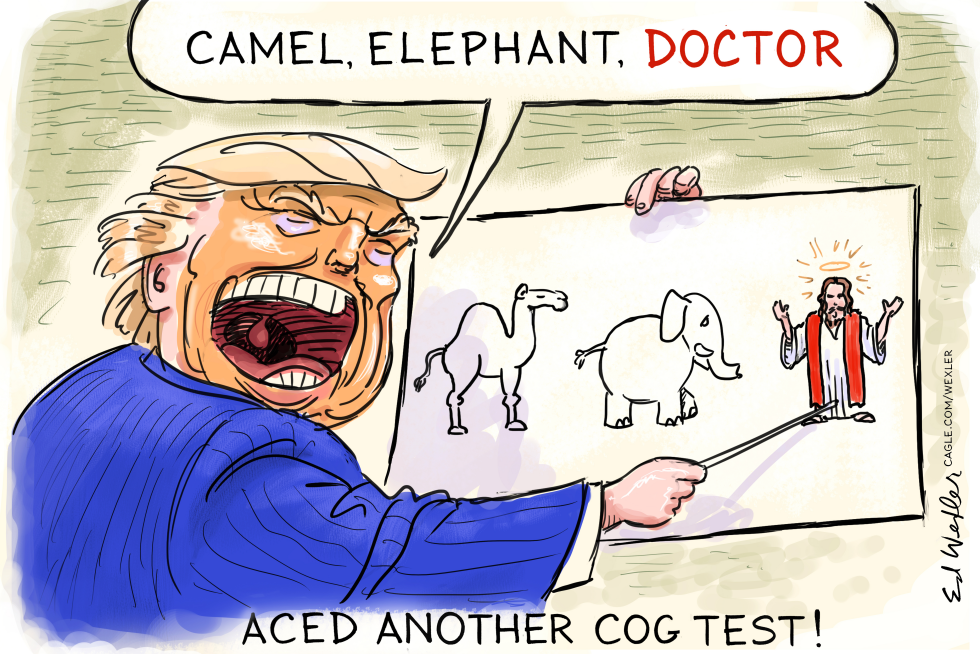
Ed Wexler's political cartoon captures Trump in a moment of satirical glory, mouth agape as he shouts 'Camel. Elephant. Doctor.' while pointing to a flipchart with crude drawings: a camel, an elephant, and a haloed Jesus figure in red robes, arms raised. The caption below reads 'Aced Another Cog Test!' blending Trump's real-life boasts about cognitive exams with absurd humor. Tags like Trump cognitive test, satirical illustration, Ed Wexler cartoon, Trump elephant camel doctor, humor Trump mental acuity, and political humor Trump health claims underscore the cartoon's sharp commentary on public perceptions of Trump's mental sharpness, delivered in classic cartoon style that's direct and unsparing.
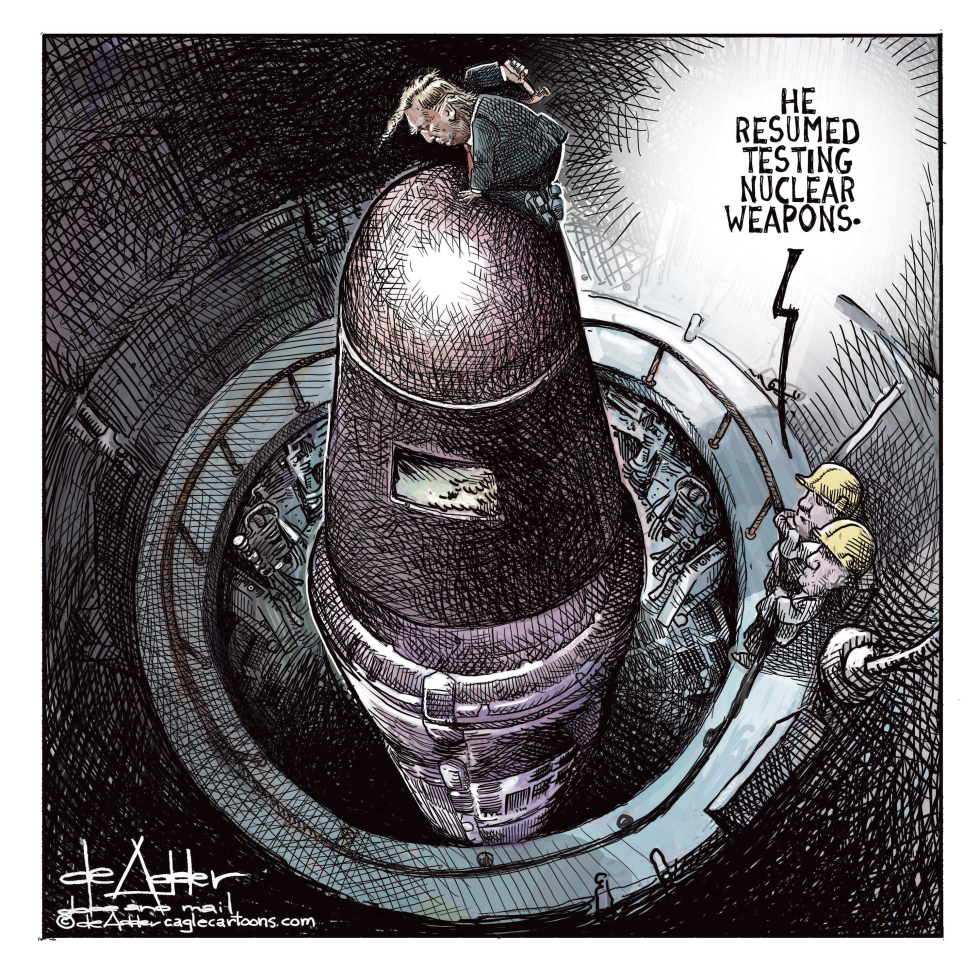
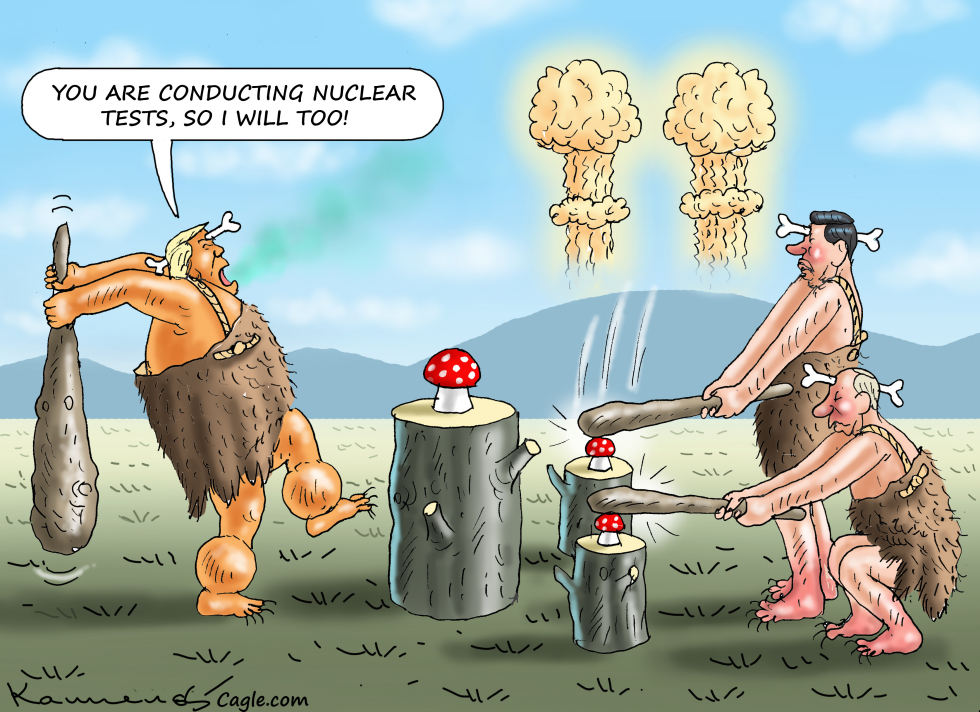
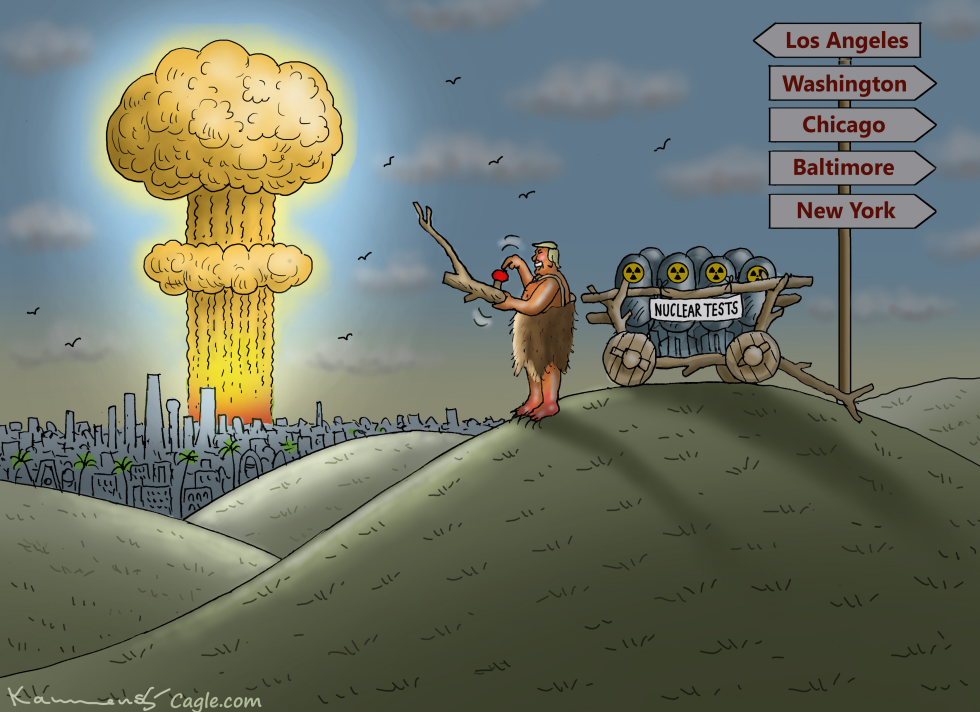
On November 3 2025 the cartoon depicts a caveman resembling Donald Trump brandishing a club and declaring he will conduct nuclear tests because others are doing so, with two mushroom clouds visible in the background and two fellow cavemen striking objects on tree stumps.