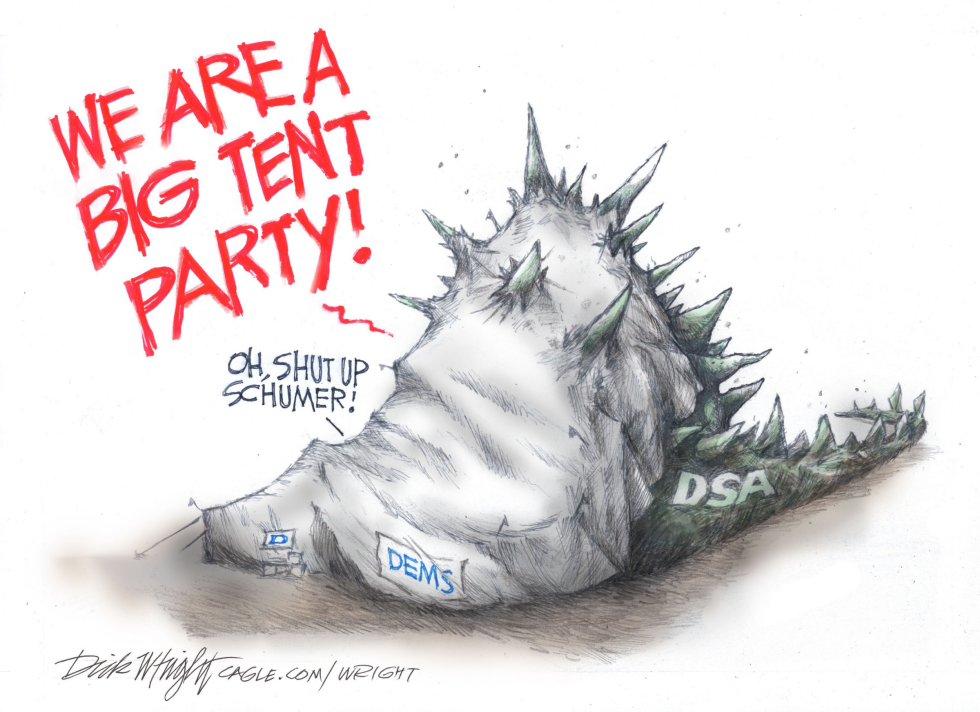
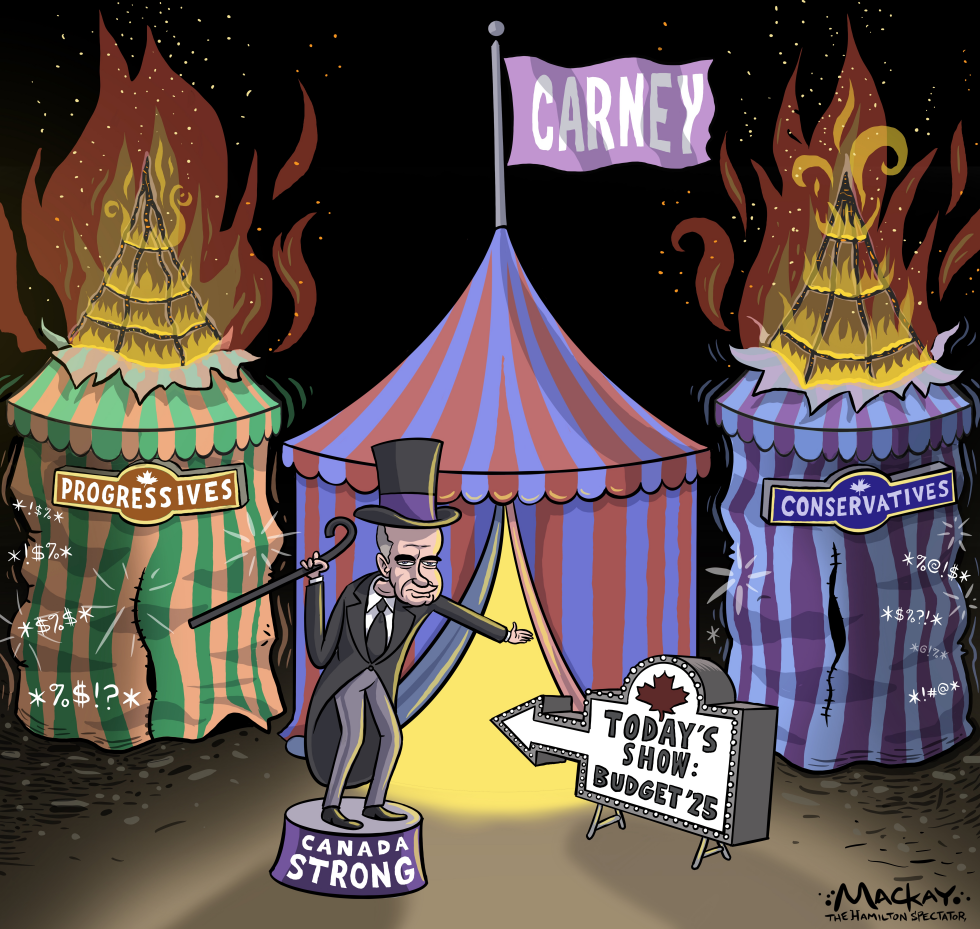
Democratic leaders continue to promote the party as a big tent open to all factions. The DSA's growing role creates visible friction with establishment figures like Senate Minority Leader Chuck Schumer. This dynamic highlights ongoing tensions over the party's direction and messaging ahead of future elections. The piece argues that the big tent claim rings hollow when the socialist wing dominates and dismisses traditional voices.
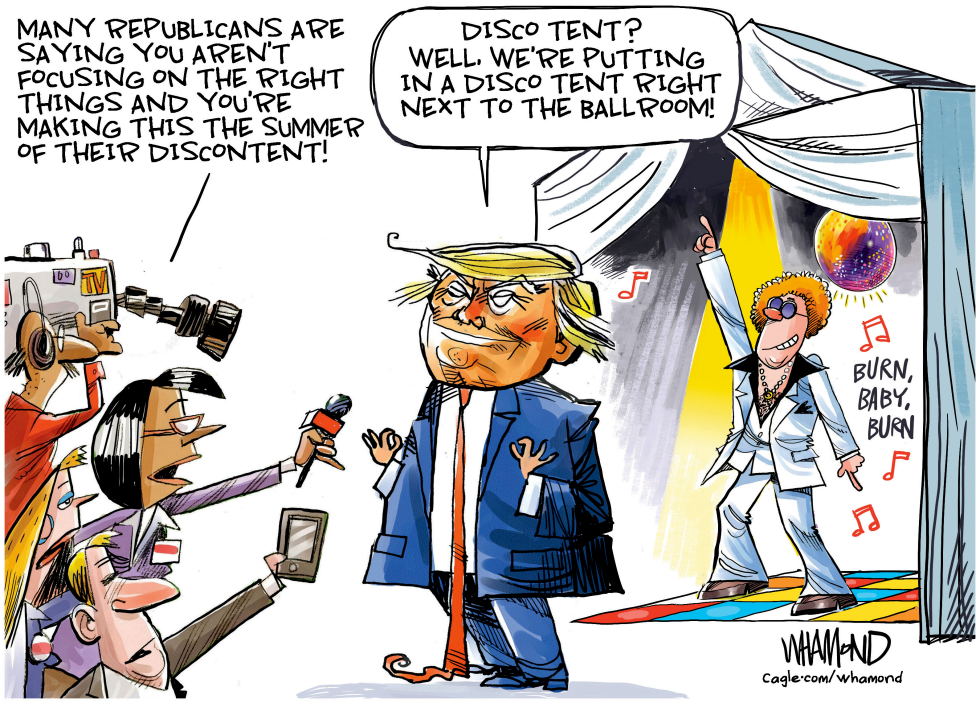
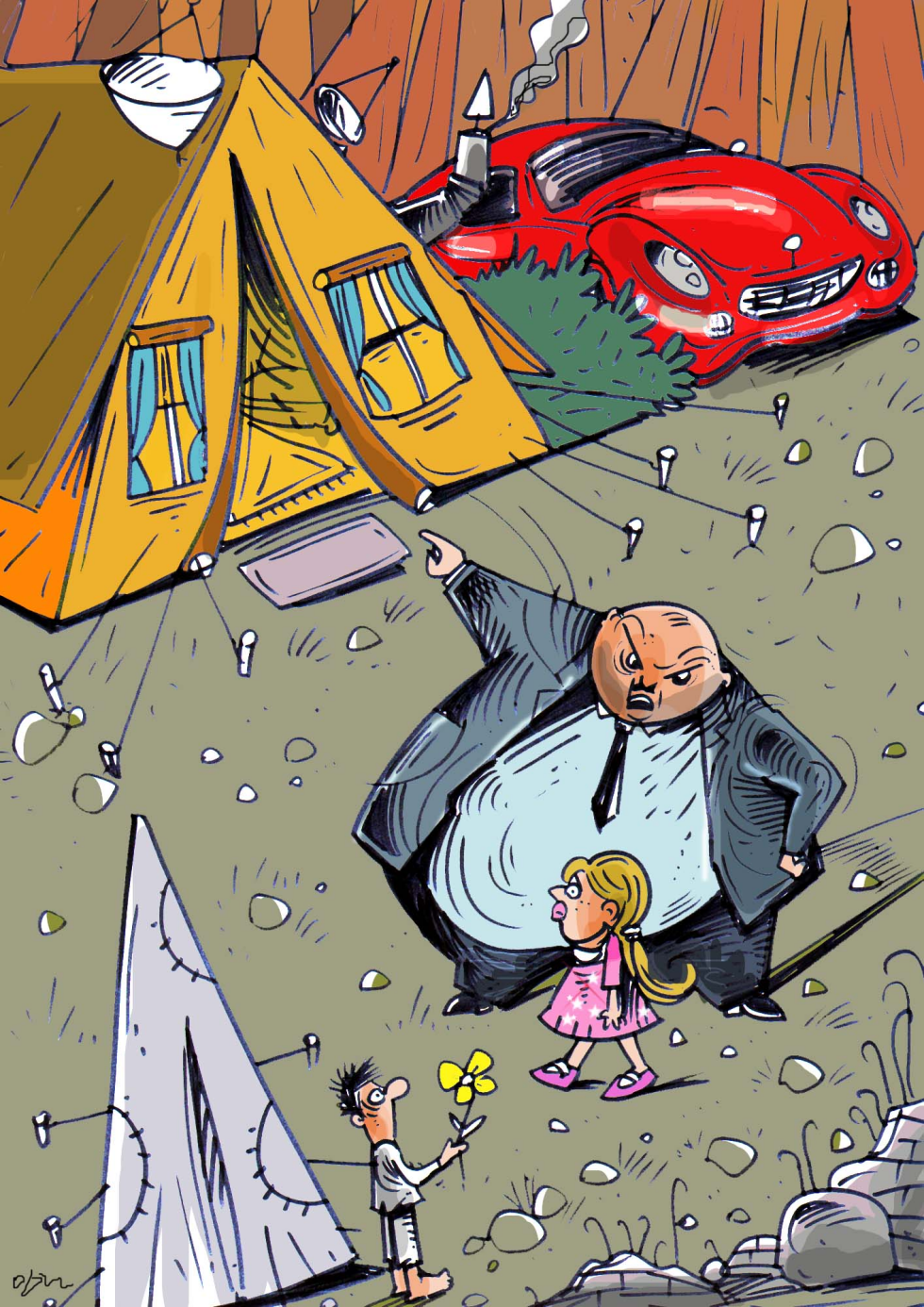
Republicans have publicly criticized Donald Trump for diverting focus from core issues during the summer of 2026, highlighting internal party friction over perceived misplaced priorities. The criticism centers on White House renovation choices that include adding a disco tent adjacent to the ballroom. Trump faces direct questions from the press about these decisions. The editorial position frames the episode as evidence of deepening discontent within the Republican ranks over the president's agenda.
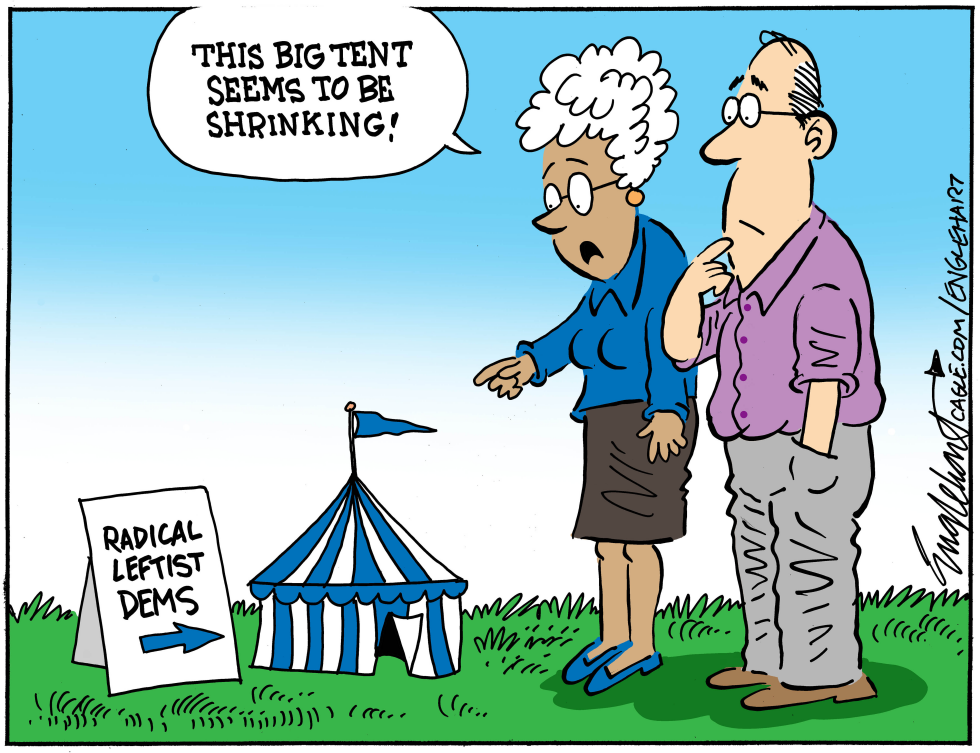
Democratic Party figures have grown concerned that the traditional big tent coalition is contracting as radical leftists consolidate control over the party's direction and messaging. The shift sidelines moderates and narrows the range of acceptable views within the organization. This dynamic raises questions about the party's ability to maintain broad electoral appeal in upcoming cycles. The editorial takes the position that the exclusionary turn is self-defeating and accelerates the party's isolation from mainstream voters.
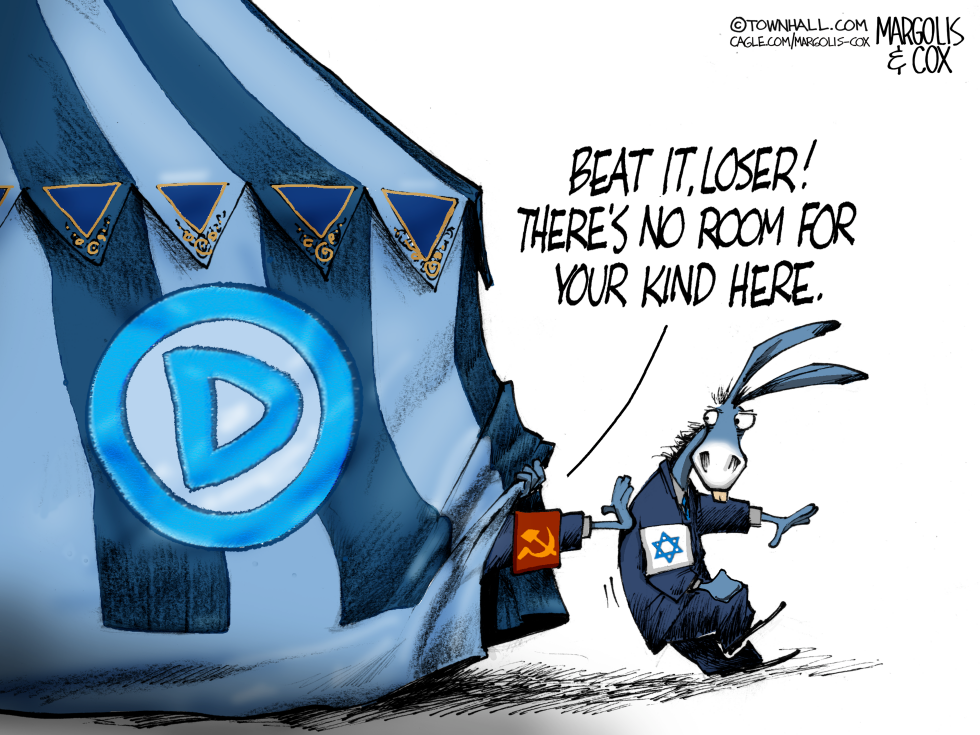
The Democratic Party's big tent faces internal pressure over its stance on Israel and ideological extremes as the traditional donkey mascot is shown being expelled. The cartoon highlights tensions between inclusivity claims and rejection of certain viewpoints. It argues the party is narrowing its base by excluding elements tied to both pro-Israel positions and communism.
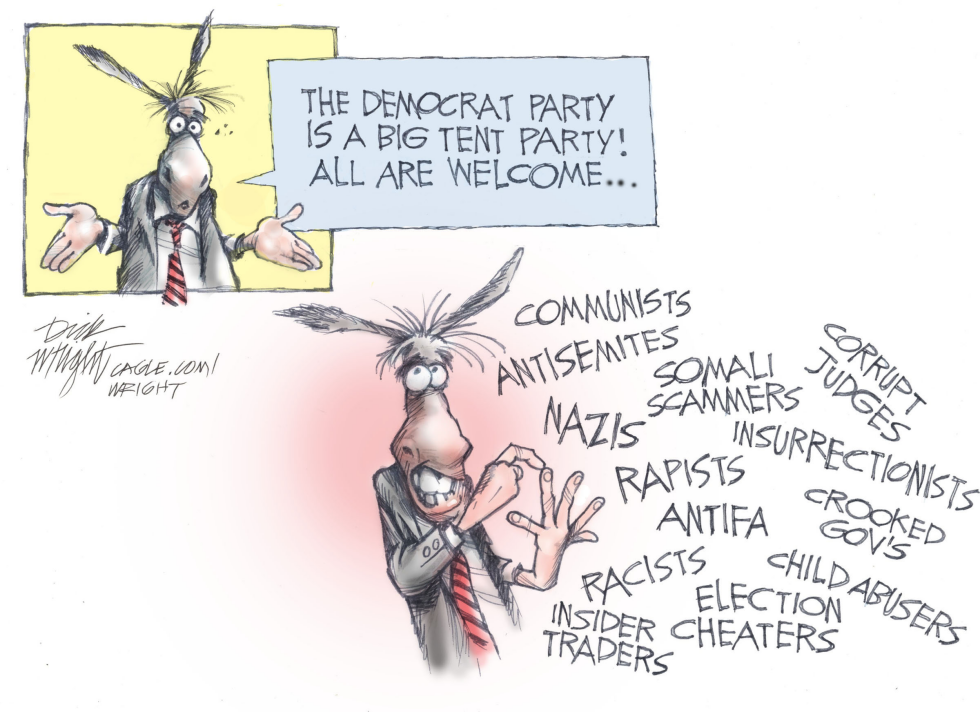
A July 2026 cartoon by Dick Wright depicts the Democrat Party's big tent claim through an inset donkey figure. The main character, also a donkey in a suit, gestures amid a cloud of labels naming groups such as communists, antisemites, Nazis, rapists, Antifa, racists, and election cheaters. The image critiques the party's inclusivity rhetoric by associating it with these categories. Publication occurs amid ongoing partisan debates over party platforms and voter bases.
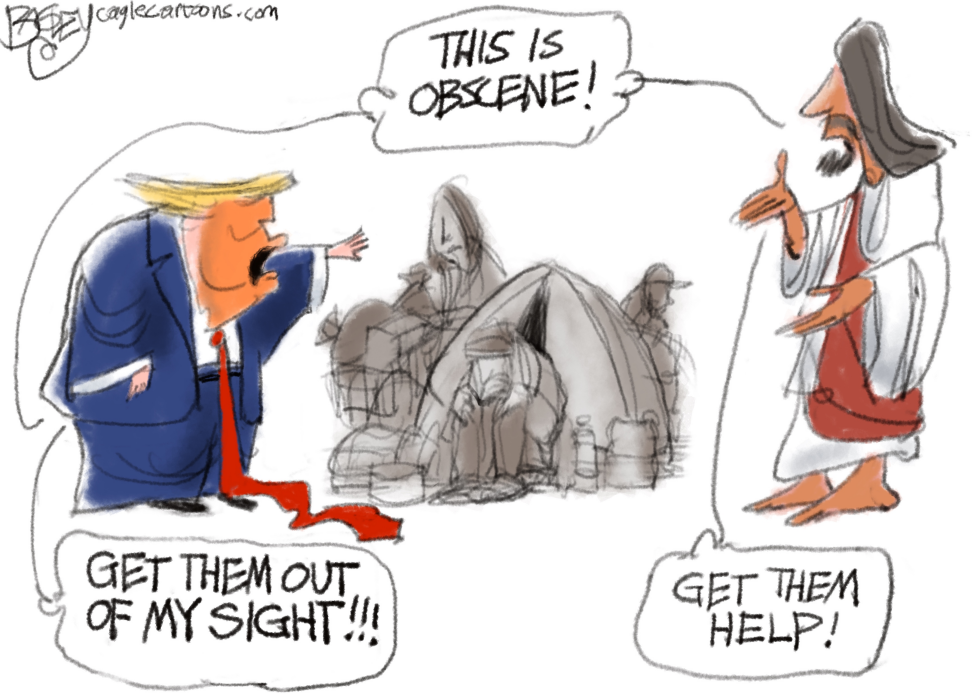
Pat Bagley's latest piece captures a stark contrast in this Trump homelessness cartoon, where a caricature in a blue suit and red tie gestures furiously at a cluster of makeshift tents and huddled figures, declaring the scene obscene and demanding their removal. On the right, a long-haired, bearded man in a white robe and red sash extends a hand, advocating to get them help instead. The homeless crisis political humor underscores differing approaches to urban plight, with the Trump Jesus contrast cartoon highlighting themes of expulsion versus empathy. Such editorial cartoon homelessness policy works often spark debate on societal responses, blending sharp lines and simple composition for maximum impact in satirical take Trump compassion.