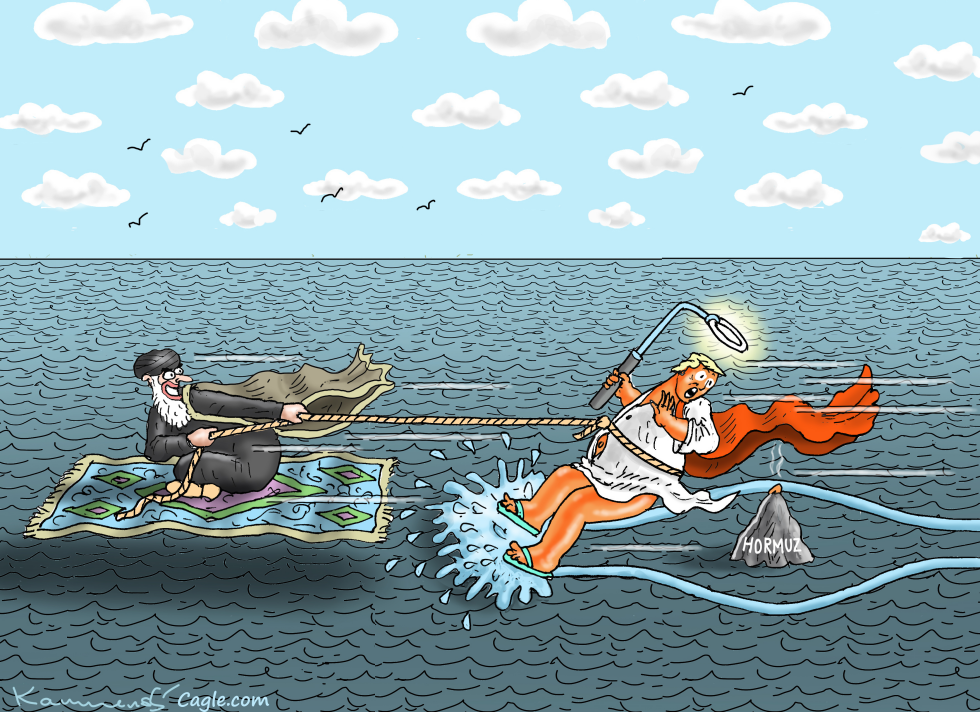
Tensions in the Strait of Hormuz have escalated with threats to shipping lanes critical for global oil supplies. Israeli and U.S. leaders face mounting losses from disruptions. The cartoon argues that involvement risks dragging both into deeper conflict without clear gains.
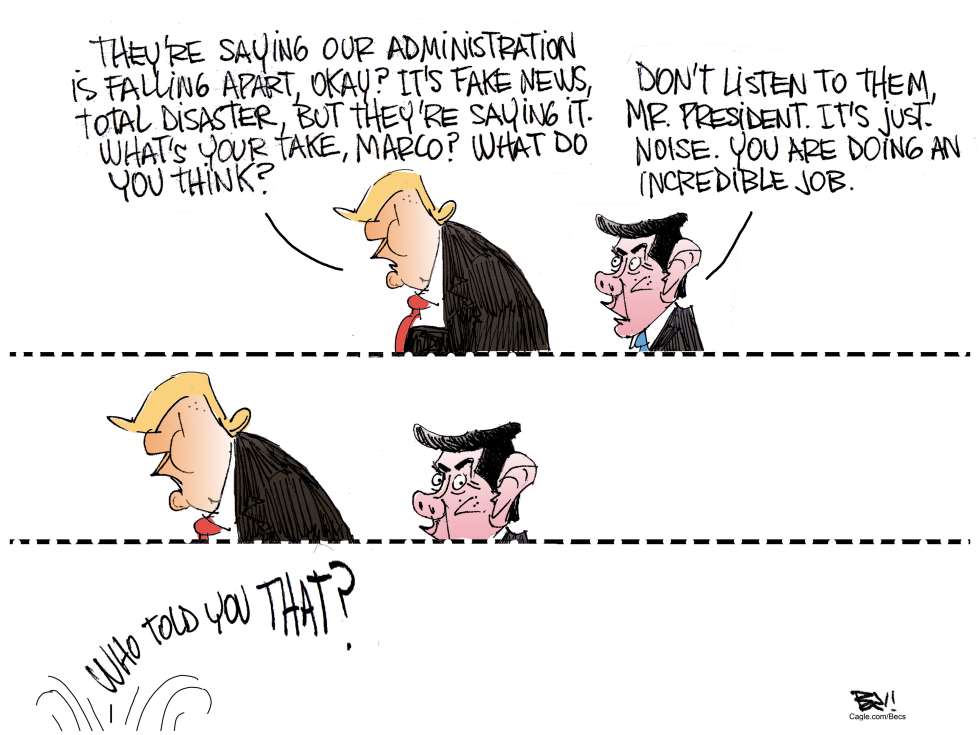
President Trump asked Senator Marco Rubio for his assessment of reports that the administration is in disarray, labeling them fake news. Rubio dismissed the reports as noise and praised Trump's performance. Trump responded by questioning who had told Rubio that assessment. The exchange highlights tensions over loyalty and information flow inside the administration. The cartoon portrays Rubio's positive reply as triggering suspicion rather than reassurance.
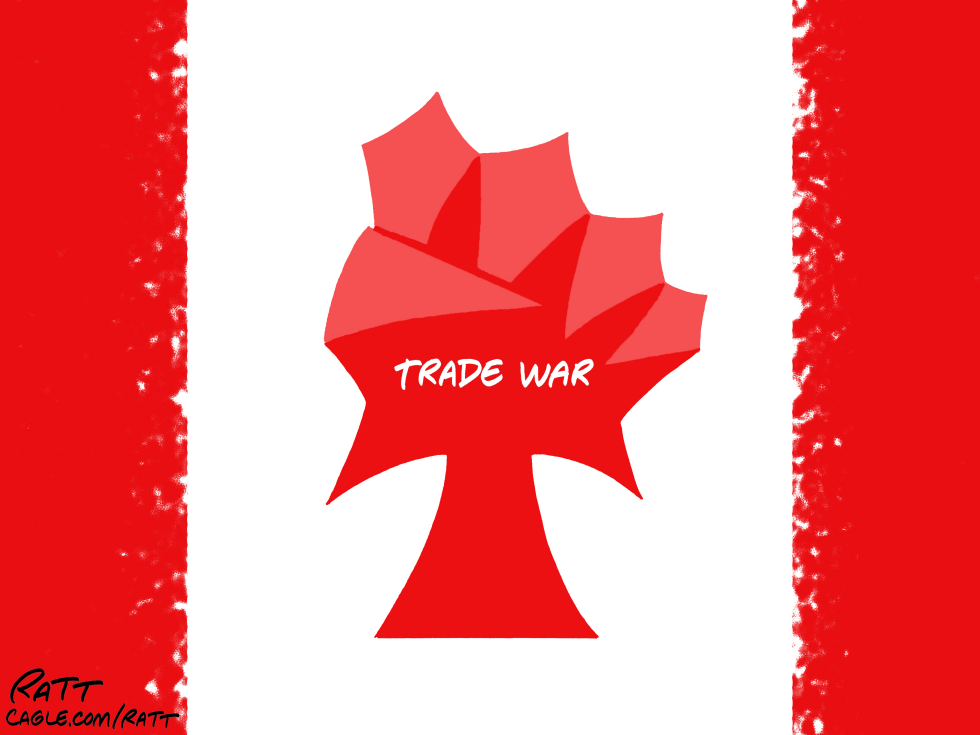
Ongoing US-Canada trade tensions escalated in 2026 with new tariff threats targeting Canadian exports. The dispute threatens key sectors including autos, lumber and agriculture, raising costs for consumers on both sides of the border. Canada has signaled plans to diversify markets and strengthen domestic industry. The cartoon frames the conflict as a direct assault on Canadian sovereignty and economic stability. It portrays the trade war as fracturing national symbols while urging a stronger northern response.
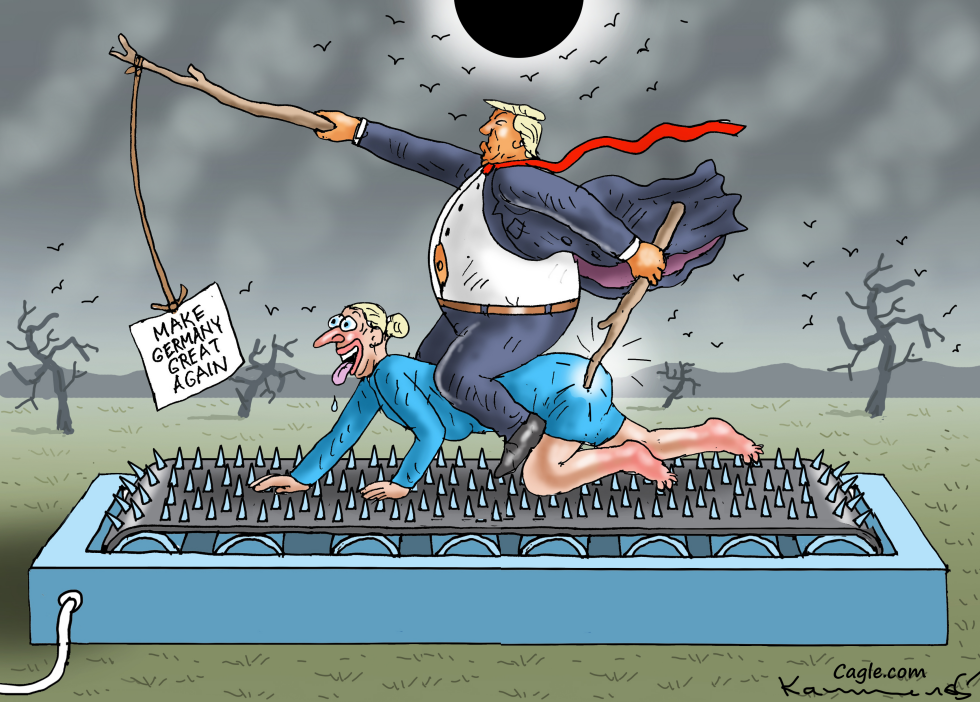
Donald Trump promotes a revival slogan aimed at Germany while Angela Merkel faces the consequences. The effort highlights ongoing tensions in transatlantic relations and questions about external influence on European domestic policy. The piece argues that such interventions impose unnecessary hardship without delivering benefits.
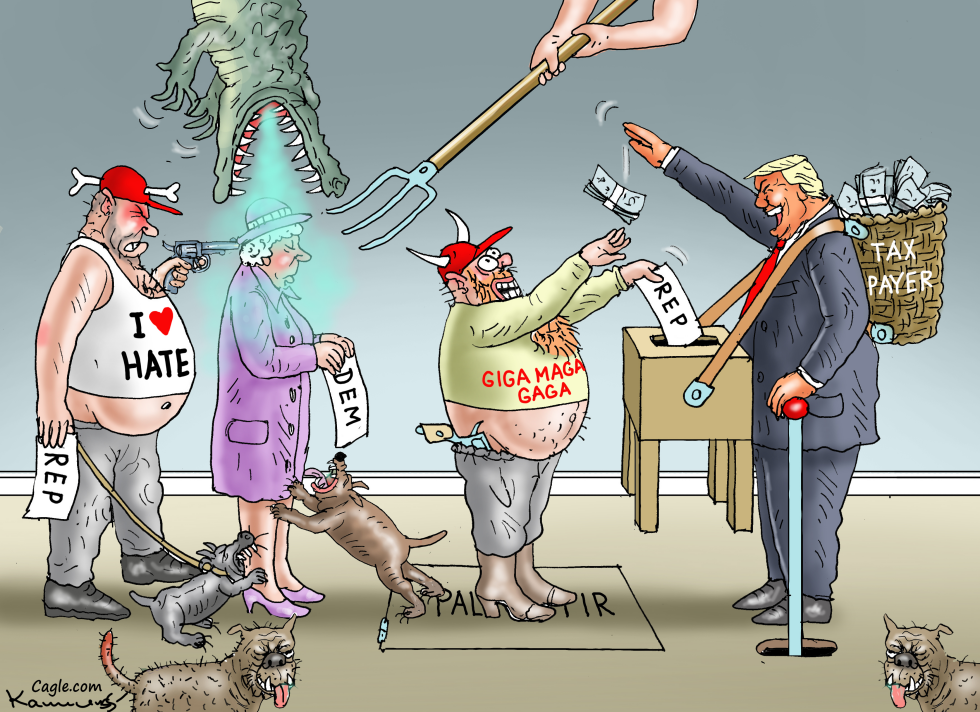
As the 2026 midterm elections approach, former President Trump has positioned himself as a central force in Republican campaigns, directing resources and mobilizing supporters. The cartoon highlights the use of taxpayer money in these efforts and the intense partisan divide, with Democrats portrayed as under attack. It takes the position that such involvement risks undermining fair electoral processes.
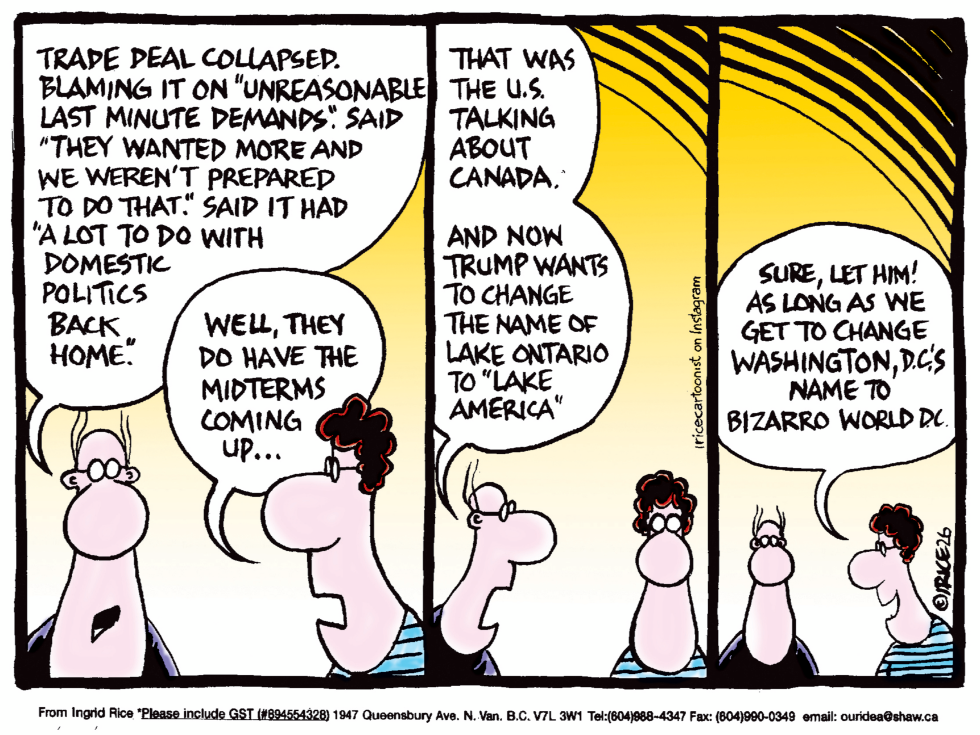
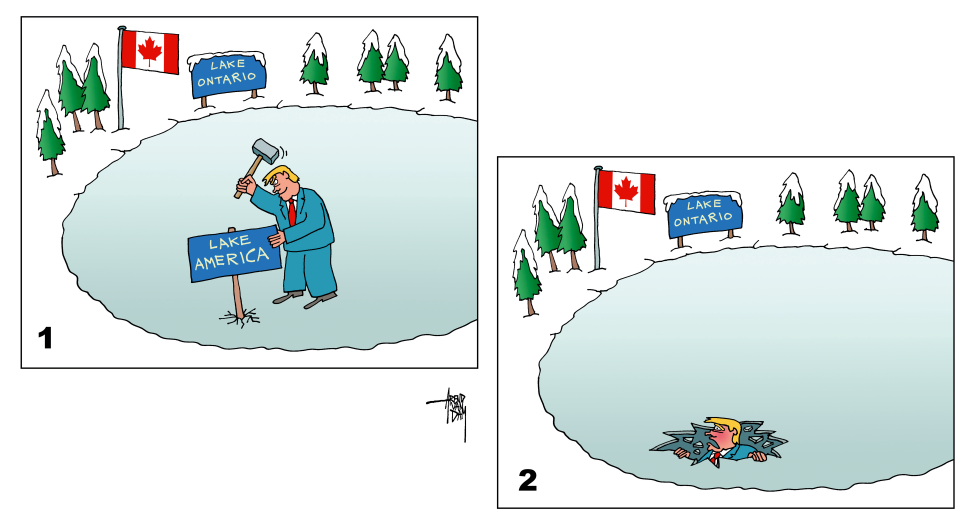
A Canada-U.S. trade deal collapsed after U.S. negotiators cited unreasonable last-minute demands and linked the failure to domestic politics ahead of midterms. President Trump then proposed renaming Lake Ontario to Lake America. Canadian officials responded by offering to rename Washington D.C. to Bizarro World DC if the change proceeds. The exchange highlights how trade tensions and political posturing are escalating between the two countries. The cartoon mocks the name-change idea as emblematic of broader dysfunction in bilateral relations.
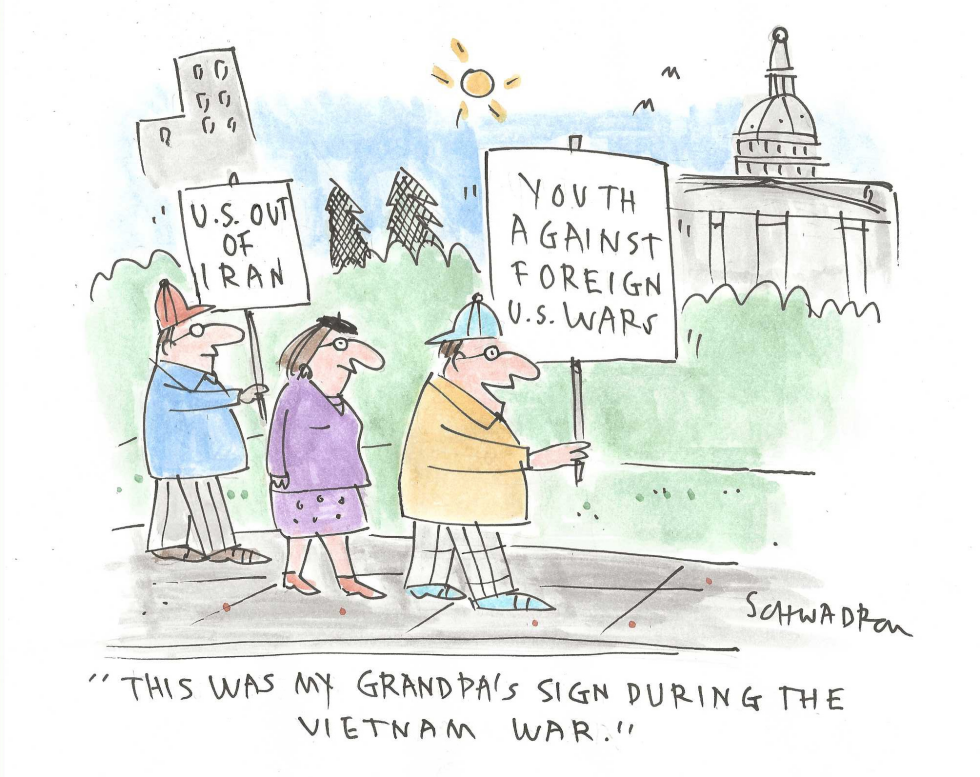
Anti-war demonstrators gather near the Capitol with signs calling for an end to US involvement in Iran and broader foreign conflicts. One protester notes that his sign originated during the Vietnam War, underscoring continuity across generations. The piece highlights persistent public opposition to military engagements abroad and questions the repetition of past policy mistakes.
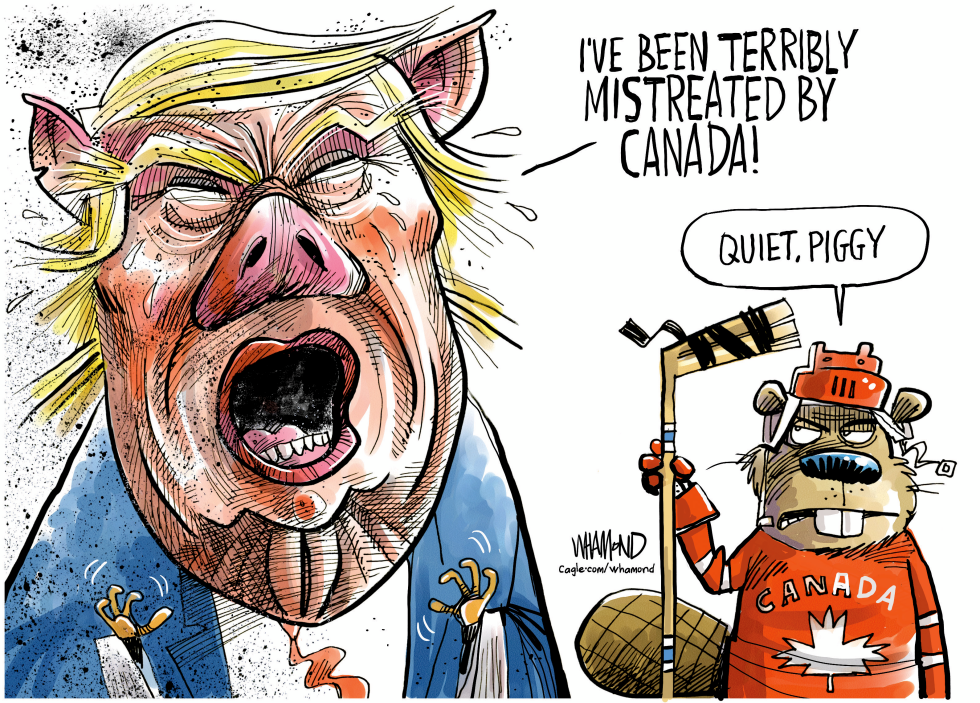
Donald Trump has publicly accused Canada of mistreating the United States in ongoing trade matters. The claim comes amid renewed friction over tariffs and cross border commerce. Canada has responded with its own pointed rebuttal. The exchange highlights persistent strains in bilateral relations. The cartoon portrays the accusation as exaggerated and the Canadian reply as direct. It suggests the US position lacks substance and invites a firm counter.
Donald Trump directed an aide to plant a Lake America sign on the frozen surface of Lake Ontario in a symbolic claim on Canadian waters. The move was part of ongoing US-Canada friction over shared resources and border definitions. The ice broke, sending the figure through the surface. The episode underscores the practical limits of unilateral US assertions against a close neighbor whose cooperation remains essential on trade, security, and environmental issues. The cartoon presents the effort as self-defeating and poorly timed.
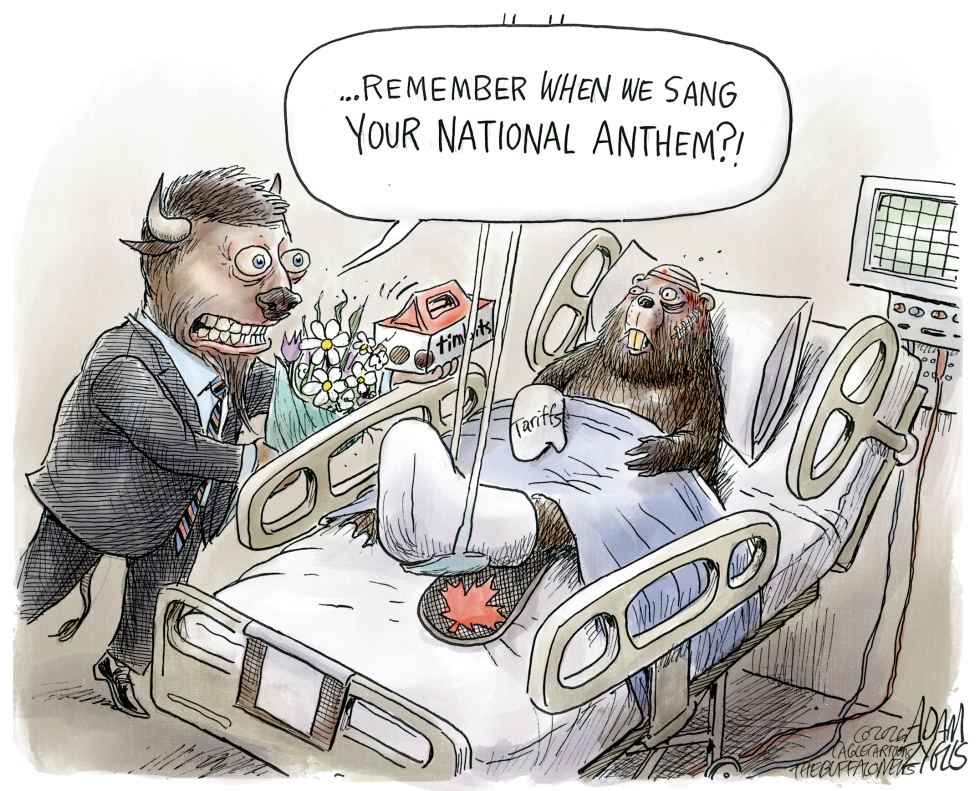
The cartoon depicts a suited bull figure at the bedside of an injured beaver wearing a hospital gown labeled Tariffs. The beaver lies in a hospital bed with a maple leaf emblem visible. A speech bubble from the bull references singing the national anthem. Medical equipment and a Tim Hortons box appear in the room. The image addresses ongoing tariff policies affecting US Canada trade relations as of the September 2026 publication date. The visual metaphor highlights economic harm to the Canadian side of the partnership while recalling past cooperative gestures between the two nations.
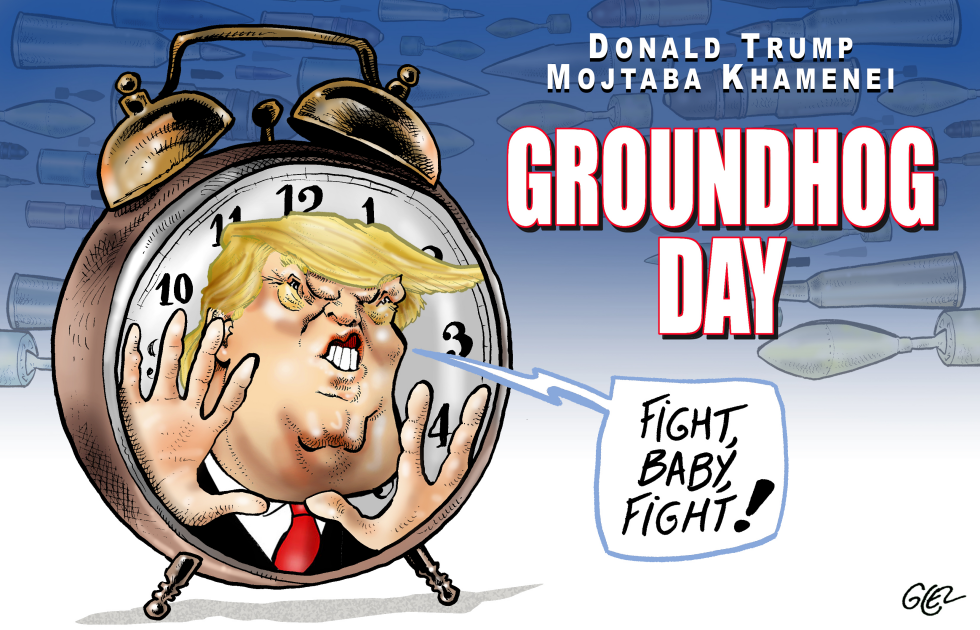
On September 3 2026 the cartoon highlights the recurring pattern of US-Iran tensions involving Donald Trump and Mojtaba Khamenei. The piece frames their renewed standoff as an endless Groundhog Day loop marked by missile threats and bellicose rhetoric. It argues that the same actors and dynamics keep producing the same dangerous cycle without resolution.
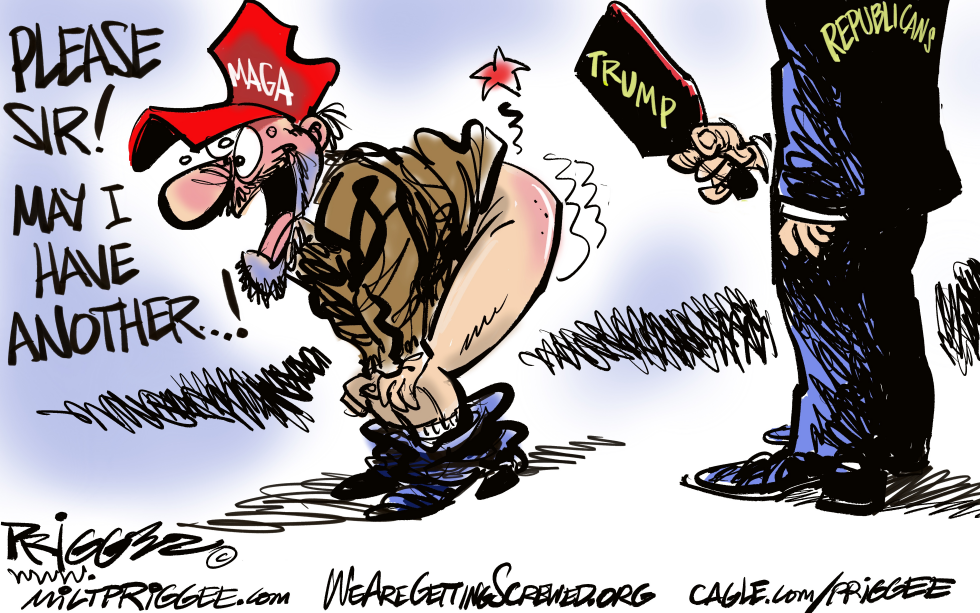
The cartoon depicts a caricature of Donald Trump bent over with pants down, pleading 'Please sir! May I have another!' while a Republican figure holds a Trump-labeled book ready to strike. Published September 1, 2026, the image comments on the power relationship between Trump and the Republican Party after recent electoral events.
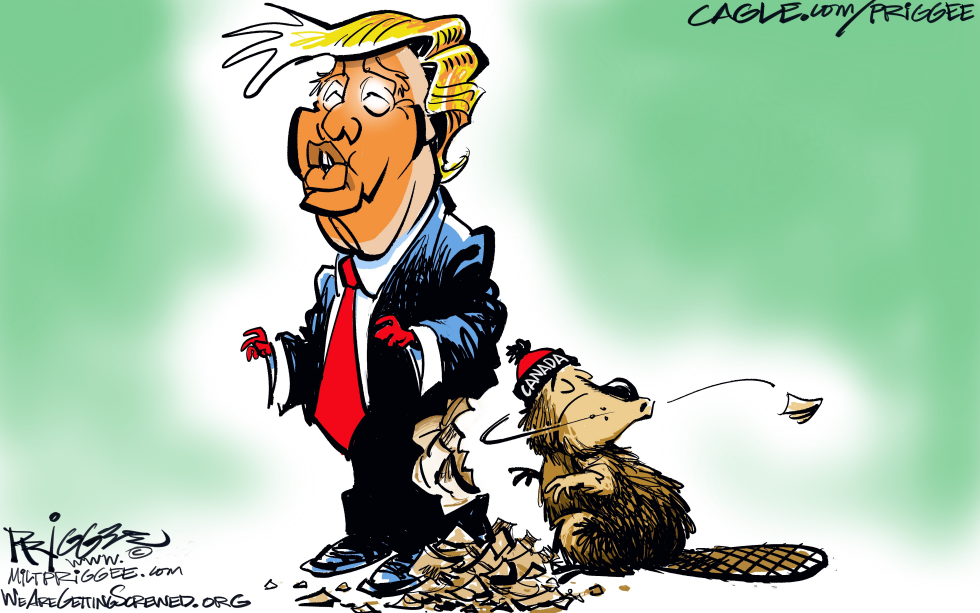
A political cartoon shows Donald Trump with his pants chewed by a beaver wearing a Canada hat. Wood chips litter the ground around his feet. The image captures friction in U.S.-Canada relations as of September 2026. The beaver represents Canada responding to policies from the Trump administration. Trade and diplomatic issues form the backdrop for the visual metaphor.
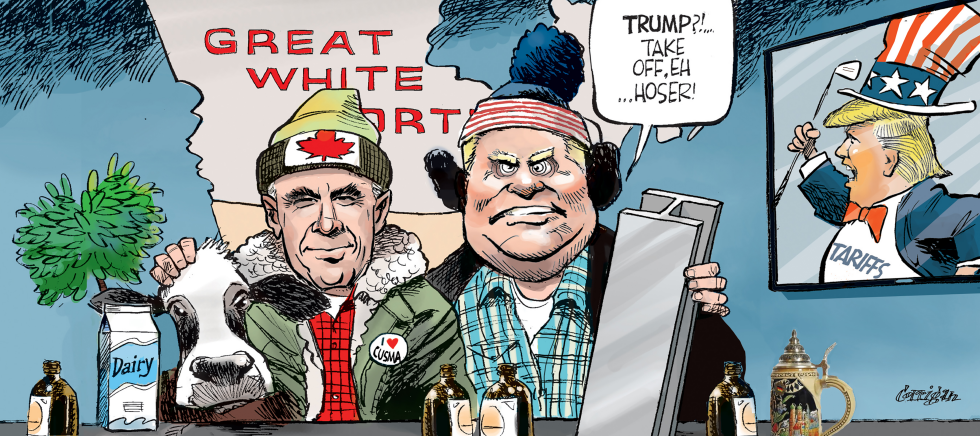
President Trump renewed tariff threats against Canada focused on dairy imports in late August 2026. Canadian leaders responded by highlighting domestic protections and cultural stakes. The move risks straining long-standing trade ties under existing agreements. The cartoon frames the confrontation as a direct challenge to Canadian sovereignty in agriculture. It portrays US policy as aggressive posturing that ignores mutual economic interests.
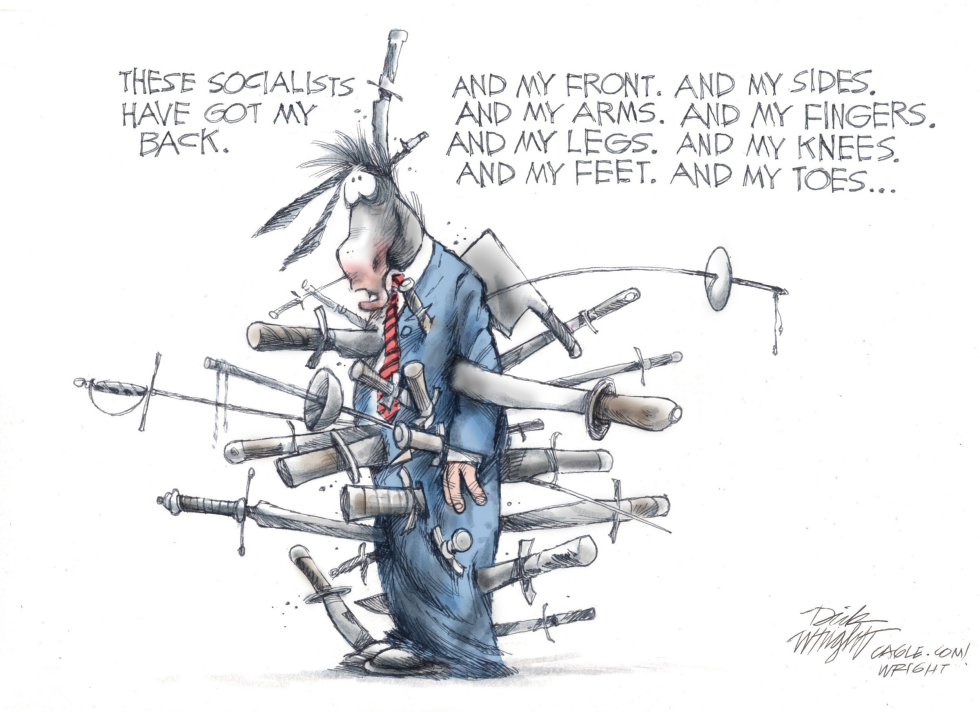
Tensions between socialist factions and mainstream Democrats continue to strain party cohesion ahead of future elections. The cartoon depicts socialists as actively harming the Democratic brand through relentless internal attacks. It argues that such infighting weakens the party's ability to govern effectively and appeal to broader voters.