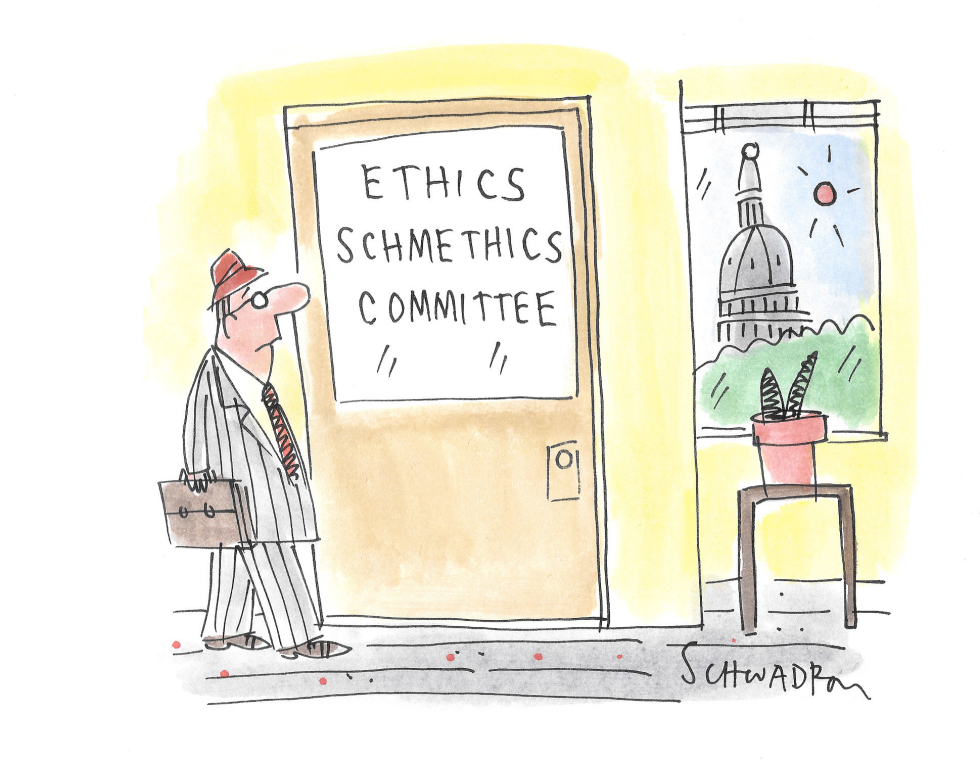
Congress continues to sideline meaningful ethics oversight, with lawmakers showing little interest in strengthening or even respecting the chamber's ethics committee. The panel exists on paper but carries little practical weight in daily operations. This dynamic matters because weak internal standards erode public trust in legislative institutions and invite outside influence. The cartoon captures the prevailing attitude that ethics rules are an afterthought rather than a core responsibility.
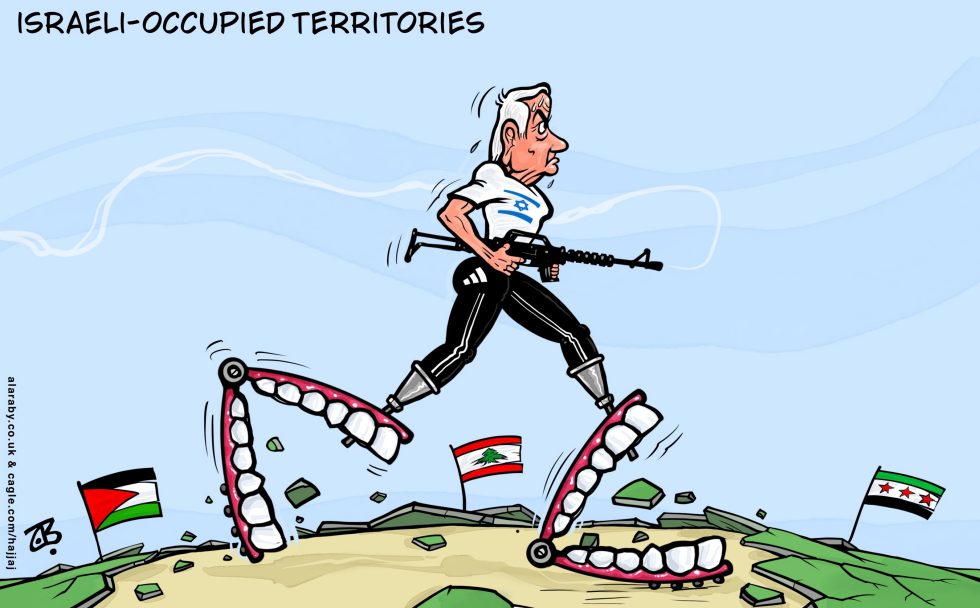
Israeli Prime Minister Benjamin Netanyahu has maintained policies of territorial control and military operations in areas bordering Israel including Gaza the West Bank southern Lebanon and parts of Syria. These actions have drawn international scrutiny over sovereignty violations and regional stability. The cartoon frames the policy as aggressive expansion that damages neighboring states.
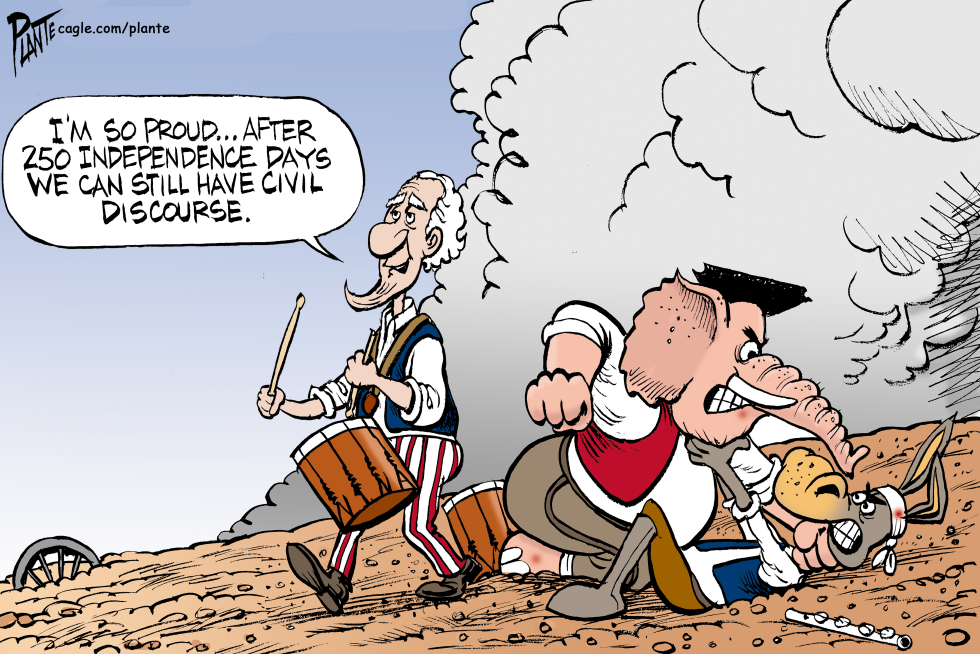
On the 250th anniversary of American independence, a Revolutionary War drummer expresses pride in continued civil discourse even as the Republican elephant and Democratic donkey grapple violently on the ground nearby.
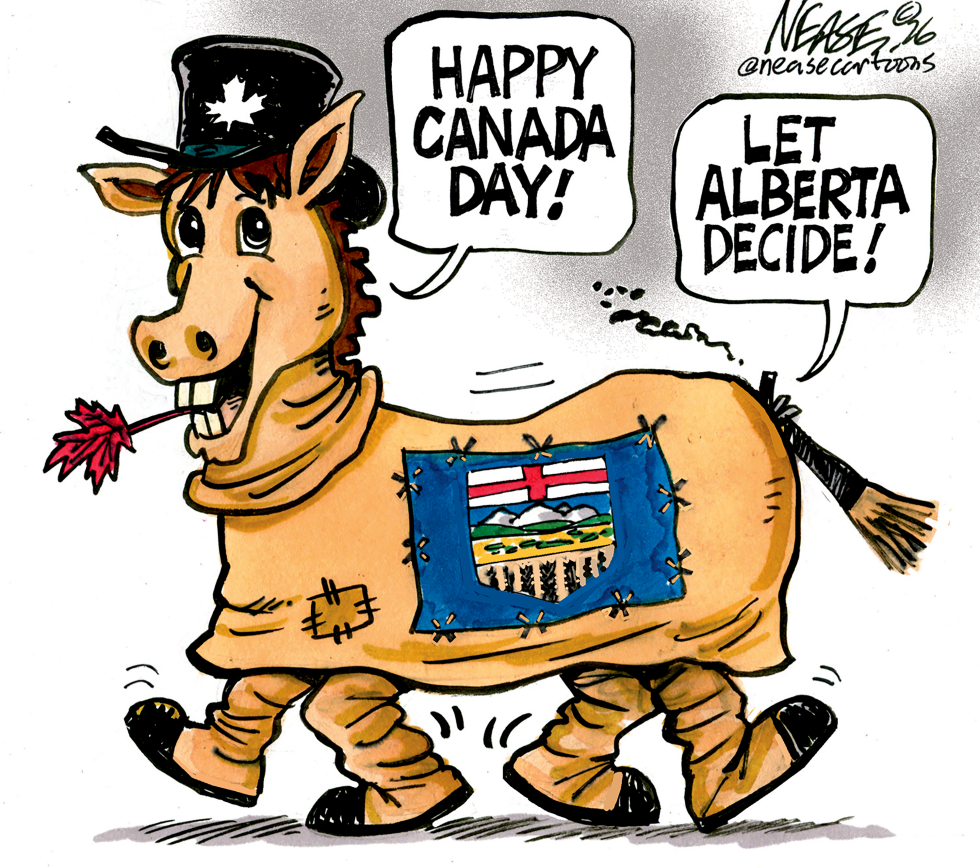
A horse figure wearing an Alberta flag blanket and a top hat marked with a maple leaf walks forward on June 29 2026. One speech bubble reads HAPPY CANADA DAY while the second reads LET ALBERTA DECIDE. The figure holds a red maple leaf in its mouth. The image marks Canada Day with a visual reference to Alberta identity and a statement on provincial decision making.
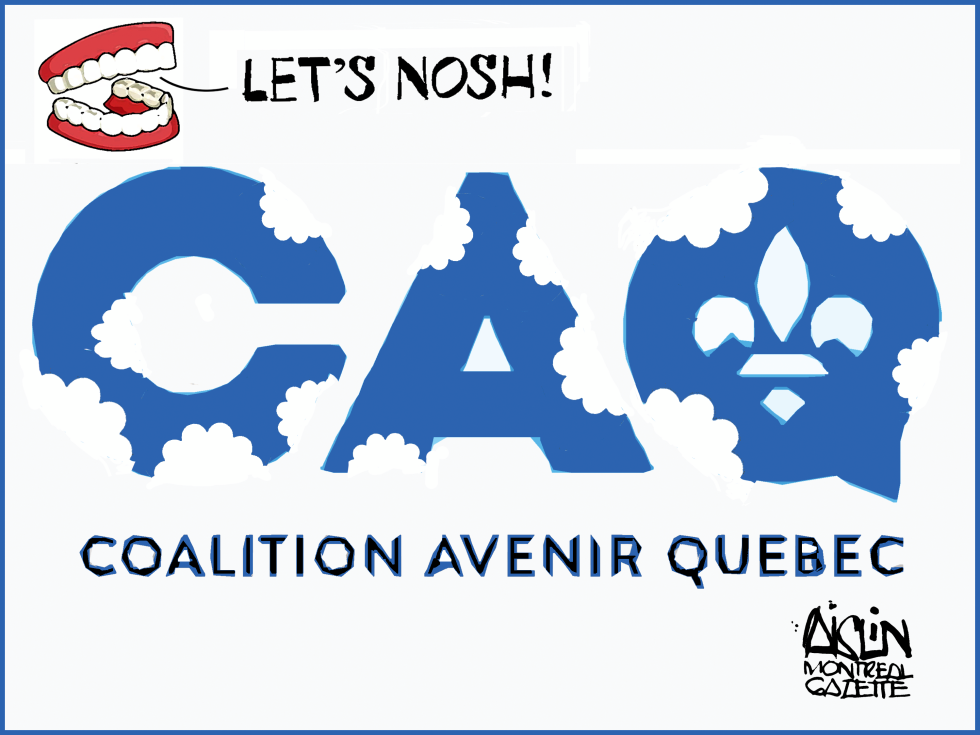
The Montreal Gazette editorial cartoon by Aislin reworks the Coalition Avenir Quebec logo by adding a set of teeth above the stylized blue CAQ letters that incorporate a fleur de lis. The teeth point to the phrase LET'S NOSH while the full party name appears below in block letters.
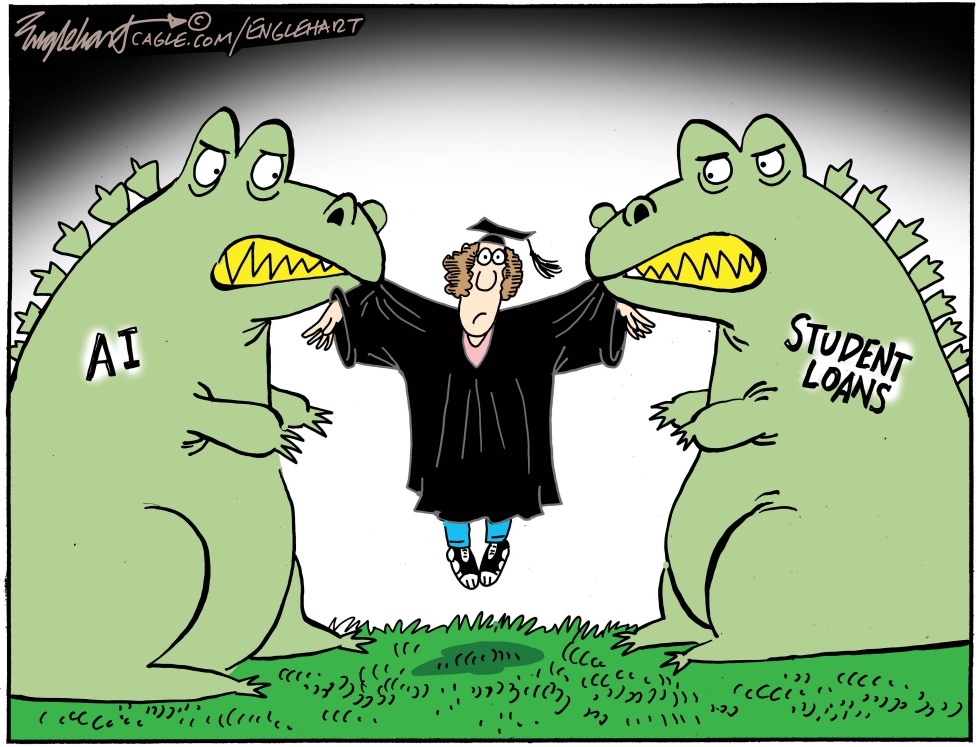
The cartoon shows a 2026 graduate caught between an AI alligator on the left and a student loans alligator on the right. Both creatures stand on green grass with open jaws. The graduate wears a black gown, blue socks and a mortarboard. Text labels identify each alligator clearly. The scene is simple with no additional figures or objects visible.
Arend van Dam's cartoon shows a gray battleship marked USA, complete with guns and missiles, driven by a figure in a suit at the wheel, as it goes over a waterfall between rocky cliffs under a blue sky. The image captures the essence of strategy failure in the Strait of Hormuz, tying into themes of Iran, ayatollahs, war, battleship mishaps, Middle East conflicts, oil, gas, energy, and economy. Such visuals often poke at misguided military moves, where the ship's plunge represents a dramatic downfall in strategic planning. The dry humor lies in the absurdity of a warship treating a strait like a river rapid, underscoring potential economic fallout from regional tensions. Cartoons like this thrive on clear, exaggerated metaphors that resonate with readers familiar with global news.
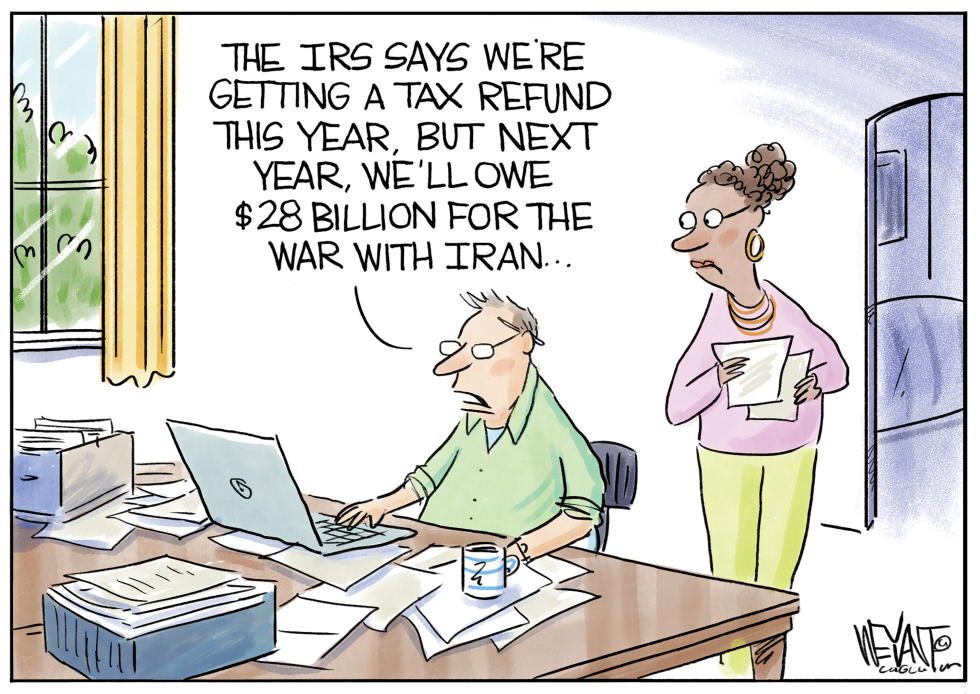
Dive into this biting political cartoon tax refund piece where a woman, holding papers, informs a laptop-working man about their IRS windfall this year, only to drop the bomb of owing $28 billion next for the war with Iran. The satirical cartoon Iran war vibe captures the absurdity of US taxes funding wars, with cluttered desks and exasperated expressions underscoring the humorous take on federal spending. It's a classic taxpayer burden Iran conflict jab, poking fun at government spending satire while illustrating the disconnect between personal finances and massive military expenses. Through cartoon about military expenses, it cleverly critiques fiscal policy in an office setting, making the war with Iran taxpayer joke both relatable and irreverently insightful for viewers pondering editorial cartoon fiscal policy.
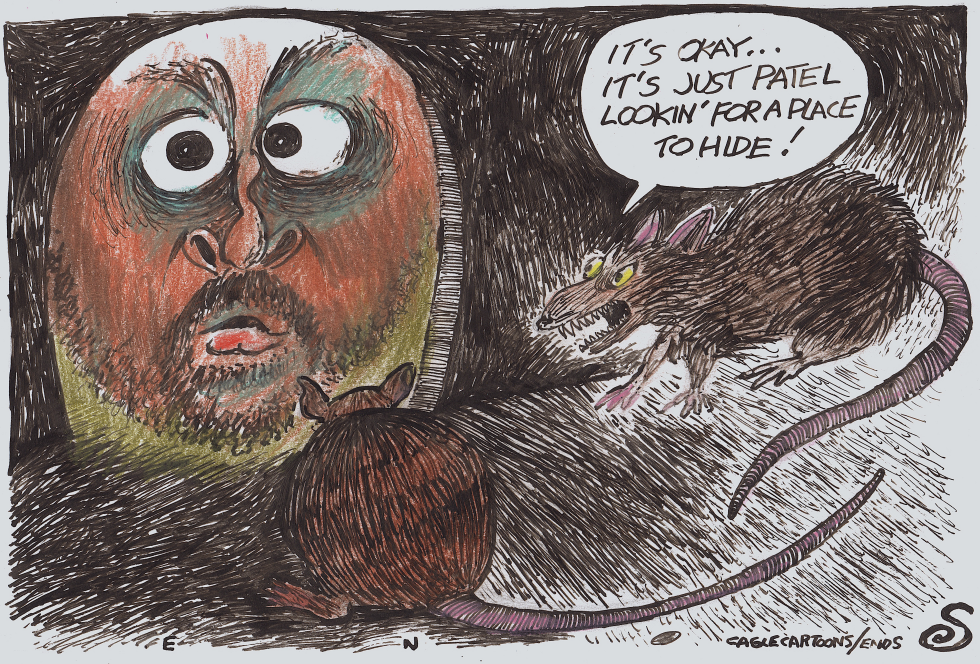
Randall Enos draws a big, bug-eyed face labeled as Patel gazing into a dark hole where a fierce rat speaks, saying it's just Patel seeking a hiding spot. The cartoon tags Kash Patel, director of FBI, Trump firings, rats, Trump lackeys, sycophants, Pam Bondi, pointing to the chaos of Trump appointments and firings. The rat's aggressive pose and the face's shock amplify the humor in political survival tactics. This piece mocks how loyalists scramble for cover amid purges, a timeless jab at sycophancy in power circles. Enos's scratchy style adds grit to the scene, making it shareable for those tracking Trump-era drama.
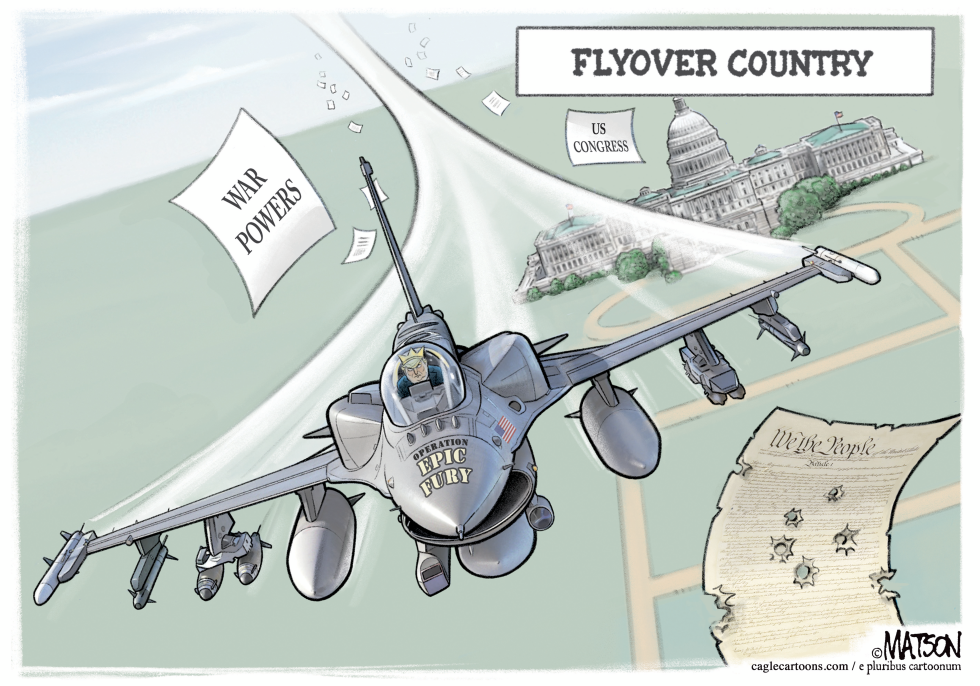
This sharp political cartoon captures the essence of executive overreach, with a fighter jet dubbed 'Epic Fury' zooming past US Congress, discarding war powers documents like confetti over flyover country. The torn US Constitution riddled with bullet holes symbolizes the erosion of constitutional principles amid unchecked military actions. Tags like political cartoon, war powers, US Congress, flyover country, US Constitution, and executive power underscore the satire on how presidents often sidestep legislative approval for wars, leaving the heartland—flyover country—to bear the brunt. It's a humorous yet insightful critique of the power imbalance in Washington, where the Capitol is just a scenic detour on the path to conflict.
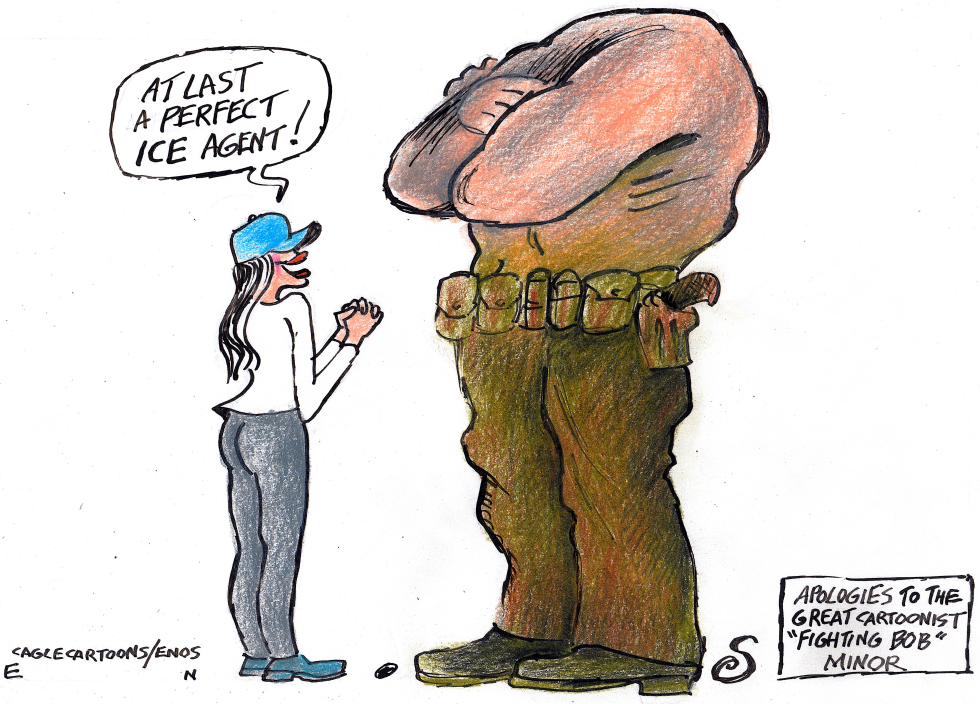
On January 16 2026 Kristi Noem as Homeland Security Secretary is shown praising a massive violent ICE agent. The cartoon highlights concerns over untrained agents and brutality in enforcement actions.
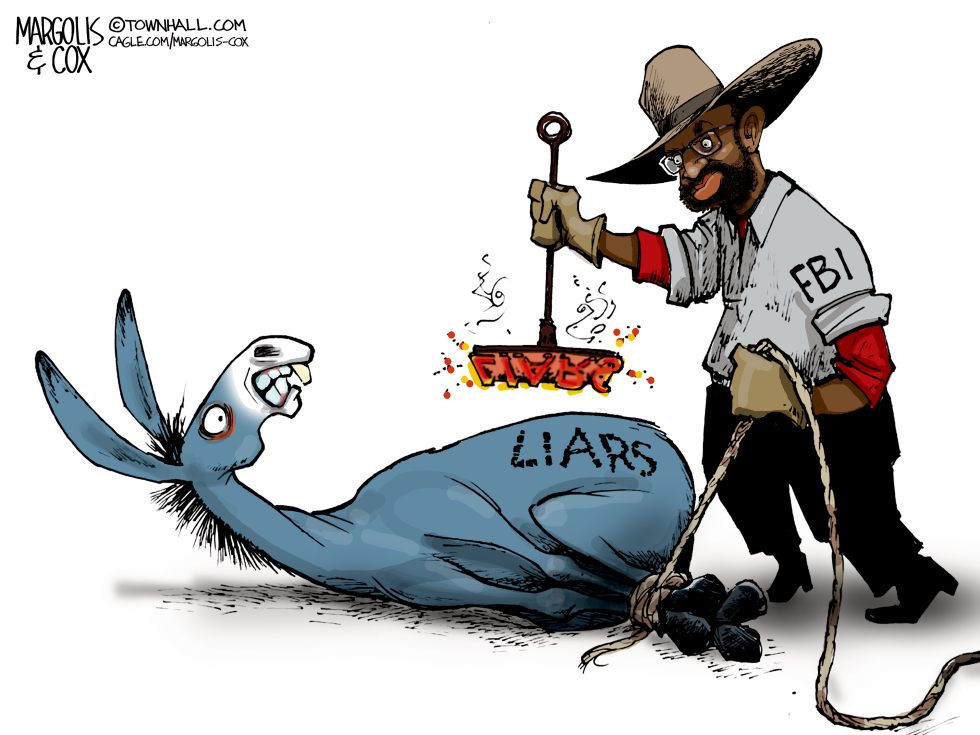
This political cartoon by Margolis & Cox depicts a bearded man wearing an FBI shirt and large hat, wielding a hot branding iron to mark a blue donkey with 'LIARS.' The donkey, symbolizing Democrats, lies on the ground tied with a rope, grimacing in pain as sparks fly from the brand. Smoke rises from the contact point, emphasizing the heated accusation. Dated 2025, the artwork critiques political deception through bold imagery. Tags like Kash Patel FBI, Democrats liars, political satire, branding iron cartoon, Democratic donkey, and conservative humor underscore its pointed message on partisan conflict.
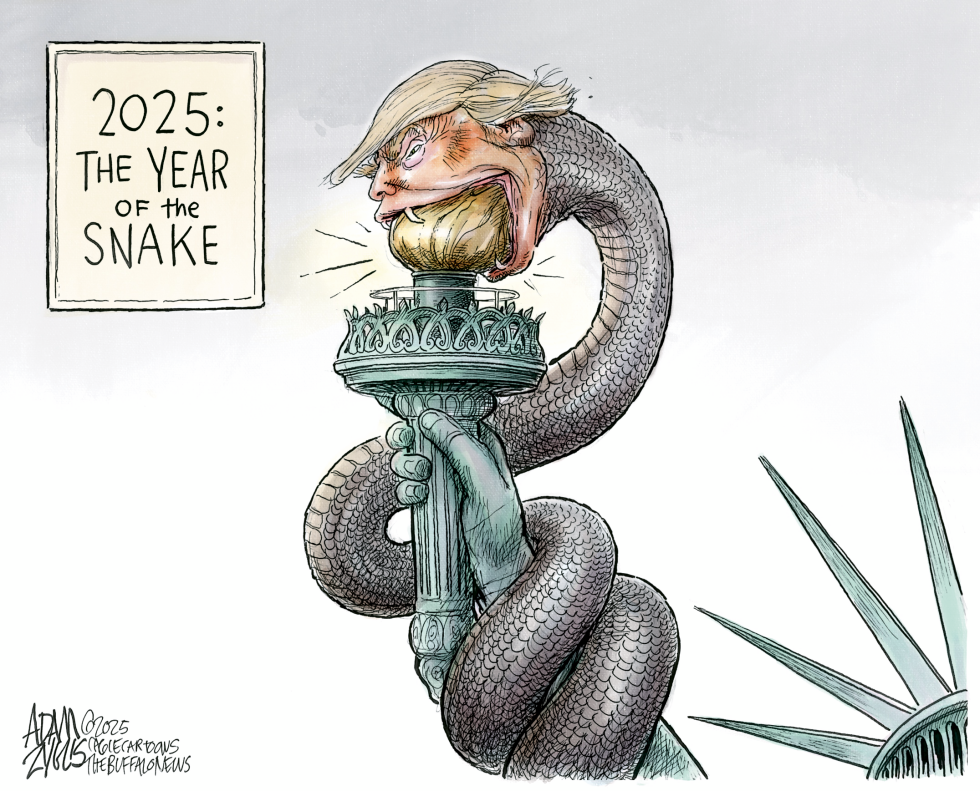
The cartoon depicts Donald Trump with a snake body coiled around the Statue of Liberty's raised arm while his head bites the torch. A sign labels 2025 as the year of the snake. The image responds to ongoing debates over executive actions and institutional norms in the early months of the second Trump administration. The visual metaphor centers on the tension between presidential power and foundational symbols of American governance.