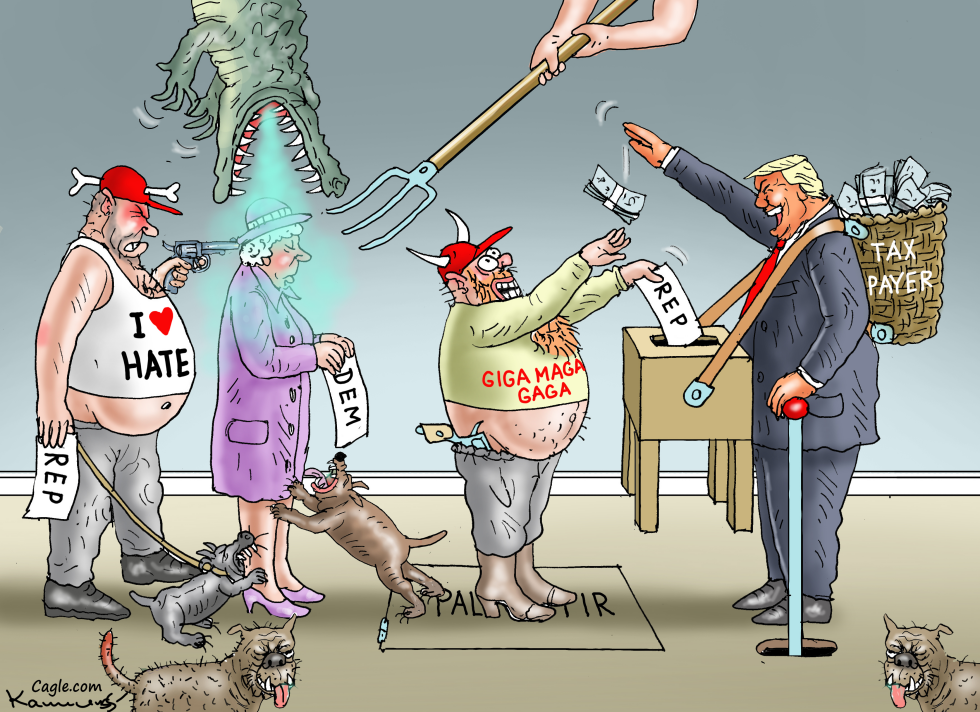
As the 2026 midterm elections approach, former President Trump has positioned himself as a central force in Republican campaigns, directing resources and mobilizing supporters. The cartoon highlights the use of taxpayer money in these efforts and the intense partisan divide, with Democrats portrayed as under attack. It takes the position that such involvement risks undermining fair electoral processes.
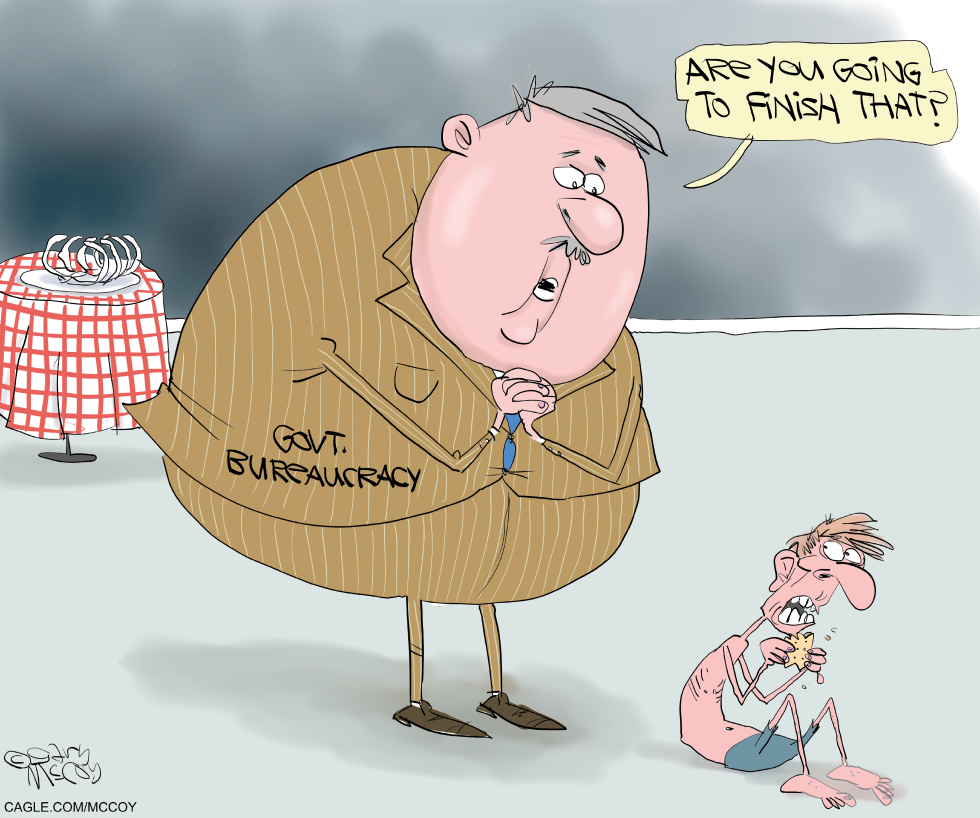
The cartoon shows an oversized man labeled Government Bureaucracy standing above a gaunt citizen who clutches a small star-shaped item. A nearby table holds only scraps. The large figure asks if the citizen plans to finish the food. The image comments on how expanding government operations can leave ordinary people with fewer resources. It uses scale and positioning to illustrate the imbalance between bureaucratic size and citizen need. The publication date places the work in a period of ongoing debate over federal spending and agency growth.
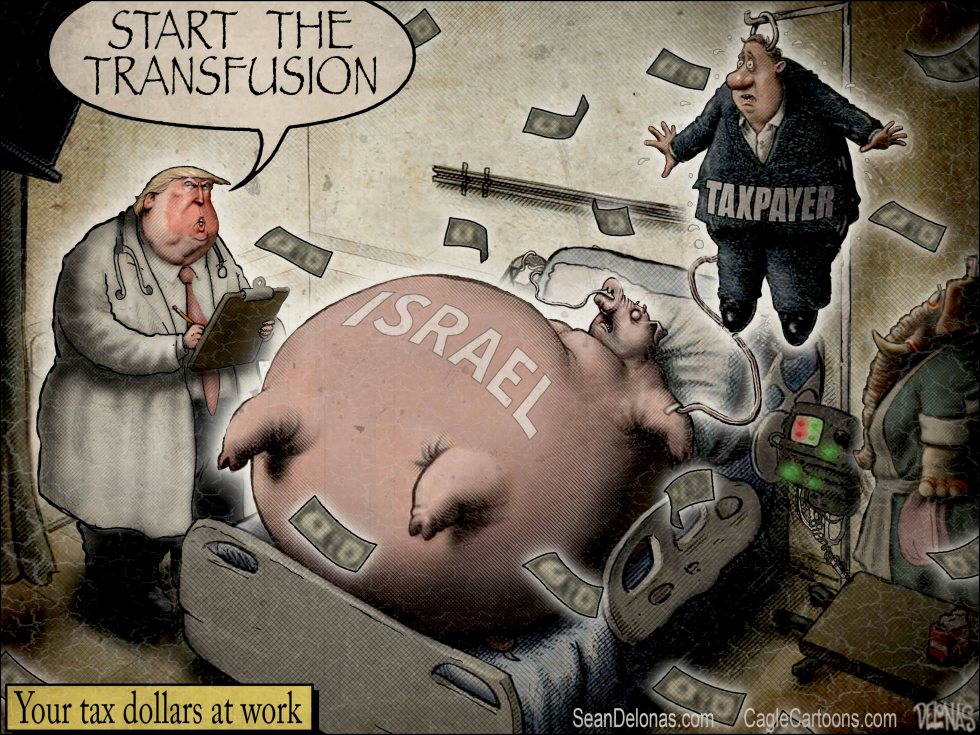
The Trump administration has directed additional US taxpayer resources toward Israel amid ongoing regional tensions. The move continues long-standing American support for the ally but draws fresh scrutiny over scale and priorities. Critics argue the assistance burdens domestic budgets without sufficient oversight. The piece portrays the transfer as an unsustainable extraction from American contributors to sustain a dependent recipient.
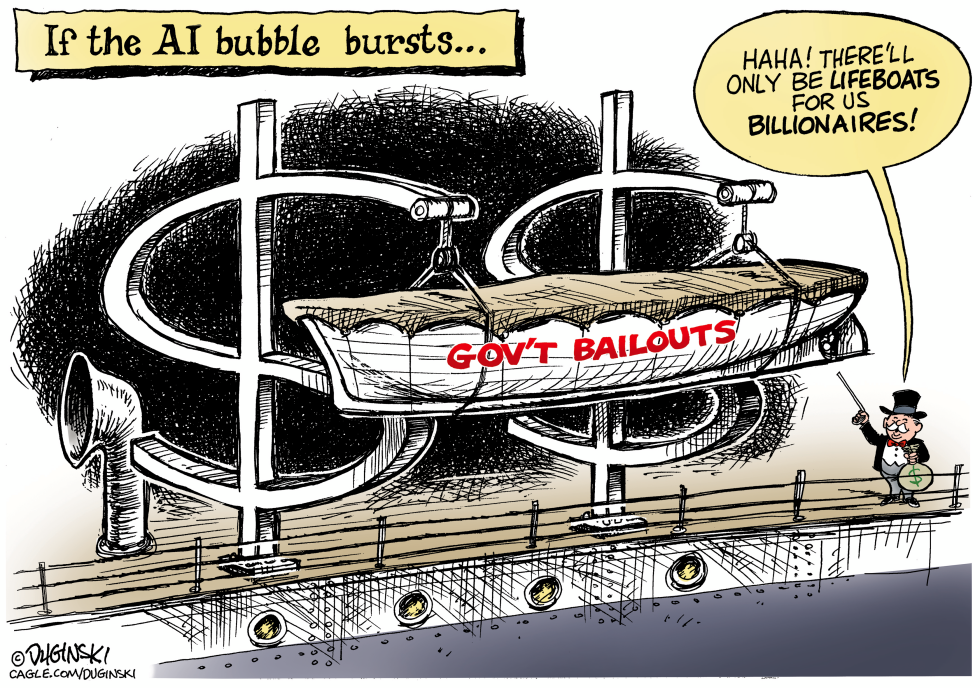
Speculation grows over potential government intervention if the artificial intelligence sector experiences a sharp downturn. Industry leaders and investors face questions about whether public funds would support failing companies. The editorial argues that any such support would primarily protect billionaires rather than address wider economic fallout from overvalued tech assets.
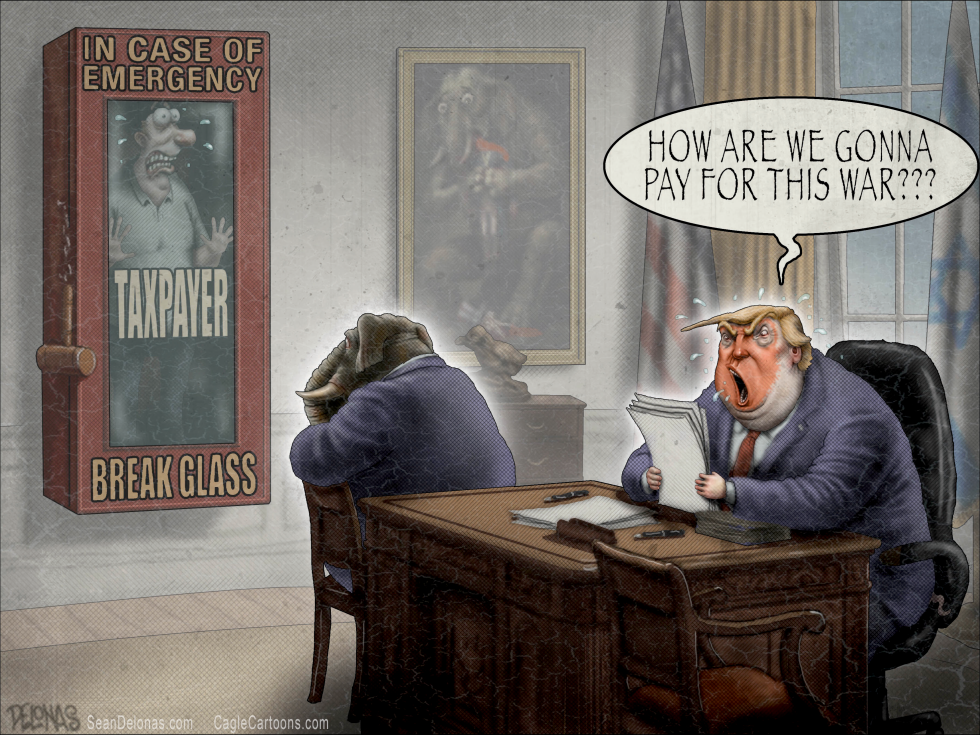
Donald Trump publicly questions the costs of ongoing war funding in mid-2026, highlighting taxpayer burdens during budget debates. The move underscores tensions within Republican circles over defense spending priorities and fiscal responsibility. The piece portrays the concern as an emergency response to mounting expenses.
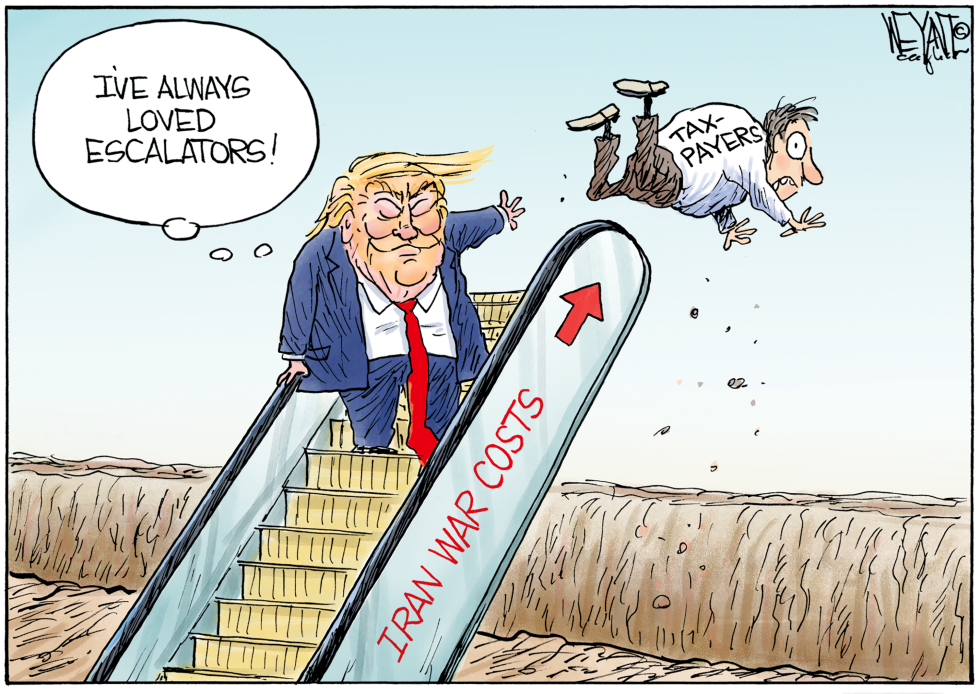
President Trump has indicated steps toward heightened U.S. military involvement with Iran, prompting fresh debate over the financial toll on American taxpayers. The move comes amid ongoing regional instability in the Middle East and questions about defense budget priorities. The piece argues that such policies place undue strain on domestic resources without sufficient justification.
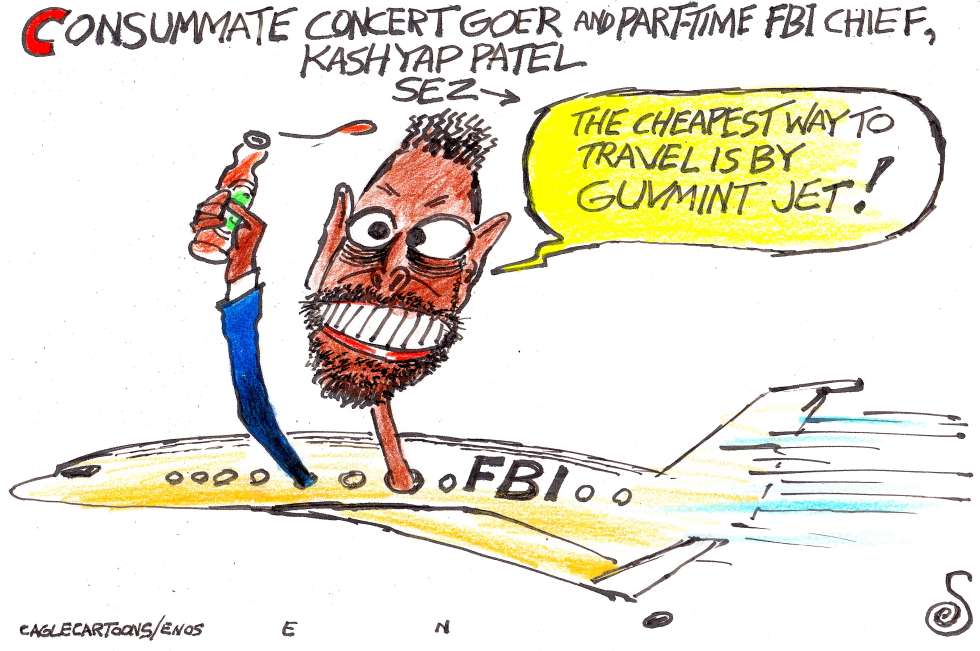
Kash Patel appears atop an FBI jet in the July 2026 image. The figure holds a bottle in one raised hand. A speech bubble attributes a statement about government jet travel being the cheapest option. Text at the top identifies Patel as a part-time FBI chief and concert goer. The jet displays FBI markings on its side. Bottom text includes the artist credit.
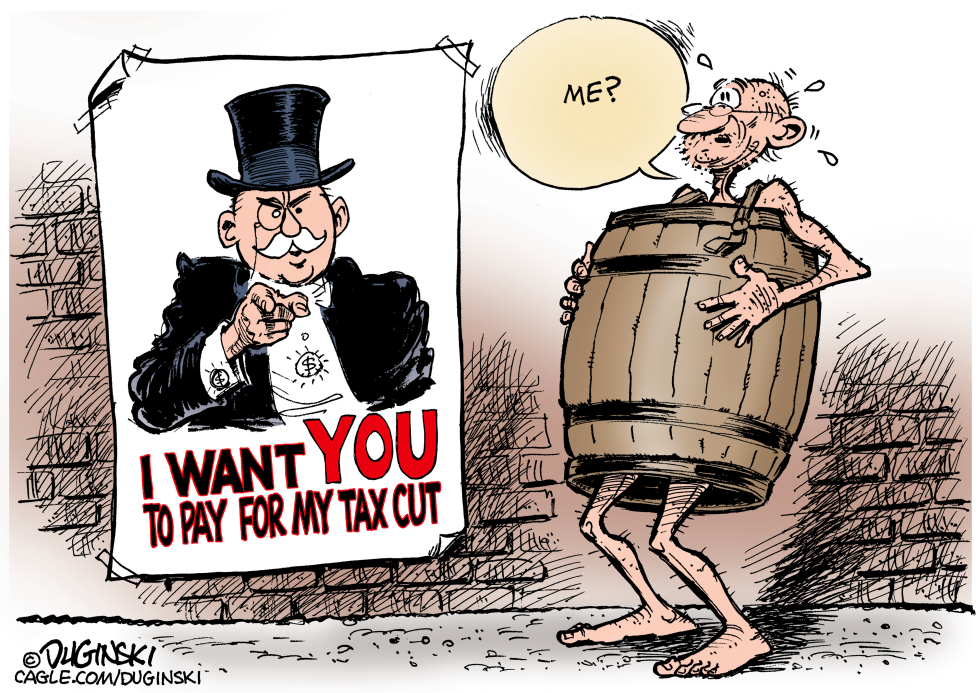
A poster of Uncle Sam points directly at a thin man trapped in a barrel, with bold text demanding that the man pay for the tax cut. The barefoot figure reacts with surprise in a speech bubble. The scene unfolds against brick walls, highlighting tension between authority and the economically disadvantaged.
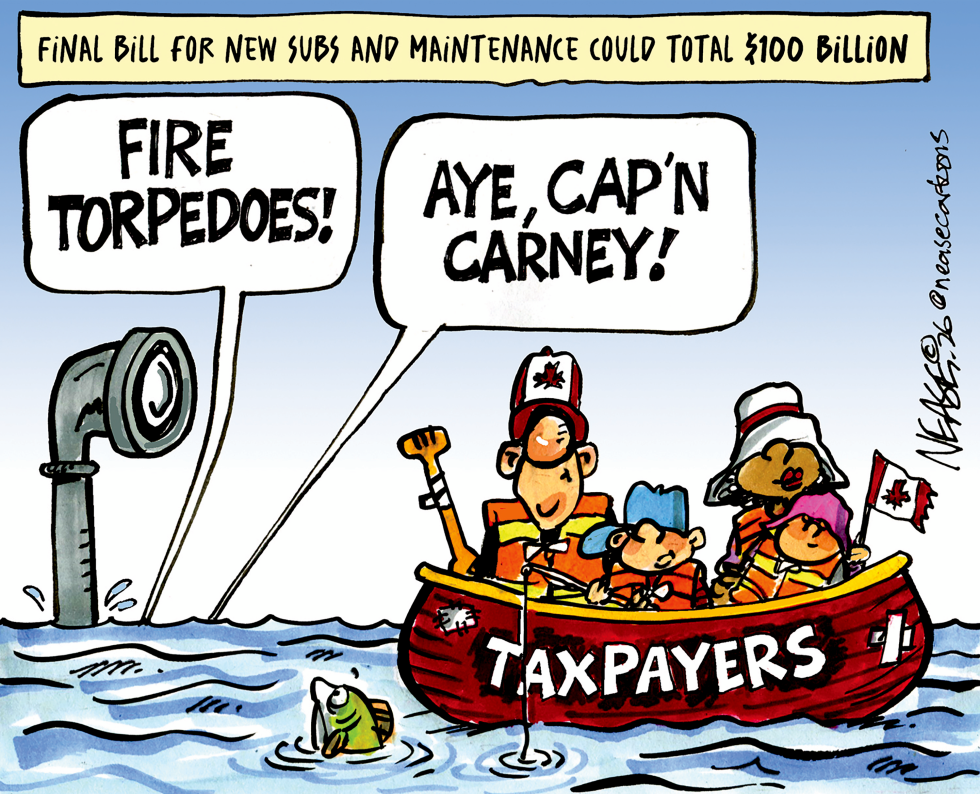
A political cartoon from July 6, 2026, shows a red boat marked TAXPAYERS carrying figures including one identified as Cap'n Carney. Speech bubbles show calls to fire torpedoes and affirm orders. A banner above warns that the final bill for new submarines and maintenance could reach $100 billion. A periscope rises from the water beside the vessel. The image highlights Canadian defense procurement costs borne by the public.
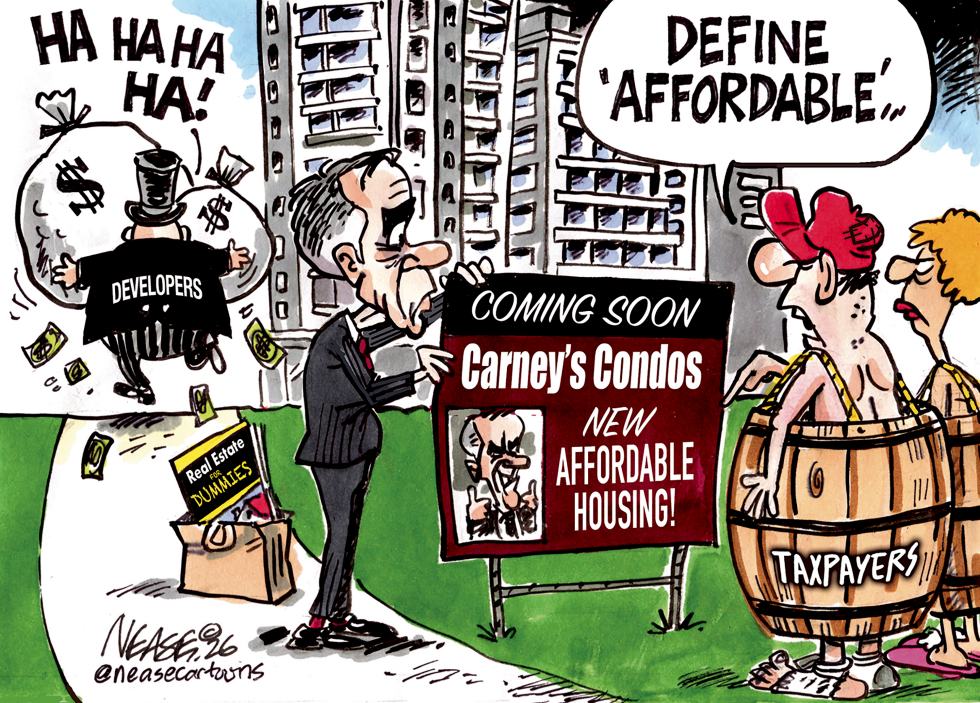
A real estate sign for Carney's Condos promotes new affordable housing. Developers in top hats collect money while laughing. Two taxpayers trapped in barrels question the definition of affordable. A book on real estate basics sits on the ground near high rise buildings.
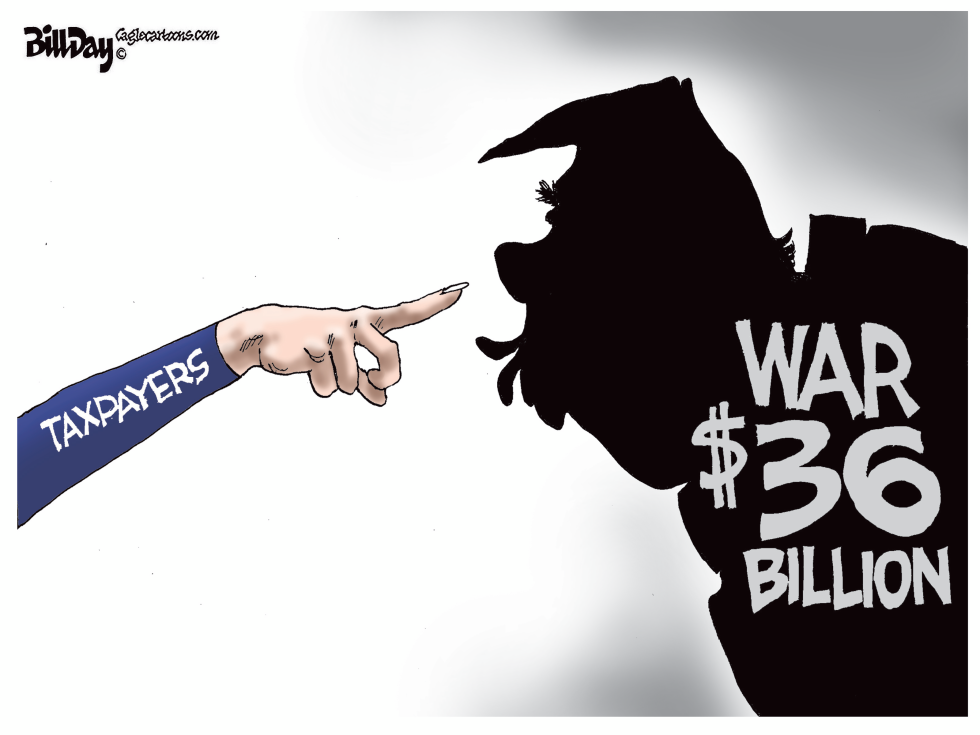
The cartoon depicts a taxpayers arm pointing directly at a dark silhouette bearing the words WAR $36 BILLION. Published on June 30 2026 the image addresses ongoing debates over military expenditures and public accountability for large scale war costs. The visual uses a simple silhouette to represent the recipient of criticism while the pointing gesture emphasizes taxpayer frustration with the scale of spending.
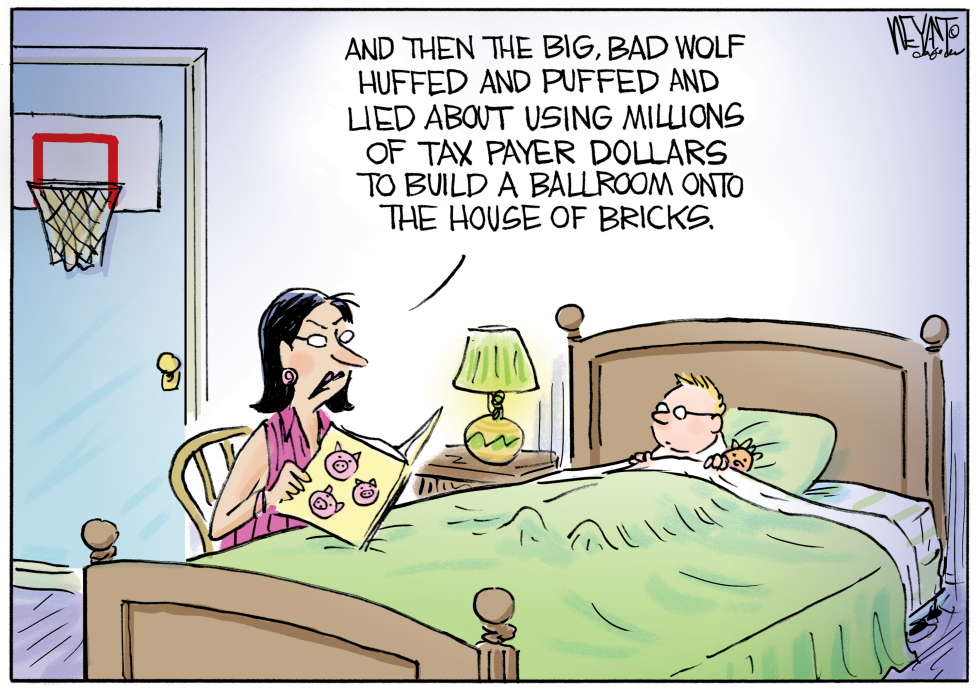
A mother reads a bedtime story to her child, altering the three little pigs tale to accuse the big bad wolf of lying about spending millions of taxpayer dollars to add a ballroom to the house of bricks. The scene unfolds in a child's bedroom with a basketball hoop visible through the door and a green lamp on the nightstand. This image responds to recent controversies over public fund misuse for private or extravagant projects by political figures.