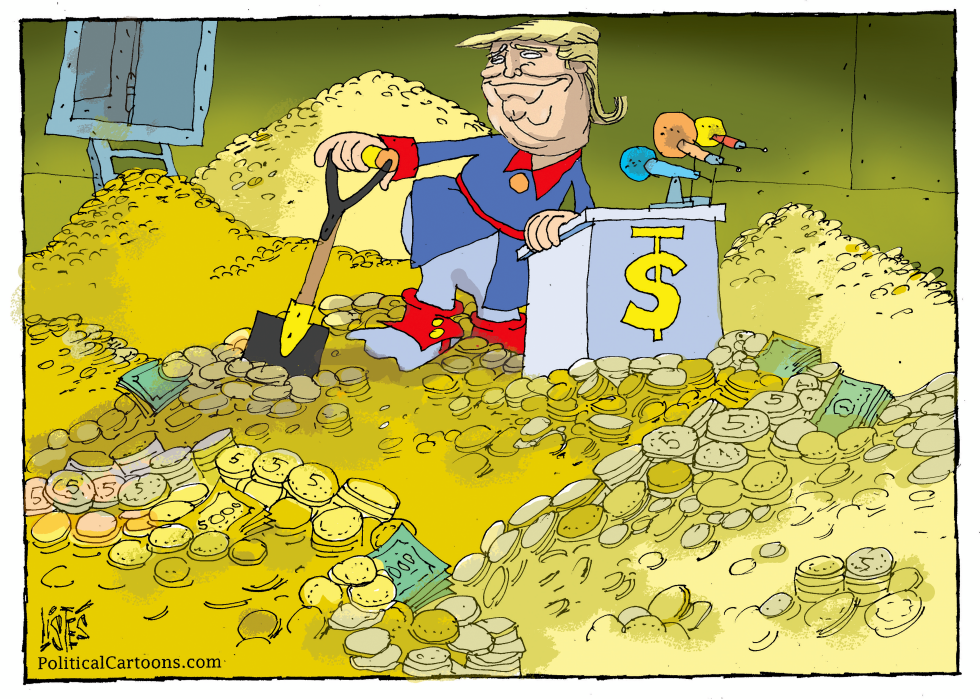
Donald Trump remains a central figure in debates over wealth and political power as of September 2026. The cartoon responds to ongoing scrutiny of how personal fortune intersects with public life and policy influence. It portrays the former president amid symbols of money to critique that dynamic. The editorial position frames Trump's association with wealth as a defining and problematic feature of his political presence.
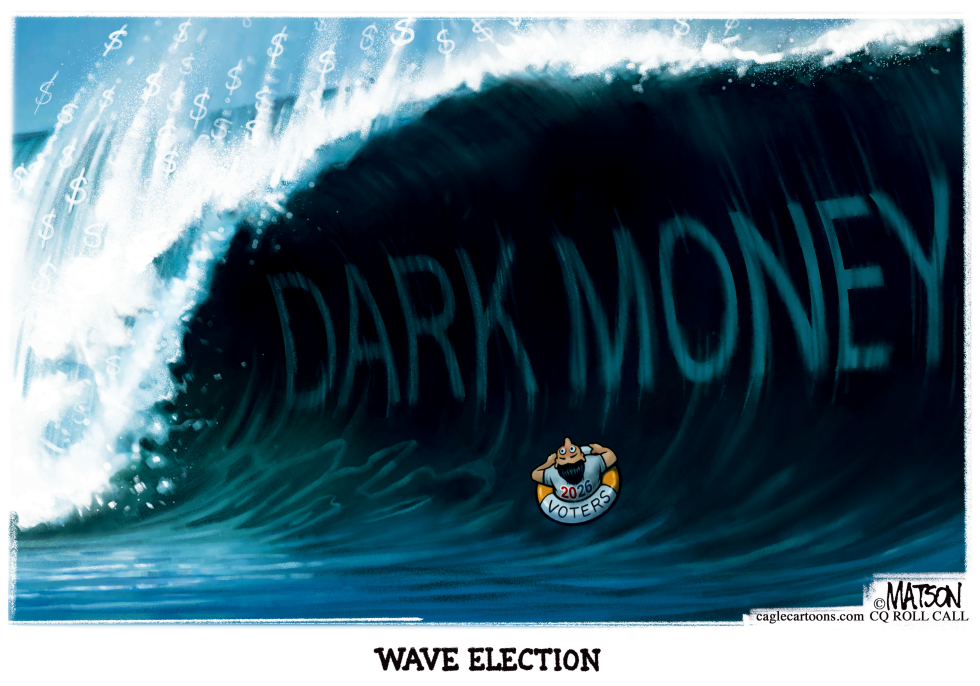
Unregulated dark money continues to pour into the 2026 election cycle, raising concerns that voters will be sidelined by massive undisclosed spending. The influx comes as candidates and outside groups prepare for midterm contests across the country. Critics argue the surge distorts democratic participation and drowns out ordinary voices. The editorial cartoon depicts this dynamic as an overwhelming wave labeled dark money bearing down on a lone voter buoy. It takes the position that such spending poses a direct threat to fair elections and calls for stronger safeguards.
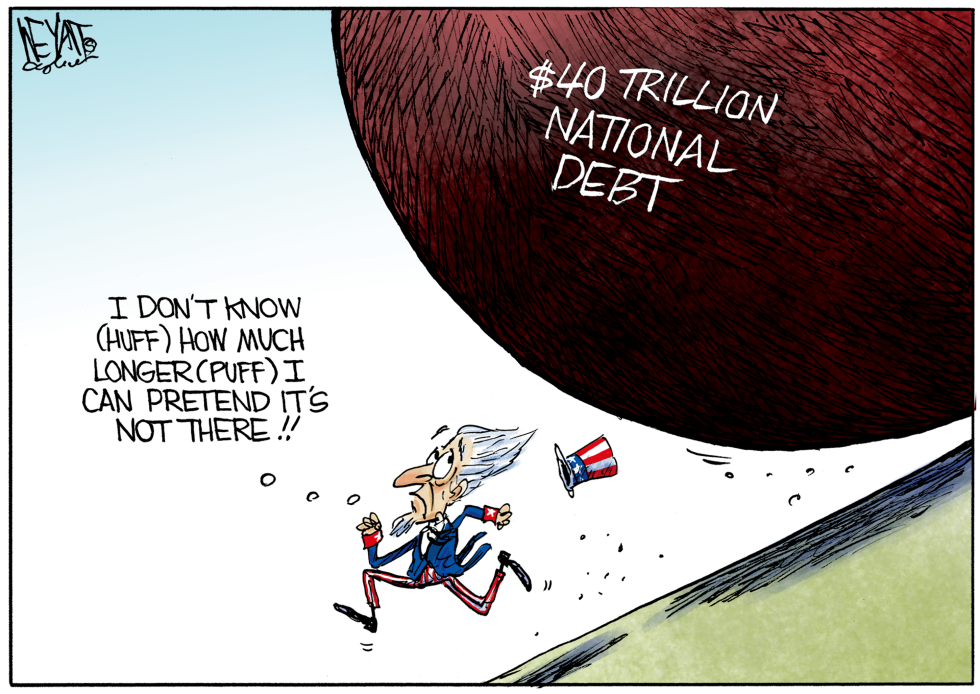
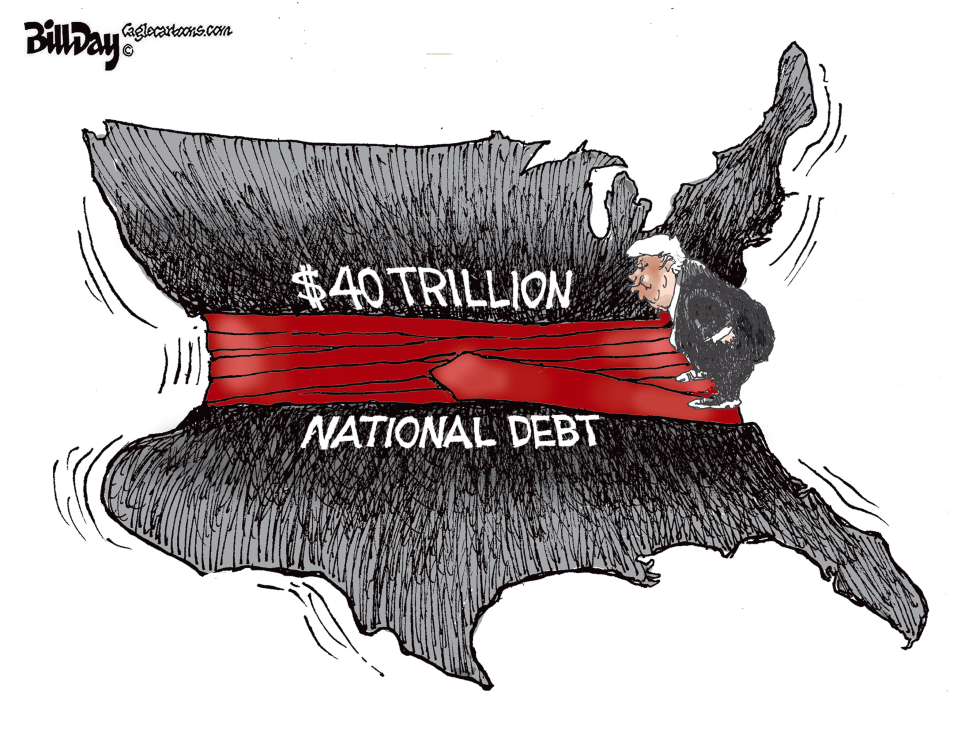
The US national debt has climbed to $40 trillion amid ongoing debates over spending and borrowing limits. Lawmakers continue to defer tough choices on entitlements and revenue. The cartoon argues that pretending the problem does not exist only delays an inevitable reckoning.
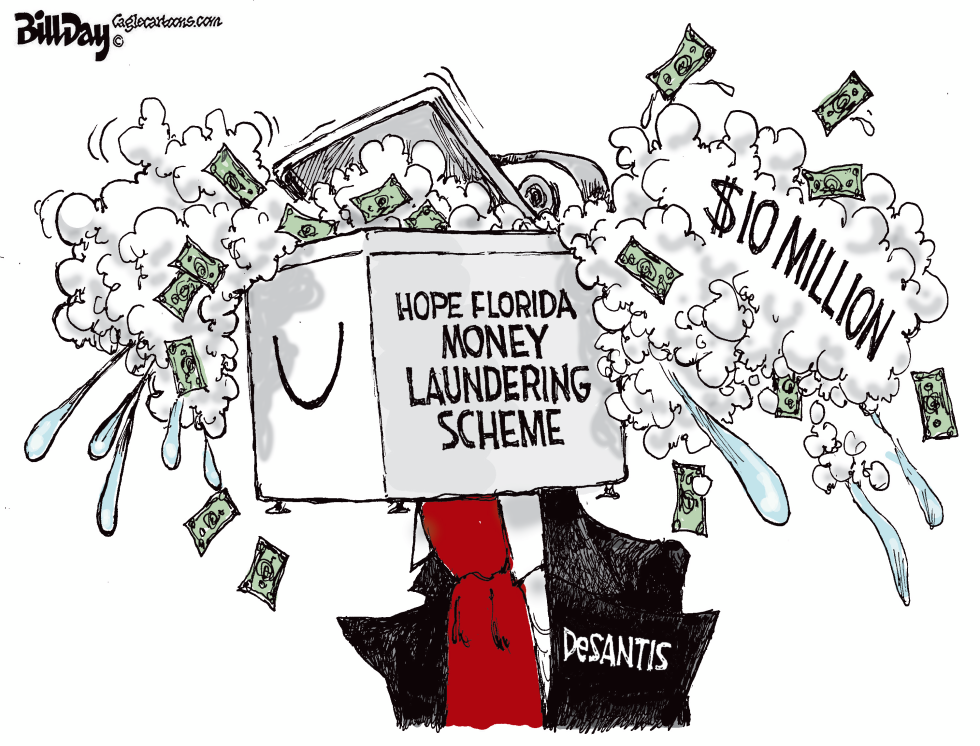
Florida Governor Ron DeSantis faces questions over the Hope Florida initiative after reports surfaced of a $10 million money laundering scheme tied to state funds. The allegations center on how program money was handled and distributed. Critics argue the episode raises serious questions about oversight and accountability in state government. The cartoon portrays DeSantis directly linked to the scheme through the labeled washing machine. It takes the position that the governor bears responsibility for the alleged misuse of public resources.
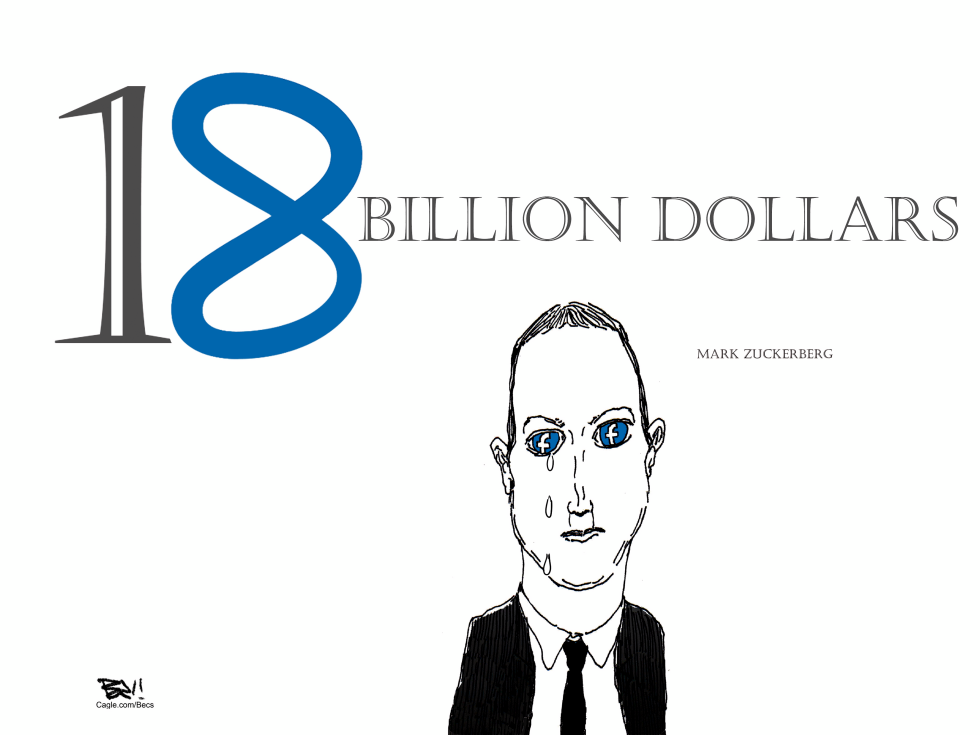
Meta Platforms reported a significant valuation drop that erased 18 billion dollars from Mark Zuckerberg's holdings. The loss reflects broader volatility in social media stocks and investor concerns over advertising revenue. Zuckerberg's public profile makes the personal financial impact a focal point for discussions on tech wealth. The piece portrays the event as a moment of visible distress for the executive. It underscores how quickly billionaire fortunes tied to public companies can shift with market sentiment.
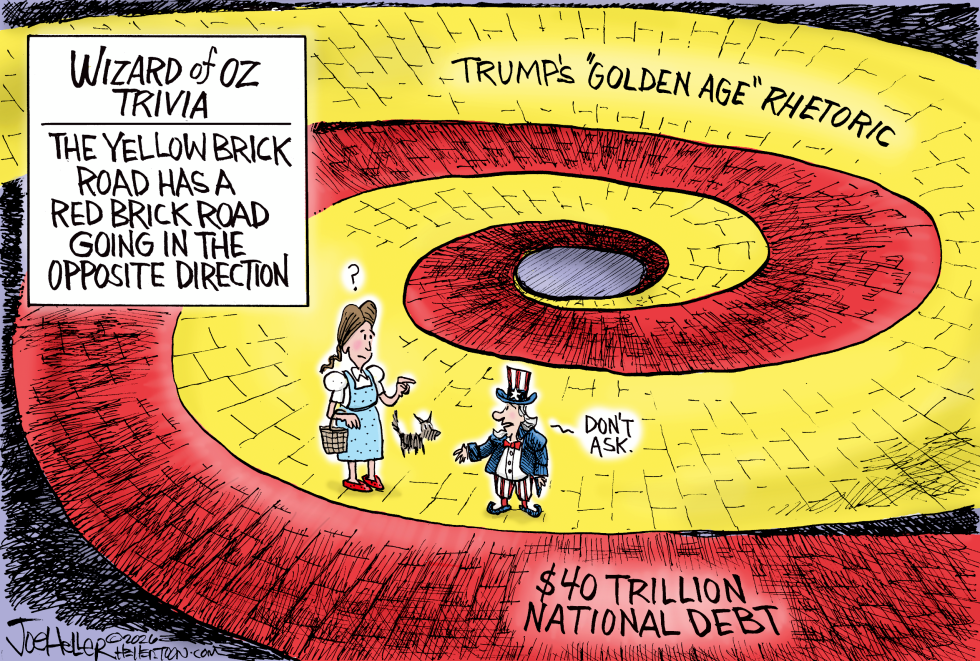
National debt has reached forty trillion dollars amid ongoing debate over fiscal policy. The administration promotes a golden age vision while critics highlight unsustainable borrowing. The piece argues that optimistic rhetoric masks a path leading directly into deeper financial trouble.
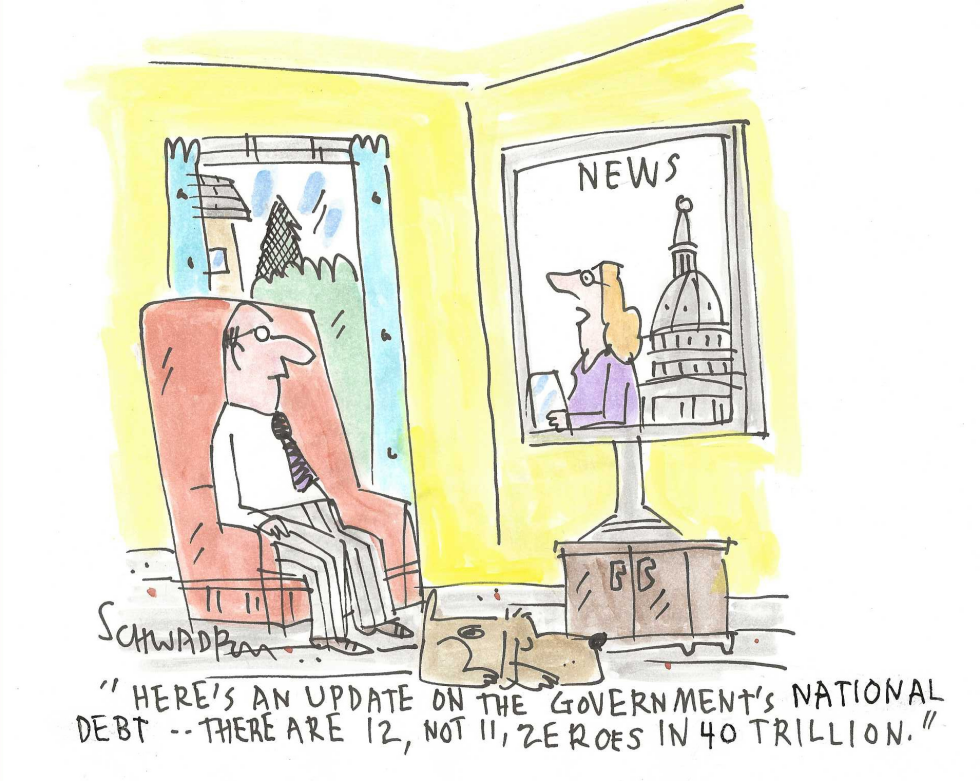
A television news report updates the national debt figure to 40 trillion dollars. The anchor emphasizes that the amount contains twelve zeros rather than eleven. The development underscores ongoing fiscal pressures on federal budgets and public attention to spending totals. The piece presents the correction as a straightforward broadcast detail delivered to a home audience.
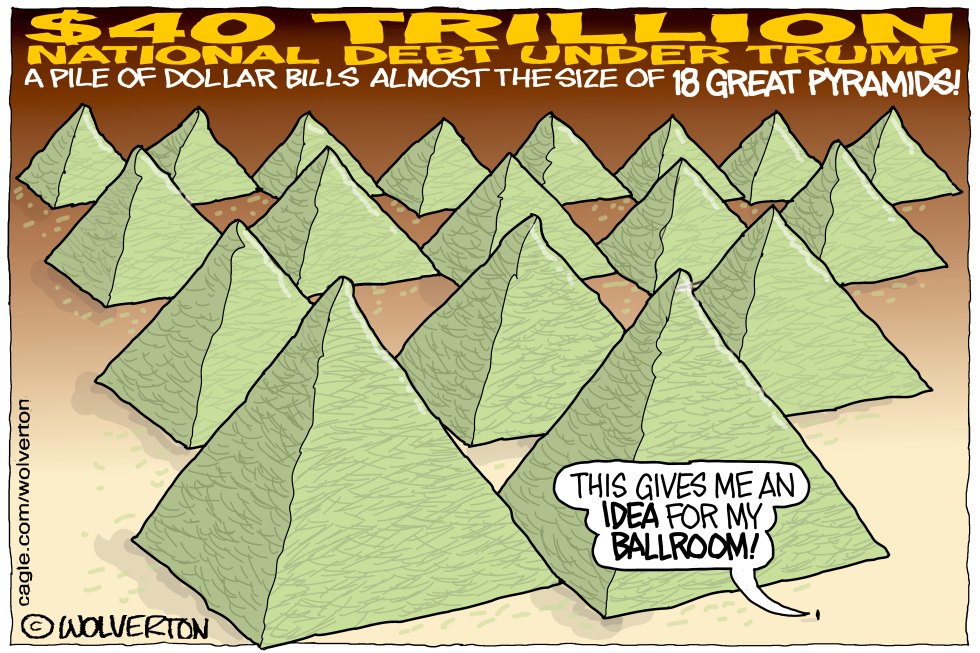
The image presents a field of green pyramids constructed from dollar bills set against a brown and tan background. Large text at the top states the $40 trillion national debt figure under Trump and compares the pile size to 18 great pyramids. A speech bubble emerges from one pyramid in the foreground with a remark about a ballroom idea. The composition places the largest structures toward the front and smaller ones receding into the distance. The visual ties the debt total directly to the current administration period referenced in the text.
The cartoon shows Donald Trump positioned next to a red band labeled $40 trillion national debt stretched across a shaded map of the United States. The red band cuts through the map with motion lines suggesting strain. Text identifies the debt amount and the national debt label below it. The image responds to ongoing concerns about federal debt levels projected to reach that figure. It places the president in direct visual association with the fiscal challenge.
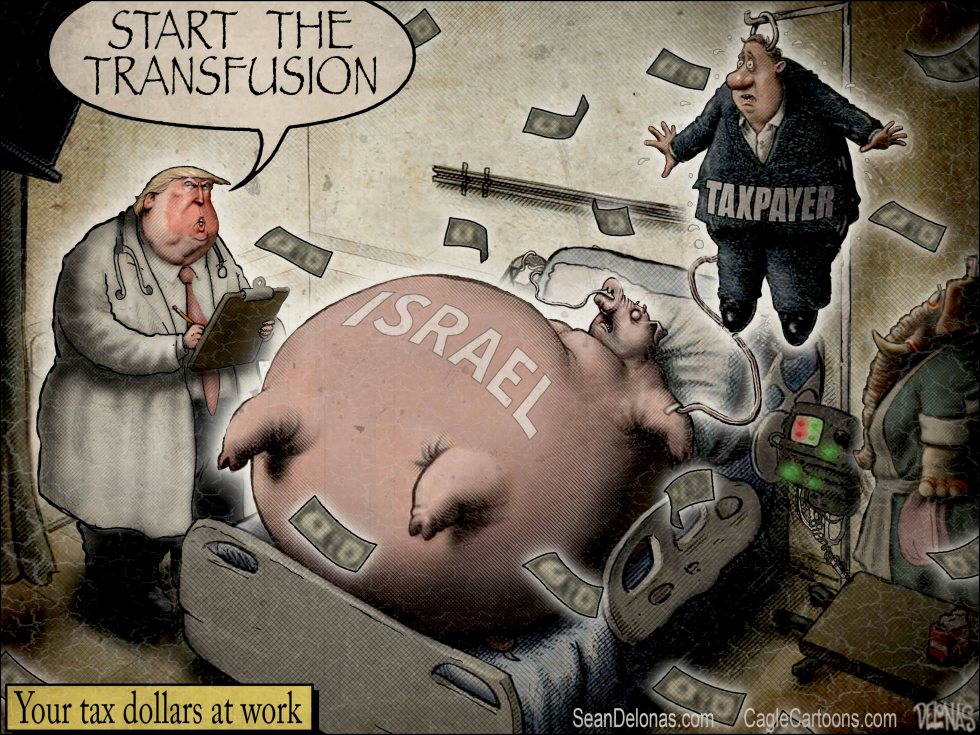
The Trump administration has directed additional US taxpayer resources toward Israel amid ongoing regional tensions. The move continues long-standing American support for the ally but draws fresh scrutiny over scale and priorities. Critics argue the assistance burdens domestic budgets without sufficient oversight. The piece portrays the transfer as an unsustainable extraction from American contributors to sustain a dependent recipient.
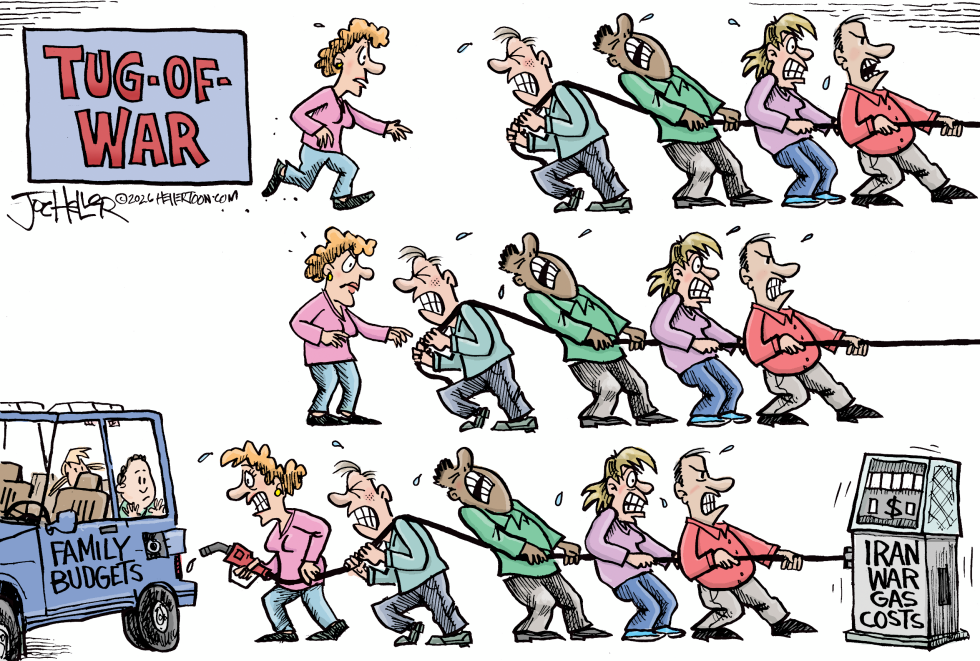
Rising gas prices linked to potential conflict with Iran are pressuring household budgets across the country. The cartoon illustrates the direct economic tug between military action abroad and everyday costs at the pump, arguing that families bear the immediate burden of such decisions.
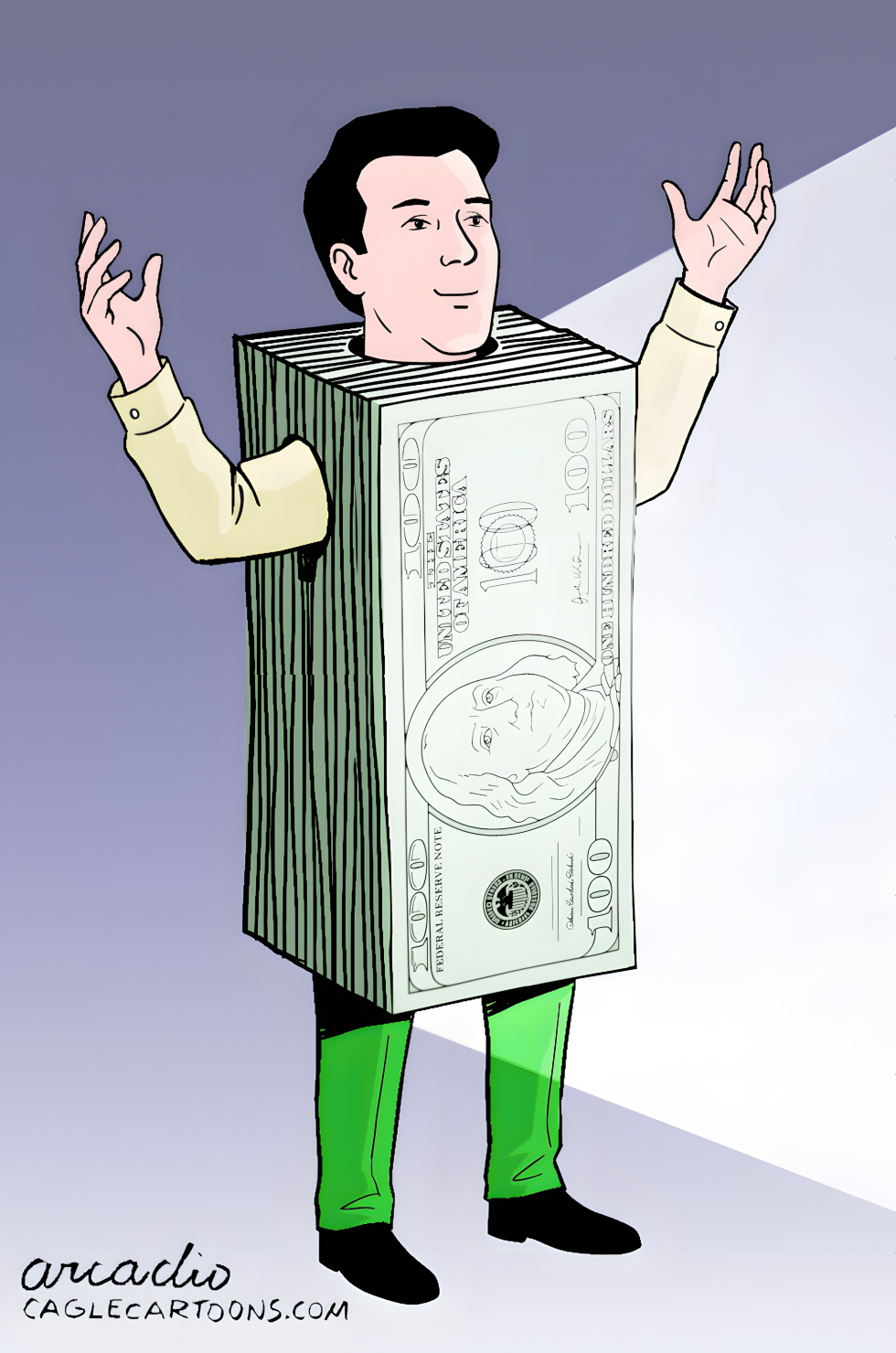
The US dollar maintains its central role in international finance and trade. Its status as the primary reserve currency supports global transactions and stability. The editorial highlights this continued influence without recent policy shifts or challenges altering the dynamic.
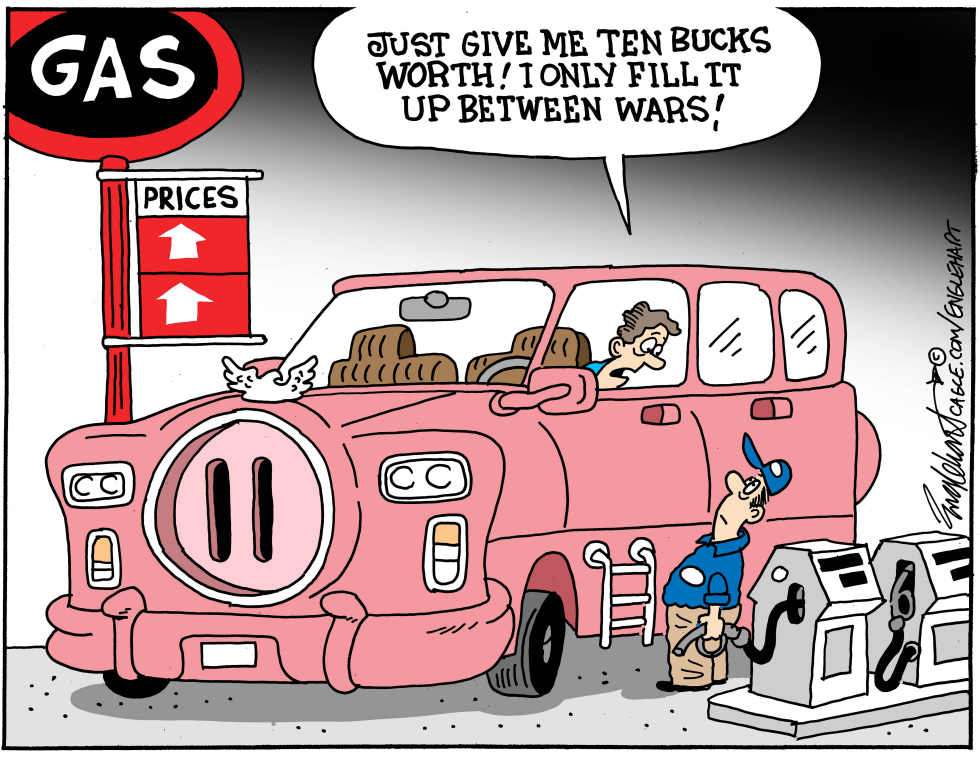
Gas prices continue climbing at stations nationwide, prompting drivers to make minimal purchases. The situation highlights ongoing pressure on household budgets from energy costs. The piece portrays the frustration with limited fills and references to external conflicts affecting supply stability.
On July 9, 2026, Pat Bagley's cartoon depicts Donald Trump pushing a cart loaded with enormous sacks labeled 2026 and $2,000,000,000.00 GRIFT. A woman in a red hat hands him a small handbag while stating that he donates his $400,000 salary. The image contrasts the tiny claimed donation against the massive grift sacks. The scene draws from ongoing discussions of presidential finances and public salary claims during the period.
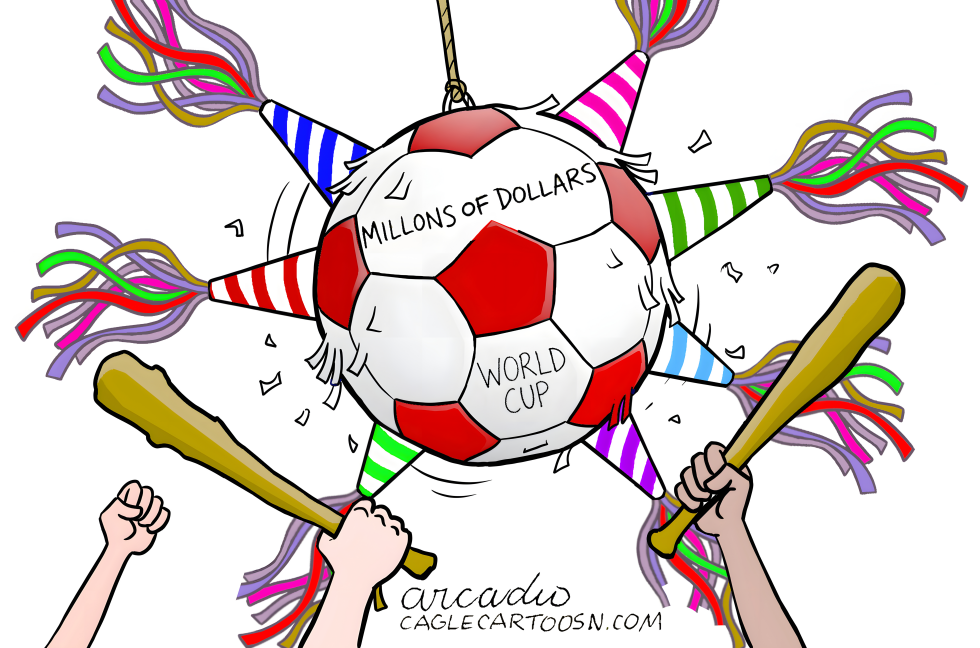
A soccer ball piñata labeled World Cup and Millions of Dollars hangs from a rope while multiple hands swing wooden bats at it. Colorful streamers and paper fragments scatter with each impact. The image appears on July 2 2026 amid ongoing preparations and financial discussions surrounding the 2026 World Cup hosted across North America.