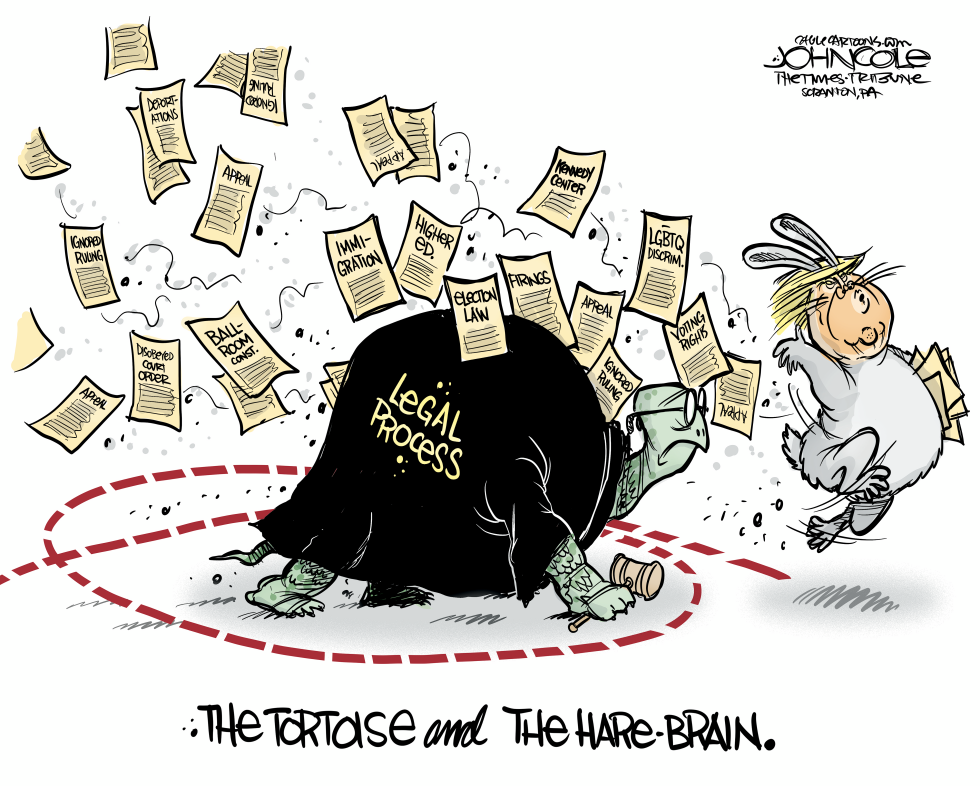
Multiple legal cases involving former President Trump continue through appeals on election law, voting rights, immigration rulings and related matters. The slow pace of the judicial system allows repeated filings and delays. The cartoon argues that this extended process effectively lets Trump run circles around accountability rather than face timely resolution on the merits.
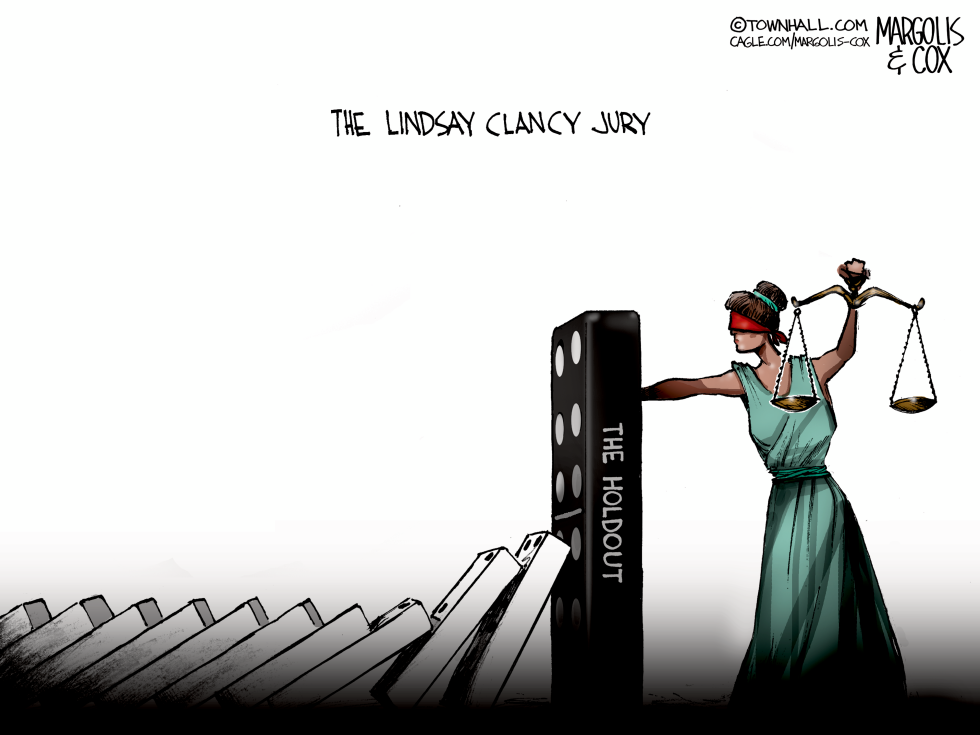
The Lindsay Clancy jury reached a critical impasse when one holdout juror refused to join the majority, threatening to derail deliberations in the closely watched case. The deadlock highlights how a single dissenting voice can halt proceedings and force mistrial risks or further negotiations. The cartoon frames this as a precarious domino chain where the holdout threatens broader collapse. It critiques the fragility of jury consensus in high-stakes criminal trials and questions whether the system adequately manages such standoffs.
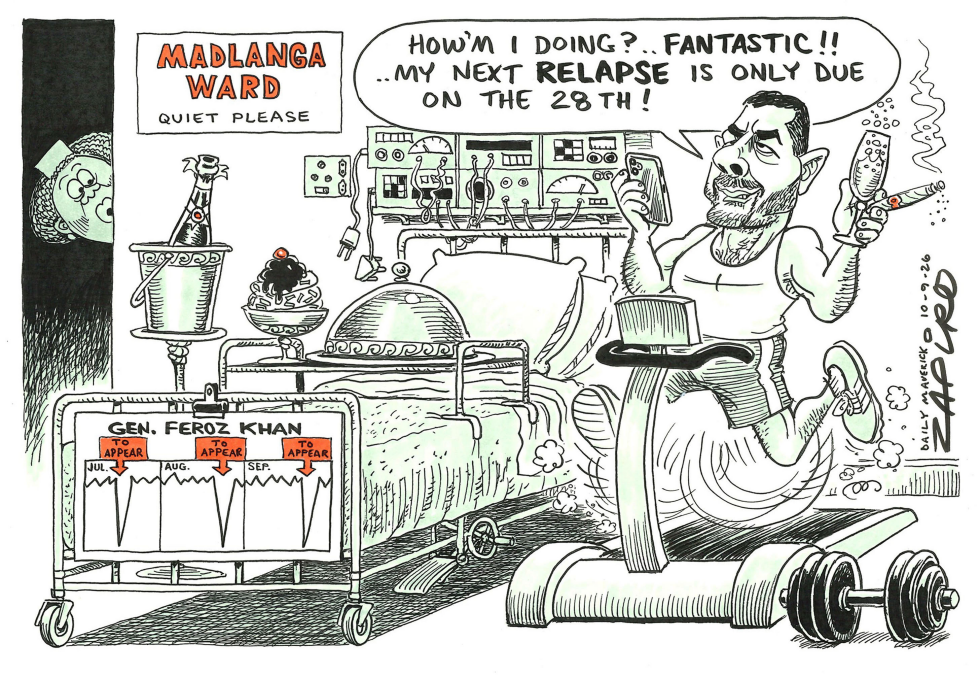
Maj-Gen Feroz Khan, suspended SAPS Crime Intelligence deputy head, was shot in an apparent assassination attempt in June 2026 days before scheduled Madlanga Commission testimony. His evidence was postponed multiple times citing recovery and medical certificates, with the next appearance set for 28 September. The cartoon mocks the pattern of delays as a convenient scheduling of relapse.
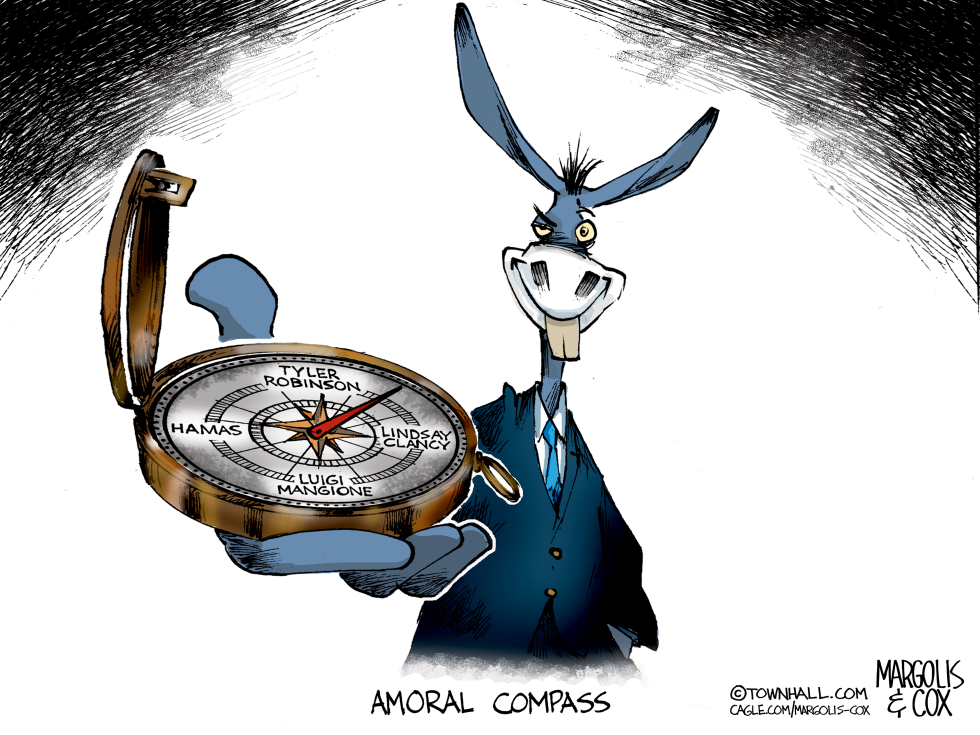
On September 11, 2026, a political cartoon by Margolis & Cox depicts the Democratic Party's moral framework as broken by associating it with figures such as Luigi Mangione, Lindsay Clancy, Tyler Robinson, and Hamas. The piece argues that progressive tolerance for these cases reveals a deeper ethical failure. It matters because public trust in political morality shapes elections and policy debates. The cartoon takes the position that the left has abandoned consistent principles in favor of selective outrage.
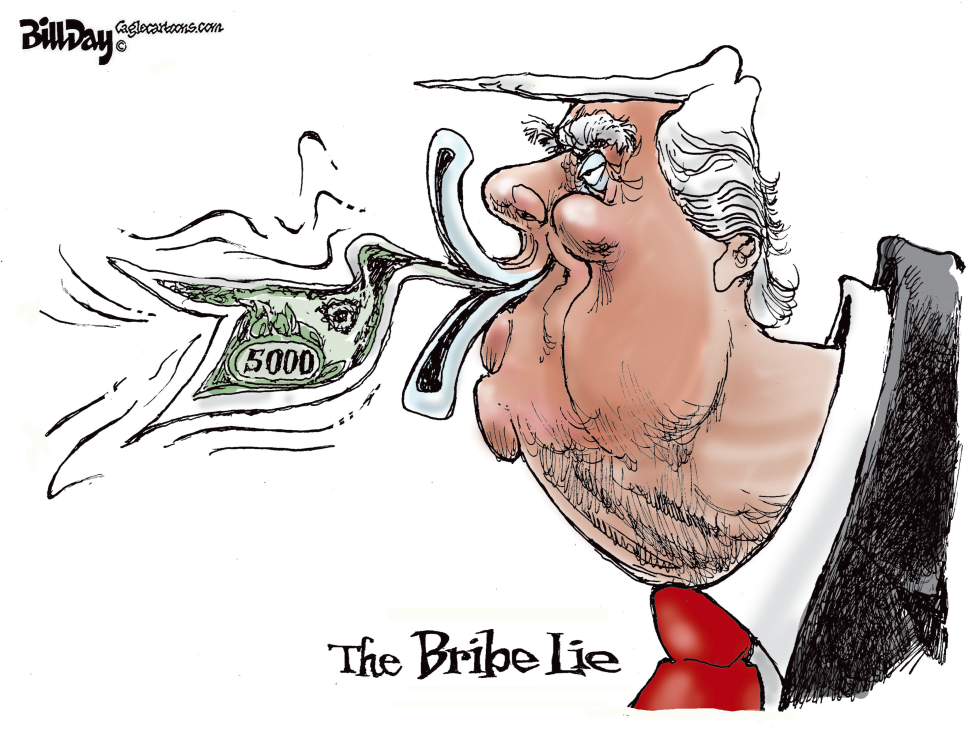
Donald Trump has repeatedly denied receiving improper payments or bribes tied to official actions. Recent reports have raised questions about large cash transfers and their origins. The cartoon argues that these denials amount to a lie, with the money trail contradicting public statements. It positions the issue as a test of accountability for the former president and his circle. The piece suggests the public should view such explanations with skepticism given the visible evidence of financial gain.
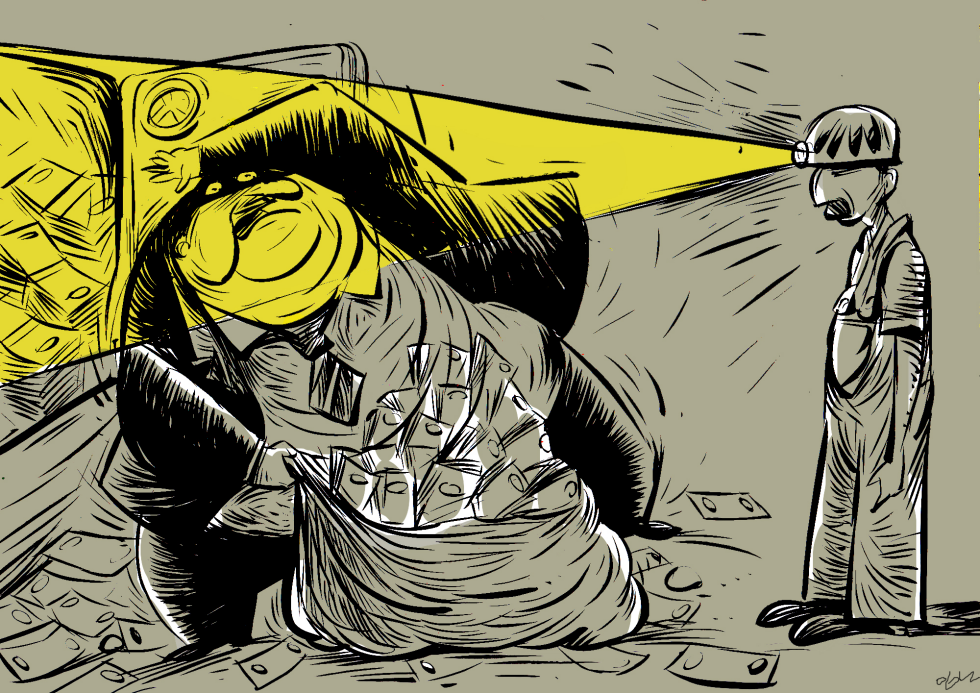
Ongoing concerns about officials and contractors mishandling public resources continue to surface in various jurisdictions. Weak controls allow individuals to divert funds meant for public projects. The cartoon underscores the need for stronger accountability measures to prevent such diversion and restore trust in government spending.
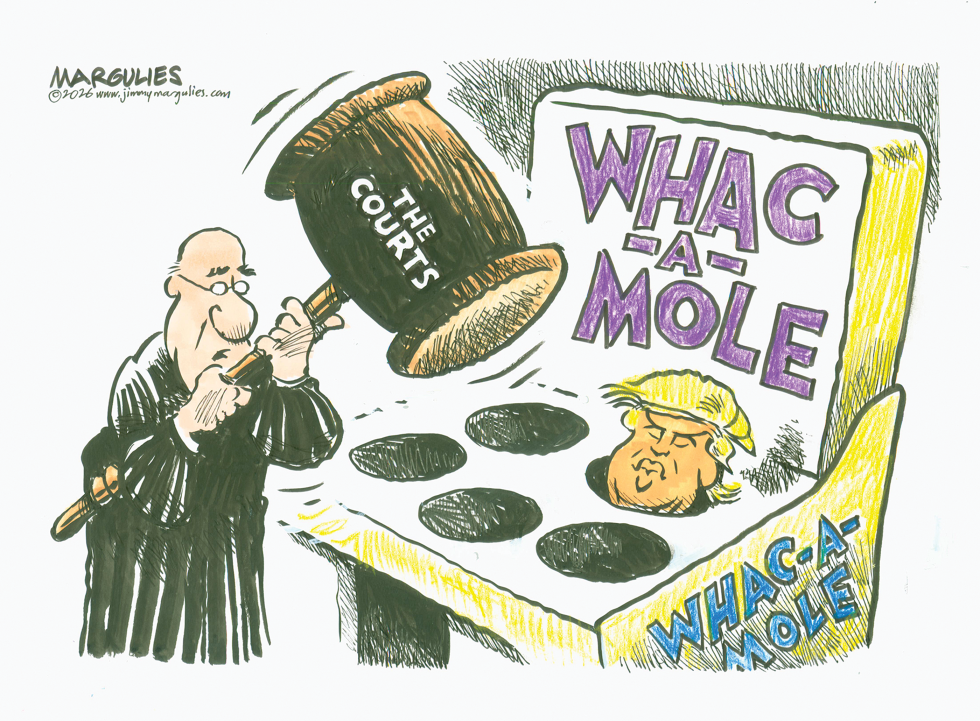
Courts have pursued multiple cases against Donald Trump in recent years, raising questions about timing and motivation ahead of elections. The editorial argues the legal actions resemble a repetitive game rather than measured justice.
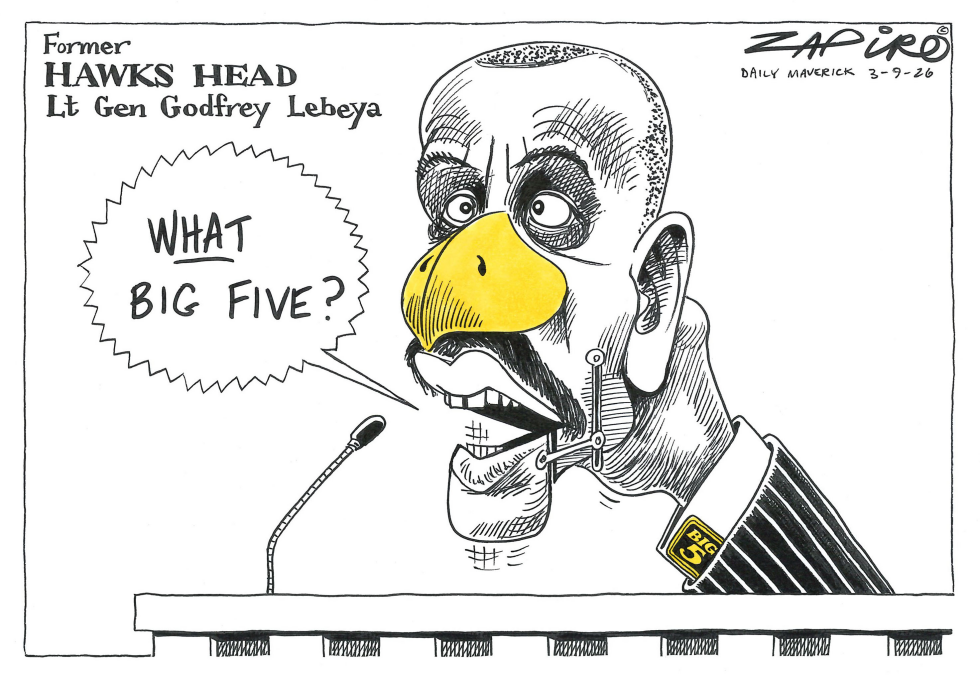
Former Hawks head Lt Gen Godfrey Lebeya publicly questioned the Big Five label applied to him and his unit. The designation refers to the focus on five priority crime areas under South African anti-corruption efforts. The exchange highlights tensions over how the Hawks prioritize cases involving senior officials and organized crime. The cartoon frames Lebeya's denial as an attempt to distance himself from the label's implications for accountability.
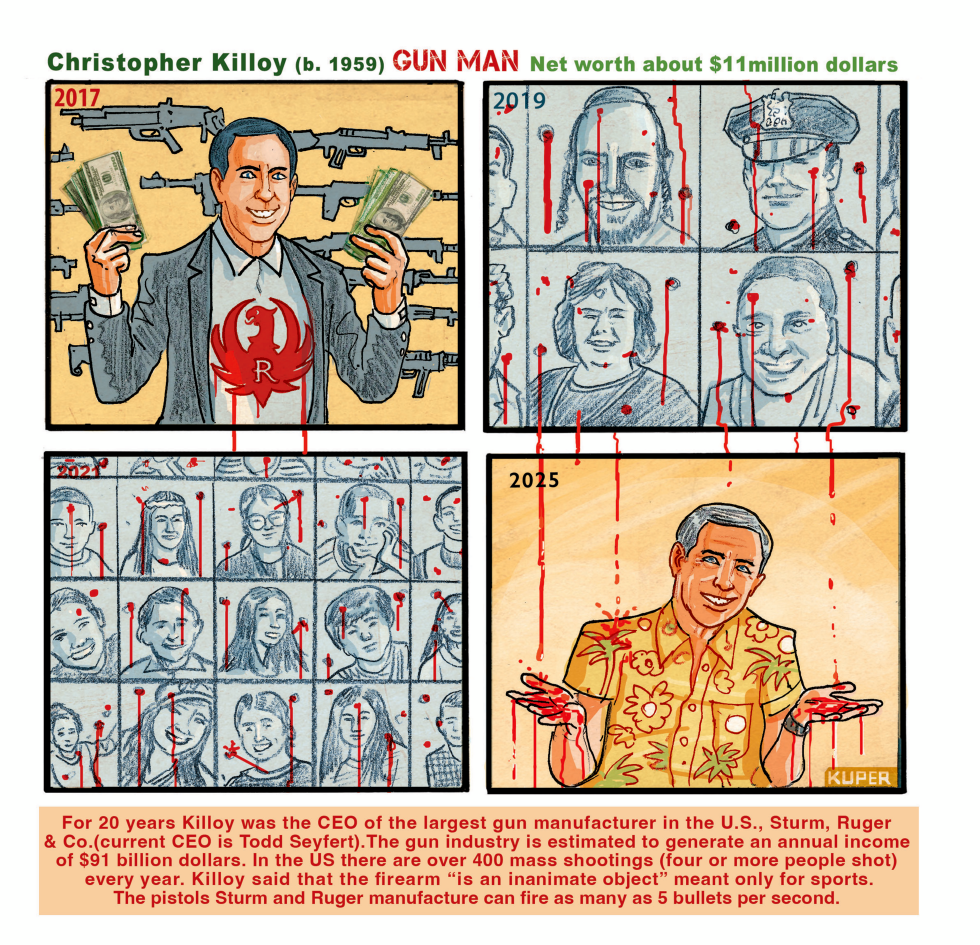
Christopher Killoy served as CEO of Sturm, Ruger & Co. from roughly 2005 to 2025, during which the company generated billions in revenue from firearms used in hundreds of U.S. mass shootings. The industry earns an estimated $91 billion annually, and more than 400 incidents occur each year. Killoy described guns as inanimate sporting objects. The cartoon criticizes the disconnect between corporate profits and the human cost shown in the accumulating portraits of victims.
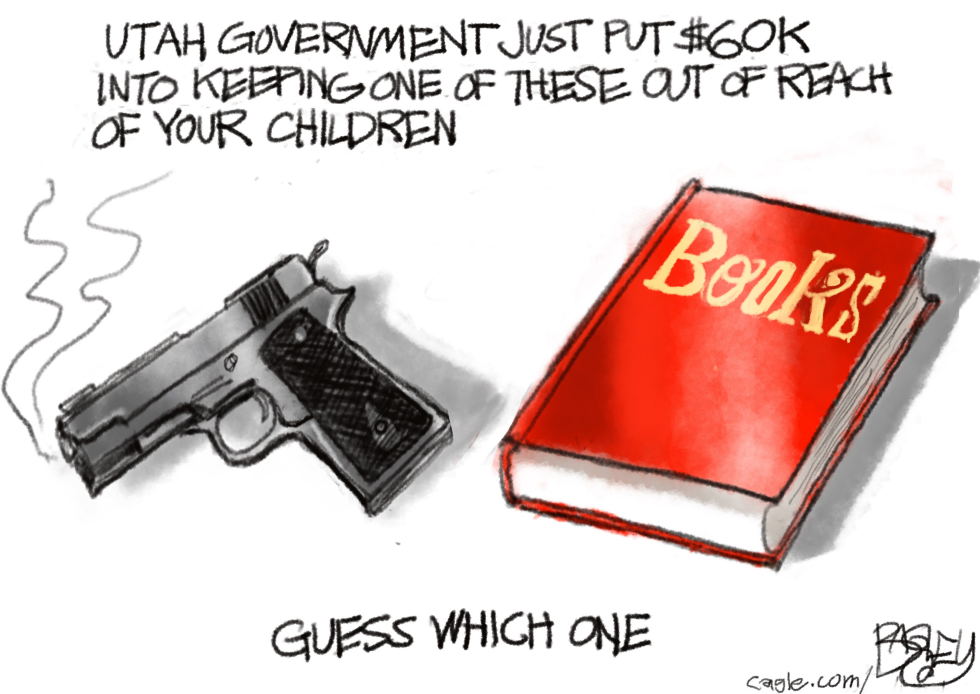
Utah officials directed $60,000 toward measures keeping certain books from children. Firearms remain readily available in the state. The decision highlights priorities in public safety and education policy. The piece criticizes the allocation as misplaced emphasis on censorship instead of addressing gun risks.
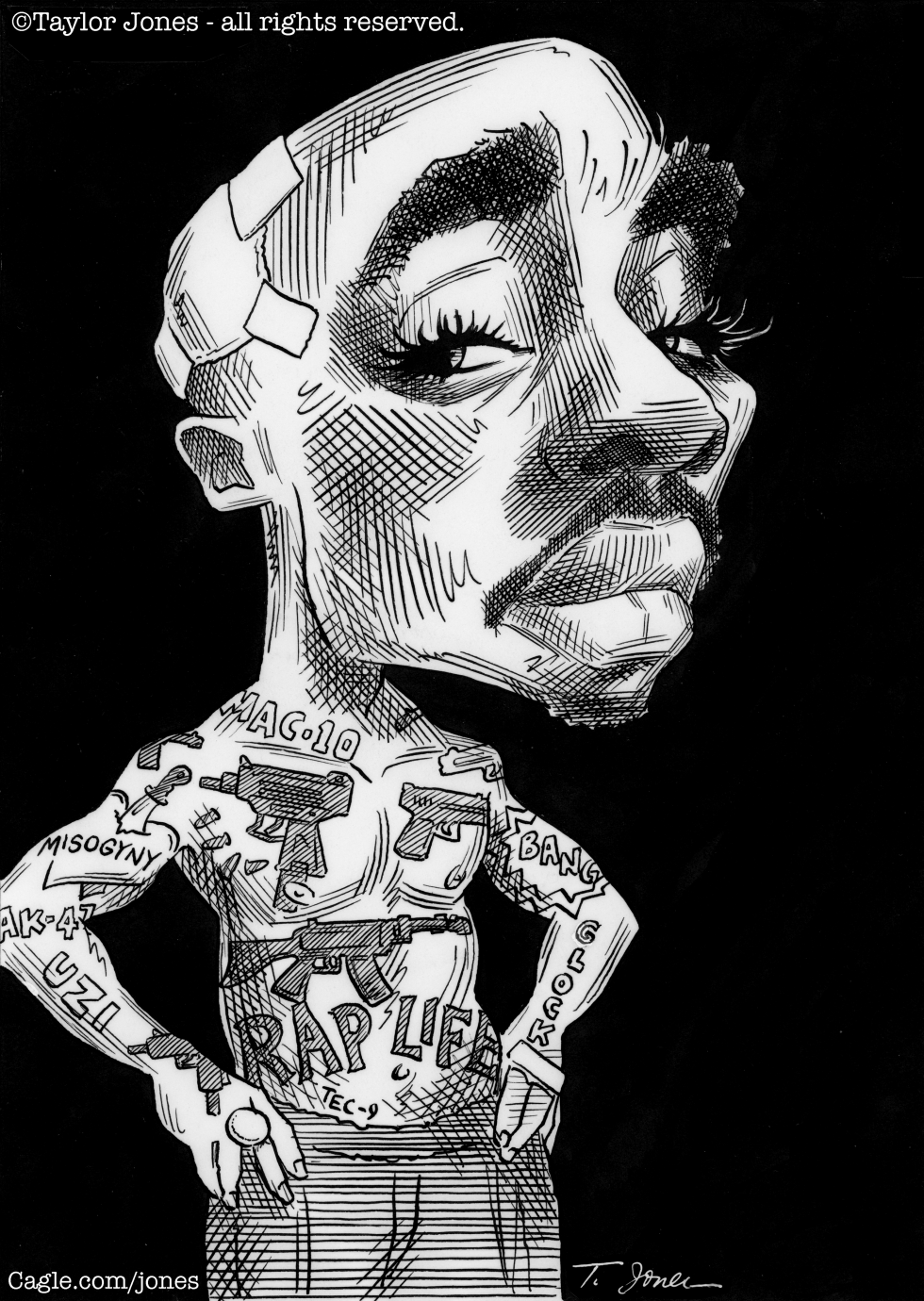
The caricature of Tupac Shakur covered in gun tattoos and the word misogyny responds to the persistent association of rap with firearm imagery and anti-woman themes. It underscores how such elements in hip-hop culture continue to shape public perceptions of the genre and its icons long after Shakur's death. The piece takes the position that these symbols remain central to the rapper's enduring image and the broader problems they represent.
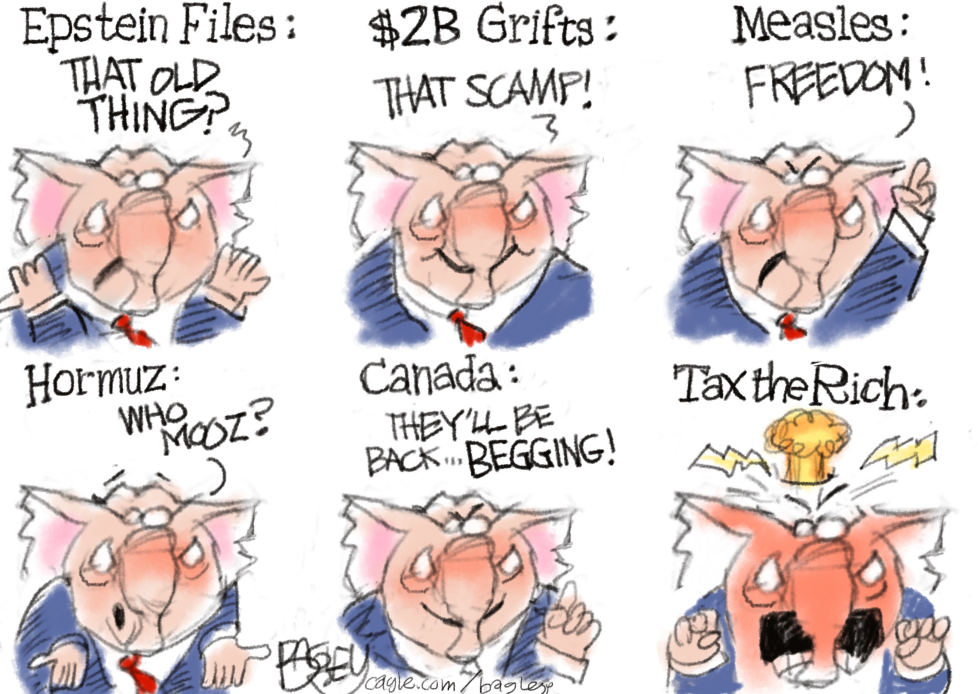
A political figure downplays the Epstein files, billion-dollar grifts, measles outbreaks, Hormuz tensions, Canada relations and wealth taxes. The piece critiques selective indifference to ongoing controversies and policy flashpoints.
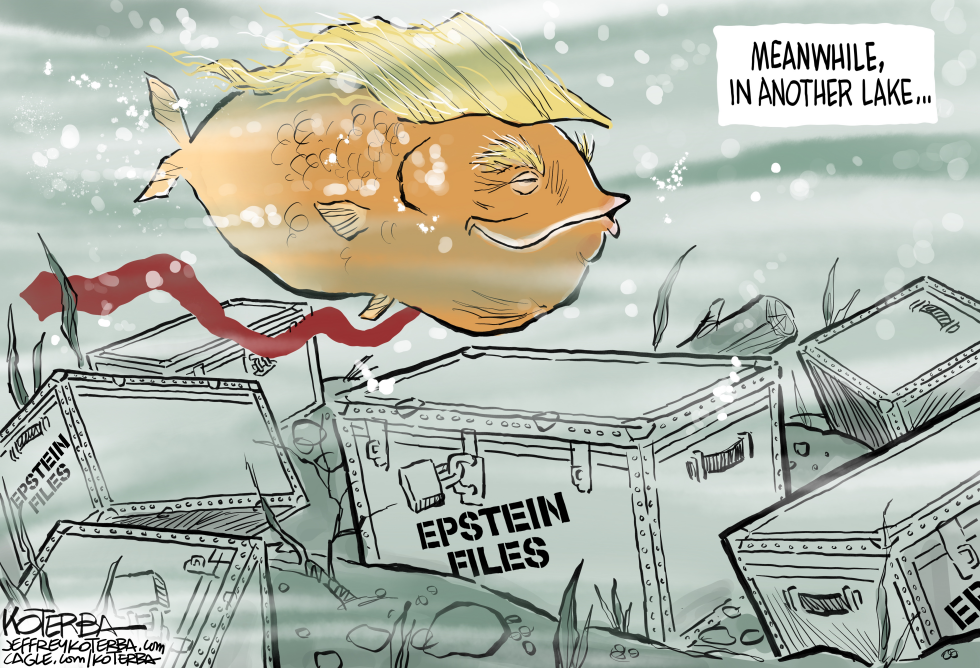
Donald Trump remains the central figure in discussions over Jeffrey Epstein files as courts and investigators continue to review sealed materials. The files contain names and details from prior cases that could affect multiple high-profile individuals. The piece portrays the former president as operating in a separate environment from those documents.
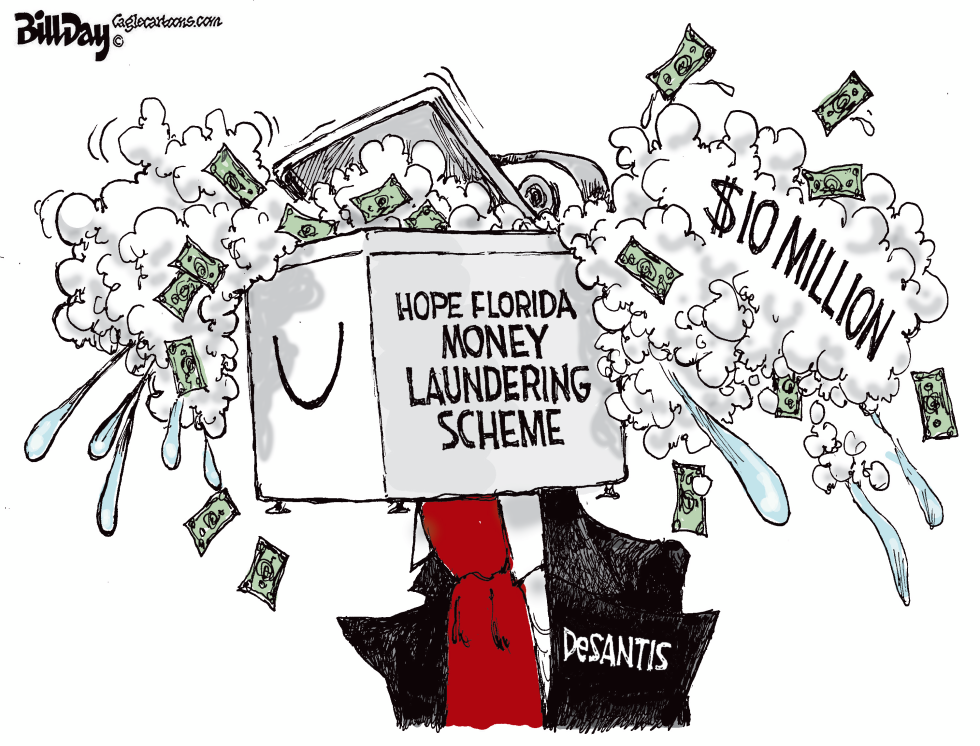
Florida Governor Ron DeSantis faces questions over the Hope Florida initiative after reports surfaced of a $10 million money laundering scheme tied to state funds. The allegations center on how program money was handled and distributed. Critics argue the episode raises serious questions about oversight and accountability in state government. The cartoon portrays DeSantis directly linked to the scheme through the labeled washing machine. It takes the position that the governor bears responsibility for the alleged misuse of public resources.
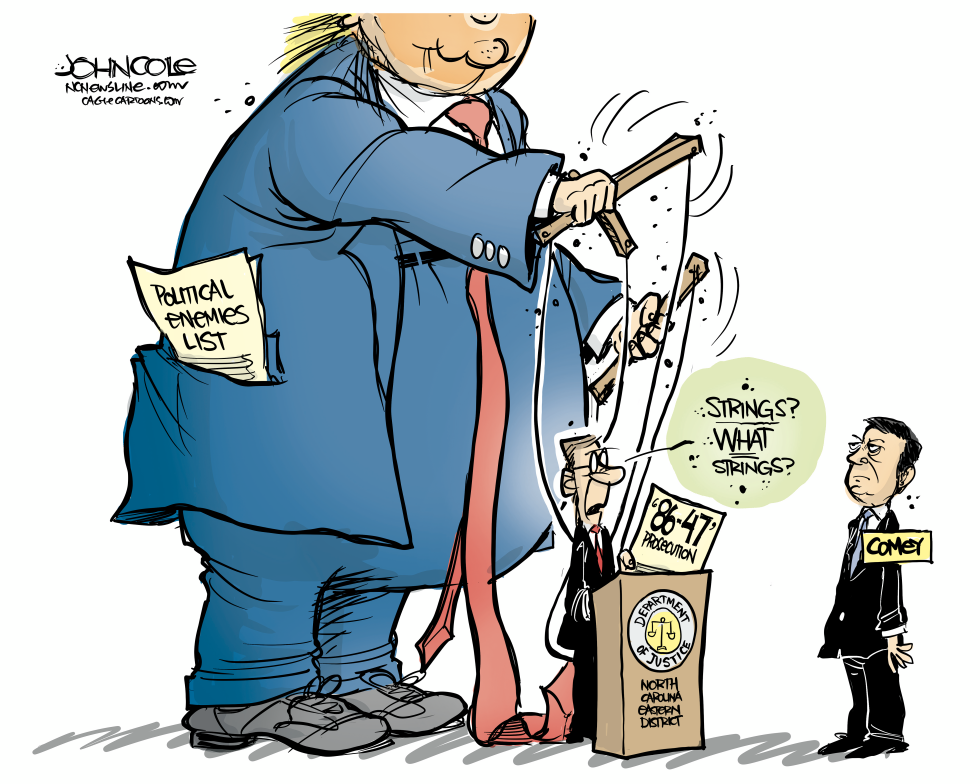
President Trump is shown directing a Department of Justice prosecution of former FBI Director James Comey in the North Carolina Eastern District. The image portrays the president as a puppeteer controlling the case through strings attached to a figure holding an 86-47 prosecution sign. The editorial position criticizes the use of federal prosecutorial power against political opponents.