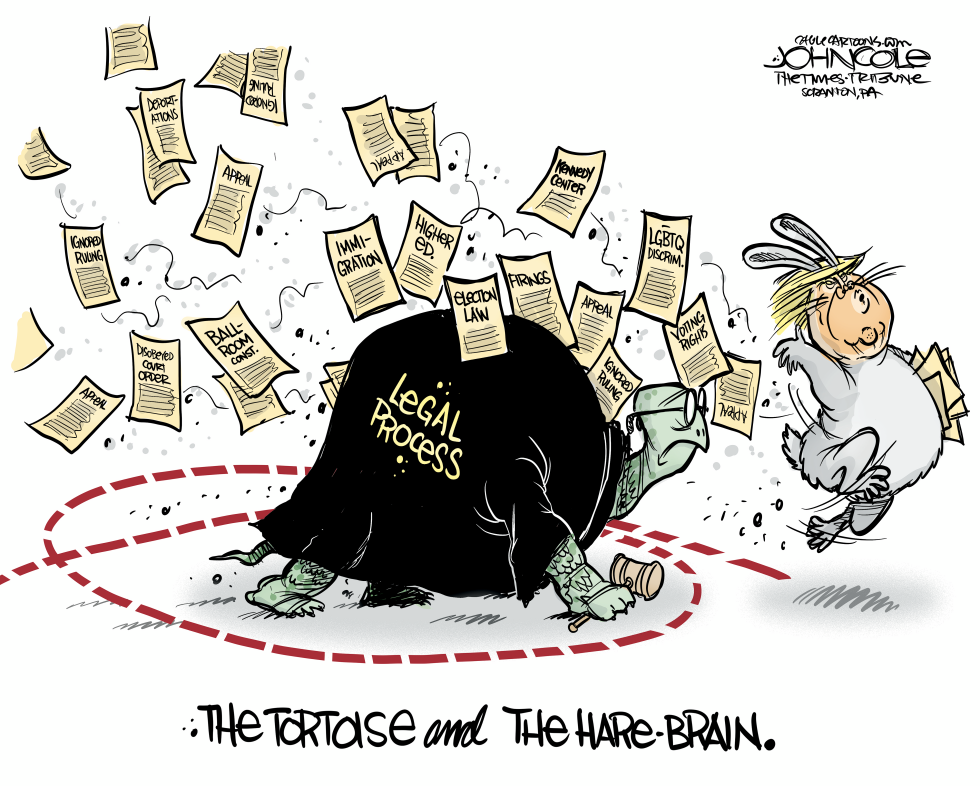
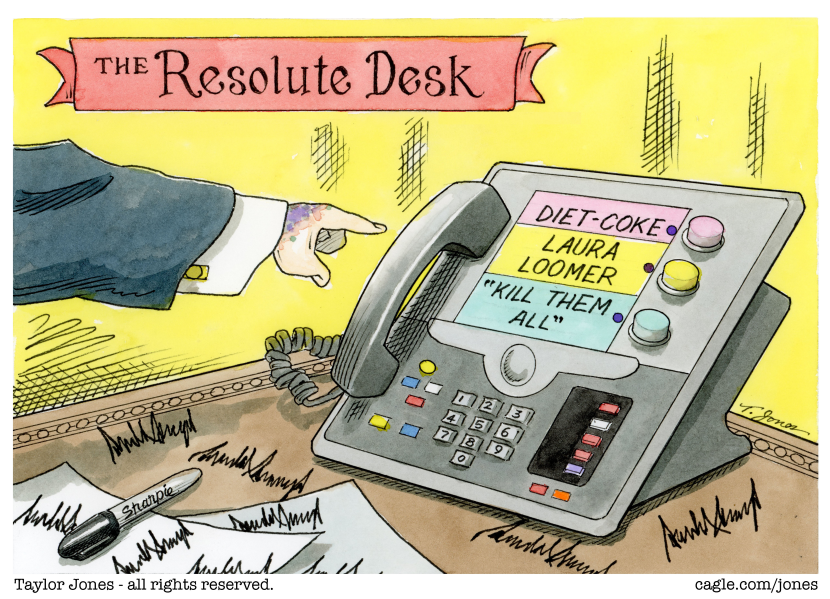
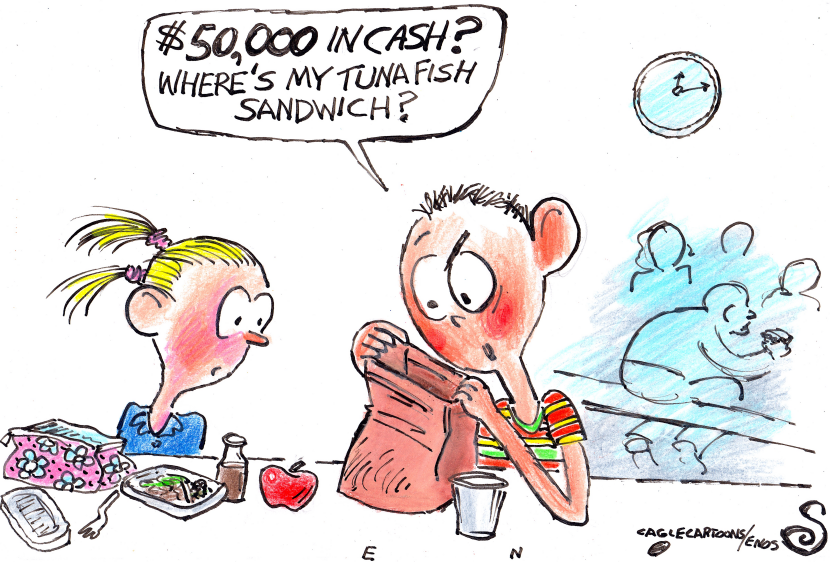
Multiple legal cases involving former President Trump continue through appeals on election law, voting rights, immigration rulings and related matters. The slow pace of the judicial system allows repeated filings and delays. The cartoon argues that this extended process effectively lets Trump run circles around accountability rather than face timely resolution on the merits.
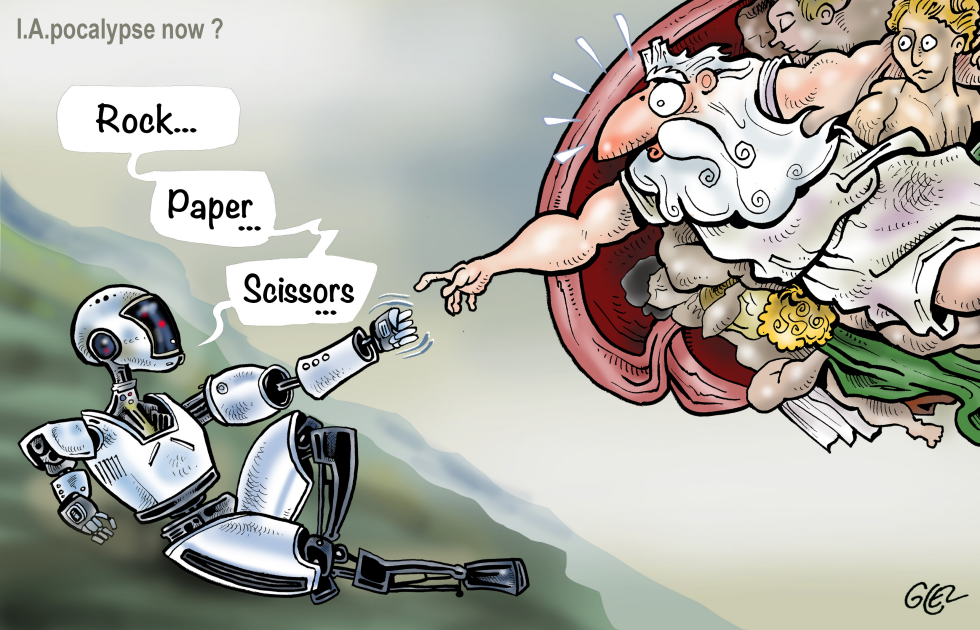
Rapid advances in artificial intelligence have intensified debates over whether machines could eventually surpass or supplant human notions of creation and control. Developers and ethicists warn that unchecked AI progress risks unintended consequences for society and long-held beliefs. The cartoon uses a familiar biblical image to frame these concerns as an existential contest. It positions AI as a direct challenger to divine order rather than a mere tool. The editorial stance highlights the hubris of treating technology as an equal or superior force to traditional sources of authority.
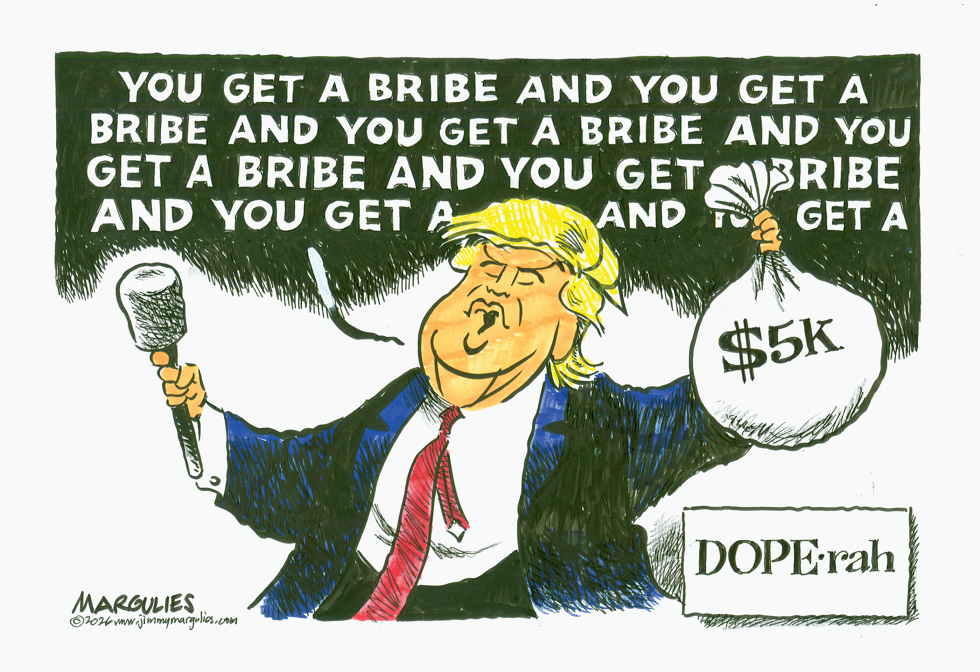
Donald Trump has faced renewed scrutiny over allegations of using official authority to distribute favors and payments. The pattern involves judicial and executive actions that critics say cross into bribery. Such conduct raises questions about accountability in high office. The cartoon frames the behavior as a deliberate, widespread distribution of bribes to allies and supporters. It argues that this approach undermines public trust and normalizes corruption at the highest levels.
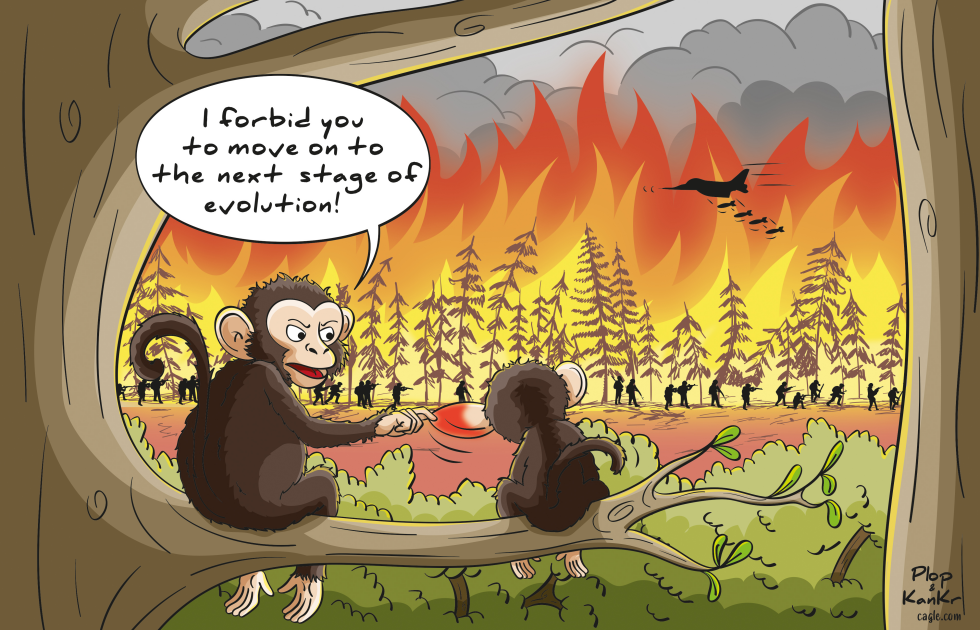
The cartoon published on September 7, 2026, shows two monkeys on a tree branch overlooking a forest fire. One monkey holds a red object and declares it forbids the next stage of evolution. In the background, soldiers stand in formation and a fighter jet flies overhead. The image responds to ongoing themes of war disrupting societal and human development. It uses the monkeys to represent humanity stalled by violence and destruction rather than advancing.
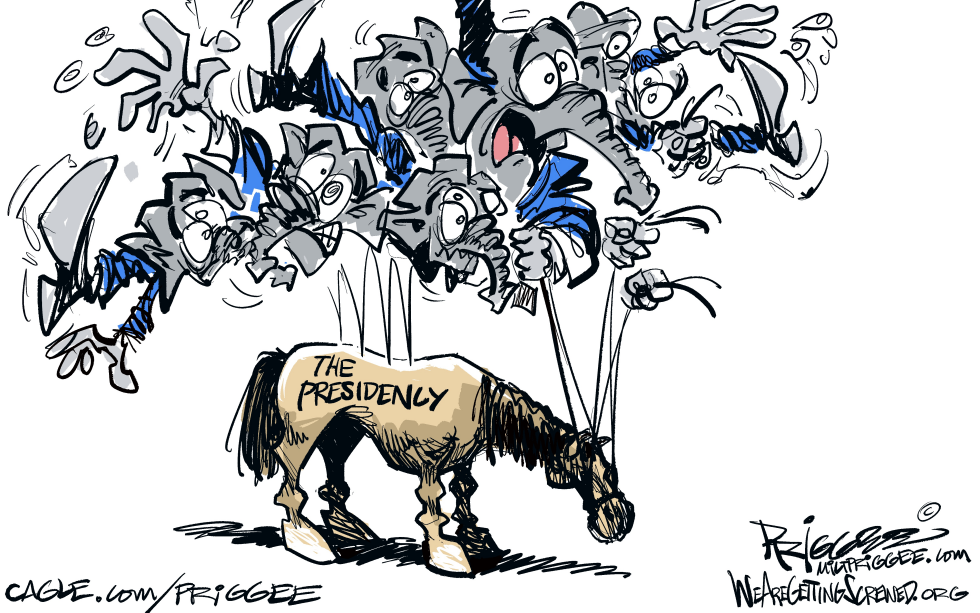
A political cartoon depicts several puppet-like figures with elephant features holding strings attached to a horse labeled THE PRESIDENCY. The image illustrates competing pulls on the office amid disarray. It responds to ongoing discussions about party influence and leadership dynamics around the 2026 period.
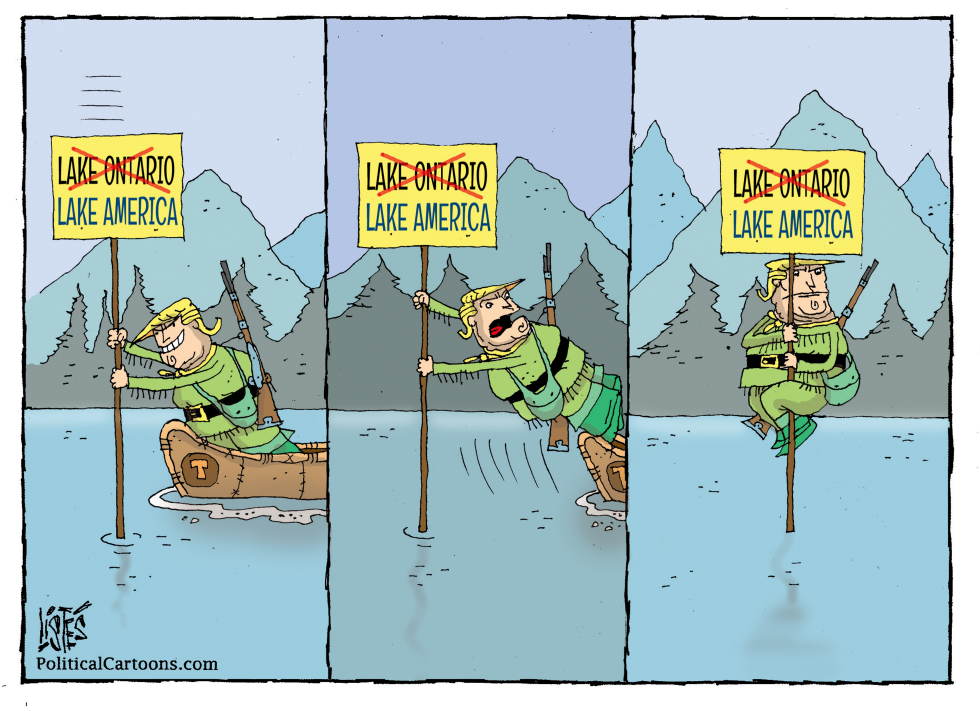
Donald Trump directed the renaming of Lake Ontario to Lake America in a move targeting shared U.S.-Canada waters. The action underscores ongoing tensions over border resources and national identity. The piece portrays the effort as an overreaching nationalist gesture that ignores international boundaries and practical realities.
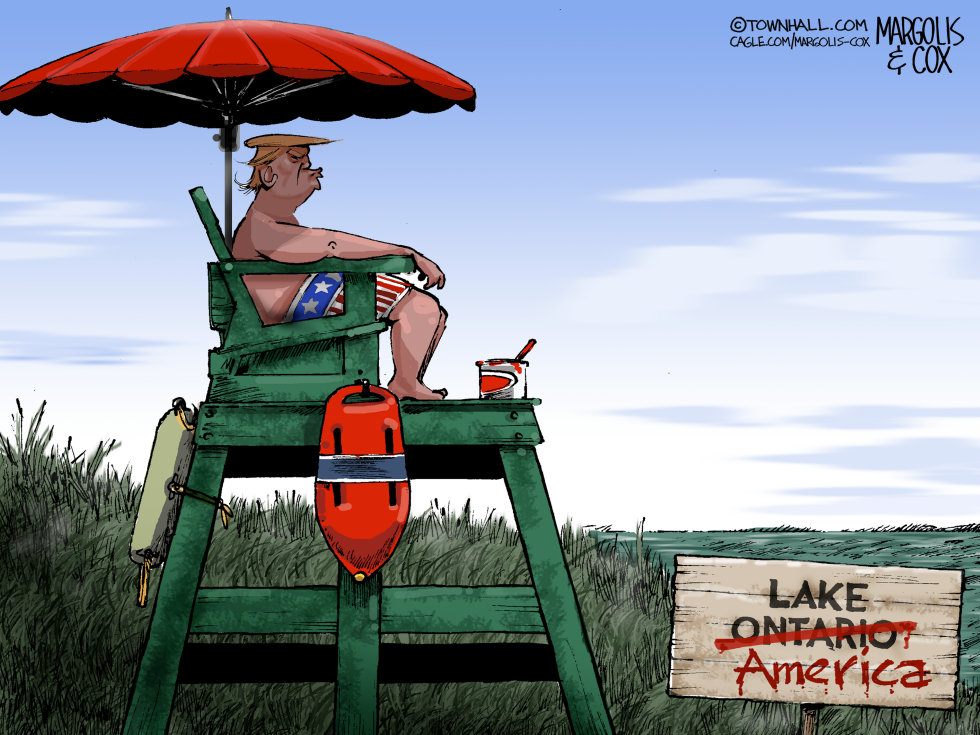
President Donald Trump directed the renaming of Lake Ontario to Lake America on or around August 30, 2026. The move continues a pattern of executive actions rebranding federal and natural sites. Supporters view it as assertive national identity reinforcement while critics see unnecessary overreach into established geographic names. The cartoon depicts Trump overseeing the change from a lifeguard post, underscoring his direct involvement in the decision.
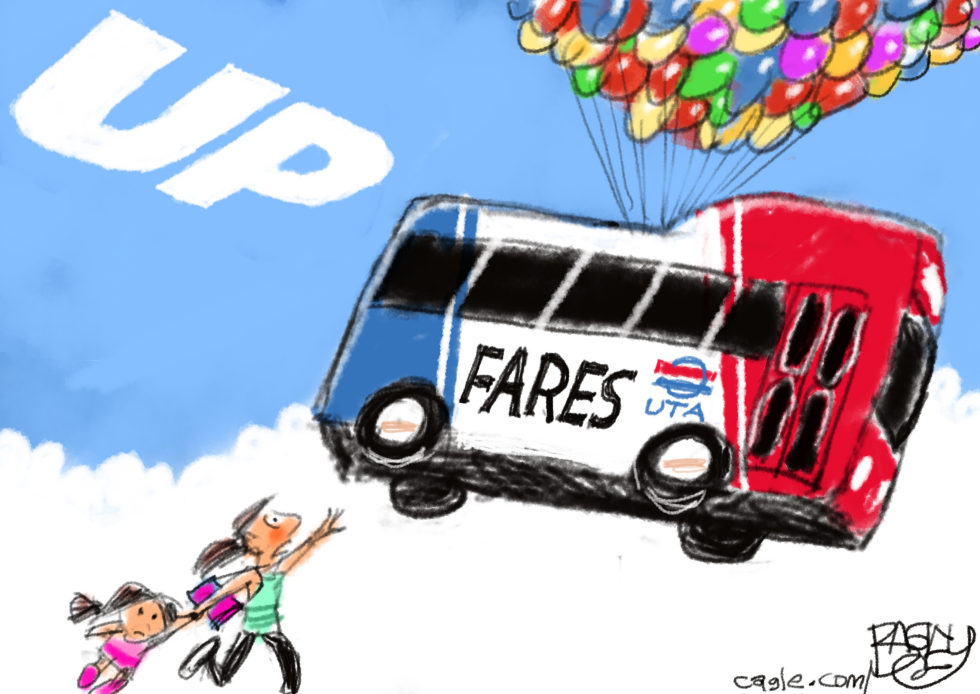
Utah Transit Authority faces pressure to increase bus fares amid broader cost pressures affecting public services. The development matters because higher fares can reduce ridership and strain lower-income households that rely on transit. The piece argues that these increases are being driven by external forces that riders are actively trying to resist.
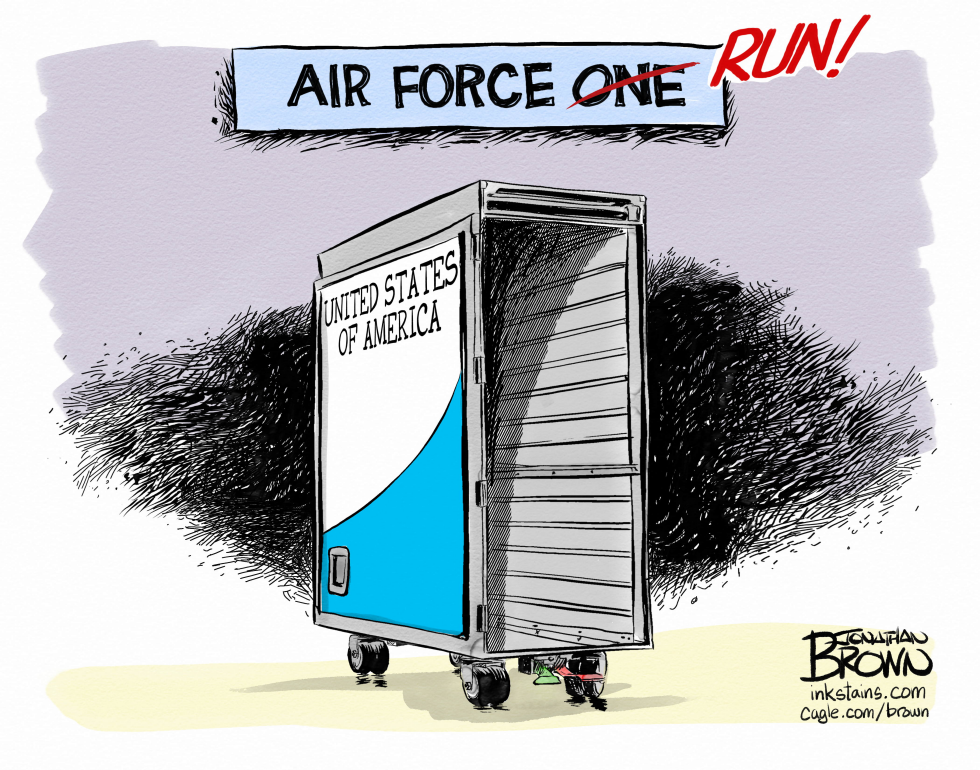
A wheeled airline catering cart occupies the center of the frame, painted in the livery of the presidential aircraft: white upper body, curved blue lower panel, and UNITED STATES OF AMERICA lettered down the side. Its full height door hangs open on empty wire shelving. Above it a pale blue placard reads AIR FORCE ONE, with ONE struck through in red and RUN! added beside that word in the same color. Two neckties poke out from between the casters underneath, one of them the long red tie Donald Trump is known for, the only trace of the men folded up inside. The drawing responds to reports that Trump sheltered in an airline galley cart against an assassination threat traced to Iran, turning the most recognizable branding in presidential aviation into an instruction to flee. Jonathan Brown signed the lower right corner alongside inkstains.com and Cagle.com/brown.
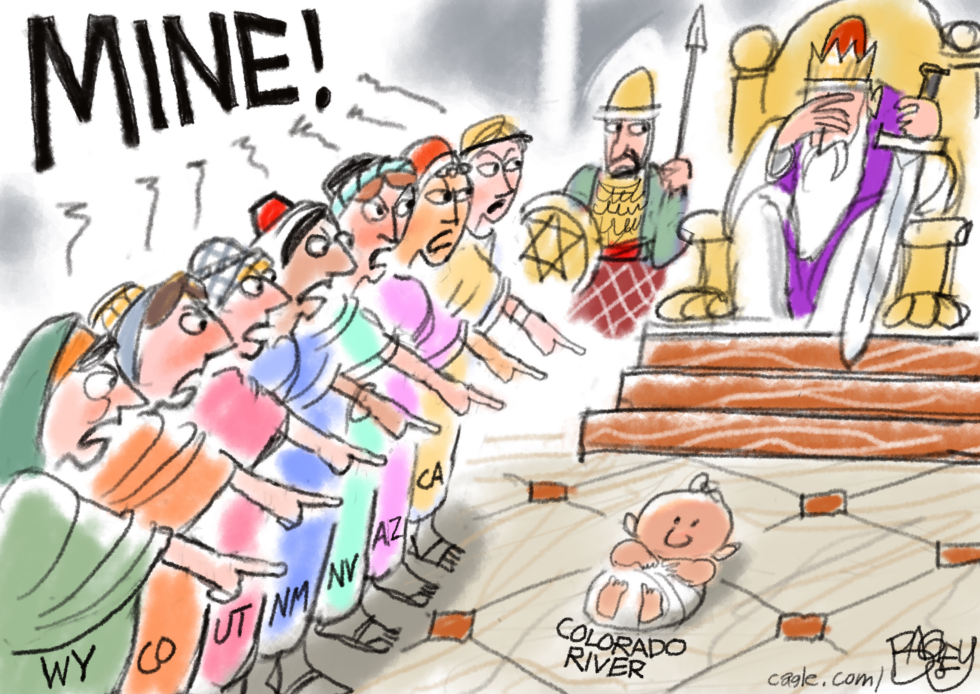
Western states continue long-running negotiations over limited Colorado River water supplies amid persistent drought conditions. The seven basin states have struggled for years to agree on reduced allocations required by declining reservoir levels. The dispute affects millions of users across agriculture, cities and tribes. Recent federal calls for deeper cuts have heightened tensions without producing a final compact. The cartoon frames the states as claimants in a classic judgment scenario, underscoring the zero-sum nature of the fight.
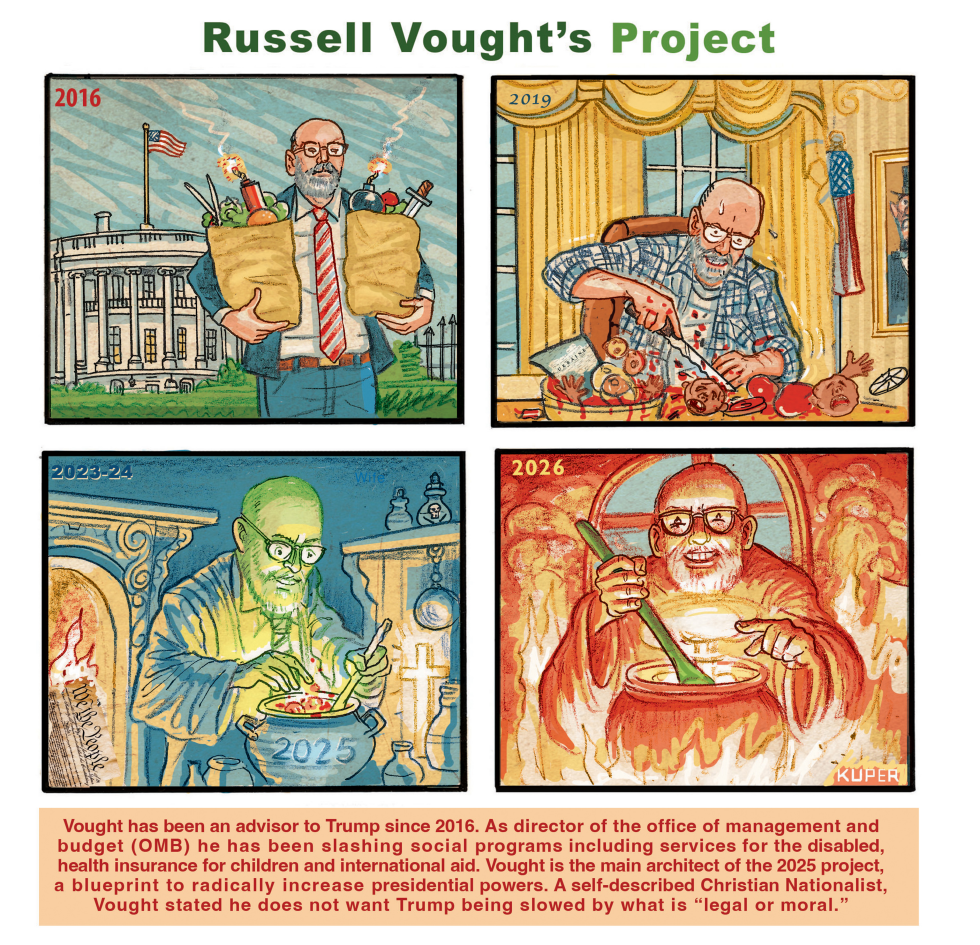
Russell Vought has served as a Trump advisor since 2016 and later directed the Office of Management and Budget, where he cut funding for disability services, children’s health insurance and foreign aid. He is the principal author of Project 2025, a plan to enlarge presidential authority. The cartoon presents his progression from 2016 through 2026 as a deliberate effort to remove legal or moral restraints on executive action.
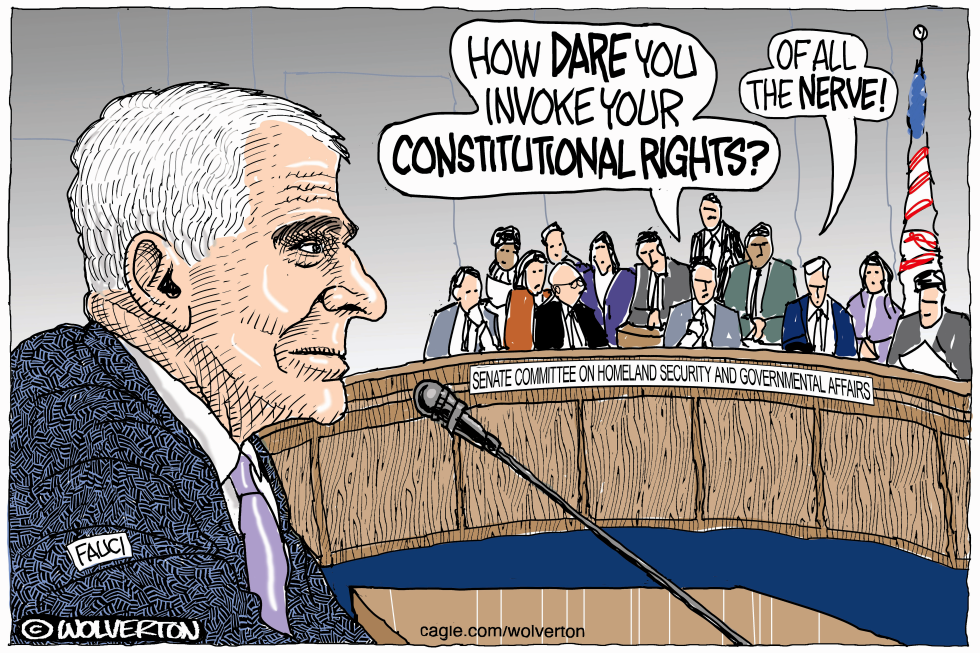
Anthony Fauci appeared before the Senate Committee on Homeland Security and Governmental Affairs on August 6, 2026. Committee members reacted sharply when the witness referenced constitutional protections. The exchange highlights ongoing tensions between congressional oversight and individual rights in high-profile hearings. The piece portrays the senators as overreaching in their response to the rights claim.
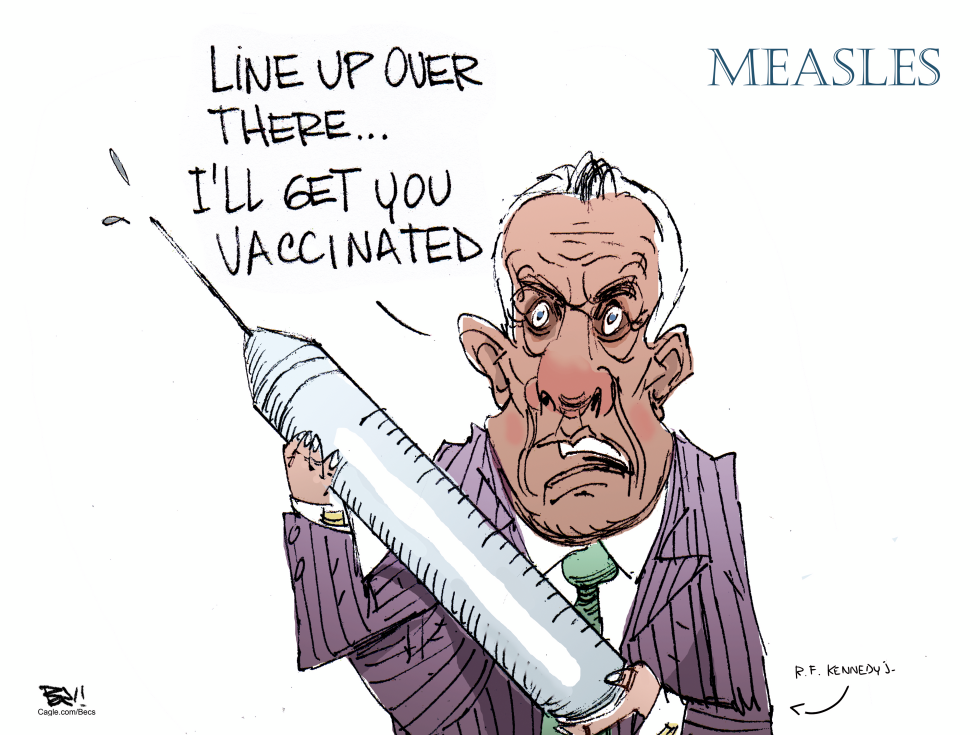
Robert F. Kennedy Jr., serving as a top health official in 2026, faces scrutiny over a sudden push for measles vaccinations. The move comes as cases rise and public skepticism lingers from prior stances. The editorial argues the policy reversal exposes inconsistent leadership on immunization.
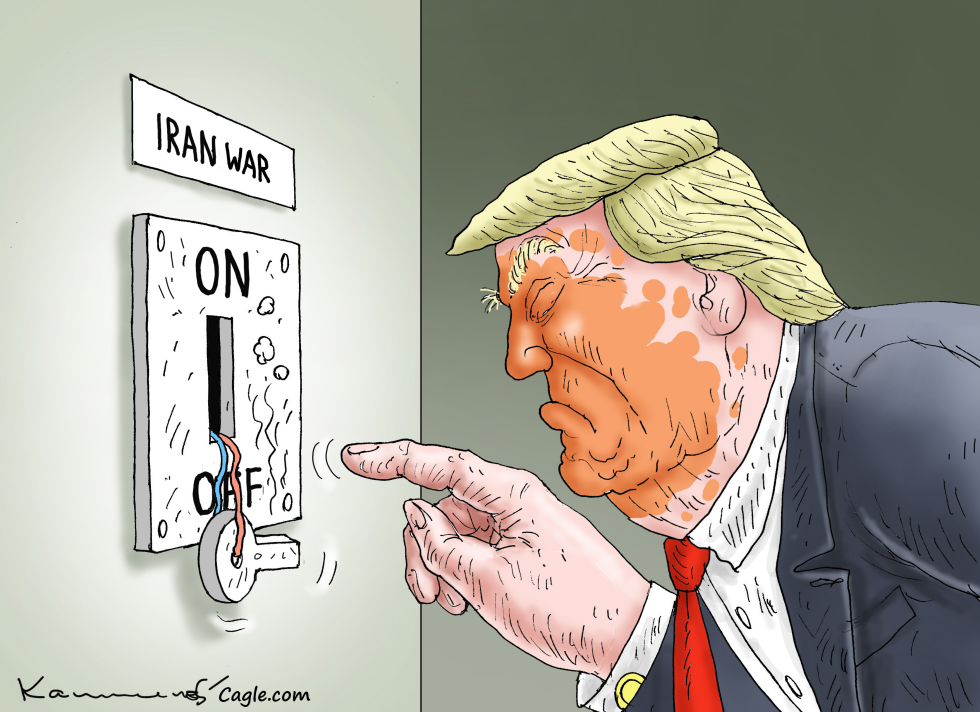
On August 2, 2026, former President Donald Trump is shown reaching to flip a switch labeled Iran War from off to on. The image responds to ongoing tensions with Iran and questions about U.S. military involvement in the Middle East. The piece argues that Trump is eager to initiate or escalate conflict despite the high stakes for regional stability and American interests.
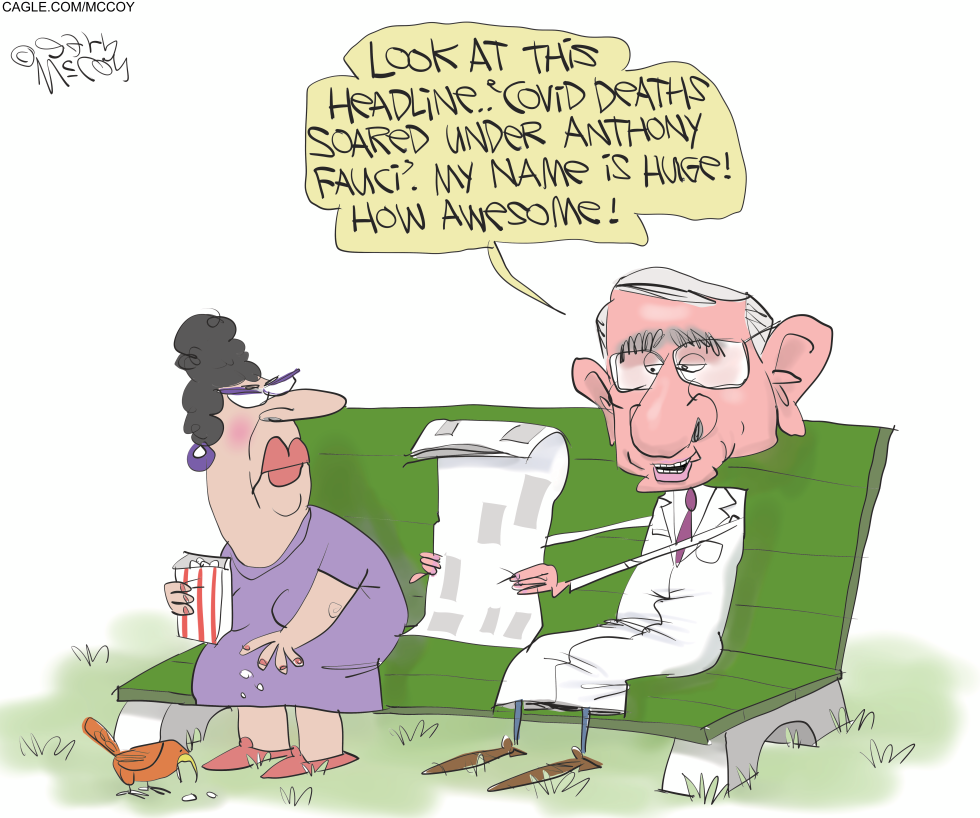
A newspaper headline reports COVID deaths rose under Anthony Fauci. The former health official reacts by celebrating the prominence of his own name in the story. The piece portrays this response as self-absorbed and detached from the human cost of the pandemic.