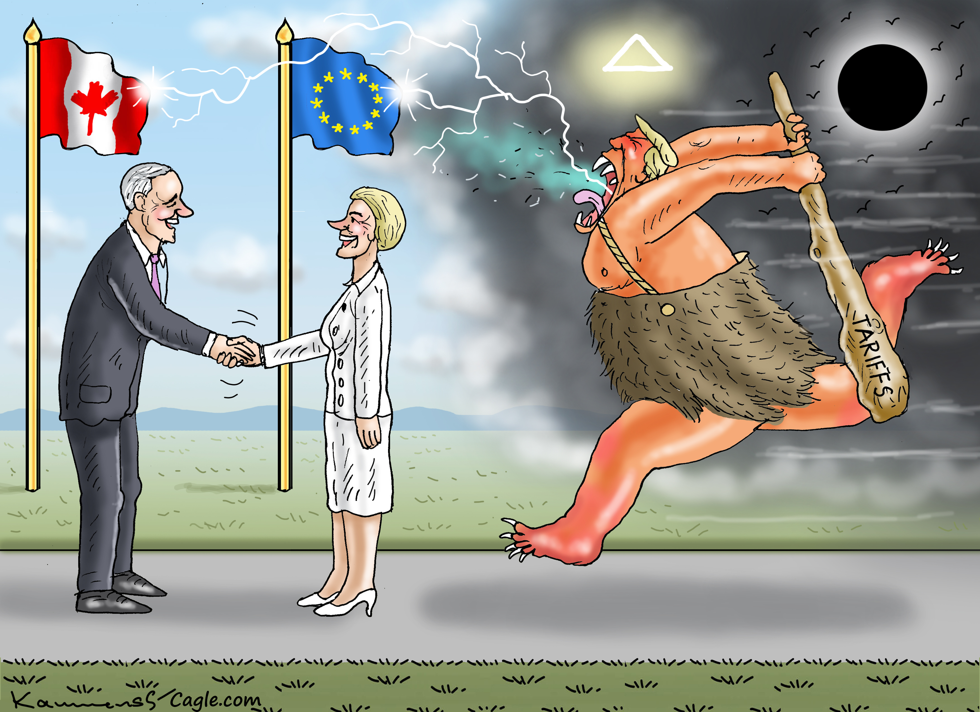
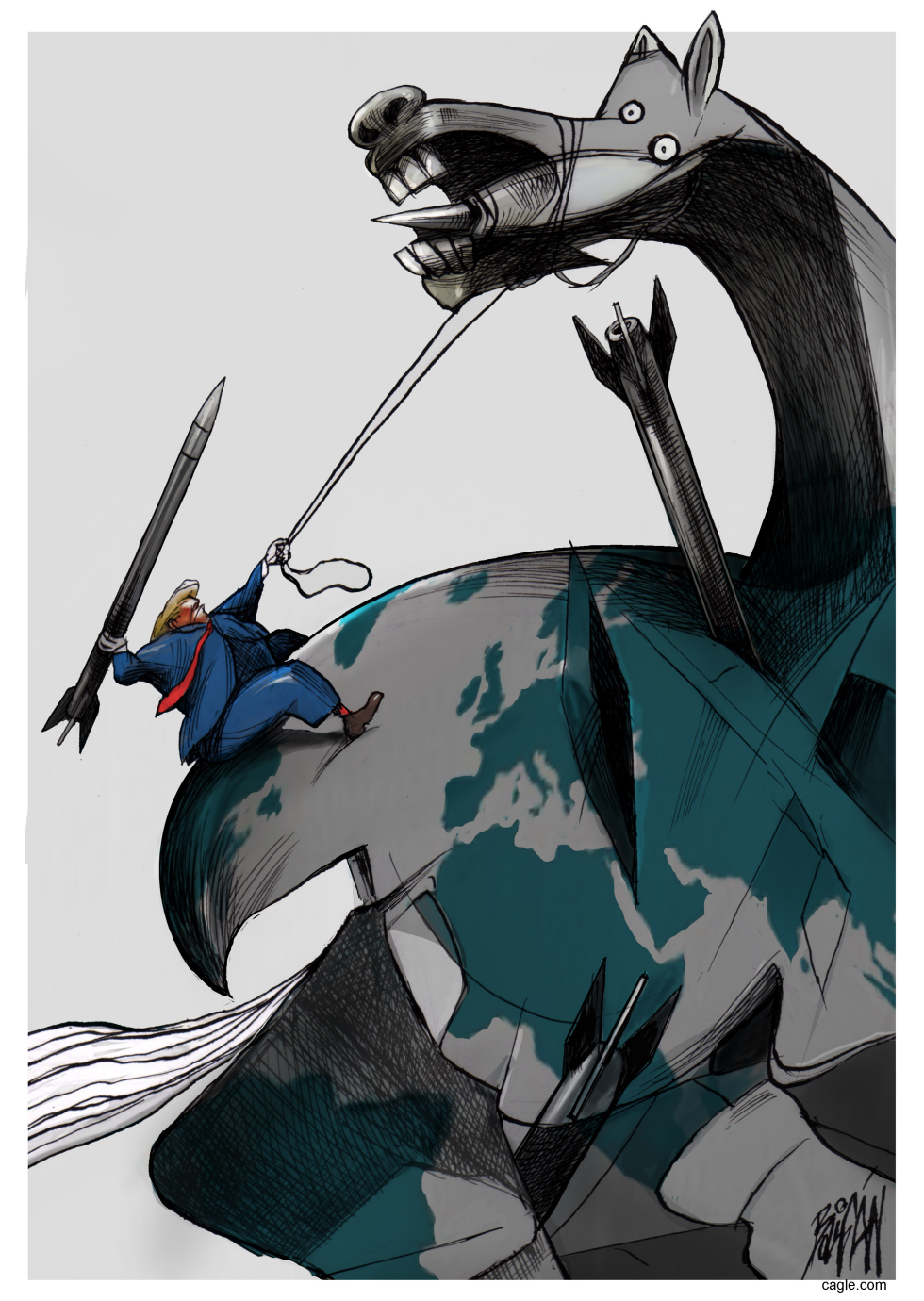
On September 17 2026 Canada and the European Union advanced a strengthened trade framework amid ongoing US tariff pressures. The agreement aims to boost economic cooperation and reduce reliance on American markets. President Trump responded with renewed threats of broad tariffs on allied imports. The move risks escalating trade friction across the Atlantic at a time when global supply chains remain fragile. The cartoon portrays the US stance as a primitive and self-defeating outburst that isolates Washington from its closest partners.
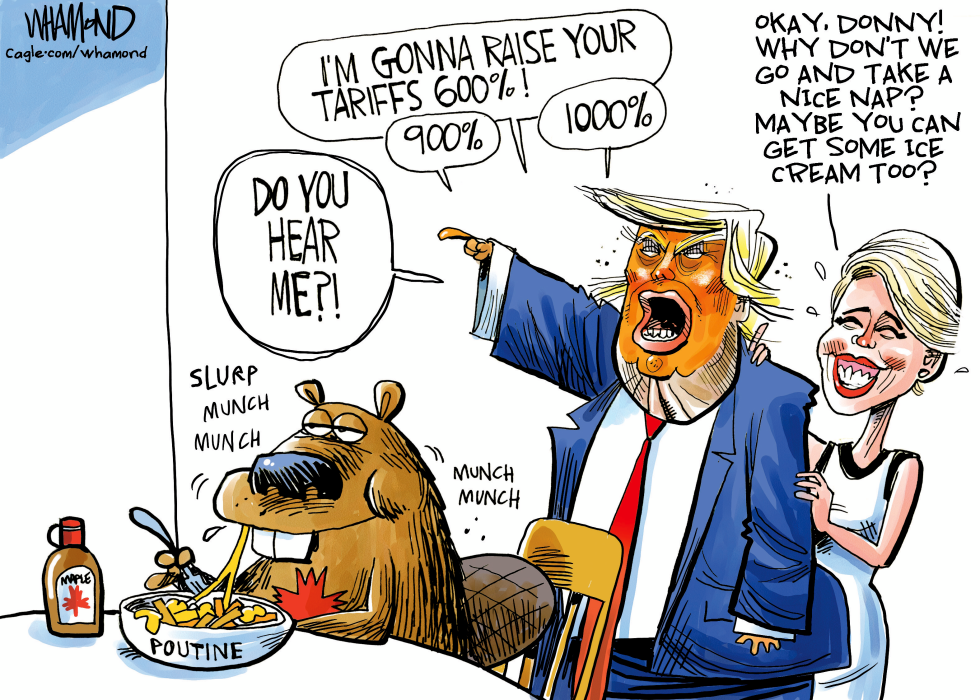
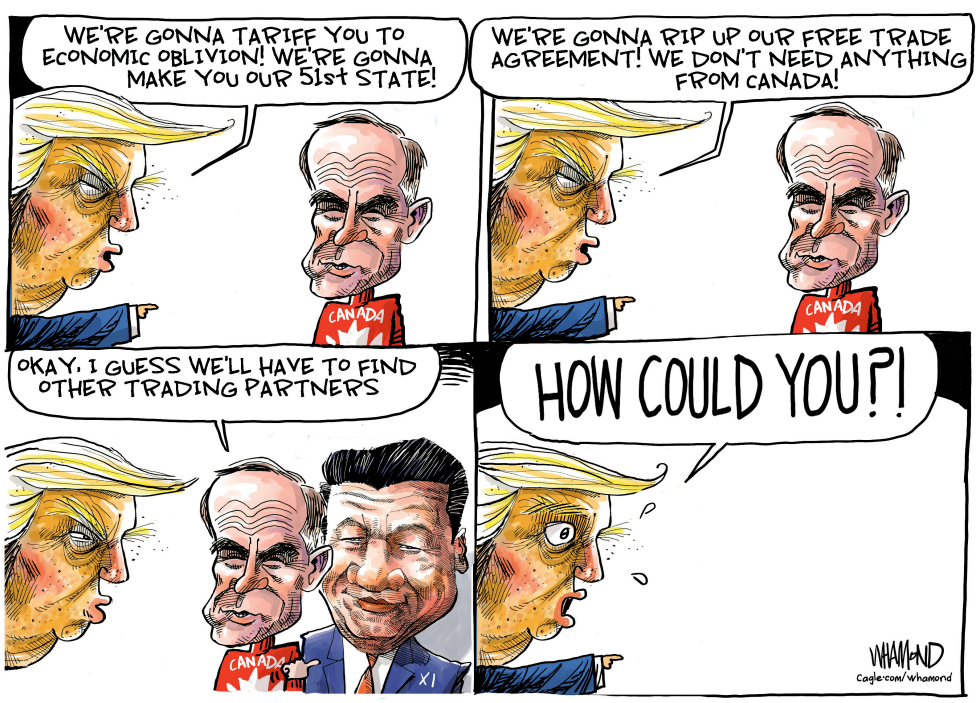
Donald Trump has renewed threats to impose tariffs as high as 1000 percent on Canadian goods. The move targets longstanding trade partners and risks disrupting supply chains for autos, lumber and agriculture. Canada has responded with calls for calm negotiations rather than retaliation. The escalation comes as both nations seek to stabilize economic ties ahead of potential policy shifts. The cartoon portrays the threats as an overreaction best met with indifference and redirection rather than escalation.
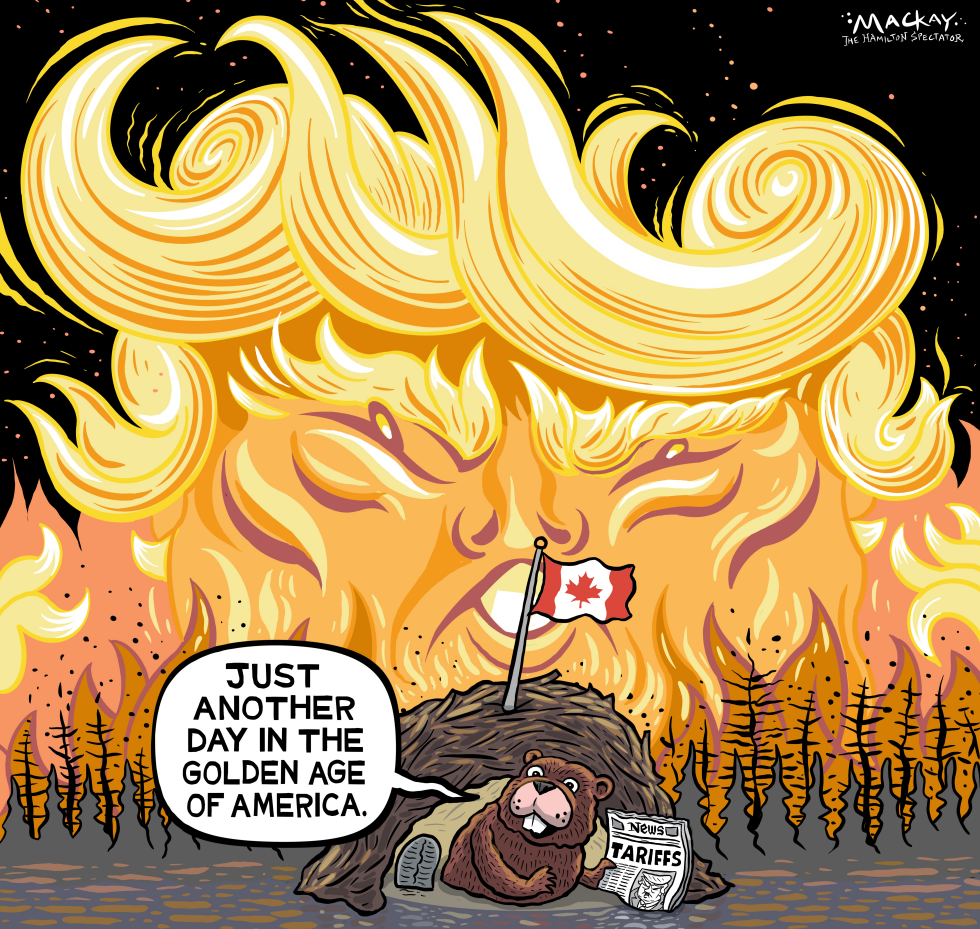
President Trump escalated tariff threats against Canada in mid-August 2026, targeting key exports and prompting Ottawa to brace for economic pressure. The move reignites bilateral trade tensions that have simmered since earlier rounds of duties. The cartoon portrays Canada hunkering down while dismissing the disruption as routine under the current administration.
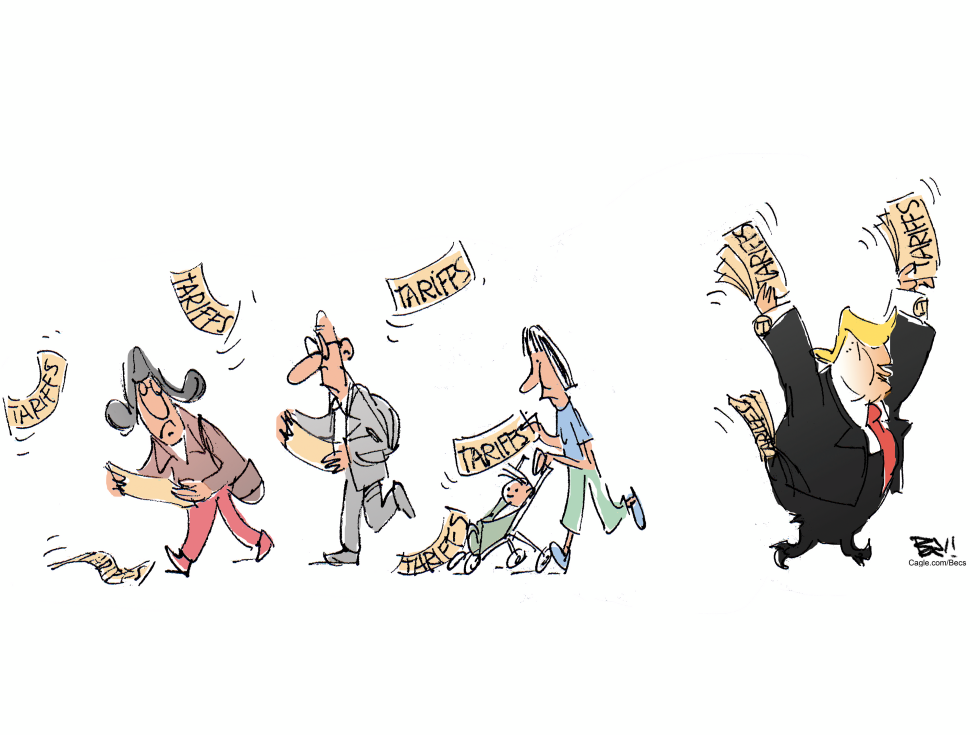
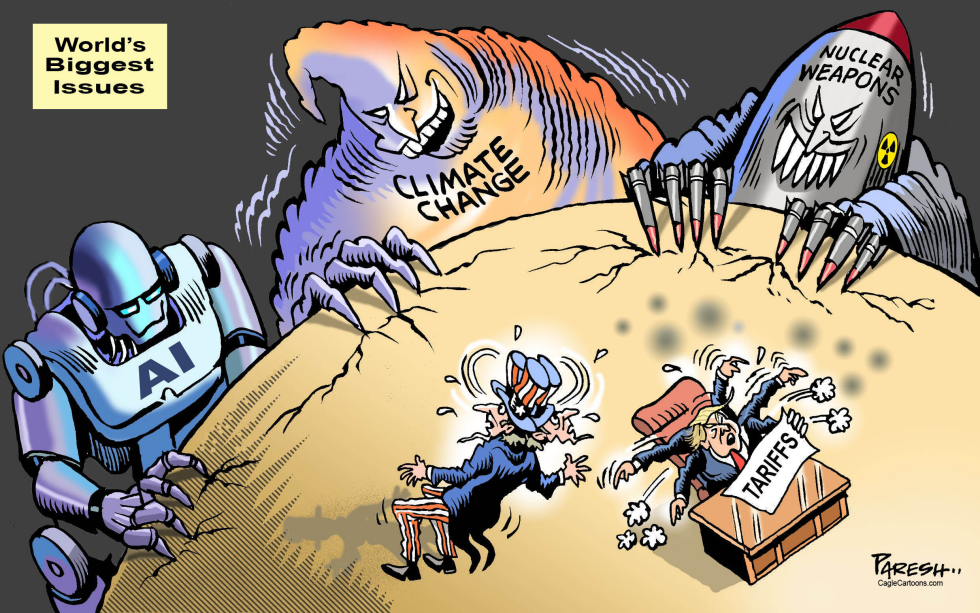
Donald Trump expanded tariffs across trading partners in mid-2026, triggering immediate market volatility and diplomatic pushback. The move raised costs for consumers and businesses reliant on imports. The piece portrays the policy as an indiscriminate barrage that disrupts daily life and global commerce.
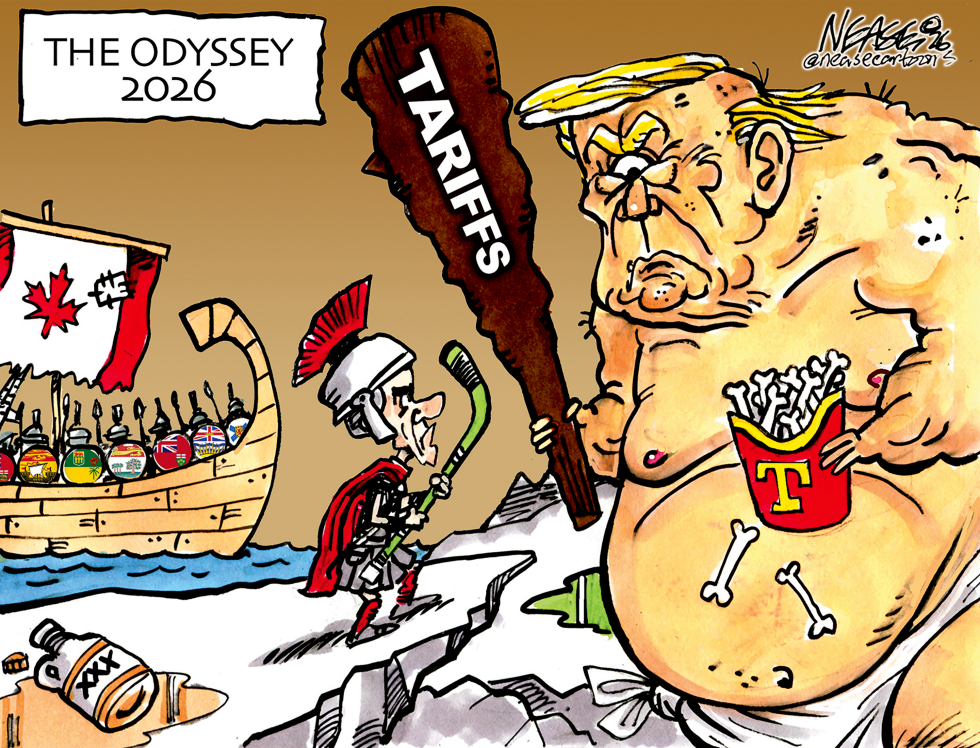
President Trump escalates tariffs on trading partners including Canada in mid-2026. The move targets imports amid ongoing disputes over trade balances and supply chains. Allies respond with coordinated pushback through diplomatic and economic channels. The cartoon casts the confrontation as a one-sided power play by the oversized tariff wielder against smaller coordinated opponents.
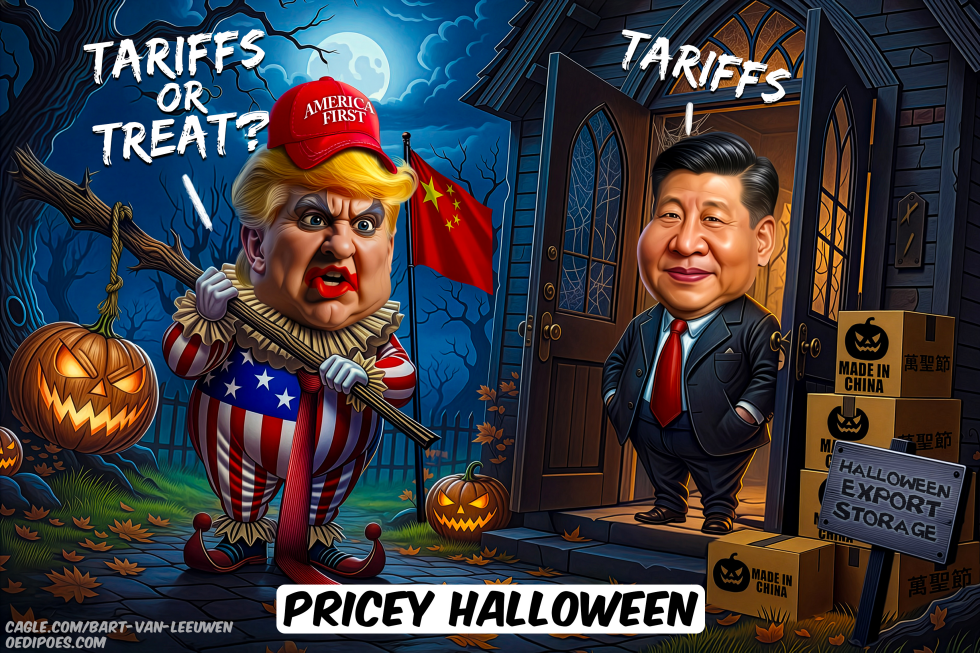
On October 4 2025 the cartoon depicts Donald Trump in a jester costume confronting Xi Jinping outside a house stacked with Chinese made Halloween goods. The scene highlights the impact of proposed tariffs on imported holiday products and resulting higher consumer prices in the United States.
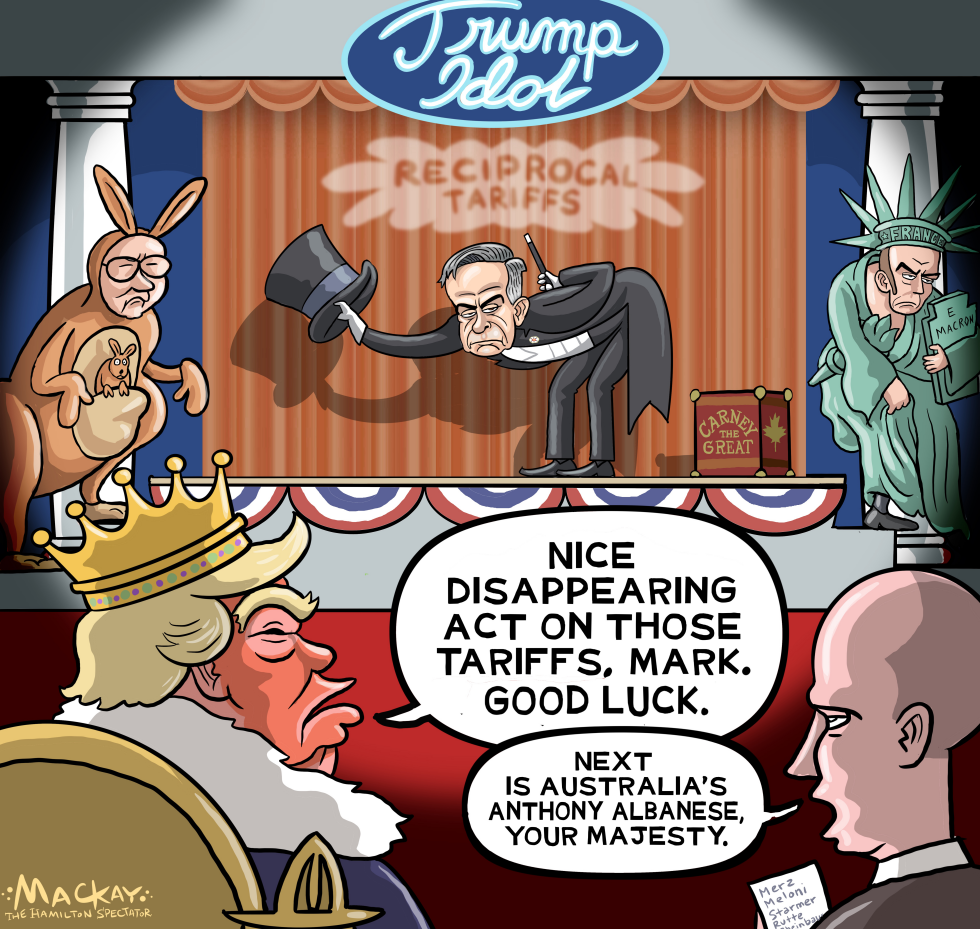
Graeme MacKay's cartoon depicts a stage parody of American Idol called Trump Idol, where a crowned Donald Trump judges world leaders performing acts related to reciprocal tariffs. A figure resembling Mark Carney bows in a top hat, having performed a disappearing act on tariffs, while a kangaroo-costumed character waits, labeled as Australia's Anthony Albanese. A Statue of Liberty figure holds a sign for E Macron France, and a box reads Carney The Great with a Canadian flag. The scene satirizes trade, diplomacy, economy, trust, and international relationships under Trump's strategy, with a bald advisor announcing the next act to 'Your Majesty.' The backdrop emphasizes reciprocal tariffs, blending protest and boycott themes in a humorous critique of USMCA and global partnerships.
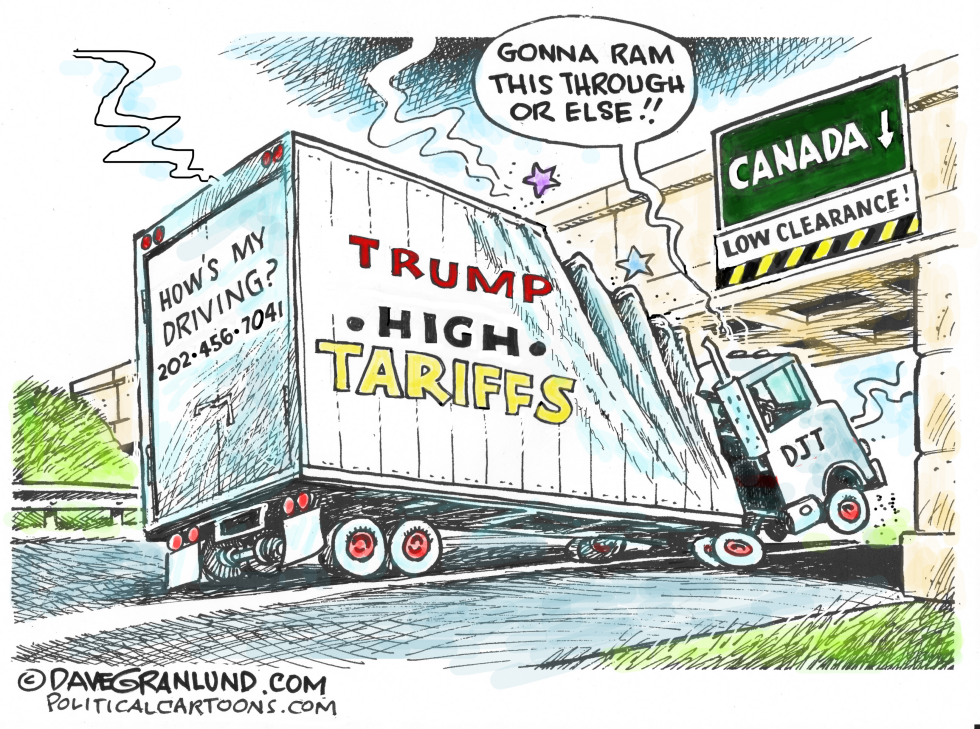
A political cartoon shows a large truck labeled Trump High Tariffs attempting to pass under a low clearance sign for Canada. The vehicle is jammed, with the driver vowing to ram through. The scene comments on proposed higher tariffs targeting Canada as a trading partner. The phone number on the trailer matches a known White House contact line. The cartoon critiques the approach as likely to harm US buyers through increased costs while straining longstanding alliance relations.
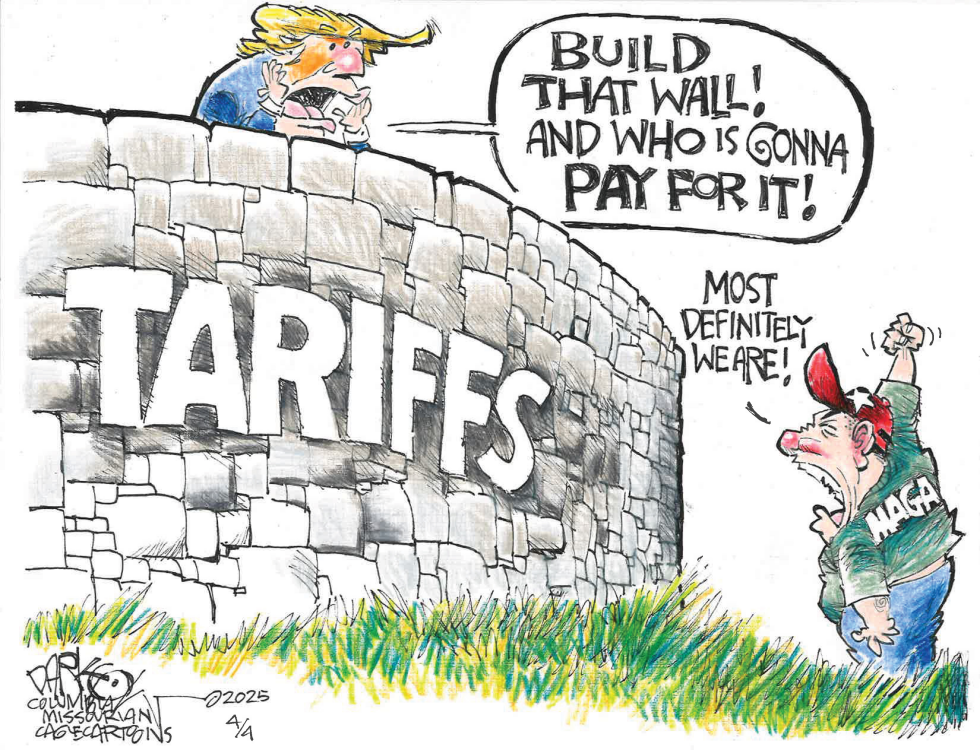
The cartoon shows a blond-haired man atop a stone wall marked 'TARIFFS,' shouting 'Build that wall! And who is gonna pay for it!' A red-hatted figure in a 'MAGA' shirt below responds 'Most definitely we are!' This setup draws a parallel to familiar chants, underscoring tariffs as a burden on consumers. Tags like Trump, tariffs, build the wall, MAGA, inflation, economy, trade war, backfire, and recession frame the scene. The dry humor lies in the obvious irony, where supporters unwittingly acknowledge the cost. Composition keeps it simple, with grassy base and bold lettering for impact. Such cartoons thrive on timely policy jabs, making this one sharable amid ongoing trade debates.