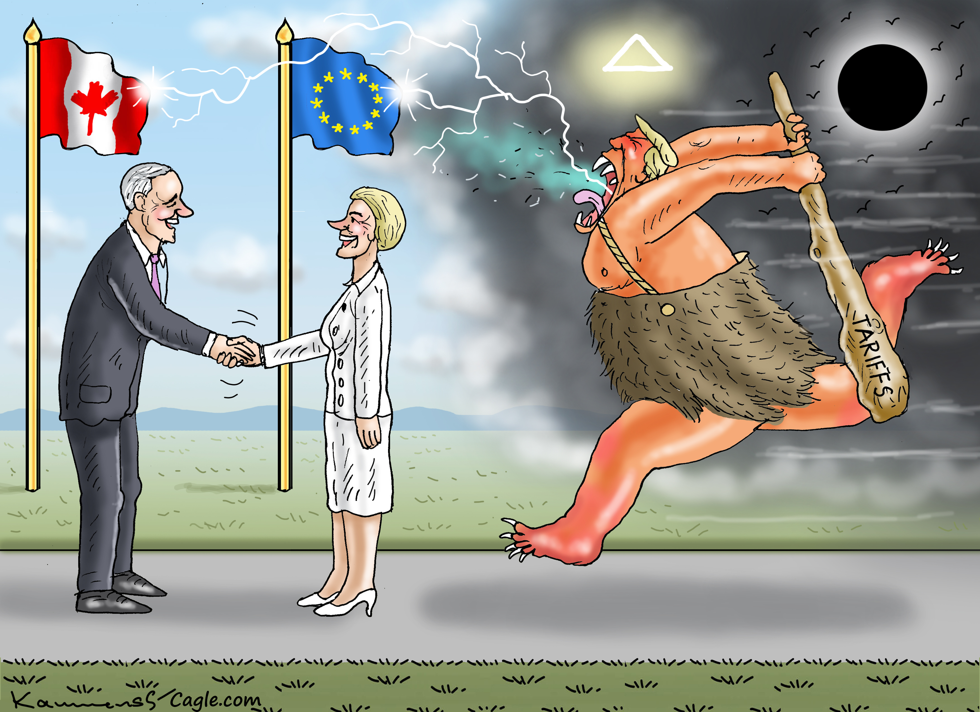
On September 17 2026 Canada and the European Union advanced a strengthened trade framework amid ongoing US tariff pressures. The agreement aims to boost economic cooperation and reduce reliance on American markets. President Trump responded with renewed threats of broad tariffs on allied imports. The move risks escalating trade friction across the Atlantic at a time when global supply chains remain fragile. The cartoon portrays the US stance as a primitive and self-defeating outburst that isolates Washington from its closest partners.
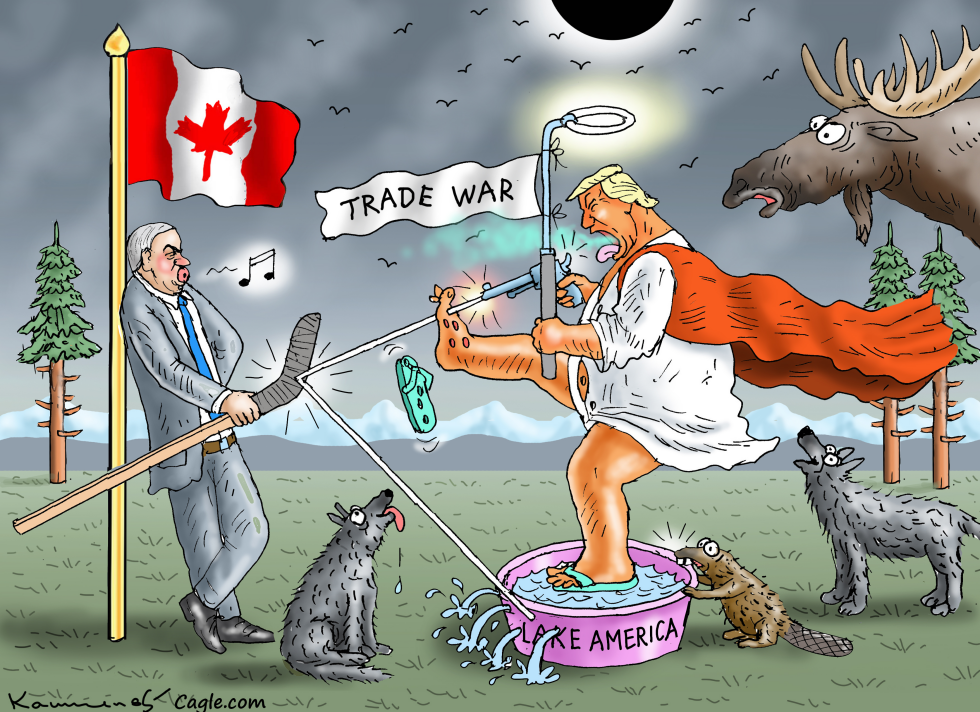
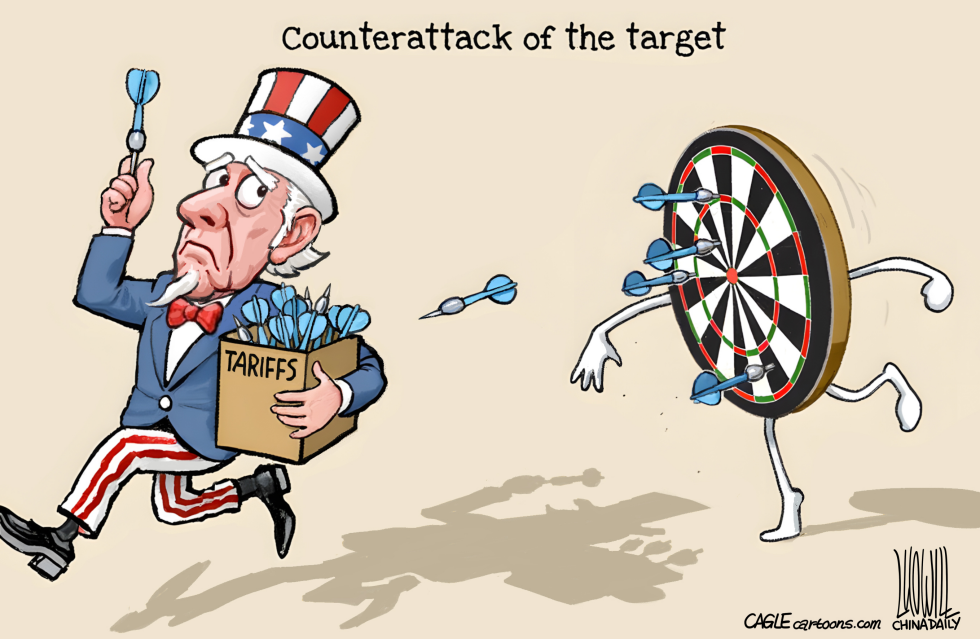
President Trump launched new tariffs on Canadian goods in early September 2026, citing trade imbalances and border issues. The move immediately prompted Canadian countermeasures including duties on US exports. The policy shift disrupts integrated supply chains in autos, energy and agriculture that support millions of jobs on both sides of the border. Markets reacted with volatility as investors weighed the costs of renewed protectionism. The cartoon portrays the tariff campaign as self-inflicted harm that leaves the US exposed to swift Canadian pushback.
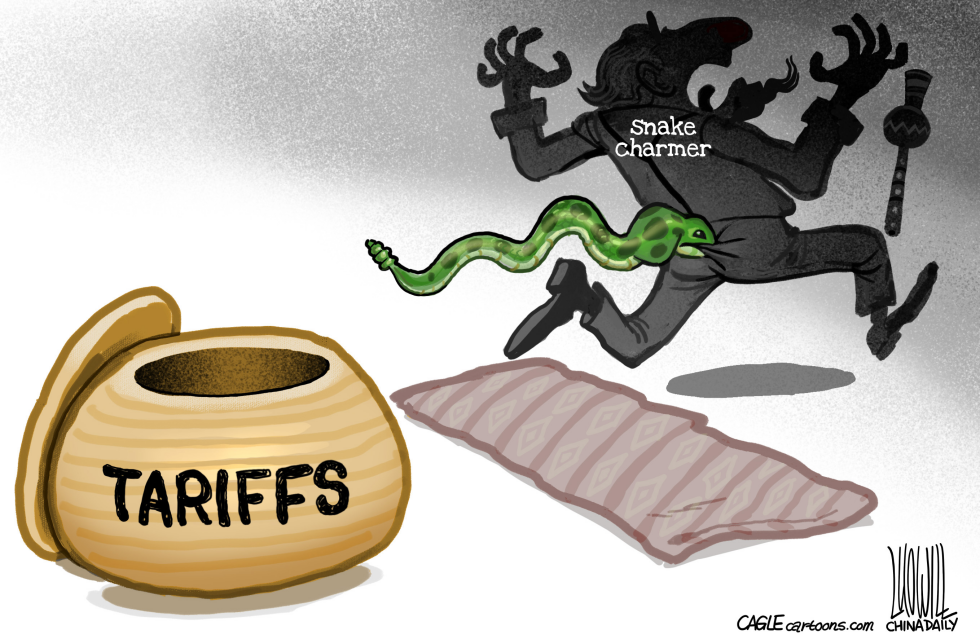
A political cartoon published August 28, 2026, shows a snake charmer fleeing as a green snake emerges from a pot labeled tariffs. The image uses the snake charmer metaphor to comment on tariff policies. The cartoon appeared in China Daily and was distributed via Cagle Cartoons. It responds to ongoing trade tensions involving tariffs. The visual suggests tariffs carry uncontrolled risks similar to an escaped snake.
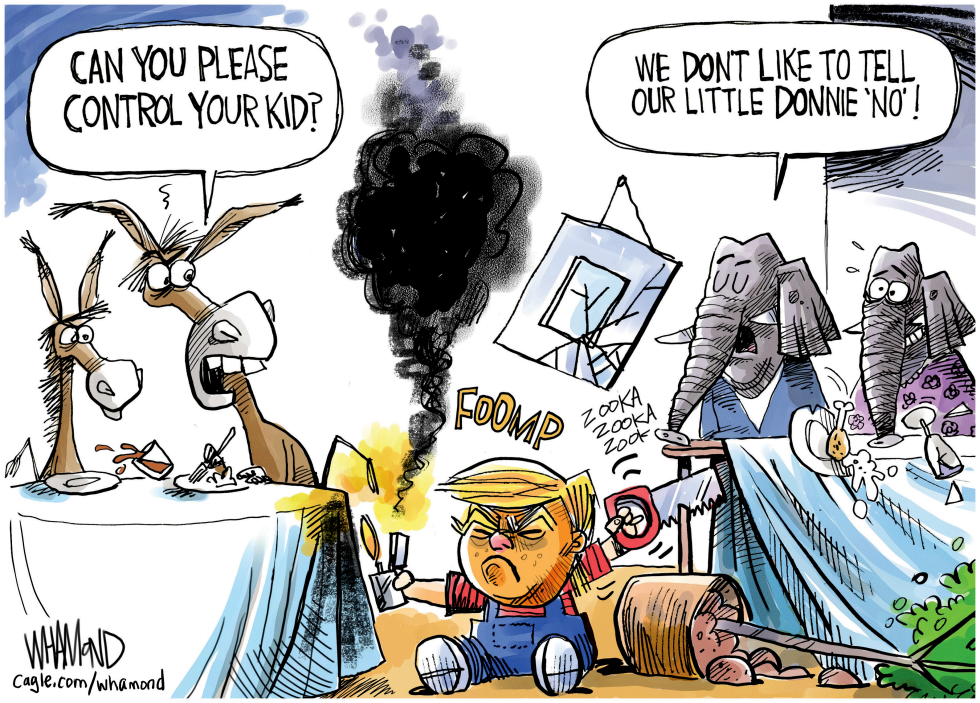
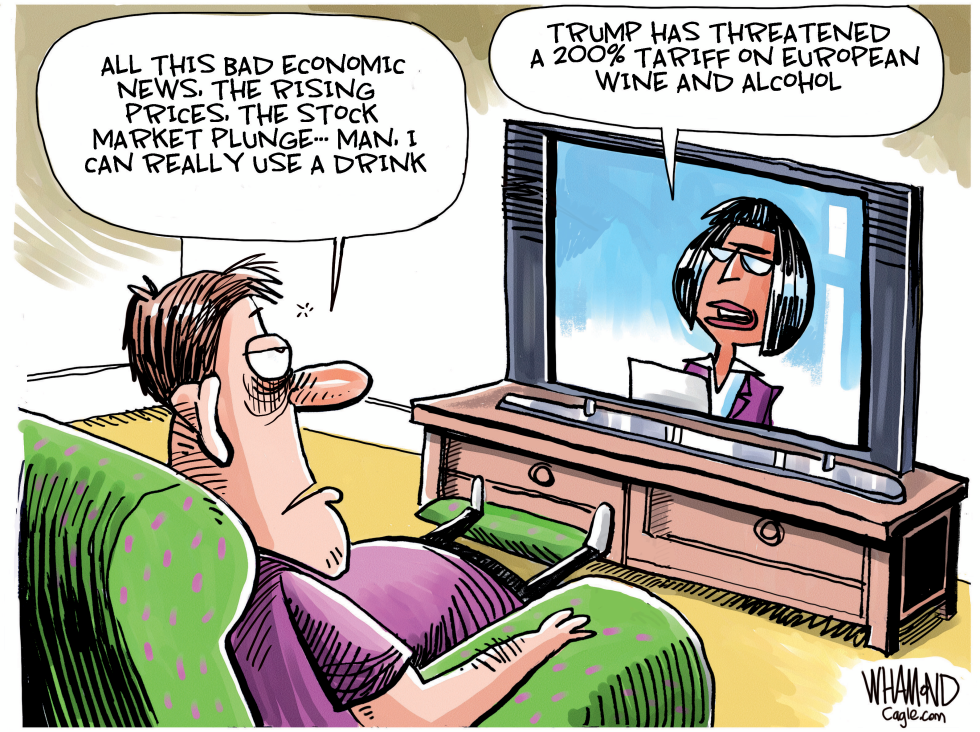
Dave Whamond's cartoon captures the irony of Trump alcohol tariffs, where a 200 percent tariff on European wine and alcohol threatens to escalate trade wars with the EU. Amid bad economic news like rising prices and stock market plunge, a weary viewer laments needing a drink, underscoring how such policies drive us to drink. Investors shaken by potential inflation and retaliatory tariffs on US whiskey and bourbon face higher costs for alcoholic beverages. The image highlights consumer burdens in this economy, blending humor with critique of trade escalation.