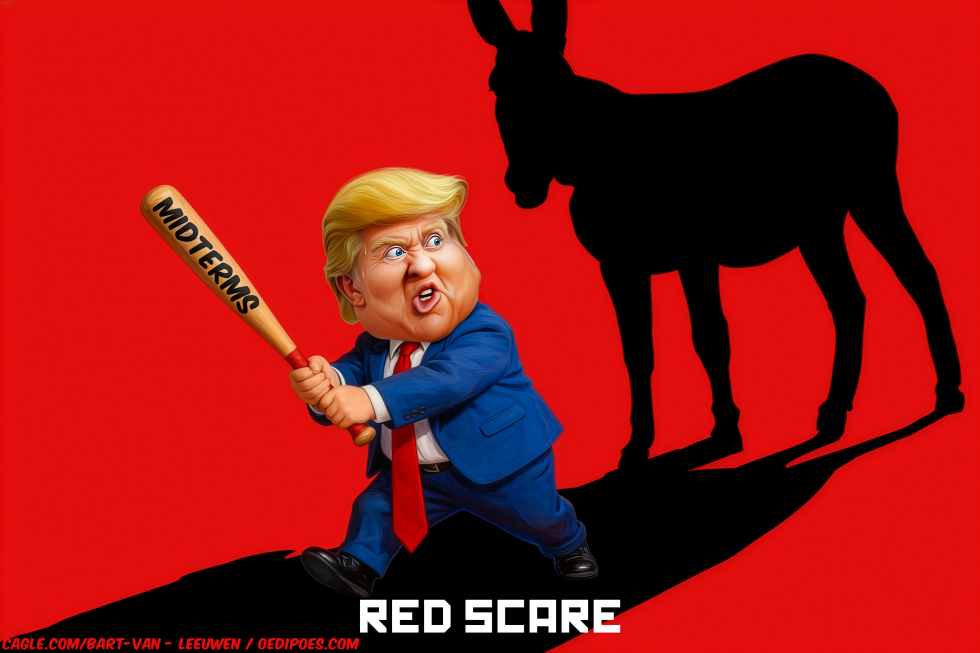
The cartoon shows Donald Trump in a blue suit swinging a baseball bat labeled MIDTERMS toward a black donkey silhouette on a red background. The phrase RED SCARE appears prominently at the bottom. Published on September 14, 2026, the image comments on Trump's approach to the upcoming midterm elections. It portrays the former president as aggressively pursuing Democratic opponents. The visual draws on historical Red Scare imagery to suggest fear-based political tactics. The composition places Trump in the foreground with the donkey shadow looming behind him.
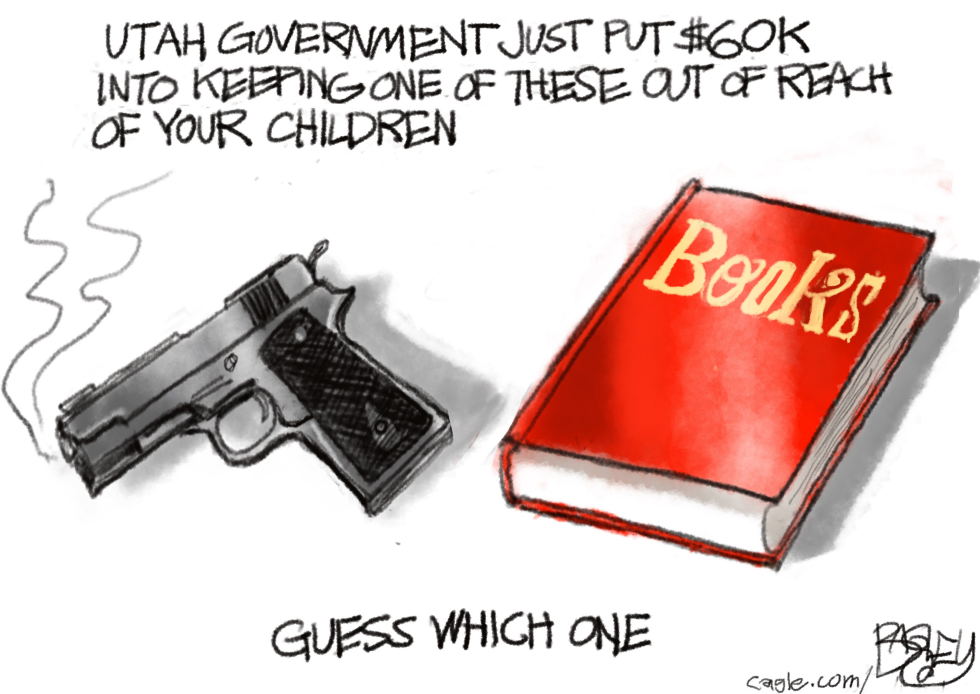
Utah officials directed $60,000 toward measures keeping certain books from children. Firearms remain readily available in the state. The decision highlights priorities in public safety and education policy. The piece criticizes the allocation as misplaced emphasis on censorship instead of addressing gun risks.
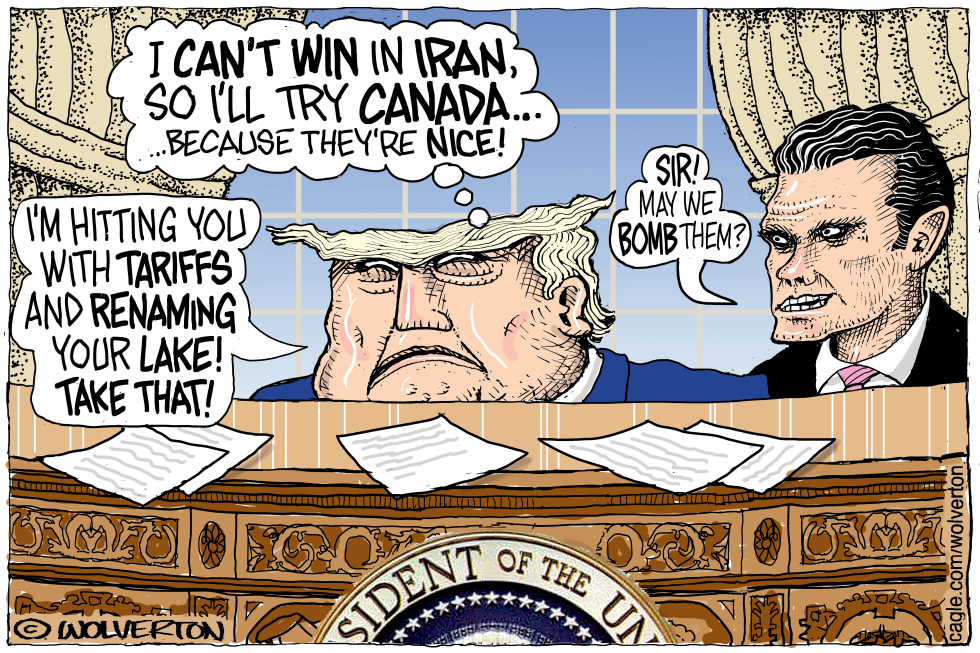
In the cartoon, President Trump appears frustrated at his desk, declaring tariffs and a lake renaming against Canada after setbacks in Iran. His advisor interjects with a suggestion to bomb the northern neighbor. The scene plays on recent trade tensions and foreign policy frustrations as of late August 2026. The visual uses speech and thought bubbles to highlight the shift in targets from a difficult adversary to a more cooperative one. This reflects ongoing debates over tariffs as leverage in international relations.
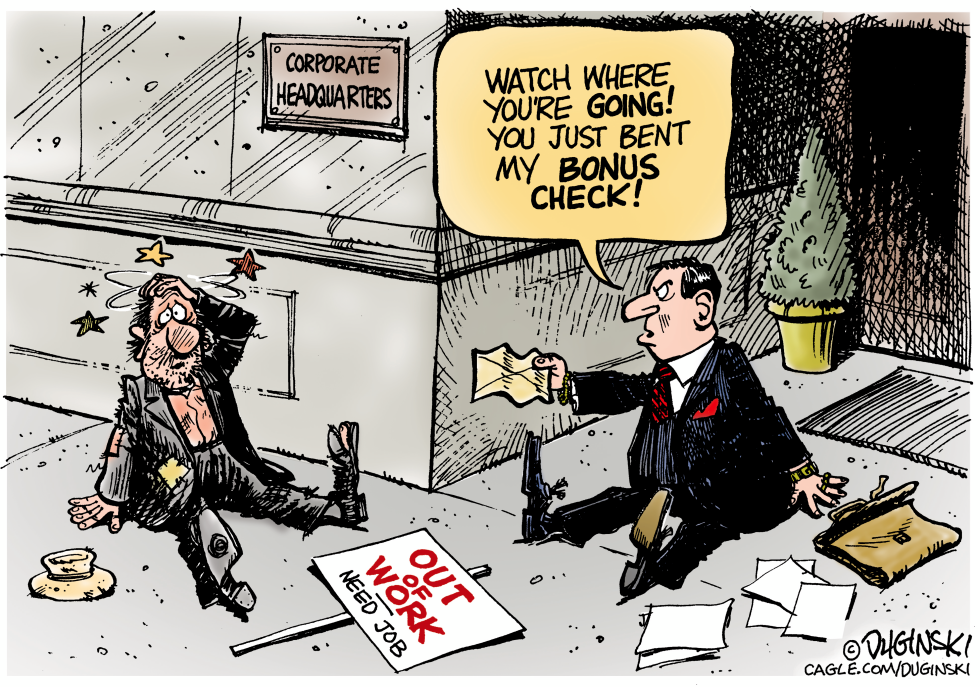
Corporate executives continue to receive large bonuses even as layoffs persist across sectors. The piece responds to ongoing debates over executive compensation packages during periods of workforce reduction. It takes the position that such bonuses appear disconnected from the realities facing displaced employees.
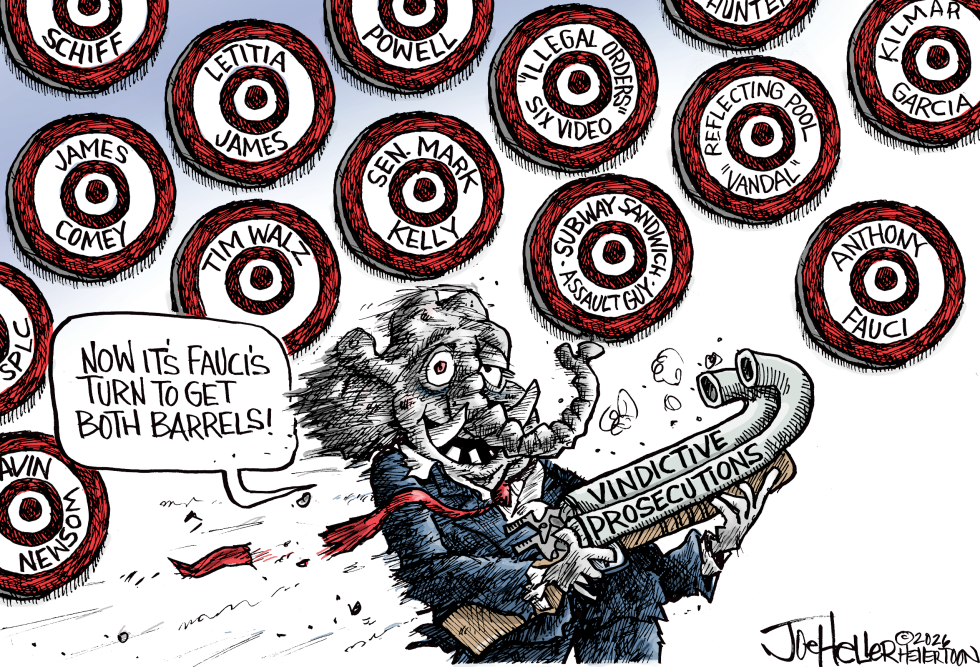
Donald Trump has signaled intent to pursue legal action against Anthony Fauci and other perceived opponents. The move extends a pattern of targeting figures from prior investigations and public disputes. The editorial portrays these actions as personal retribution rather than legitimate accountability.
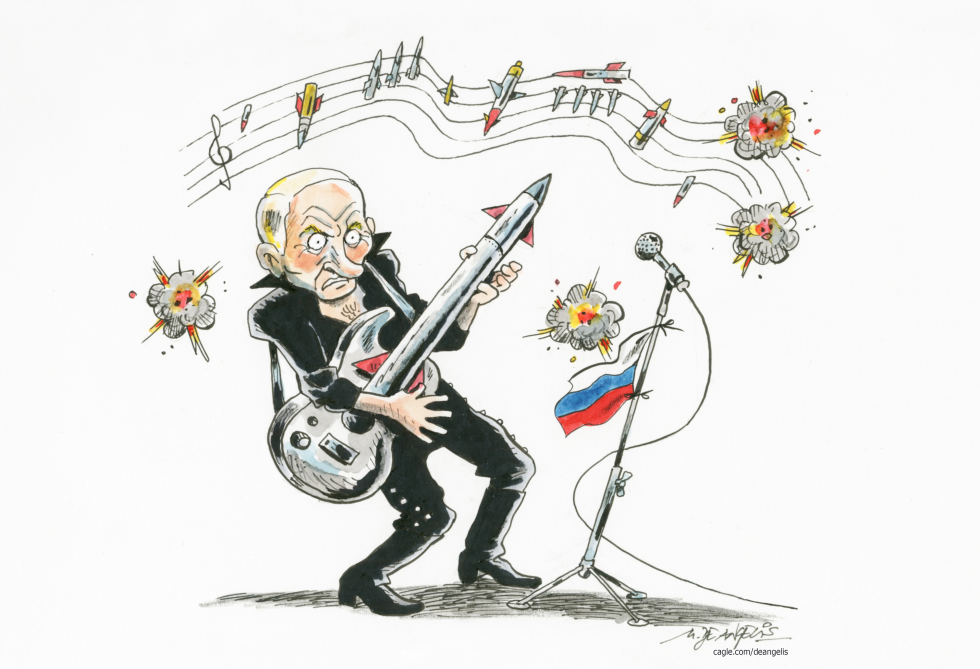
Russian President Vladimir Putin continues directing missile strikes in the Ukraine conflict, maintaining pressure on Kyiv through repeated aerial attacks. The imagery frames this sustained military campaign as a theatrical rock performance. The piece critiques the leader's embrace of destructive weaponry as spectacle rather than strategy.
Global leaders continue to dismiss repeated scientific warnings about accelerating climate impacts even as extreme weather events intensify worldwide. The ongoing failure to curb emissions and adopt binding reductions leaves future generations exposed to rising temperatures, sea levels, and resource conflicts. The editorial argues that such willful disregard of clear danger signs amounts to reckless endangerment of the planet itself.
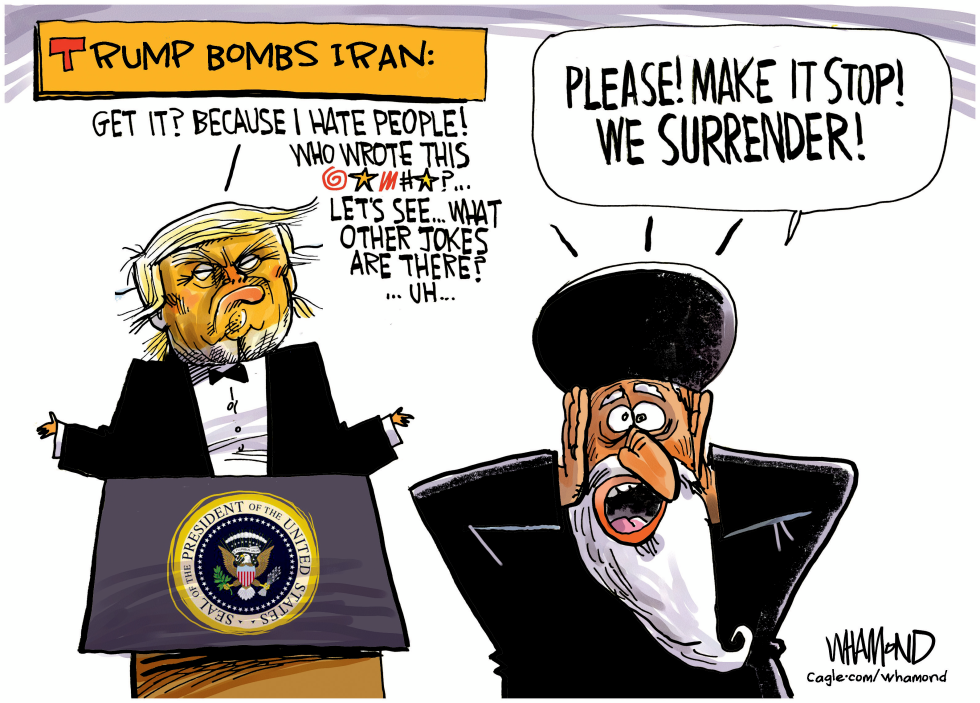
President Trump ordered strikes on Iran in late July 2026, prompting an immediate public plea for surrender from Iranian leadership. The action escalates tensions in the Middle East and raises questions about U.S. military objectives. The editorial takes the position that the strikes reflect personal animus rather than strategic necessity and mocks the president's framing of the operation.
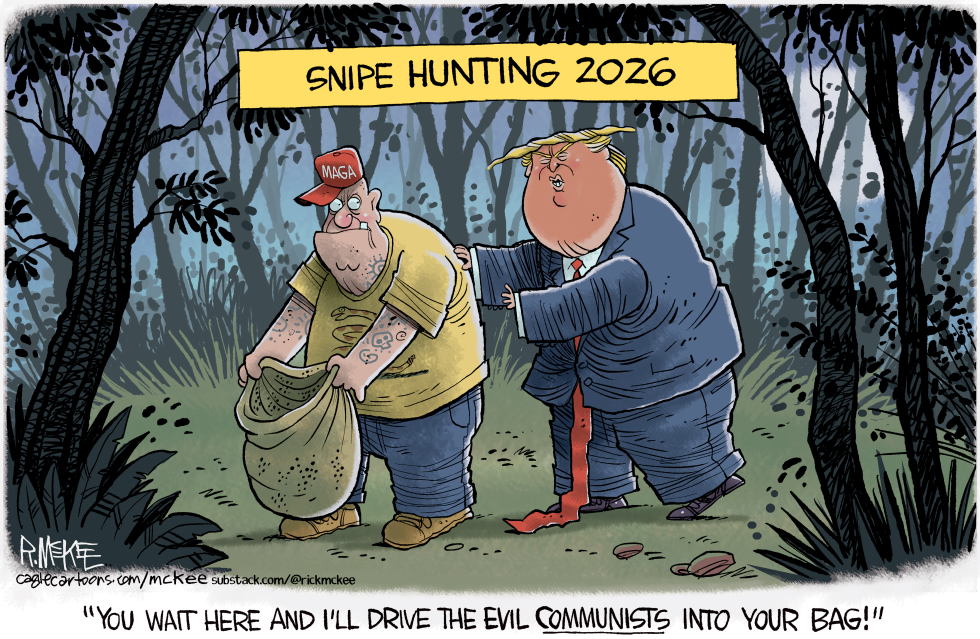
Donald Trump appears in a wooded setting with a MAGA supporter holding an open bag. Trump gestures ahead and vows to drive evil communists into the trap. The image frames the effort as a classic snipe hunt, highlighting the futility of the promised purge.
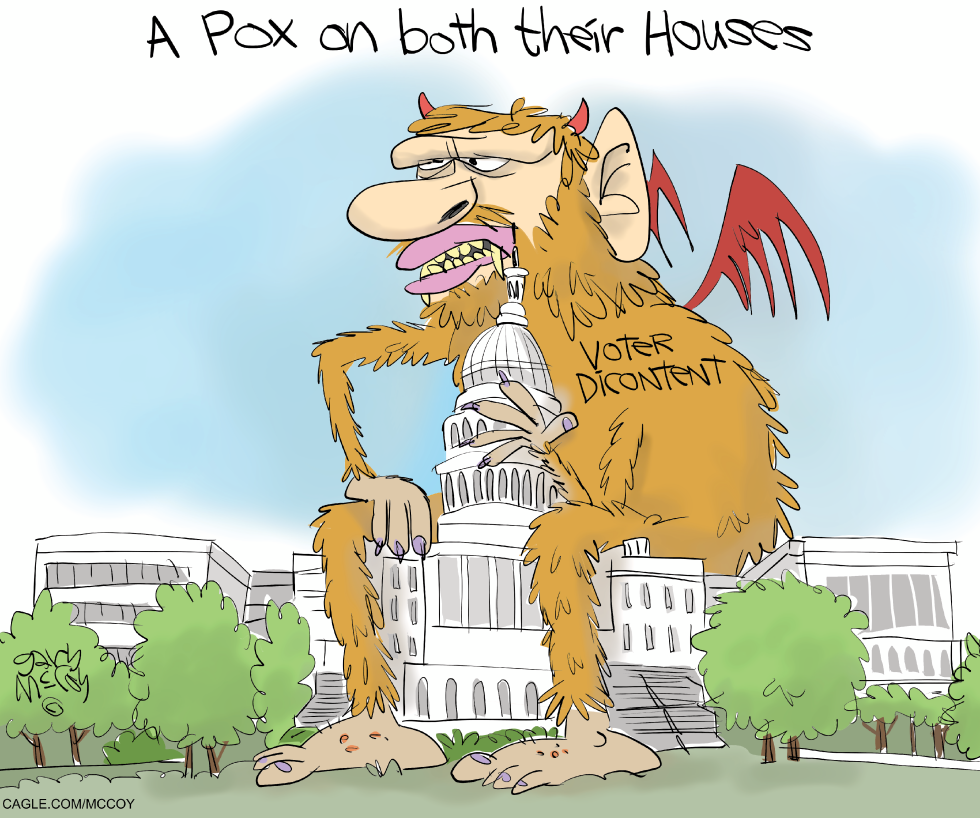
Voter frustration with Congress has grown amid stalled legislation and partisan gridlock on Capitol Hill. The piece portrays this sentiment as a towering monstrous force looming over the legislative branch. It argues that public anger targets both parties equally for failing to address key issues.
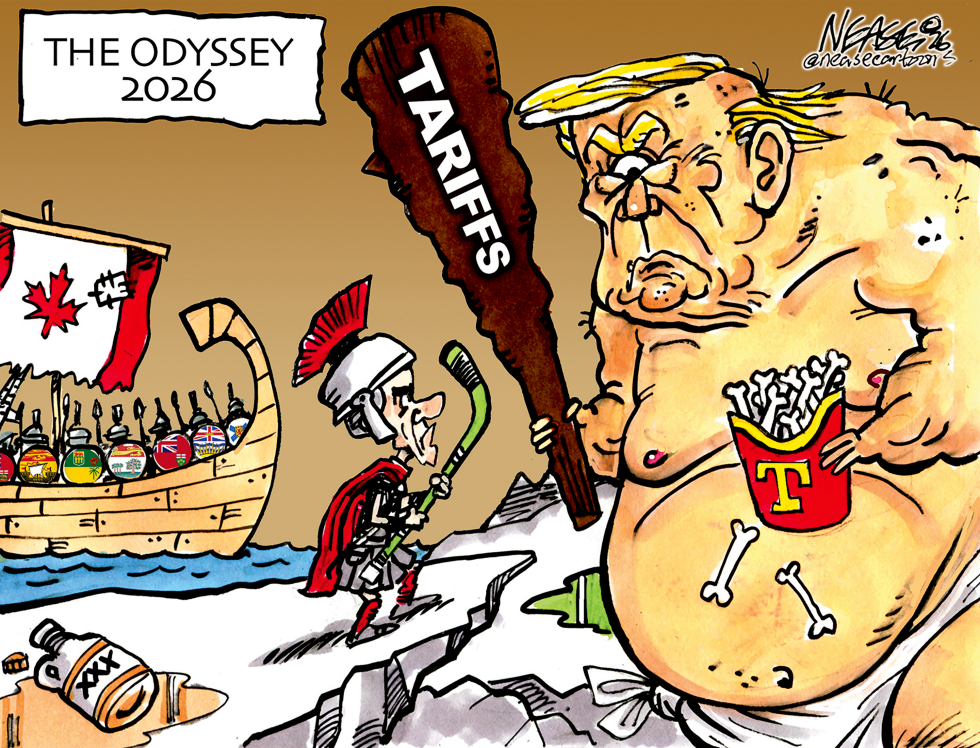
President Trump escalates tariffs on trading partners including Canada in mid-2026. The move targets imports amid ongoing disputes over trade balances and supply chains. Allies respond with coordinated pushback through diplomatic and economic channels. The cartoon casts the confrontation as a one-sided power play by the oversized tariff wielder against smaller coordinated opponents.
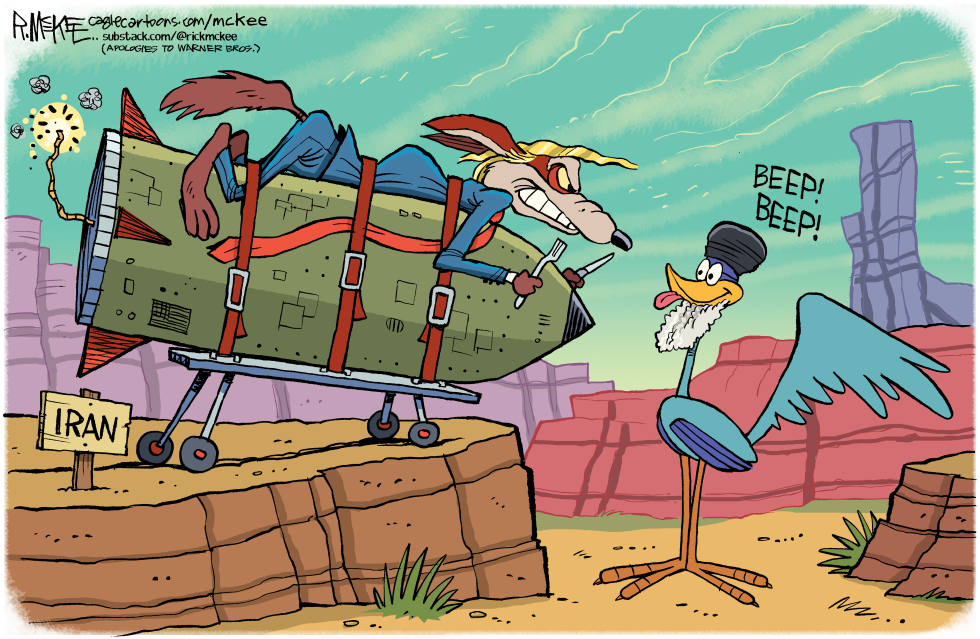
Donald Trump has renewed pressure on Iran through statements and policy signals in recent weeks. The moves come amid ongoing nuclear concerns and regional instability. The piece argues that such aggressive posturing risks backfiring in ways similar to past miscalculations.
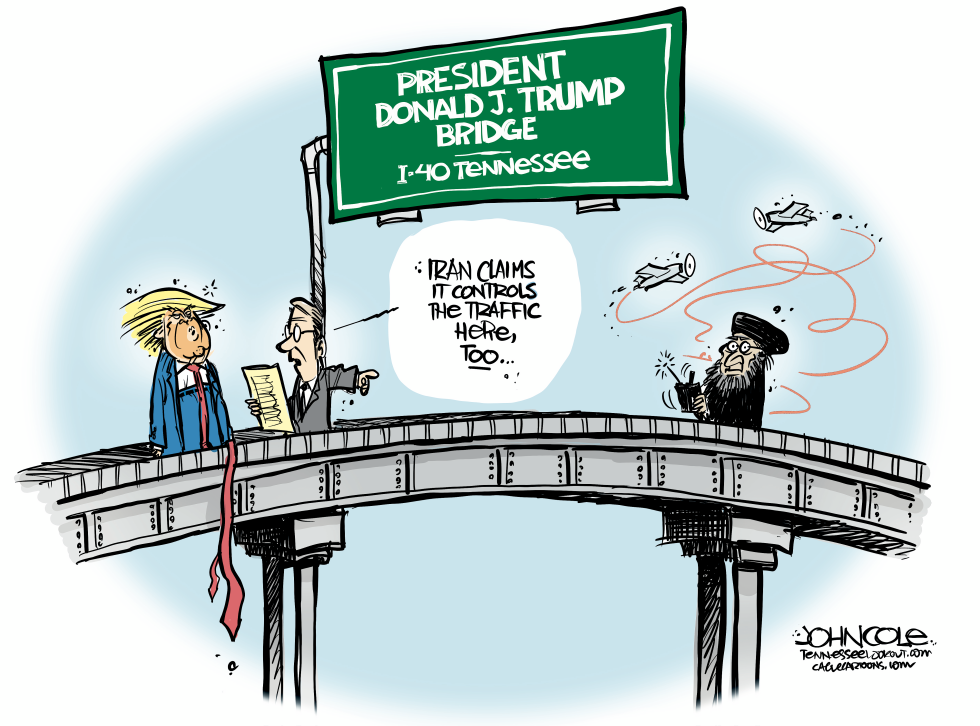
President Donald J. Trump attended the naming of the President Donald J. Trump Bridge on I-40 in Tennessee. The event drew attention when an Iranian figure appeared to claim control over traffic on the span. The development highlights ongoing tensions with Iran over shipping lanes and international routes. The cartoon frames the claim as an extension of Iran's broader pattern of asserting dominance over key passages. It positions the bridge naming as a domestic moment overshadowed by foreign threats.
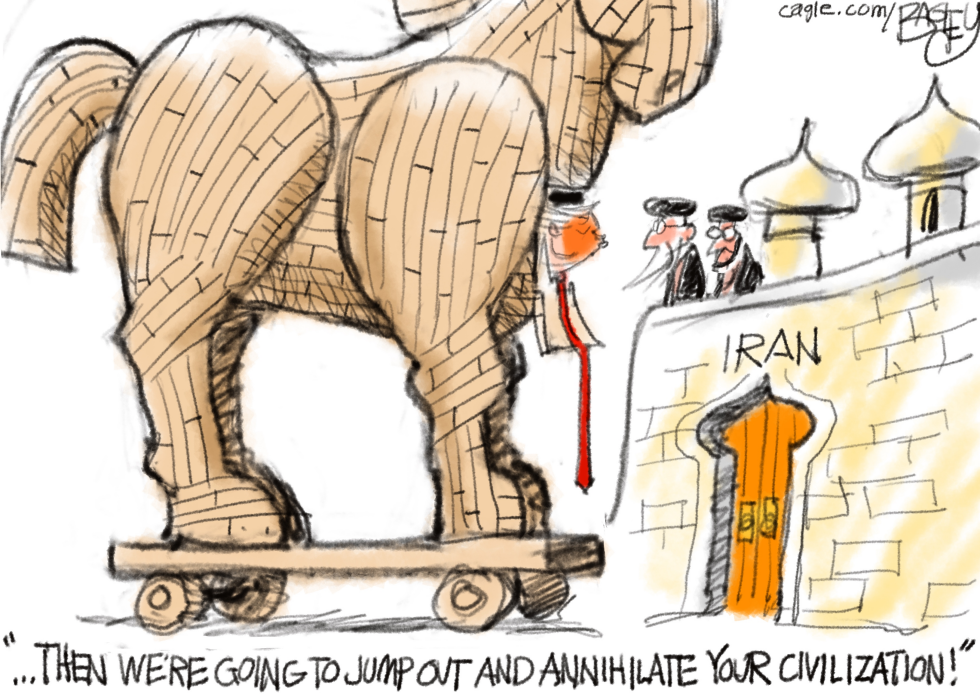
A Republican-led initiative deploys a deceptive approach toward Iran, with a prominent figure positioned to lead an abrupt escalation. The move raises questions about long-term regional stability and the reliability of stated intentions. The piece portrays the effort as a concealed threat rather than genuine diplomacy.
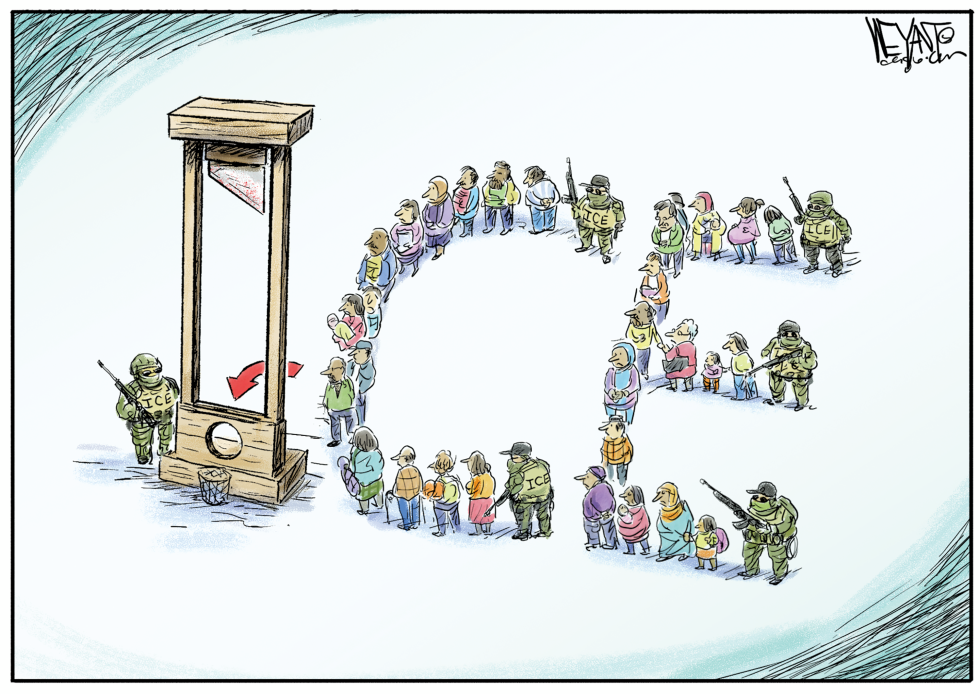
Immigration enforcement actions continue to draw scrutiny over methods used to process and remove individuals at the border. The piece frames these operations as overly harsh through its central visual device. It takes the position that current practices treat routine processing as punitive and excessive.