Germany's far-right Alternative for Germany party is gaining ground ahead of elections with rhetoric echoing historical extremism. The party has faced repeated scrutiny for members' Nazi-era references and anti-immigrant stances that courts have flagged as extremist. This development matters because AfD polling strength could reshape coalition math and policy on migration, EU ties, and civil liberties. The cartoon argues that supporters are consuming a toxic ideological brew that risks normalizing authoritarian symbols and eroding democratic norms.
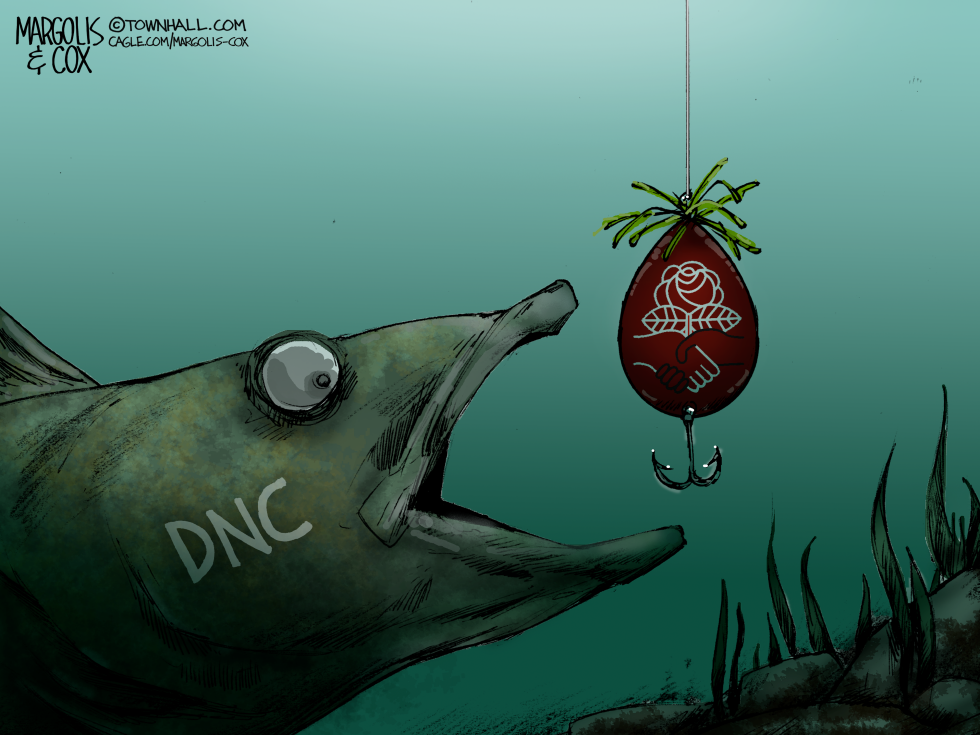
The Democratic National Committee faces growing influence from the Democratic Socialists of America. The cartoon depicts the DNC as a fish drawn to a lure bearing the DSA rose and handshake symbol. This reflects ongoing efforts by the socialist faction to shape Democratic priorities on economic policy and party direction. The piece suggests the DNC risks being pulled toward more radical positions. It highlights internal party dynamics where progressive activists seek greater control over the broader Democratic apparatus.
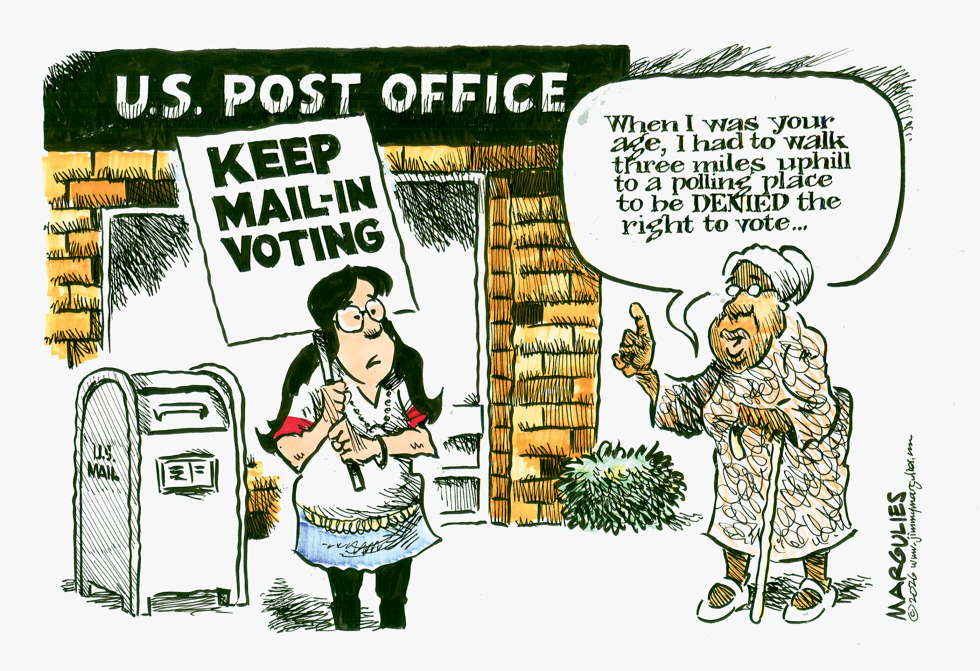
A protest sign at a U.S. Post Office calls for an end to mail-in voting. The cartoon responds to ongoing state-level efforts to restrict mail ballots after expanded use in recent elections. Such limits disproportionately affect older voters and those with mobility issues who previously faced physical barriers at polling places. The piece argues that rolling back mail-in options revives the very obstacles elderly citizens once endured, undermining broader access to the ballot.
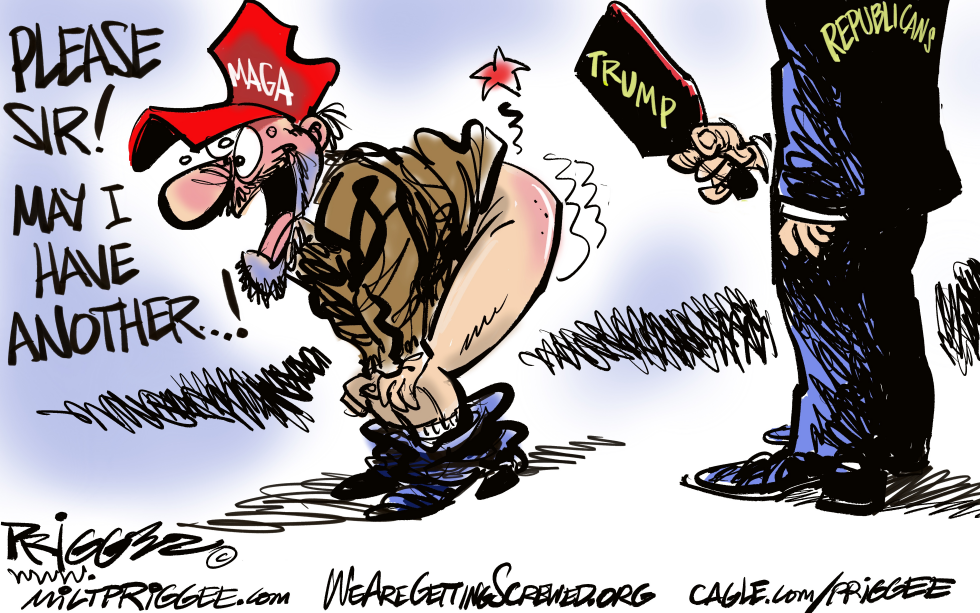
The cartoon depicts a caricature of Donald Trump bent over with pants down, pleading 'Please sir! May I have another!' while a Republican figure holds a Trump-labeled book ready to strike. Published September 1, 2026, the image comments on the power relationship between Trump and the Republican Party after recent electoral events.
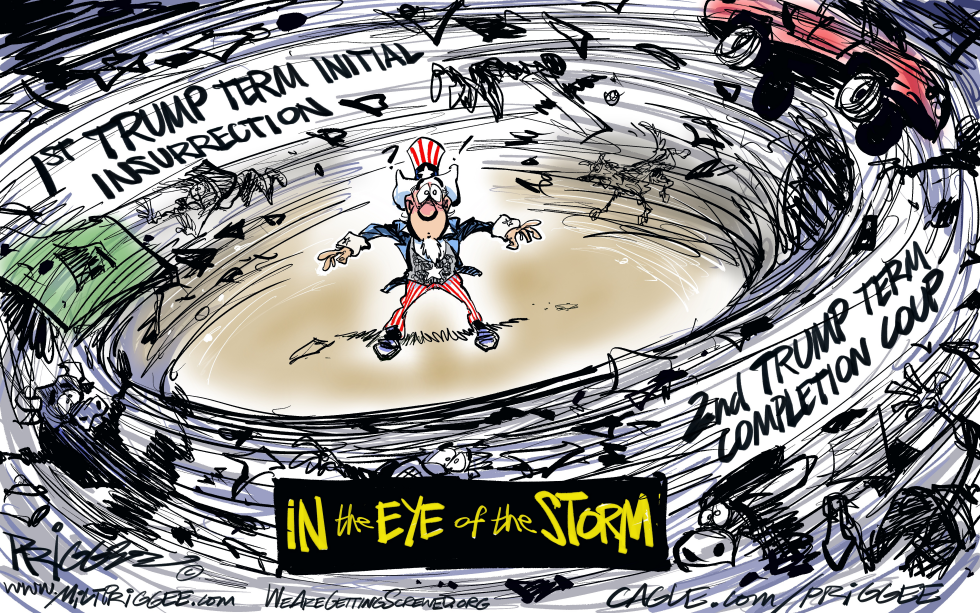
The image shows Uncle Sam positioned in a calm central area surrounded by swirling debris labeled as the first Trump term initial insurrection and the second Trump term completion coup. Text on the left and right frames the scene with those phrases. A banner at the bottom reads in the eye of the storm. The composition places the national symbol between references to past and future political events tied to Donald Trump.
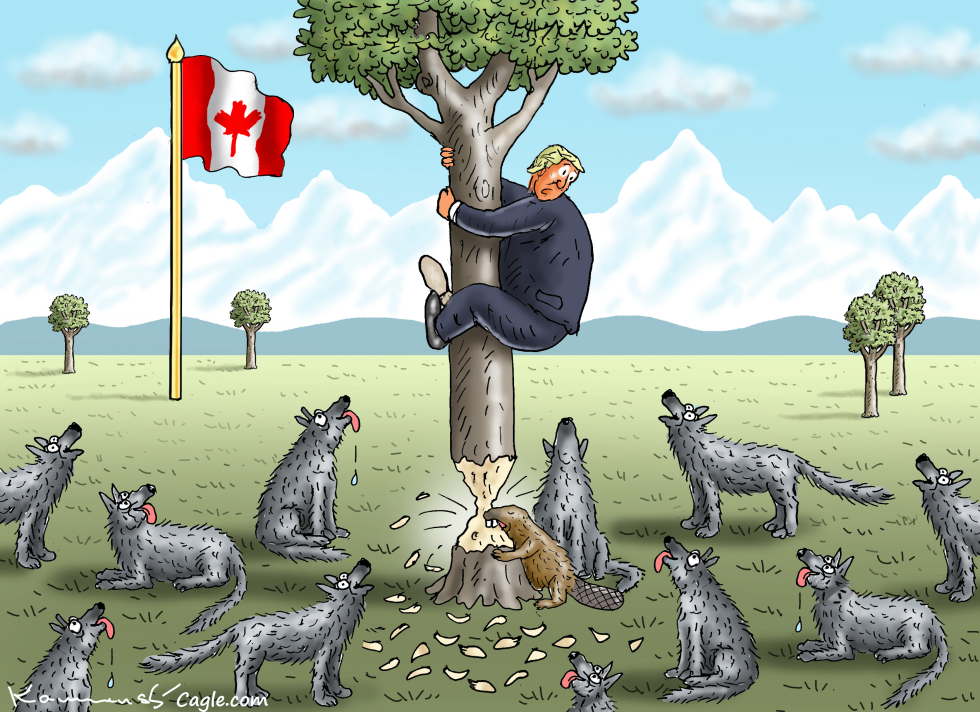
Donald Trump remains entangled in ongoing tensions with Canada over trade and border issues in 2026. The situation highlights persistent friction between the two nations on economic policy. The piece portrays Trump as increasingly isolated by Canadian actions while other actors observe the outcome.
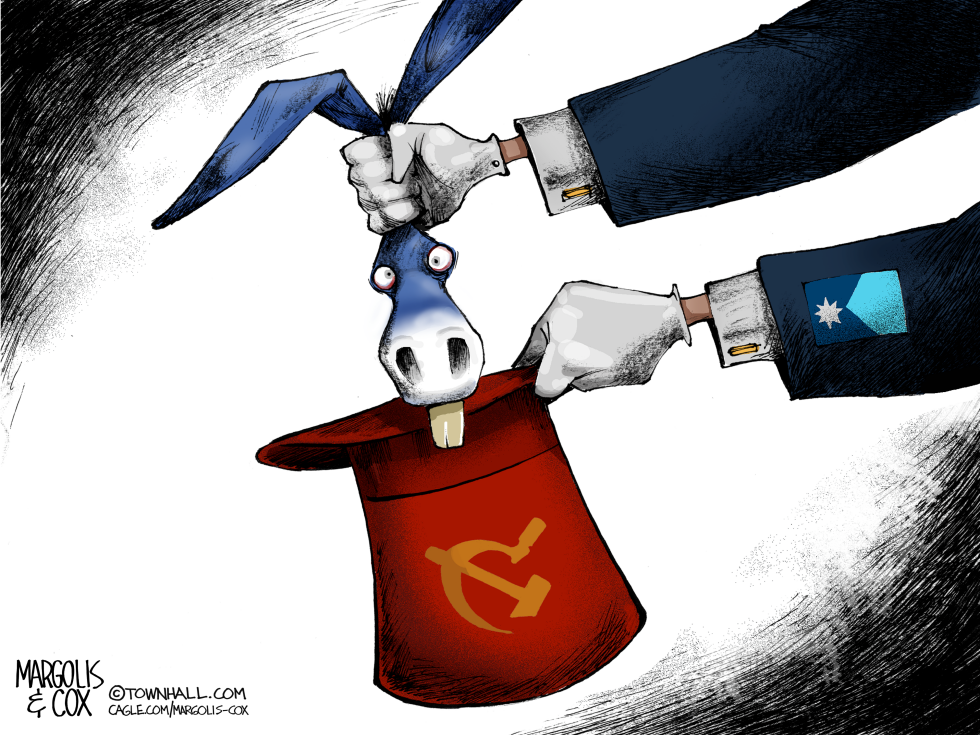
Accusations that Democratic policies carry communist undertones have persisted in partisan debate for years. The image frames the party as emerging directly from a communist emblem through a conjurer's reveal. This visual argument underscores ongoing conservative critiques that Democratic governance veers toward authoritarian economic controls rather than traditional American principles.
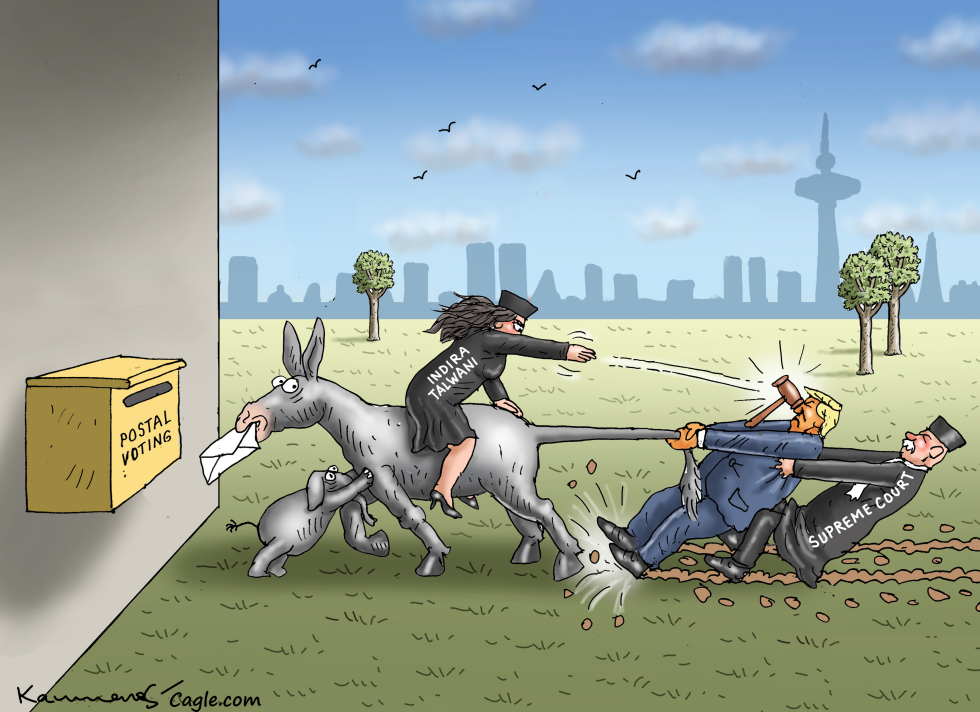
A political cartoon shows federal Judge Indira Talwani riding a Democratic donkey labeled with postal voting while dragging two Supreme Court justices across a field near the Space Needle. The image responds to ongoing disputes over postal voting rules and federal court involvement in election procedures. Talwani, a U.S. District Judge, has issued rulings affecting voting access in recent cases. The cartoon uses the donkey as a party symbol and a yellow ballot box to illustrate the conflict between lower court decisions and the Supreme Court. The visual argument centers on judicial power in election law matters active in 2026.
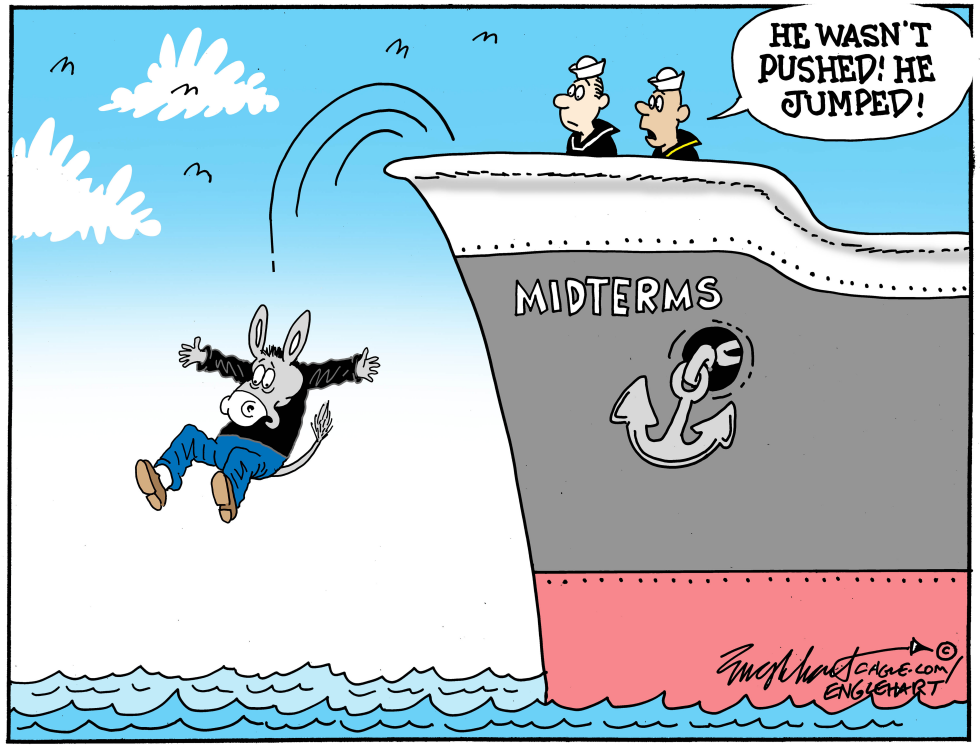
With the 2026 midterm elections approaching, Democratic candidates face headwinds in key races. The party symbol is shown leaping from the midterms vessel into open water. Sailors on deck insist the departure was voluntary. The image captures ongoing Democratic struggles to maintain momentum and voter support in competitive districts. The editorial position frames the move as self-inflicted rather than externally forced.
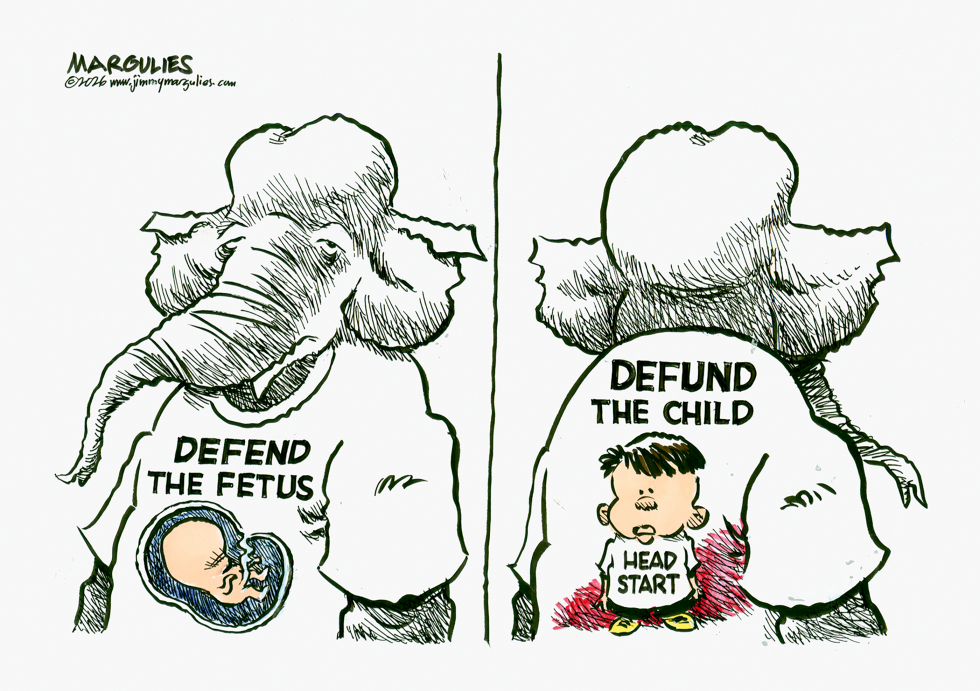
Republicans continue to champion fetal protections while proposing cuts to early childhood programs such as Head Start. The divide highlights ongoing debates over when government support for life begins and ends. The cartoon criticizes the inconsistency in prioritizing the unborn over living children in need of assistance.
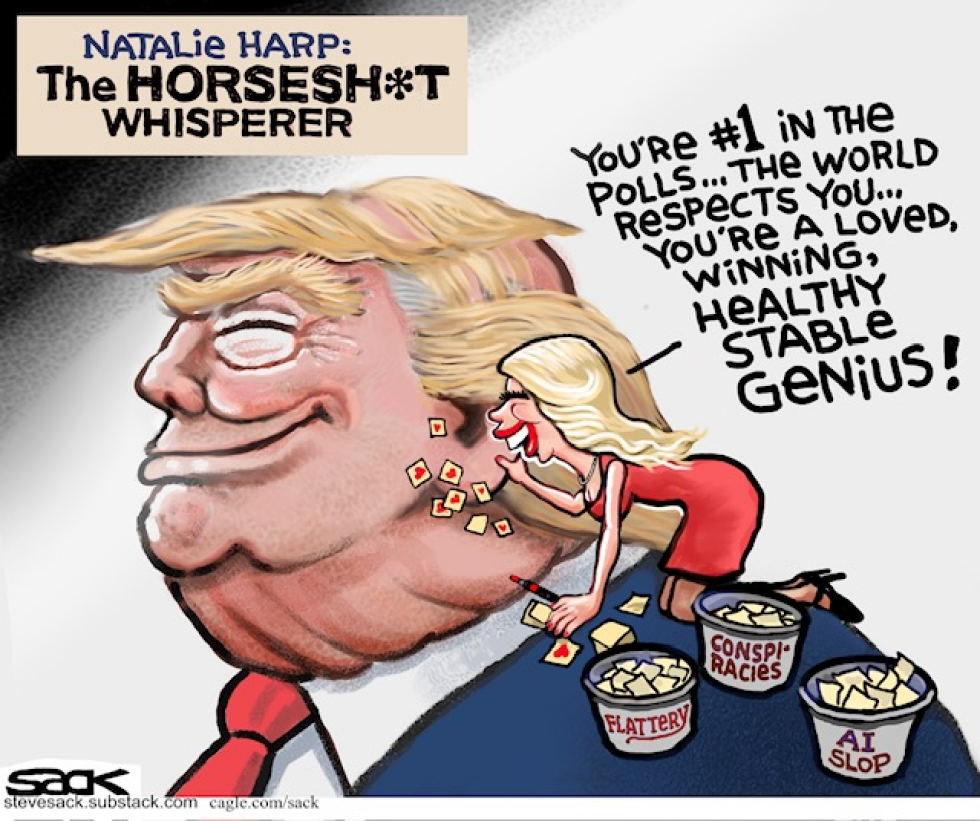
Natalie Harp, a close aide to Donald Trump, has been noted for delivering curated positive updates and affirmations to the former president during his political activities. This ongoing dynamic occurs as Trump navigates public perception challenges and internal circles that mix traditional flattery with newer elements like AI-generated content and conspiracy discussions. The approach matters because it shapes how information reaches a key political figure ahead of future electoral considerations. The piece presents this interaction as an echo chamber reinforced by selective inputs rather than broader scrutiny.
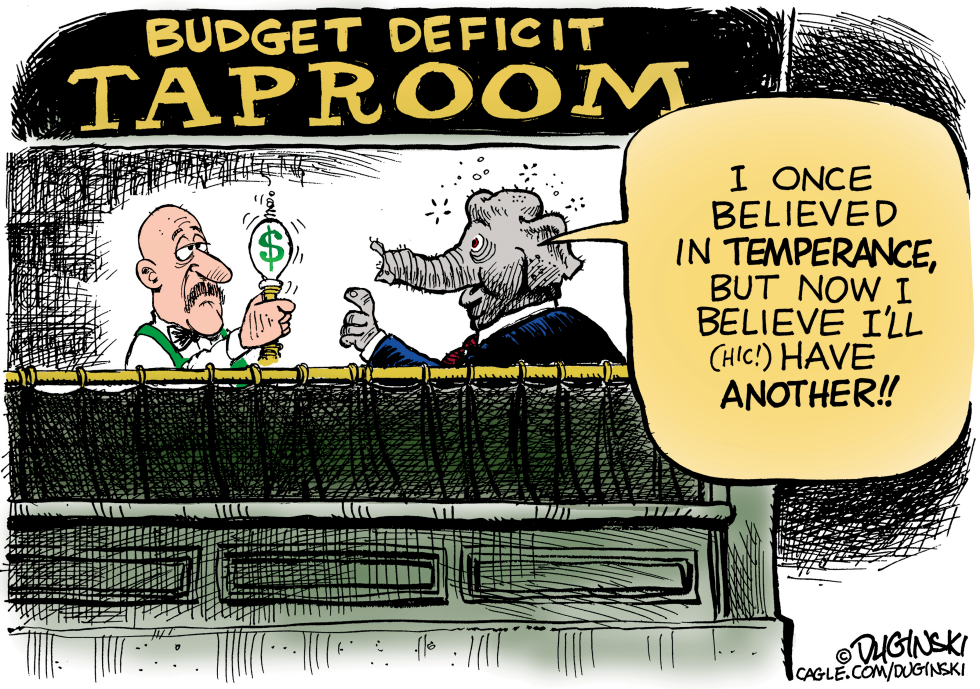
Republicans have long criticized deficit spending under Democratic administrations yet continue to support policies that expand federal borrowing when in power. The pattern reflects ongoing tension between stated fiscal restraint and actual legislative priorities on taxes and spending. The cartoon argues that the party has abandoned earlier commitments to balanced budgets in favor of repeated deficit increases.
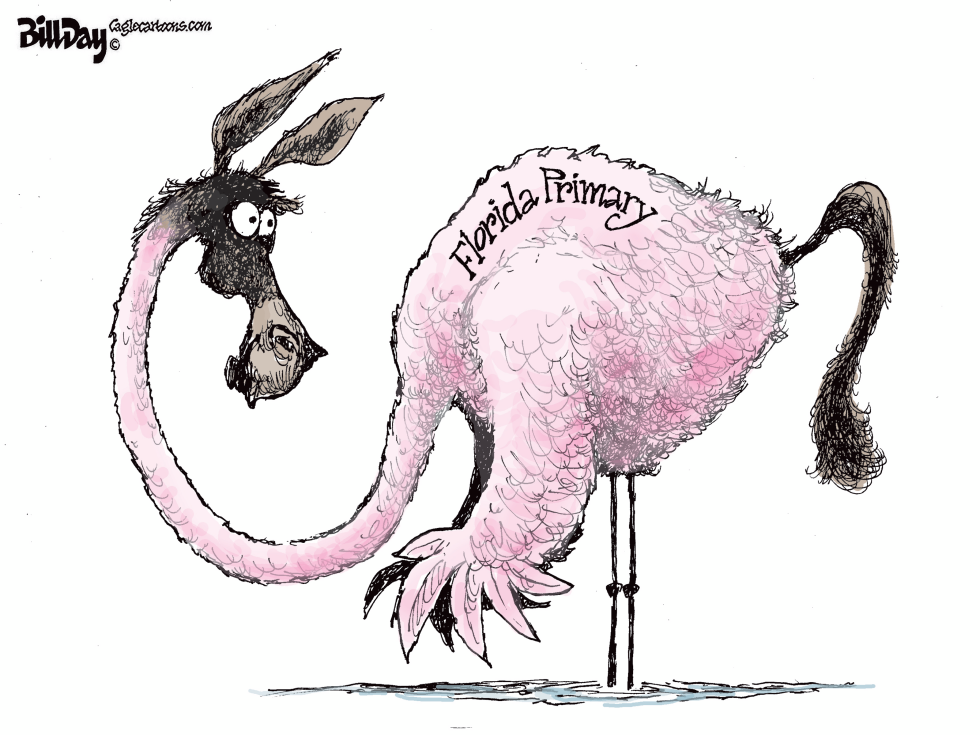
Florida prepares for its primary election with Democratic candidates competing for key nominations. The contest draws attention due to the state's role in national party positioning. The piece portrays the primary as an awkward fusion of traditional party identity and local Florida elements, suggesting the process strains familiar symbols.
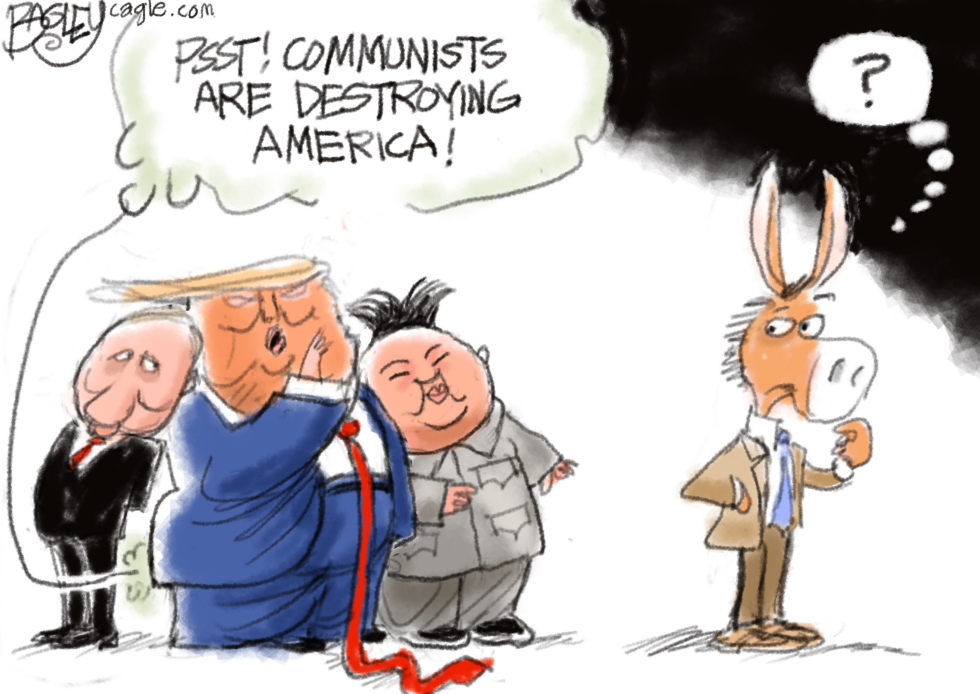
Donald Trump has renewed warnings that communists are undermining the United States, directing the message at Democratic leaders. The claim comes amid ongoing partisan clashes over domestic policy and foreign influence. The piece presents the Democratic response as skeptical and uncertain.
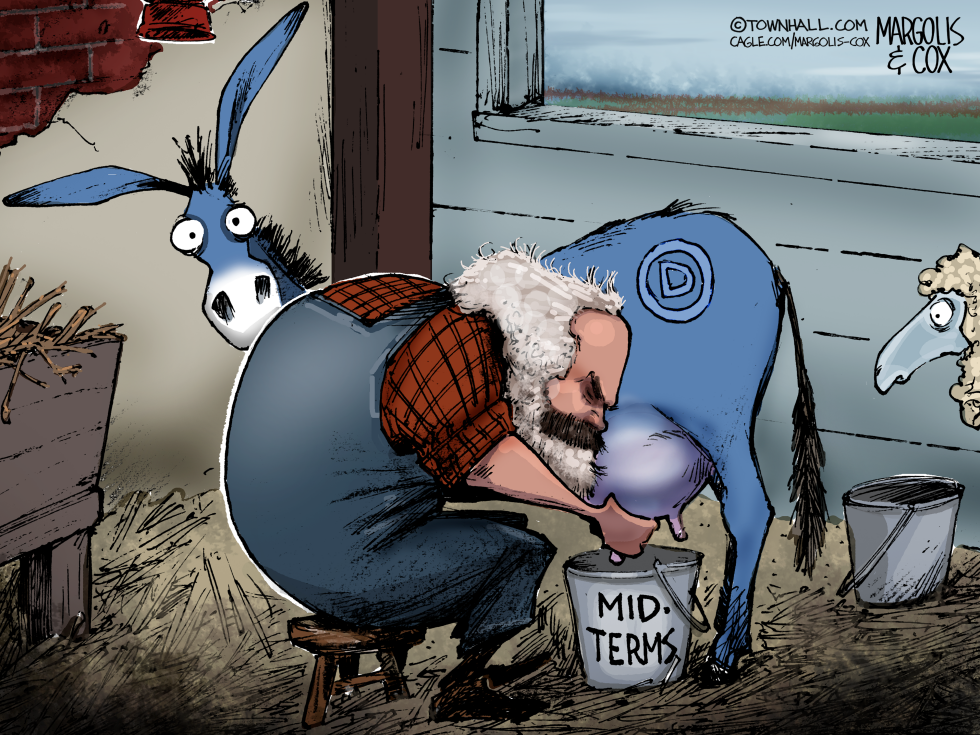
Democrats face ongoing questions about ideological influences from socialist thinkers as they prepare midterm strategies. The piece portrays Karl Marx directly engaging the party symbol to extract electoral gains. It argues that such roots undermine the party's mainstream appeal and long-term viability.