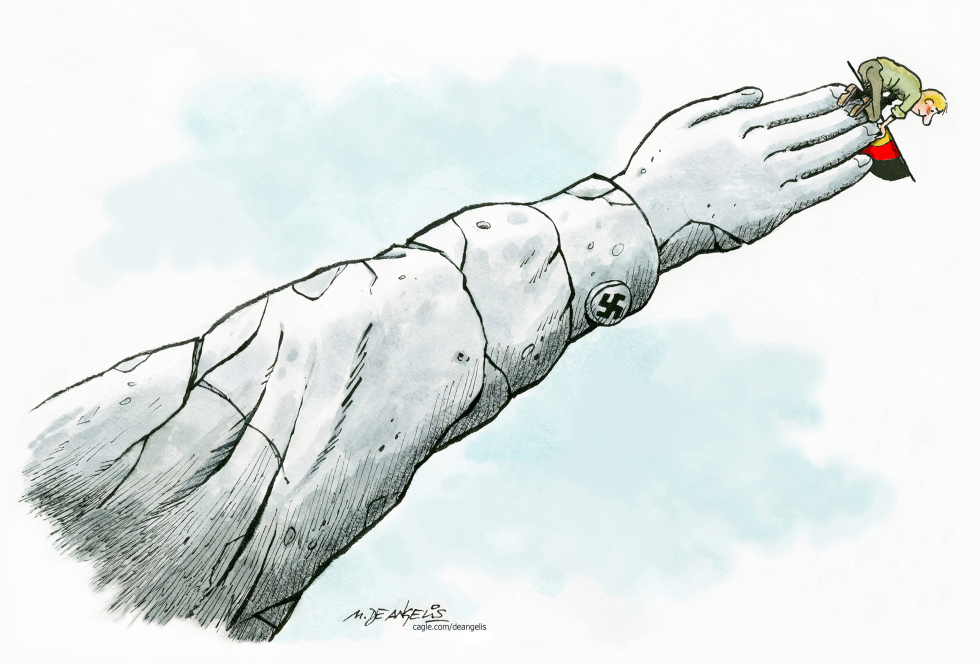
Concerns over far-right political gains in Germany have intensified in recent years, with parties embracing nationalist rhetoric drawing scrutiny for echoing historical extremist movements. The development matters because it tests the resilience of post-war democratic institutions in Europe's largest economy. The cartoon argues that such influences continue to exert a controlling grip on German political life despite decades of denazification efforts.
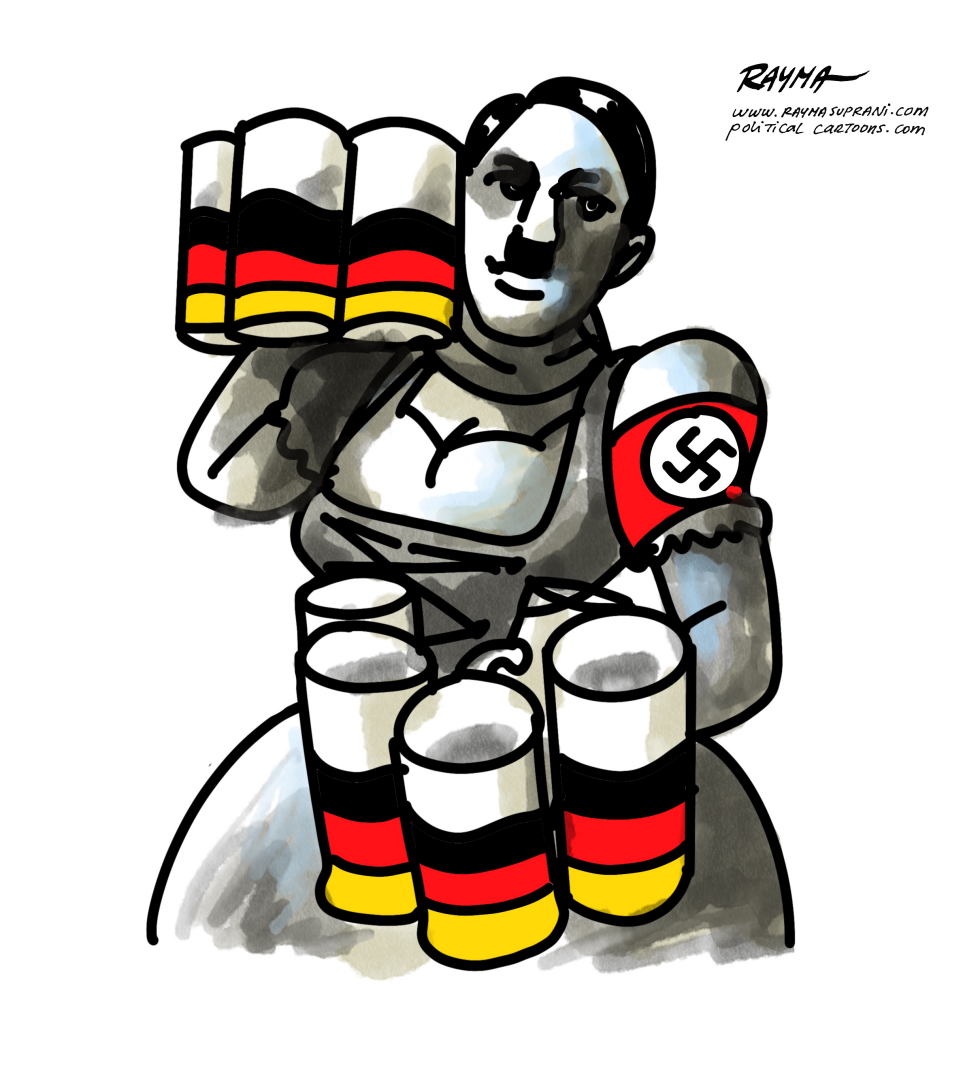
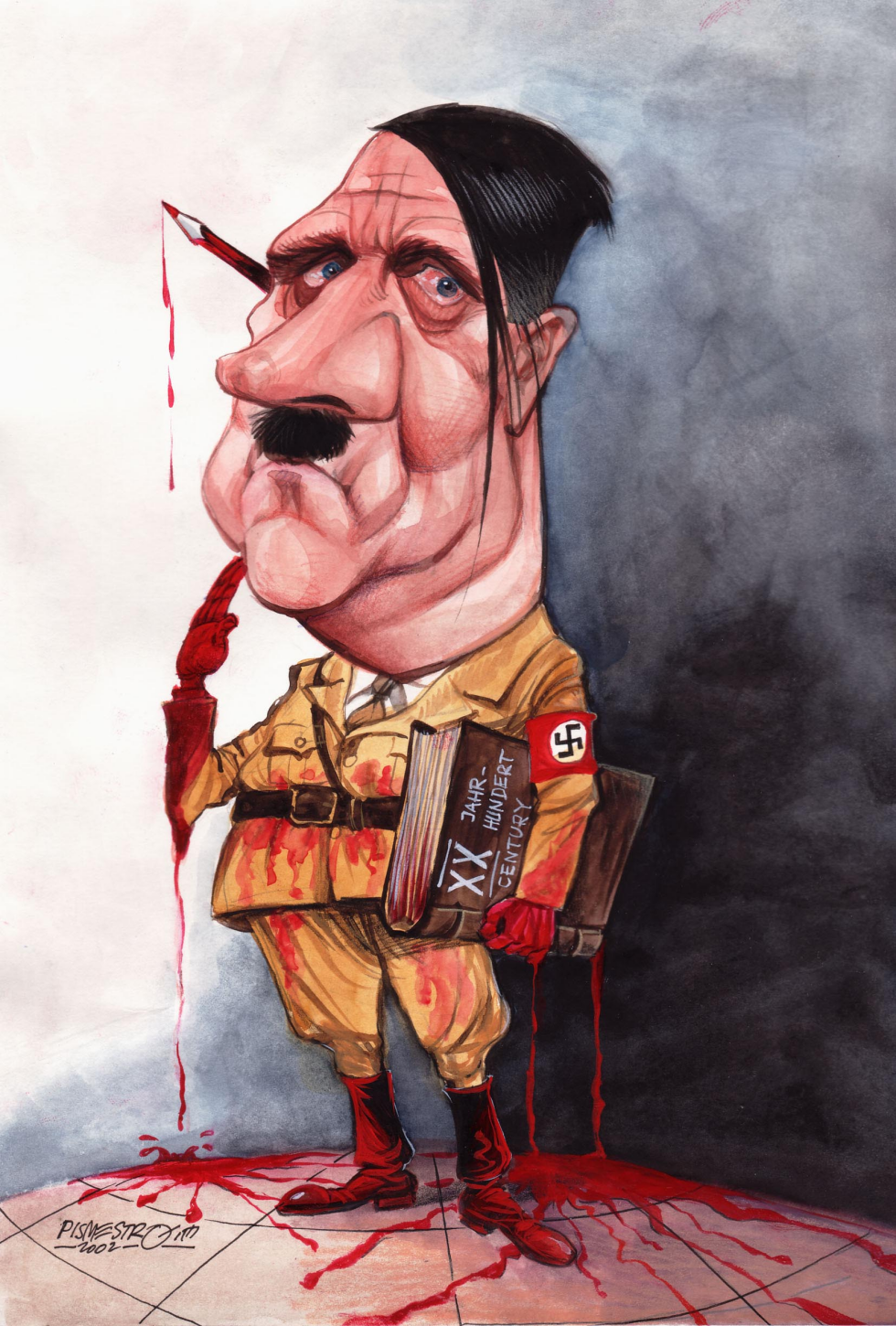
The cartoon depicts a figure resembling Adolf Hitler clad in armor and bearing a swastika armband while surrounded by beer mugs colored like the German flag. It responds to ongoing discussions about far-right movements in Germany by blending historical Nazi references with contemporary beer culture symbols. The work highlights perceived connections between political radicalism and national social customs as of the 2026 publication date. No specific recent event anchors the piece beyond recurring themes of extremism in European politics.
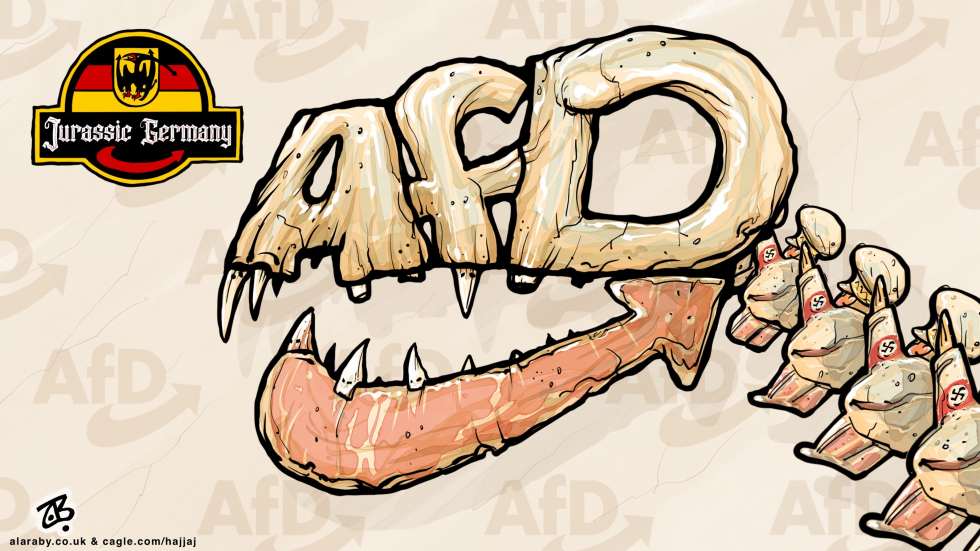
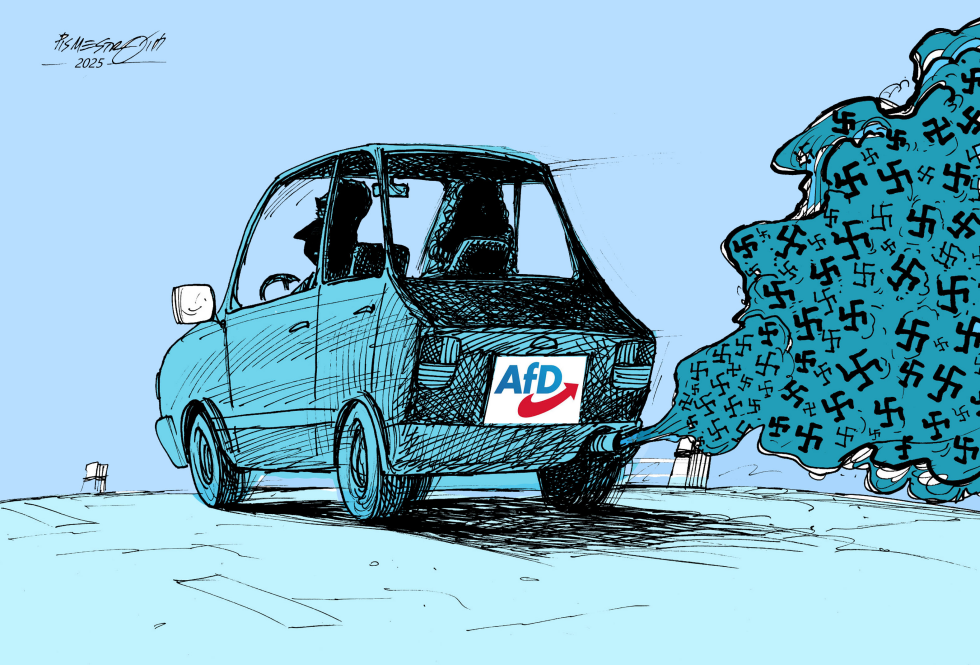
The Alternative for Germany party posted strong results in recent state and national contests, drawing renewed scrutiny over its tolerance for extremist elements. The outcome matters because AfD now holds significant parliamentary seats and influences policy debates on immigration and national identity. The cartoon argues that these gains risk normalizing symbols and rhetoric long associated with Germany's darkest chapter.
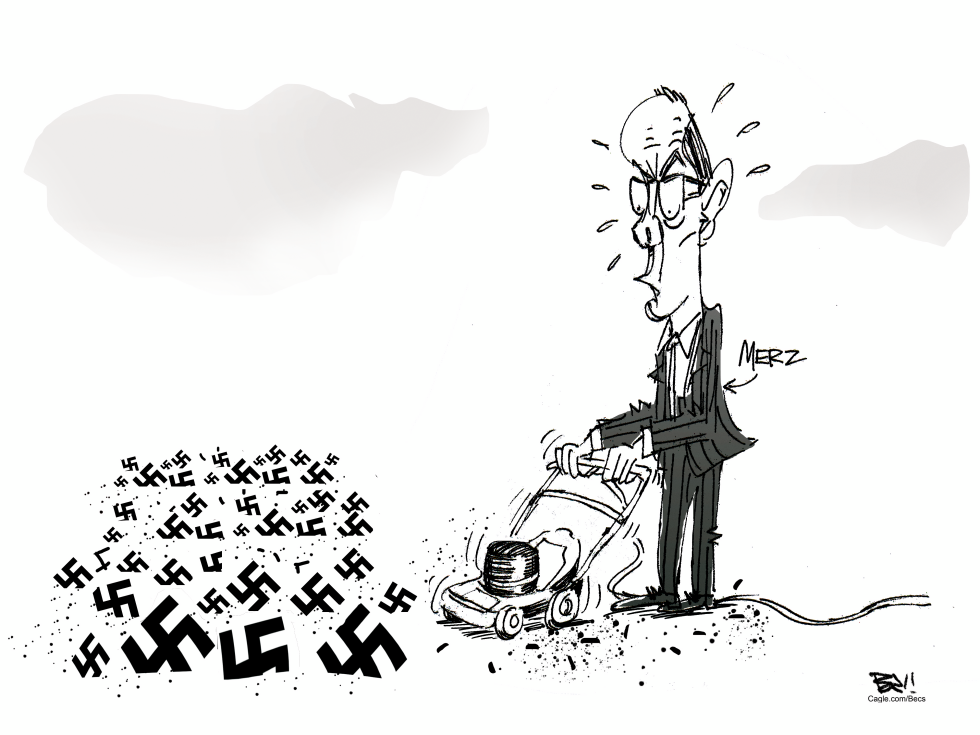
Friedrich Merz, a leading German conservative, has positioned himself against far-right extremism by publicly rejecting Nazi symbols and associated groups. The move comes as Germany faces growing concerns over rising far-right activity ahead of key political contests. Merz's stance aims to draw a clear line separating mainstream conservatism from extremist fringes. The cartoon portrays this effort as a deliberate cleanup of dangerous symbols. It endorses the push to isolate and diminish far-right influence in German politics.
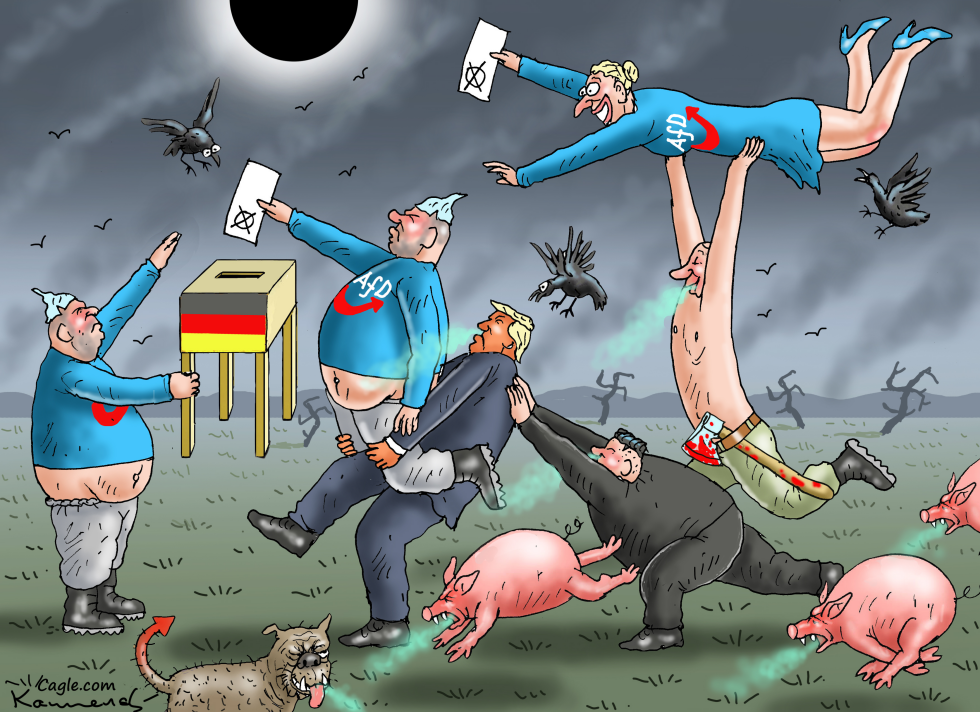
The AfD seeks gains in upcoming German elections with visible support from Donald Trump and other authoritarian figures. The party faces accusations of extremist ties. The cartoon portrays this backing as a direct boost to the far-right campaign while highlighting Nazi symbols on ballots.
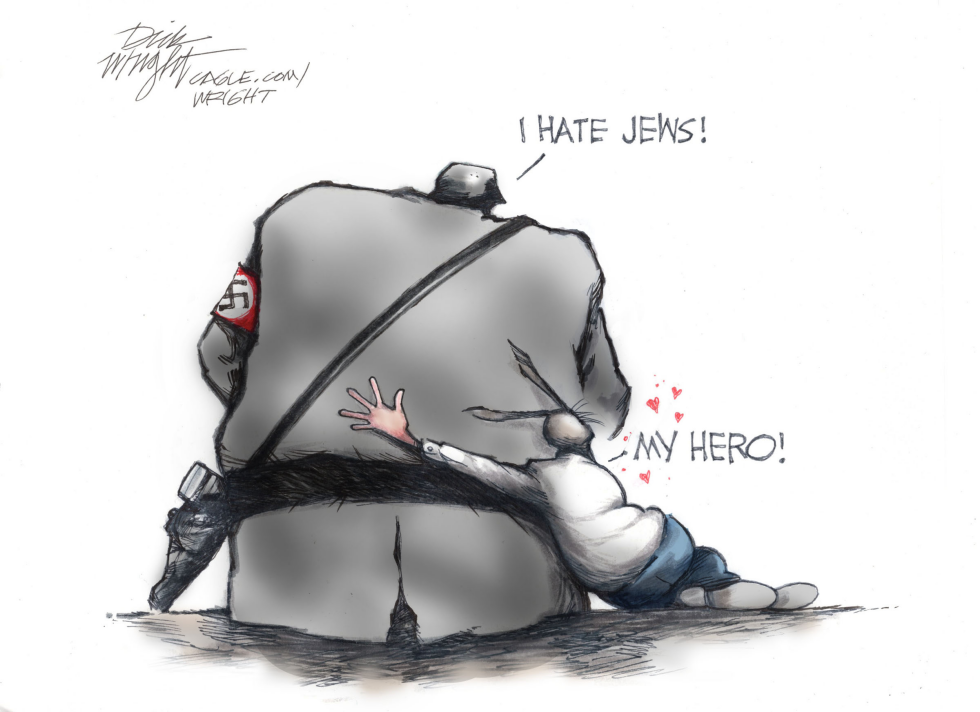
A political cartoon from July 2026 depicts the Democratic Party symbol adoring a Nazi soldier who declares hatred for Jews. The image responds to ongoing accusations of antisemitism within progressive circles and Democratic leadership. The editorial position frames Democrats as willing to embrace or overlook explicit Jew hatred for political gain.
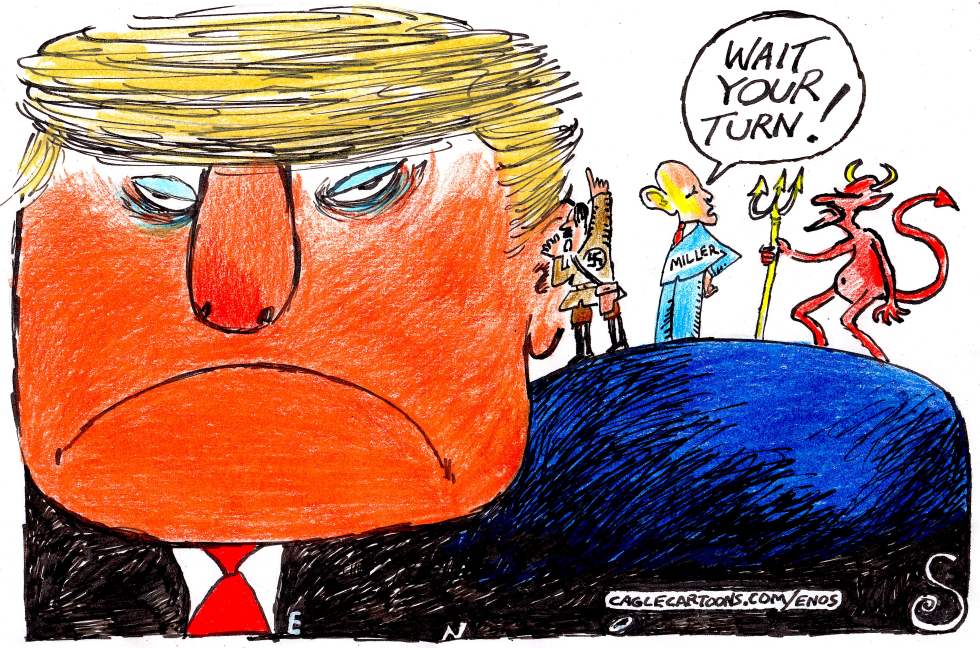
A large caricature of Donald Trump dominates the frame with an orange face and yellow hair. To the right, a smaller Stephen Miller figure in a blue shirt stands beside a red devil holding a pitchfork. A speech bubble from the devil says 'WAIT YOUR TURN!' A tiny figure with a swastika armband appears behind Miller. The image is dated July 6, 2026, and signed by Randall Enos with a Cagle Cartoons credit line.
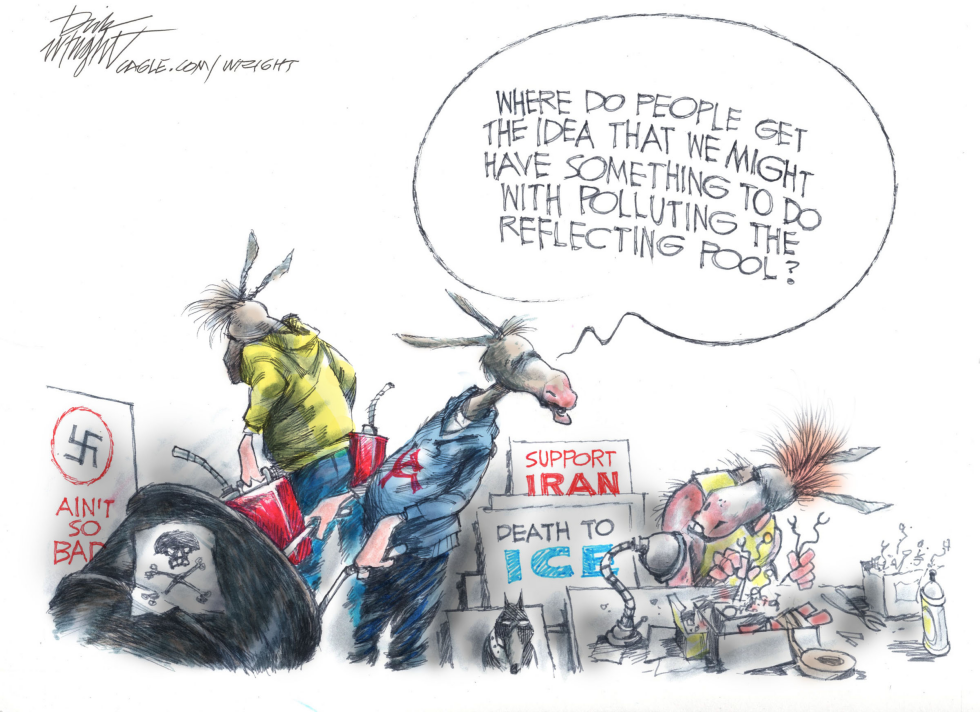
A group of protesters at the reflecting pool in Washington DC dump red liquid from containers marked with toxic symbols while holding signs reading Support Iran and Death to ICE. One figure displays a swastika and another denies involvement in any pollution through a large speech bubble. The scene includes scattered debris and a skull-and-crossbones bag.