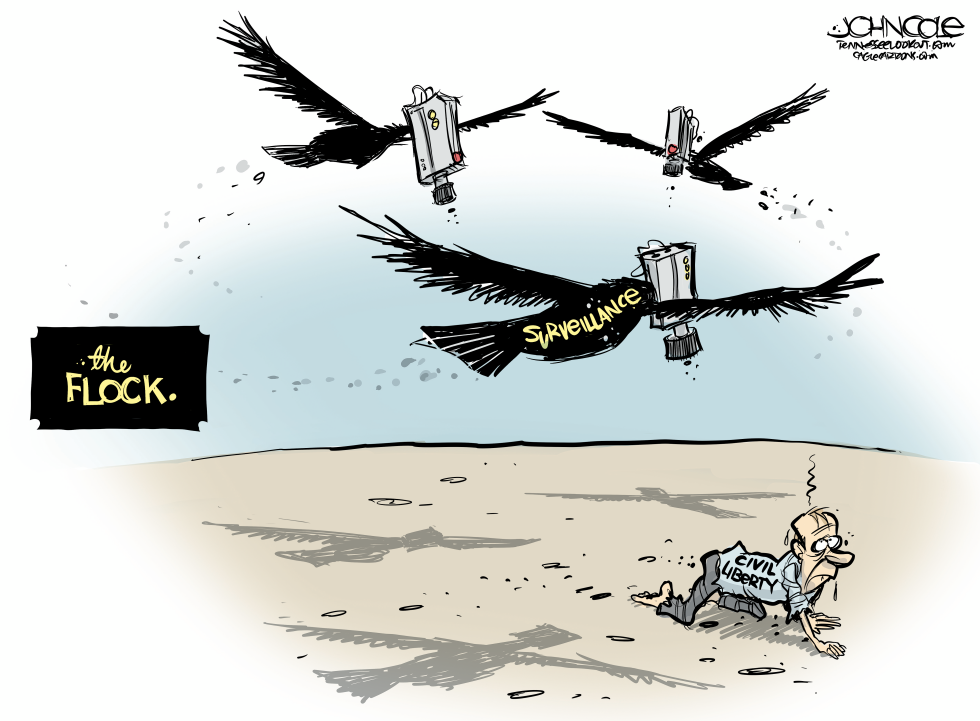
Police departments across the country have rapidly adopted Flock Safety automated license plate readers, creating vast networks that track vehicle movements in real time. The technology promises faster crime solving but raises alarms over data retention, sharing with federal agencies, and minimal judicial oversight. The cartoon argues that these systems are eroding civil liberties with little public accountability.
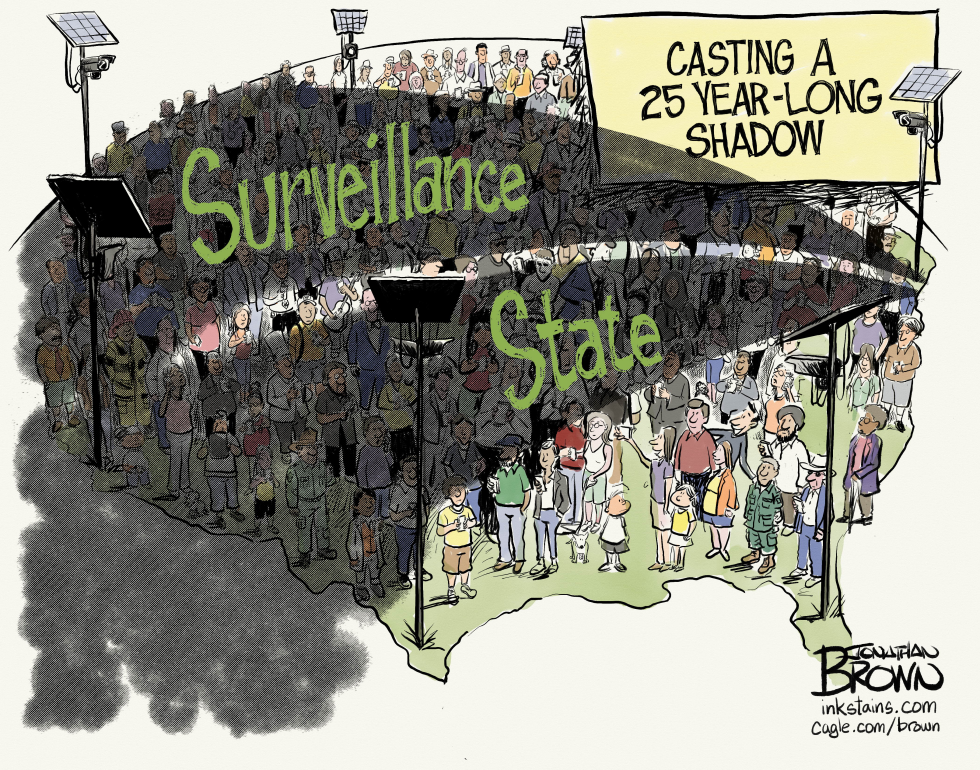
The cartoon depicts a dense crowd of Americans standing on a map of the United States, partially obscured by a large dark shadow cast by surveillance cameras mounted on poles. The words 'Surveillance State' appear prominently in green lettering across the scene, while a sign in the upper right reads 'CASTING A 25 YEAR-LONG SHADOW.' The image comments on the lasting effects of expanded government surveillance programs that began after the September 11 attacks, now spanning a quarter century. It illustrates how these measures continue to influence daily life and public spaces in 2026.
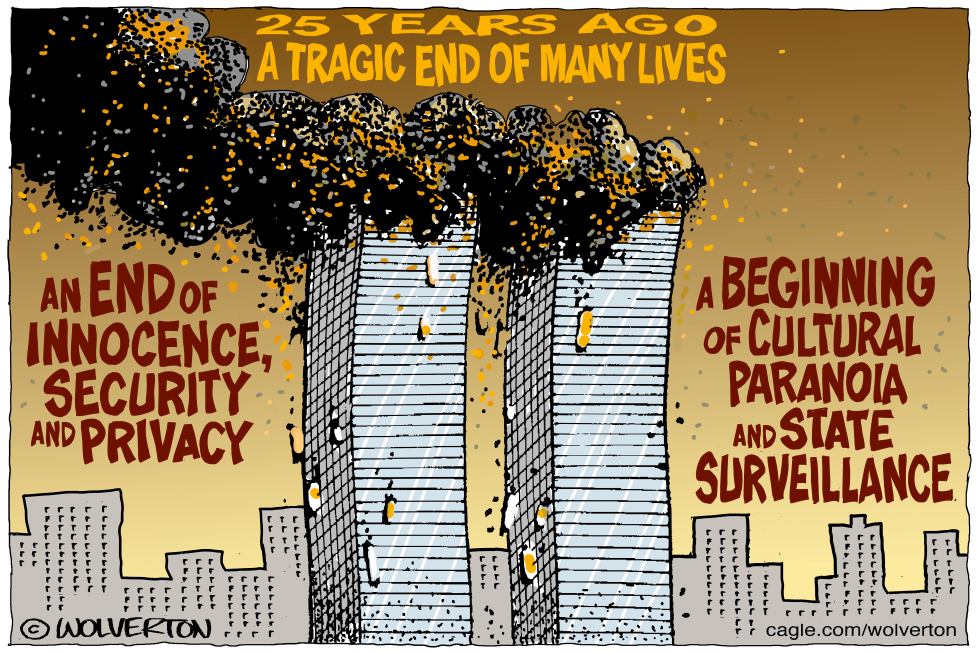
On the 25th anniversary of the September 11 attacks, the cartoon highlights the human tragedy while pointing to the subsequent expansion of state surveillance and erosion of privacy. The editorial position frames the attacks as both an end to national innocence and the start of heightened monitoring.
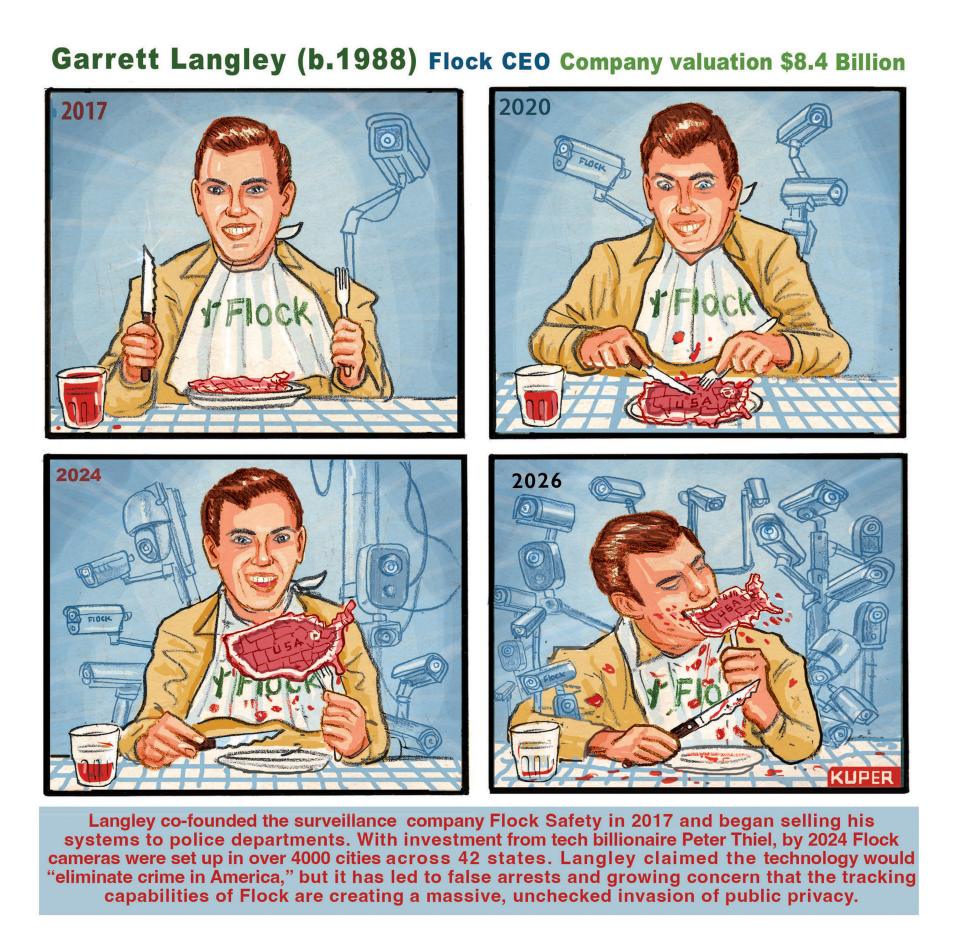
Flock Safety, co-founded by Garrett Langley in 2017, has installed cameras in over 4,000 cities across 42 states with backing from Peter Thiel. Langley promoted the system as a way to eliminate crime, yet reports show false arrests and widespread privacy concerns. The cartoon depicts Langley consuming a map of the US as cameras proliferate, underscoring the editorial view that the company's growth represents an unchecked invasion of public privacy.
Ontario Progressive Conservative leader Doug Ford faces accusations of directing surveillance on Liberal rival Bonnie Crombie during her Jamaica vacation. Reports indicate party operatives monitored her activities at a resort, prompting opposition outrage over privacy violations. The episode highlights tensions between the governing PCs and opposition parties ahead of future elections. The cartoon portrays Ford as comically inept in his hiding spot, underscoring the absurdity and potential overreach of the alleged operation.
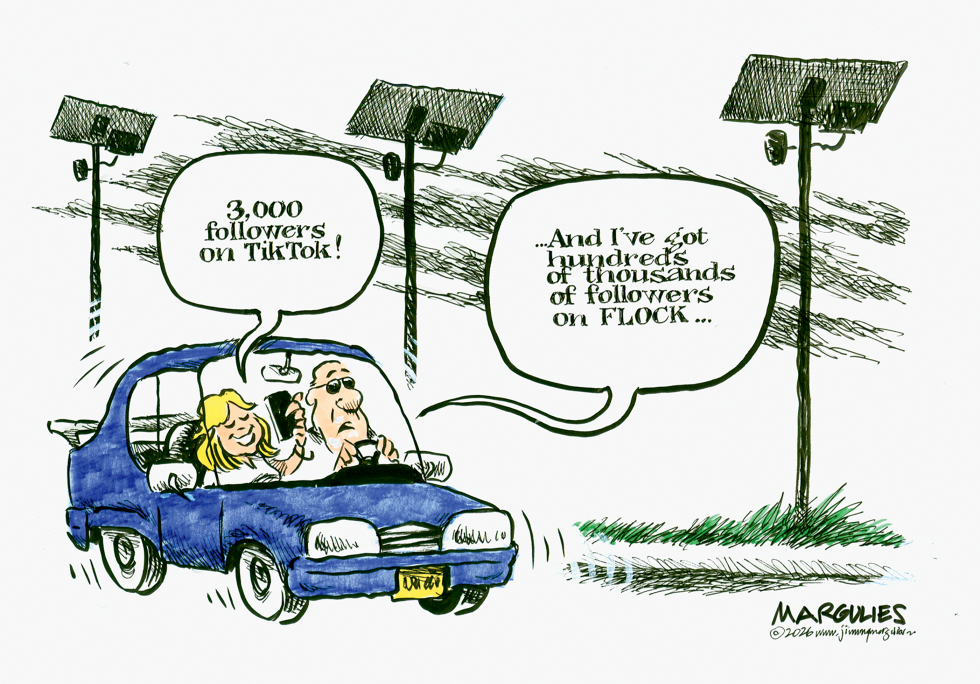
Drivers on public roads increasingly encounter networks of automated license plate readers operated by companies such as Flock Safety. The cartoon highlights the contrast between voluntary social media sharing on platforms like TikTok and involuntary data collection by surveillance systems. It underscores how both forms of attention now shape modern life, with the editorial noting the irony of competing over follower numbers in either realm.
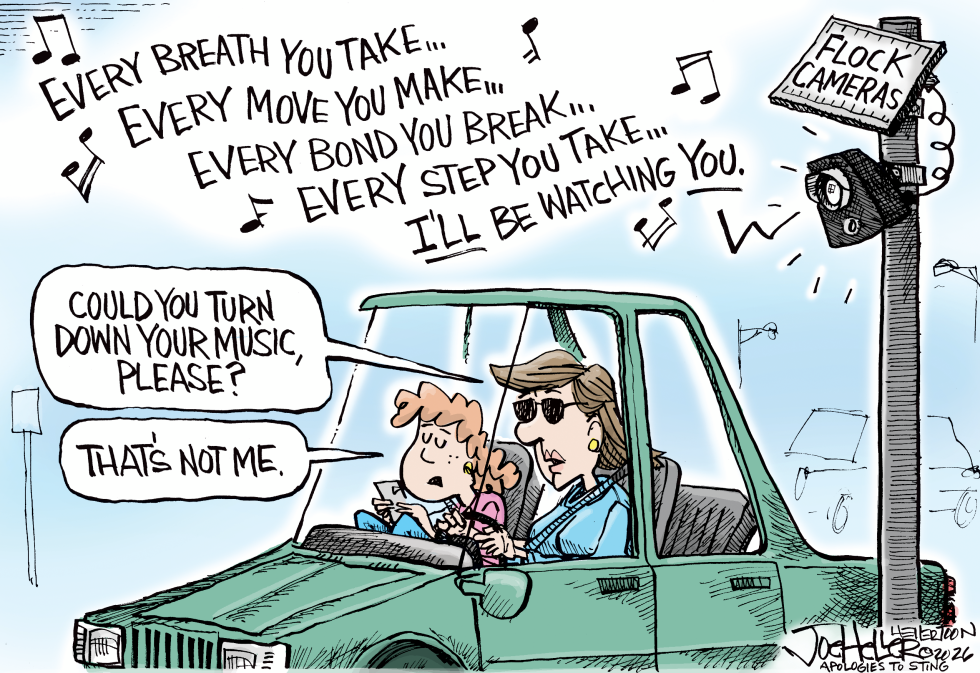
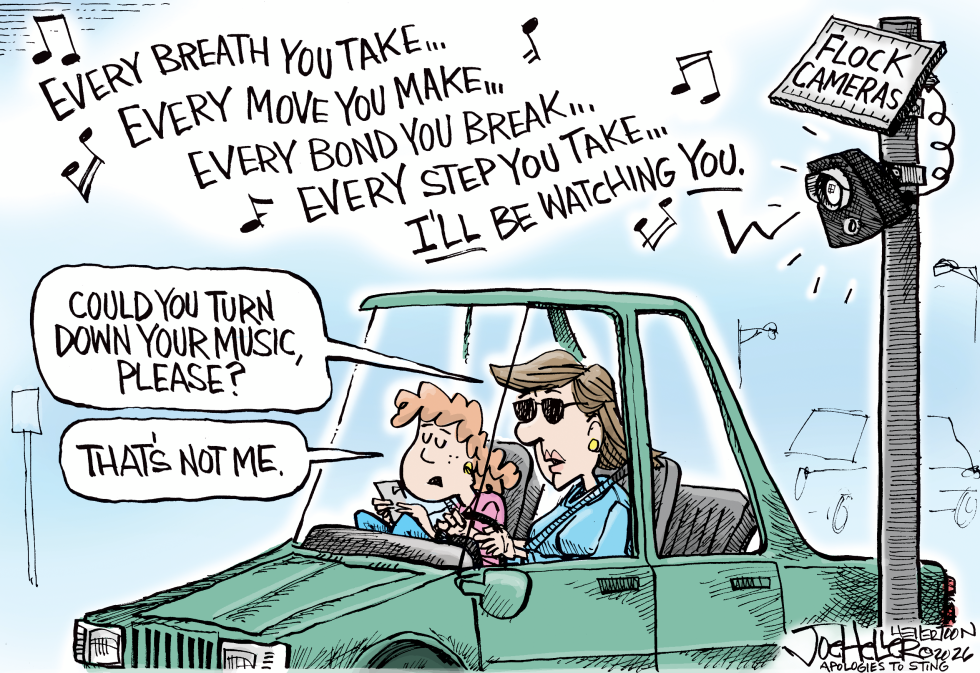
Police departments across the country have expanded use of Flock license-plate readers that capture vehicle movements in real time. The technology raises questions about data retention and warrantless tracking of citizens. The cartoon portrays the cameras as an omnipresent watcher echoing a classic song about surveillance.
Police departments across the country have expanded use of Flock license plate readers to track vehicles in real time. The technology raises questions about the balance between public safety and individual privacy. The piece argues that such systems create an inescapable watch on everyday movement.
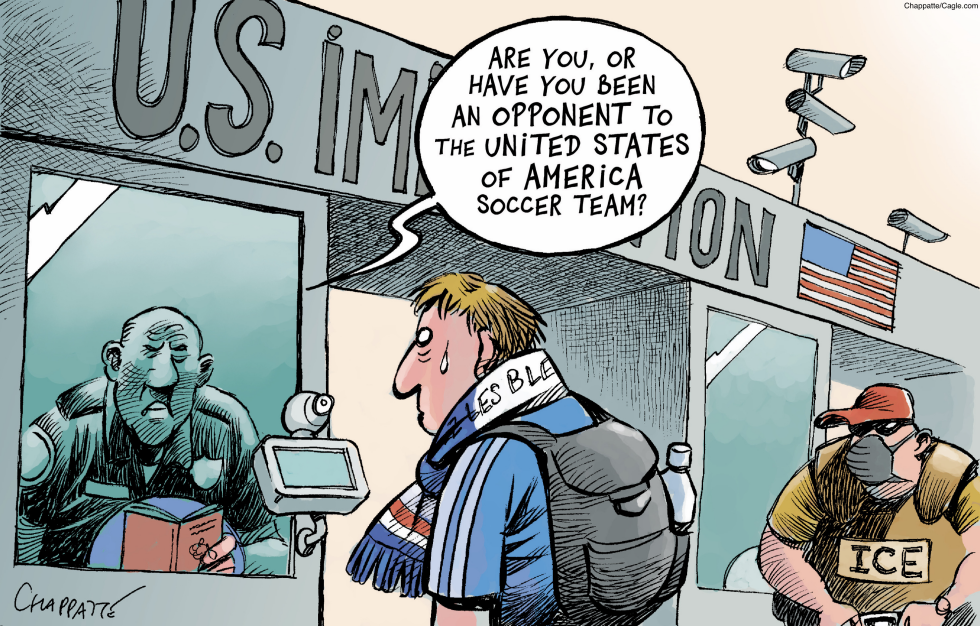
At a U.S. immigration station, an officer questions a Les Bleus supporter about any opposition to the American soccer team. An ICE agent waits nearby amid cameras and flags. The scene highlights tensions around borders and international sports ahead of the 2026 World Cup.