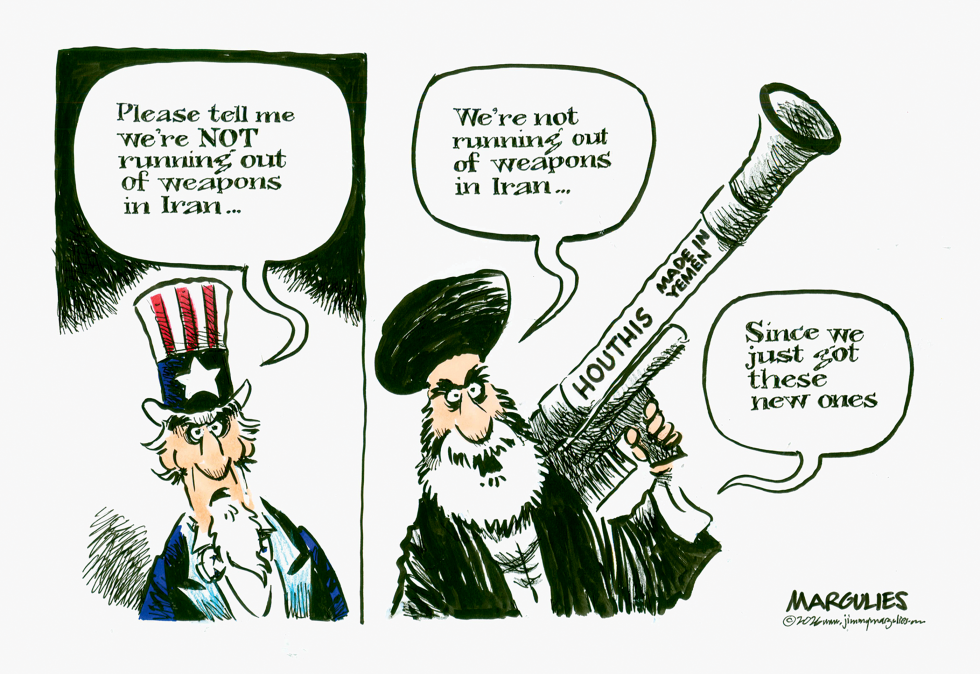
Reports indicate Houthi forces in Yemen have begun supplying missiles to Iran, addressing potential shortages in Iranian stockpiles. The development raises questions about regional arms flows and US policy responses in the Middle East. The cartoon highlights American concerns over whether Iran is truly facing weapons deficits, given the influx of Houthi-provided arms from Yemen. It portrays the situation as undermining claims of Iranian vulnerability while underscoring ongoing tensions in proxy dynamics.
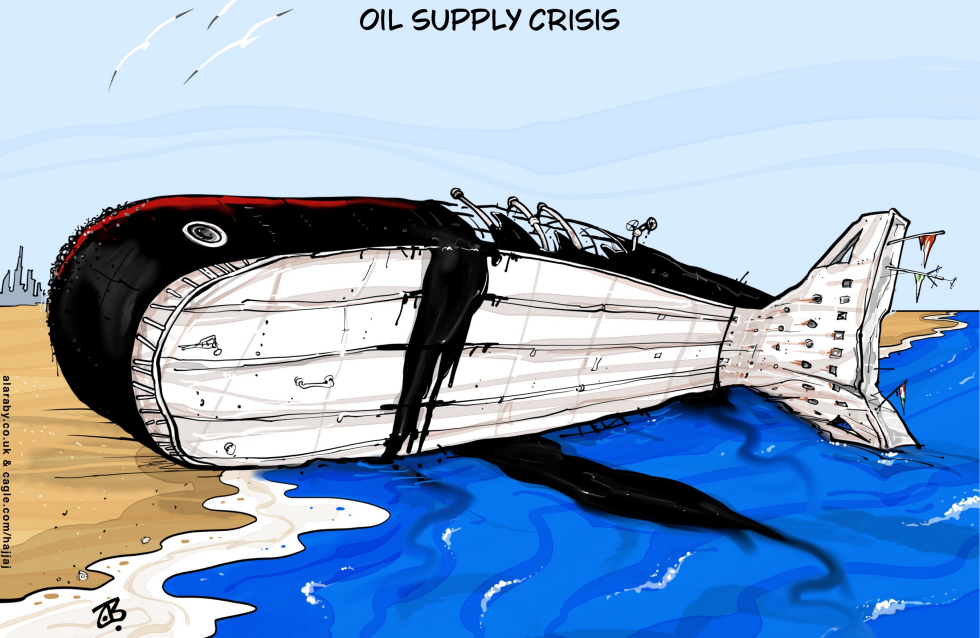
A major oil tanker has run aground, disrupting supply routes and releasing crude into coastal waters. The incident underscores vulnerabilities in global energy transport networks that rely on aging or poorly maintained vessels. Such events can spike fuel prices and trigger immediate cleanup costs for affected regions. The cartoon frames the grounding as a direct cause of the broader supply crisis rather than an isolated accident. It points to systemic weaknesses in oversight and infrastructure that allow one failure to cascade into wider shortages and ecological harm.
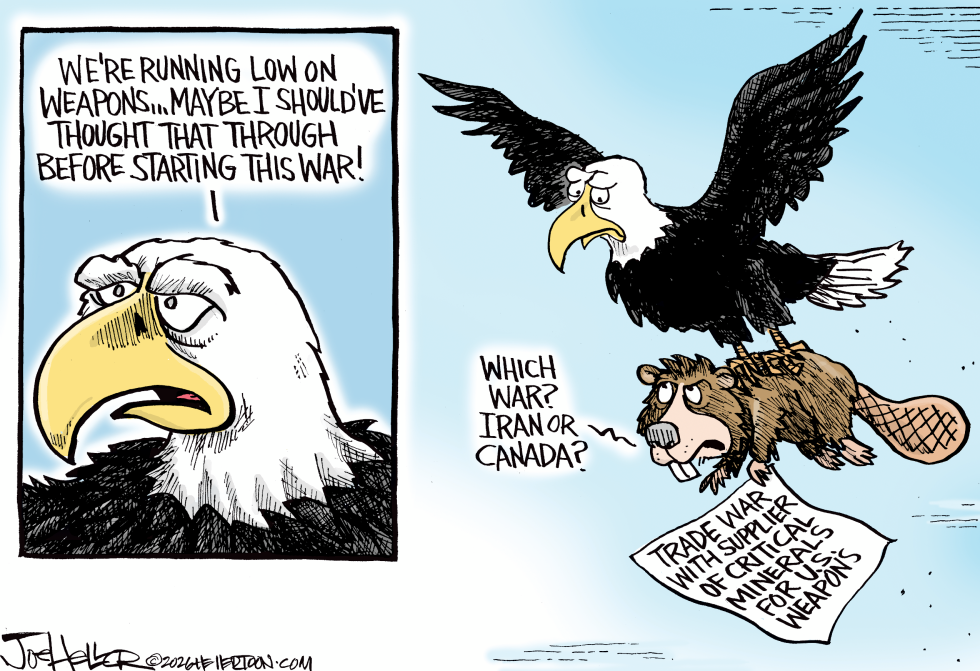
The United States faces potential weapons shortages linked to trade tensions with Canada, a key supplier of critical minerals, while also managing conflicts involving Iran. The situation highlights risks to military readiness from disrupted supply chains. The piece argues that initiating trade disputes with essential partners undermines defense capabilities at a critical time.
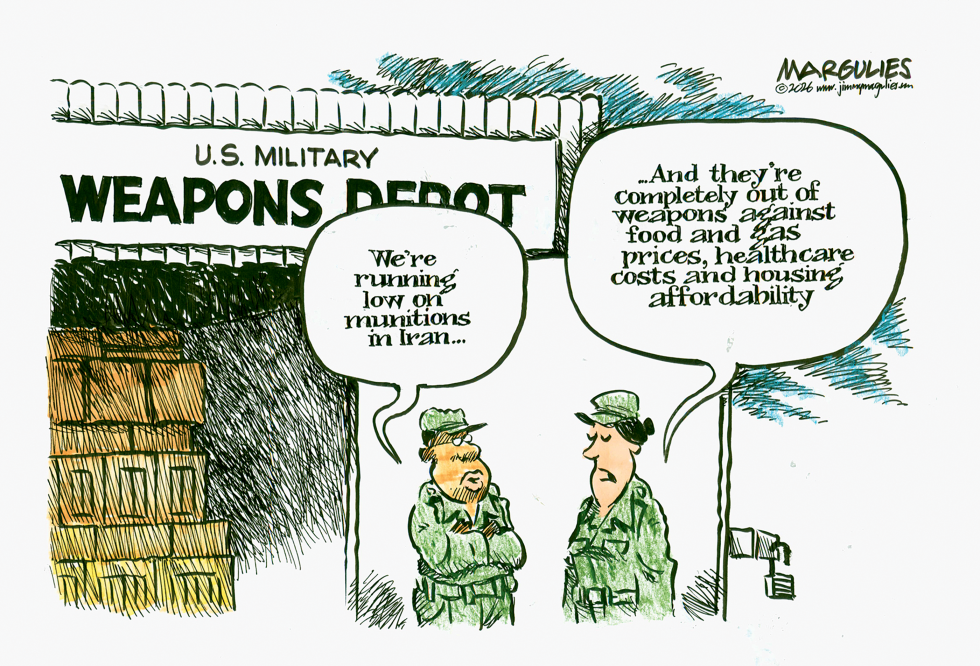
The cartoon depicts two U.S. soldiers outside a weapons depot labeled U.S. Military Weapons Depot. One soldier states the facility is running low on munitions in Iran. The second replies that domestic fronts are out of weapons against food and gas prices, healthcare costs and housing affordability. The image responds to ongoing debates over U.S. military aid commitments abroad and competing budget pressures at home as of the August 2026 publication date. It uses the depot setting and dialogue to contrast foreign military demands with economic challenges facing American households.
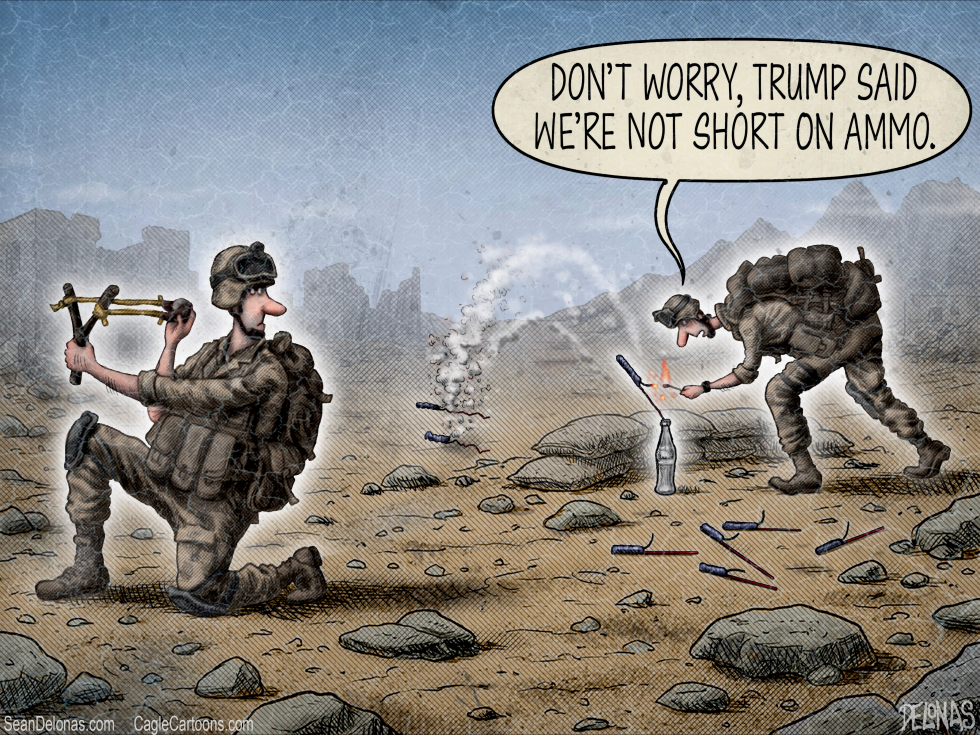
U.S. forces in a desert conflict zone report ammunition shortages forcing improvised weapons. The situation highlights strains on military logistics during ongoing operations. The piece critiques assurances from leadership that supplies remain adequate.
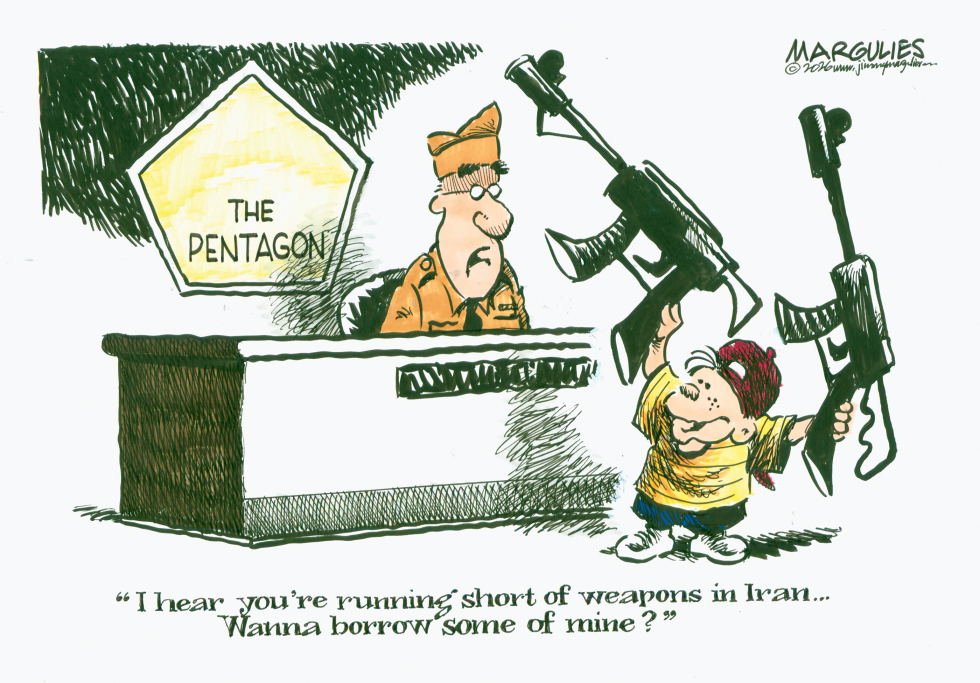
A Pentagon officer receives an unsolicited offer of rifles from a child citing shortages in Iran. The exchange underscores ongoing U.S. concerns over arms flows and regional stability in the Middle East. No specific recent policy shift or confirmed shortage has been verified in the days leading to publication. The piece frames the Pentagon as open to unconventional sources for military support. It critiques reliance on external or irregular suppliers in foreign policy decisions.
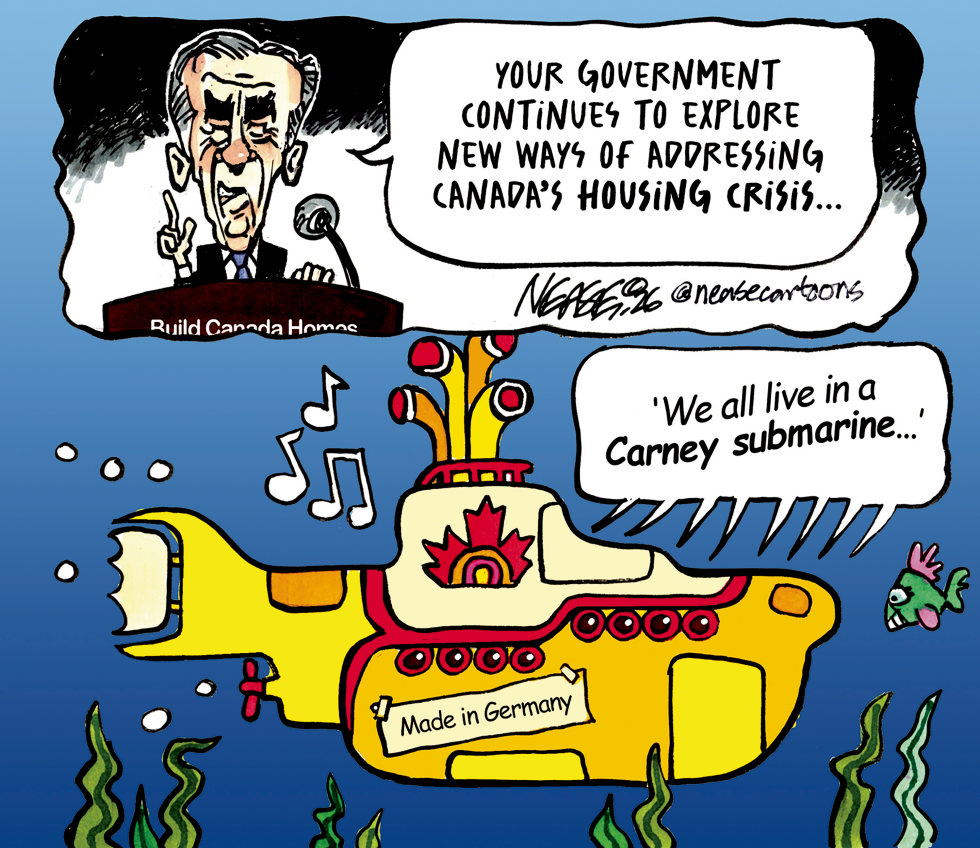
On July 7 2026 Mark Carney speaks from a Build Canada Homes podium about ongoing government efforts to address the national housing crisis. Below the surface a yellow submarine marked Made in Germany and bearing a maple leaf emblem carries the slogan We all live in a Carney submarine. The scene references the Beatles song while depicting policy exploration through underwater imagery with musical notes and a small fish observer.
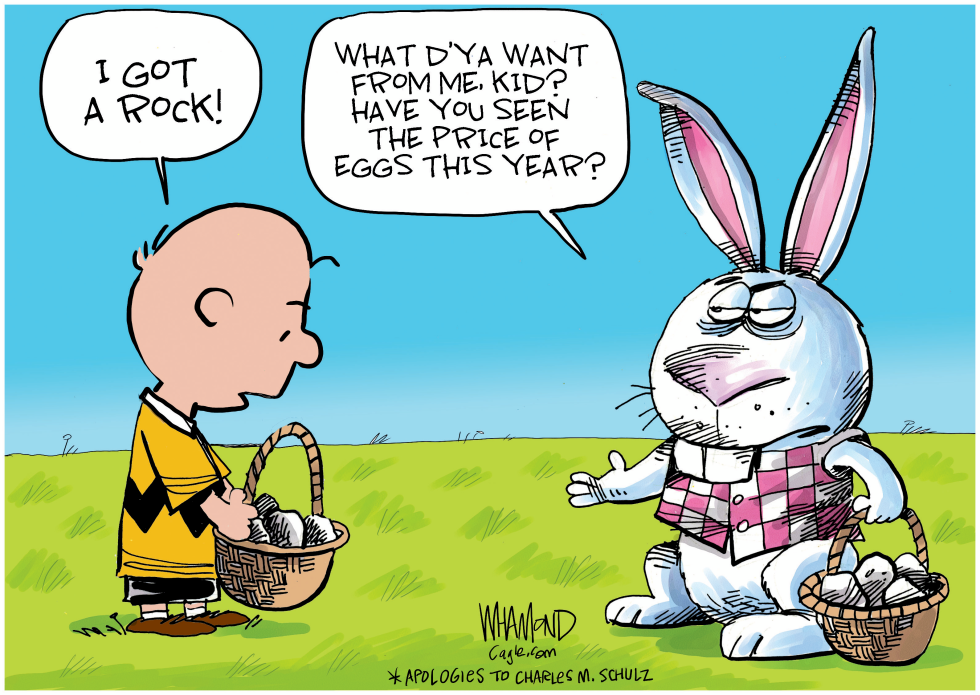
On April 3, 2023, Dave Whamond's cartoon shows Charlie Brown telling the Easter Bunny he got a rock, only for the rabbit to point to soaring egg prices. The Peanuts-style scene captures consumer frustration with grocery costs during the spring holiday season.