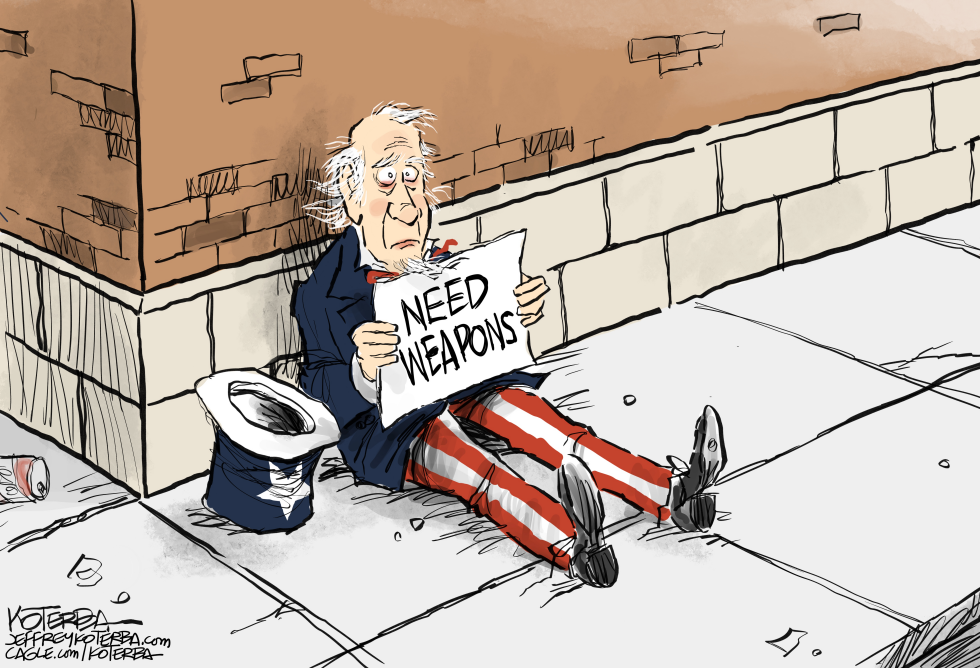
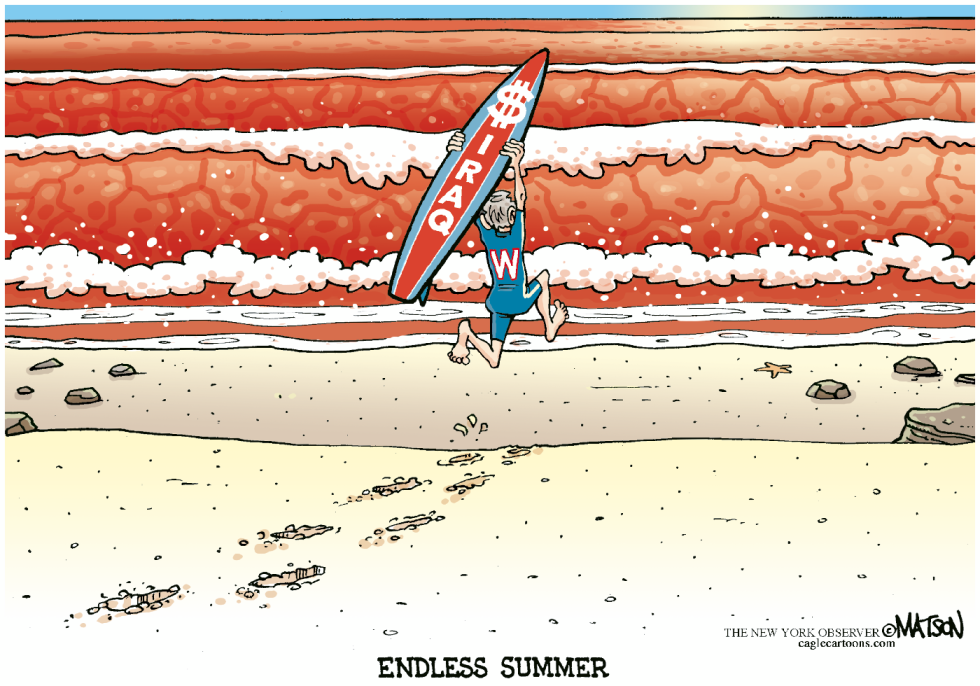
Uncle Sam appears as a disheveled figure on a sidewalk holding a sign requesting weapons. The image captures an ongoing national debate over military resources and international commitments. The editorial stance highlights perceived weakness in current arms policy and funding priorities.
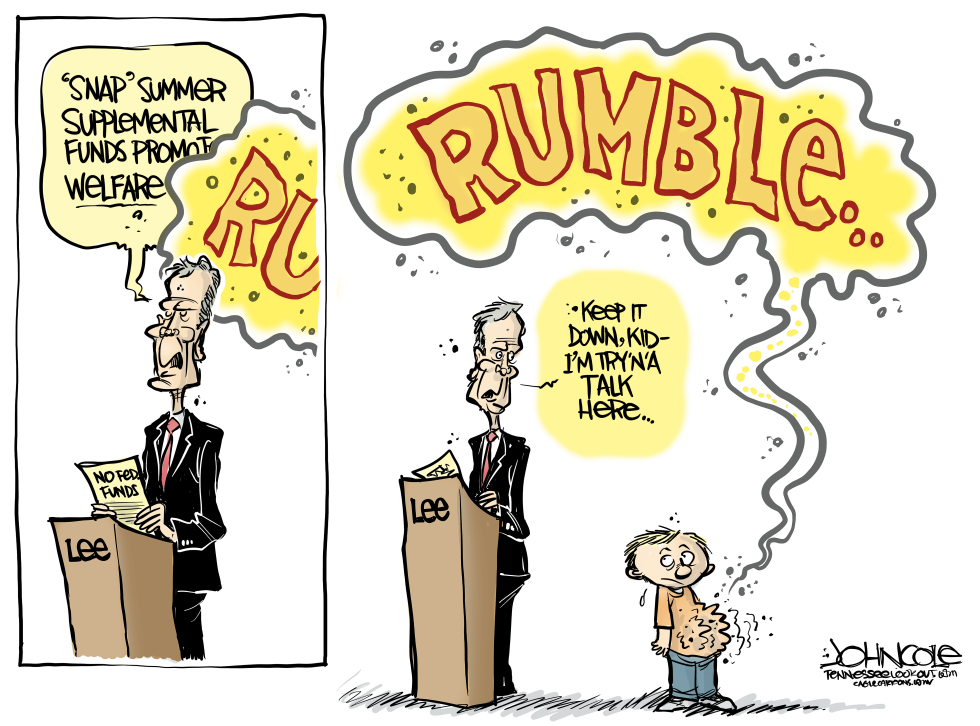
Tennessee Governor Bill Lee has declined federal SNAP summer supplemental funds, arguing the program promotes welfare. The cartoon depicts Lee at a podium holding papers marked no fed funds while a speech bubble criticizes the assistance. Nearby a hungry child with a rumbling stomach stands ignored as Lee tells the child to keep quiet. The image highlights the tension between state policy choices and immediate child needs during summer months when school meals are unavailable.
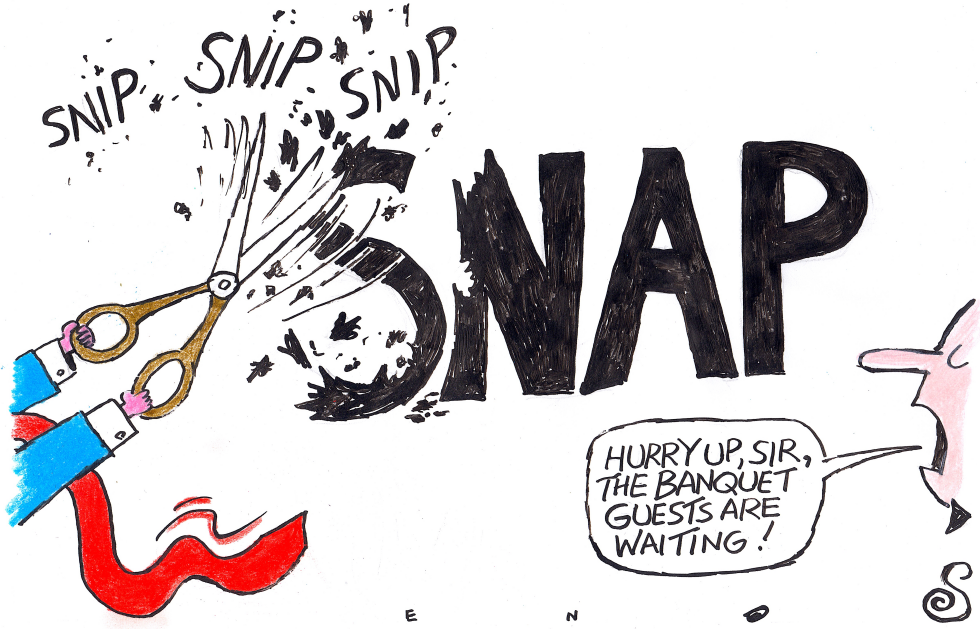
The cartoon depicts a hand wielding scissors to cut the letters of SNAP, the Supplemental Nutrition Assistance Program. A speech bubble urges haste for banquet guests. This visual responds to reports of proposed cuts to food stamps under the Trump administration in late 2025. The contrast highlights perceived priorities between lavish events at Mar-a-Lago and reductions in nutrition assistance for Americans facing hunger. The piece uses the act of cutting to symbolize policy changes affecting low-income households.
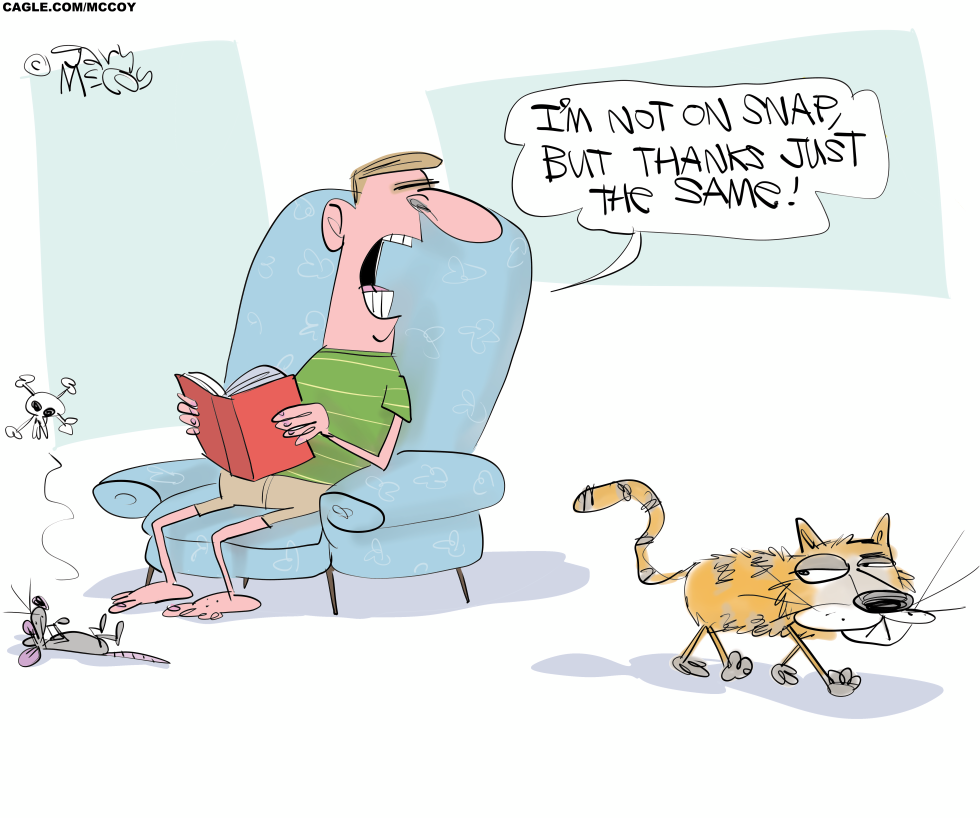
The cartoon depicts a man seated in an armchair who rejects a bandaged cat's offer of a mouse on a plate, declaring he is not on SNAP. The scene comments on debates over Supplemental Nutrition Assistance Program funding during government budget negotiations between parties. It highlights public attitudes toward food aid amid concerns about hunger and program cuts.
The cartoon by John Cole depicts former President Donald Trump pulling a ribbon labeled Big Beautiful Bill that strikes a man wearing a Food Stamp cap and clutching a Food Mart bag. The large orange text SNAP! emphasizes the sudden impact. Published June 8 2025 the work responds to ongoing Republican efforts in Congress to reduce funding for the Supplemental Nutrition Assistance Program as part of broader tax and spending legislation. The visual metaphor illustrates critics' concerns that such cuts will increase hunger among low-income Americans while benefiting other priorities.