A new illustration depicts three children viewed from behind, each shouldering oversized air conditioning units in place of traditional schoolbags. The central text declares the theme of increasingly heavy schoolbags as students return to class. The visual draws on the weight and cooling function of the units to represent the physical and academic loads placed on young learners. Publication occurs at the end of August, aligning with the annual back-to-school period when families prepare for the new term. The piece uses the air conditioner motif to comment on how school requirements have grown more demanding over time.
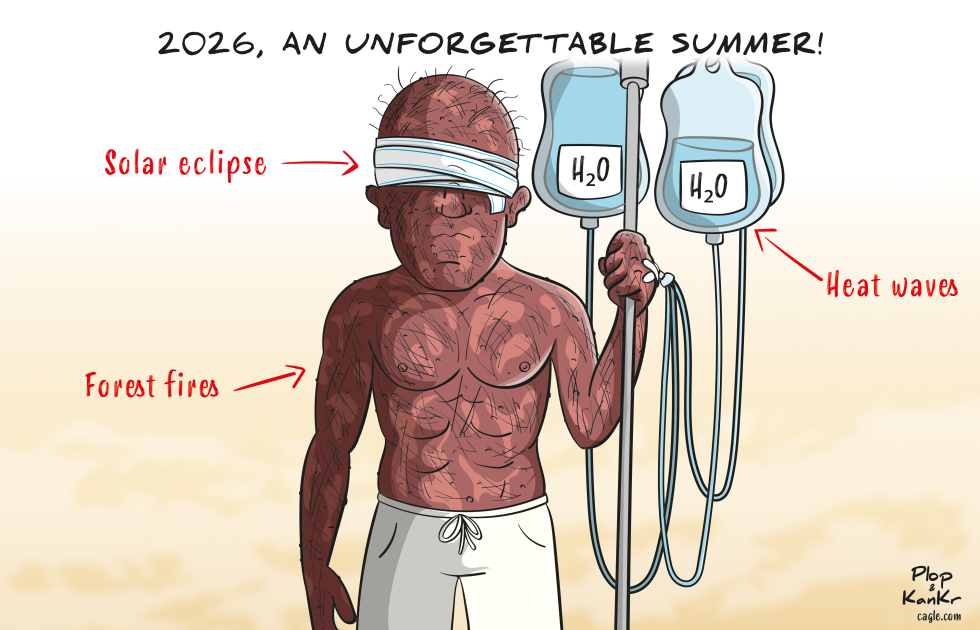
The image shows a shirtless man standing with two IV bags delivering H2O. One bag is labeled heat waves. A blindfold covers his eyes with an arrow from solar eclipse. Another arrow points to forest fires on his arm. The top text reads 2026 an unforgettable summer. The scene places multiple seasonal events on one body at once.
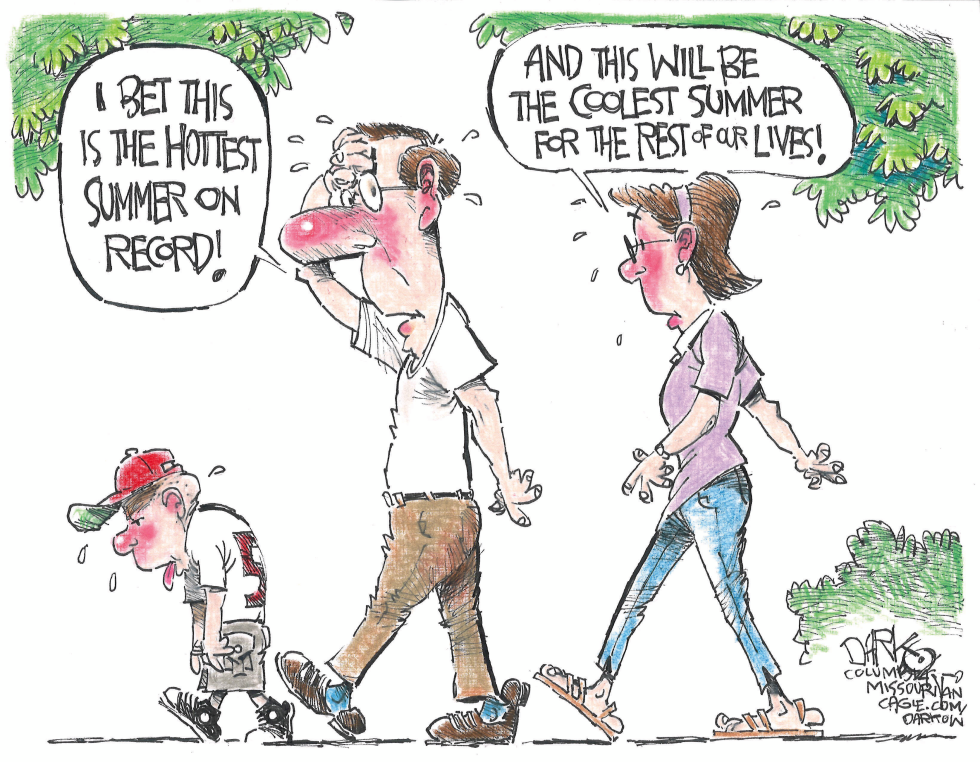
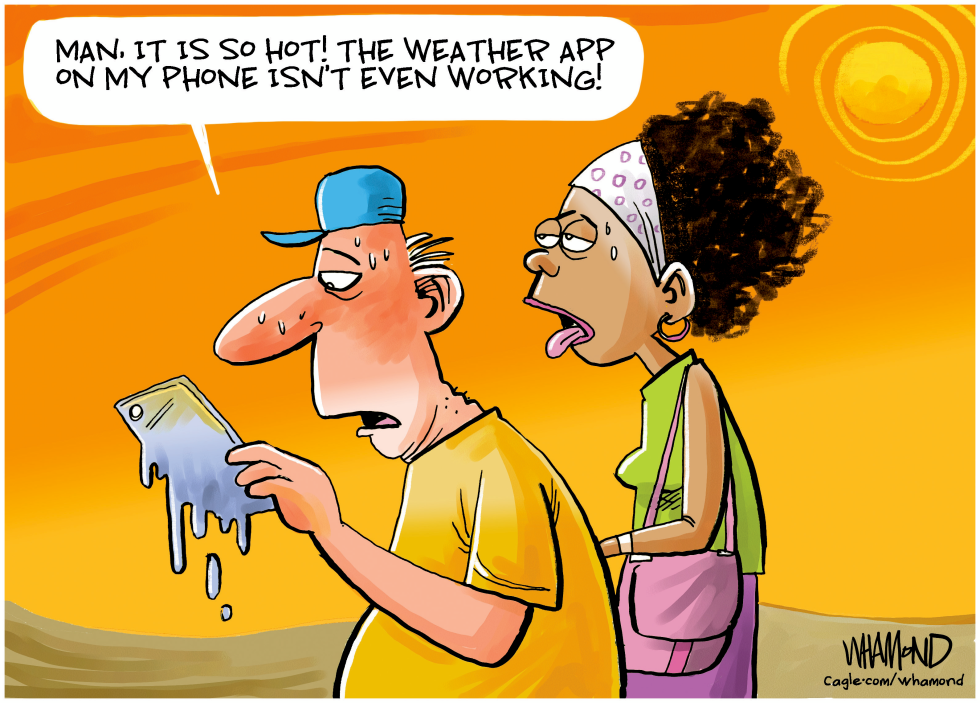
Record summer temperatures in 2026 prompted widespread public discussion of extreme heat events and their link to long-term climate patterns. Families and communities experienced prolonged discomfort as temperatures broke previous benchmarks, underscoring the immediate effects of warming trends. The piece argues that current heat represents only the beginning of progressively harsher conditions unless broader action addresses the underlying causes.
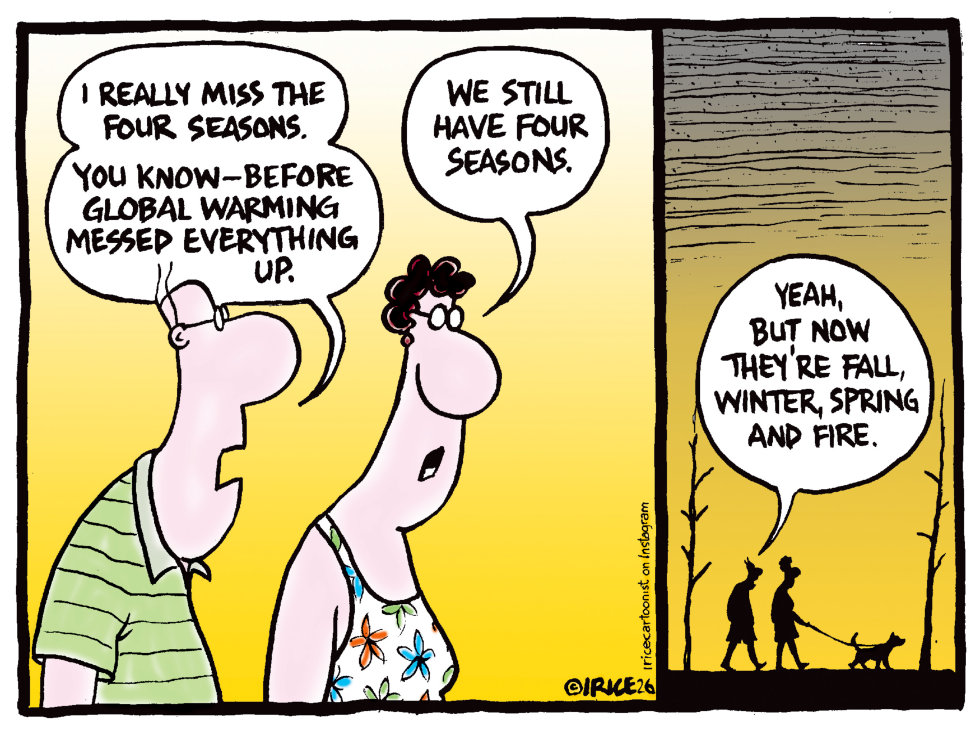
Rising global temperatures continue to alter weather patterns across regions, replacing predictable seasonal cycles with extreme heat and wildfires. The ongoing climate shift affects daily routines and safety in affected areas. The piece argues that fire has effectively become a permanent addition to the traditional four seasons due to these changes.
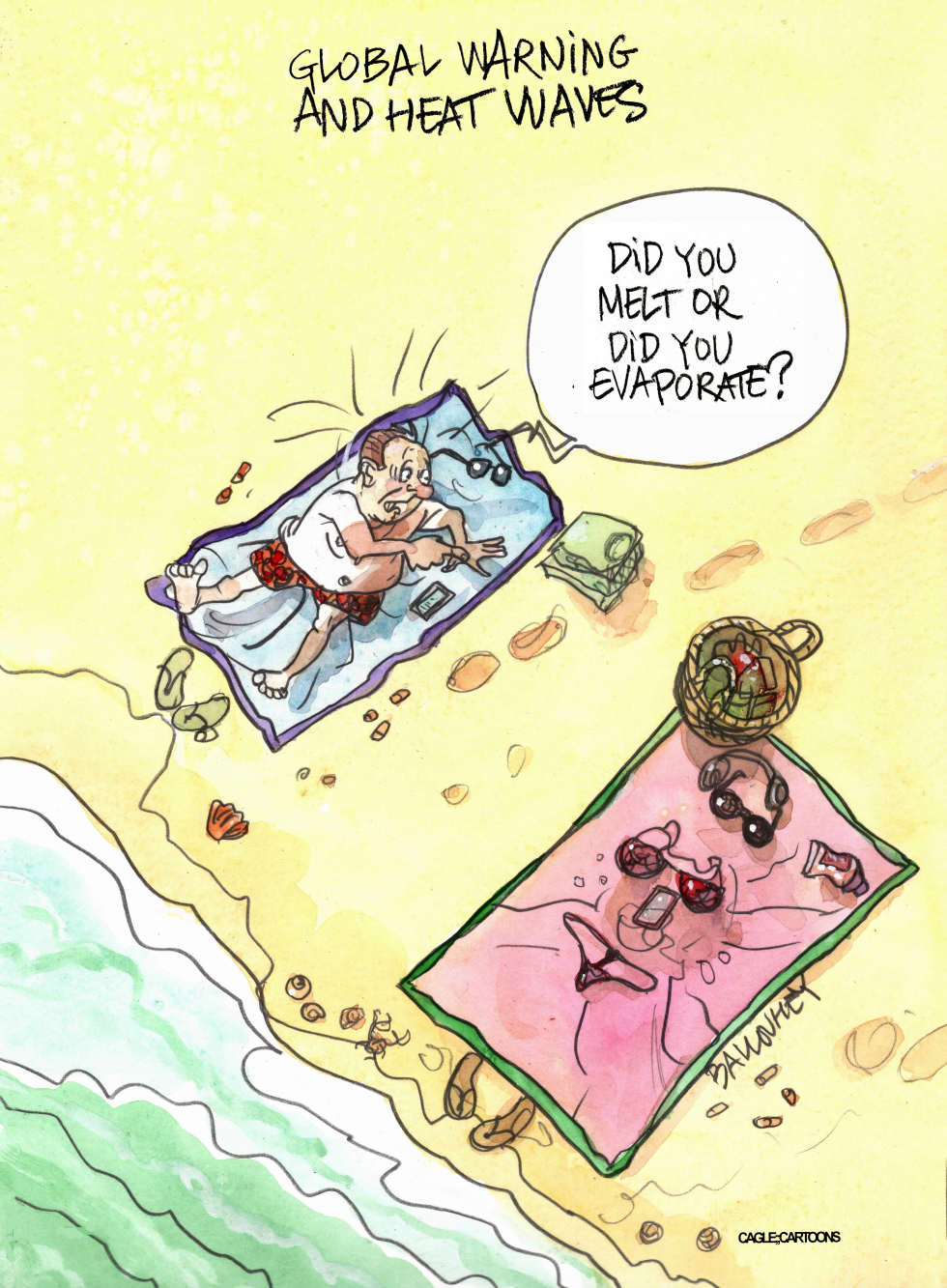
Record heat waves linked to global warming are affecting beach areas worldwide. Visitors face intense temperatures that prompt concerns over personal safety and environmental impact. The situation highlights ongoing climate pressures on daily activities. The piece argues that such conditions demand immediate attention to rising temperatures and their direct effects on people.
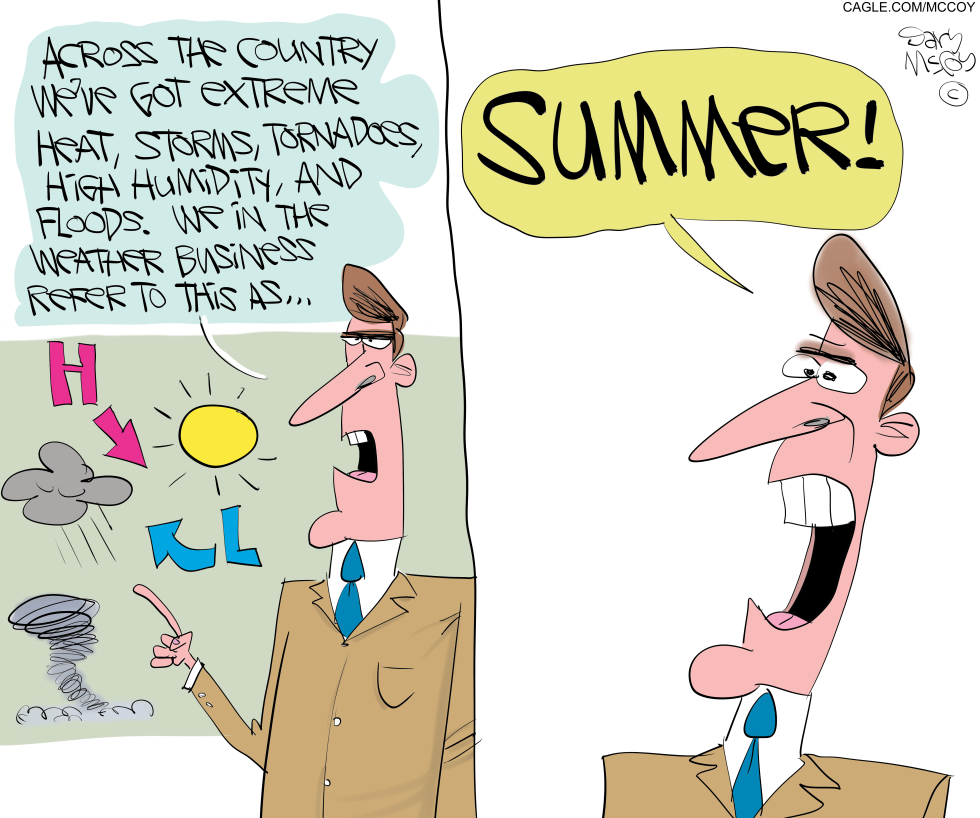
Meteorologists across the country continue to report widespread heat, storms, tornadoes, humidity, and flooding during peak summer months. These conditions align with long-standing seasonal expectations rather than unprecedented anomalies. The cartoon underscores how routine summer weather gets framed as extreme to heighten public concern.
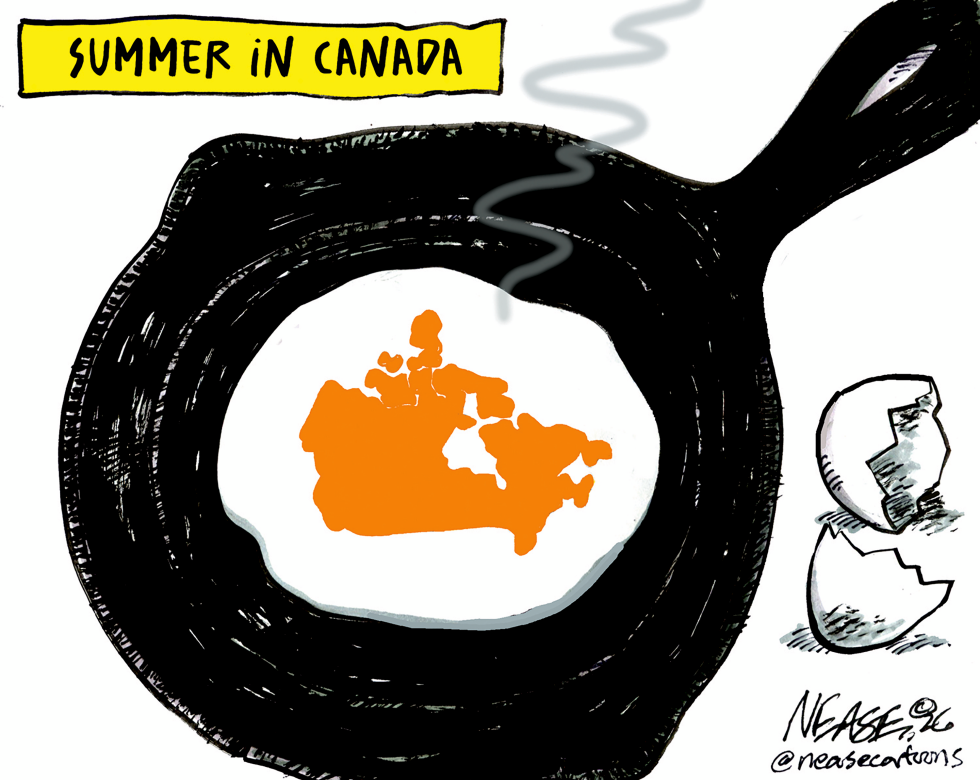
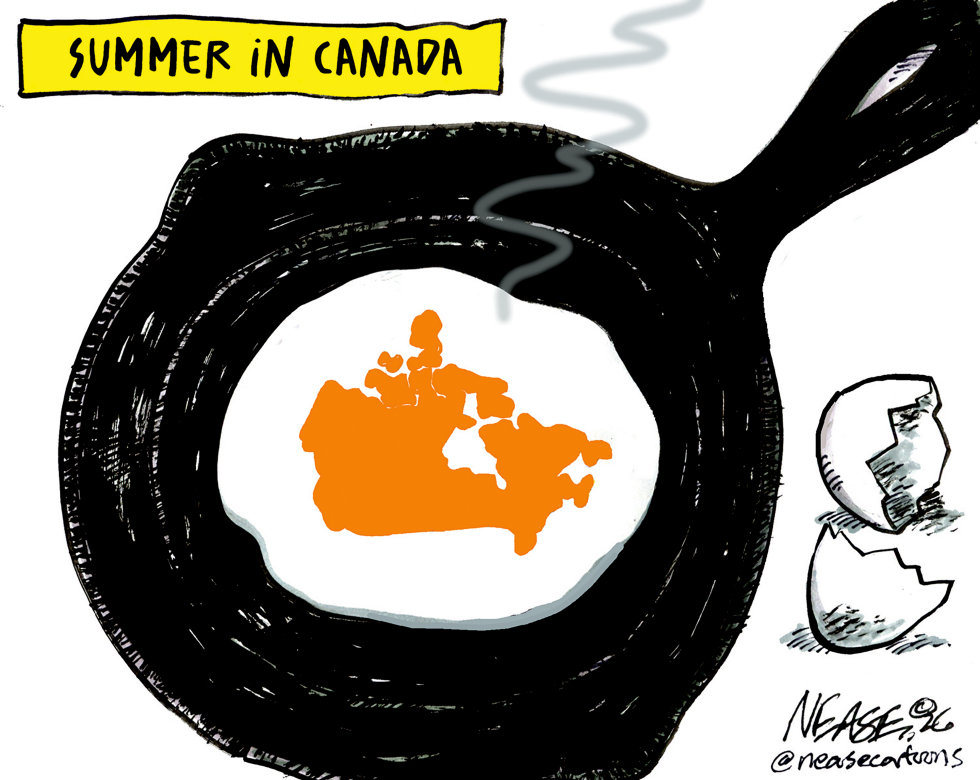
Canada has faced repeated extreme heat and wildfire seasons in recent years. The piece responds to summers that now bring health advisories and air quality warnings rather than mild weather. It renders the country as an egg frying in a skillet.
A black frying pan contains a fried egg whose orange yolk forms the shape of Canada. A yellow banner above reads Summer in Canada while steam lines curl upward from the pan. A cracked eggshell sits to the right. The image uses the visual metaphor of an egg frying to represent summer conditions across the country on the publication date.
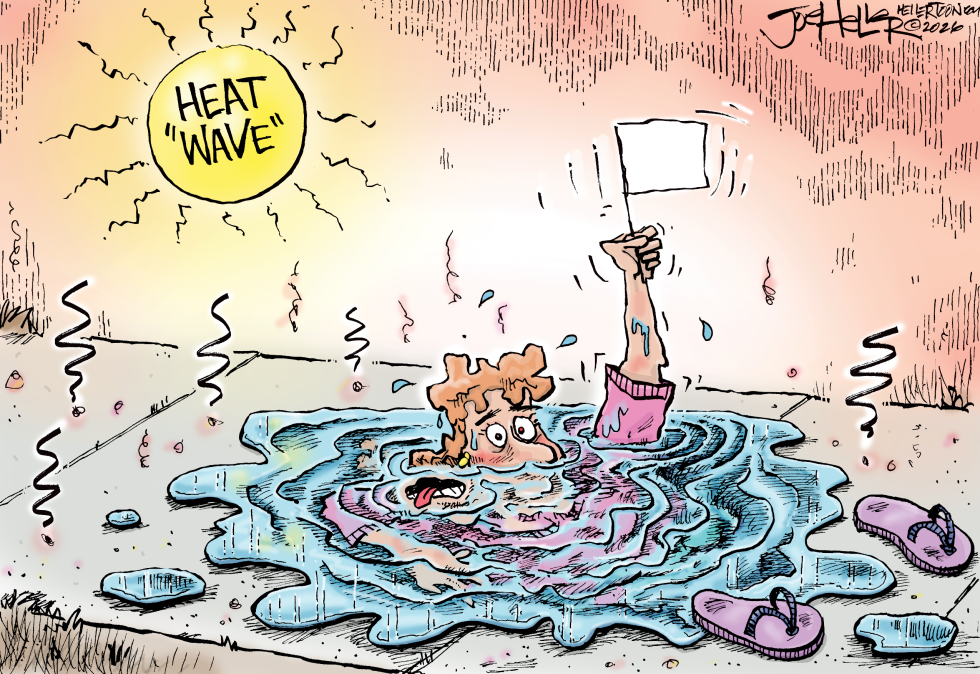
A cartoon published July 13, 2026, depicts a person trapped in a shrinking puddle on cracked pavement, waving a white flag in surrender beneath a sun labeled Heat Wave. The scene captures the overwhelming impact of extreme summer temperatures, with the figure partially submerged and surrounded by discarded flip flops. The image highlights the physical toll of prolonged heat, showing steam and distress as the sun dominates the sky. This visual responds to ongoing heat wave conditions affecting many regions during mid-July.
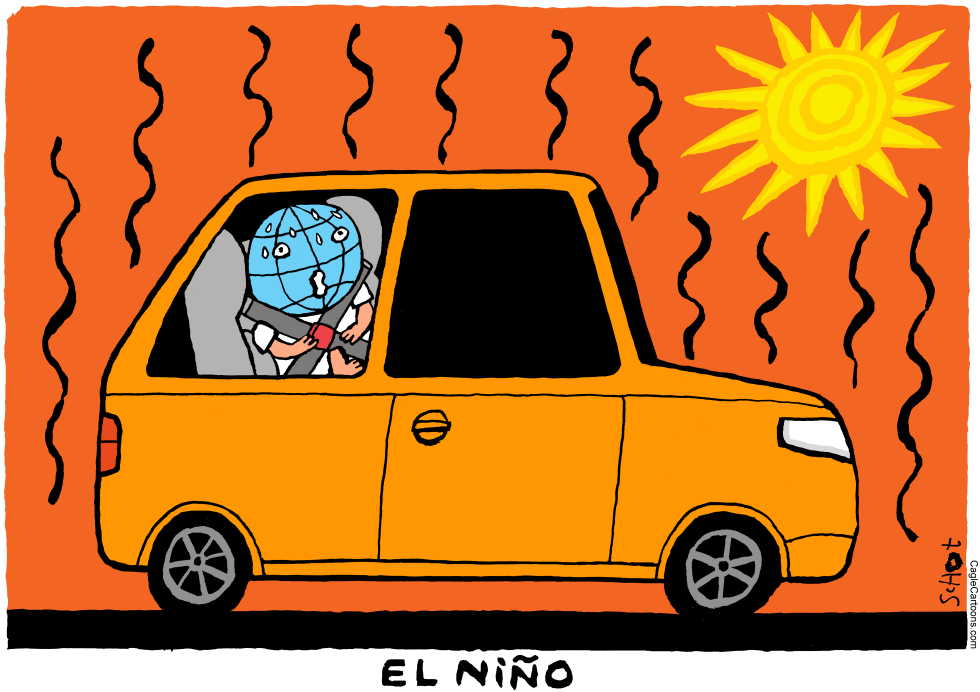
A yellow car sits under a bright sun with heat waves rising on an orange background. Inside the car a globe figure wearing a seatbelt sweats in the driver's seat. Large text at the bottom reads EL NIÑO.
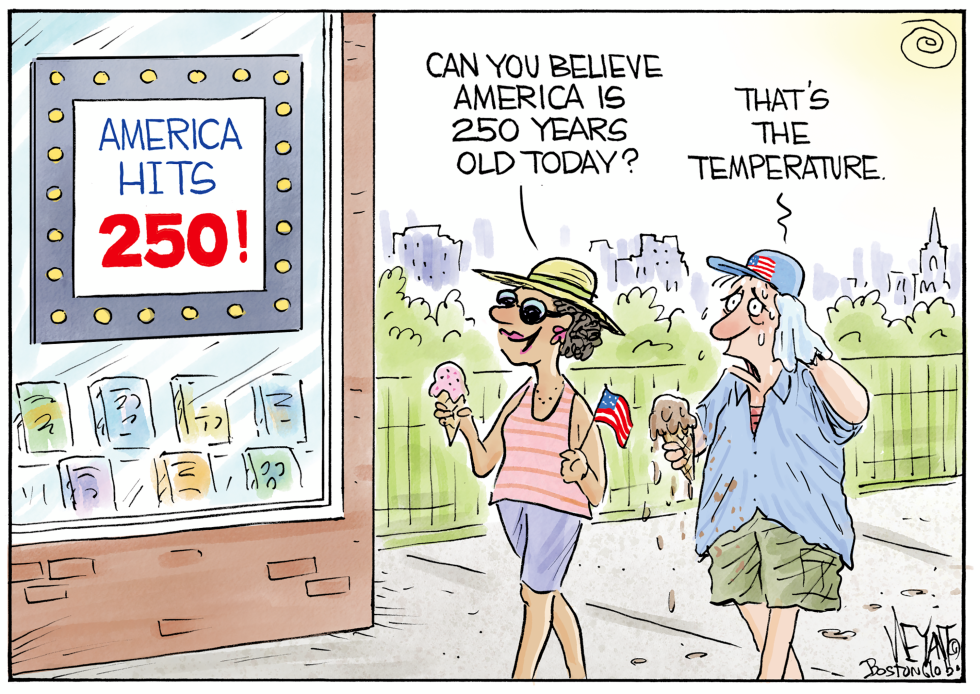
On July 2 2026 two figures pause outside an ice cream shop whose sign proclaims America Hits 250. The woman in a flag tank top asks if anyone can believe the country is 250 years old today. Her companion replies that the figure matches the current temperature as his cone melts onto the pavement. The exchange occurs two days before the July Fourth holiday during a period of elevated summer readings. Background buildings and greenery place the scene in an urban park setting.
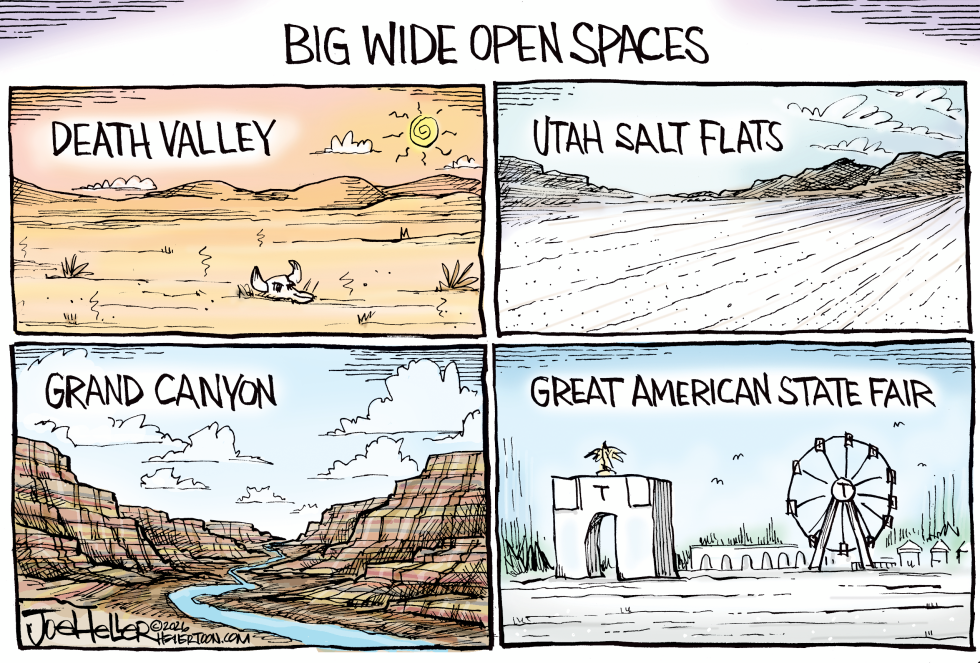
A four-panel illustration titled Big Wide Open Spaces places Death Valley, Utah Salt Flats, and the Grand Canyon next to the Great American State Fair. Each panel shows wide horizons in the natural settings while the fair panel includes a Ferris wheel, entrance gate, and tents. The comparison highlights scale differences between remote landscapes and a populated event ground. The piece appeared online on July 2, 2026.
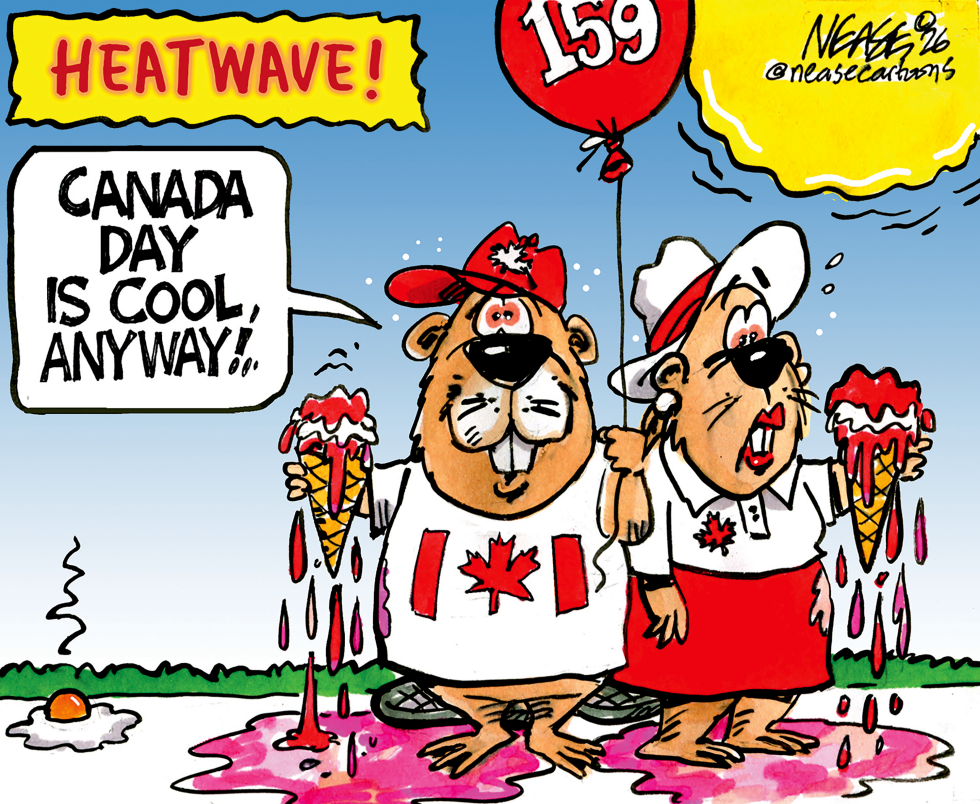
On June 30 2026 two cartoon beavers dressed in Canadian flag attire stand on melting pavement holding ice cream cones that drip heavily during an intense heatwave. A red balloon marked 159 floats above while a speech bubble declares Canada Day cool anyway. A fried egg lies on the ground near the pink puddle formed by the melting treats.