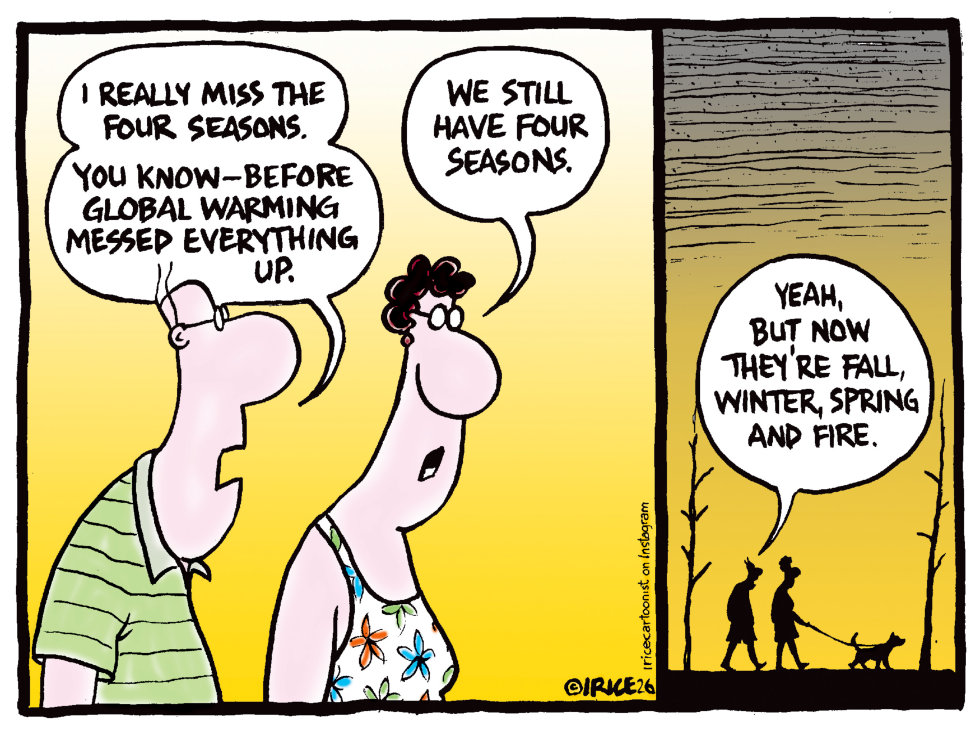
Rising global temperatures continue to alter weather patterns across regions, replacing predictable seasonal cycles with extreme heat and wildfires. The ongoing climate shift affects daily routines and safety in affected areas. The piece argues that fire has effectively become a permanent addition to the traditional four seasons due to these changes.
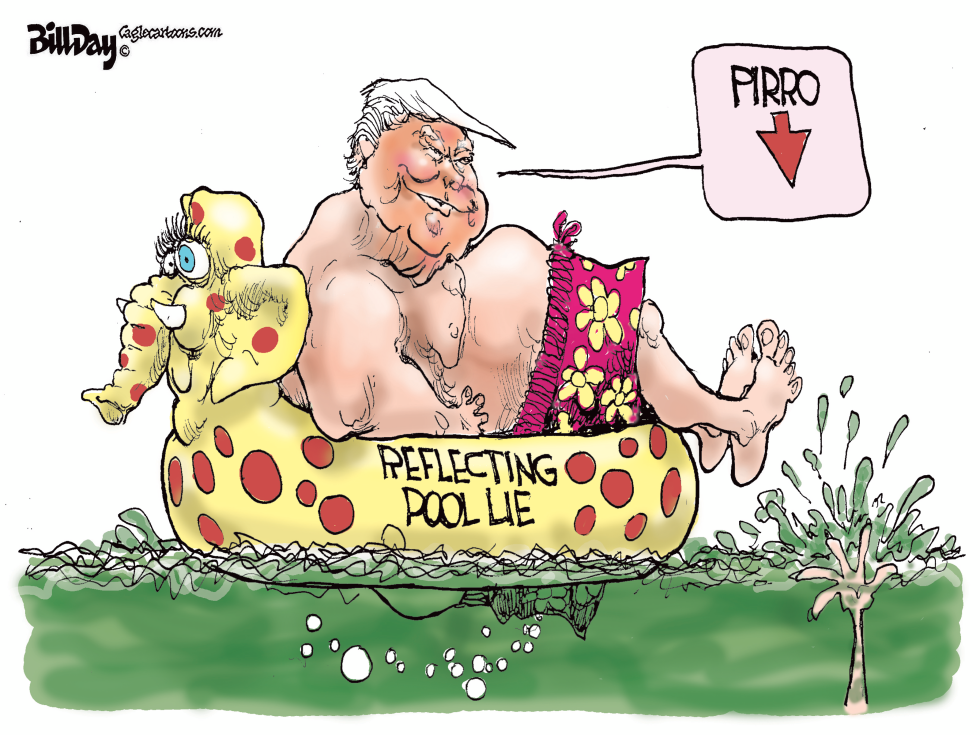
Donald Trump appears in a summer setting reclining on an inflatable labeled Reflecting Pool Lie. The image ties to ongoing questions about statements from the former president and associate Jeanine Pirro. Public attention remains on consistency of public remarks from political figures. The piece frames the scene as an illustration of evasion or distortion in political discourse.
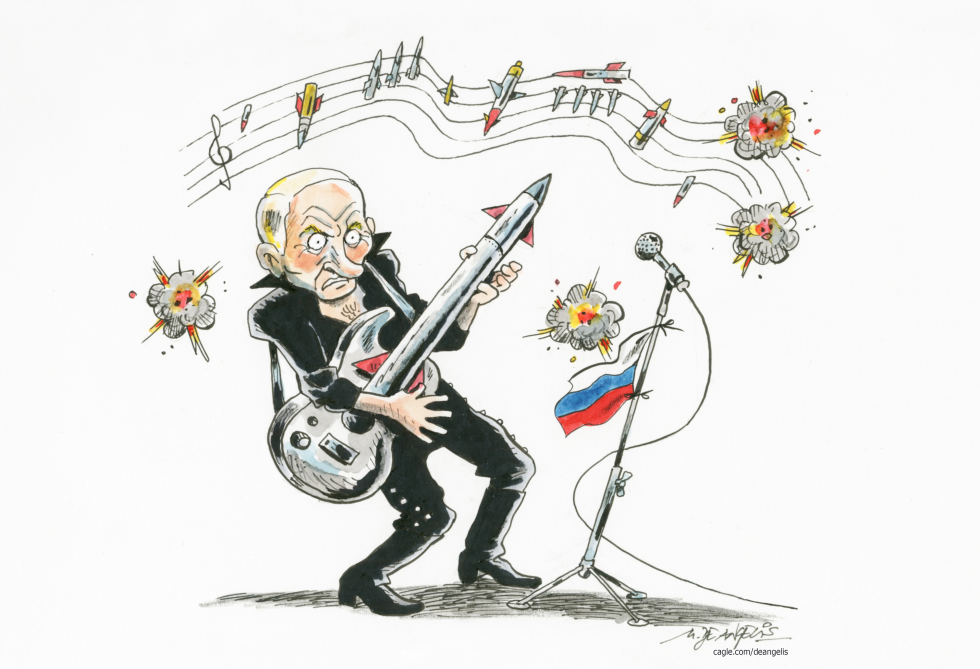
Russian President Vladimir Putin continues directing missile strikes in the Ukraine conflict, maintaining pressure on Kyiv through repeated aerial attacks. The imagery frames this sustained military campaign as a theatrical rock performance. The piece critiques the leader's embrace of destructive weaponry as spectacle rather than strategy.
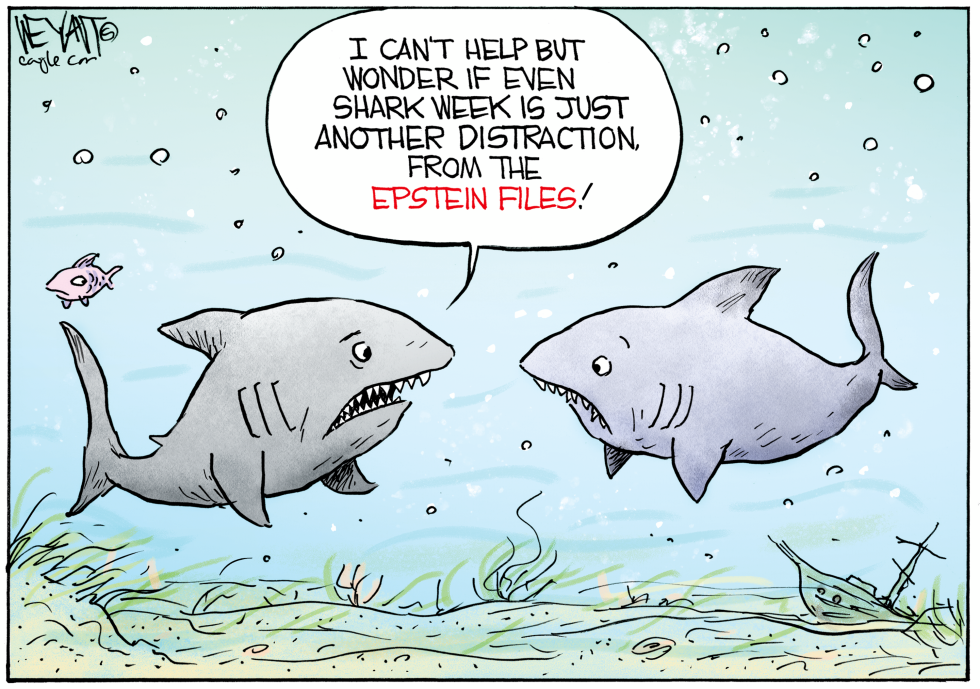
Around late July 2026, renewed attention to Epstein-related court documents coincided with the annual Shark Week programming block on cable television. Observers noted the overlap as another instance of entertainment scheduling pulling focus from ongoing legal disclosures involving powerful figures. The editorial takes the position that such timing functions as a recurring mechanism to sideline substantive coverage of the files.
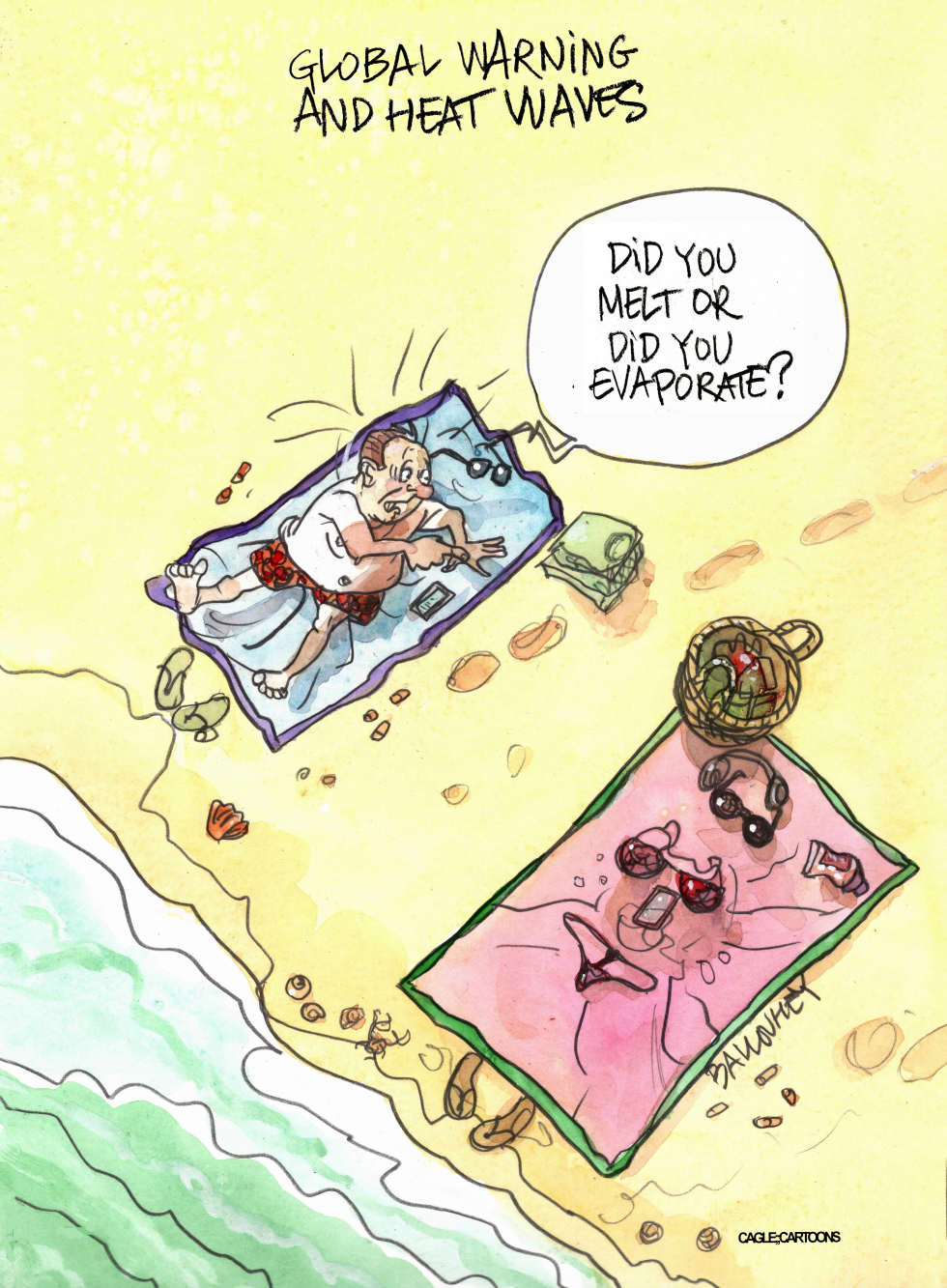
Record heat waves linked to global warming are affecting beach areas worldwide. Visitors face intense temperatures that prompt concerns over personal safety and environmental impact. The situation highlights ongoing climate pressures on daily activities. The piece argues that such conditions demand immediate attention to rising temperatures and their direct effects on people.
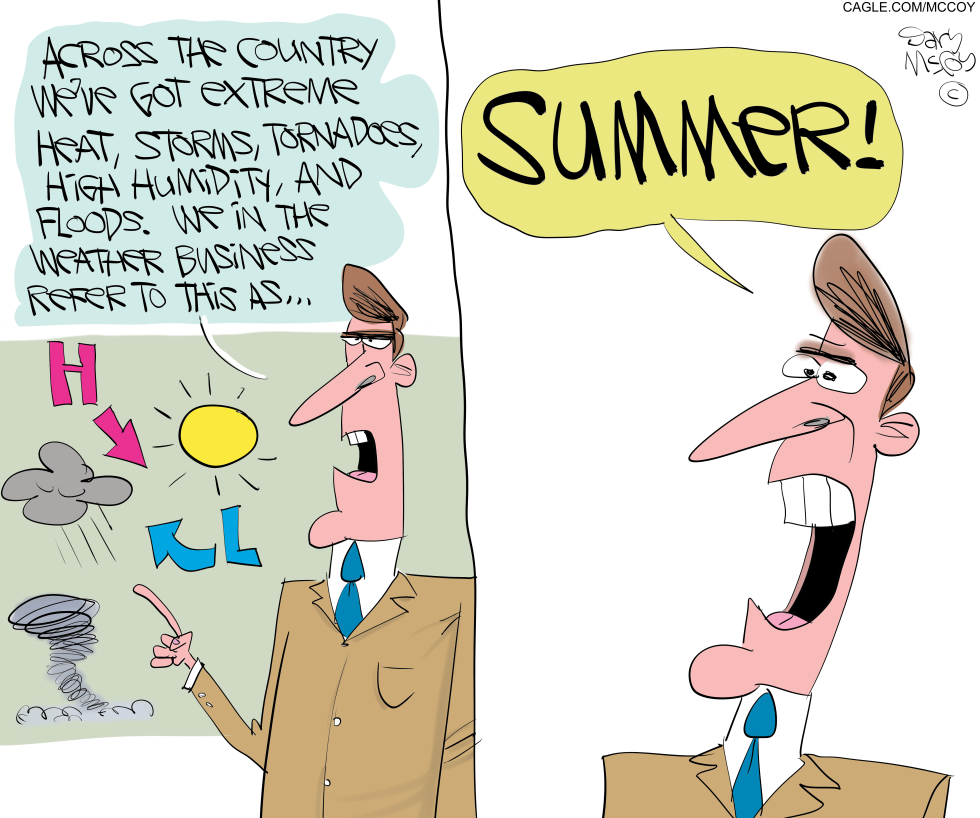
Meteorologists across the country continue to report widespread heat, storms, tornadoes, humidity, and flooding during peak summer months. These conditions align with long-standing seasonal expectations rather than unprecedented anomalies. The cartoon underscores how routine summer weather gets framed as extreme to heighten public concern.
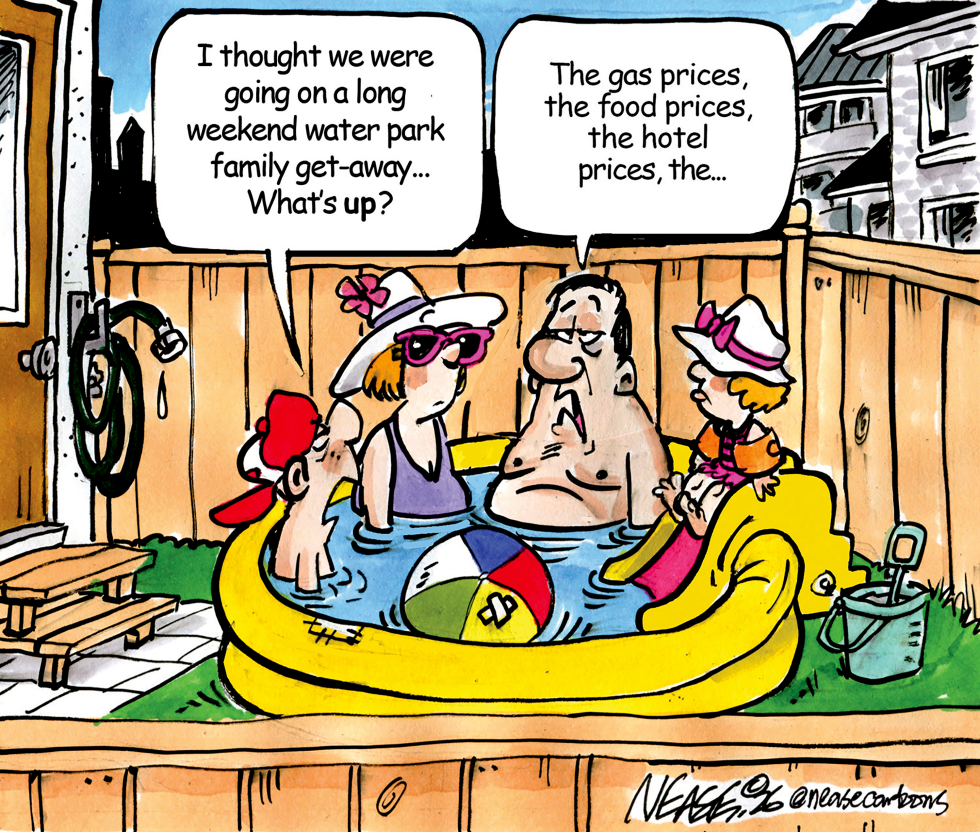
Families planning summer getaways face steep increases in gas, food, and hotel costs that disrupt long weekend plans. The piece highlights how these expenses push households toward simpler backyard alternatives while underscoring the persistent strain inflation places on everyday leisure.
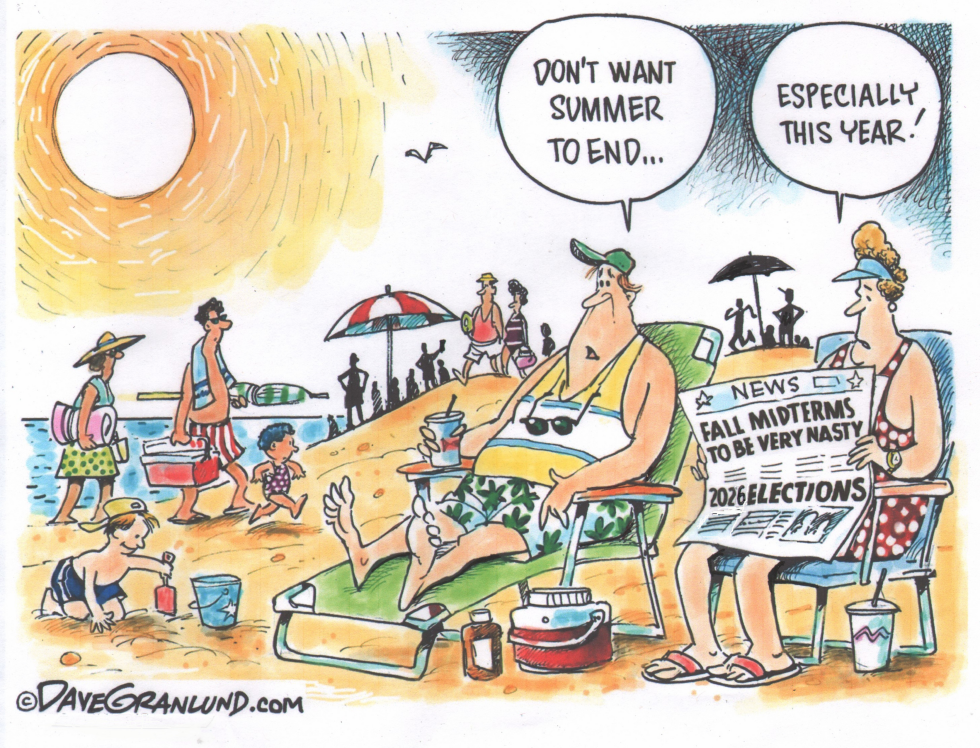
With the 2026 midterm elections approaching, voters across the country are bracing for contentious races that could reshape Congress. The campaigns are already shaping up to be unusually heated, with both parties mobilizing aggressively. This dynamic matters because control of the House and Senate will influence policy on spending, investigations, and presidential priorities for the remainder of the term. The piece takes the position that many citizens would rather avoid the coming political battles altogether.
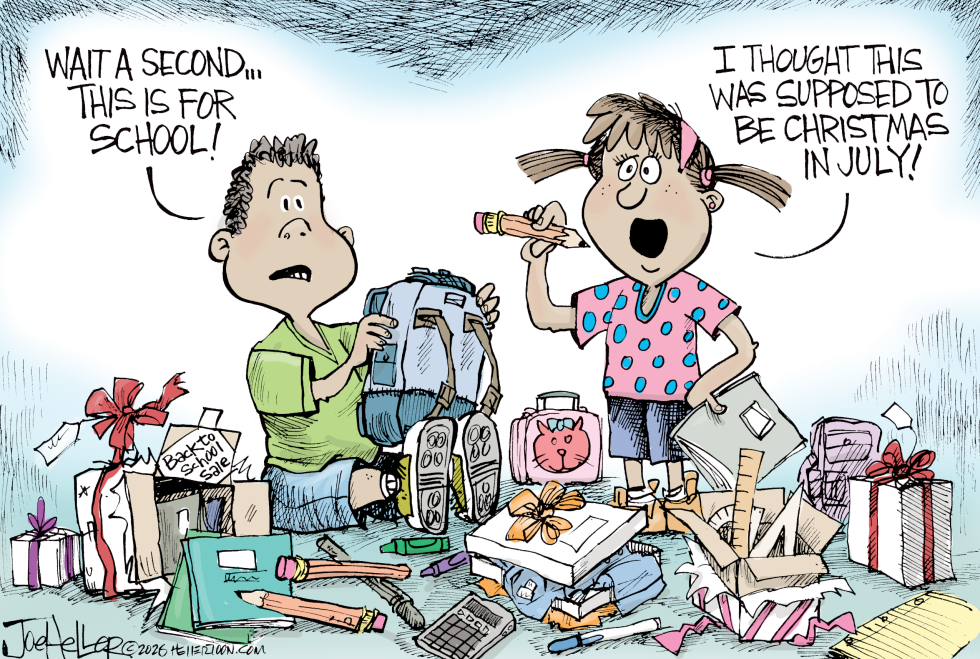
Retailers launched back-to-school promotions in late July, prompting families to stock up on supplies weeks ahead of the academic calendar. The timing overlaps with summer clearance events that mimic holiday marketing tactics. Parents and students face added pressure to buy early amid rising costs for essentials. The piece highlights how commercial calendars compress traditional shopping seasons and shift family routines.
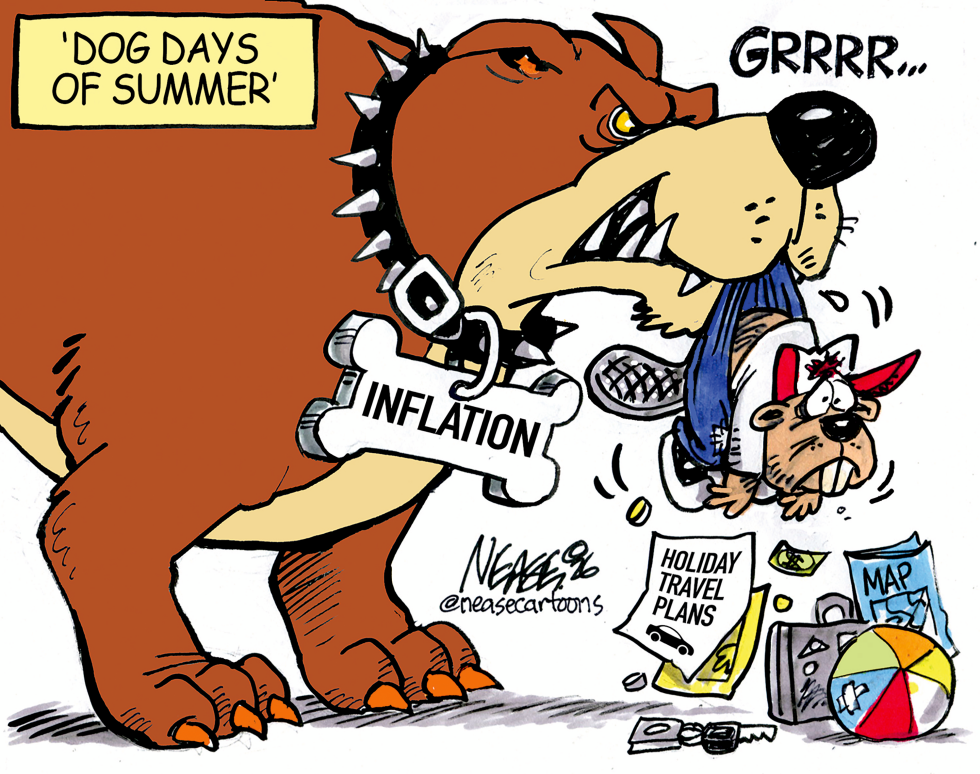
Rising inflation continues to pressure household budgets and summer travel spending in 2026. Consumers face higher costs for fuel, lodging and airfare as the peak vacation season approaches. The situation matters because it directly affects family plans and economic confidence heading into the second half of the year. The piece argues that inflation remains a persistent threat that undercuts holiday preparations and forces difficult choices for travelers.
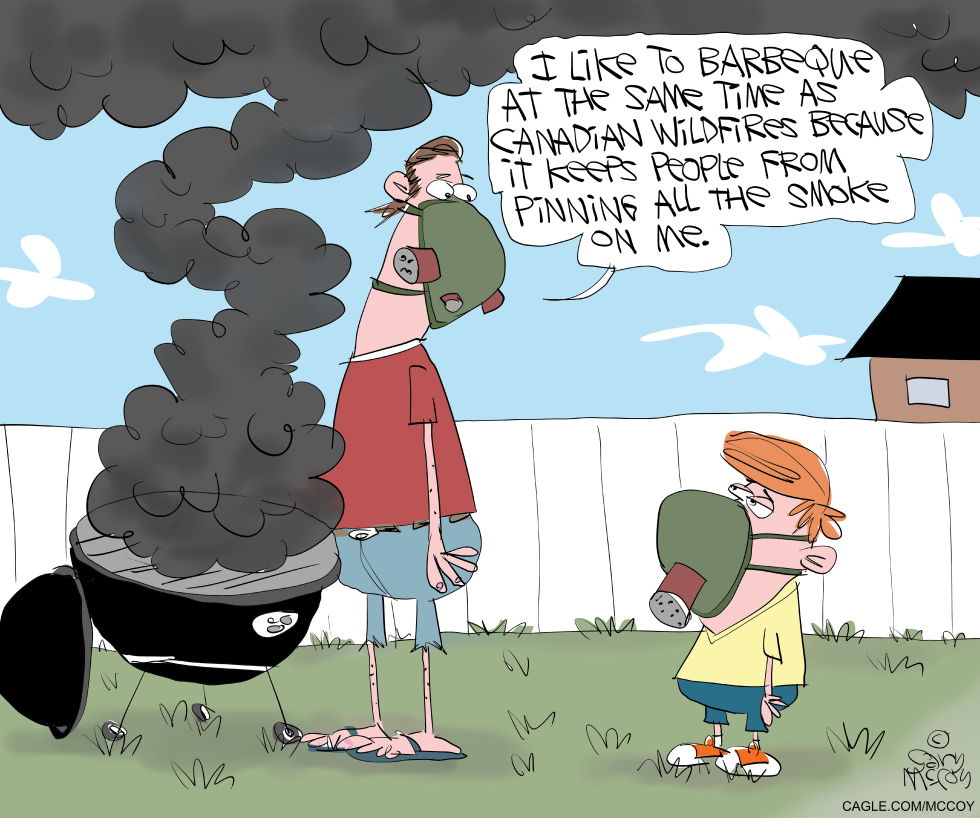
Canadian wildfires in mid-2026 sent thick smoke plumes across the northern United States, prompting air-quality alerts and health warnings in multiple states. Residents already dealing with regional haze faced additional backyard smoke from summer grilling. The cartoon depicts two figures wearing gas masks beside an active barbecue, with the adult figure claiming the wildfires conveniently deflect attention from personal smoke contributions. The piece highlights how individuals exploit larger environmental events to minimize accountability for smaller-scale pollution during the same period.
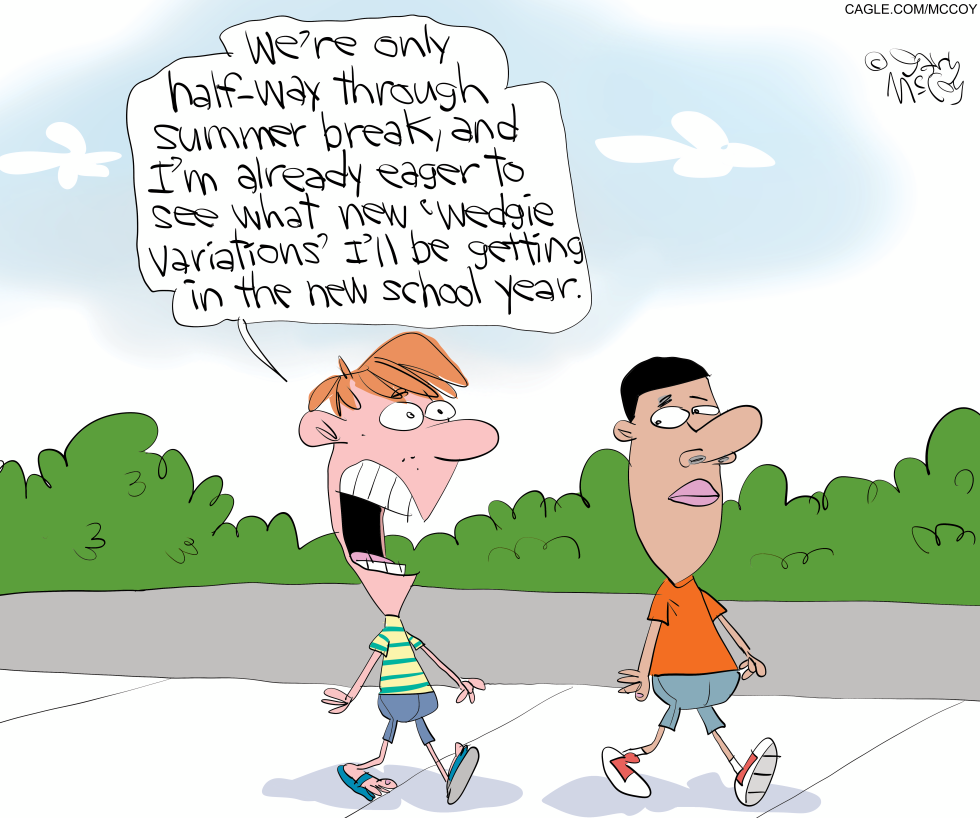
Two boys walk along a sidewalk bordered by green bushes. The boy in the striped shirt expresses dread about new wedgie variations awaiting him when school resumes after summer break.
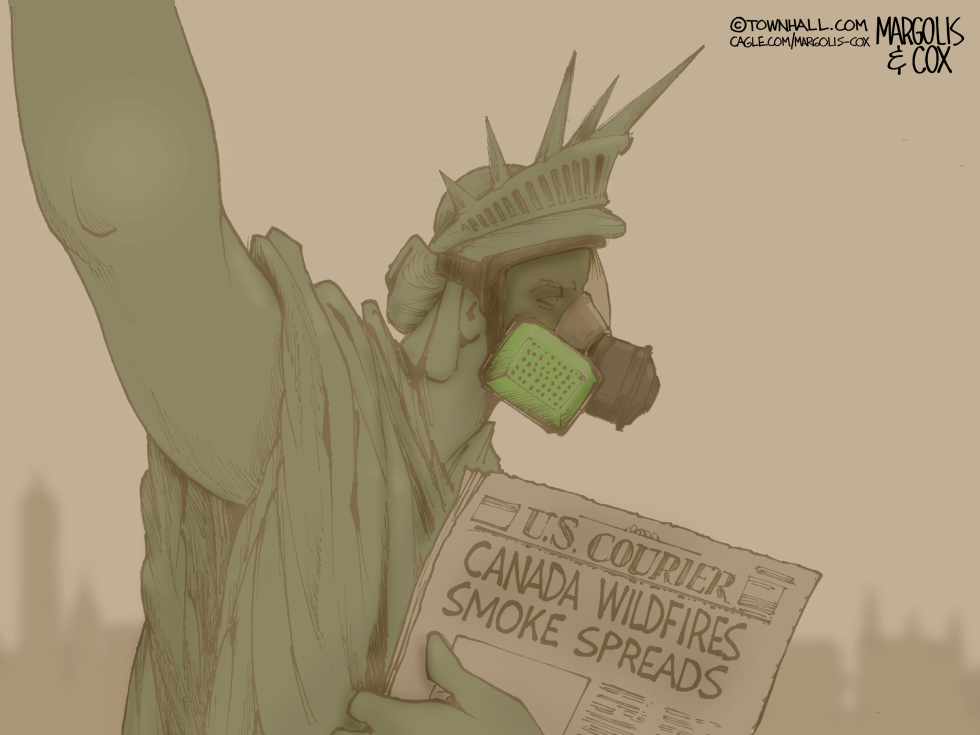
Canadian wildfires in mid-July 2026 sent dense smoke plumes southward, degrading air quality across the northern United States and prompting health alerts in multiple states. The recurring seasonal event underscores how climate-driven fire seasons now affect populations far from the burn zones. The cartoon depicts the Statue of Liberty wearing a gas mask while clutching a newspaper headlined on the spreading smoke, signaling that even national symbols of openness now require protection from environmental fallout.