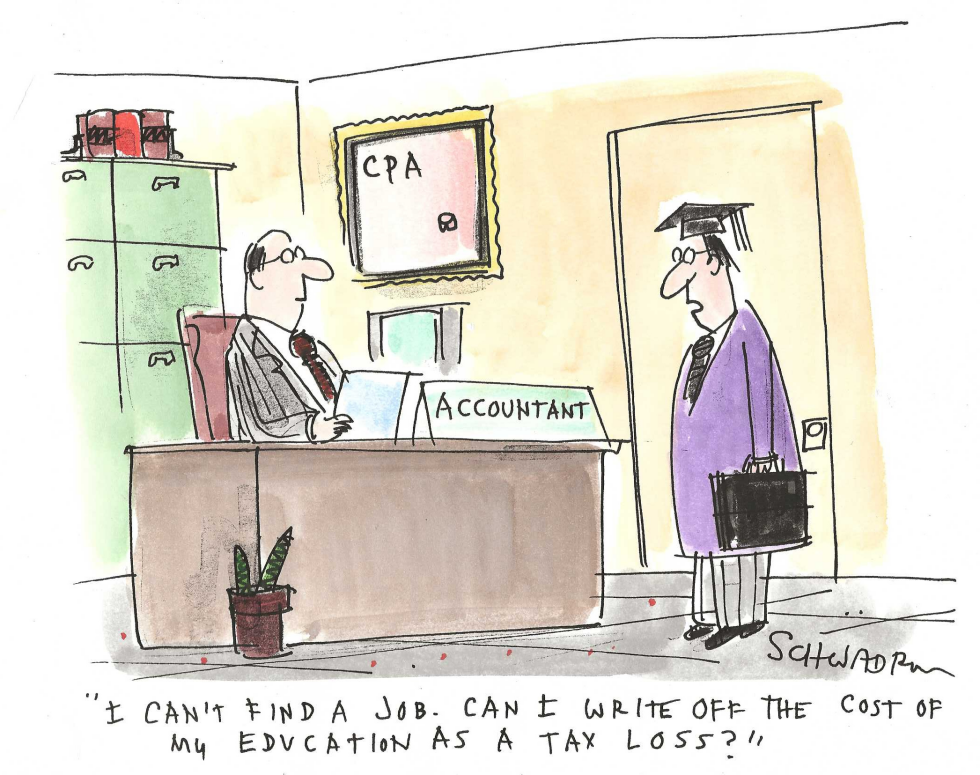
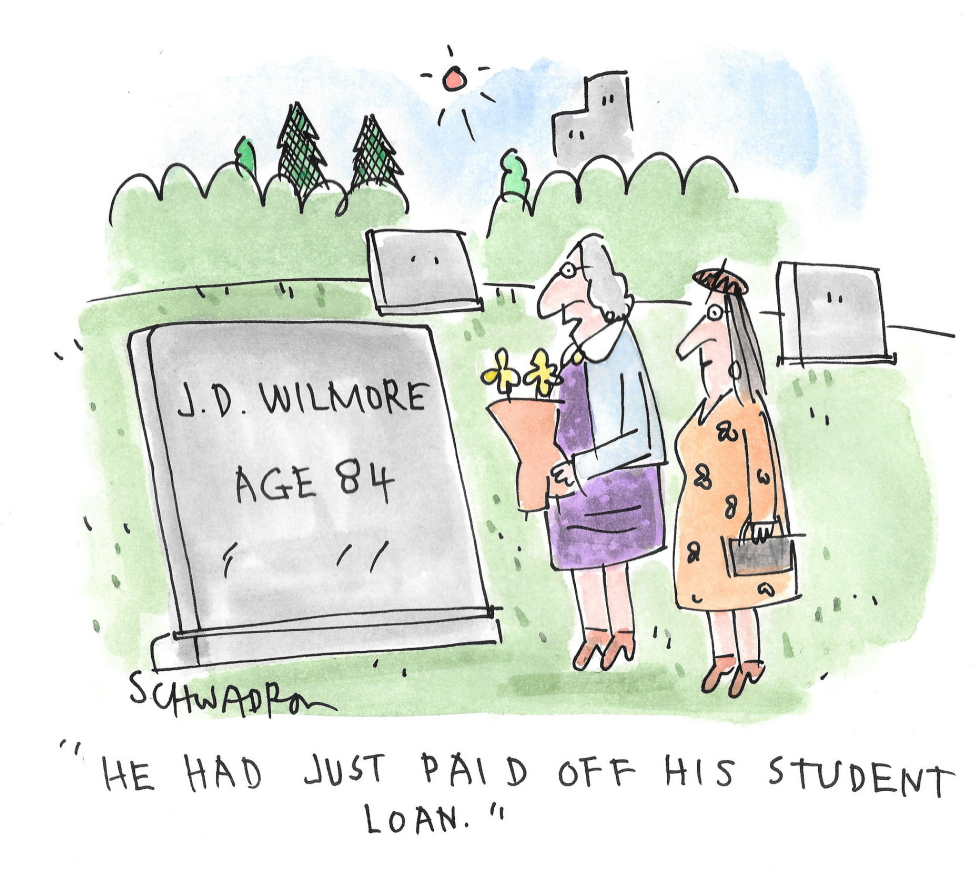
Recent college graduates facing extended unemployment have begun inquiring whether the cost of their degrees can be treated as a tax-deductible loss. Accountants report fielding more such questions as hiring in some sectors remains slow. The inquiry reflects broader frustration with the return on investment for higher education when entry-level positions are scarce. The cartoon captures this practical, if unconventional, approach to offsetting student debt through the tax code. It underscores ongoing debates about the value of degrees and the limits of existing tax relief for education expenses.
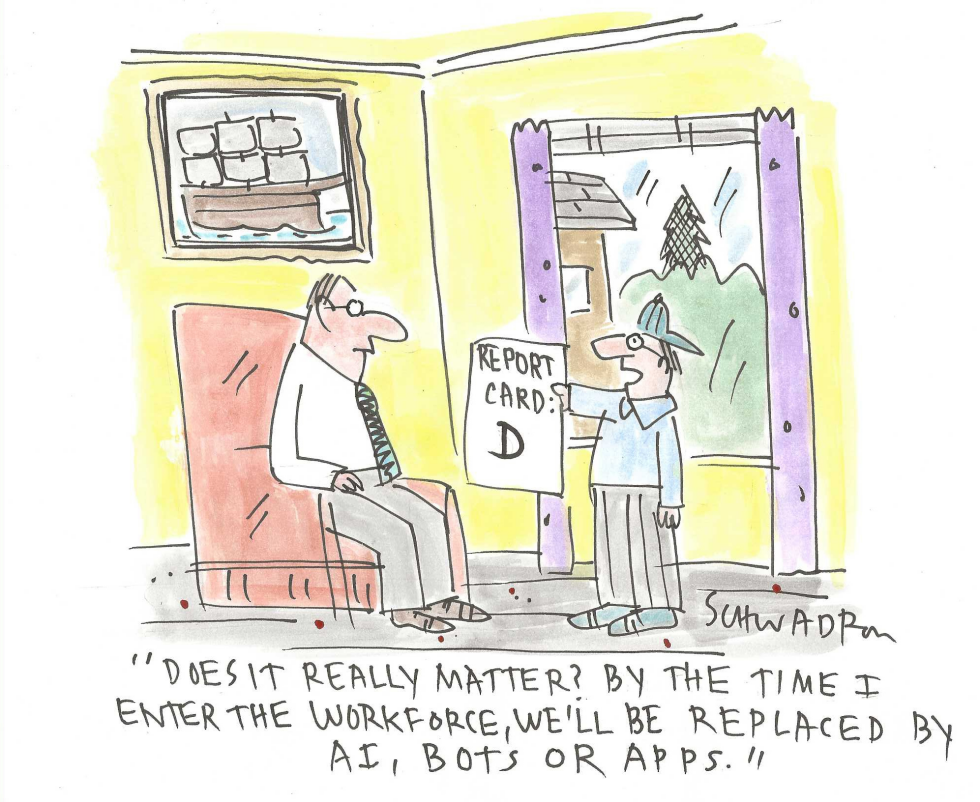
Rising student skepticism about academic effort stems from widespread predictions that AI and automation will eliminate many jobs before today's students graduate. The cartoon responds to this dynamic by showing a student using those forecasts to shrug off a poor grade. It highlights how fears of technological displacement may undermine motivation in schools. The piece suggests such excuses reflect a broader cultural shift where traditional education credentials appear less relevant. The editorial stance questions whether this mindset accelerates the very problems it cites.
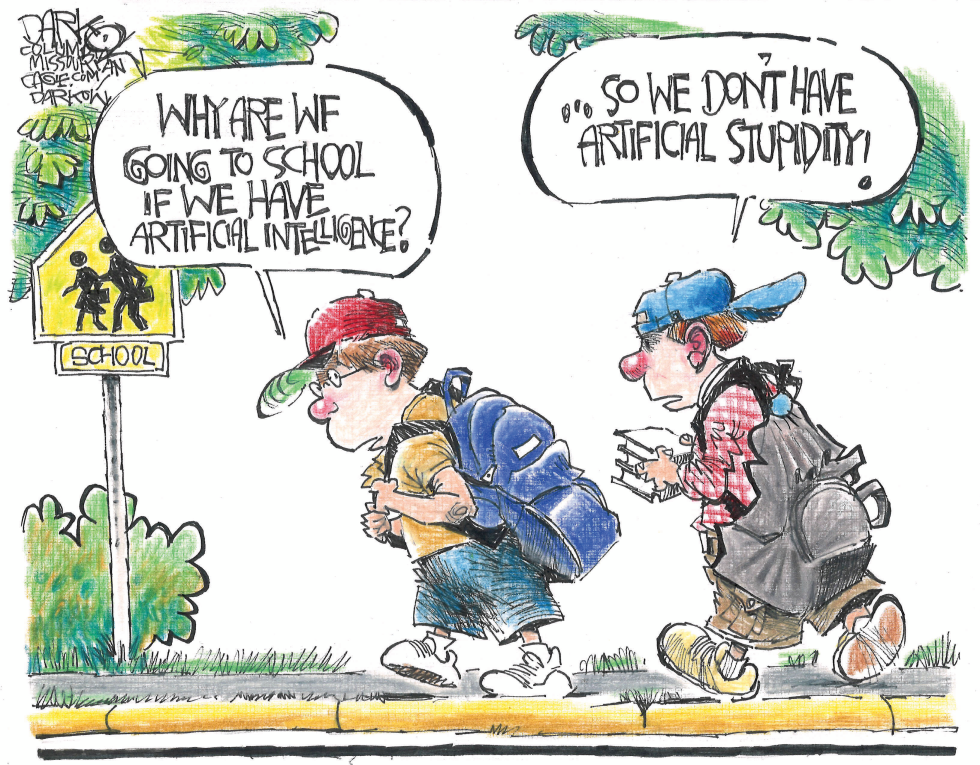
By 2026, rapid advances in artificial intelligence have prompted widespread questions about the ongoing role of traditional schooling. Students and educators alike wonder whether classroom learning retains value when AI tools can supply instant answers and assistance. The debate centers on whether reliance on AI risks producing graduates lacking critical thinking skills. Without structured education, society could face a generation marked by artificial stupidity rather than genuine understanding. The piece argues that schools remain necessary to build real intelligence and avoid that outcome.
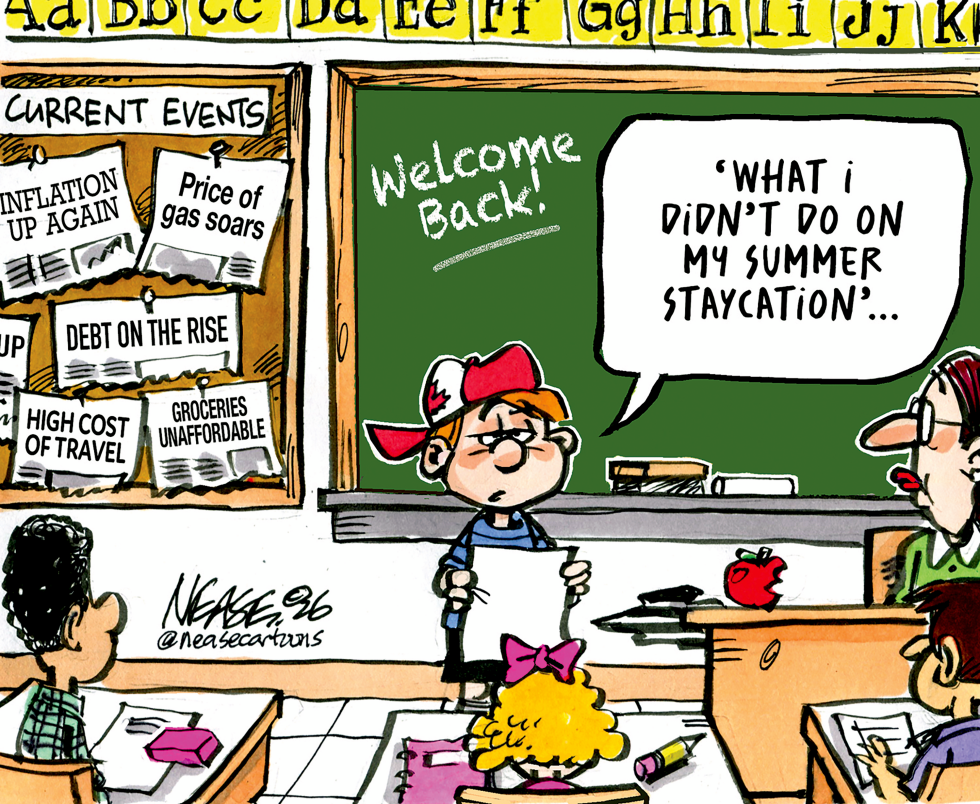
Rising inflation, gas prices, and household debt have made traditional summer vacations unaffordable for many families, leading to increased staycations as the new school year starts. The cartoon captures this cost-of-living squeeze through a classroom presentation on what students did not do over the break. It underscores how everyday expenses now dominate family decisions and limit leisure options.
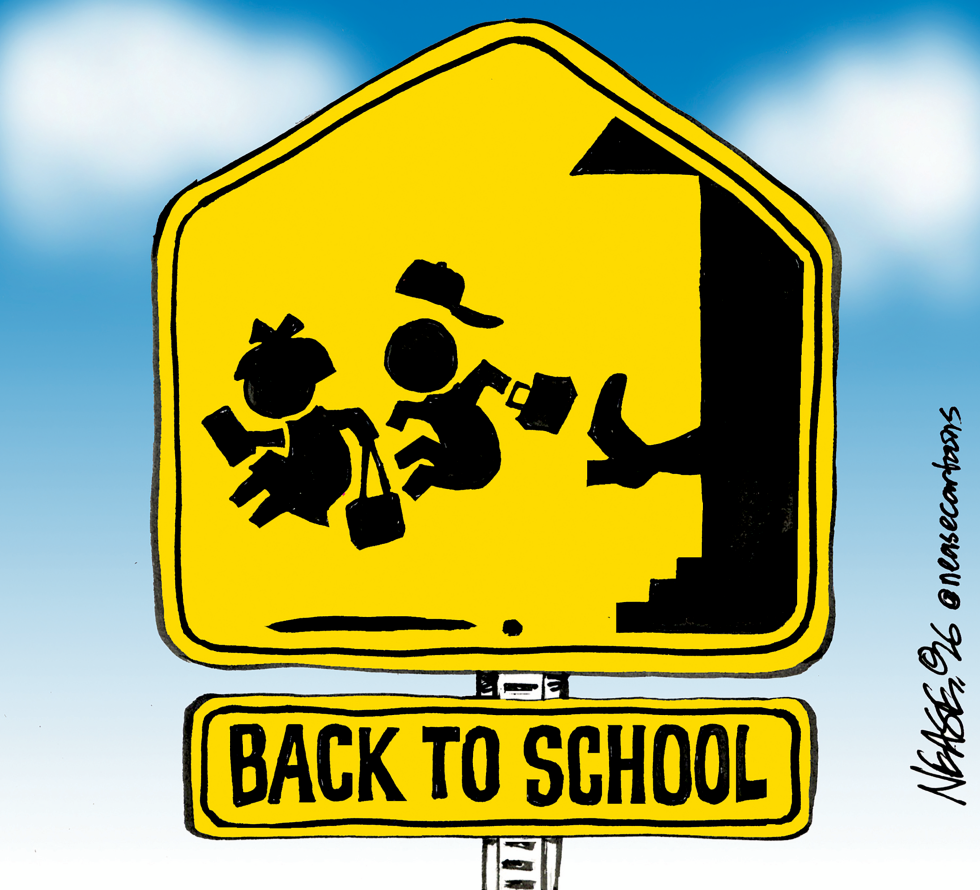
Schools across the country prepare for the fall semester amid ongoing debates over student safety and resource allocation. The modified crossing sign serves as a visual reminder of hazards that accompany the annual back-to-school period. The piece argues that standard precautions remain insufficient without stronger policy support for protection measures.
A new illustration depicts three children viewed from behind, each shouldering oversized air conditioning units in place of traditional schoolbags. The central text declares the theme of increasingly heavy schoolbags as students return to class. The visual draws on the weight and cooling function of the units to represent the physical and academic loads placed on young learners. Publication occurs at the end of August, aligning with the annual back-to-school period when families prepare for the new term. The piece uses the air conditioner motif to comment on how school requirements have grown more demanding over time.
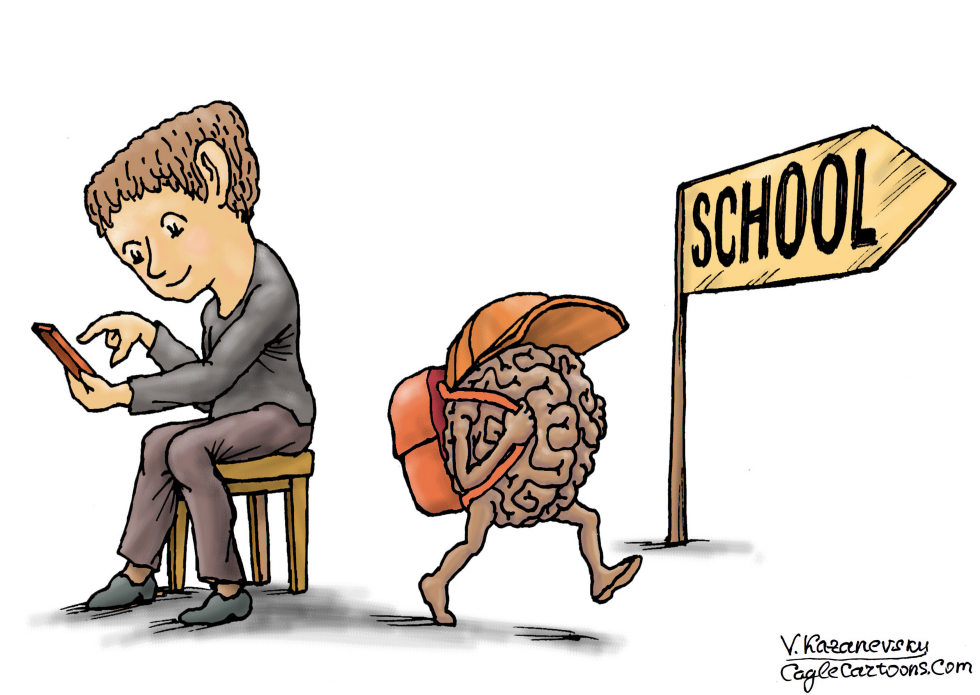
Schools continue to grapple with widespread smartphone use among students that diverts attention from classroom learning. The issue matters because constant device access fragments focus and reduces academic engagement at a critical developmental stage. The piece argues that the brain itself must literally head to school while the distracted student remains behind.
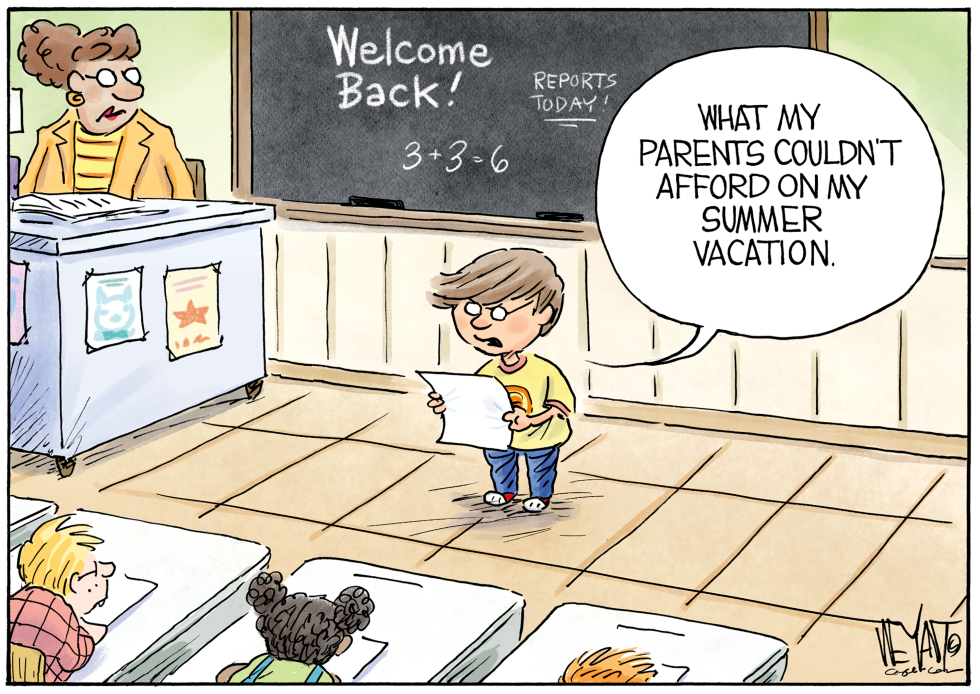
Rising living costs continue to squeeze household budgets as families navigate post-pandemic recovery and persistent price pressures on travel and leisure. A classroom scene captures one student's report on what his parents could not afford during summer break, underscoring how everyday families feel the pinch. The piece frames the issue as a direct consequence of ongoing economic conditions affecting ordinary households.
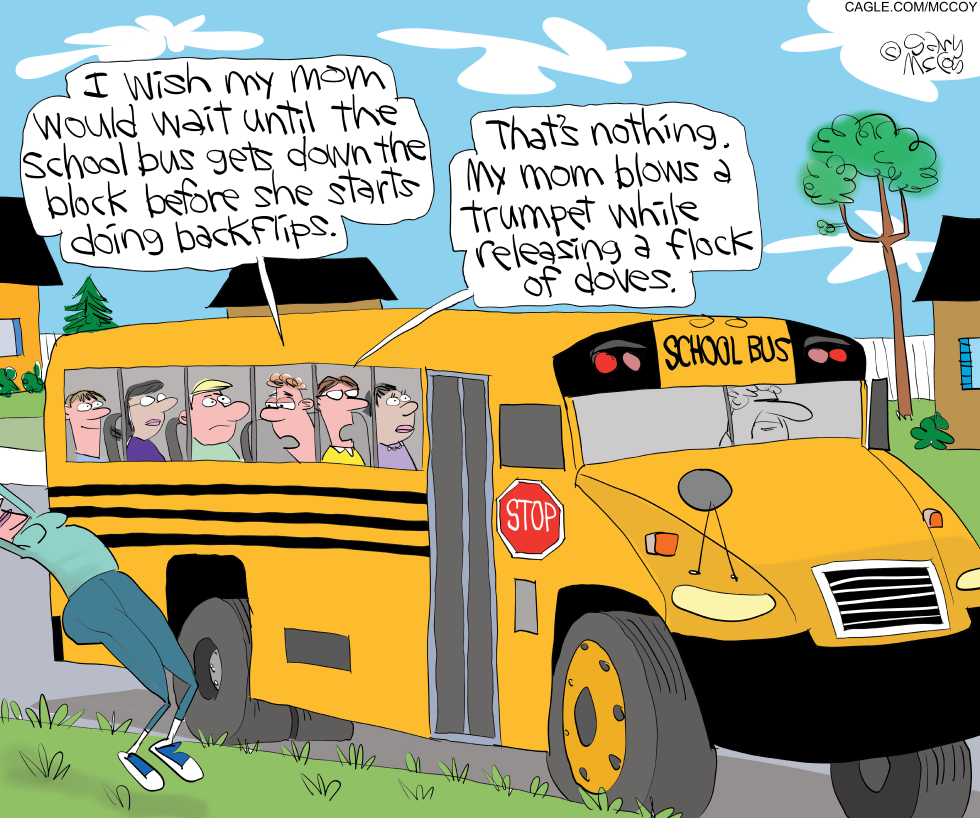
Parents often embarrass their children with enthusiastic send-offs at the school bus. The piece highlights the humorous side of overzealous maternal behavior in daily routines.
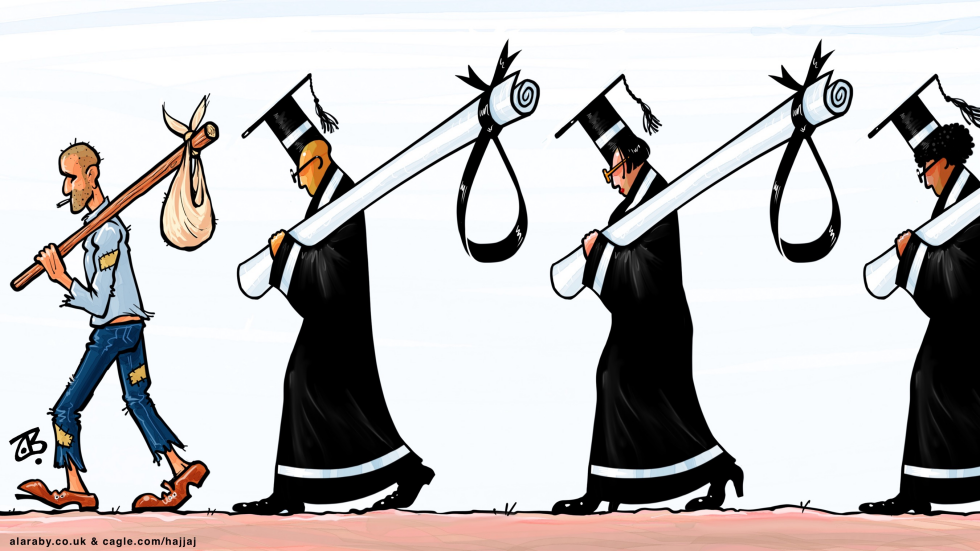
Graduates face mounting education costs that turn diplomas into symbols of debt. The image captures the procession of students weighed down by financial obligations after completing their studies. It critiques the ongoing burden placed on new degree holders.
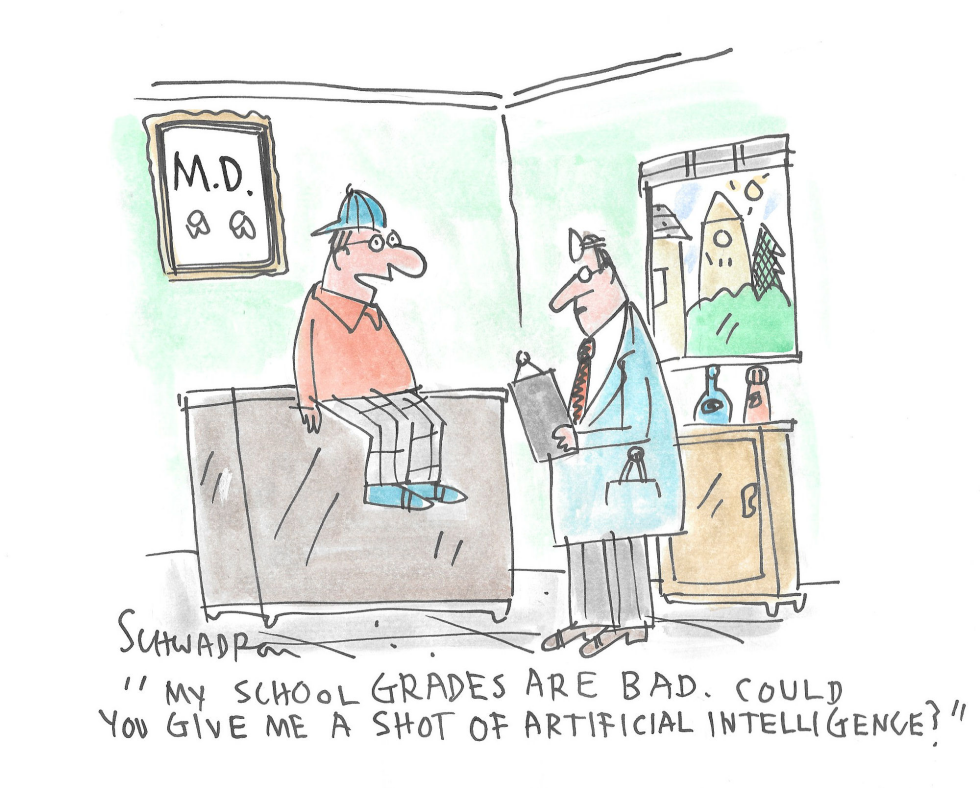
A student visits a doctor seeking an injection of artificial intelligence to improve failing school grades. The request reflects broader interest in using emerging technology to address educational challenges. The piece portrays this as a humorous but telling sign of how AI is entering everyday problem-solving discussions.
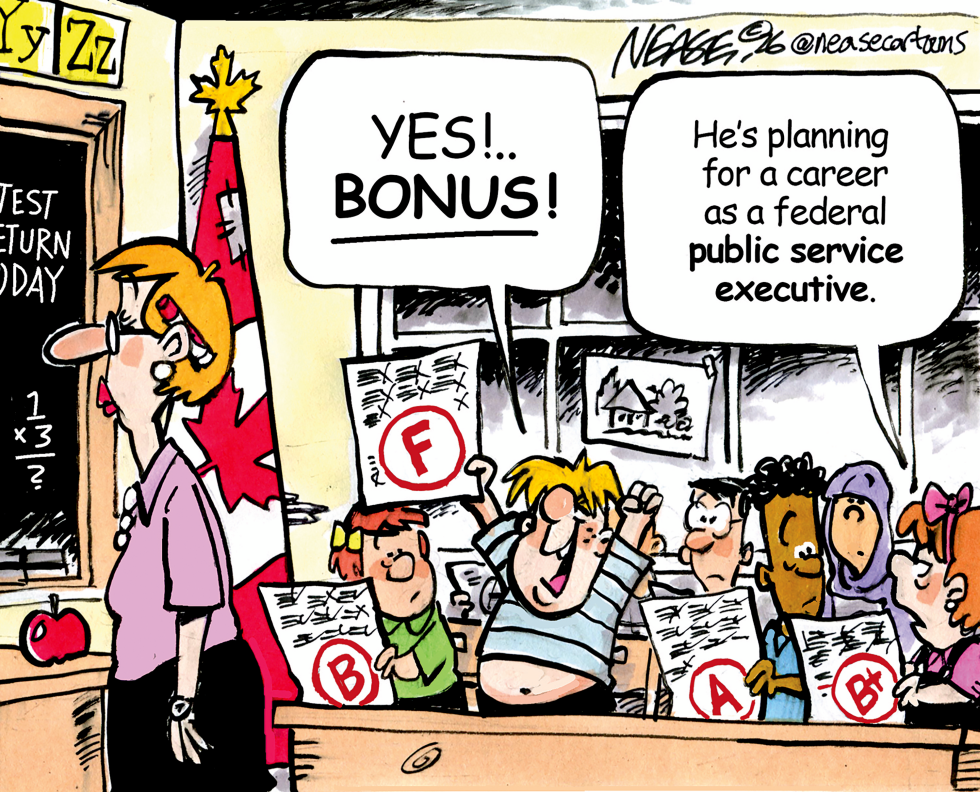
A Canadian classroom cartoon depicts a failing student celebrating a potential federal public service bonus. The piece critiques how government bureaucracy may reward poor performance through executive incentives rather than merit-based advancement.
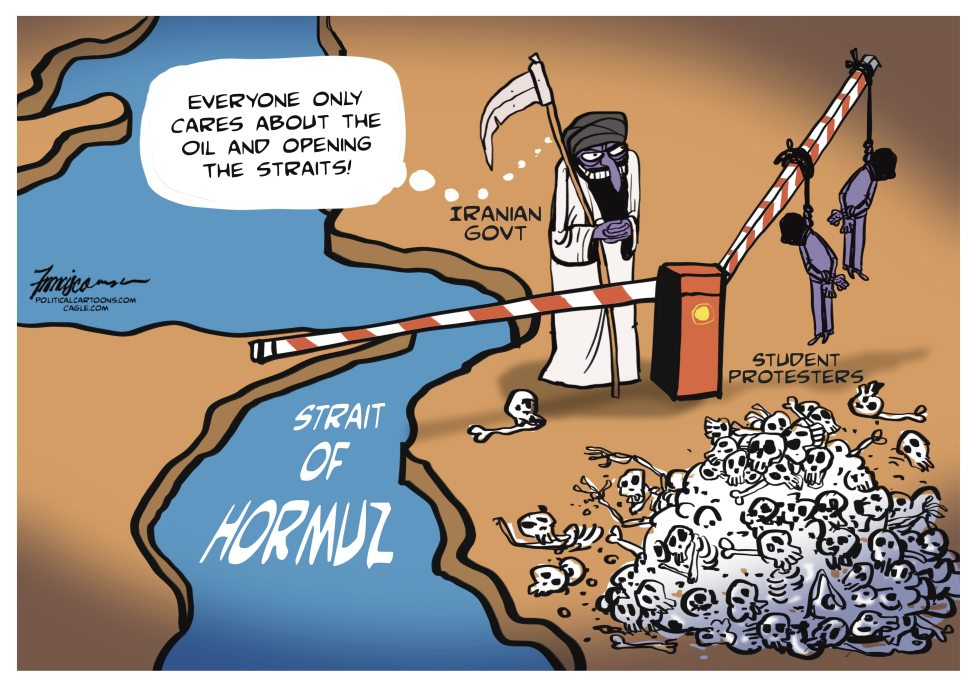
The Iranian government continues to suppress domestic student protests while maintaining control over the Strait of Hormuz, a critical global oil transit point. International attention remains fixed on energy flows rather than internal repression. The editorial position criticizes the regime for valuing oil revenue and strait access above the lives of its citizens.
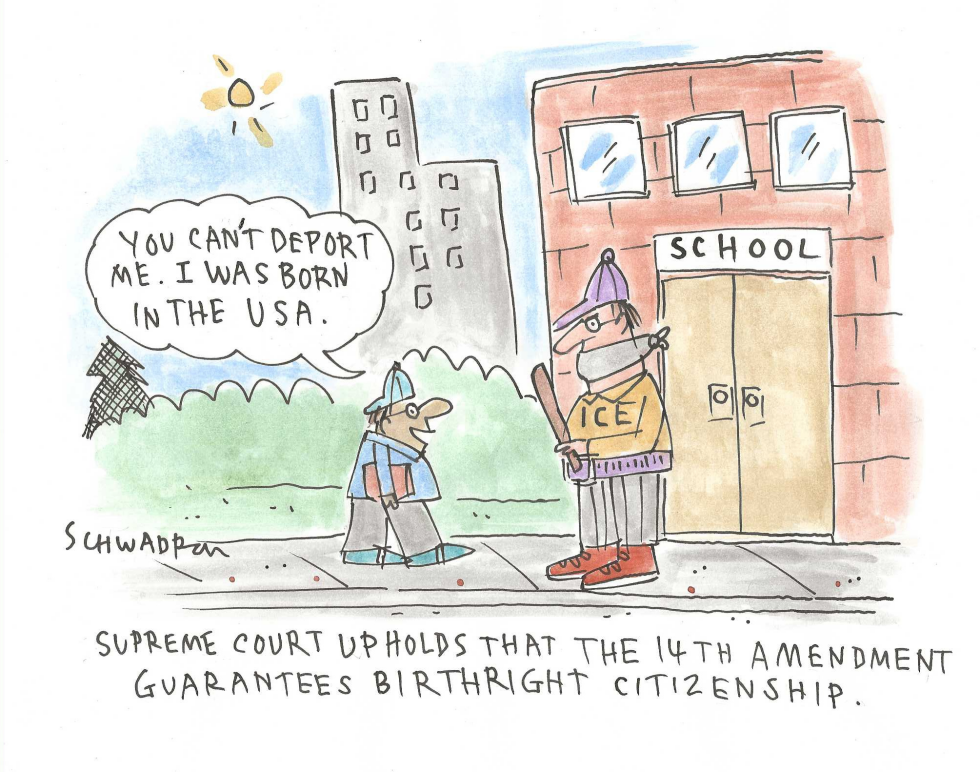
The image shows a student asserting US birth to an ICE agent holding a bat outside a school. The caption states the Supreme Court upheld 14th Amendment birthright citizenship. This responds to ongoing deportation policy debates involving the amendment and enforcement actions as of the 2026 publication date.