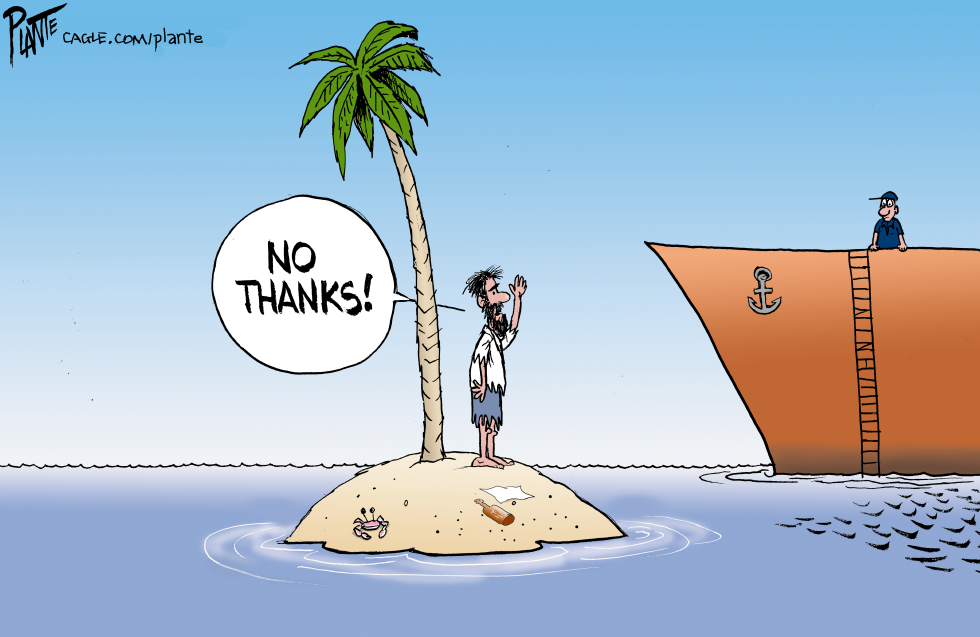
A castaway on a remote island faces an unexpected chance at rescue from a passing vessel. The situation highlights ongoing human tensions between solitude and reintegration into society. The piece takes the position that some individuals genuinely prefer isolation over returning to the outside world.
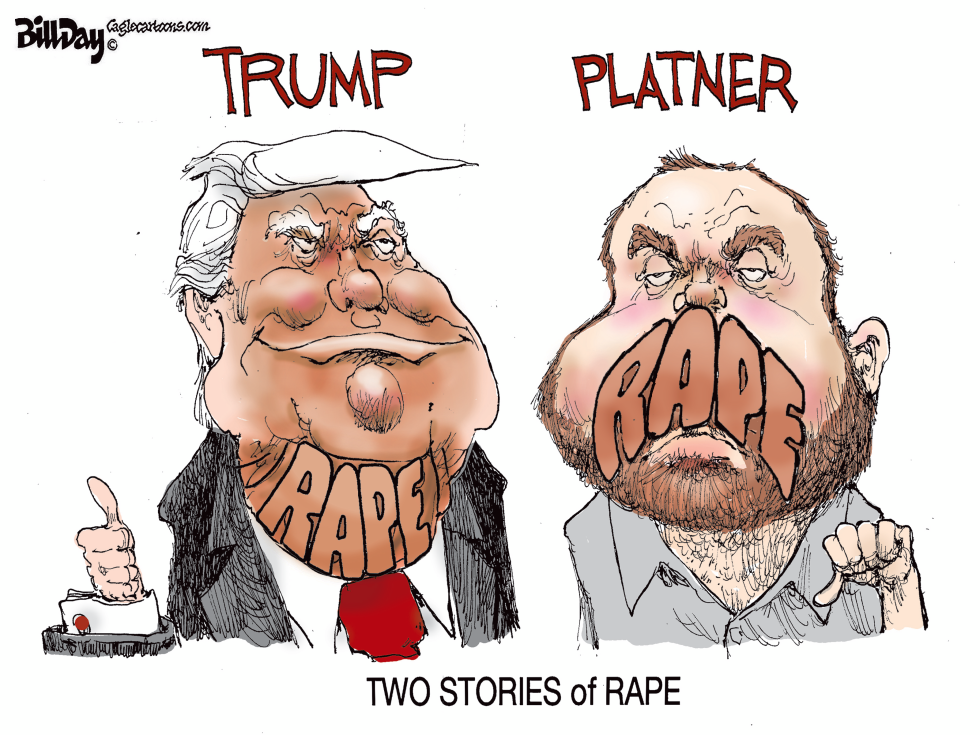
The image presents side by side depictions of Donald Trump and an individual named Platner. Each has the word rape overlaid on the lower face area. Trump extends a thumbs up gesture near papers while Platner extends a thumbs down gesture. Large red text at the bottom reads two stories of rape. The date of July 2026 places this in a period of ongoing public discussion around accusations involving prominent figures.
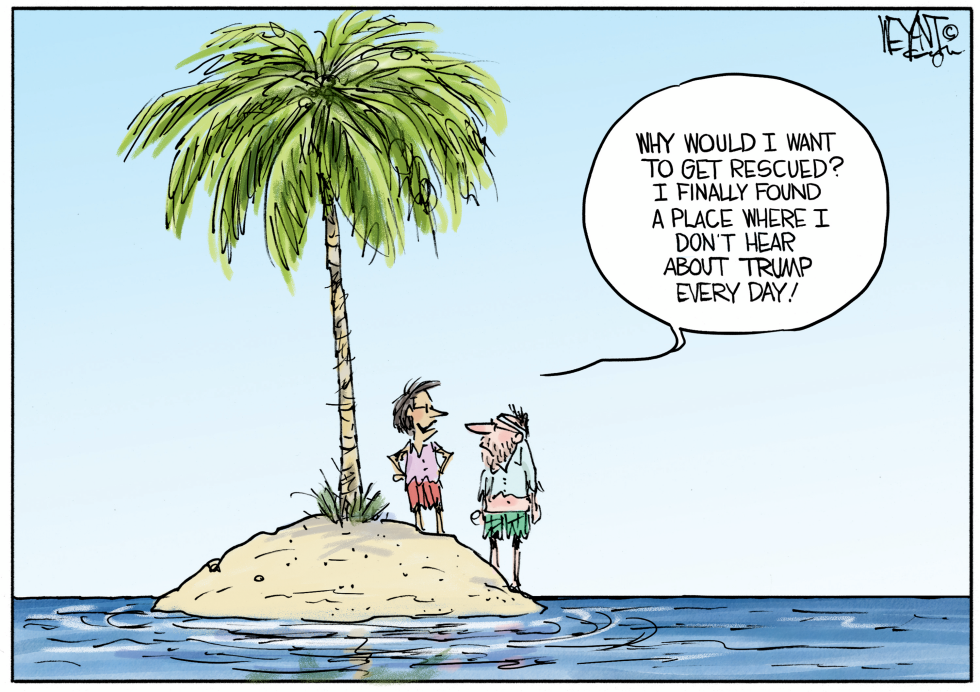
On June 29, 2026, a cartoon depicts two castaways on a tiny desert island with a single palm tree. One man in a speech bubble declares he has no interest in rescue because the location spares him daily mentions of Trump. The image captures widespread public exhaustion with political coverage centered on the former president during a period of intense media focus.
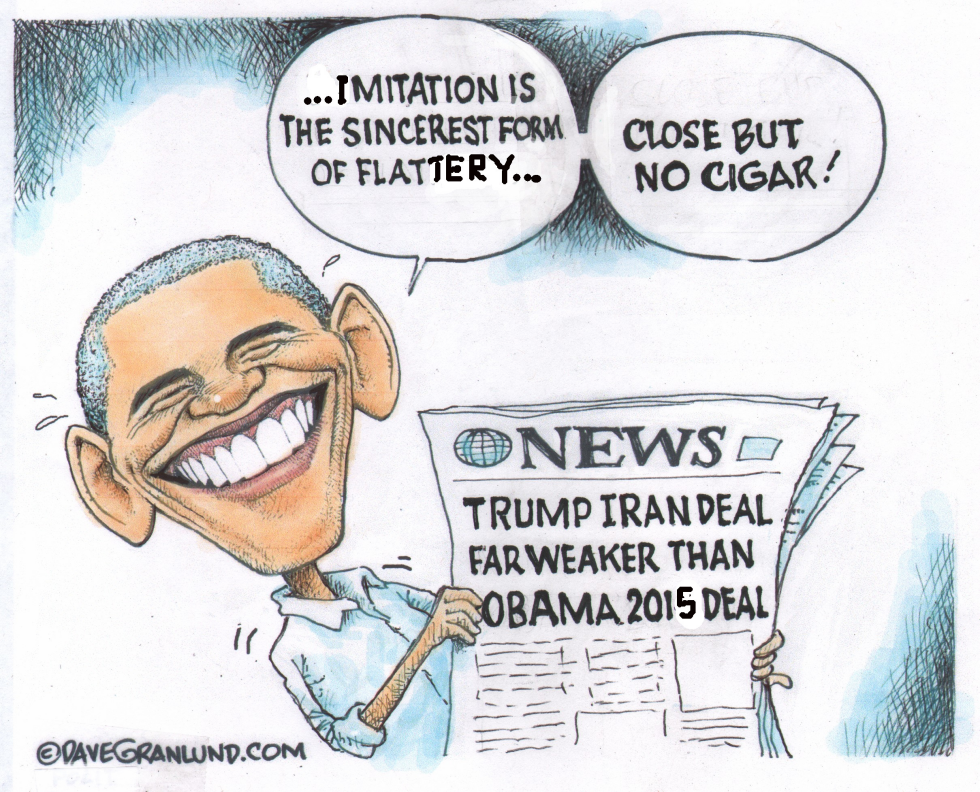
A political cartoon dated June 19, 2026, depicts former President Barack Obama laughing as he holds a newspaper. The front page headline reads that the Trump Iran deal is far weaker than the Obama 2015 deal. Speech bubbles show Obama saying imitation is the sincerest form of flattery while another voice replies close but no cigar. The image responds to ongoing comparisons of the two administrations approaches to Iran negotiations. It highlights perceived shortcomings in the later agreement through visual humor.
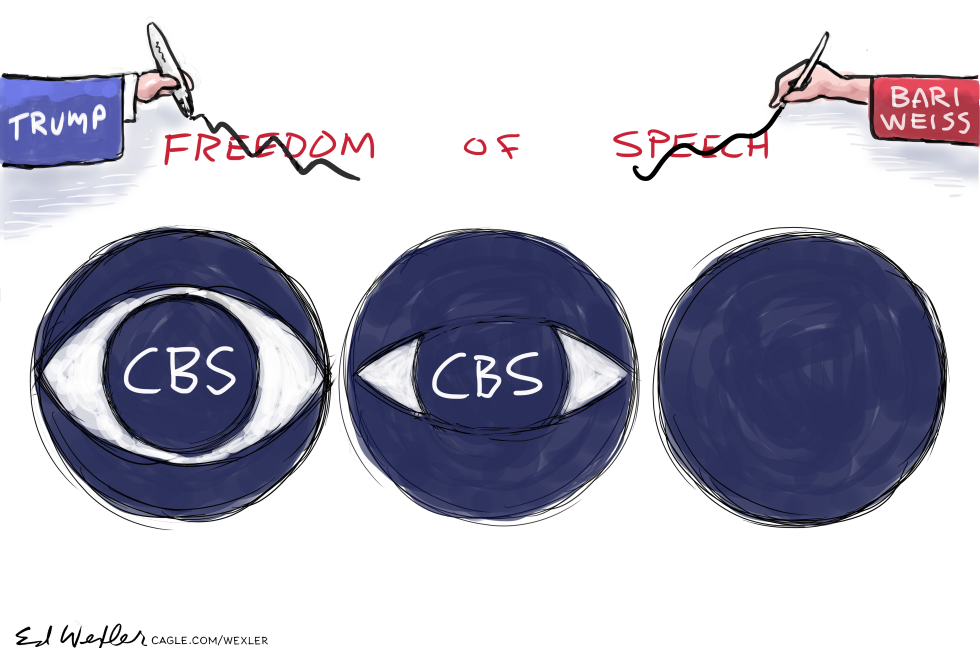
Arms from Trump and Bari Weiss cut the red words Freedom of Speech above three CBS circles with varying eye states. The left CBS eye is open, the middle is squinted, and the right is solid dark. The image responds to ongoing tensions over media coverage and press freedom involving CBS and public figures.
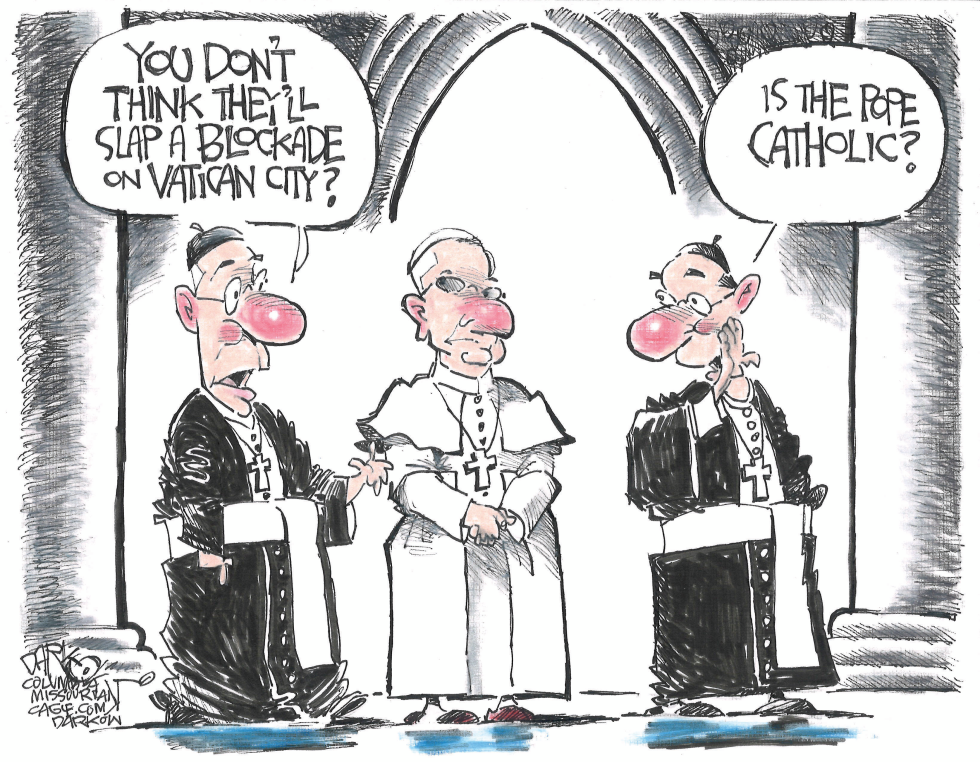
John Darkow's cartoon captures three Catholic clergy in traditional attire, with the central Pope figure amid a discussion on a Vatican blockade. The left figure worries about sanctions slapping Vatican City, while the right delivers the classic 'Is the Pope Catholic?' line, a rhetorical jab at obvious truths. This piece uses dry humor to spotlight tensions around religious institutions facing isolation, blending blockade fears with papal identity. The archway background grounds it in Vatican aesthetics, emphasizing the blockade theme without overreaching into unseen politics.
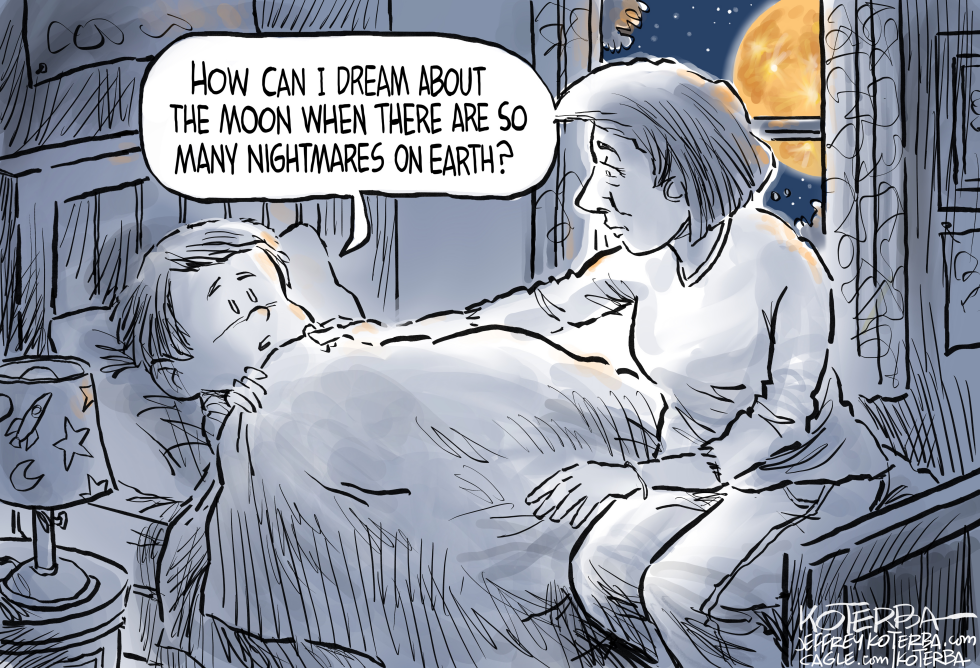
This poignant political cartoon depicts a child in bed, gazing toward a window framing a massive orange moon against a starry night sky, while confiding in a seated adult figure. The child's speech bubble reads: 'How Can I Dream About The Moon When There Are So Many Nightmares On Earth?' A bedside lamp with a star design illuminates the scene. Through this setup, the artwork satirizes how youth anxiety from global issues—like wars, climate woes, and social upheavals—stifles big dreams and aspirations. It's a clever commentary on how earthly nightmares eclipse celestial hopes, blending humor with insight into modern parenthood and childhood innocence lost. Tags: political cartoon, child nightmares, moon dreams, earth troubles, satirical illustration, youth anxiety, global chaos.
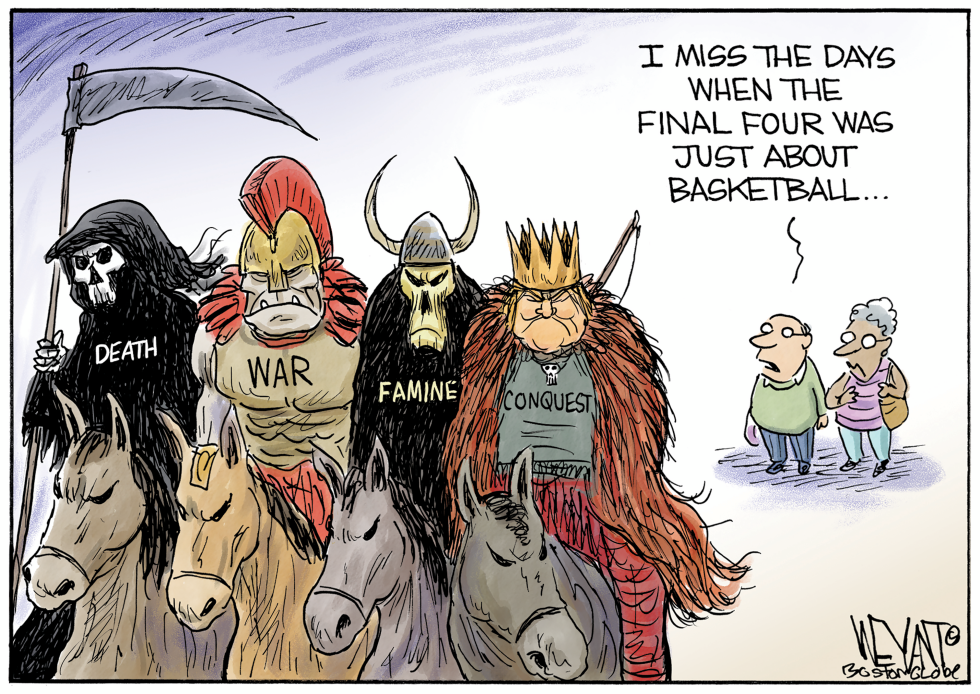
The April 2026 cartoon depicts the Four Horsemen of the Apocalypse marching forward during NCAA Final Four season. Their presence highlights how international conflicts eclipse traditional sports focus. A speech bubble expresses longing for basketball-only coverage while bystanders observe the shift.
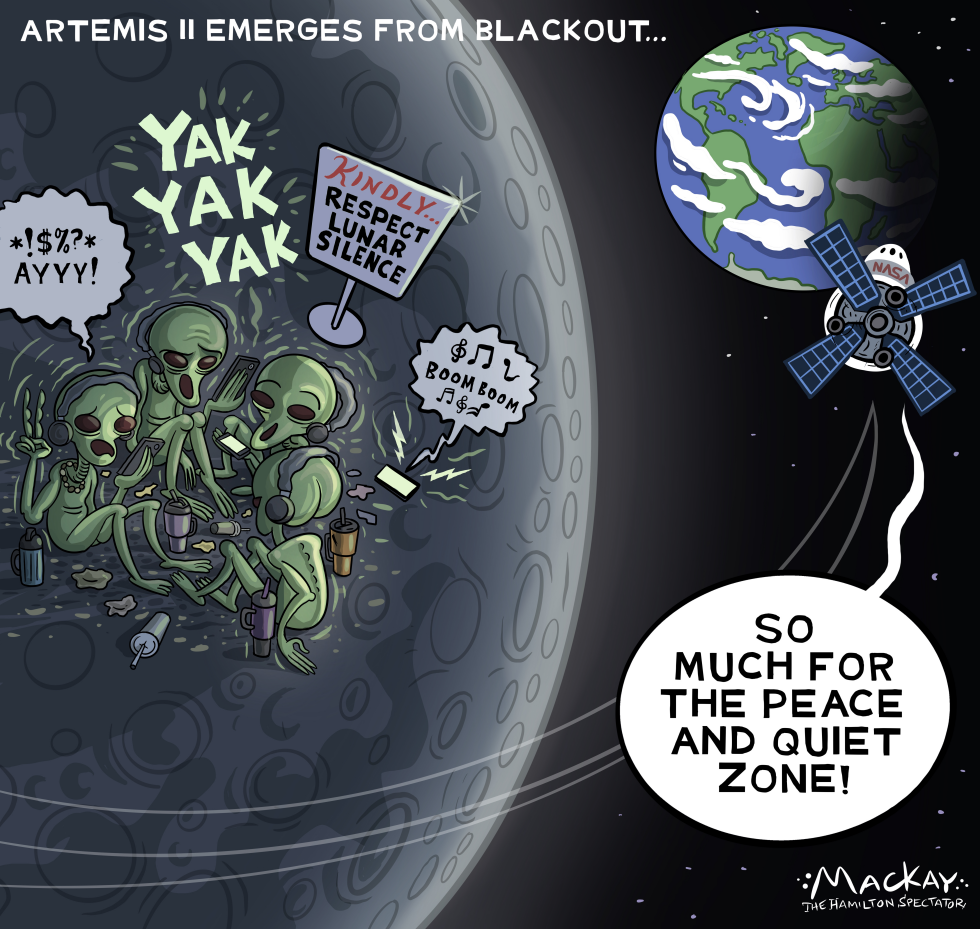
Graeme MacKay's cartoon shows a group of green aliens on the moon, clearly annoyed by the approaching NASA Artemis II spacecraft emerging from blackout. The aliens, depicted with headphones, phones, and drinks, make noisy exclamations like 'Yak Yak Yak' and music notes, while a sign pleads 'Kindly Respect Lunar Silence.' One alien laments, 'So much for the peace and quiet zone!' against the backdrop of Earth. This piece satirizes space exploration's impact on supposed lunar solitude, touching on tags like Artemis, moon, NASA, aliens, quiet zone, and communication. The far side setting emphasizes the interruption of silence by human astronauts.
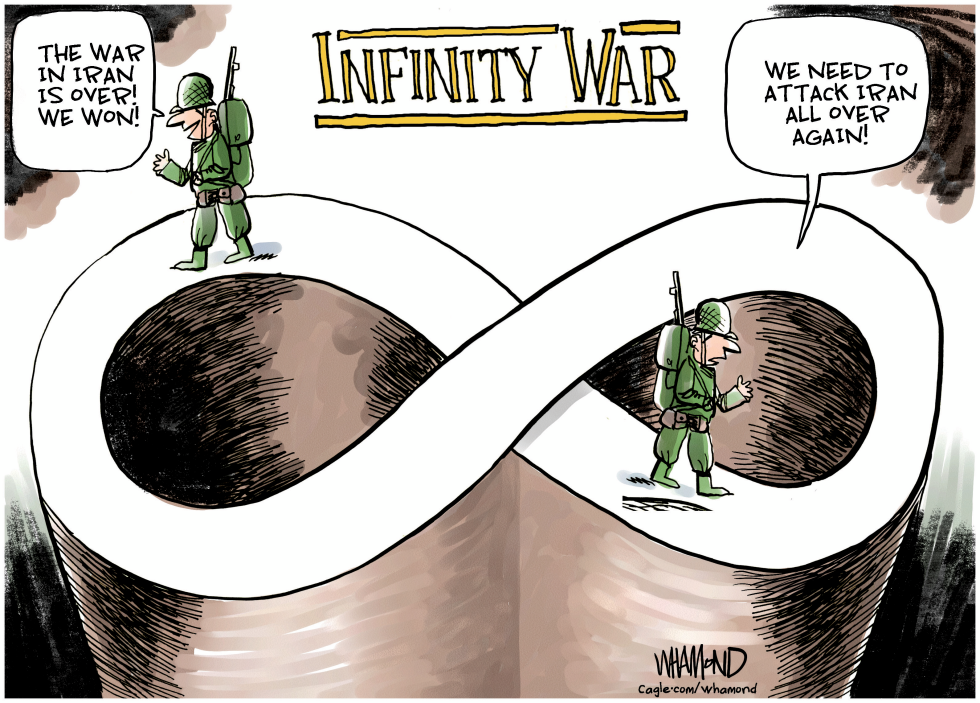
Dave Whamond's cartoon features two soldiers positioned on a large infinity symbol, one announcing victory in the Iran war while the other insists on attacking again, highlighting the perpetual nature of conflict. The title 'Infinity War' parodies endless warfare, with the loop representing cycles of victory and renewed aggression. Tags like iran war cartoon, infinity symbol war, endless conflict satire, military parody, perpetual war illustration, and satirical soldiers emphasize the dry humor in depicting how wars in regions like Iran seem to restart indefinitely, a common theme in political cartoons that resonates with ongoing global tensions.
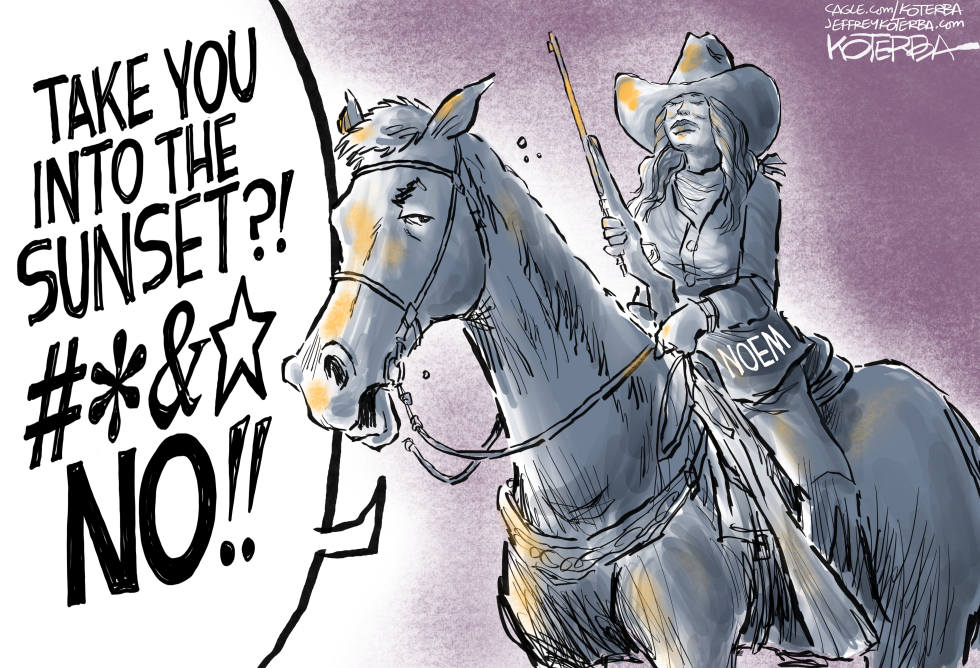
This Jeff Koterba political cartoon skewers Kristi Noem, the South Dakota governor embroiled in GOP scandal over her infamous dog-killing anecdote. Depicted as a cowgirl on a horse labeled 'NOEM,' the steed profanely refuses to 'take you into the sunset,' symbolizing the abrupt halt to her rising star in conservative politics, particularly her dashed hopes as a Trump VP pick. The humorous rejection underscores the backlash from animal cruelty revelations, blending satire with sharp commentary on Republican controversy and election humor. Viral potential lies in its irreverent take on political downfall, making it a shareable gem in American politics discourse.
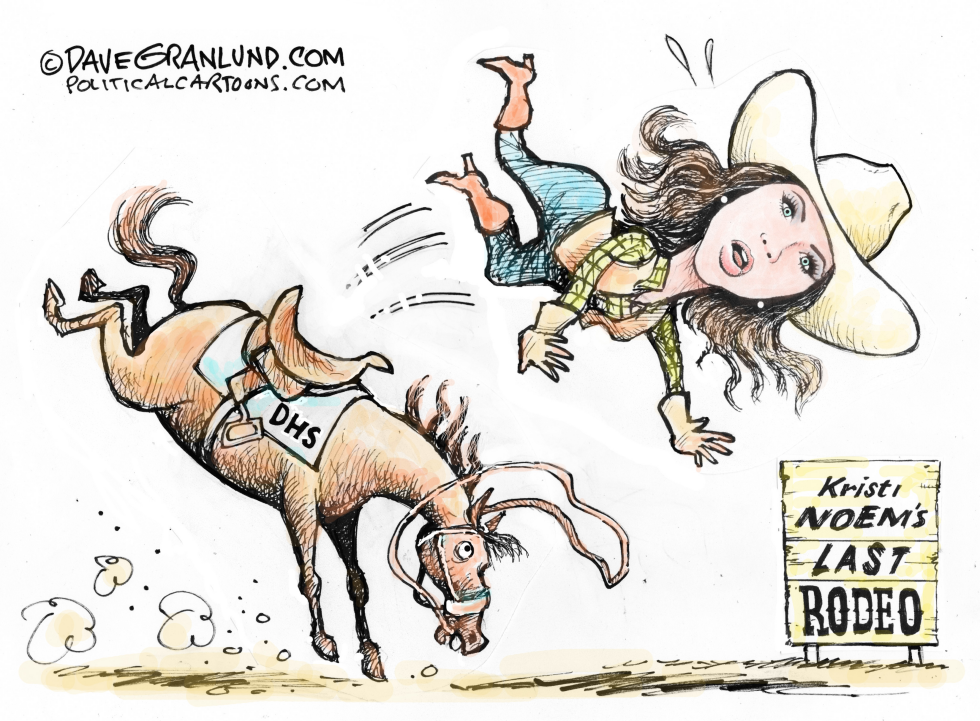
Dave Granlund's political cartoon hilariously portrays South Dakota Governor Kristi Noem in a rodeo metaphor, being violently thrown from a bucking horse labeled 'DHS' under a sign reading 'Kristi Noem's Last Rodeo.' This satire illustration captures her career downfall amid the infamous dog killing scandal, where she admitted to shooting her unruly pup Cricket, sparking widespread outrage. The humorous cartoon underscores how her VP ambitions for the Republican politics ticket were derailed, turning her book promotion into a PR nightmare. With elements of cowboy politics and political humor, it highlights the irreverent side of GOP satire, suggesting this could be Noem's final political stunt.
Daryl Cagle's political cartoon cleverly twists the classic monster under bed scenario into a commentary on immigration fear, with a parent assuring a terrified child that there are no ICE agents lurking below. The image captures the essence of deportation fears plaguing families amid strict border enforcement and Trump era politics. Through satirical humor, it highlights childhood anxiety amplified by real-world immigration policy, family separation, and immigrant rights concerns, making a poignant statement on how political decisions invade even the sanctity of bedtime stories.