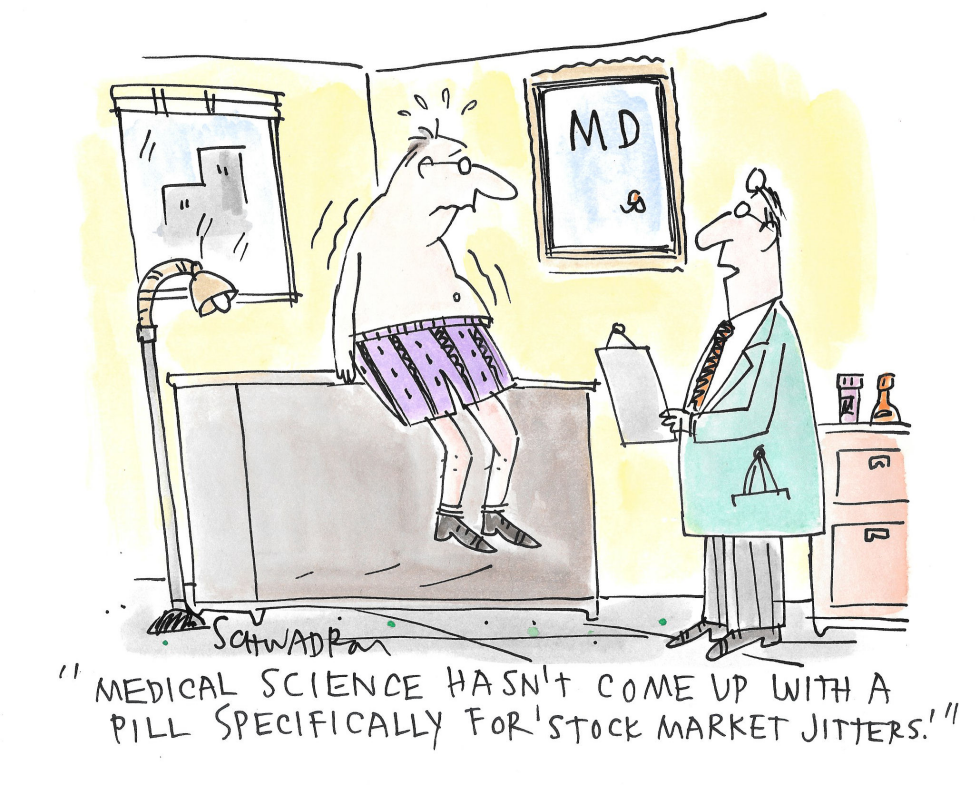
Stock market fluctuations continue to generate widespread investor anxiety amid ongoing economic uncertainty. Market swings tied to interest rates, trade policy, and corporate earnings have left many without clear remedies. The cartoon highlights that medical science offers no specific treatment for this form of financial stress, underscoring the limits of medicine when confronting market-driven worries.
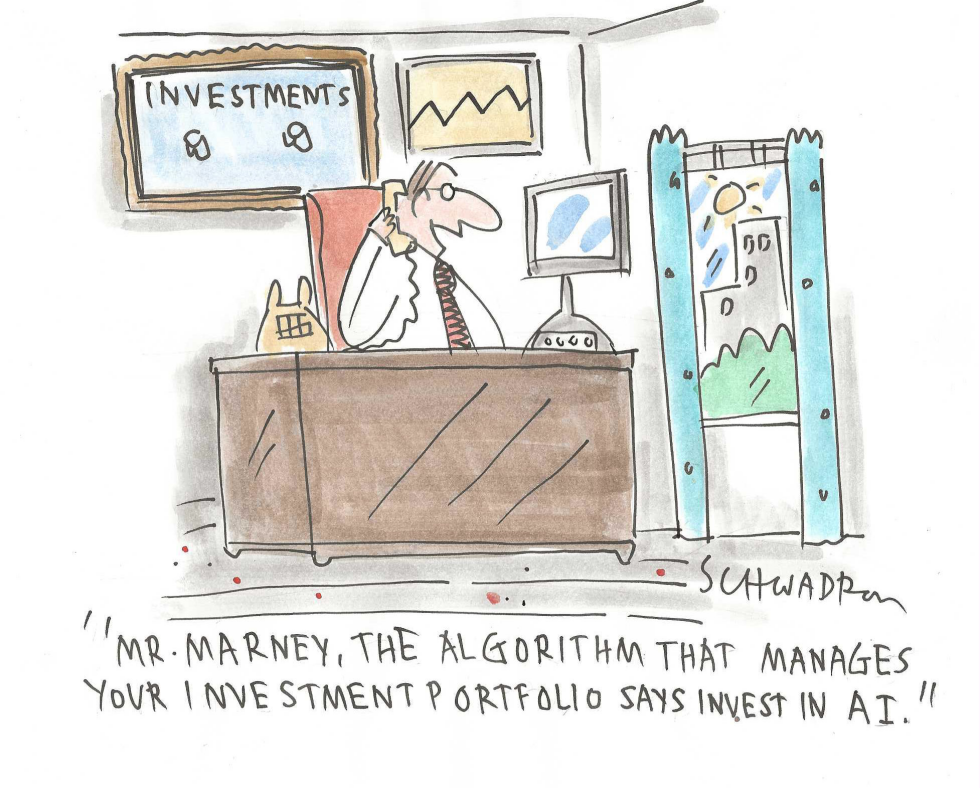
Financial institutions have expanded use of algorithmic systems to oversee client portfolios, with many such tools now directing capital toward artificial intelligence companies. The trend raises questions about self-reinforcing investment cycles where the managing software favors its own sector. The cartoon highlights the circular logic of automated recommendations that benefit AI developers and related stocks.
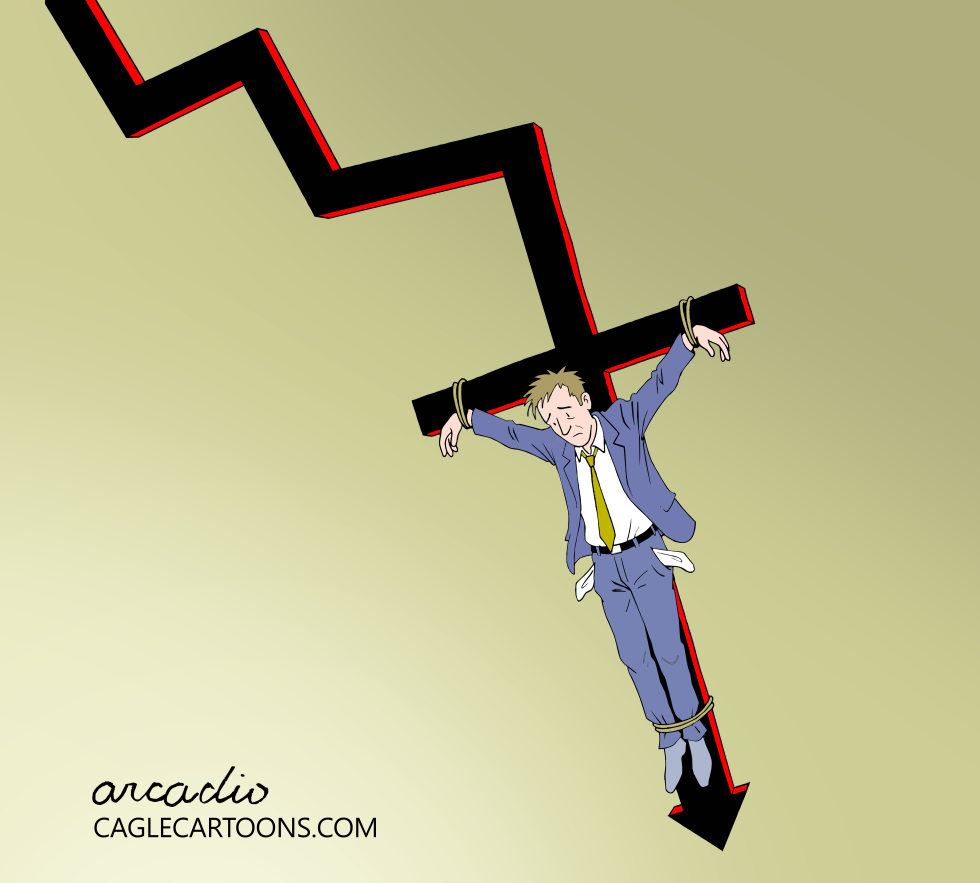
Corporate leaders continue to confront sharp market drops that directly affect company performance and investor confidence. The situation underscores how executives remain closely tied to negative financial trends rather than insulated from them. The piece argues that such binding reflects the reality of accountability in failing markets.
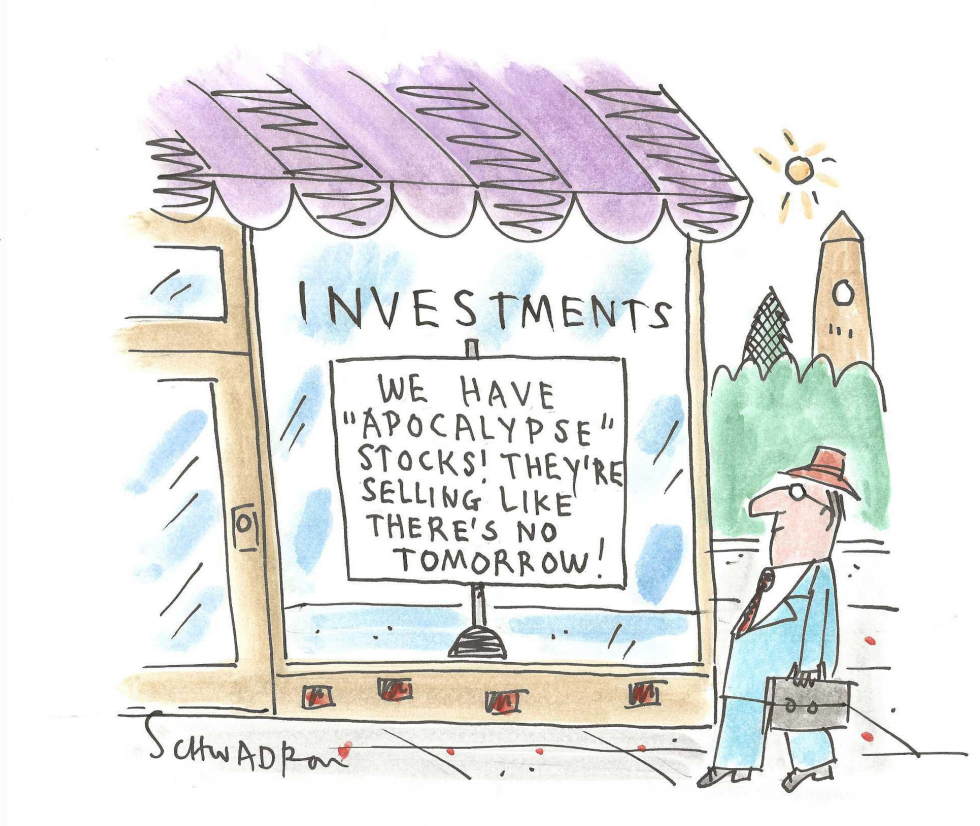
Investor interest in so-called apocalypse stocks has risen as markets reflect broader economic uncertainty. The trend highlights how some traders position for worst-case scenarios in business and finance. The cartoon underscores the ironic appeal of such products, suggesting hype around end-times investing reveals deeper anxieties about stability.
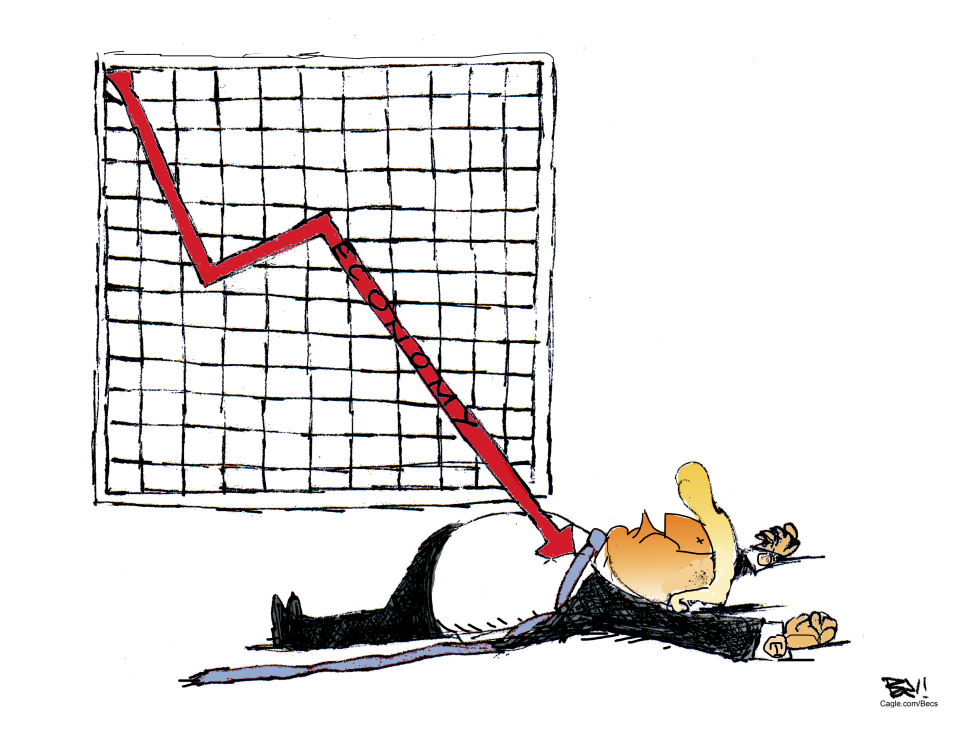
Economic indicators released in late August 2026 showed continued contraction in key sectors including manufacturing and consumer spending. President Donald Trump faced direct political fallout from the downturn. The data underscored challenges in sustaining growth amid inflation pressures and global trade tensions. The cartoon depicts the president flattened by the falling trend line, underscoring the administration's vulnerability on economic performance. It argues that the president bears responsibility for the slide and cannot escape its consequences.
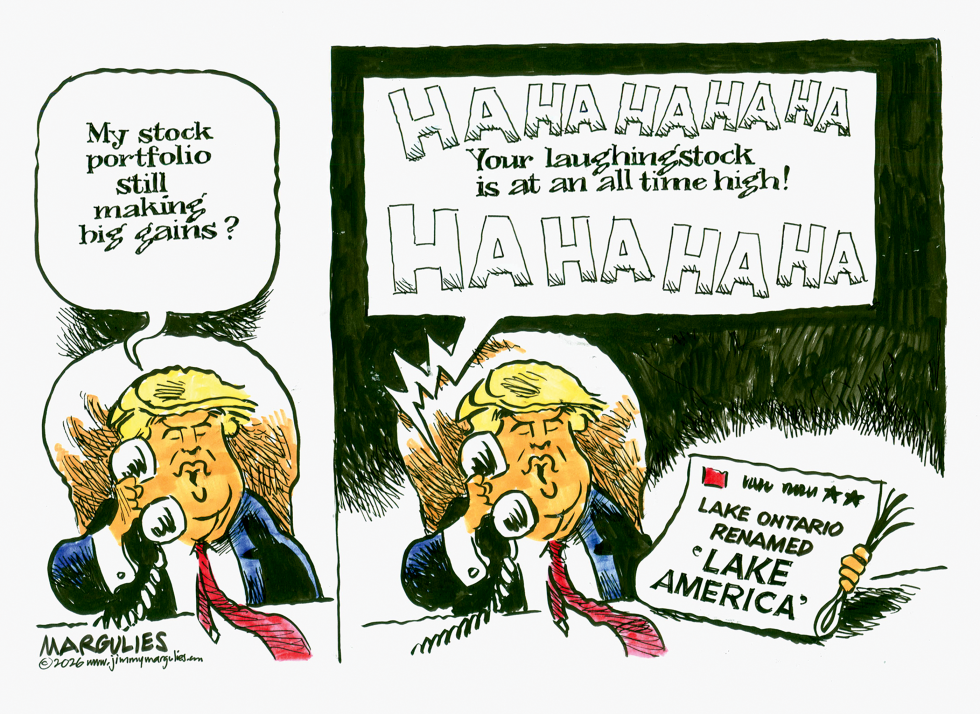
Donald Trump brushed aside questions about renaming Lake Ontario as Lake America during an August 2026 call focused on his stock holdings. The move drew attention to ongoing efforts to rebrand geographic features under his administration. The piece portrays the episode as another instance of Trump prioritizing personal financial optics over policy substance.
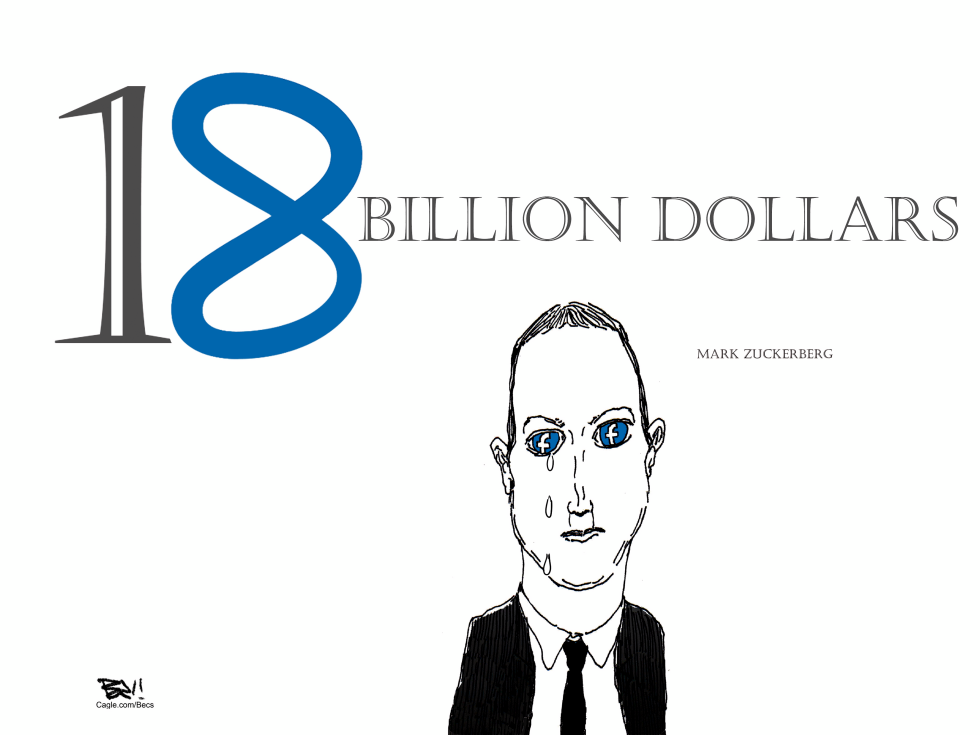
Meta Platforms reported a significant valuation drop that erased 18 billion dollars from Mark Zuckerberg's holdings. The loss reflects broader volatility in social media stocks and investor concerns over advertising revenue. Zuckerberg's public profile makes the personal financial impact a focal point for discussions on tech wealth. The piece portrays the event as a moment of visible distress for the executive. It underscores how quickly billionaire fortunes tied to public companies can shift with market sentiment.
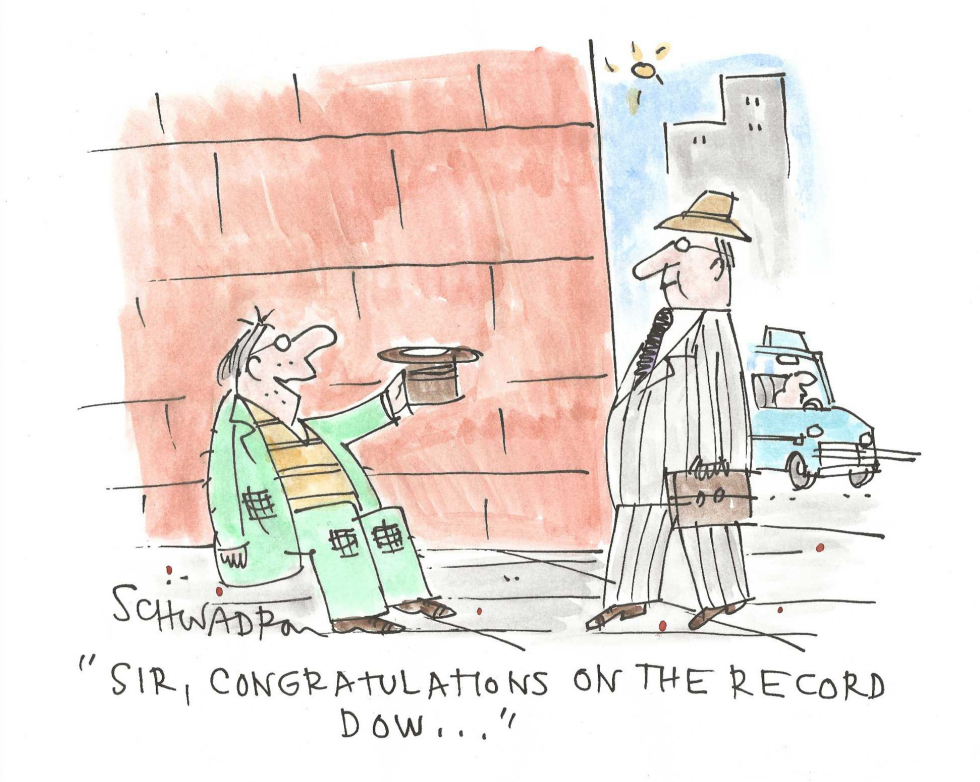
The Dow Jones Industrial Average reached a new record high in late August 2026, reflecting strong corporate earnings and investor confidence. Business leaders celebrated the milestone while many Americans continued to face stagnant wages and rising living costs. The cartoon depicts a beggar offering congratulations to a passing executive, underscoring the disconnect between Wall Street performance and everyday economic reality. This visual argument critiques how market success often benefits a narrow segment of society while leaving others behind.
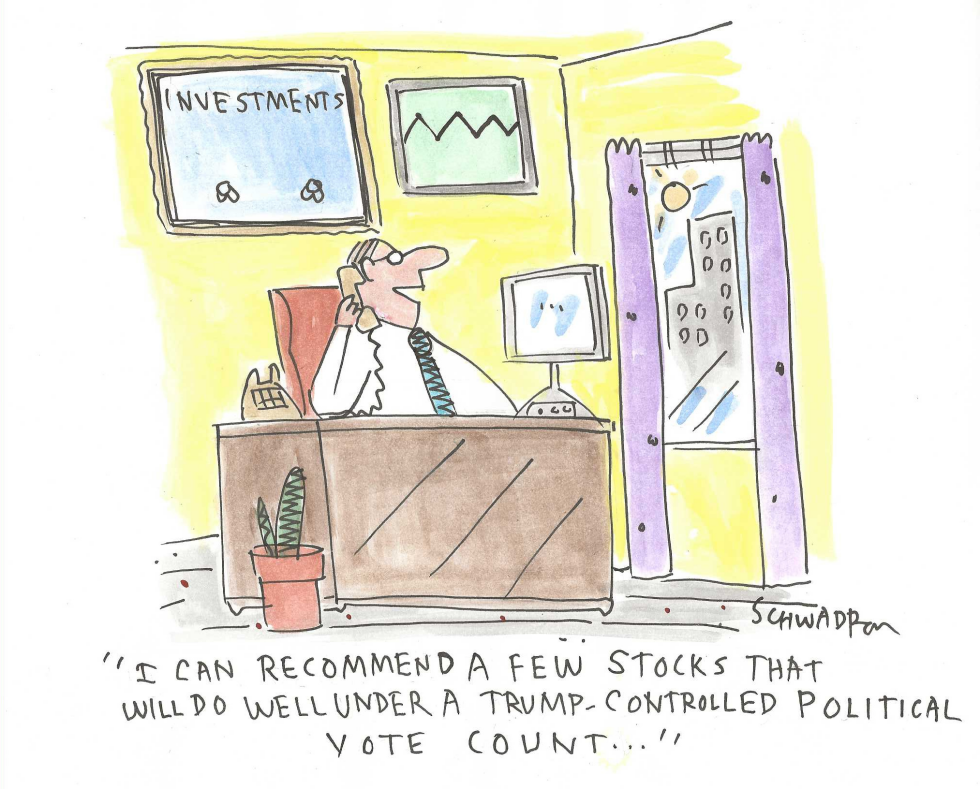
A stockbroker on the phone recommends investments expected to perform under a Trump-controlled political vote count. The scene occurs amid visible symbols of restraint including handcuffs on an investments sign and a barred door resembling a prison cell. The piece responds to ongoing concerns about election integrity and potential political interference in vote tabulation processes. It takes the position that such influence creates opportunities for financial gain tied directly to control over electoral outcomes.
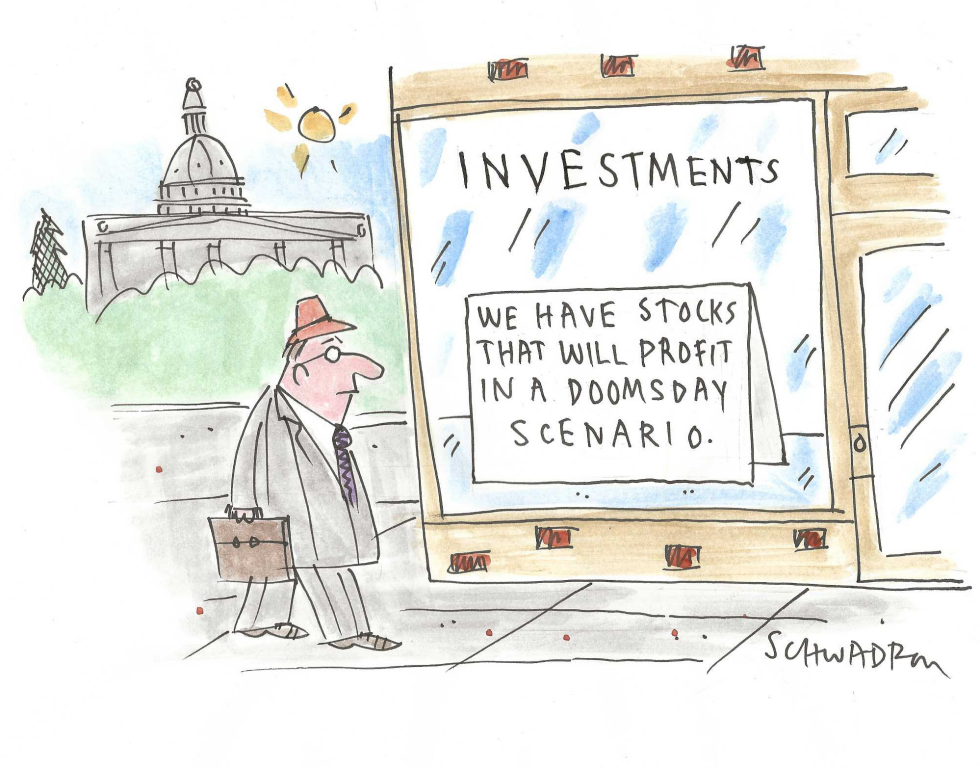
Investment firms continue to market specialized stock offerings designed to gain value during periods of widespread economic or geopolitical turmoil. Such products attract attention from clients seeking protection against market downturns or global instability. The cartoon highlights the persistent appeal of these instruments even as broader uncertainty lingers around policy and international developments.
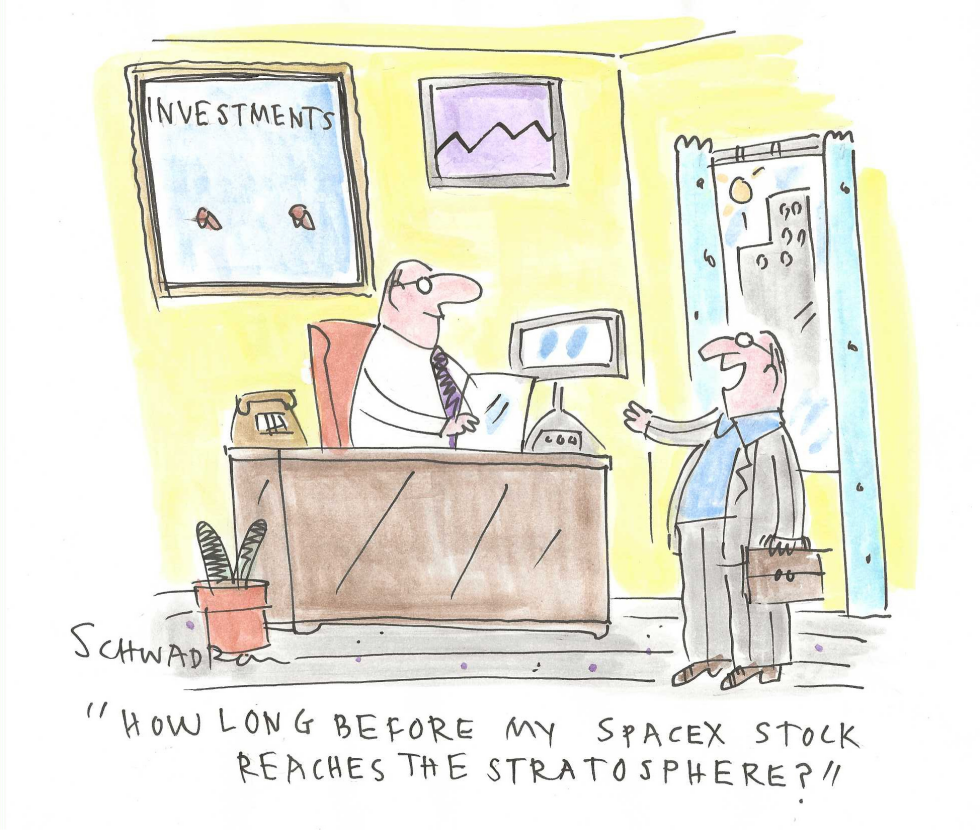
An investor meets with a financial advisor to discuss prospects for SpaceX shares. The private company remains a focal point for those tracking high-growth technology firms. The exchange highlights ongoing interest in valuation and future returns for such holdings. The piece frames the inquiry around expectations of substantial gains. It underscores the speculative nature of investing in non-public aerospace ventures.
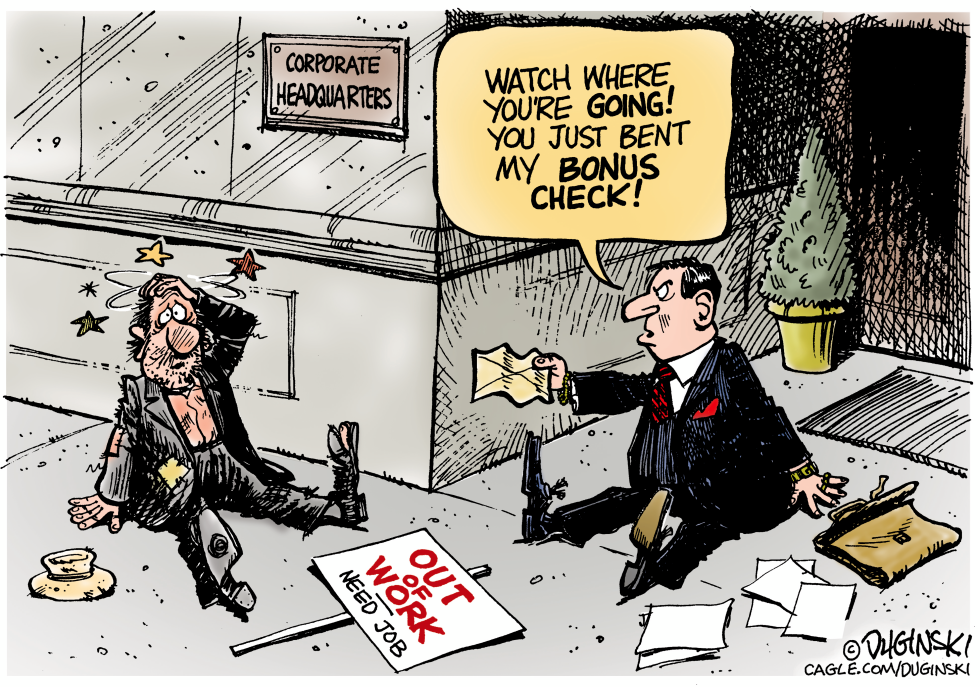
Corporate executives continue to receive large bonuses even as layoffs persist across sectors. The piece responds to ongoing debates over executive compensation packages during periods of workforce reduction. It takes the position that such bonuses appear disconnected from the realities facing displaced employees.
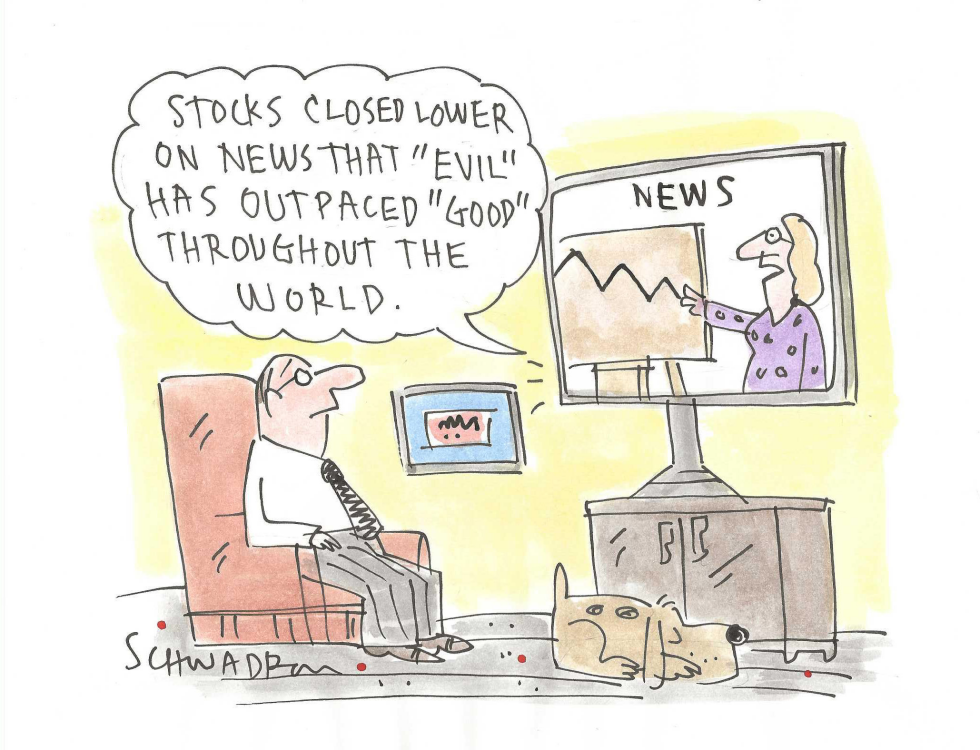
Stock markets declined after news reports indicated evil has outpaced good around the world. The development prompted immediate selling as traders absorbed the assessment from major outlets. The shift highlights how broad negative narratives can influence trading volumes and sentiment in real time. The piece presents the market reaction as a direct response to the reported imbalance between evil and good.
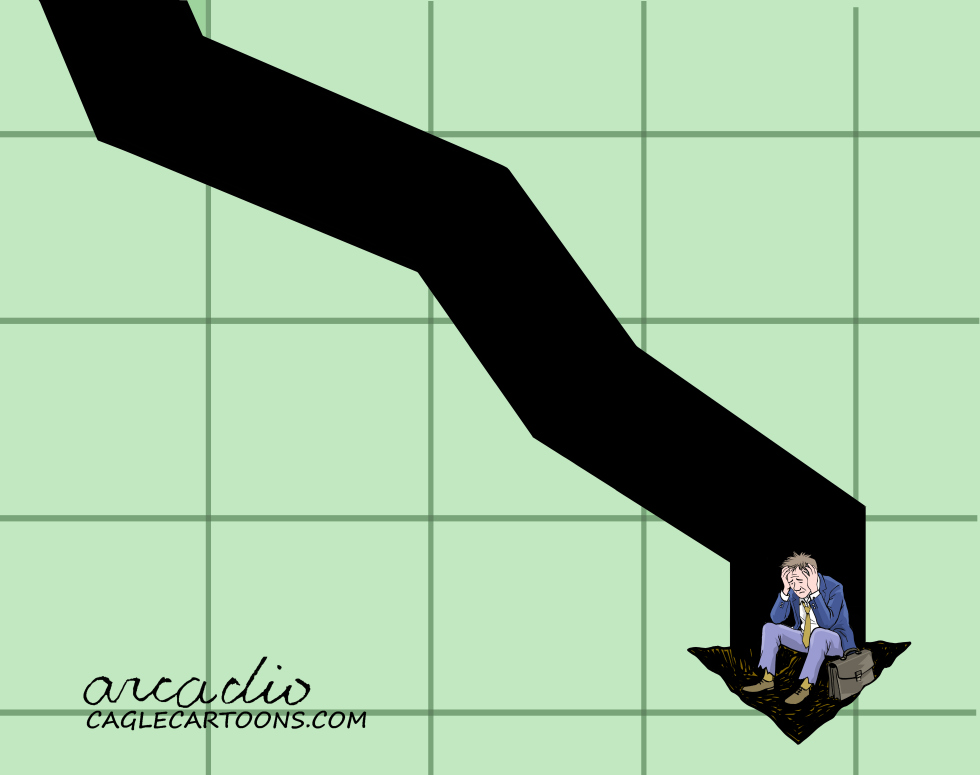
Businesses face mounting pressure from ongoing economic contraction that leaves executives isolated and without clear recovery paths. The decline affects employment, investment, and market stability across sectors. The piece highlights the personal toll on those navigating the downturn and underscores the urgency of addressing root causes before further damage spreads.